Nucleosídeos
Os nucleosídeos são building blocks fundamentais dos ácidos nucleicos, compostos por uma base nitrogenada ligada a uma molécula de açúcar. Nesta seção, você encontrará uma ampla variedade de nucleosídeos essenciais para pesquisas em biologia molecular, bioquímica e farmacologia. Esses compostos desempenham papéis cruciais na síntese de DNA e RNA, e também são vitais em vários processos metabólicos. Os nucleosídeos são usados para estudar material genético, desenvolver terapias antivirais e anticancerígenas, e entender os mecanismos celulares. Na CymitQuimica, fornecemos nucleosídeos de alta qualidade para apoiar suas necessidades de pesquisa e desenvolvimento, garantindo pureza e confiabilidade para suas aplicações experimentais.
Foram encontrados 3570 produtos de "Nucleosídeos"
Ordenar por
Pureza (%)
0
100
|
0
|
50
|
90
|
95
|
100
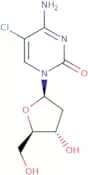
5-Chloro-2'-deoxycytidine
CAS:5-Chloro-2'-deoxycytidine (5-Cl-dC) is a nucleoside analog that inhibits DNA synthesis by blocking the action of thymidylate synthase. It can be used in animal models to study bowel diseases, such as ulcerative colitis and Crohn's disease. 5-Cl-dC has been shown to be effective in treating the effects of radiation and chemical toxicity in HL60 cells, a type of human leukemia cell line. 5-Cl-dC has also been shown to enhance the cytotoxicity of eosinophil peroxidase, which is an enzyme that may be involved in the pathogenesis of asthma. This drug is currently being evaluated for its safety and efficacy in clinical trials involving patients with myelodysplastic syndrome or acute myeloid leukemia who are at risk for developing leukemia.
Fórmula:C9H12CIN3O4Pureza:Min. 95%Cor e Forma:PowderPeso molecular:261.67 g/mol3'-O-Propargyluridine
CAS:3'-O-Propargyluridine is a synthetic nucleoside with an alkyne functional handle on the 3'-position of the sugarFórmula:C12H14N2O6Pureza:Min. 95%Cor e Forma:White PowderPeso molecular:282.25 g/mol1-(3'-azido-3'-deoxy-b-D-ribofuranosyl)-5-nitro-2(1H)-pyridinone
CAS:1-(3'-azido-3'-deoxy-b-D-ribofuranosyl)-5-nitro-2(1H)-pyridinone is a nucleoside analog that has antiviral and anticancer activities. It has been shown to be an activator of cellular DNA polymerase γ, which is involved in the DNA chain elongation process during DNA replication. 1-(3'-azido-3'-deoxy-b-D-ribofuranosyl)-5-nitro-2(1H)-pyridinone also inhibits the activity of human T cell leukemia virus type 1 (HTLV1) reverse transcriptase by binding to its active site and preventing the synthesis of viral DNA. This compound has a high quality with a purity > 98% and is not radioactive or toxic.Pureza:Min. 95%Adenosine 5'-diphosphate monosodium salt
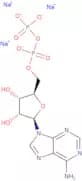
CAS:Used for energy storage and in nucleic acid metabolismFórmula:C10H14N5NaO10P2Pureza:Min. 98 Area-%Cor e Forma:White Off-White PowderPeso molecular:449.18 g/mol2'/3'-(N-Methylanthraniloyl)-adenosine-5'-monophosphate triethylammonium salt
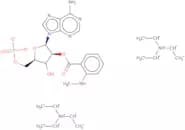
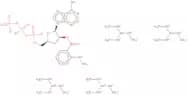
CAS:2'/3'-(N-Methylanthraniloyl)-adenosine-5'-monophosphate triethylammonium salt is an antiviral agent that is based on ribonucleosides. This drug has been shown to be effective against cancer and herpes simplex virus type 1 (HSV-1) and may have potential as a treatment for HIV. It also inhibits the growth of tumors in animal models. 2'/3'-(N-Methylanthraniloyl)-adenosine-5'-monophosphate triethylammonium salt is synthesized by reacting ribonucleosides with N-(2,2,2,-trimethylpropyl)anthranilic acid chloride in the presence of triethylamine. The resulting product can be purified by column chromatography or recrystallization.Fórmula:C18H21N6O8PPureza:Min. 95%Peso molecular:480.37 g/mol1-(2-C-Methyl-b-D-ribofuranosyl)-5-nitropyridine-2(1H)-one
1-(2-C-Methyl-b-D-ribofuranosyl)-5-nitropyridine-2(1H)-one is an antiviral agent that belongs to the class of monophosphate deoxyribonucleosides. It is a novel compound that has been shown to be an activator of high purity and quality. 1-(2-C-Methyl-b-D-ribofuranosyl)-5-nitropyridine-2(1H)-one is synthesized from modified ribonucleosides and phosphoramidites. The antiviral activity of this drug against DNA viruses (e.g., herpes, adenovirus) and RNA viruses (e.g., influenza virus) has been shown in vitro and in vivo. In addition, 1-(2-C-Methyl-b--D--ribofuranosyl)-5--nitropyridine--2(1H)--Pureza:Min. 95%2'-O-tert-Butyldimethylsilyl-N2-isobutyryl-5'-O-MMT-guanosine 3'-CE phosphoramidite
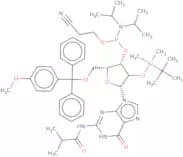
2'-O-tert-Butyldimethylsilyl-N2-isobutyryl-5'-O-MMT-guanosine 3'-CE phosphoramidite is a novel modified ribonucleoside that has been synthesized to mimic the natural nucleotide. It has been shown to activate DNA synthesis, inhibit cancer cell division and proliferation, and inhibit viral replication. 2'-O-tert-Butyldimethylsilyl-N2-isobutyryl-5'-O-MMTguanosine 3'-CE phosphoramidite is a monophosphate nucleotide with an anticancer activity. It has also showed antiviral effects against HIV and Hepatitis B virus. This novel modified ribonucleoside is highly pure and can be used for the synthesis of high quality DNA, RNA, or phosphoramidites.Fórmula:C49H66N7O8PSiPureza:Min. 95%Peso molecular:940.17 g/mol2,4-bis(Benzyloxy)-6-chloropyrimidine
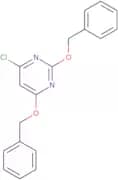
CAS:This study investigates the association between the use of 2,4-bis(benzyloxy)-6-chloropyrimidine (BCP) and lowering in the risk of developing breast cancer in women. The study is based on a national dataset that includes all Danish women who were enrolled in the Danish Breast Cancer Screening Program from 1995 to 2009. The covariates collected include age, weight, height, family history of breast cancer, parity, and hormone replacement therapy. This research was conducted by researchers at various universities in Denmark.Pureza:Min. 95%2-Methylthio-N6-isopentenyladenosine
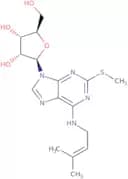
CAS:A nucleoside analogue of adenosine that arises from post-transcriptional modification. In humans, this is mediated by the enzyme CDK5RAP1 in mitochondrial transfer RNA (tRNA) at amino acid 37. Deficiency for this modification, for example due to CDK5RAP1 deficiency, leads to impaired mitochondrial protein synthesis. This has implications for mitochondrial diseases, as well as cancer, type II diabetes and vitiligo. Synthetic ms2i6A can be used to raise monoclonal antibodies against this nucleotide in vivo.Fórmula:C16H23N5O4SPureza:Min. 95%Cor e Forma:White PowderPeso molecular:381.45 g/molN6-Benzoyl-3'-O-tert-butyldimethylsilyl-5'-O-DMT-adenosine 2'-CE phosphoramidite
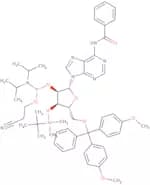
CAS:N6-Benzoyl-3'-O-tert-butyldimethylsilyl-5'-O-DMT-adenosine 2'-CE phosphoramidite is an antiviral nucleoside phosphoramidite that is used in the synthesis of DNA. It has been shown to have antiviral activity against HIV and herpes, as well as anticancer effects. It also has high purity, being a novel synthetic nucleoside with a CAS number. N6-Benzoyl-3'-O-tert-butyldimethylsilyl-5'-O-DMT-adenosine 2'-CE phosphoramidite is synthesized using novel methods. The synthesis process includes activation with diphosphate, DNA, and Novel nucleosides, which are high quality and modified.Fórmula:C53H66N7O8PSiPureza:Min. 95%Cor e Forma:PowderPeso molecular:988.19 g/mol5'-Deoxy-5'-fluorothymidine
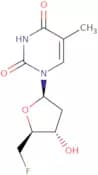
CAS:5'-Deoxy-5'-fluorothymidine is a cytotoxic agent that inhibits the synthesis of DNA by binding to the enzyme thymidylate synthase and preventing the formation of thymine nucleotide. 5'-Deoxy-5'-fluorothymidine has shown to be effective against herpes simplex virus, murine bone, and tissue culture cells. This drug also inhibits cellular proliferation in vitro and can be used in chemotherapy treatment. 5'-Deoxy-5'-fluorothymidine is synthesized from guanine by an enzyme called deoxyguanosine kinase. The biosynthesis of this drug involves two steps: conversion of guanine to xanthosine monophosphate (XMP) and conversion of XMP to 5'-deoxy-5'-fluorothymidine (dFTP).Fórmula:C10H13FN2O4Pureza:Min. 95%Peso molecular:244.22 g/molN2-Isobutyryl-2'-deoxy-5'-O-pixylguanosine
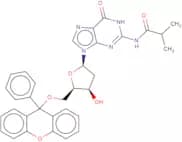
N2-Isobutyryl-2'-deoxy-5'-O-pixylguanosine is a modified nucleotide that has been shown to be an activator of the protein kinase C and may have anticancer and antiviral properties. N2-Isobutyryl-2'-deoxy-5'-O-pixylguanosine is a synthetic nucleoside that is structurally similar to ribonucleosides and deoxyribonucleosides, but contains a modified base. The nucleotide is activated by phosphorylation and then undergoes hydrolysis in the cell to form diphosphate. This product has CAS No. 125965-04-3, purity at 99%, and high quality.Fórmula:C33H31N5O6Pureza:Min. 95%Peso molecular:593.64 g/mol3’-Deoxy-3’C-methyl-5-methyluridine
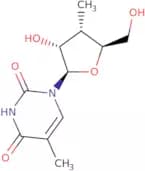
CAS:3’-Deoxy-3’C-methyl-5-methyluridine is a novel and efficient phosphoramidite monophosphate, which can be used in the synthesis of DNA. This product has antiviral activity against HIV and some other viruses. The phosphoramidite is modified with a diphosphate group, which increases the efficiency of DNA synthesis. 3’-Deoxy-3’C-methyl-5-methyluridine is synthesized by modifying 5′ position with a C6 methylaminomethyl group and coupling with the 3′ deoxynucleoside.Pureza:Min. 95%1-(3'-5'-Di-O-benzoyl-2'-deoxy-2'-fluoro-alpha-L-arabinofuranosyl)thymine
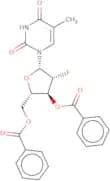
1-(3`-5`-Di-O-benzoyl-2`-deoxy-2`-fluoro-alpha-L-arabinofuranosyl)thymine is a nucleoside analog with modifications that influence its biological activity. It is made up of a thymine base, benzoyl groups that protect hydroxyl functionalities during chemical synthesis and a α-L-linkage, which impacts its biological interactions compared to β-L-nucleosides. This molecule also contains the sugar 2'-Deoxy-2'-fluoro-α-L-arabinofuranose which has a L-arabinose configuration, an α-Anomeric linkage and a 2'-Fluoro substitution. The latter modification has the potential to increase the molecule's metabolic stability and resistance to enzymatic degradationFórmula:C24H21FN2O7Pureza:Min. 95%Peso molecular:484.89 g/molN4-Acetylcytidine
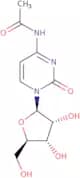
CAS:N4-Acetylcytidine is a modified nucleoside and endogenous urinary nucleoside product of the degradation of tRNA. N4-Acetylcytidine is a biological marker for various cancers with elevated concentrations present in urine. N4-Acetylcytidine is also a partially protected cytidine and therefore can be used as a synthetic building block to prepare further derivatized nucleosides such as 2’,3’-dideoxycytidine.Fórmula:C11H15N3O6Pureza:Min. 95%Cor e Forma:White PowderPeso molecular:285.25 g/mol2'-O-(N-Methylanthraniloyl)-3'-deoxy-adenosine-5'-triphosphate triethylammonium salt
CAS:2'-O-(N-Methylanthraniloyl)-3'-deoxy-adenosine-5'-triphosphate triethylammonium salt is a novel antiviral and anticancer compound. It is an analogue of adenosine, which inhibits the synthesis of viral RNA and DNA. This compound can also be used to treat certain types of cancer. 2'-O-(N-Methylanthraniloyl)-3'-deoxy-adenosine-5'-triphosphate triethylammonium salt is chemically synthesized by reacting anthranilic acid with 3',5'-dideoxyadenosine 5' triphosphoric acid.Fórmula:C18H23N6O13P3Pureza:Min. 95%Peso molecular:624.33 g/molN4-Benzoyl-2'-deoxy-5'-O-tritylcytidine
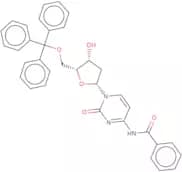
CAS:N4-Benzoyl-2'-deoxy-5'-O-tritylcytidine is a nucleoside analog that is used as an antiviral agent. It inhibits DNA synthesis by inhibiting the enzyme DNA polymerase, which is essential for the replication of viral and cellular DNA. N4-Benzoyl-2'-deoxy-5'-O-tritylcytidine also has anticancer activity, which may be due to its ability to inhibit ribonucleotide reductase and thereby block the production of RNA.Fórmula:C35H31N3O5Pureza:Min. 95%Peso molecular:573.65 g/molN4-Benzoyl-2'-deoxy-5'-O-pixylcytidine
CAS:N4-Benzoyl-2'-deoxy-5'-O-pixylcytidine is a novel nucleoside that is structurally related to cytidine. It is synthesized from 2'-deoxycytidine monophosphate and 4-benzoylpixyl chloride. N4-Benzoyl-2'-deoxy-5'-O-pixylcytidine has antiviral, antiangiogenic and anticancer properties, as well as the ability to inhibit the replication of DNA in cells. This compound can be used for synthesis of phosphoramidites, which are used in the production of oligonucleotides.Fórmula:C35H29N3O6Pureza:Min. 95%Peso molecular:587.64 g/mol4’,5’-Didehydro-5’-deoxy-5-methyluridine
CAS:4’,5’-Didehydro-5’-deoxy-5-methyluridine is a monophosphate nucleoside that is used as an antiviral agent. It has been shown to be active in the treatment of HIV and hepatitis B. 4’,5’-Didehydro-5’-deoxy-5-methyluridine also has anticancer properties and has been shown to inhibit cell proliferation in vitro by interfering with DNA synthesis. This product is an intermediate for the synthesis of other nucleosides and phosphoramidites.Pureza:Min. 95%N2-Isobutyryl-3',5'-O-(1,1,3,3-tetraisopropyl-1,3-disiloxanediyl)guanosine
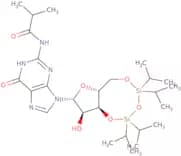
CAS:N2-Isobutyryl-3',5'-O-(1,1,3,3-tetraisopropyl-1,3-disiloxane-diyl)guanosine is a nucleoside that is activated by phosphorylation. It has been shown to be an inhibitor of cancer cell growth and proliferation in vitro. This compound was also found to inhibit the expression of two oncogenes (c-MYC and c-Ki67) and induce the expression of the tumor suppressor gene p53. This nucleoside is synthesized from 2'-deoxyadenosine monophosphate (2'-DAMP) with a modified DNA synthesis protocol.Fórmula:C26H45N5O7Si2Pureza:Min. 95 Area-%Cor e Forma:White Off-White PowderPeso molecular:595.84 g/mol