Nucleosídeos
Os nucleosídeos são building blocks fundamentais dos ácidos nucleicos, compostos por uma base nitrogenada ligada a uma molécula de açúcar. Nesta seção, você encontrará uma ampla variedade de nucleosídeos essenciais para pesquisas em biologia molecular, bioquímica e farmacologia. Esses compostos desempenham papéis cruciais na síntese de DNA e RNA, e também são vitais em vários processos metabólicos. Os nucleosídeos são usados para estudar material genético, desenvolver terapias antivirais e anticancerígenas, e entender os mecanismos celulares. Na CymitQuimica, fornecemos nucleosídeos de alta qualidade para apoiar suas necessidades de pesquisa e desenvolvimento, garantindo pureza e confiabilidade para suas aplicações experimentais.
Foram encontrados 3567 produtos de "Nucleosídeos"
Ordenar por
Pureza (%)
0
100
|
0
|
50
|
90
|
95
|
100
5'-O-DMT-N2-isobutyryl-2'-O-methylguanosine
CAS:<p>5'-O-DMT-N2-isobutyryl-2'-O-methylguanosine is a nucleoside that has been synthesized using an oxime opening of the 5' position and a methylation at the 2' position. It has been shown to have an affinity for tissues in a chemotactic assay. The compound is minimised to remove non-specific binding sites, avoiding false positives on the checklist. This molecule has been analysed with fluorescence spectroscopy and microscopy techniques, which revealed that it is distributed in tissues as well as being found in dragonflies. It was also shown to be transduced by muscle cells and geochemically detected in limestone from China.</p>Fórmula:C36H39N5O8Pureza:Min. 95%Cor e Forma:PowderPeso molecular:669.74 g/mol8-Hydrazinoadenosine
CAS:<p>8-Hydrazinoadenosine is an inhibitor of phosphodiesterase, which is a key enzyme in the regulation of cellular processes. 8-Hydrazinoadenosine binds to the active site of the enzyme and inhibits its function. This binding prevents hydrolysis of the phosphate bond between two nucleotides and so prevents the formation of a new nucleotide from a nucleoside and a phosphate molecule. 8-Hydrazinoadenosine has been shown to inhibit phosphodiesterases in vitro and in animals, including rat brain and mouse lung. Strategies for 8-hydrazinoadenosine commercialization have been investigated, including attaching it to other molecules that are more easily absorbed by cells or using irradiation to produce 8-aminoadenosine, which can be converted into 8-hydrazinoadenosine.</p>Pureza:Min. 95%8-Chloroadenosine
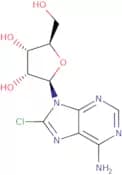
CAS:<p>8-Chloroadenosine is a potent inhibitor of apoptosis, which is the process by which cells die. It has been shown to inhibit cell growth in murine hepatoma cells and synergize with other cytotoxic agents. 8-Chloroadenosine inhibits the activity of bcl-2 protein and thus blocks the release of cytochrome c from mitochondria. This causes DNA damage by inhibiting DNA synthesis and protein synthesis, leading to apoptosis. 8-Chloroadenosine has also been shown to be an active inhibitor of cancer cells, especially myeloma cell lines. The response element for 8-chloroadenosine is located in the promoter region of the gene encoding cyclooxygenase 2 (COX-2), which encodes a protein that produces prostaglandins involved in inflammation and tumor growth. The concentration of camp in cancer tissues determines whether these cells will respond favorably or unfavorably to this drug.</p>Fórmula:C10H12ClN5O4Pureza:Min. 95%Cor e Forma:PowderPeso molecular:301.69 g/mol5-Hydroxymethyl-2’-O-(2-methoxyethyl)uridine
CAS:<p>5-Hydroxymethyl-2’-O-(2-methoxyethyl)uridine (5HMEU) is a nucleoside that is synthesized from 2’,3’-dideoxyribonucleosides. 5HMEU has been shown to be an activator of the human telomerase enzyme and is used in the synthesis of DNA. It also has anticancer properties and can inhibit the growth of various cancer cells, including pancreatic, breast, prostate, lung, liver, and cervical cancer cells. 5HMEU is a modified nucleoside that contains a hydroxyl group at the 2’ position and an methoxyl group at the 5’ position. The chemical name for 5HMEU is 5-hydroxymethyl-2'-O-(2-methoxyethyl)uridine.</p>Pureza:Min. 95%2'-Deoxy-5-methylcytidine
CAS:<p>2'-Deoxy-5-methylcytidine is a nucleoside analogue that inhibits the synthesis of DNA. It prevents methylation of guanine, which disrupts the binding of guanine nucleotide-binding proteins to the dna template and prevents polymerase chain reactions. 2'-Deoxy-5-methylcytidine has been shown to inhibit colon cancer cells in vitro, and may be a potential biomarker for bowel disease. This drug is also a methyltransferase inhibitor, which means it blocks the enzyme responsible for adding methyl groups to cytosine molecules.</p>Fórmula:C10H15N3O4Pureza:Min. 98 Area-%Cor e Forma:White PowderPeso molecular:241.25 g/molN4-Benzoyl-5'-O-DMT-2'-O-(2-methoxyethyl)cytidine 3'-CE phosphoramidite
<p>Nucleoside phosphoramidite used in oligonucleotide synthesis</p>Fórmula:C49H58N5O10PPureza:Min. 95%Peso molecular:907.99 g/mol2'-C-Methylcytidine
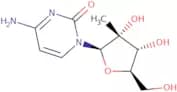
CAS:<p>Broad-spectrum anti-viral; inhibitor of HCV NS5B RNA polymerase</p>Fórmula:C10H15N3O5Pureza:Min. 98 Area-%Cor e Forma:White Off-White PowderPeso molecular:257.25 g/molPolyinosinic acid-polycytidylic acid, homopolymer (1:1)
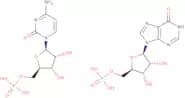
CAS:<p>Polyinosinic acid-polycytidylic acid (Poly I:C), an agonist of TLR3 toll-like receptors, is a synthetic double-stranded RNA analog, consisting of polyinosinic acid (poly I) paired with polycytidylic acid (poly C), forming a stable duplex structure.PolyI:C stimulates the secretion of pro-inflammatory cytokines and type I interferon through its interaction with endosomal Toll-like receptor 3 (TLR-3) and the cytoplasmic receptors melanoma differentiation-associated gene 5 (MDA-5) and retinoic acid-inducible gene I (RIG-I). This immunostimulant activity makes Poly I:C a useful vaccine adjuvant and is used in vaccine formulations. Poly I:C and its stabilized analogs (e.g., poly-ICLC) are also being actively researched for their dual role in oncology: directly targeting tumors and acting as immune potentiators. For example Poly I:C can induce apoptosis in tumor cells and stimulate immunogenic cell death and is therefore being explored alongside chemotherapy, radiotherapy, and checkpoint inhibitors, helping to overcome resistance mechanisms and strengthen treatment outcomes.We can supply PolyI:C to all stages of your project - from R&D and preclinical phases right up to GMP commercial manufacture. Contact our team for custom Poly I:C products.<br>For more on poly I:C read out blog 'Poly I:C: A Vaccine Adjuvant With Oncological Potential.'</p>Fórmula:(C10H13N4O8P)x•(C9H14N3O8P)xCor e Forma:Powder2’,3’,5’-Tri-O-benzoyl-5-hydroxymethyl-2’C-methyluridine
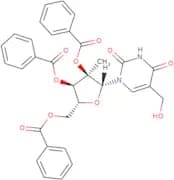
CAS:<p>2’,3’,5’-Tri-O-benzoyl-5-hydroxymethyl-2’C-methyluridine is an analogue of 5-hydroxymethyluridine. The 2’,3’,5’-tri-O-benzoyl group is used to protect the hydroxyl group and prevent oxidation. It has been shown to inhibit replication of DNA in vitro and in vivo against human leukemia cells. This product is synthesized by phosphoramidite chemistry from 2′,3′,5′triphosphate and 5′hydroxymethyluridine. The purity of this product is >99%.<br>2’,3’,5’-Tri-O-benzoyl-5-(hydroxymethyl)uridine can be used as a nucleoside or nucleotide analog for anticancer treatments or other therapeutic purposes.</p>Pureza:Min. 95%N4-Benzoyl-3'-deoxy-5'-O-DMT-cytidine
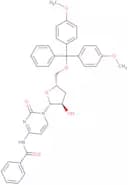
CAS:<p>N4-Benzoyl-3'-deoxy-5'-O-DMT-cytidine is a synthetic nucleoside that is used as an activator for DNA synthesis. It is also used in the preparation of diphosphate derivatives for use as antiviral and anticancer agents or as probes for DNA and RNA research. N4-Benzoyl-3'-deoxy-5'-O-DMT-cytidine is a novel, high purity, and high quality chemical with CAS No. 86234-45-9.</p>Fórmula:C37H35N3O7Pureza:Min. 95%Peso molecular:633.69 g/mol2'-Deoxy-2'-fluorocytidine-5'-triphosphate lithium salt - 100mM aqueous solution
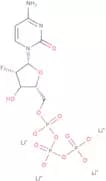
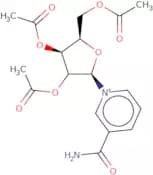
CAS:<p>2'-Deoxy-2'-fluorocytidine-5'-triphosphate lithium salt is a nucleoside that is used in the synthesis of DNA. 2'-Deoxy-2'-fluorocytidine-5'-triphosphate lithium salt is an antiviral, antineoplastic, and anticancer agent. It has been shown to be active against some strains of HIV and herpes viruses. 2'-Deoxy-2'-fluorocytidine-5'-triphosphate lithium salt also inhibits DNA polymerase and RNA polymerase, preventing viral replication and transcription.<br>The phosphate group on the 5' end of this molecule can be modified to produce phosphoramidites, diphosphates, or triphosphates.</p>Fórmula:C9H11FN3O13P3·Li4Pureza:Min. 95%Peso molecular:508.88 g/mol1-(2,3,5-Tri-O-acetyl-b-D-ribofuranosyl)nicotinamide
<p>1-(2,3,5-Tri-O-acetyl-b-D-ribofuranosyl)nicotinamide is a phosphoramidite that is used for the synthesis of DNA and RNA. It has antiviral and anticancer properties. This compound binds to DNA and inhibits the activity of topoisomerase II, which leads to cell death by inhibiting the production of proteins vital for cell division. 1-(2,3,5-Tri-O-acetyl-b-D-ribofuranosyl)nicotinamide also prevents the replication of viral RNA by inhibiting reverse transcriptase.</p>Fórmula:C17H21N2O8Pureza:Min. 95%Peso molecular:381.36 g/mol2-[(Benzo[b]thien-2-ylcarbonyl)amino]benzoic acid
CAS:<p>2-[(Benzo[b]thien-2-ylcarbonyl)amino]benzoic acid is a benzoic acid derivative for use in research</p>Fórmula:C16H11NO3SPureza:Min. 95%Cor e Forma:PowderPeso molecular:297.33 g/molKinetin riboside-5'-triphosphate sodium salt
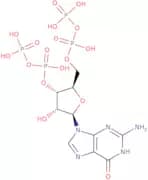
<p>Kinetin riboside-5'-triphosphate sodium salt is a novel antiviral. It is a modified ribonucleotide that inhibits DNA synthesis and has been shown to be effective against cancer cells in vitro. Kinetin riboside-5'-triphosphate sodium salt can also activate the immune system by inducing the production of cytokines, such as interleukin-2 (IL-2), which may have anticancer effects.</p>Pureza:Min. 95%Guanosine 3', 5'- bisdiphosphate lithium salt
CAS:<p>Regulates gene transcription; inhibits the synthesis of tRNA and rRNA</p>Fórmula:C10H17N5O17P4·xLiPureza:Min. 95%Peso molecular:603.16 g/mol5-Chloro-7-(2-C-methyl-b-D-ribofuranosyl)-7H-pyrrolo[2,3-d]pyrimidin-4-amine
CAS:<p>5-Chloro-7-(2-C-methyl-b-D-ribofuranosyl)-7H-pyrrolo[2,3-d]pyrimidin-4-amine is a novel nucleoside and phosphoramidite activator. It is synthesized from 2'-deoxyadenosine, 5'-chloropurine riboside, and 1,1'-bis(diisopropylphosphino)ferrocene. This compound has been shown to be an effective antiviral and anticancer agent in vitro.</p>Fórmula:C12H15ClN4O4Pureza:Min. 95%Peso molecular:314.72 g/mol7-b-D-Ribofuranosyl-7H- tetrazolo[5,1i]purine
CAS:<p>7-b-D-Ribofuranosyl-7H- tetrazolo[5,1i]purine is a novel modified ribonucleoside. It has the ability to activate DNA at the monophosphate level and can be used as a substrate for DNA polymerase and in the synthesis of deoxyribonucleosides. 7-b-D-Ribofuranosyl-7H- tetrazolo[5,1i]purine also has antiviral properties, which may be due to its inhibition of viral RNA synthesis. The compound is also used in anticancer treatment as it inhibits cellular proliferation by inhibiting DNA synthesis.</p>Pureza:Min. 95%1-(2’-Deoxy-2’-fluoro-b-D-arabinofuranosyl)-N3-(2S)-(2-amino-3-carbonyl]propyluracil
CAS:<p>1-(2’-Deoxy-2’-fluoro-β-D-arabinofuranosyl)-N3-(2S)-(2-amino-3-carbonyl]propyluracil is a novel, anticancer drug. It is active against both RNA and DNA viruses, such as HIV, influenza virus and herpes virus. 1-(2’-Deoxy-2’-fluoro-β-D-arabinofuranosyl)-N3-(2S)-(2-amino-3-carbonyl]propyluracil has been shown to be an activator for phosphoramidites in aqueous solution. This compound is of high purity with CAS No. 2072145–25–4. It is also a synthesized, monophosphate nucleoside that can be used in the production of modified nucleosides for therapeutic purposes or as antiviral agents</p>Pureza:Min. 95%2,8-Dimethyladenosine
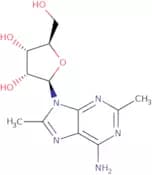
CAS:<p>2,8-Dimethyladenosine is a methylated derivative of the purine nucleoside adenosine, in which methyl groups are added at the 2-position and 8-position of the adenine base.</p>Fórmula:C12H17N5O4Pureza:Min. 95%Cor e Forma:White PowderPeso molecular:295.29 g/mol2,2'-Anhydrouridine
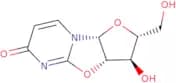
CAS:<p>The nucleophilic opening of 2,2'-Anhydrouridine represents a novel synthetic approach for elaborating the ring of nucleosides. For example, compounds such as 2-amino-, 2-fluoro- and 2-phenylseleno-2-deoxyuridines are prepared from the nucleophilic opening of 2,2'-Anhydrouridine.Â2,2'-Anhydrouridine inhibits uridine phosphorylase, a key enzyme targeted by some antitumor drugs.</p>Fórmula:C9H10N2O5Pureza:Min. 98 Area-%Cor e Forma:White Off-White PowderPeso molecular:226.19 g/mol





![2-[(Benzo[b]thien-2-ylcarbonyl)amino]benzoic acid](/_next/image/?url=https%3A%2Fstatic.cymitquimica.com%2Fproducts%2F3D%2Fthumb-webp%2FNB181580.webp&w=3840&q=75)

![5-Chloro-7-(2-C-methyl-b-D-ribofuranosyl)-7H-pyrrolo[2,3-d]pyrimidin-4-amine](/_next/image/?url=https%3A%2Fstatic.cymitquimica.com%2Fproducts%2F3D%2Fthumb-webp%2FNC14096.webp&w=3840&q=75)
![7-b-D-Ribofuranosyl-7H- tetrazolo[5,1i]purine](/_next/image/?url=https%3A%2Fstatic.cymitquimica.com%2Fproducts%2F3D%2Fthumb-webp%2FNR163016.webp&w=3840&q=75)
![1-(2’-Deoxy-2’-fluoro-b-D-arabinofuranosyl)-N3-(2S)-(2-amino-3-carbonyl]propyluracil](/_next/image/?url=https%3A%2Fstatic.cymitquimica.com%2Fproducts%2F3D%2Fthumb-webp%2FND162854.webp&w=3840&q=75)