Nucleosídeos
Os nucleosídeos são building blocks fundamentais dos ácidos nucleicos, compostos por uma base nitrogenada ligada a uma molécula de açúcar. Nesta seção, você encontrará uma ampla variedade de nucleosídeos essenciais para pesquisas em biologia molecular, bioquímica e farmacologia. Esses compostos desempenham papéis cruciais na síntese de DNA e RNA, e também são vitais em vários processos metabólicos. Os nucleosídeos são usados para estudar material genético, desenvolver terapias antivirais e anticancerígenas, e entender os mecanismos celulares. Na CymitQuimica, fornecemos nucleosídeos de alta qualidade para apoiar suas necessidades de pesquisa e desenvolvimento, garantindo pureza e confiabilidade para suas aplicações experimentais.
Foram encontrados 3569 produtos de "Nucleosídeos"
Ordenar por
Pureza (%)
0
100
|
0
|
50
|
90
|
95
|
100
3'-Azido-3'-deoxy-L-uridine
<p>3'-Azido-3'-deoxy-L-uridine is a nucleoside that is a modified form of uridine with an azide group. It has antiviral, anticancer, and novel properties. 3'-Azido-3'-deoxy-L-uridine is synthesized from the corresponding ribonucleosides and diphosphates in high purity and quality. This compound can be used as an antiviral agent in the treatment of AIDS and herpes. It also has anticancer activity, which may be due to its ability to inhibit DNA synthesis or to bind to DNA and induce oxidative stress. 3'-Azido-3'-deoxy-L-uridine is synthesized by the enzymatic conversion of uridines with a monophosphate group at the 3' position into nucleosides with an azide group at the 3' position.</p>Fórmula:C9H11N5O5Pureza:Min. 95%Peso molecular:269.21 g/mol2',5'-Dideoxyguanosine
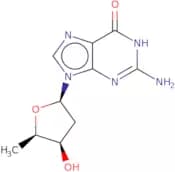
CAS:<p>2',5'-Dideoxyguanosine is a modified nucleoside analog of guanosine, one of the four natural nucleosides found in RNA and DNA. This synthetic molecule has hydroxyl groups removed from the 2' and 5' positions of the sugar component, which alters its ability to participate in nucleic acid synthesis.</p>Fórmula:C10H13N5O3Pureza:Min. 97 Area-%Cor e Forma:White PowderPeso molecular:251.25 g/mol1-(b-D-Xylofuranosyl)-2-thiouracil
CAS:<p>1-(b-D-Xylofuranosyl)-2-thiouracil is a synthetic nucleoside that inhibits viral and cancer cell growth. It is an analog of the natural nucleoside thymidine, with an extra oxygen atom at position 2. The molecule forms a monophosphate, which is converted to a diphosphate by phosphoramidate synthase. This diphosphate is then incorporated into DNA, where it inhibits the activity of DNA polymerase and deoxyribonucleases, leading to inhibition of DNA synthesis. 1-(b-D-Xylofuranosyl)-2-thiouracil also has antiviral properties as it can inhibit viral replication by blocking the incorporation of nucleotides into the growing DNA strand.</p>Fórmula:C9H12N2O5SPureza:Min. 95%Peso molecular:260.27 g/mol5-Amino-2’-deoxy-2’-O-methyluridine HCl
<p>5-Amino-2’-deoxy-2’-O-methyluridine HCl is a novel nucleoside analog that has been modified with an O-methyl group at the 5′ position of the ribose moiety. This modification inhibits phosphorylation by inhibiting DNA polymerase and thus, preventing DNA synthesis. 5-Amino-2’-deoxy-2’-O-methyluridine HCl has also been shown to inhibit viral replication by inhibiting viral RNA and protein synthesis, while not affecting human RNA and protein synthesis. 5AADMUT is an activator of diphosphate metabolism in cells which may be due to its ability to inhibit enzymes involved in nucleotide metabolism (e.g., adenosine kinase).</p>Pureza:Min. 95%N6-Benzoyl-2',3'-dideoxy-3'-N-DMT-adenosine
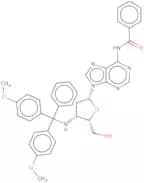
N6-Benzoyl-2',3'-dideoxy-3'-N-DMT-adenosine is a novel nucleoside that can be used as an antiviral agent. It is a phosphoramidite and has been shown to inhibit replication of HIV, HSV, and CMV. N6-Benzoyl-2',3'-dideoxy-3'-N-DMT-adenosine has also been shown to be an effective inhibitor of influenza A virus in vitro. This drug inhibits viral DNA synthesis by competing with natural nucleosides for incorporation into the viral DNA chain and by inhibiting viral DNA polymerase activity.Fórmula:C38H36N6O5Pureza:Min. 95%Peso molecular:656.75 g/mol2-Aminoadenosine
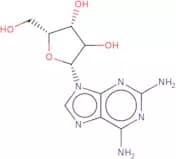
CAS:2-Aminoadenosine is a synthetic nucleoside analog of adenosine in which the purine base is 2,6-diaminopurine, featuring an additional amino group at the C2 position. This modification enhances hydrogen bonding potential and alters base-pairing specificity, allowing it to form three hydrogen bonds with uracil or thymine, in contrast to adenine's two. As a result, 2-aminoadenosine has been studied for its impact on nucleic acid stability, replication fidelity, and enzymatic recognition. It has also shown potential in antiviral and anticancer research due to its ability to disrupt normal RNA and DNA metabolism.Fórmula:C10H14N6O4Pureza:Min. 98 Area-%Cor e Forma:White PowderPeso molecular:282.26 g/mol2-Chloro-2'-deoxyadenosine 5'-triphosphate sodium salt
2-Chloro-2'-deoxyadenosine 5'-triphosphate sodium salt is a nucleoside that can be used in the synthesis of DNA and RNA. It is a synthetic, high quality, and novel compound that has been shown to have antiviral, anticancer, and anti-inflammatory properties. This compound has been shown to inhibit the growth of cancer cells by inhibiting the production of proteins vital for cell division. 2-Chloro-2'-deoxyadenosine 5'-triphosphate sodium salt has also been shown to be an activator of nucleoside phosphorylase and deoxynucleotide kinase, which are enzymes that catalyze the conversion of nucleosides into their corresponding monophosphates.Pureza:Min. 95%BBQ-650-DT CEP
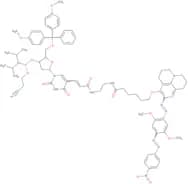
CAS:BBQ-650-DT CEP is an antiviral compound that is a phosphoramidite derivative of cytidine. BBQ-650-DT CEP has been shown to inhibit the replication of human immunodeficiency virus type 1 (HIV-1) and other retroviruses in vitro, and to inhibit tumor cell proliferation in vivo. BBQ-650-DT CEP also inhibits the synthesis of RNA and DNA, which may have anticancer properties. This compound has been shown to be active against leukemia cells, lymphoma cells, and various breast cancer cell lines. It has also been shown to induce apoptosis in leukemia cells.Fórmula:C76H89N12O15PPureza:Min. 95%Peso molecular:1,441.6 g/molN4-Benzoyl-5'-O-benzoyl-2'-O-tert-butyldimethylsilylcytidine 3'-CE phosphoramidite
N4-Benzoyl-5'-O-benzoyl-2'-O-tert-butyldimethylsilylcytidine 3'-CE phosphoramidite is a novel nucleoside that has been modified by the addition of a benzoyl group to the 5' position of the ribonucleotide moiety. N4-Benzoyl-5'-O-benzoyl-2'-O-tert-butyldimethylsilylcytidine 3'-CE phosphoramidite is an anticancer and antiviral agent that inhibits viral replication by competitive inhibition of DNA polymerase. N4-Benzoyl-5'-O-benzoyl -2'-O -tert -butyldimethylsilylcytidine 3'-CE phosphoramidite is active against HIV, herpes virus, and cytomegalovirus. This compound also inhibits the synthesisFórmula:C38H52N5O8PSiPureza:Min. 95%Peso molecular:765.93 g/mol5-Chloro-2-iodopyrimidine
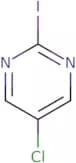
CAS:5-Chloro-2-iodopyrimidine is an organic molecule that belongs to the class of trifluoromethylated molecules. It was discovered by a team of chemists in 2006 and has been used as a reagent for the efficient trifluoromethylation of organic molecules. 5-Chloro-2-iodopyrimidine can be catalyzed with copper, which is responsible for its unique reactivity. The synthesis of this molecule has been shown to be efficient in organic chemistry. END>Fórmula:C4H2ClIN2Pureza:Min. 95%Cor e Forma:PowderPeso molecular:240.43 g/mol3’-b-C-Methyluridine
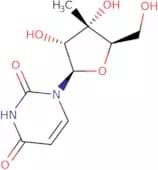
CAS:<p>3’-b-C-Methyluridine (3′-b-CMU) is an analog of uridine. It inhibits the activity of viral and bacterial nucleases by attacking the phosphate group. 3′-b-CMU inhibits syncytial formation in cell cultures, which may be due to its ability to inhibit RNA synthesis. This drug has a hydroxyl group that can react with free radicals and may have some inhibitory effect on deoxyribonucleoside triphosphate hydrolysis. 3′-b-CMU is not widely used clinically because it is not readily available, but it is being reinvestigated for use in corynebacterium infections.</p>Pureza:Min. 95%3'-O-Propargylcytidine
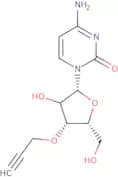
<p>3'-O-Propargylcytidine is a monophosphate nucleoside that belongs to the group of synthetic, novel nucleosides and deoxyribonucleosides. It is a modified form of cytidine with an extra methyl group attached to the 3' position of the ribose sugar. 3'-O-Propargylcytidine has been shown to inhibit cancer cells by binding to DNA and preventing transcription and replication. This compound also inhibits virus replication and has antiviral properties. 3'-O-Propargylcytidine is highly pure and high quality, which makes it a good candidate for use in pharmaceuticals or other applications requiring high purity.</p>Fórmula:C12H15N3O5Pureza:(%) Min. 97%Cor e Forma:PowderPeso molecular:281.26 g/mol5,6-Dichlorobenzimidazole-1-b-D-ribofuranoside
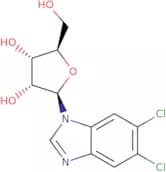
CAS:5,6-Dichlorobenzimidazole-1-b-D-ribofuranoside is a chemical compound that has been shown to be neurotoxic in vitro. It has significant cytotoxicity against human leukemia cells (HL60) and induces neuronal death. This drug also inhibits the production of neurotrophic factors, which are vital for the normal development of neurons. 5,6-Dichlorobenzimidazole-1-b-D-ribofuranoside inhibits transcriptional regulation of genes that encode for receptors and enzymes. The compound is chemically stable and does not degrade easily by hydrolysis or oxidation. It can bind to polymerase chain reaction (PCR) primers and inhibit DNA synthesis. 5,6-Dichlorobenzimidazole-1-b-D-ribofuranoside also affects cell nuclei by inhibiting DNA synthesis and enzyme activities.Fórmula:C12H12Cl2N2O4Pureza:Min. 98 Area-%Cor e Forma:White PowderPeso molecular:319.15 g/molN4-Benzoyl-5-methylcytidine
CAS:N4-Benzoyl-5-methylcytidine is a labile chemical that can be uniquely prepared using biochimie. It has been shown to have anticodon activity in assays and is synthesized chemically. The nucleoside is phosphoramidite, which is methylated and reproducible. N4-Benzoyl-5-methylcytidine has been shown to inhibit the growth of cells by blocking the synthesis of purines and pyrimidines. It may also have biophysical properties that are related to its ability to bind to DNA.Fórmula:C17H19N3O6Pureza:Min. 95%Cor e Forma:PowderPeso molecular:361.35 g/mol2'-C-Methyl-6-S-methyl-6-thioinosine
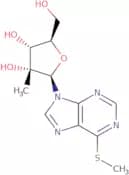
CAS:<p>2'-C-Methyl-6-S-methyl-6-thioinosine is a modified nucleoside that can be used as an antiviral and anticancer agent. It has been shown to activate the immune system by inducing cytokine production, which leads to increased cytotoxicity against tumor cells. 2'-C-Methyl-6-S-methyl-6-thioinosine has also been shown to inhibit DNA synthesis and induce apoptosis in cancer cells. This product is of high purity and quality, with a CAS number of 172722-76-8.</p>Pureza:Min. 95%2'-C-Methyladenosine 5'-triphosphate triethyl ammonium salt - Aqueous solution
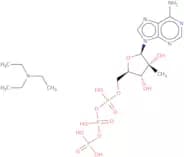
CAS:<p>2'-C-Methyladenosine 5'-triphosphate triethyl ammonium salt is a synthetic nucleotide analog of adenosine triphosphate (ATP), modified at the 2'-carbon of the ribose ring. This molecule has potential applications in biochemical, enzymatic, and antiviral research, particularly in studies involving RNA synthesis and viral RNA polymerases.</p>Fórmula:C35H79N9O13P3Pureza:Min. 95%Cor e Forma:Colorless PowderPeso molecular:926.98 g/mol2’,3’,5’-Tri-O-benzoyl-5-hydroxymethyl-2’C-methyluridine
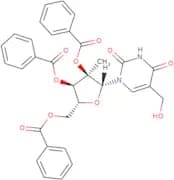
CAS:2’,3’,5’-Tri-O-benzoyl-5-hydroxymethyl-2’C-methyluridine is an analogue of 5-hydroxymethyluridine. The 2’,3’,5’-tri-O-benzoyl group is used to protect the hydroxyl group and prevent oxidation. It has been shown to inhibit replication of DNA in vitro and in vivo against human leukemia cells. This product is synthesized by phosphoramidite chemistry from 2′,3′,5′triphosphate and 5′hydroxymethyluridine. The purity of this product is >99%. 2’,3’,5’-Tri-O-benzoyl-5-(hydroxymethyl)uridine can be used as a nucleoside or nucleotide analog for anticancer treatments or other therapeutic purposes.Pureza:Min. 95%Cytidine 5'-diphosphate disodium salt
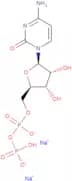
CAS:Cytidine 5'-diphosphate disodium salt (CDP) is a monophosphate nucleotide that is an antiviral agent and an anticancer drug. CDP inhibits viral replication by inhibiting the synthesis of DNA, RNA, and proteins. It has been shown to be effective against herpes virus, vaccinia virus, Newcastle disease virus, and influenza A virus. CDP also has anti-cancer effects as it inhibits the growth of various tumor cells in vivo and in vitro. This drug is a phosphoramidite nucleoside that can be used for the modification of other nucleosides or as an activator for DNA synthesis.Fórmula:C9H13N3O11P2·Na2Pureza:Min. 90.0 Area-%Cor e Forma:White PowderPeso molecular:447.14 g/mol1-(2,3,5-Tri-O-acetyl-b-D-ribofuranosyl)nicotinamide
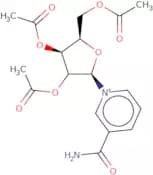
<p>1-(2,3,5-Tri-O-acetyl-b-D-ribofuranosyl)nicotinamide is a phosphoramidite that is used for the synthesis of DNA and RNA. It has antiviral and anticancer properties. This compound binds to DNA and inhibits the activity of topoisomerase II, which leads to cell death by inhibiting the production of proteins vital for cell division. 1-(2,3,5-Tri-O-acetyl-b-D-ribofuranosyl)nicotinamide also prevents the replication of viral RNA by inhibiting reverse transcriptase.</p>Fórmula:C17H21N2O8Pureza:Min. 95%Peso molecular:381.36 g/mol2'-O-Acetyl-3'-deoxy-3'-fluoro-5-methoxy-5'-O-toluoyluridine
CAS:2'-O-Acetyl-3'-deoxy-3'-fluoro-5-methoxy-5'-O-toluoyluridine is a modified nucleoside that has antiviral, anticancer and antimalarial activities. This compound has been synthesized as a monophosphate derivative of the natural nucleoside uridine. It is an activator of DNA polymerase, which helps to synthesize DNA in cells. 2'-O-Acetyl-3'-deoxy-3'-fluoro-5-methoxy-5'-O-toluoyluridine also has anticancer activity due to its ability to inhibit the replication of the human tumor virus KSHV.Pureza:Min. 95%