Nucleosídeos
Foram encontrados 3569 produtos de "Nucleosídeos"
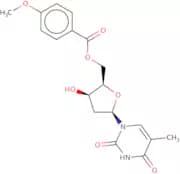
5'-O-p-Anisoylthymidine
5'-O-p-Anisoylthymidine is a novel activator and ribonucleoside that has been synthesized by modifying the structure of thymidine. This compound is active against cancer and antiviral, such as herpes simplex virus type 1, herpes simplex virus type 2, varicella zoster virus, influenza A/PR/8/34 (H1N1), and influenza B/Yamagata/16/88. 5'-O-p-Anisoylthymidine activates viral transcription in cells infected with these viruses by inhibiting the synthesis of deoxyribonucleosides. It also inhibits DNA synthesis by inhibiting the incorporation of deoxyribonucleotides into DNA during replication. This product is CAS No. 138581-03-2 and comes in high purity and high quality.Fórmula:C18H20N2O7Pureza:Min. 95%Peso molecular:376.36 g/mol2'-Deoxy-5-methyl-isocytidine triphosphate
2'-Deoxy-5-methyl-isocytidine triphosphate (2'-DMI-dTP) is a novel nucleoside that is synthesized by phosphoramidite chemistry. 2'-DMI-dTP has antiviral and anticancer activities, and can be used for the treatment of hepatitis B virus (HBV) and human papillomavirus (HPV). It has shown protective effects in animal models of HBV infection. 2'-DMI-dTP inhibits HBV replication by inhibiting DNA synthesis. In addition, it decreases levels of reactive oxygen species in cells treated with HBV. 2'-DMI-dTP also inhibits HPV replication through inhibition of DNA synthesis, which may lead to cancer prevention or treatment. 2'-DMI-dTP may be a useful drug candidate for the treatment of other viral infections such as influenza A virus and HIV type 1.Pureza:Min. 95%5-(2-Fluorovinyl)-2'-Deoxyuridine
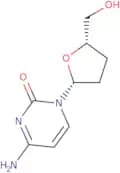
CAS:5-(2-Fluorovinyl)-2'-Deoxyuridine is a hydrophobic analogue of acyclovir that has potent activity against herpes simplex virus type 1. It inhibits the synthesis of viral DNA, and thus prevents the formation of plaques in tissue culture. This drug also inhibits cell proliferation and viral production by l1210 cells as well as lung fibroblasts. 5-(2-Fluorovinyl)-2'-Deoxyuridine has shown inhibitory effects against uninfected cells, but not against cells infected with herpes simplex virus type 2.Fórmula:C11H13FN2O5Pureza:Min. 95%Peso molecular:272.23 g/mol2',3'-Dideoxycytidine
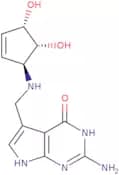
CAS:Anti-viral; reverse transcriptase inhibitorFórmula:C9H13N3O3Pureza:Min. 98 Area-%Cor e Forma:White PowderPeso molecular:211.22 g/molQueuine hydrochloride
CAS:Queuine is a modified nucleoside found in tRNA. It is synthesized from guanosine by the enzyme queuine tRNA-ribosyltransferase, which converts guanosine to queuosine. Queuine hydrochloride is a synthetic form of queuine that can be used for research purposes to examine the anticodon loop and other structural features of the molecule. The prokaryotic and eukaryotic organisms studied showed different levels of synthesis of queuine, with bacteria synthesizing more than mammals. Bacteria were found to have a greater affinity for queuine than eukaryotes, which may be due to modification of the trna anticodon loop or to differences in ribosomal proteins.Fórmula:C12H15N5O3·HClPureza:(%) Min. 90%Cor e Forma:Light (Or Pale) Beige To Light (Or Pale) Purple SolidPeso molecular:313.74 g/mol3'-b-Azido-2',3'-dideoxy-5'-O-DMT-uridine
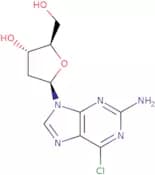
3'-b-Azido-2',3'-dideoxy-5'-O-DMT-uridine is a modified nucleoside that is synthesized by the phosphoramidite method. It is a novel antiviral drug with anticancer properties. This active compound has been shown to be an activator of ribonucleotide reductases, which are enzymes that catalyze the conversion of ribonucleotides to deoxyribonucleotides. 3'-b-Azido-2',3'-dideoxy-5'-O-DMT-uridine is not cytotoxic at concentrations up to 40 mM, and it has been shown to inhibit replication of human immunodeficiency virus type 1 (HIV) in tissue culture.Pureza:Min. 95%2-Amino-6-chloro-9-(2'-deoxy-b-D-ribofuranosyl)purine
CAS:2-Amino-6-chloro-9-(2'-deoxy-b-D-ribofuranosyl)purine is a purine nucleoside where the purine base has a 2-amino group at position 2 and a chlorine at position 6. The sugar is 2'-deoxy, meaning it is like the sugar found in DNA, lacking the 2'-hydroxyl group that is present in RNA. The amino and chloro groups on the purine base modify how this molecule behaves in biological systems making it useful in research applications.Fórmula:C10H12ClN5O3Pureza:Min. 97 Area-%Cor e Forma:White PowderPeso molecular:285.69 g/mol5’(R)-C-Methyladenosine
CAS:5’(R)-C-Methyladenosine is a nucleoside that is used as an antiviral and anticancer agent. It has been shown to inhibit the replication of the human immunodeficiency virus type 1 (HIV-1) in a dose-dependent manner, with an IC50 value of about 0.4 μM for HIV-1 reverse transcriptase activity. In addition, 5’(R)-C-Methyladenosine has been shown to inhibit DNA synthesis and promote apoptosis in cancer cells by inhibiting transcription and translation. The compound also inhibits the growth of tumor cells in mice without affecting normal tissue growth.
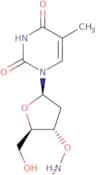
Pureza:Min. 95%3'-O-Aminothymidine
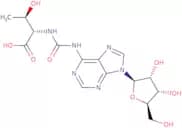
CAS:3'-O-Aminothymidine is an isomer of thymidine, a nucleoside that is found in DNA and RNA. It has a neutral charge and belongs to the category of nucleosides. 3'-O-Aminothymidine is synthesized by the coupling of an amino group with a hydroxyl group. This reaction is efficient and can be used to produce dimers. 3'-O-Aminothymidine can also be used as a precursor for other nucleotides or as a synthetic intermediate in other chemical reactions.Fórmula:C10H15N3O5Pureza:Min. 95%Cor e Forma:PowderPeso molecular:257.24 g/molN6-Carbamoylthreonyladenosine sodium salt
CAS:N6-Carbamoylthreonyladenosine sodium salt is a fatty acid that is found in the bacterial cell wall. It has been shown to be an essential component of the cell wall for Gram-positive and Gram-negative bacteria. N6-Carbamoylthreonyladenosine sodium salt has been used to study the mechanism of protein synthesis in bacteria, especially how enzymes are involved in this process. Chemical biology studies have shown that this molecule can bind to DNA and inhibit bacterial growth. The crystal structure of N6-Carbamoylthreonyladenosine sodium salt has also been determined using x-ray diffraction data. This molecule inhibits the binding of proteins to DNA, which prevents transcription and replication. The reaction mechanism involves hydrogen bonding between the oxygen atoms on N6-Carbamoylthreonyladenosine sodium salt and divalent metal ions such as magnesium or zinc, which are required for protein synthesis.Fórmula:C15H19N6O8·NaPureza:Min. 98 Area-%Cor e Forma:White PowderPeso molecular:434.34 g/mol1-(2R,3R,4R,5R)-3-Hydroxy-5-(hydroxymethyl)-4-methoxytetra hydrofuran-2-yl)-5-methylpyrimidine-2,4(1H,3H)-dione
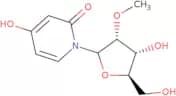
1-(2R,3R,4R,5R)-3-Hydroxy-5-(hydroxymethyl)-4-methoxytetra hydrofuran-2-yl)-5-methylpyrimidine-2,4(1H,3H)-dione is a nucleoside that is a novel anticancer drug. It has been shown to have potent antineoplastic activity in vitro and in vivo. This compound is an activator of the p53 tumor suppressor gene and may also act as a transcriptional inhibitor of NF-κB.Pureza:Min. 95%3-Deaza-2'-O-methyluridine
CAS:3-Deaza-2'-O-methyluridine is a nucleoside that is used as an antiviral agent and in the treatment of leukemia. It has been shown to inhibit the growth of L1210 cells in a dose-dependent manner. 3-Deaza-2'-O-methyluridine also inhibits the synthesis of DNA, RNA, and proteins. The compound is eliminated by renal excretion with a plasma elimination half life of 9 hours. This drug can be administered intramuscularly or intravenously at a dosage of 10 mg/kg every 8 hours, but should not be given more than 5 days without interruption due to accumulation in tissues.
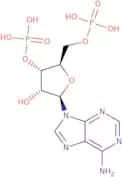
Fórmula:C11H15NO6Pureza:Min. 95%Peso molecular:257.24 g/molAdenosine 3',5'-bisphosphate triethylammonium salt - 10mM aqueous solution
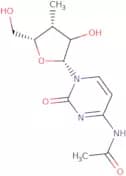
CAS:Adenosine 3',5'-bisphosphate triethylammonium salt is a metabolite of adenosine and an ester of triethylamine. The conjugate acid has been isolated from mouse urine. It is a metabolite of adenosine in the liver and is hydrolyzed to adenosine monophosphate and bisphosphate. Adenosine 3',5'-bisphosphate triethylammonium salt is used to study the metabolism of adenosine in mice. It has also been shown that this metabolite can inhibit the growth of E. coli (a bacterium) and mouse erythrocyte mitochondria by blocking ATP synthesis at the level of substrate-level phosphorylation.Fórmula:C10H15N5O10P2•(C6H15N)xPureza:Min. 95%Peso molecular:427.2 g/molN4-Acetyl-3'-deoxy-3'-C-methylcytidine
N4-Acetyl-3'-deoxy-3'-C-methylcytidine is a novel antiviral drug that is modified from cytidine. It is an activator of the monophosphate pathway of DNA synthesis, which causes the incorporation of N4-acetyl-3'-deoxy-3'-C-methylcytidine into ribonucleosides and deoxyribonucleosides. This compound has been shown to be active against a variety of cancers, including leukemia, colon cancer, breast cancer, and prostate cancer.Fórmula:C12H17N3O5Pureza:Min. 95%Peso molecular:283.28 g/mol3-Acetylpyridine adenine dinucleotide
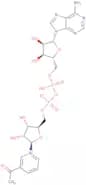
CAS:A non-physiological analog of nicotinamide adenine dinucleotide (NAD+) in biochemical research, particularly as a tool to study the mechanisms of NAD+-dependent enzymes.Fórmula:C22H28N6O14P2Pureza:Min. 92 Area-%Cor e Forma:White Off-White PowderPeso molecular:662.44 g/mol7-Deaza-2'-C-methyladenosine
CAS:7-Deaza-2'-C-methyladenosine (7DMA) is an antiviral agent that has shown anti-Hepatitis C virus activity in vitro. 7DMA inhibits the binding of a number of compounds to the viral RNA polymerase and blocks mRNA synthesis, leading to inhibition of viral replication. This drug also binds to the Toll-like receptor 3, which is involved in the immune response against hepatitis. 7DMA has been shown to have a pharmacokinetic profile suitable for use as an antiviral agent. However, it does not show any significant pharmacokinetic properties in vivo and needs further study.Fórmula:C12H16N4O4Pureza:Min. 97.0 Area-%Peso molecular:280.28 g/molRef: 3D-W-202771
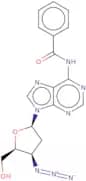
-Unit-ggA consultar1gA consultar50mgA consultar100mgA consultar250mgA consultar500mgA consultar3'-Azido-N6-benzoyl-2',3'-dideoxyadenosine
CAS:3'-Azido-N6-benzoyl-2',3'-dideoxyadenosine is an antiviral drug that inhibits the synthesis of viral DNA and RNA. This antiviral drug is a novel synthetic nucleoside analogue that is phosphorylated to form monophosphate, which inhibits the synthesis of RNA. 3'-Azido-N6-benzoyl-2',3'-dideoxyadenosine has been shown to be effective against cancer cells by inhibiting ribonucleotide reductase and DNA synthesis. 3'-Azido-N6-benzoyl-2',3'-dideoxyadenosine also inhibits DNA synthesis by blocking the enzymes DNA polymerase and deoxyribonucleoside kinase.Fórmula:C17H16N8O3Pureza:Min. 95%Cor e Forma:PowderPeso molecular:380.36 g/mol3'-O-Propargylcytidine
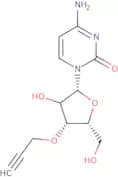
3'-O-Propargylcytidine is a monophosphate nucleoside that belongs to the group of synthetic, novel nucleosides and deoxyribonucleosides. It is a modified form of cytidine with an extra methyl group attached to the 3' position of the ribose sugar. 3'-O-Propargylcytidine has been shown to inhibit cancer cells by binding to DNA and preventing transcription and replication. This compound also inhibits virus replication and has antiviral properties. 3'-O-Propargylcytidine is highly pure and high quality, which makes it a good candidate for use in pharmaceuticals or other applications requiring high purity.
Fórmula:C12H15N3O5Pureza:(%) Min. 97%Cor e Forma:PowderPeso molecular:281.26 g/molGuanosine 3',5'-cyclic monophosphate
CAS:Guanosine 3',5'-cyclic monophosphate (cGMP) is a nucleotide that functions as a second messenger in the cell. It is involved in many cellular processes, including mitochondrial functions and energy metabolism. cGMP is synthesized from guanosine triphosphate (GTP) by the enzyme guanine nucleotide-binding protein, which hydrolyzes the phosphate group from GTP to form cGMP. cGMP has been shown to be involved in neuronal death, axonal growth, and glucose uptake in cells. Optimum concentrations of cGMP have been found to be between 1-10 μM. It has also been shown to be an important mediator of cyclic axonal growth and bowel disease. Guanosine 3',5'-cyclic monophosphate can also act as a polymerase chain reaction primer for DNA amplification in vitro.Fórmula:C10H12N5O7PPureza:Min. 98 Area-%Cor e Forma:White PowderPeso molecular:345.21 g/mol5-O-Benzoyl-1,2-O-isopropylidene-3-O-methyl-a-D-xylofuranose
5-O-Benzoyl-1,2-O-isopropylidene-3-O-methyl-a-D-xylofuranose is a modified nucleoside that belongs to the category of deoxyribonucleosides. It is an antiviral agent that has been shown to be active against Herpes simplex virus type 1. 5-O-Benzoyl-1,2,3,4,5,6 -hexahydrobenzo[e]pyrazine (BENZOPYR) is a potent activator of DNA synthesis and phosphorylation in mammalian cells. The modification of this nucleoside allows for its use as a monophosphate in the synthesis of DNA or RNA. 5ODAP is also used as a substrate for phosphoramidite chemistry in the preparation of oligodeoxynucleotides for use in DNA sequencing and other biotechnological applications.Pureza:Min. 95%