


Nucleosídeos
Os nucleosídeos são building blocks fundamentais dos ácidos nucleicos, compostos por uma base nitrogenada ligada a uma molécula de açúcar. Nesta seção, você encontrará uma ampla variedade de nucleosídeos essenciais para pesquisas em biologia molecular, bioquímica e farmacologia. Esses compostos desempenham papéis cruciais na síntese de DNA e RNA, e também são vitais em vários processos metabólicos. Os nucleosídeos são usados para estudar material genético, desenvolver terapias antivirais e anticancerígenas, e entender os mecanismos celulares. Na CymitQuimica, fornecemos nucleosídeos de alta qualidade para apoiar suas necessidades de pesquisa e desenvolvimento, garantindo pureza e confiabilidade para suas aplicações experimentais.
Foram encontrados 3567 produtos de "Nucleosídeos"
Ordenar por
Pureza (%)
0
100
|
0
|
50
|
90
|
95
|
100
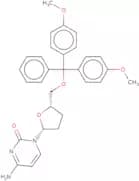
2',3'-Dideoxy-5'-O-DMT-cytidine
CAS:<p>2',3'-Dideoxy-5'-O-DMT-cytidine is a chemically modified cytidine nucleoside which can be used in synthetic chemistry, especially in nucleic acid synthesis. A dimethoxytrityl (DMT) protecting group is attached to the 5'-oxygen of the sugar. This is not biologically active, but it’s commonly used in solid-phase oligonucleotide synthesis to protect the 5' end during step-by-step DNA or RNA construction.</p>Fórmula:C30H31N3O5Pureza:Min. 95%Cor e Forma:PowderPeso molecular:513.6 g/molDMT-2'-OMe-pseudouridine phosphoramidite
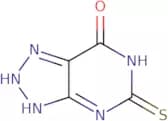
<p>DMT-2'-OMe-pseudouridine phosphoramidite is an antiviral, anticancer, and DNA synthesis inhibitor. It has been used in the synthesis of oligonucleotide probes for sequencing and hybridization studies. DMT-2'-OMe-pseudouridine phosphoramidite is a modified nucleoside that is used as a building block for the synthesis of DNA. This compound is synthesized from 2'-deoxy-5-methyluridine and dimethoxytrityl chloride. DMT-2'-OMe-pseudouridine phosphoramidite inhibits the synthesis of RNA and DNA by binding to ribonucleotides and deoxyribonucleotides during the polymerization reaction, thereby blocking the progression of the reaction.</p>Pureza:Min. 95%8-Aza-6-hydroxy-2-mercaptopurine
CAS:<p>8-Aza-6-hydroxy-2-mercaptopurine (8AzaMP) is a novel nucleoside analog that is an activator of the thymidylate synthase enzyme. It has been shown to inhibit the replication of many DNA viruses and to inhibit tumor growth in animal models. 8AZA MP has been evaluated in Phase I and II clinical trials for the treatment of various cancers, including malignant melanoma, renal cell carcinoma, and chronic lymphocytic leukemia. This drug has also shown promise as a chemotherapeutic agent for AIDS patients with HIV infection or AIDS-related complex.</p>Fórmula:C4H3N5OSPureza:Min. 95%Cor e Forma:PowderPeso molecular:169.17 g/mol5-(Azidomethyl)-2’-O-(2-methoxyethyl)uridine
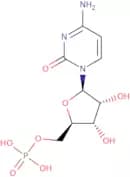
CAS:<p>5-(Azidomethyl)-2’-O-(2-methoxyethyl)uridine is a novel, modified nucleoside with anticancer and antiviral properties. It is synthesized from 2’-deoxyadenosine 5’-monophosphate (dAMP) and 5-bromo-2’-chloroacetamidofluoromethane (BAF). This product has been shown to inhibit the proliferation of cancer cells in vitro. It also inhibits the synthesis of viral DNA and RNA, which may contribute to its antiviral effects.</p>Fórmula:C13H19N5O7Pureza:Min. 95%Peso molecular:357.32 g/molCytidine 5'-monophosphate free acid
CAS:<p>Cytidine 5'-monophosphate is a nucleotide that is important in the synthesis of DNA and RNA. It is a precursor to uridine monophosphate (UMP) and uridylic acid (UDP). Cytidine 5'-monophosphate has been found to inhibit the growth of antibiotic-resistant strains of bacteria, such as those resistant to ampicillin, chloramphenicol, tetracycline, kanamycin, and streptomycin. Cytidine 5'-monophosphate also has inhibitory properties against energy metabolism and protein oxidation in bowel disease. This nucleotide has been shown to increase the rate constant for polymerase chain reaction (PCR) by up to 10-fold.</p>Fórmula:C9H14N3O8PPureza:Min. 98 Area-%Cor e Forma:White Off-White PowderPeso molecular:323.2 g/molN6-Acetyladenosine
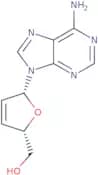
CAS:<p>N6-Acetyladenosine is a nucleoside that belongs to the group of N-acetylated adenosines. It is found in thermophilic organisms and has been shown to be involved in optimal growth. N6-Acetyladenosine has also been found to be an important part of the coding and population modifications of crenarchaeota, archaeal organisms that are phylogenetically related to methanogens. Unfractionated populations of methanogen contain both N6-acetyladenosine residues and other modified adenosines, with each organism differing in the types of modifications they contain. Transfer of these modified adenosines from one organism to another can lead to changes in their coding and population modifications.</p>Fórmula:C12H15N5O5Pureza:Area-% Min. 90 Area-%Cor e Forma:White PowderPeso molecular:309.28 g/mol2',3'-Dideoxy-2',3'-didehydroadenosine
CAS:<p>2′,3′-Dideoxy-2′,3′-didehydroadenosine, abbreviated to d4A, is a synthetic purine nucleoside analog. Possible applications are its use to study antiviral activity.</p>Fórmula:C10H11N5O2Pureza:Min. 95%Cor e Forma:Off-White PowderPeso molecular:233.23 g/mol3'-Azido-3'-deoxy-b-L-cytidine
CAS:<p>3'-Azido-3'-deoxy-b-L-cytidine is a novel nucleoside that has been shown to be an activator of the ribonuclease activity of purified RNase A in vitro. This product is suitable for use in synthesis of oligodeoxynucleotides and phosphoramidites. 3'-Azido-3'-deoxy-b-L-cytidine can be used as a potential anticancer drug or antiviral agent.</p>Pureza:Min. 95%5'-Amino-5'-deoxy-2'-O-methyluridine
<p>5'-Amino-5'-deoxy-2'-O-methyluridine is a novel nucleoside analog with antiviral and anticancer properties. 5'-Amino-5'-deoxy-2'-O-methyluridine is an activator of the immune system, which may be due to its ability to inhibit DNA synthesis by inhibiting ribonucleotide reductase and DNA polymerase. This drug has shown activity against a variety of human tumor cell lines in vitro and in vivo. 5'-Amino-5'-deoxy-2'-O-methyluridine also inhibits the growth of several bacterial strains, including methicillin resistant Staphylococcus aureus (MRSA) and Mycobacterium avium complex.</p>Pureza:Min. 95%N2,2'-O-Dimethylguanosine
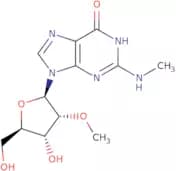
CAS:<p>N2,2'-O-Dimethylguanosine is a nucleoside that belongs to the category of modified bases. It is synthesized from adenosine and a methyl group by a mutant strain of Escherichia coli. N2,2'-O-Dimethylguanosine can be identified by its characteristic UV-visible spectrum and high retention time on chromatographic columns. It has been shown to inhibit translation in E. coli at concentrations as low as 1 mM and also inhibits growth rate at concentrations as low as 2 mM. The chemical structure of this compound is similar to that of guanosine, but it contains an extra methyl group on its 2' carbon atom. This chemical modification may result in changes in the way the molecule interacts with other molecules or how it functions in the cell. <br>N2,2'-O-Dimethylguanosine was first identified from a mutant strain of Escherichia coli that had been subjected to mutagenesis</p>Fórmula:C12H17N5O5Pureza:Min. 95%Peso molecular:311.29 g/mol2'-Deoxy-5'-O-DMT-2'-fluorouridine 3'-CE phosphoramidite
CAS:<p>2'-Deoxy-5'-O-DMT-2'-fluorouridine 3'-CE phosphoramidite is a nucleotide that is used in the synthesis of DNA. It is an organic compound consisting of a molecule with a phosphate group at one end and a ribose sugar at the other. 2'-Deoxy-5'-O-DMT-2'-fluorouridine 3'-CE phosphoramidite is synthesized on a solid support by reacting nucleophilic reagents with the ribonucleoside. This drug has antineoplastic effects, inhibiting cancer cell growth by interfering with the production of ribonucleic acid (RNA) and protein synthesis. Hydrolysis of this drug releases fluorouracil, which inhibits thymidylate synthase, preventing the conversion of dUMP to dTMP, and thus blocking DNA synthesis.</p>Fórmula:C39H46FN4O8PPureza:Min. 98 Area-%Cor e Forma:PowderPeso molecular:748.78 g/molN6,N6,2'-O-Trimethyladenosine
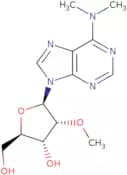
CAS:<p>N6,N6,2'-O-Trimethyladenosine is a nucleoside that is found in small quantities in human tissues. It is synthesized by the enzyme polymerase from adenosine and S-adenosyl-L-methionine. N6,N6,2'-O-Trimethyladenosine is structurally similar to guanosine and cytidine and can be modified by nature or synthetic strategies. N6,N6,2'-O-Trimethyladenosine has been shown to have effects on fertility and may be involved in epigenetics as well as tuberculosis. Its role as an epigenetic marker for gene regulation has not been fully determined.</p>Fórmula:C13H19N5O4Pureza:Min. 88 Area-%Cor e Forma:White PowderPeso molecular:309.32 g/mol4’,5’-Didehydro-2’-O-(2-methoxyethyl)-5-methyluridine
CAS:<p>4’,5’-Didehydro-2’-O-(2-methoxyethyl)-5-methyluridine (DdeO) is a novel phosphoramidite that is synthesized from 2’,3’-dideoxycytidine. It is used in DNA synthesis and as an antiviral and anticancer agent. DdeO has shown to be a potent activator of the p53 tumor suppressor gene and inhibits the proliferation of human cancer cells by inhibiting the activity of DNA polymerase alpha. DdeO also inhibits viral replication by interfering with viral DNA synthesis.</p>Pureza:Min. 95%3’-Azido-3’-deoxyguanosine
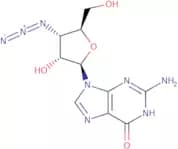
CAS:<p>Please enquire for more information about 3’-Azido-3’-deoxyguanosine including the price, delivery time and more detailed product information at the technical inquiry form on this page</p>Fórmula:C10H12N8O4Pureza:Min. 95%Peso molecular:308.098152'-Deoxy-2'-fluoro-5-methyluridine
CAS:<p>2'-Deoxy-2'-fluoro-5-methyluridine is a nucleoside analog that is a modified version of uridine, where the sugar (deoxyribose) has a fluoro modification at the 2' position and a methyl group is attached at the 5' position of the uracil base.</p>Fórmula:C10H13FN2O5Pureza:Min. 95%Cor e Forma:White PowderPeso molecular:260.22 g/mol4’-Cyanouridine
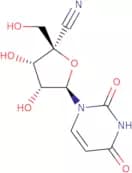
CAS:<p>4’-Cyanouridine is a nucleoside that is used in the synthesis of DNA and RNA. It is often used as a precursor in the production of phosphoramidites and nucleosides, which are important for DNA synthesis. 4’-Cyanouridine can be used to inhibit viral replication by blocking the activity of reverse transcriptase, an enzyme required for the synthesis of viral DNA. 4’-Cyanouridine can also be used to treat cancer cells by preventing the growth of cells. This compound has been shown to activate RNA polymerase II, which is required for protein synthesis and cell division. The high purity and novel nature of this product make it ideal for use in research laboratories or other specialized settings where high quality products are required.</p>Pureza:Min. 95%2',5'-Dideoxyuridine
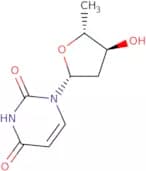
CAS:<p>2',5'-Dideoxyuridine is a synthetic nucleoside analog derived from uridine, one of the four standard nucleosides found in RNA. It is chemically modified by the removal of hydroxyl (–OH) groups at the 2' and 5' positions of the sugar, altering its ability to participate in RNA or DNA chain formation.</p>Fórmula:C9H12N2O4Pureza:Min. 95%Cor e Forma:White To Off-White SolidPeso molecular:212.21 g/molGuanosine 5'-diphosphate disodium salt
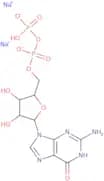
CAS:<p>Guanosine 5'-diphosphate (GDP) disodium salt is a nucleoside dipsphate and a pyruvate kinase substrate, which converts GDP to GTP.</p>Fórmula:C10H13N5Na2O11P2Pureza:Min. 90.0 Area-%Peso molecular:487.16 g/mol1', 2', 3', 4', 5'- ¹³C5-Adenosine
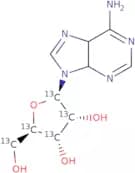
CAS:<p>1', 2', 3', 4', 5'- ¹³C5-Adenosine is adenosine which has all five carbon atoms of the ribose sugar replaced with the stable isotope carbon-13 (^13C). Possible applications are in proteomics studies.</p>Fórmula:C5C5H13N5O4Pureza:Min. 97 Area-%Cor e Forma:White PowderPeso molecular:272.2 g/mol1-(2’-Deoxy-2’-fluoro--b-D-arabinofuranosyl)-N3-(2S)-[2-(t-butoxycarbonyl)-amino-3-carbonyl]propyluracil
CAS:<p>1-(2’-Deoxy-2’-fluoro--b-D-arabinofuranosyl)-N3-(2S)-[2-(t-butoxycarbonyl)-amino-3-carbonyl]propyluracil is a nucleoside phosphoramidite. It has been shown to be active against viruses and cancer cells in vitro. This product is synthesized by our team of chemists from high quality raw materials, and it is made available at very competitive prices.</p>Pureza:Min. 95%









![1-(2’-Deoxy-2’-fluoro--b-D-arabinofuranosyl)-N3-(2S)-[2-(t-butoxycarbonyl)-amino-3-carbonyl]propyl…](/_next/image/?url=https%3A%2Fstatic.cymitquimica.com%2Fproducts%2F3D%2Fthumb-webp%2FND162852.webp&w=3840&q=75)