Nucleosídeos
Foram encontrados 3569 produtos de "Nucleosídeos"
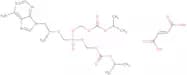
Tenofovir disoproxil fumarate
CAS:Anti-viral; reverse transcriptase inhibitor
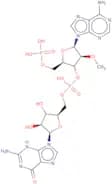
Fórmula:C23H34N5O14PPureza:Min. 97.5 Area-%Cor e Forma:White Off-White PowderPeso molecular:635.52 g/mol(2’OMe-5’P-A)pG
CAS:A nucleoside product for research purposes
Fórmula:C39H73N13O14P2Peso molecular:1,010.02 g/mol2'-Deoxyuridine-5'-diphosphate triethylammonium, 10 mM aqueous solution
CAS:a deoxynucleotide diphosphate
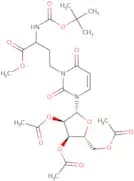
Fórmula:C9H14N2O11P2•C6H15NPeso molecular:489.35 g/mol3N’-Boc-α-(aminoacetyl)propyl-N-2’,3’,5’-tri-O-acetyluridine
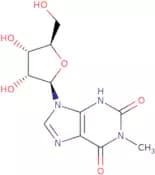
Based functionalised uridineFórmula:C25H35N3O13Peso molecular:585.56 g/mol1-Methylxanthosine
CAS:Produto Controlado1-Methylxanthosine is a caffeine derivative that was first isolated from xanthosine in 1887. It is an acidic compound and has been shown to have antiinflammatory effects, which may be due to its inhibition of prostaglandin synthesis. 1-Methylxanthosine has also been shown to have anticarcinogenic properties, possibly through the inhibition of the enzyme nitrous oxide synthase.
Fórmula:C11H14N4O6Pureza:Min. 95%Peso molecular:298.25 g/molAminoallyl-UTP trisodium
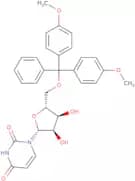
Please enquire for more information about Aminoallyl-UTP trisodium including the price, delivery time and more detailed product information at the technical inquiry form on this pageFórmula:C12H20N3O15P3•Na3Pureza:Min. 95%Peso molecular:608.22 g/mol5'-O-DMT-uridine
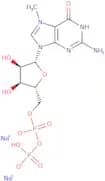
CAS:5'-O-DMT-uridine is an oligodeoxynucleotide that has been conjugated to tetracycline. It is a bioconjugate that can be used for photooxidation of DNA, as well as for the prevention of bacterial efflux. The 5'-O-DMT group can be removed from the uridine by light irradiation or by bioconjugate chemistry, which results in the release of tetracycline and subsequent binding to bacterial ribosomes. This prevents protein synthesis and cell division. The linker can be any cyclic or dehydrating compound.Fórmula:C30H30N2O8Pureza:Min. 98 Area-%Cor e Forma:White Off-White PowderPeso molecular:546.58 g/mol7-Methylguanosine-5’-diphosphate disodium
CAS:Inhibition of decapping.Fórmula:C11H17N5O11P2•Na2Pureza:Min. 95%Cor e Forma:PowderPeso molecular:503.21 g/mol2-Fluoro-6-O-[2-(4-nitrophenyl)ethyl]inosine
CAS:2-Fluoro-6-O-[2-(4-nitrophenyl)ethyl]inosine (2F-6ENPE) is a novel antiviral agent that inhibits the synthesis of RNA in the body. It is a monophosphate nucleotide analog and a prodrug that is converted to its active form, 2F-6ENP by ribonucleoside kinases. This drug has been shown to inhibit the growth of cancer cells in vitro and in vivo. 2F-6ENPE has also been shown to be effective against methicillin resistant staphylococcus aureus (MRSA).Fórmula:C18H18FN5O7Pureza:Min. 95%Cor e Forma:PowderPeso molecular:435.36 g/molN¹-Methylpseudouridine-5'-triphosphate sodium,100 mM aqueous solution
N¹-methylpseudouridine-5'-triphosphate sodium, 100 mM aqueous solution (NMP) is an activator of deoxyribonucleosides that is synthesized in the laboratory. It has antiviral and anticancer activity and can be used to treat influenza A virus. NMP has been shown to inhibit the growth of cancer cells by inhibiting DNA synthesis and inducing apoptosis.Fórmula:C10H17N2O15P3•xNaPureza:Min. 95%Peso molecular:498.17 g/mol2'-Deoxyinosine-5'-monophosphate disodium salt
CAS:2'-Deoxyinosine-5'-monophosphate disodium salt is a synthetic nucleoside, phosphoramidite, and diphosphate that is used in the synthesis of DNA. It has been shown to have antiviral effects against HIV and herpes simplex virus type 2 (HSV-2). This drug also has anticancer activity and is an activator of novel nucleosides.Fórmula:C10H11N4Na2O7PPureza:Min. 98 Area-%Cor e Forma:White PowderPeso molecular:376.17 g/mol8-Methyladenosine
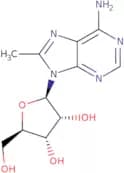
CAS:8-Methyladenosine is an acid conjugate that can be found in the urine of healthy people. It is a protonated molecule that binds to a p2 subtype of the G protein-coupled receptor, which is activated by adenosine and 8-methyladenosine. This drug has been used in clinical trials for the treatment of herpes simplex virus and cervical cancer. The intramolecular hydrogen bond between the methyl group and the adenosine ring is responsible for its high binding affinity for this receptor. The glycosidic bond is formed when an 8-methyladenosine molecule attaches to a receptor on a cell surface, forming an intramolecular hydrogen bond with the receptor's amino acid side chain. This bond is broken when a protonated molecule of 8-methyladenosine enters the cell and interacts with the receptor, resulting in activation of this receptor.
Fórmula:C11H15N5O4Pureza:Min. 95%Cor e Forma:White PowderPeso molecular:281.27 g/mol5-Bromo-5'-O-tert-butyldimethylsilyl-2',3'-O-isopropylideneuridine
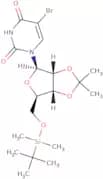
CAS:5-Bromo-5'-O-tert-butyldimethylsilyl-2',3'-O-isopropylideneuridine is a novel nucleoside analog that has been synthesized to inhibit the synthesis of RNA. The 5-Bromo-5'-O-tert-butyldimethylsilyl-2',3'-O-isopropylideneuridine is an Activator, which inhibits the activity of ribonucleotide reductase. It also exhibits antiviral and anticancer activities.Fórmula:C18H29BrN2O6SiPureza:Min. 95%Cor e Forma:PowderPeso molecular:477.42 g/mol4-Amino-2,6-dihydroxy-5-nitrosopyrimidine
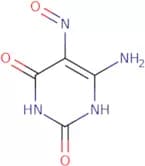
CAS:4-Amino-2,6-dihydroxy-5-nitrosopyrimidine is a molecule that has been shown to be an effective inhibitor of the enzyme tyrosinase in the oxidation of tyrosine to DOPA, which is a precursor of melanin. It is believed that vibrational and structural changes during these reactions are responsible for the inhibitory effects. 4-Amino-2,6-dihydroxy-5-nitrosopyrimidine has also been shown to have anti cancer effects on glioma cells. This molecule binds to copper ions, forming a chelate ring that can stabilize reactive intermediates and terminate free radicals. The chlorine atom on this molecule may be responsible for its cytotoxic effects by reacting with nucleophilic sites on proteins. The functional groups on this molecule react with acid catalysts, such as protonation or dehydration reactions.Fórmula:C4H4N4O3Pureza:Min. 98 Area-%Cor e Forma:PowderPeso molecular:156.1 g/mol2'-Deoxy-5'-O-DMT-uridine 3'-CE phosphoramidite
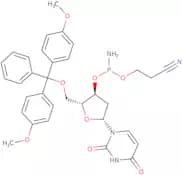
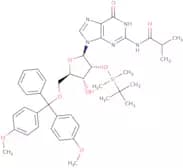
CAS:2'-Deoxy-5'-O-DMT-uridine 3'-CE phosphoramidite is an antibiotic that inhibits bacterial growth by binding to DNA, preventing transcription and replication. It has been shown to have antibacterial activity against a wide variety of bacteria, including staphylococcus, tuberculosis and vibrio cholerae. 2'-Deoxy-5'-O-DMT-uridine 3'-CE phosphoramidite is a chemotaxis regulator in the biosynthetic pathway of certain bacteria. These bacteria use this compound as a precursor for the production of other antibiotics. This antibiotic binds to the regulatory site on bacterial chemotaxis and inhibits the response to attractants such as sugars or amino acids.Fórmula:C39H47N4O8PPureza:Min. 98 Area-%Cor e Forma:White Off-White PowderPeso molecular:730.81 g/mol2'-O-(tert-Butyldimethylsilyl)-5'-O-DMT-N2-isobutyryl-guanosine
CAS:2'-O-(tert-Butyldimethylsilyl)-5'-O-DMT-N2-isobutyryl-guanosine is a synthetic nucleoside that has been modified with a tert-butyldimethylsilyl group. This modification is used to improve the efficiency of coupling reactions between nucleosides and phosphoramidites in oligonucleotide synthesis. The 2'-O-(tert-Butyldimethylsilyl)-5'-O-DMT-N2-isobutyryl guanosine is also used as a chromophore in spectroscopy experiments and as a ligand in metal coordination chemistry.Fórmula:C41H51N5O8SiPureza:Min. 98 Area-%Cor e Forma:Off-White PowderPeso molecular:769.96 g/mol7-Methyl-6-thioguanosine inner salt
CAS:7-Methyl-6-thioguanosine inner salt is a compound that inhibits the activity of creatine kinase and phosphatase, which are enzymes involved in energy metabolism. It also binds to actin filaments and prevents their depolymerization. The binding mechanism of 7-methyl-6-thioguanosine inner salt is believed to be due to its ability to form disulfide bonds with cysteine residues on the surface of the enzyme. This inhibition has been shown to reduce the ATP production in mammalian cells and has been used as a model system for studying cellular processes.
Fórmula:C11H15N5O4SPureza:Min. 95 Area-%Cor e Forma:White PowderPeso molecular:313.33 g/molQueuosine
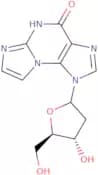
CAS:Queuosine is a modified nucleoside found in the tRNA of both eukaryotic and prokaryotic organisms. It is primarily sourced from the gut microbiota and obtained through dietary intake, as humans lack the biosynthetic machinery to produce it endogenously. Queuosine plays a crucial role in cellular processes by contributing to the accuracy of protein synthesis, impacting cellular growth and maintenance. Its importance extends to understanding the molecular mechanisms underpinning various physiological processes and the potential for dysregulation in diseases. Ongoing research is exploring queuosine's implications in cellular metabolism, including its role in cancer biology and neurobiology. Understanding the pathways and effects of queuosine incorporation into tRNA may provide insights into novel therapeutic avenues for targeting metabolic disorders and diseases associated with translational fidelity.Fórmula:C17H23N5O7Pureza:Min. 95 Area-%Cor e Forma:PowderPeso molecular:409.39 g/mol2'-Deoxy-N2,3-ethenoguanosine
CAS:2'-Deoxy-N2,3-ethenoguanosine is a novel antiviral agent that is phosphorylated by the viral enzyme ribonucleotide reductase and then incorporated into viral DNA. This compound is an activator of deoxyribonucleoside monophosphate activity and inhibits the synthesis of DNA and RNA. 2'-Deoxy-N2,3-ethenoguanosine has been shown to inhibit the growth of cancer cells in culture and may be useful for treating cancer.Fórmula:C12H13N5O4Pureza:Min. 95%Peso molecular:291.26 g/mol2-Chloroadenosine hemihydrate
CAS:2-Chloroadenosine hemihydrate is a synthetic purine nucleoside analog, closely related to adenosine, with a chlorine atom substituted at the 2-position on the adenine ring. This molecule has potential application in research.Fórmula:C10H12ClN5O4H2OPureza:Min. 95%Cor e Forma:PowderPeso molecular:310.69 g/mol



![2-Fluoro-6-O-[2-(4-nitrophenyl)ethyl]inosine](/_next/image/?url=https%3A%2Fstatic.cymitquimica.com%2Fproducts%2F3D%2Fthumb-webp%2FNF162956.webp&w=3840&q=75)