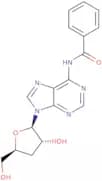
Nucleosídeos
Foram encontrados 3569 produtos de "Nucleosídeos"
2'-Deoxynebularine
CAS:2'-Deoxynebularine is a nucleoside analog that has been shown to inhibit the replication of human immunodeficiency virus type 1 (HIV-1) in vitro. 2'-Deoxynebularine binds to the viral DNA and inhibits its synthesis by hydrogen bonding with the sugar-phosphate backbone. This inhibition prevents the production of new viral DNA and stops viral replication. The drug also inhibits cellular proliferation, which may be due to its ability to inhibit oxidative DNA damage in animal cells. This drug has been shown to inhibit enzyme activities in both human skin cells and leukemia cells, which may be due to its ability to act as a substrate for various enzymes. It is also an effective inhibitor of cellular protein synthesis.Fórmula:C10H12N4O3Pureza:Min. 95%Peso molecular:236.23 g/mol8-Azidocyclic adenosine diphosphate ribose
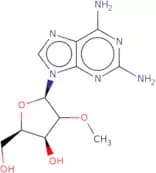
CAS:8-Azidocyclic adenosine diphosphate ribose (8AADPR) is a molecule that is synthesized from ATP and ribose. It has been shown to inhibit the endoplasmic reticulum Ca2+-ATPase, which transports calcium ions out of the cell, leading to increased concentrations of calcium ions in the cytosol. 8AADPR also inhibits mitochondrial ATPase, which leads to an accumulation of ADP-ribose within mitochondria. This accumulation leads to the inhibition of protein synthesis within mitochondria and an activation of ryanodine receptors. There are no known adverse effects associated with 8AADPR at this time, but it should be used with caution due to its potential effects on cardiac function.Fórmula:C15H20N8O13P2Pureza:Min. 95%Peso molecular:582.31 g/mol2,6-Diamino-9-(2'-O-methyl-b-D-ribofuranosyl)purine
CAS:2,6-Diamino-9-(2'-O-methyl-b-D-ribofuranosyl)purine is a synthetic nucleoside that is used as an antiviral and antitumor agent. It is a modified nucleoside with a purine base. It has been shown to be effective against certain cancer cells in vitro and in vivo. This drug also has antiviral properties, which may be due to its ability to inhibit DNA synthesis through the inhibition of viral RNA replication. 2,6-Diamino-9-(2'-O-methyl-b-D-ribofuranosyl)purine is resistant to phosphorylation by kinase enzymes and it can be used as a precursor for the preparation of other nucleosides.Fórmula:C11H16N6O4Pureza:Min. 95%Cor e Forma:White to off-white solid.Peso molecular:296.29 g/mol4-Phenylpyrimidine-2-thiol
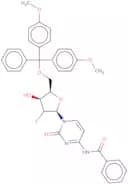
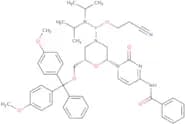
CAS:4-Phenylpyrimidine-2-thiol is a chemical compound that belongs to the group of elemental compounds. It has a density of 1.5 g/mL, a melting point of > 200 °C, and a boiling point of > 300 °C. 4-Phenylpyrimidine-2-thiol has been shown to exist as chains with assembled chains in the crystalline state. The crystals are composed of two molecules stacked on top of each other in an antiparallel orientation. The crystal structure was solved through x-ray crystallography and single-crystal x-ray diffraction. 4-Phenylpyrimidine-2-thiol is dimeric in solution and polymerizes in the solid state to form polymers with chains consisting of four phenylpyrimidine units. This compound has an elemental analysis consisting mainly of carbon and hydrogen, with small amounts of sulfur and nitrogen present.Fórmula:C10H8N2SPureza:Min. 95%Peso molecular:188.25 g/molN4-Benzoyl-1-(2'-deoxy-5'-O-DMT-2'-fluoro-b-D-arabinofuranosyl)cytosine
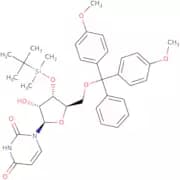
N4-Benzoyl-1-(2'-deoxy-5'-O-DMT-2'-fluoro-b-D-arabinofuranosyl)cytosine is an antiviral compound that inhibits the synthesis of viral RNA. This nucleoside analog is a monophosphate and diphosphate inhibitor of ribonucleotide reductase, which is required for DNA and RNA synthesis. N4-Benzoylcytosine has also been shown to be cytotoxic against tumor cells in vitro and in vivo, making it a potential anticancer drug. It was synthesized as part of a novel series of compounds that have been shown to inhibit the growth of bacterial cultures, including Mycobacterium tuberculosis.Fórmula:C37H34FN3O7Pureza:Min. 95%Peso molecular:651.7 g/mol3'-O-tert-Butyldimethylsilyl-5'-O-DMT-uridine
CAS:3'-O-tert-Butyldimethylsilyl-5'-O-DMT-uridine is a nucleoside that is modified with a tert-butyldimethylsilyl group at the 3' position. It is used as an activator for synthesizing oligonucleotides, ribonucleosides, and phosphoramidites. 3'-O-tert-Butyldimethylsilyl-5'-O-DMT-uridine has antiviral and anticancer properties. This product can be used in research applications such as the synthesis of novel DNA and RNA molecules, as well as for diagnostic purposes such as detecting viral infections.Fórmula:C36H44N2O8SiPureza:Min. 95%Peso molecular:660.83 g/molN6-Benzoyl-5'-chloro-5'-deoxy-2',3'-O-isopropylideneadenosine
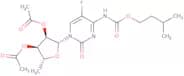
N6-Benzoyl-5'-chloro-5'-deoxy-2',3'-O-isopropylideneadenosine is a novel nucleoside that has the potential to be a therapeutic agent for cancer and antiviral therapy. It is an analog of adenosine that inhibits viral replication by inhibiting the viral enzyme RNA-dependent DNA polymerase. N6-Benzoyl-5'-chloro-5'-deoxy-2',3'-O-isopropylideneadenosine also inhibits tumor growth by inducing apoptosis. The compound has been shown to inhibit human leukemia cells in vitro, as well as mouse leukemia cells in vivo. This novel nucleoside is synthesized through a two step process starting with 5'-chloroadenosine and converting it to 5'-chloroinosidine with potassium cyanide, followed by deoxygenation at the 6 position with benzoyl chloride and sodium hydroxide.Pureza:Min. 95%2',3'-Di-O-acetyl-5'-deoxy-5-fluoro-N4-(isopentyloxycarbonyl)cytidine
CAS:2',3'-Di-O-acetyl-5'-deoxy-5-fluoro-N4-(isopentyloxycarbonyl)cytidine is an antiviral nucleoside. It is a novel nucleotide analog that inhibits human immunodeficiency virus (HIV). The cytidine monophosphate moiety of 2',3'-Di-O-acetyl-5'-deoxy-5-fluoro-N4-(isopentyloxycarbonyl)cytidine has been modified with the substitution of the acetyl group at the 2' position with a deoxyribose group, and the 5' fluoro group with a 5'-deoxyfluro group. This modification prevents phosphodiesterases from hydrolyzing it to its monophosphate form, which leads to higher antiviral activity. 2',3'-Di-O-acetyl-5'-deoxy-5-fluoro -Fórmula:C19H26FN3O8Pureza:Min. 95%Peso molecular:443.42 g/mol5'-O-DMT-thymidine 3'-Q Linker CPG 1000 Å
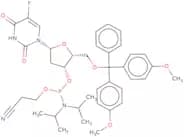
5'-O-DMT-thymidine 3'-Q Linker CPG 1000 Å is an Activator that is a monophosphate and synthesized through the modification of nucleosides. It has novel anticancer properties and is a high quality, high purity, and modified nucleotide. The 5'-O-DMT-thymidine 3'-Q Linker CPG 1000 Å has been shown to have antiviral activity against herpes simplex virus type 1 (HSV-1) in human cells. It also has anticancer effects on human leukemia cells by inhibiting the growth of cancer cells.Pureza:Min. 95%2'-Deoxy-5'-O-DMT-5-fluorouridine 3'-CE phosphoramidite
CAS:2'-Deoxy-5'-O-DMT-5-fluorouridine 3'-CE phosphoramidite is a nucleoside analogue that inhibits the growth of cancer cells. It is used in the synthesis of oligonucleotides, which are used as drugs to treat cancers. This product has high purity and good quality and has been shown to be effective against cancer cells.
Fórmula:C39H46FN4O8PPureza:Min. 95%Cor e Forma:PowderPeso molecular:748.8 g/mol5-Amino-1-(2',3',5'-tri-O-acetyl-b-D-ribofuranosyl)-imidazole-4-carbonitrile
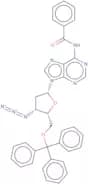
CAS:5-Amino-1-(2',3',5'-tri-O-acetyl-b-D-ribofuranosyl)-imidazole-4-carbonitrile is a novel nucleoside analogue that inhibits the viral enzyme ribonucleotide reductase. It has antiviral activity against the herpes viruses, cytomegalovirus, and Epstein Barr virus. 5AADC has also been shown to inhibit DNA synthesis in tumor cells. This compound is currently undergoing clinical trials as an anticancer agent.Fórmula:C15H18N4O7Pureza:Min. 95%Peso molecular:366.33 g/mol3'-Azido-N4-benzoyl-5'-O-trityl-2',3'-dideoxyadenosine
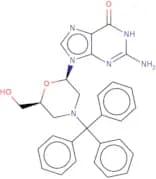
3'-Azido-N4-benzoyl-5'-O-trityl-2',3'-dideoxyadenosine is a novel nucleoside that has been described as an activator of diphosphate. It is a modified deoxyribonucleoside, with the amino group in the ribose moiety replaced by an azido group. This nucleotide inhibits viral and cellular DNA synthesis by blocking DNA polymerase. 3'-Azido-N4-benzoyl-5'-O-trityl-2',3'-dideoxyadenosine can also be used for anticancer purposes, where it has been shown to inhibit cancer cell growth.Fórmula:C36H30N8O3Pureza:Min. 95%Peso molecular:622.68 g/mol7’-Hydroxy-N-Trityl-morpholino guanine
CAS:Please enquire for more information about 7’-Hydroxy-N-Trityl-morpholino guanine including the price, delivery time and more detailed product information at the technical inquiry form on this pageFórmula:C29H28N6O3Peso molecular:508.57 g/mol2,6-Dichloro-7-methylpurine
CAS:2,6-Dichloro-7-methylpurine (2,6-DCMP) is a chlorinated purine analog that has anticancer activity. It is an ATP competitive inhibitor that inhibits protein synthesis by competitively binding to the alpha subunit of the ribosome. 2,6-DCMP has been shown to have strong antiviral activity against human immunodeficiency virus and cytotoxic effects on human adenocarcinoma cells in vitro. The IC50 values for this compound are 50 nM against HIV and 5 μM against human adenocarcinoma cells.Fórmula:C6H4Cl2N4Pureza:Min. 95%Peso molecular:203.03 g/mol5'-O-DMT-N2-DMF-guanosine-3'-succinyl CPG 1000 Å
5'-O-DMT-N2-DMF-guanosine-3'-succinyl CPG 1000 Å is a nucleoside, modified with succinyldiimidazopropylcarbodiimide. It is an activator of phosphoramidites and is used in the synthesis of DNA and RNA. 5'-O-DMT-N2-DMF-guanosine-3'-succinyl CPG 1000 Å has shown anticancer and antiviral properties in vitro.Pureza:Min. 95%Guanosine-5'-monophosphate triethylammonium salt
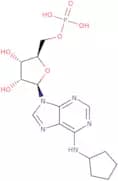
CAS:Guanosine-5'-monophosphate triethylammonium salt is a synthetic nucleoside that is an activator of DNA. It is used in antiviral and anticancer treatments, as well as in the synthesis of deoxyribonucleosides. This product has been shown to have high purity and high quality.Fórmula:C10H14N5O8P•C6H15NPureza:Min. 95%Peso molecular:464.41 g/molN6-Cyclopentyladenosine-5'-O-monophosphate
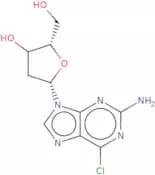
CAS:N6-Cyclopentyladenosine-5'-O-monophosphate is a nucleoside that is a substrate for RNA polymerase and is involved in the regulation of transcription. It also has been shown to be localized in the nucleus, cytoplasm, and cell membrane. N6-Cyclopentyladenosine-5'-O-monophosphate is used in diagnosis as an immunochemical reagent for the detection of matrix metalloproteinases (MMPs) and it can be used to measure MMP-9 activity. The monoclonal antibody (mAb) against this nucleoside can be used to detect N6-Cyclopentyladenosine-5'-O-monophosphate in biological samples such as human serum or cell culture.Fórmula:C15H22N5O7PPureza:Min. 95%Peso molecular:415.34 g/mol6-Chloro-9-(2-deoxy-b-L-erythro-pentofuranosyl)-9H-purin-2-amine
CAS:6-Chloro-9-(2-deoxy-b-L-erythro-pentofuranosyl)-9H-purin-2-amine is a novel antiviral and anticancer agent. It is an analog of adenosine that inhibits viral replication by inhibiting DNA synthesis. 6CePP2A is an activator of nucleoside deoxyribonucleotidyltransferase, which converts dATP to dTTP.Fórmula:C10H12ClN5O3Pureza:Min. 95%Peso molecular:285.69 g/molN4-Benzoyl-2'-deoxy-5'-O-DMT-2'-trifluoroacetamidocytidine
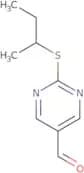
N4-Benzoyl-2'-deoxy-5'-O-DMT-2'-trifluoroacetamidocytidine is a novel nucleoside analog that is activated by ribonucleotide reductase. This compound inhibits the synthesis of DNA and RNA in cells, which leads to the inhibition of cellular proliferation. N4-Benzoyl-2'-deoxy-5'-O-DMT-2'-trifluoroacetamidocytidine has been shown to be effective against cancer cells, as well as antiviral and antiretroviral activity. It is also active against drug resistant strains of HIV.Fórmula:C39H35F3N4O8Pureza:Min. 95%Peso molecular:744.71 g/mol2-(sec-Butylthio)pyrimidine-5-carbaldehyde
CAS:2-(sec-Butylthio)pyrimidine-5-carbaldehyde is a molecule that inhibits cell growth and angiogenesis. It was found to inhibit the phosphorylation of specific proteins, leading to the inhibition of cell growth and angiogenesis. This compound has been shown to be effective against prostate cancer cells in vitro and in vivo, as well as in a mouse model for breast cancer. In this model, the drug inhibited tumor growth without any apparent toxicity to normal tissues. 2-(sec-Butylthio)pyrimidine-5-carbaldehyde has been tested as a potential antiangiogenic agent in mice, with results showing no adverse effects on animals.Fórmula:C9H12N2OSPureza:Min. 95%Peso molecular:196.27 g/molN4-Benzoyl-5’-O-DMT-morpholinocytidine-N’-CE phosphoramidite
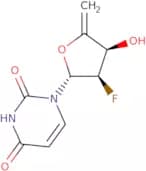
CAS:Please enquire for more information about N4-Benzoyl-5’-O-DMT-morpholinocytidine-N’-CE phosphoramidite including the price, delivery time and more detailed product information at the technical inquiry form on this pageFórmula:C46H53N6O7PPureza:Min. 98 Area-%Cor e Forma:PowderPeso molecular:832.92 g/mol4',5'-Didehydro-2',5'-dideoxy-2'-fluorouridine
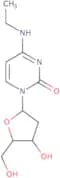
CAS:4',5'-Didehydro-2',5'-dideoxy-2'-fluorouridine is a monophosphate of the nucleoside 5FU. It is an antiviral and anticancer agent that inhibits viral DNA synthesis by competitively inhibiting the activity of thymidylate synthase, which converts dUMP to dTMP. 4',5'-Didehydro-2',5'-dideoxy-2'-fluorouridine also induces apoptosis in neoplastic cells. This compound has high purity and quality, and can be used as a phosphoramidite for the synthesis of modified oligonucleotides.Fórmula:C10H10FNO4Pureza:Min. 95%Peso molecular:227.19 g/molN4-Ethyl-2'-deoxycytidine
CAS:N4-Ethyl-2'-deoxycytidine is a novel nucleoside analog that inhibits the activity of DNA polymerase. It is used as an anticancer, antiviral and antiretroviral agent. N4-Ethyl-2'-deoxycytidine has been shown to be active against herpes simplex virus type 1 (HSV-1), HSV-2, cytomegalovirus (CMV), human immunodeficiency virus type 1 (HIV-1) and HIV-2 in vitro. This drug also has antiangiogenic properties due to its ability to inhibit the synthesis of vascular endothelial growth factor A. N4-Ethyl-2'-deoxycytidine is a modified nucleoside that can be phosphorylated by cellular enzymes, which activates it by converting it into a monophosphate or diphosphate form. This drug inhibits the production of RNA from DNA and also prevents proteinFórmula:C11H17N3O4Pureza:Min. 95%Peso molecular:255.27 g/molN6-Monobutyryl-2'-deoxyadenosine 3',5'-cyclic monophosphate sodium salt
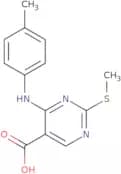
CAS:N6-Monobutyryl-2'-deoxyadenosine 3',5'-cyclic monophosphate sodium salt is a novel antiviral and anticancer agent that is a synthetic nucleoside analogue. It has been shown to be effective at inhibiting the growth of human cancer cells in vitro and in vivo. N6-Monobutyryl-2'-deoxyadenosine 3',5'-cyclic monophosphate sodium salt binds to viral RNA, resulting in inhibition of protein synthesis and cell death.Fórmula:C14H18N5O6P·NaPureza:Min. 95%Peso molecular:406.29 g/mol2-(Methylthio)-4-(P-Tolylamino)Pyrimidine-5-Carboxylic Acid
CAS:2-(Methylthio)-4-(P-tolylamino)pyrimidine-5-carboxylic acid is an anticancer drug that is a novel, modified nucleoside. It has been shown to be active as a monophosphate and diphosphate in vitro. 2-(Methylthio)-4-(P-tolylamino)pyrimidine-5-carboxylic acid has also been shown to have antiviral activity against HIV and herpes simplex virus type 1 (HSV1).Fórmula:C13H13N3O2SPureza:Min. 95%Peso molecular:275.33 g/mol2'-Deoxy-5'-DMT-5-[3-(trifluoroacetylamino)-1-propynyl]-uridine 3'-CE phosphoramidite
CAS:2'-Deoxy-5'-DMT-5-[3-(trifluoroacetylamino)-1-propynyl]-uridine 3'-CE phosphoramidite is a novel modified nucleoside that is synthesized by the reaction of 2'-deoxy-5'-DMT-5-[3-(trifluoroacetylamino)-1-propynyl] uridine with bis(2,4,6-trimethylbenzoyl)phosphine and then with tetrazole. This product inhibits the synthesis of viral RNA and DNA and has been shown to be effective against cancer cells in vitro.Fórmula:C44H49F3N5O9PPureza:Min. 95%Peso molecular:879.86 g/mol8-Bromoguanosine-5'-triphosphate sodium salt - 10 mM aqueous solution
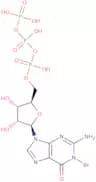
CAS:8-Bromoguanosine-5'-triphosphate sodium salt is a nucleotide analog that inhibits the enzyme ribonucleotide reductase. This drug inhibits bacterial growth by interfering with protein synthesis and cell division. It binds to the purine riboswitch, which is an allosteric regulatory binding site on the ribosome, inactivating it. 8-Bromoguanosine-5'-triphosphate sodium salt also binds to the active site of bacterial RNA polymerase and inhibits DNA synthesis. The activity of this drug has been shown using a bacteriophage system in which the enzyme protein synthesis was inhibited by 8-bromoguanosine-5'-triphosphate sodium salt.Fórmula:C10H15N5O14P3Br·xNaPureza:Min. 95%Peso molecular:602.08 g/mol5'-O-DMT-2,3'-anhydrothymidine
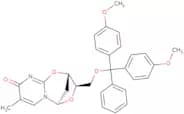
CAS:5'-O-DMT-2,3'-anhydrothymidine is a solvent that is used for labeling nucleic acids. It can be used in positron emission tomography (PET) imaging as a diagnostic tool for cancer and other diseases. 5'-O-DMT-2,3'-anhydrothymidine is also used to carry the radioactive isotope fluorodeoxyglucose (FDG) in positron emission tomography (PET). The FDG is labeled with the PET tracer and then injected into the patient's body. This allows for whole-body visualization of glucose metabolism and tumor cell uptake.Fórmula:C31H30N2O6Pureza:Min. 95%Peso molecular:528.61 g/mol2,6-Dichloro-9-(3',5'-di-O-benzoyl-2'-deoxy-2'-fluoro-a-D-arabinofuranosyl)purine
2,6-Dichloro-9-(3',5'-di-O-benzoyl-2'-deoxy-2'-fluoro-a-D-arabinofuranosyl)purine is a nucleoside that is used in the synthesis of antiviral drugs. It is a modified monophosphate with a 3',5'-di-O-benzoyl group and 2'-deoxyribose. This substance can be prepared from the corresponding 2,6-dichloropurine by reaction with chloroacetaldehyde diethyl acetal. 2,6 Dichloro 9-(3',5'-di-O-benzoyl) purine has been shown to have anticancer activity against various human cancer cell lines in vitro and in vivo.Pureza:Min. 95%1,5-Anhydro-2,3-dideoxy-2-(N2-isobutyrylguanidin-1-yl)-D-glucitol
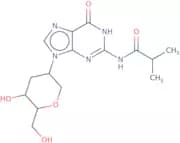
1,5-Anhydro-2,3-dideoxy-2-(N2-isobutyrylguanidin-1-yl)-D-glucitol is a novel, activator ribonucleosides deoxyribonucleosides diphosphate phosphoramidites modified anticancer antiviral monophosphate nucleosides synthetic high purity CAS No. It has been shown to have anticancer and antiviral properties. This compound also inhibits the replication of HIV in vitro.Fórmula:C15H21N5O5Pureza:Min. 95%Peso molecular:351.37 g/mol2-(1-Piperidinyl)-5-pyrimidinecarbaldehyde
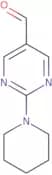
CAS:2-(1-Piperidinyl)-5-pyrimidinecarbaldehyde is an antiviral and anticancer phosphoramidite. It is a novel monophosphate nucleoside analogue that inhibits DNA synthesis by inhibiting the activity of ribonucleotide reductase. 2-(1-Piperidinyl)-5-pyrimidinecarbaldehyde has been shown to be effective against influenza virus, HIV, Herpes Simplex Virus, and human leukemia cells. This compound is not active against bacteria or fungi.Fórmula:C10H13N3OPureza:Min. 95%Peso molecular:191.23 g/mol3'-Azido-2',3'-dideoxy-5'-O-DMT-5-methylcytidine
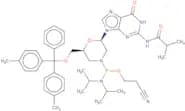
3'-Azido-2',3'-dideoxy-5'-O-DMT-5-methylcytidine (Zidovudine) is a nucleoside analog that inhibits the replication of human immunodeficiency virus type 1. It is phosphorylated by cellular enzymes to form the active triphosphate form, which incorporates into viral DNA and causes chain termination. Zidovudine has been used in the treatment of HIV infection and AIDS. This drug also has antiviral activity against other retroviruses such as HIV type 2 and measles virus, as well as some DNA viruses, such as herpes simplex type 1. Zidovudine may be useful for the treatment of cancer, particularly Kaposi's sarcoma.Pureza:Min. 95%N2-Isobutyryl-5’-O-DMT-morpholinoguanosine-N’-CE phosphoramidite
CAS:A morpholino amidite
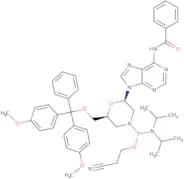
Fórmula:C44H55N8O7PPureza:Min. 98 Area-%Cor e Forma:PowderPeso molecular:838.93 g/molN6-Benzoyl-5’-O-DMT-morpholinoadenosine-N’-CE phosphoramidite
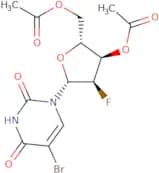
CAS:A morpholino amiditeFórmula:C47H53N8O6PPureza:Min. 98 Area-%Cor e Forma:PowderPeso molecular:856.95 g/mol3',5'-Di-O-acetyl-5-bromo-2'-deoxy-2'-fluorouridine
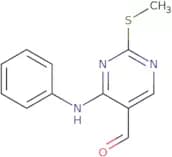
CAS:3',5'-Di-O-acetyl-5-bromo-2'-deoxy-2'-fluorouridine is a novel antiviral agent that has been synthesized as a high quality, high purity monophosphate. It is a modified nucleoside that is used to synthesize phosphoramidites. It has antiviral activity against herpes simplex virus type 1 and 2, and cytomegalovirus. 3',5'-Di-O-acetyl-5-bromo-2'-deoxy-2'-fluorouridine is also an inhibitor of the DNA polymerase enzyme and inhibits the synthesis of viral DNA in infected cells. This drug can be used for the treatment of infections caused by these viruses.Fórmula:C13H14BrFN2O7Pureza:Min. 95%Peso molecular:409.16 g/mol2-Methylsulfanyl-4-phenylamino-pyrimidine-5-carbaldehyde
CAS:2-Methylsulfanyl-4-phenylamino-pyrimidine-5-carbaldehyde is a Ribonucleside, Deoxyribonucleoside, Activator, Antiviral, Synthetic and Modified DNA Nucleoside. It has been shown to inhibit viral replication in vitro by interfering with the formation of the viral diphosphate. 2-Methylsulfanyl-4-phenylamino-pyrimidine-5-carbaldehyde is a ribonucleotide that is synthesized from commercially available starting materials. This compound has shown to be active against HIV type 1 virus in vitro and has been proposed as a potential antiviral agent for the treatment of AIDS. 2-Methylsulfanyl-4-phenylamino pyrimidine 5 carbaldehyde (2MSAP) was found to be active against HIV type 1 virus in vitro and has been proposed as a potential antiviral agent for the treatment ofFórmula:C12H11N3OSPureza:Min. 95%Peso molecular:245.3 g/mol5'-O-DMT-5-[N-(2-(trifluoroacetamido)ethyl)-3-E-acrylamido]-2'-deoxyuridine
CAS:5'-O-DMT-5-[N-(2-(trifluoroacetamido)ethyl)-3-E-acrylamido]-2'-deoxyuridine is a nucleoside analog that is an activator of DNA polymerase. It has been shown to have anticancer activity in vitro and in vivo. 5'-O-DMT-5-[N-(2-(trifluoroacetamido)ethyl)-3-E-acrylamido]-2'-deoxyuridine was found to inhibit the proliferation of leukemia cells, human colon cancer cells, and human prostate cancer cells. This compound also inhibits viral replication by affecting the synthesis of viral DNA and RNA. 5'-O-DMT-5-[N-(2-(trifluoroacetamido)ethyl)-3-E-acrylamido]-2'-deoxyuridine may be used as a research tool for studying the mechanism of action of antiviral drugs suchFórmula:C37H37F3N4O9Pureza:Min. 95%Peso molecular:738.74 g/mol2-Amino-8-(2-deoxy-β-D-ribofuranosyl)-imidazo[1,2-α]-1,3,5-triazin-4(8H)-one
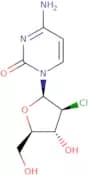
CAS:2-Amino-8-(2-deoxy-β-D-ribofuranosyl)-imidazo[1,2-α]-1,3,5-triazin-4(8H)-one is a modified nucleoside analog with the following structure: the core heterocyclic structure is a fused imidazole-triazine ring, there is a 2-amino group at position 2 of the imidazole ring and it has a 2-deoxy-β-D-ribofuranose sugar attached at the 8-position of the heterocyclic ring, making it structurally related to DNA nucleosides.Fórmula:C10H13N5O4Pureza:Min. 95%Cor e Forma:PowderPeso molecular:267.24 g/mol1-(2'-Chloro-2'-deoxy-b-D-arabinofuranosyl)cytosine
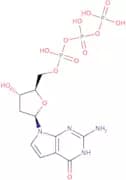
CAS:1-(2'-Chloro-2'-deoxy-b-D-arabinofuranosyl)cytosine is a synthetic, modified nucleoside that can be phosphorylated to its monophosphate form. It is an inhibitor of DNA synthesis and the replication of viral DNA. 1-(2'-Chloro-2'-deoxy-b-D-arabinofuranosyl)cytosine has been shown to have anticancer activity in vitro and in vivo. This drug is also active against some RNA viruses such as hepatitis B virus and human immunodeficiency virus type 1 (HIV).Fórmula:C9H12ClN3O4Pureza:Min. 95%Peso molecular:261.66 g/mol7-Deaza-2'-deoxyguanosine-5'-triphosphate lithium salt - 100mM aqueous solution
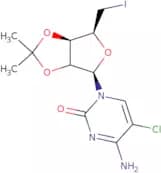
CAS:7-Deaza-2'-deoxyguanosine-5'-triphosphate lithium salt is a nucleoside analog that inhibits telomerase. It binds to the catalytic subunit of telomerase, which is an RNA-dependent DNA polymerase that synthesizes telomeres during DNA replication. This binding prevents the enzyme from extending the 3' end of the DNA strand, inhibiting cell proliferation and leading to apoptosis. Telomerase inhibition has been shown to have an inhibitory effect on insulin resistance in mice. 7-Deaza-2'-deoxyguanosine-5'-triphosphate lithium salt also inhibits protein kinases, but does not inhibit phosphatases or other enzymes.Fórmula:C11H17N4O13P3·xLiPureza:Min. 95%Peso molecular:506.19 g/mol5-Chloro-5'-deoxy-5'-iodo-2',3'-O-isopropylidenecytidine
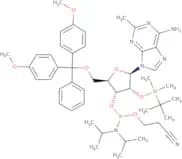
5-Chloro-5'-deoxy-5'-iodo-2',3'-O-isopropylidenecytidine is a nucleoside analog that has antiviral, anticancer, and high purity properties. It is an activated nucleotide that can be incorporated into DNA or RNA. 5-Chloro-5'-deoxy-5'-iodo-2',3'-O-isopropylidenecytidine is a modified nucleoside with the deoxyribose sugar replaced by an isopropylidene group. This modification prevents the drug from being metabolized and excreted from the body. The drug is used to treat various cancers such as leukemia and lymphoma, as well as herpes simplex virus infections. It also has been shown to have antimicrobial properties against bacteria, fungi, and viruses.Fórmula:C12H15ClIN3O4Pureza:Min. 95%Peso molecular:427.63 g/mol2'-O-tert-Butyldimethylsilyl-5'-O-DMT-C2-methyladenosine 3'-CE phosphoramidite
CAS:2'-O-tert-Butyldimethylsilyl-5'-O-DMT-C2-methyladenosine 3'-CE phosphoramidite is an antiviral agent that inhibits the synthesis of DNA. It can be used to treat AIDS, because it inhibits the reverse transcriptase enzyme. 2'-O-tert-Butyldimethylsilyl-5'-O-DMT-C2-methyladenosine 3'-CE phosphoramidite also has anticancer properties, which is due to its ability to inhibit RNA and protein synthesis in cancer cells. This compound has been synthesized by reacting 5'-O-DMT cytidine with methylacetoacetate under standard conditions. The modified nucleoside has a high purity, high quality, and novel structure.Fórmula:C47H64N7O7SiPureza:Min. 95%Peso molecular:867.14 g/mol7’-O-DMT-morpholino-5-methyluridine-N’-CE phosphoramidite
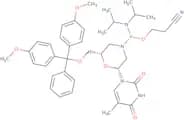
CAS:a morpholino amiditeFórmula:C40H50N5O7PPureza:Min. 98 Area-%Cor e Forma:PowderPeso molecular:743.83 g/mol4-Amino-2,6-dimethyl-8-(2'-deoxy-3',5'-di-O-toluoyl-a-D-ribofuranosyl)-7-pteridone
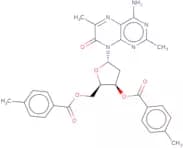
4-Amino-2,6-dimethyl-8-(2'-deoxy-3',5'-di-O-toluoyl-a-D-ribofuranosyl)-7-pteridone is a novel nucleoside that has been modified by the addition of a 2'-deoxy, 3',5'-di-O-toluoyl group on the sugar moiety. This modification increases the stability of 4AMDT in serum and enhances its antiviral activity against DNA and RNA viruses. It also inhibits the proliferation of cancer cells and induces cell death by inhibiting protein synthesis.Fórmula:C29H29N5O6Pureza:Min. 95%Peso molecular:543.57 g/mol2'-Deoxy-5-hydroxyuridine 5'-triphosphate
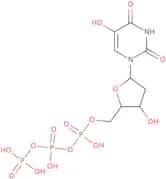
CAS:2'-Deoxy-5-hydroxyuridine 5'-triphosphate (doxorubicin) is a cytotoxic and chemotherapeutic agent that interferes with DNA replication. It is an oxidized form of the natural pyrimidine base thymine. The drug blocks DNA synthesis by preventing the incorporation of uracil into the newly synthesized strand, which causes strand breaks. Doxorubicin has been shown to be effective in treating a variety of cancers, including those of the breast, ovaries, bladder, and stomach. This drug can also cause severe side effects such as heart damage and hearing loss due to its interaction with cellular oxygen metabolism.Pureza:Min. 95%6-Chloro-9-(3',5'-di-O-benzoyl-2'-Deoxy-2'-fluoro-b-D-arabinofuranosyl)purine
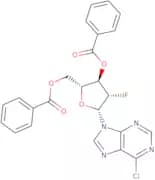
CAS:6-Chloro-9-(3',5'-di-O-benzoyl-2'-Deoxy-2'-fluoro-b-D-arabinofuranosyl)purine is a nucleoside that is used as an anticancer and antiviral agent. It is synthesized from 9-(3',5'-di-O-benzoyl)-2'-deoxyribofuranosyl chloride, which is then chlorinated to form 6-chloro purine. This product has been shown to be active against human DNA tumor cells and other viruses in vitro. 6CPA, like other nucleosides, can be phosphorylated on the 3' or 5' position of the sugar moiety, yielding monophosphate or diphosphate derivatives respectively. The monophosphate derivative of 6CPA has a higher cytotoxicity than the diphosphate derivative. The deoxyribose sugar moiety canFórmula:C24H18CIFN4O5Pureza:Min. 95%Peso molecular:496.89 g/molThymidine-5'-diphosphate-2-deoxy-D-glucose disodium salt
Thymidine-5'-diphosphate-2-deoxy-D-glucose disodium salt is a novel, modified nucleoside that is chemically synthesized from 2,3,4,6-tetraaminopyrimidine. It has antiviral activity and can be used to treat HIV infections. It is an active form of thymidine and inhibits the synthesis of viral DNA by blocking the activity of viral DNA polymerase in reverse transcription. This drug also exhibits anticancer activity by preventing cell proliferation and inducing apoptosis. Thymidine-5'-diphosphate-2-deoxy-D-glucose disodium salt is high purity with a CAS number of 63625-04-9.
Fórmula:C16H24N2O15P2Na2Pureza:Min. 95%Peso molecular:592.29 g/mol3'-Azido-3'-deoxy-5-methylcytidine
CAS:3'-Azido-3'-deoxy-5-methylcytidine (AZDMC) is a novel nucleoside analog that inhibits viral replication. AZDMC is an activator of cellular DNA synthesis, which is essential for the replication of DNA and the production of RNA. It also has antiviral activity against influenza A and B viruses. The chemical name for AZDMC is 3'-azido-3'-deoxy-5-methylcytidine monophosphate (AMP). The CAS number for AZDMC is 1282040-14-5. It can be synthesized with high purity and quality by Ribonucleosides, Modified, Deoxyribonucleosides, Nucleosides, Phosphoramidites.
Pureza:Min. 95%N6-Benzoyl-3'-deoxyadenosine
CAS:N6-Benzoyl-3'-deoxyadenosine is a nucleoside analogue that is used as a substrate for DNA polymerase. The efficiency of this compound has been shown to be higher than other nucleotides. In addition, N6-Benzoyl-3'-deoxyadenosine has been shown to be an efficient donor in the ligation reaction and can also act as a competitive inhibitor of topoisomerase II. N6-Benzoyl-3'-deoxyadenosine is a scissile substrate for DNA topoisomerase II and cleaves at the same site as dATP. This compound has been shown to be active against both Gram-positive bacteria and Mycobacterium tuberculosis with high selectivity.Fórmula:C17H17N5O4Pureza:Min. 95%Peso molecular:355.35 g/molAdenosine HCl
CAS:Adenosine is a nucleoside that is found in all cells. It plays an important role in the formation of ATP and as a neurotransmitter. Adenosine also acts on a receptor to promote vasodilation, improve cardiac contractility, and increase cardiac output. Adenosine has been found to be effective in preventing congestive heart failure in rats with myocardial infarction. In humans, adenosine has been shown to have beneficial effects on metabolic disorders such as diabetes mellitus and diabetic neuropathy. Adenosine HCl is an acid salt of adenosine that can be used for the treatment of coronary artery disease.Fórmula:C10H13N5O4·HClPureza:Min. 95%Peso molecular:303.7 g/mol










![2'-Deoxy-5'-DMT-5-[3-(trifluoroacetylamino)-1-propynyl]-uridine 3'-CE phosphoramidite](/_next/image/?url=https%3A%2Fstatic.cymitquimica.com%2Fproducts%2F3D%2Fthumb-webp%2FPD138044.webp&w=3840&q=75)


![5'-O-DMT-5-[N-(2-(trifluoroacetamido)ethyl)-3-E-acrylamido]-2'-deoxyuridine](/_next/image/?url=https%3A%2Fstatic.cymitquimica.com%2Fproducts%2F3D%2Fthumb-webp%2FND08236.webp&w=3840&q=75)
![2-Amino-8-(2-deoxy-β-D-ribofuranosyl)-imidazo[1,2-α]-1,3,5-triazin-4(8H)-one](/_next/image/?url=https%3A%2Fstatic.cymitquimica.com%2Fproducts%2F3D%2Fthumb-webp%2FNA145593.webp&w=3840&q=75)