Nucleosídeos
Foram encontrados 3569 produtos de "Nucleosídeos"
5’-O-DMT cET-N6-benzoyladenosine 3’-OCE amidite
CAS:Please enquire for more information about 5'-ODMT cEt N-Bz A Phosphoramidite including the price, delivery time and more detailed product information at the technical inquiry form on this page
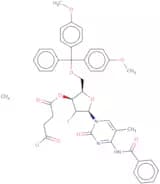
Fórmula:C49H54N7O8PPeso molecular:899.97 g/molN4-Benzoyl-1-(2'-deoxy-5'-O-DMT-2'-fluoro-b-D-arabinofuranosyl)-5-methylcytosine-3'-O-succinate triethylammonium salt
N4-Benzoyl-1-(2'-deoxy-5'-O-DMT-2'-fluoro-b-D-arabinofuranosyl)-5-methylcytosine-3'-O-succinate triethylammonium salt is a synthetic nucleoside. It is used for the treatment of HIV infection. N4-Benzoyl-1-(2'-deoxy-5'-O-DMT)-2'-fluoro -b -D -arabinofuranosyl) -5 methylcytosine (ADT) inhibits viral replication by inhibiting the activity of reverse transcriptase, which is an enzyme that synthesizes DNA from RNA. ADT is activated to its active form by phosphorylation with a kinase and then converted to diphosphate ADP by the enzyme pyrophosphatase. ADP then acts as a substrate for DNA polymerases, incorporating into newly synthesized DNA
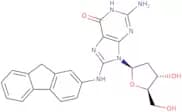
Fórmula:C42H40FN3O10·C6H16NPureza:Min. 95%Peso molecular:868 g/mol2'-Deoxy-8-(9H-fluoren-2-ylamino)-guanosine
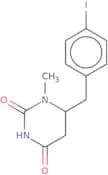
CAS:2'-Deoxy-8-(9H-fluoren-2-ylamino)-guanosine (FdA) is a synthetic nucleoside that was designed for use as a dietary supplement to inhibit carcinogenesis. It is an analog of guanosine and is phosphorylated by cellular kinases to form 2'-deoxy-8-(9H-fluoren-2-ylamino)-inosine monophosphate. FdA inhibits the process of DNA replication in mammalian cells, which may be due to its ability to bind single stranded DNA. This drug has been shown to reduce the mutation frequency and increase the life span of mice with bladder cancer.Fórmula:C23H22N6O4Pureza:Min. 95%Peso molecular:446.46 g/mol6-(4-Iodobenzyl)-1-Methyl Pyrimidine-2,4-(1H,3H)-Dione
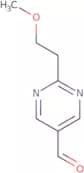
CAS:6-(4-Iodobenzyl)-1-Methyl Pyrimidine-2,4-(1H,3H)-Dione is a nucleoside analog that has shown to be an activator of the ribonucleotide reductase enzyme. It has also been shown to have anticancer activity. 6-(4-Iodobenzyl)-1-Methyl Pyrimidine-2,4-(1H,3H)-Dione inhibits DNA synthesis by binding to the DNA molecule at the site of incorporation and preventing its duplication. This compound also inhibits RNA synthesis by binding to the RNA molecule at the site of incorporation and preventing its duplication. It has been shown to inhibit cancer cell growth in culture and can be used as a chemotherapeutic agent.Fórmula:C12H11IN2O2Pureza:Min. 95%Peso molecular:342.13 g/mol2-(2-Methoxyethyl)pyrimidine-5-carbaldehyde
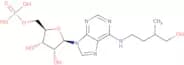
CAS:2-(2-Methoxyethyl)pyrimidine-5-carbaldehyde is a modified nucleoside that has been shown to be an effective antiviral and anticancer agent. This compound inhibits viral replication by blocking the synthesis of viral DNA, and also exhibits cytotoxic activity against cancer cells. 2-(2-Methoxyethyl)pyrimidine-5-carbaldehyde is an activator of ribonucleotide reductase and deoxyribonucleotide reductase and can be used in the synthesis of nucleosides, DNA, or phosphoramidites.Fórmula:C8H10N2O2Pureza:Min. 95%Peso molecular:166.18 g/molDihydrozeatin riboside-5'-monophosphate sodium salt
CAS:Dihydrozeatin riboside-5'-monophosphate sodium salt is a cytokinin that belongs to the group of indole compounds. It has been shown to inhibit the biosynthesis of ethylene, which prevents fruit from ripening. Dihydrozeatin riboside-5'-monophosphate sodium salt is also able to inhibit the synthesis of adenosine, another plant hormone that inhibits growth and promotes dormancy in plants. The bioassay for this product has been done with amanita muscaria, an edible mushroom found in North America and Europe. This mushroom contains dihydrozeatin as well as other related compounds such as zeatin, which can be converted into dihydrozeatin by enzymes present in the intestines. The symptoms of poisoning by this mushroom include vomiting and diarrhea, owing to its effects on intestinal motility.Fórmula:C15H22N5Na2O8P·H2OPureza:Min. 95%Cor e Forma:White To Off-White SolidPeso molecular:495.33 g/mol8-Oxo-7-thioguanosine
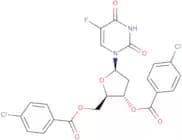
CAS:8-Oxoguanosine monophosphate (8-oxoGMP) is a synthetic nucleoside that is activated by the enzyme thioredoxin reductase and phosphorylated to form 8-oxoGTP. The anticancer activity of 8-oxoGMP is due to its ability to inhibit ribonucleotide reductase, which reduces the production of DNA and RNA in cells. This product has been shown to inhibit HIV replication in vitro and in vivo. It also inhibits viral replication by inhibiting the synthesis of viral nucleic acids such as DNA, RNA, and deoxyribonucleic acid (DNA).Fórmula:C10H12N4O6SPureza:Min. 95%Cor e Forma:PowderPeso molecular:316.29 g/mol3',5'-Di-O-p-chlorobenzoyl-2'-deoxy-5-fluorouridine
CAS:3',5'-Di-O-p-chlorobenzoyl-2'-deoxy-5-fluorouridine is a nucleoside derivative that has antiviral activity. It is synthesized by the condensation of 2,3,5-trihydroxybenzoic acid with 3'-chloro-5'-fluoroacetophenone in the presence of pyridine and triethylamine. The nucleoside has been shown to be an effective inhibitor of HIV replication in vitro. 3',5'-Di-O-p-chlorobenzoyl-2'-deoxy-5-fluorouridine also inhibits DNA synthesis in human lymphocytes at concentrations of 5 μM or less. This compound can be used as an activator for DNA polymerases and phosphoramidites for DNA synthesis.Fórmula:C23H17Cl2FN2O7Pureza:Min. 95%Peso molecular:523.29 g/mol3',5'-Di-O-acetyl-N2-acetyl-O6-diphenylcarbamoyl-2'-deoxy-D-guanosine
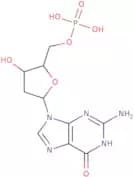
3',5'-Di-O-acetyl-N2-acetyl-O6-diphenylcarbamoyl-2'-deoxy-D-guanosine is a synthetic nucleoside that has been modified with an acetyl group at the 3' and 5' positions of the sugar. It has antiviral, anticancer, and antiretroviral activities against HIV. This nucleoside has also been shown to inhibit human leukemia cells in vitro by binding to DNA, inhibiting its synthesis. The drug is currently undergoing clinical trials for the treatment of AIDS patients.Pureza:Min. 95%2'-Deoxyguanosine-5'-monophosphate free acid
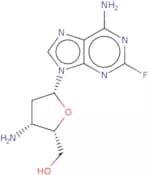
CAS:2'-Deoxyguanosine-5'-monophosphate free acid (dGMP) is a nucleotide that can be used as a substrate to measure the activity of protein kinase C. It is also a precursor in DNA synthesis, and its incorporation into DNA is catalyzed by polymerase chain reaction. 2'-Deoxyguanosine-5'-monophosphate free acid has been shown to inhibit transcriptional regulation, which may be related to its interaction with nuclear DNA. Furthermore, it has been shown to have an antioxidant effect due to its ability to donate electrons. 2'-Deoxyguanosine-5'-monophosphate free acid has also been shown to react with sodium salts in plasma mass spectrometry experiments, and titration calorimetry experiments have shown that it reacts with calcium ions in vitro.br>Fórmula:C10H14N5O7PPureza:Min. 95%Peso molecular:347.22 g/mol3'-Amino-2',3'-dideoxy-2-fluoroadenosine
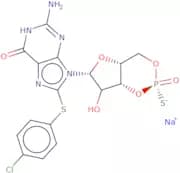
3'-Amino-2',3'-dideoxy-2-fluoroadenosine is a novel compound that inhibits the enzyme ribonucleotide reductase, which is involved in the synthesis of DNA. It also has antiviral and anticancer activities. 3'-Amino-2',3'-dideoxy-2-fluoroadenosine has high purity and high quality and can be used as an activator for phosphoramidite synthesis.Fórmula:C10H13FN6O2Pureza:Min. 95%Cor e Forma:PowderPeso molecular:268.25 g/mol8-(4-Chlorophenylthio)guanosine 3',5'-cyclic monophosphothioate Sp-isomer sodium
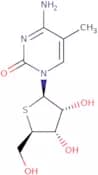
CAS:8-(4-Chlorophenylthio)guanosine 3',5'-cyclic monophosphothioate Sp-isomer sodium salt (8-chloro-GTP) is a modified nucleoside that inhibits the synthesis of DNA by preventing the addition of nucleotides to the 3' end of DNA. It is an antiviral and anticancer agent, and can be used as a phosphoramidite in the synthesis of DNA. 8-chloro-GTP has shown high purity and high quality in synthesized DNA. Research on this compound is still ongoing, but it has been shown to be novel and modified compared to other nucleosides.Fórmula:C16H14ClN5O6PS2•NaPureza:Min. 95%Peso molecular:525.86 g/mol5-Methyl-4’-thiocytidine
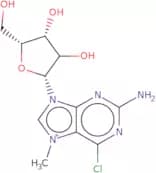
CAS:5-Methyl-4’-thiocytidine is an antiviral agent that has been shown to be effective against herpes simplex virus (HSV) type 1 and 2. 5-Methyl-4’-thiocytidine inhibits viral replication by competing with deoxyribonucleosides for incorporation into the viral DNA, which leads to the synthesis of defective DNA. This drug also has anticancer properties and is used in the treatment of leukemia, lymphoma, and carcinomas. 5-Methyl-4’-thiocytidine is a novel monophosphate nucleoside that can be used as an activator for phosphoramidite synthesis. The CAS number for this compound is 1312295-87-6. Synthesis of 5-methyl 4’ thiocytidine requires high purity, high quality nucleosides, and a novel phosphoramidite synthesis procedure.Pureza:Min. 95%2-Amino-6-chloro-7-methyl-9-(b-D-ribofuranosyl)purine
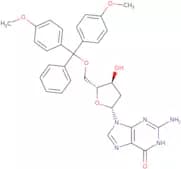
CAS:2-Amino-6-chloro-7-methyl-9-(b-D-ribofuranosyl)purine is a nucleoside which is the structural analog of adenosine and is used in the synthesis of DNA, RNA, and other nucleosides. It has antiviral activity against herpes simplex virus type 1 and 2, Epstein Barr virus, poliovirus types 1, 2, and 3, and vesicular stomatitis virus. This compound also has anticancer activity. 2-Amino-6-chloro-7-methyl-9-(b-D ribofuranosyl) purine can be used to synthesize deoxyribonucleosides or monophosphate nucleotides. It can also be used as an intermediate for phosphoramidites in the synthesis of DNA or RNA.Fórmula:C11H16ClN5O4Pureza:Min. 95%Peso molecular:317.73 g/mol2'-Deoxy-5'-O-DMT-guanosine
CAS:2'-Deoxy-5'-O-DMT-guanosine is a purine nucleoside that is converted to 2'-deoxy-5'-O-DMT-adenosine by the enzyme deoxyadenosyltransferase. This conversion is necessary for the synthesis of adenosylcobalamin, which is essential for the methylation of homocysteine to methionine. 2'-Deoxy-5'-O-DMT-guanosine has been shown to have cancer chemopreventive effects in vitro and in vivo. It also has been shown to enhance dna hybridization and hydrophobic interactions with cancerous cells, which may be due to its ability to inhibit gene expression.
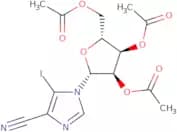
Fórmula:C31H31N5O6Pureza:Min. 95%Peso molecular:569.61 g/mol5-Iodo-1-(2',3',5'-tri-O-acetyl-b-D-ribofuranosyl)-imidazo-4-carbonitrile
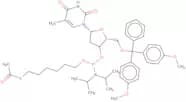
CAS:5-Iodo-1-(2',3',5'-tri-O-acetyl-b-D-ribofuranosyl)-imidazo-4-carbonitrile is a nucleoside phosphoramidite that is synthesized from 2'-deoxyribose, 5'-iodoimidazole and triacetic acid. This compound is a novel phosphoramidite and can be used to synthesize DNA or RNA molecules. It has been shown to have anticancer properties, which may be due to its ability to inhibit DNA replication. 5-Iodo-1-(2',3',5'-tri-O-acetyl-b-D-ribofuranosyl)-imidazo-4-carbonitrile also has antiviral properties and can be used as an activator in the synthesis of modified nucleosides.Fórmula:C15H16IN3O7Pureza:Min. 95%Peso molecular:477.21 g/mol5'-O-DMT-thymidine 3'-O-[(S-acetyl-6-thiohexyl) N,N-diisopropylphosphoramidite
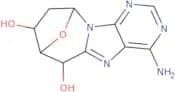
5'-O-DMT-thymidine 3'-O-[(S-acetyl-6-thiohexyl) N,N-diisopropylphosphoramidite] is a novel compound that has been modified to enhance antiviral activity and provide protection against influenza virus. The phosphoramidite monophosphate is prepared by coupling of the 5'-O-DMT-thymidine 3'-O-[(S-acetyl-6-thiohexyl) N,N-diisopropylphosphoramidite] with an appropriate nucleoside phosphorylating agent, such as a thiophosphorylating agent. This product has high purity and quality.Pureza:Min. 95%(5'S)-2'-Deoxy-8,5'-cycloadenosine
CAS:(5'S)-2'-Deoxy-8,5'-cycloadenosine is a nucleoside analog that blocks the synthesis of DNA. It is a glycosylated nucleoside that contains an 8-carbon fatty acid chain linked to the 5’ carbon of the sugar ring. This compound is formed from the reaction of (5'S)-2'-deoxyadenosine and dicyclohexylcarbodiimide. The biological properties of this drug are not well understood, but it has been shown to be reactive with physiological levels and able to induce neuronal death in an experimental model. The mechanism for this effect is unknown, but may involve intramolecular hydrogen bonding or hydrolysis by esterases. A molecular docking analysis was performed to study the binding affinity between (5'S)-2'-deoxy-8,5'-cycloadenosine and human mda-mb-231 breast cancer cells. This analysis showed that wild
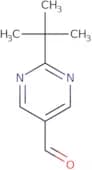
Fórmula:C10H11N5O3Pureza:Min. 95%Peso molecular:249.23 g/mol2-tert-Butylpyrimidine-5-carbaldehyde
CAS:2-tert-Butylpyrimidine-5-carbaldehyde (2BP) is a potent, selective inhibitor of DNA polymerase that is expressed in the tibia during bone development. 2BP has been shown to inhibit platelet-derived growth factor (PDGF)-induced angiogenesis in mouse calvaria and animal research models. This compound also inhibits the proliferation of basic fibroblasts and cancer cells in vitro.Fórmula:C9H12N2OPureza:Min. 95%Peso molecular:164.2 g/mol3'-O-Azidomethyl 2'-deoxyadenosine 5'-O-triphosphate sodium salt
3'-O-Azidomethyl 2'-deoxyadenosine 5'-O-triphosphate sodium salt (3'AADAP) is a novel nucleotide analog that has been shown to have antiviral and anticancer activities. It is a high-quality, purified nucleotide that can be used as an activator for DNA synthesis. 3'AADAP can also be used to synthesize deoxyribonucleosides, which are modified nucleotides that have the ability to inhibit replication of RNA viruses such as HIV. The CAS number for 3'AADAP is 72295-72-8.Fórmula:C11H17N8O12P3Pureza:Min. 95%Peso molecular:546.22 g/mol5'-ODMT-thymidine 3'-Sp-oxazaphospholidine
5'-ODMT-thymidine 3'-Sp-oxazaphospholidine is a modified nucleoside that can be used as an anticancer drug. It is a high purity, diphosphate, Anticancer, Modified, Phosphoramidites. 5'-ODMT-thymidine 3'-Sp-oxazaphospholidine is synthesized by the phosphorylation of thymidine with oxazaphospholidine. It has been shown to inhibit DNA and RNA synthesis in cancer cells.
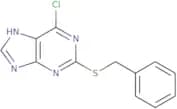
Pureza:Min. 95%2-Benzylthio-6-chloropurine
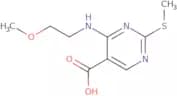
CAS:2-Benzylthio-6-chloropurine is a synthetic nucleoside analogue that is an antiviral agent. It inhibits the synthesis of viral DNA by competitive inhibition of thymidine kinase, which is an enzyme necessary for the conversion of deoxyribonucleotides to their monophosphate form. 2-Benzylthio-6-chloropurine has been found to be effective against herpes simplex virus 1 and 2 (HSV1 and HSV2). The drug is also active against HIV, influenza A virus, and cytomegalovirus.Fórmula:C15H9CIN4SPureza:Min. 95%Peso molecular:416.24 g/mol4-(2-Methoxyethylamino)-2-(Methylthio)Pyrimidine-5-Carboxylic Acid
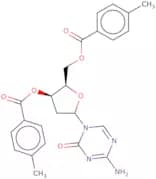
CAS:4-(2-Methoxyethylamino)-2-(methylthio)pyrimidine-5-carboxylic acid (4MEAP) is a novel phosphoramidite that can be used in the synthesis of ribonucleosides and deoxyribonucleosides. 4MEAP has antiviral activity, cytotoxicity, and anticancer properties. It may also have potential as an anti-inflammatory agent due to its ability to inhibit prostaglandin production.Fórmula:C9H13N3O3SPureza:Min. 95%Peso molecular:243.28 g/mol1-(2'-Deoxy-3',5'-di-O-toluoyl-D-ribofuranosyl)-4-amino-1,3-dihydro-2-oxo-1,3,5-triazine
1-(2'-Deoxy-3',5'-di-O-toluoyl-D-ribofuranosyl)-4-amino-1,3-dihydro-2-oxo-1,3,5-triazine is a nucleoside that is used as an anticancer drug. It is a modified nucleotide with a 2'-deoxyribofuranosyl group attached to the 3' carbon of the sugar moiety. It has been shown to be active against viruses and cancer cells. 1-(2'-Deoxy-3',5'-di-O-toluoyl-D-ribofuranosyl)-4-amino -1,3 -dihydro -2 -oxo -1,3,5 -triazine inhibits the replication of DNA by inhibiting DNA polymerase. This in turn prevents RNA synthesis and protein synthesis.Fórmula:C24H24N4O6Pureza:Min. 95%Peso molecular:464.48 g/mol1-b-D-Ribofuranosyl-1,2,4-triazole-3-carboxamide-5'-triphosphate, lithium salt
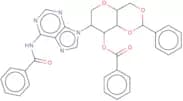
1-b-D-Ribofuranosyl-1,2,4-triazole-3-carboxamide-5'-triphosphate, lithium salt (ABIPT) is a modified nucleotide that has antiviral and anticancer activities. It is an activator of the ribonucleoside diphosphate reductase enzyme and can be used to treat viral diseases such as HIV and hepatitis C. ABIPT also has anticancer activity by inhibiting DNA synthesis in tumor cells and inducing apoptosis. This drug is a novel monophosphate nucleoside that has been shown to inhibit the replication of influenza virus in vitro.Pureza:Min. 95%1,5-Anhydro-3-O-benzoyl-4,6-O-benzylidene-2-deoxy-2-(N6-benzoyladenin-1-yl)-D-altro-hexitol
CAS:1,5-Anhydro-3-O-benzoyl-4,6-O-benzylidene-2-deoxy-2-(N6-benzoyladenin-1)-yl)-D-altrohexitol is a novel anticancer and antiviral agent. It is a phosphoramidate nucleotide analog that inhibits viral replication by blocking the synthesis of viral DNA. It also has an inhibitory effect on cancer cells, which may be due to its ability to activate natural killer cells or cytotoxic T lymphocytes.Fórmula:C32H27N5O6Pureza:Min. 95%Cor e Forma:SolidPeso molecular:577.6 g/mol3'-O-tert-Butyldimethylsilyl-2'-deoxy-5'-O-DMT-adenosine
CAS:3'-O-tert-Butyldimethylsilyl-2'-deoxy-5'-O-DMT-adenosine is a nucleoside with a novel chemical structure. It is a deoxyribonucleoside monophosphate, which has antiviral and anticancer properties. 3'-O-tert-Butyldimethylsilyl-2'-deoxy-5'-O-DMT-adenosine inhibits the formation of diphosphate from ATP, which prevents DNA and RNA synthesis in cells. This drug also binds to the enzyme ribonuclease, preventing the breakdown of RNA. The phosphoramidites used for synthesizing 3'-O-tert-Butyldimethylsilyl-2'-deoxy-5'-O-DMT adenosine are of high quality and can be used for making other nucleosides.Fórmula:C37H45N5O5SiPureza:Min. 95%Peso molecular:667.87 g/molAdenosine-5'-O-diphospho-(1''-(4-nitrophenoxy)-ribose) sodium
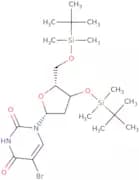
CAS:Adenosine-5'-O-diphospho-(1''-(4-nitrophenoxy)-ribose) sodium is a nucleic acid analog that is used in antiviral, anticancer, and gene therapy. It is a modified nucleotide with a phosphoramidite group at the 5' position. The phosphoramidite group is used for the synthesis of DNA or RNA. It has been shown to activate cellular processes such as transcription, translation, and replication in vitro. This compound also inhibits cancer cell growth in vivo and has been shown to be effective against bacterial infections caused by Mycobacterium tuberculosis and Mycobacterium avium complex.Fórmula:C21H26N6O16P2·xNaPureza:Min. 95%Peso molecular:680.41 g/mol3',5'-Bis-O-(tert-butyldimethylsilyl)-5-bromo-2'-deoxyuridine
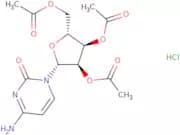
CAS:3',5'-Bis-O-(tert-butyldimethylsilyl)-5-bromo-2'-deoxyuridine is a novel synthetic nucleoside. It is an intermediate in the synthesis of phosphoramidites and has been used in the synthesis of oligonucleotides and DNA. 3',5'-Bis-O-(tert-butyldimethylsilyl)-5-bromo-2'-deoxyuridine can also be used as antiviral and anticancer agents. 3',5'-Bis-O-(tert-butyldimethylsilyl)-5-bromo-2'-deoxyuridine is soluble in water, ethanol, and chloroform at a concentration of 1 g/L. The purity of this product is greater than 98%.Fórmula:C21H39BrN2O5Si2Pureza:Min. 95%Peso molecular:535.62 g/mol2',3',5'-Tri-O-acetylcytidine HCl
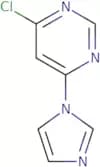
CAS:2',3',5'-Tri-O-acetylcytidine HCl is a modified nucleoside that has been shown to have anticancer activity. The cytotoxic effect of 2',3',5'-tri-O-acetylcytidine HCl is mediated by its ability to inhibit DNA synthesis, which leads to cell death. This agent also inhibits viral replication and may be useful in the treatment of herpes virus infections. 2',3',5'-tri-O-acetylcytidine HCl is a stable nucleoside analog that can be used as an activator for polyphosphate polymerase or as a building block for the preparation of phosphoramidites, which are intermediates in the synthesis of oligonucleotide sequences.Fórmula:C15H19N3O8·HClPureza:Min. 95%Peso molecular:405.79 g/mol4-Chloro-6-imidazol-1-yl-pyrimidine
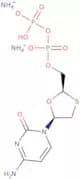
CAS:4-Chloro-6-imidazol-1-yl-pyrimidine is a quaternary ammonium compound that can be used to make antireflection coatings. It has been shown to have a high degree of compatibility with polymers, such as allyl carbonate, which are used in functional groups. 4-Chloro-6-imidazol-1-yl-pyrimidine has also been shown to react with stannous octoate, and the reaction time is dependent on the concentration of both compounds. This molecule has been found to be biodegradable and liquid crystal compositions can be made from it by changing the ratio of molecules to liquid crystals. 4-Chloro-6-imidazol-1-yl pyrimidine reacts with hydroxyl groups in epoxy resins and diolefinic hydrocarbons, forming crosslinks in sealants or coatings. The sealantFórmula:C7H5ClN4Pureza:Min. 95%Peso molecular:180.59 g/molLamivudine 5'-diphosphate ammonium salt
CAS:Lamivudine is a monophosphate antiviral drug that inhibits the synthesis of DNA. It has been shown to inhibit the replication of human immunodeficiency virus-1 (HIV-1) in vitro, and to protect monkeys from simian acquired immune deficiency syndrome (SAIDS). Lamivudine 5'-diphosphate ammonium salt is an antiviral agent that belongs to the group of deoxyribonucleosides. It has been shown to be effective against HIV-1 and SAIDS in animals. The mechanism of action is not fully understood, but it may work by inhibiting viral RNA synthesis or by preventing viral DNA integration into host cell DNA.
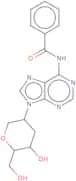
Fórmula:C8H19N5O9P2SPureza:Min. 95%Peso molecular:423.28 g/mol1,5-Anhydro-2,3-dideoxy-2-(N6-benzoyladenin-1-yl)-D-glucitol
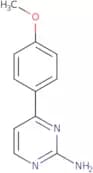
1,5-Anhydro-2,3-dideoxy-2-(N6-benzoyladenin-1-yl)-D-glucitol is a novel modified nucleoside that is used as an activator in the synthesis of oligodeoxynucleotides and ribonucleosides. It is also used for the synthesis of phosphoramidites for DNA and RNA molecules. This product is available in high purity and quality.Fórmula:C18H19N5O4Pureza:Min. 95%Peso molecular:369.38 g/mol2-Amino-4-(4-methoxyphenyl)pyrimidine
CAS:2-Amino-4-(4-methoxyphenyl)pyrimidine (AMP) is a synthetic nucleoside analog. It has antiviral activity and is used for the treatment of hepatitis B virus infection. AMP inhibits viral DNA polymerase and prevents the synthesis of viral DNA and RNA. It has been modified to include a methoxy group at the 4 position, which provides additional stability against the enzyme ribonuclease. AMP is also an activator of ribonucleotide reductase and can be used as a substrate to synthesize deoxyribonucleosides, phosphoramidites, diphosphate, or monophosphate nucleotides for DNA synthesis.
AMP has CAS number 99844-02-7 and is available in high purity.Fórmula:C11H11N3OPureza:Min. 95%Peso molecular:201.22 g/molN6-Benzoyl-7-deaza-2'-deoxyadenosine
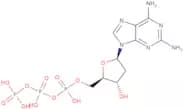
CAS:N6-Benzoyl-7-deaza-2'-deoxyadenosine is a novel synthetic monophosphate activator that can be used to induce cell death in cancer cells. It is structurally similar to the natural nucleotide adenosine, and it binds to the same receptors on cells as adenosine. N6-Benzoyl-7-deaza-2'-deoxyadenosine has been shown to inhibit viral replication by interfering with DNA synthesis and RNA transcription, which are essential for viral reproduction.Fórmula:C18H18N4O4Pureza:Min. 95%Peso molecular:354.36 g/mol2-Amino-2'-deoxyadenosine 5'-triphosphate
CAS:2-Amino-2'-deoxyadenosine 5'-triphosphate (2ADP) is a nucleotide that is involved in the synthesis of DNA. It is an important part of the process of DNA replication, as it provides the necessary energy to drive reactions that synthesize new DNA strands. It also has anti-viral properties and can be used as a molecular probe to detect acid. 2ADP is detectable with most common detection methods, such as UV/visible absorbance spectroscopy, fluorescence spectroscopy, and chemiluminescence. It is one of the three triphosphates found in cells and can be used to polymerize RNA by adding ribose phosphate groups to the sugar molecule in RNA. This reaction requires ATP, which produces AMP, ADP, and 2ADP.Fórmula:C10H17N6O12P3Pureza:Min. 95%Peso molecular:506.2 g/mol5'-O-DMT-uridine 3'-succinyl CPG 1000 Å (RNA)
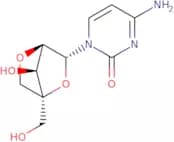
5'-O-DMT-uridine 3'-succinyl CPG 1000 Å (RNA) is a nucleoside that belongs to the group of modified nucleosides. It is used as an activator for phosphoramidite synthesis and as an antiviral agent. 5'-O-DMT-uridine 3'-succinyl CPG 1000 Å (RNA) has been shown to have anticancer activity by inhibiting DNA, RNA, and protein synthesis in tumor cells and also stimulating apoptosis. 5'-O-DMT-uridine 3'-succinyl CPG 1000 Å (RNA) is synthesized from uracil, which is obtained by the hydrolysis of thymine or cytosine. This product is available with a high quality at a competitive price.Pureza:Min. 95%2’-O,4’-C-Methylenecytidine
CAS:2’-O,4’-C-Methylenecytidine is a nucleoside that has been used to synthesize oligonucleotides. It has been shown to form duplexes with complementary DNA and RNA strands. 2’-O,4’-C-Methylenecytidine forms bicyclic analogues with high efficiency and can be used as an n-type structural probe.Pureza:Min. 95%2’-Deoxy-8-methylthioadenosine
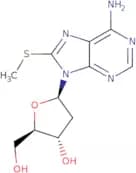
CAS:2’-Deoxy-8-methylthioadenosine is a monophosphate and antiviral compound. It is used for the treatment of viral infections and has been shown to be active against herpes simplex, varicella zoster, cytomegalovirus, Epstein-Barr virus, and human immunodeficiency virus. The compound inhibits the activity of DNA polymerase by competing with deoxyribonucleosides as substrates. This results in the inhibition of DNA synthesis. 2’-Deoxy-8-methylthioadenosine also inhibits ribonucleotide reductase, which is an enzyme that catalyzes the production of ribonucleotides from deoxyribonucleotides. 2’-Deoxy-8-methylthioadenosine has been shown to inhibit cell proliferation in vitro and in vivo through G2/M phase arrest and apoptosis induction.Pureza:Min. 95%3'-o-(t-Butyldimethylsilyl)-5'-deoxy-5'-(1,3-diphenyl-2-imidazolidinyl)thymidine
CAS:3'-o-(t-Butyldimethylsilyl)-5'-deoxy-5'-(1,3-diphenyl-2-imidazolidinyl)thymidine is an anticancer drug that inhibits the growth of cells by preventing DNA synthesis. It is a modified nucleoside that is synthesized from thymidine and has been shown to have antiviral and anti-inflammatory properties. 3'-o-(t-Butyldimethylsilyl)-5'-deoxy-5'-(1,3-diphenyl-2-imidazolidinyl)thymidine is also used in the production of phosphoramidites and ribonucleotides.Fórmula:C30H40N4O4SiPureza:Min. 95%Peso molecular:548.7 g/molN5-Benzoyl-2'-deoxy-5'-O-DMT-adenosine 3'-succinyl CPG 500 Å
N5-Benzoyl-2'-deoxy-5'-O-DMT-adenosine 3'-succinyl CPG 500 Å is a modified nucleoside that is used for the synthesis of DNA and RNA. It is an activator of antiviral and anticancer drugs. N5-Benzoyl-2'-deoxy-5'-O-DMT-adenosine 3'-succinyl CPG 500 Å has been shown to be an effective cancer treatment agent in vivo, as well as an inhibitor of viral replication. It can also be used in the synthesis of nucleosides and phosphoramidites.Pureza:Min. 95%Cor e Forma:Powder3’-O-tert-Butyldiphenylsilylthymidine
CAS:Used as a protected thymidine nucleoside in chemical synthesis, specifically as an intermediate in the preparation of other thymidine derivatives, particularly 5'-modified nucleosides and oligonucleotides. The tert-butyldiphenylsilyl (TBDPS) group is a silyl protecting group selectively attached to the 3' hydroxyl group of thymidine.Fórmula:C26H32N2O5SiPureza:Min. 95%Cor e Forma:White PowderPeso molecular:480.63 g/molL-5-methyluridine
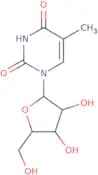
CAS:L-5-methyluridine is a nucleoside that is used as a building block in the synthesis of oligonucleotides. It contains one ribose sugar and one deoxyribose sugar, linked to the base adenine by a phosphate group. L-5-methyluridine can be synthesized from 5-chloro-2'-deoxyadenosine, hypoxanthine, and ammonium chloride. The synthesis starts with condensation reactions between the two sugar molecules to form an intermediate called a nucleoside. This is followed by alkylation of the base and then oxidation of the sugar group to form anomeric esters. The last step involves hydrolysis of the acyloxy ester, which yields L-5-methyluridine after acidification.Fórmula:C10H14N2OPureza:Min. 95%Peso molecular:178.23 g/mol2'-Deoxy-5'-S-DMT-5'-thioinosine 3'-CE phosphoramidite
2'-Deoxy-5'-S-DMT-5'-thioinosine 3'-CE phosphoramidite is a novel nucleoside analogue that has antiviral activity. It can be synthesized from 2'-deoxyribonucleosides and 5'-thioinosine monophosphate. This compound inhibits viral replication by inhibiting the synthesis of viral diphosphate, which is required for DNA synthesis. The compound also has anticancer properties and can inhibit the growth of tumor cells by blocking the process of DNA synthesis.Pureza:Min. 95%2'-Deoxyadenosine-5'-O-(1-thiotriphosphate) lithium salt - 100 mM aqueous solution
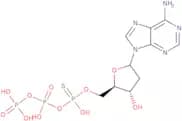
CAS:2'-Deoxyadenosine-5'-O-(1-thiotriphosphate) lithium salt is a circularization agent that can be used in the efficient method for the synthesis of DNA. It inhibits the growth of bacteria by binding to their DNA and preventing transcription. 2'-Deoxyadenosine-5'-O-(1-thiotriphosphate) lithium salt has shown inhibitory effects against tuberculosis and other infectious diseases, including diphtheria, tetanus, typhoid fever, and malaria. This drug also prevents the replication of viral RNA. The inhibition occurs through an analog mechanism at the level of nucleic acid synthesis or polymerase chain reaction (PCR). The thiophosphate group is cleaved from the triphosphate moiety in the presence of metal ions such as Zn2+, Mg2+, Mn2+, or Ca2+. The active form is enzymatically hydrolyzed by covalent enzyme activity toFórmula:C10H16N5O11P3S·xLiPureza:Min. 95%Peso molecular:507.25 g/molN-Benzoyl-5'-O-(bis(4-methoxyphenyl)phenylmethyl)-2'-O-(2-methoxyethyl)adenosine
CAS:N-Benzoyl-5'-O-(bis(4-methoxyphenyl)phenylmethyl)-2'-O-(2-methoxyethyl)adenosine is a synthetic nucleoside that is an activator of DNA polymerase and has antiviral activities. It is also used in the synthesis of deoxyribonucleosides, phosphoramidites, and ribonucleosides.Fórmula:C41H41N5O8Pureza:Min. 95%Cor e Forma:White PowderPeso molecular:731.79 g/molAristeromycin
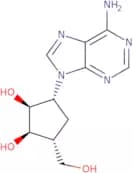
CAS:Carbocyclic nucleoside antibioticFórmula:C11H15N5O3Pureza:Min. 95%Peso molecular:265.27 g/mol2',3',5'-Tri-O-acetyl-5-methyluridine
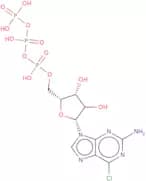
2',3',5'-Tri-O-acetyl-5-methyluridine is a nucleoside that is used as a substrate for the enzyme, methylmagnesium (MeMg) nucleotides. It has been shown to have a high basicity and is a good substrate for the enzyme, MeMg nucleotides. 2',3',5'-Tri-O-acetyl-5-methyluridine also has stereoselectivity and can be synthesized with high purity.Pureza:Min. 95%2-Amino-6-chloro-(b-D-ribofuranosyl)purine-5'-triphosphate
2-Amino-6-chloro-(b-D-ribofuranosyl)purine-5'-triphosphate is a modified nucleotide analog that is used as an antiviral agent. It inhibits the synthesis of viral DNA by competitively inhibiting the incorporation of deoxyribonucleoside triphosphates into the growing DNA chain. 2-Amino-6-chloro-(b-D-ribofuranosyl)purine-5'-triphosphate is phosphorylated to 2-[2-(2,6,8,10,12,14,16,-doxohexadecyl)-1H--imidazo[4,5--c]pyridine--1--carboxylic acid]ethanol phosphate in vivo and this active form inhibits human immunodeficiency virus type 1 (HIV1) replication in vitro with an IC 50 of 0.06 μM.Fórmula:C10H15ClN5O13P3Pureza:Min. 95%Peso molecular:541.63 g/mol1-(b-D-Xylofuranosyl)cytosine
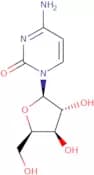
CAS:1-(b-D-Xylofuranosyl)cytosine is a nucleoside analog that is used in the treatment of cancer. It inhibits DNA replication by binding to the RNA template strand and blocking the incorporation of cytosine. 1-(b-D-Xylofuranosyl)cytosine has been shown to have an inhibitory effect on tumor cell lines, with a thermal expansion coefficient similar to biphenyl. The molecular weight of 1-(b-D-xylofuranosyl)cytosine is approximately 244 g/mol, which is greater than that of water (18 g/mol). 1-(b-D-xylofuranosyl)cytosine also binds to double stranded DNA with high affinity, leading to inhibition of protein synthesis and cell division. In addition, this compound has been shown to bind to naphthalene and form adducts with its hydroxyl groups.Fórmula:C9H13N3O5Pureza:Min. 95%Cor e Forma:White To Off-White SolidPeso molecular:243.22 g/mol