Nucleosídeos
Os nucleosídeos são building blocks fundamentais dos ácidos nucleicos, compostos por uma base nitrogenada ligada a uma molécula de açúcar. Nesta seção, você encontrará uma ampla variedade de nucleosídeos essenciais para pesquisas em biologia molecular, bioquímica e farmacologia. Esses compostos desempenham papéis cruciais na síntese de DNA e RNA, e também são vitais em vários processos metabólicos. Os nucleosídeos são usados para estudar material genético, desenvolver terapias antivirais e anticancerígenas, e entender os mecanismos celulares. Na CymitQuimica, fornecemos nucleosídeos de alta qualidade para apoiar suas necessidades de pesquisa e desenvolvimento, garantindo pureza e confiabilidade para suas aplicações experimentais.
Foram encontrados 3569 produtos de "Nucleosídeos"
Ordenar por
Pureza (%)
0
100
|
0
|
50
|
90
|
95
|
100
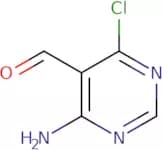
4-Amino-6-chloropyrimidine-5-carbaldehyde
CAS:<p>4-Amino-6-chloropyrimidine-5-carbaldehyde is a reactive molecule that is used in the synthesis of macrocyclic aldehydes. It is prepared by the oxidation of anilines with oxalyl chloride in the presence of hydrochloric acid and amines. 4-Amino-6-chloropyrimidine-5-carbaldehyde reacts with hydrazine to form diamines, which are used as building blocks for pharmaceuticals. This molecule has been shown to have anticancer properties, by inhibiting DNA replication and cell growth through its ability to inhibit protein synthesis.</p>Fórmula:C5H4ClN3OPureza:Min. 95%Peso molecular:157.56 g/mol5-Ethynyl-1-(b-D-ribofuranosyl)-imidazo-4-carbonitrile
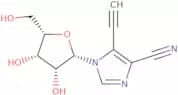
CAS:<p>5-Ethynyl-1-(b-D-ribofuranosyl)-imidazo-4-carbonitrile is a novel, modified ribonucleoside monophosphate that has antiviral, anticancer, and antiretroviral properties. It was originally synthesized as an activator of the DNA polymerase and is capable of stimulating the synthesis of RNA from DNA templates. It has been shown to inhibit the growth of cancer cells in vitro and in vivo. 5-Ethynyl-1-(b-D-ribofuranosyl)-imidazo-4-carbonitrile is also a phosphoramidite nucleotide analog that can be incorporated into DNA during DNA synthesis.</p>Fórmula:C11H11N3O4Pureza:Min. 95%Peso molecular:249.22 g/molS-(2-Hydroxy-5-nitrobenzoyl)-6-thioinosine
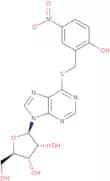
CAS:<p>S-(2-Hydroxy-5-nitrobenzoyl)-6-thioinosine is a population of endogenous inotropic agents that are transported by the uptake system. It interacts with benzodiazepine receptor and has been shown to act as an agonist. The uptake system is responsible for the uptake of S-(2-hydroxy-5-nitrobenzoyl)-6-thioinosine, which then binds to the benzodiazepine receptor. This binding causes an increase in cAMP levels and subsequent relaxation of smooth muscle cells. S-(2-hydroxynitrobenzoyl)-6-thioinosine has been shown to be a transport inhibitor, which affects the uptake of other drugs such as benzodiazepines and antiepileptics. It also modulates responsiveness through interaction with the transport system.</p>Fórmula:C17H17N5O7SPureza:Min. 95%Peso molecular:435.41 g/mol2-Amino-6-chloro-9-(3'-deoxy-3'-fluoro-b-D-ribofuranosyl)-9H-purine
CAS:<p>2-Amino-6-chloro-9-(3'-deoxy-3'-fluoro-b-D-ribofuranosyl)-9H-purine is a novel, activator ribonucleoside phosphoramidite and monophosphate nucleoside. It is synthesized from 2,4,5,6,-tetraiodo-1H-[1]pyrrole and 6-chloropurine ribofuranose. The chemical name is 1-[2'-(deoxyribofuranosyl) (3', 3'', 5', 5'', 5'')-2'-(2,4,5,6 tetraiodophenyl)] -2-(3'-fluorobenzoyl) -4-(3'-triazolecarboxamide) -1H-[1]pyrrole 4,5 dione. CAS No. 1612192-05-8.</p>Pureza:Min. 95%2'-O-tert-Butyldimethylsilyl-5'-O-DMT-N6-(2-Isopentenyl)adenosine 3'-CE phosphoramidite
<p>2'-O-tert-Butyldimethylsilyl-5'-O-DMT-N6-(2-Isopentenyl)adenosine 3'-CE phosphoramidite is an antiviral nucleoside, which is synthesized by the reaction of 2'-deoxyribonucleosides with the activator. This product is a novel chemical compound that has antiviral and anticancer activity. It can be used as a precursor for other nucleosides.</p>Pureza:Min. 95%3',5'-Di-O-acetyl-2'-deoxyguanosine
CAS:<p>3',5'-Di-O-acetyl-2'-deoxyguanosine is a nucleoside that is activated by hypochlorous acid to form a reactive intermediate, which can then react with other molecules. 3',5'-Di-O-acetyl-2'-deoxyguanosine has been shown to be selectively cytotoxic to human tumor cells and may be used as a radiosensitizer for cancer treatment. The reaction products of this compound include hypochlorite and hydrogen peroxide, which are strong oxidizing agents that cause tissue injury. This compound is also an effective reagent for the detection of myeloperoxidase in plasma samples.</p>Fórmula:C14H17N5O6Pureza:Min. 95%Cor e Forma:PowderPeso molecular:351.32 g/mol1-[(5E)-5,6-Dideoxy-6-(diethoxy phosphinyl)-2-O-methyl-beta-D-ribo-hex-5-enofuranosyl]uracil
CAS:1-[(5E)-5,6-Dideoxy-6-(diethoxy phosphinyl)-2-O-methyl-beta-D-ribo-hex-5-enofuranosyl]uracil is a novel monophosphate that was synthesized by modifying a known anticancer nucleoside. It is an activator of the antiviral ribonucleotide reductase and deoxyribonucleotide reductase. 1-[(5E)-5,6-Dideoxy-6-(diethoxy phosphinyl)-2-O-methyl-beta-D-ribohexanofuranosyl]uracil has been shown to inhibit the proliferation of cancer cells in vitro and in vivo. It also inhibits tumor growth without affecting normal tissue.Pureza:Min. 95%2',3'-Didehydro-3'-dideoxy-thymidine-5'-monophosphate, lithium salt
<p>2',3'-Didehydro-3'-dideoxy-thymidine-5'-monophosphate, lithium salt is a novel antiviral nucleoside analog that inhibits the synthesis of DNA. The drug is currently being studied to treat herpes simplex virus infections. It has been shown to inhibit viral replication in vitro and in vivo, and to induce reactivation of latent virus. 2',3'-Didehydro-3'-dideoxy-thymidine-5'-monophosphate, lithium salt also has anticancer activity by inhibiting DNA synthesis and inducing apoptosis via activation of the caspase cascade.<br>2',3'-Didehydro-3'-dideoxy-thymidine-5'-monophosphate, lithium salt is a modified nucleoside analog that is synthesized from 3’,5’-O-(1H-tetrazole)-2’,4’,6</p>Pureza:Min. 95%2'-CMethylcytidine 5'-monophosphate
<p>2'-CMethylcytidine 5'-monophosphate (2'-C-5MP) is a synthetic nucleoside that is chemically modified to inhibit viral replication. 2'-C-5MP inhibits the synthesis of DNA by binding to the polymerase enzyme of the virus and preventing it from synthesizing new DNA strands. This prevents the virus from replicating, which in turn prevents it from spreading through the body. The antiviral activity of 2'-C-5MP has been demonstrated in vitro against herpes simplex virus type 1 (HSV-1), herpes simplex virus type 2 (HSV-2), cytomegalovirus (CMV), respiratory syncytial virus (RSV), and human immunodeficiency virus type 1 (HIV-1). It also has anticancer activity and can be used as an alternative to chemotherapy for treating cancer cells. 2'-C-5MP is a novel compound with high purity and high quality, as evidenced</p>Pureza:Min. 95%2'-Deoxy-2'-fluoro-2'-C-methyluridine 5'-triphosphate sodium salt
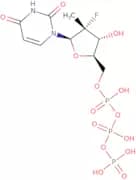
CAS:<p>2'-Deoxy-2'-fluoro-2'-C-methyluridine 5'-triphosphate sodium salt is a novel nucleoside phosphoramidite that is used in the synthesis of DNA. It has antiviral and anticancer properties, and it inhibits viral replication and also induces apoptosis in cancer cells. 2'-Deoxy-2'-fluoro-2'-C-methyluridine 5'-triphosphate sodium salt has been shown to inhibit HIV replication with an IC50 value of 0.5 mM. It specifically targets HIV reverse transcriptase, which is responsible for the conversion of RNA into DNA during the early stages of infection. The compound also inhibits cellular proliferation and induces apoptosis in cancer cells, including prostate cancer cells.</p>Fórmula:C10H16FN2O14P3Pureza:Min. 95%Peso molecular:500.16 g/mol2-Amino-6-mercapto-9-(2',3',5'-tri-O-acetyl-b-ribofuranosyl)purine
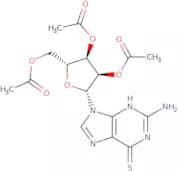
CAS:<p>2-Amino-6-mercapto-9-(2',3',5'-tri-O-acetyl-b-ribofuranosyl)purine (2AMAP) is an Activator that belongs to the group of nucleosides. It is a novel, modified nucleoside consisting of 2'-deoxyribonucleosides and phosphoramidites. 2AMAP has been shown to inhibit the proliferation of cancer cells and HIV viruses. This drug also has antiviral properties and can be used as a chemotherapeutic agent for the treatment of diseases such as chronic hepatitis B or C, cytomegalovirus or herpes virus infection. 2AMAP is highly purified, with a purity level of >99%.</p>Fórmula:C16H19N5O7SPureza:Min. 95%Peso molecular:425.42 g/mol2'-Deoxycytidine-5'-O-(1-thiotriphosphate) lithium salt
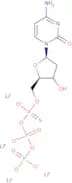
CAS:<p>2'-Deoxycytidine-5'-O-(1-thiotriphosphate) lithium salt (dCTPTP) is a nucleotide analogue that inhibits DNA replication. It is a substrate for DNA polymerase and can be incorporated into the growing strand of DNA. This drug has been shown to inhibit the replication of retroviruses, such as murine leukemia virus and human immunodeficiency virus type 1, in tissue cultures with relatively low concentrations. It also inhibits dengue virus when present at high concentrations. 2'-Deoxycytidine-5'-O-(1-thiotriphosphate) lithium salt has been used to study the mechanism of transcription-polymerase chain reactions by inhibiting RNA synthesis in vitro and in vivo.</p>Fórmula:C9H16N3O12P3S·Li4Pureza:Min. 95%Peso molecular:506.95 g/molN6-Benzyl-5'-ethylcarboxamidoadenosine
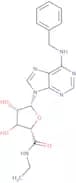
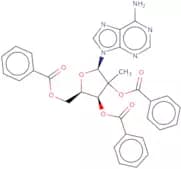
CAS:<p>N6-Benzyl-5'-ethylcarboxamidoadenosine is a novel nucleoside that has shown anticancer and antiviral activity. It is one of the first phosphoramidites to be synthesized in high purity, and it can be used as an activator for ribonucleoside synthesis. This compound also has been shown to have anti-inflammatory properties, which may be due to its ability to inhibit prostaglandin synthesis.</p>Fórmula:C19H22N6O4Pureza:Min. 95%Peso molecular:398.42 g/mol6-Amino-9-(2',3',5'-tri-O-benzoyl-2'-C-methyl-b-D-ribofuranosyl)purine
<p>6-Amino-9-(2',3',5'-tri-O-benzoyl-2'-C-methyl-b-D-ribofuranosyl)purine is a novel nucleoside analog that has been modified to include a 2'-C methyl group at the 5' position. This modification prevents the formation of an undesired phosphodiester linkage between the nucleotide and ribonucleotide moieties, which can lead to degradation of the drug. The purine base is attached at the 3' position, which is important for its antiviral activity. 6-Amino-9-(2',3',5'-tri-O-benzoyl-2'-C-methylbDribofuranosyl)purine is active against DNA viruses and has anticancer properties.</p>Fórmula:C32H27N5O7Pureza:Min. 95%Peso molecular:593.6 g/mol5-[N-(6-Aminohexyl)-3-E-acrylamido]-2'-deoxy-5'-O-DMT-uridine
CAS:<p>5-[N-(6-Aminohexyl)-3-E-acrylamido]-2'-deoxy-5'-O-DMT-uridine is a novel, activator ribonucleoside derived from the modified nucleosides 5-[N-(6-aminohexyl)-3-E-acrylamido]-2'-deoxyadenosine and 2'-deoxyuridine. It has been shown to be an effective anticancer, antiviral and antiparasitic agent. 5-[N-(6-Aminohexyl)-3-E-acrylamido]-2'-deoxy-5'-O-DMT-uridine has exhibited anticancer activity against human leukemia cells in culture, inhibiting DNA synthesis by blocking the enzyme DNA polymerase. This novel compound also blocks viral replication by inhibiting the synthesis of RNA by an enzyme called RNA polymerase II.</p>Fórmula:C39H46N4O8Pureza:Min. 95%Peso molecular:698.82 g/mol3'-Azido-2',3'-dideoxy-5'-O-DMT-5-methylcytidine N4-succinate
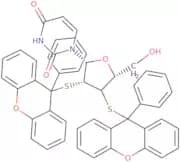
<p>3'-Azido-2',3'-dideoxy-5'-O-DMT-5-methylcytidine N4-succinate is a novel modified nucleoside that is activated by diphosphate. It is an antiviral agent that inhibits the synthesis of viral DNA and RNA. 3'-Azido-2',3'-dideoxy-5'-O-DMT-5-methylcytidine N4-succinate may be used as a chemotherapeutic agent for cancer treatment. The chemical name for this compound is 5,6,7,8,-tetrahydro-[1,2,4]triazolo[4,3a][1,4]benzodiazepin-[1,2a]-one 3'N4-(N',N',N'')-trisuccinoyl ester (3'azido) 2',3'-dideoxyadenosine 5'</p>Pureza:Min. 95%2',3'-Di(9-phenylxanthen-9-yl)dithiouridine
CAS:<p>2',3'-Di(9-phenylxanthen-9-yl)dithiouridine is a synthetic nucleoside that has antiviral, anticancer and antitumor properties. It is an activator of the enzyme ribonucleotide reductase, which converts ribonucleotides to deoxyribonucleotides. 2',3'-Di(9-phenylxanthen-9-yl)dithiouridine is used as a monophosphate or diphosphate for the treatment of cancer and HIV/AIDS. This drug has shown high purity and quality and can be synthesized in high yield.</p>Fórmula:C47H36N2O6S2Pureza:Min. 95%Peso molecular:788.93 g/molN6-Benzoyl-2'-deoxy-5'-O-DMT-adenosine 3'-succinyl CPG 2000 Å
<p>N6-Benzoyl-2'-deoxy-5'-O-DMT-adenosine 3'-succinyl CPG 2000 Å, a novel nucleoside analog, is an antiviral agent that inhibits the synthesis of viral DNA. It also induces apoptosis and cell cycle arrest in cancer cells. N6-Benzoyl-2'-deoxy-5'-O-DMT-adenosine 3'-succinyl CPG 2000 Å is synthesized by the coupling of deoxyribonucleotide phosphoramidite monomers onto a carrier support with a molecular weight of 2000Å. This product is available as white solid, and it has purity greater than 99%.</p>Pureza:Min. 95%Adenosine 3',5'-cyclic monophosphothioate Rp-isomer triethylammonium salt
CAS:Adenosine 3',5'-cyclic monophosphothioate Rp-isomer triethylammonium salt is a neurotrophic factor that can be used in the treatment of neurological disorders. It has been shown to activate various biological processes, such as neurotransmitter release and neurite outgrowth. Adenosine 3',5'-cyclic monophosphothioate Rp-isomer triethylammonium salt also has been shown to have an effect on body mass index (BMI) and colony stimulating factor (CSF). It stimulates the production of IGF-I, which is involved in the regulation of metabolic processes and has a positive effect on cell proliferation. Adenosine 3',5'-cyclic monophosphothioate Rp-isomer triethylammonium salt also has been shown to stimulate signal pathways that are involved in apoptosis and neuronal differentiation.Fórmula:C10H11N5O5PS·C6H16NPureza:Min. 95%Peso molecular:446.46 g/mol8-Bromo-2'-O-methyladenosine
8-Bromo-2'-O-methyladenosine is a modified nucleoside that is used as an antiviral and anticancer drug. It is also a high quality, novel, phosphoramidite building block. 8-Bromo-2'-O-methyladenosine has been shown to inhibit the growth of human cancer cells in culture and has anti-inflammatory effects in mice.Pureza:Min. 95%Pyrazolo[1,5-a]pyrimidine-2-carboxylic acid
CAS:<p>Pyrazolo[1,5-a]pyrimidine-2-carboxylic acid is a high purity chemical substance. It is an antiviral and anticancer agent, which has been shown to inhibit the replication of DNA in vitro. Pyrazolo[1,5-a]pyrimidine-2-carboxylic acid can be used for the synthesis of ribonucleosides, deoxyribonucleosides, nucleoside phosphoramidites, diphosphate and triphosphate. This novel chemical substance is also a potential inhibitor of DNA polymerase and RNA polymerase.</p>Fórmula:C7H5N3O2Pureza:Min. 95%Peso molecular:163.13 g/mol5'-O-DMT-2'-O-(2-methylacetamido)-5-methyluridine
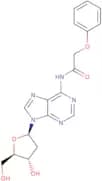
5'-O-DMT-2'-O-(2-methylacetamido)-5-methyluridine is a monophosphate of deoxyribonucleosides. It is an antiviral and anticancer agent that inhibits the synthesis of RNA in cells, which can lead to the death of the cell. The novel chemical structure of 5'-O-DMT-2'-O-(2-methylacetamido)-5-methyluridine makes it a useful drug for treatment against viral infections and cancer.Pureza:Min. 95%2'-Deoxy-N6-phenoxyacetyladenosine
CAS:<p>2'-Deoxy-N6-phenoxyacetyladenosine is a cyclic oligonucleotide analog that has been shown to be efficient in inhibiting the replication of RNA. It binds to the RNA polymerase, preventing transcription and replication of the nucleic acid. 2'-Deoxy-N6-phenoxyacetyladenosine is also an effective inhibitor of DNA synthesis and can inhibit the synthesis of proteins by binding to ribosomes. This drug is structurally similar to deoxyadenosine, which is a component of DNA, and it has been shown to be more potent than other analogs.</p>Fórmula:C18H19N5O5Pureza:Min. 97 Area-%Peso molecular:385.38 g/molN6-Benzoyl-2'-deoxy-5'-O-pixyladenosine
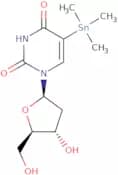
<p>N6-Benzoyl-2'-deoxy-5'-O-pixyladenosine is a novel nucleoside that acts as an antiviral and anticancer agent. It inhibits the synthesis of DNA and RNA by binding to the ribonucleotide reductase enzyme. N6-Benzoyl-2'-deoxy-5'-O-pixyladenosine has shown activity against several human cancer cell lines, including leukemia cells. This drug also binds to the viral reverse transcriptase enzyme, preventing viral replication.</p>Fórmula:C36H29N5O5Pureza:Min. 95%Peso molecular:611.66 g/mol5-(Trimethylstannyl)-2'-deoxyuridine
CAS:<p>5-(Trimethylstannyl)-2'-deoxyuridine is a nucleoside analogue that is structurally related to thymidine. It has been shown to be cytotoxic in vitro, with high cytotoxicity for human glioma cells. This drug has been detected in vivo using autoradiography and microspectrophotometry, with a maximum uptake in the brain and detectable levels in the kidneys and liver. 5-(Trimethylstannyl)-2'-deoxyuridine is taken up by cells through an energy transfer process. The drug is demercurated from the cell surface by extracellular enzymes, such as sulfatases and phosphatases, converting it into 5-mercapto-2'-deoxyuridine (MdUrd), which can be detected by its UV-absorption characteristics.</p>Fórmula:C12H20N2O5SnPureza:Min. 95%Peso molecular:391.01 g/molN6-Benzoyl-3'-O-tert-butyldimethylsilyl-adenosine 2'-CE phosphoramidite
<p>N6-Benzoyl-3'-O-tert-butyldimethylsilyl-adenosine 2'-CE phosphoramidite is a novel nucleoside that has been synthesized and characterized. It is an antiviral agent and has been demonstrated to have anticancer properties. N6-Benzoyl-3'-O-tert-butyldimethylsilyl-adenosine 2'-CE phosphoramidite is a phosphoramidite and is used in DNA synthesis as a replacement for diphosphate, which can be toxic when it reacts with ribonucleotides or deoxyribonucleotides. This novel nucleoside also inhibits the enzyme DNA polymerase, which is required for viral replication.</p>Fórmula:C53H66N7O8PSiPureza:Min. 95%Peso molecular:988.19 g/molN-(tert-butylphenoxyacetyl)-5'-O-DMT-2'-O-methylguanosine 3'-CE phosphoramidite
<p>N-(tert-butylphenoxyacetyl)-5'-O-DMT-2'-O-methylguanosine 3'-CE phosphoramidite is a novel nucleoside analogue with antiviral and anticancer activity. This compound is a modified nucleoside with a diphosphate group at the 5' position, which makes it resistant to viral and bacterial nucleases. N-(tert-butylphenoxyacetyl)-5'-O-DMT-2'-O-methylguanosine 3'-CE phosphoramidite also inhibits DNA synthesis and can induce apoptosis in cancer cells. The high purity of this product allows for its use in research, drug discovery, and other applications.</p>Fórmula:C53H64N7O10PPureza:Min. 95%Peso molecular:990.09 g/mol2'-Deoxy-5'-O-DMT-nebularine 3'-CE phosphoramidite
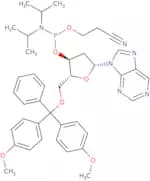
CAS:<p>2'-Deoxy-5'-O-DMT-nebularine 3'-CE phosphoramidite is an anticancer agent that is used in the treatment of leukemia. It inhibits DNA and RNA synthesis, leading to cell death by inhibiting the production of proteins vital for cell division. 2'-Deoxy-5'-O-DMT-nebularine 3'-CE phosphoramidite has been shown to be effective against leukemia cells that are resistant to other anticancer drugs such as 5FU. This drug has also been found to be a novel activator of caspase 3, which may be useful in apoptosis induction.</p>Fórmula:C40H47N6O6PPureza:Min. 95%Peso molecular:738.81 g/mol2,6-Diamino-9-(2'[2-methylacetamido]-b-D-ribofuranosyl)purine
2,6-Diamino-9-(2'[2-methylacetamido]-b-D-ribofuranosyl)purine is an antiviral drug that is an analogue of adenosine. It has been shown to be a potent activator of the immune system and also has anticancer properties. 2,6-Diamino-9-(2'[2-methylacetamido]-b-D-ribofuranosyl)purine is synthesized from 2',3'-dideoxyadenosine and 2,6 diaminopurine riboside by the use of activated phosphoramidites in a modified nucleoside synthesizer. The CAS number for this compound is 70717-54-8.Pureza:Min. 95%Cytarabine-5-monophosphate-15N2,13C1
<p>Cytarabine-5-monophosphate-15N2, 13C1 is a monophosphate nucleoside that inhibits viral replication. It is an antiviral agent used in the treatment of herpes simplex virus infections and other viruses such as HIV. Cytarabine-5-monophosphate-15N2, 13C1 also has anticancer properties and can be used to prevent cancer by inhibiting DNA synthesis. The compound is a modified nucleoside that lacks the 2' hydroxyl group and has an activated phosphate at the 3' position. This novel nucleoside is synthesized from deoxyribonucleosides using phosphoramidites as starting materials. CAS No.: 127468-52-8</p>Pureza:Min. 95%2,6-Dichloro-7-methylpurine
CAS:<p>2,6-Dichloro-7-methylpurine (2,6-DCMP) is a chlorinated purine analog that has anticancer activity. It is an ATP competitive inhibitor that inhibits protein synthesis by competitively binding to the alpha subunit of the ribosome. 2,6-DCMP has been shown to have strong antiviral activity against human immunodeficiency virus and cytotoxic effects on human adenocarcinoma cells in vitro. The IC50 values for this compound are 50 nM against HIV and 5 μM against human adenocarcinoma cells.</p>Fórmula:C6H4Cl2N4Pureza:Min. 95%Peso molecular:203.03 g/mol8-Allyloxy-N2-isobutyryl-2-deoxyguanosine
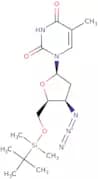
CAS:8-Allyloxy-N2-isobutyryl-2-deoxyguanosine is an anticancer drug that has been modified to be resistant to degradation by nucleases. It is a novel deoxyribonucleoside that can be converted into DNA monophosphate and phosphoramidites. 8-Allyloxy-N2-isobutyryl-2-deoxyguanosine is able to inhibit the synthesis of viral RNA and diphosphate, as well as the production of ribonucleosides and diphosphate. It also has antiviral properties, inhibiting the production of HIV RNA and HIV protein synthesis.Fórmula:C17H23N5O6Pureza:Min. 95%Peso molecular:393.40 g/mol3'-Azido-5'-O-tert-butyldimethylsilyl-3'-deoxythymidine
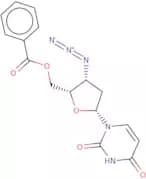
CAS:<p>3'-Azido-5'-O-tert-butyldimethylsilyl-3'-deoxythymidine (BUdR) is an antiviral agent that is used in the synthesis of DNA and RNA. BUdR is a modified phosphoramidite that is activated with diphosphate. It has a high quality, high purity, and a novel structure. BUdR has been shown to have anticancer properties as well as inhibitory effects on HIV production in cells.</p>Fórmula:C16H27N5O4SiPureza:Min. 95%Peso molecular:381.51 g/mol3'-Azido-5'-O-benzoyl-2',3'-dideoxyuridine
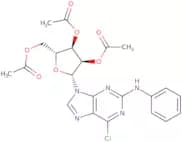
<p>3'-Azido-5'-O-benzoyl-2',3'-dideoxyuridine is a novel nucleoside that is synthesized by reacting 3'-azido-5'-deoxyuridine with 5-(benzoyl)salicylic acid. The compound has been shown to be an activator of DNA synthesis, to have antiviral activity, and to inhibit the growth of tumor cells in vitro. 3'-Azido-5'-O-benzoyl-2',3'-dideoxyuridine is a nucleoside analogue that may be useful in anticancer therapy.</p>Fórmula:C16H15N5O5Pureza:Min. 95%Peso molecular:357.32 g/mol6-Chloro-N-phenyl-9-(2,3,5-tri-O-acetyl-b-D-ribofuranosyl)-9H-purin-2-amine
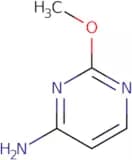
CAS:<p>6-Chloro-N-phenyl-9-(2,3,5-tri-O-acetyl-b-D-ribofuranosyl)-9H-purin-2-amine is a monophosphate nucleoside analog. It is an antiviral agent that inhibits the synthesis of DNA and RNA. 6CNP has been shown to be cytotoxic against cancer cells in vitro, as well as in vivo. This compound also shows anticancer activity by inhibiting the production of ribonucleosides and deoxyribonucleosides.</p>Fórmula:C22H22ClN5O7Pureza:Min. 95%Peso molecular:503.89 g/mol4-Amino-2-methoxypyrimidine
CAS:<p>4-Amino-2-methoxypyrimidine is a fluorescent compound that is used for the detection of hydrogen bonds, and as a precursor in the synthesis of other compounds. 4-Amino-2-methoxypyrimidine has been shown to be able to absorb ultraviolet radiation, which leads to its fluorescence. The compound can also form hydrogen bonds with other molecules and it has been shown to react with n-hexane. 4-Amino-2-methoxypyrimidine reacts with orthophosphate, producing singlet oxygen and transferring a proton. It also reacts with solvents such as water or ethanol, giving off light.</p>Fórmula:C5H7N3OPureza:Min. 95%Peso molecular:125.13 g/mol2',3'-Di-O-acetyl-5'-deoxy-5-fluoro-N-[(2-methylbutoxy)carbonyl]cytidine
CAS:<p>2',3'-Di-O-acetyl-5'-deoxy-5-fluoro-N-[(2-methylbutoxy)carbonyl]cytidine is an activator, anticancer, monophosphate nucleoside that is synthesized from 2'-deoxycytidine and 5'-fluorouracil. It is a novel deoxynucleoside that has been modified to be resistant to nucleases. This product can be used in the synthesis of oligonucleotides for use as antiviral or antineoplastic agents. 2',3'-Di-O-acetyl-5'-deoxy-5-fluoro-N-[(2-methylbutoxy)carbonyl]cytidine is also known by its CAS number 1341231-51-3.</p>Fórmula:C19H26FN3O8Pureza:Min. 95%Peso molecular:443.42 g/mol2'-Deosy-O6-diphenylcarbamoyl-5'-O-DMT-N2-isobutyrylguanine
<p>2'-Deoxy-2'-O-diphenylcarbamoyl-5'-O-DMT-N2-isobutyrylguanine (2'-DPCG) is a novel antiviral and anticancer agent. It has been shown to inhibit the replication of both DNA and RNA viruses. 2'-DPCG is synthesized in a high yield and purified to near homogeneity. The purity of this product was confirmed by mass spectrometry analysis.<br>The CAS number for this product is 1227071-12-0.</p>Pureza:Min. 95%N4-Benzoyl-3'-O-tert-butyldimethylsilyl-5'-O-DMT-cytidine
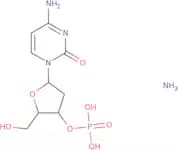
<p>N4-Benzoyl-3'-O-tert-butyldimethylsilyl-5'-O-DMT-cytidine is a nucleoside with anticancer, antiviral, and antiretroviral properties. It is synthesized by reacting cytidine with benzoyl chloride in the presence of tert-butyldimethylsilyl chloride. N4-Benzoyl-3'-O-tert-butyldimethylsilyl-5'-O-DMTcytidine has shown to be a novel and potent inhibitor of the human immunodeficiency virus type 1 (HIV1) reverse transcriptase. It also inhibits DNA synthesis and has been shown to inhibit tumor cell growth in vitro.</p>Fórmula:C43H49N3O8SiPureza:Min. 95%Peso molecular:763.95 g/mol2'-Deoxycytidine-3'-monophosphate ammonium salt
CAS:<p>2'-Deoxycytidine-3'-monophosphate ammonium salt is a synthetic compound that is used in the production of phosphite fertilizers. It is also used to detect the presence of phosphorus and sulfur in elements, as well as to synthesize alkylene compounds. In addition, 2'-Deoxycytidine-3'-monophosphate ammonium salt can be used in the synthesis of ribozymes and deoxyadenosyl compounds.</p>Fórmula:C9H14N3O7P·2NH3Pureza:Min. 95%Peso molecular:341.26 g/mol2'-Deoxy-5'-O-DMT-N2-isobutyrylguanosine 3'-H phosphonate triethylammonium salt
CAS:<p>2'-Deoxy-5'-O-DMT-N2-isobutyrylguanosine 3'-H phosphonate triethylammonium salt is a novel nucleoside analog. It has been shown to be cytotoxic to cancer cells in vitro and in vivo. 2'-Deoxy-5'-O-DMT-N2-isobutyrylguanosine 3'-H phosphonate triethylammonium salt inhibits viral replication, including herpes simplex virus type 1 (HSV1) and human immunodeficiency virus type 1 (HIV1), by inhibiting DNA synthesis.</p>Fórmula:C35H37N5O9PPureza:Min. 95%Peso molecular:804.89 g/mol3'-O-Aminoacetoxy-2'-deoxyadenosine 5'-O-triphosphate triethylammonium salt
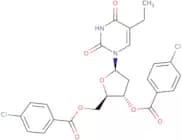
<p>Please enquire for more information about 3'-O-Aminoacetoxy-2'-deoxyadenosine 5'-O-triphosphate triethylammonium salt including the price, delivery time and more detailed product information at the technical inquiry form on this page</p>Fórmula:C13H21N6P3O12•NaxPureza:Min. 98 Area-%Cor e Forma:PowderPeso molecular:546.26 g/mol5-Ethyl-3',5'-bis-(p-chlorobenzoyl)-2'-deoxyuridine
CAS:<p>5-Ethyl-3',5'-bis-(p-chlorobenzoyl)-2'-deoxyuridine is a phosphoramidite nucleoside analog that inhibits viral replication. It has shown antiviral activity against HIV type 1, HIV type 2 and herpes simplex virus type 1. 5-Ethyl-3',5'-bis-(p-chlorobenzoyl)-2'-deoxyuridine is an analogue of the natural nucleoside uridine and is used in the synthesis of modified DNA and RNA molecules. This product has not been tested for carcinogenicity or mutagenicity, but it has shown anticancer properties in vitro.</p>Fórmula:C25H22Cl2N2O7Pureza:Min. 95%Peso molecular:533.36 g/mol1,5-Anhydro-4,6-O-benzylidene-2,3-dideoxy-2-[uracil-1-yl]-D-glucitol
CAS:<p>1,5-Anhydro-4,6-O-benzylidene-2,3-dideoxy-2-[uracil-1-yl]-D-glucitol is a synthetic nucleoside that is used as an antiviral agent. This compound is a potent inhibitor of human immunodeficiency virus (HIV) reverse transcriptase and has been shown to be active against influenza A virus. 1,5-Anhydro-4,6-O-benzylidene-2,3-dideoxy-2-[uracil]-D glucitol is also an anticancer agent that inhibits DNA synthesis in cancer cells. As a modified nucleoside with a sugar group at the 5' position, this compound inhibits the incorporation of uridine into DNA by competitively inhibiting ribonucleotide reductase.</p>Fórmula:C17H18N2O5Pureza:Min. 95%Peso molecular:330.34 g/mol4-Amino-6-methyl-8-(2'-deoxy-b-D-ribofuranosyl)-7-pteridone
CAS:<p>4-Amino-6-methyl-8-(2'-deoxy-b-D-ribofuranosyl)-7-pteridone (4AMD) is an adenosine analog that is fluorescent. 4AMD is not hydrolyzed by adenosine deaminase and has a higher affinity for the A1 receptor than for the A2a receptor. This makes it a useful probe for the study of adenosine mediated, yields, and analogs. The fluorescence properties of 4AMD were studied in different solvents at various temperatures to monitor the interaction of 4AMD with catalysis. The monomeric form of 4AMD was used to measure its fluorescence properties.</p>Fórmula:C12H15N5O4Pureza:Min. 95%Peso molecular:293.28 g/mol2'-Deoxy-5'-O-DMT-5-(3-methacryloyl)uridine 3'-CE phosphoramidite
CAS:<p>2'-Deoxy-5'-O-DMT-5-(3-methacryloyl)uridine 3'-CE phosphoramidite is a synthetic nucleoside analogue. It is an antiviral and anticancer agent that inhibits viral DNA synthesis by inhibiting the enzyme DNA polymerase. The compound also induces apoptosis in cancer cells by inhibiting RNA synthesis. 2'-Deoxy-5'-O-DMT-5-(3-methacryloyl)uridine 3'-CE phosphoramidite has been shown to be cytotoxic to human breast cancer cells, and is currently being studied as a potential treatment for prostate cancer.</p>Fórmula:C43H51N4O10PPureza:Min. 95%Peso molecular:814.88 g/mol2'-Deoxyadenosine-5'-triphosphate dilithium salt
<p>2'-Deoxyadenosine-5'-triphosphate dilithium salt is a modified nucleoside that is used in the synthesis of DNA. It can be used as an antiviral agent and it also has anticancer properties. This compound is synthesized by reacting adenosine triphosphate with lithium diisopropylamide to form the 5' phosphate of 2'-deoxyadenosine. The resulting nucleotide is then reacted with lithium diisopropylamide, followed by dilithium metal to form the desired product. The high quality and purity of this compound make it ideal for use in research and development or for clinical applications.</p>Fórmula:C10H13N5O12P3·2LiPureza:Min. 95%Peso molecular:502.04 g/mol2',3'-Dideoxyinosine-5'-monophosphate triethylammonium salt
<p>2',3'-Dideoxyinosine-5'-monophosphate triethylammonium salt is a synthetic nucleoside that is used to inhibit the production of viral DNA. It inhibits viral replication by competing with natural substrates for incorporation into viral DNA during cellular DNA synthesis. 2',3'-Dideoxyinosine-5'-monophosphate triethylammonium salt also has antiviral and anticancer activity. This product is not for human use, but for research purposes only.</p>Pureza:Min. 95%N4-Acetyl-2'-deoxy-5'-O-DMT-cytidine 3'-succinyl CPG 500 Å
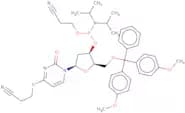
<p>N4-Acetyl-2'-deoxy-5'-O-DMT-cytidine 3'-succinyl CPG 500 Å is a novel modified nucleoside that has been shown to inhibit the replication of HIV and other viruses. N4-Acetyl-2'-deoxy-5'-O-DMT-cytidine 3'-succinyl CPG 500 Å is an activator for DNA synthesis. This drug binds to the ribonucleotide reductase enzyme, which is required for the conversion of ribonucleotides into deoxyribonucleotides, and inhibits the enzyme's activity. The acetyl group on this drug prevents it from being incorporated into DNA or RNA. This drug can be used as an antiviral or anticancer agent.</p>Pureza:Min. 95%Cor e Forma:Powder4-(2-Cyanoethylthio)-2'-deoxy-5'-DMT-uridine 3'-CE phosphoramidite
CAS:<p>4-(2-Cyanoethylthio)-2'-deoxy-5'-DMT-uridine 3'-CE phosphoramidite is a novel DNA synthesis inhibitor that is synthesized by the reaction of 4-(2-cyanoethylthio)-2'-deoxy-5'-DMT-uridine and phosphorous oxychloride. This product has antiviral and anticancer activities, as well as high purity and high quality. It can be used in cellular biology research, including the study of ribonucleosides, nucleosides, and deoxyribonucleosides. This product also inhibits HIV replication in vitro.</p>Fórmula:C42H50N5O7PSPureza:Min. 95%Peso molecular:799.93 g/mol




![1-[(5E)-5,6-Dideoxy-6-(diethoxy phosphinyl)-2-O-methyl-beta-D-ribo-hex-5-enofuranosyl]uracil](/_next/image/?url=https%3A%2Fstatic.cymitquimica.com%2Fproducts%2F3D%2Fthumb-webp%2FPD162928.webp&w=3840&q=75)


![5-[N-(6-Aminohexyl)-3-E-acrylamido]-2'-deoxy-5'-O-DMT-uridine](/_next/image/?url=https%3A%2Fstatic.cymitquimica.com%2Fproducts%2F3D%2Fthumb-webp%2FNA08232.webp&w=3840&q=75)



![Pyrazolo[1,5-a]pyrimidine-2-carboxylic acid](/_next/image/?url=https%3A%2Fstatic.cymitquimica.com%2Fproducts%2F3D%2Fthumb-webp%2FNP57366.webp&w=3840&q=75)




![2,6-Diamino-9-(2'[2-methylacetamido]-b-D-ribofuranosyl)purine](/_next/image/?url=https%3A%2Fstatic.cymitquimica.com%2Fproducts%2F3D%2Fthumb-webp%2FND167504.webp&w=3840&q=75)


![2',3'-Di-O-acetyl-5'-deoxy-5-fluoro-N-[(2-methylbutoxy)carbonyl]cytidine](/_next/image/?url=https%3A%2Fstatic.cymitquimica.com%2Fproducts%2F3D%2Fthumb-webp%2FND100109.webp&w=3840&q=75)




![1,5-Anhydro-4,6-O-benzylidene-2,3-dideoxy-2-[uracil-1-yl]-D-glucitol](/_next/image/?url=https%3A%2Fstatic.cymitquimica.com%2Fproducts%2F3D%2Fthumb-webp%2FNA04723.webp&w=3840&q=75)