Nucleosídeos
Os nucleosídeos são building blocks fundamentais dos ácidos nucleicos, compostos por uma base nitrogenada ligada a uma molécula de açúcar. Nesta seção, você encontrará uma ampla variedade de nucleosídeos essenciais para pesquisas em biologia molecular, bioquímica e farmacologia. Esses compostos desempenham papéis cruciais na síntese de DNA e RNA, e também são vitais em vários processos metabólicos. Os nucleosídeos são usados para estudar material genético, desenvolver terapias antivirais e anticancerígenas, e entender os mecanismos celulares. Na CymitQuimica, fornecemos nucleosídeos de alta qualidade para apoiar suas necessidades de pesquisa e desenvolvimento, garantindo pureza e confiabilidade para suas aplicações experimentais.
Foram encontrados 3569 produtos de "Nucleosídeos"
Ordenar por
Pureza (%)
0
100
|
0
|
50
|
90
|
95
|
100
6-Chloro-9-methylpurine
CAS:<p>6-Chloro-9-methylpurine is an inhibitor of the enzyme kinase. It has been shown to inhibit the activity of 6-chloropurine phosphohydrolase and 6-chloropurine nucleoside phosphorylase, which are important enzymes in purine metabolism. 6-Chloro-9-methylpurine can be used to treat a number of diseases, including myeloid leukemia, where it inhibits the production of nucleic acids. This drug has also been shown to inhibit the growth of lettuce by inhibiting chlorophyll synthesis.</p>Fórmula:C6H5ClN4Pureza:Min. 95%Peso molecular:168.58 g/mol8-Chloroadenosine 3',5'-cyclic monophosphate dihydrate
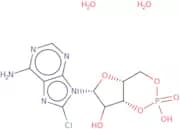
CAS:<p>8-Chloroadenosine 3',5'-cyclic monophosphate dihydrate (8-Cl-cAMP) is an anticancer drug that inhibits the growth of cells in vitro and in vivo. 8-Cl-cAMP is a cytostatic agent that can inhibit the proliferation of cancer cells, especially renal cell cancer cells. It also has synergistic activity with epidermal growth factor, which may be due to its ability to increase the production of reactive oxygen species and decrease mitochondrial membrane potential. 8-Cl-cAMP may have potential as an anticancer agent due to its ability to induce apoptosis and inhibit protein synthesis.</p>Fórmula:C10H11ClN5O6P·2H2OPureza:Min. 95%Peso molecular:399.69 g/mol3'-Deoxy-N6-octanoyladenosine
CAS:<p>3'-Deoxy-N6-octanoyladenosine is a nucleoside that is used to synthesize DNA, RNA, and other nucleic acid molecules. It has antiviral and anticancer properties. 3'-Deoxy-N6-octanoyladenosine has been shown to be an activator of phosphoramidites in the synthesis of DNA. This compound also inhibits the growth of cancer cells by inhibiting the synthesis of DNA and RNA in cells. The purity of this product is >98% and it can be used for research purposes or as a pharmaceutical intermediate.</p>Fórmula:C18H27N5O4Pureza:Min. 95%Peso molecular:377.44 g/mol8-Bromo-9-[3',5'-O-(1,1,3,3-tetraisopropyl-1,3-disiloxanediyl)-2'-deoxy-b-D-ribofuranosyl]guanine
CAS:8-Bromo-9-[3',5'-O-(1,1,3,3-tetraisopropyl-1,3-disiloxanediyl)-2'-deoxy-b-D-ribofuranosyl]guanine is a nucleoside analog that inhibits DNA synthesis in the cancer cells. This agent is an activator of nucleases and can inhibit RNA synthesis by inhibiting the enzyme ribonucleotide reductase. 8-Bromo-9-[3',5'-O-(1,1,3,3-tetraisopropyl-1,3-disiloxanediyl)-2'-deoxy-b-Dribofuranosyl]guanine also has antiviral activity against herpes simplex virus type 1 and 2. The drug is a novel compound with anticancer activity that targets DNA synthesis by binding to the enzyme topoisomerase II. ThisFórmula:C22H38BrN5O5Si2Pureza:Min. 95%Peso molecular:588.64 g/mol6-(2-Cyanoethylthio)-2'-deoxy-5'-O-DMT-N2-trifluoroacetylguanosine 3'-CE phosphoramidite
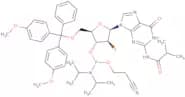
CAS:<p>6-(2-Cyanoethylthio)-2'-deoxy-5'-O-DMT-N2-trifluoroacetylguanosine 3'-CE phosphoramidite is a novel, modified nucleoside with antiviral, anticancer and other potential therapeutic activities. It is synthesized by the reaction of 6-(2-cyanoethylthio)-2'-deoxy-5'-O-DMT nucleoside with 2,4,6-trifluoroacetic anhydride in the presence of N,N'-diisopropylethylamine. The product is purified on a column to yield high quality material. The CAS number for this compound is 146691-59-0.</p>Fórmula:C45H50N8O7PSPureza:Min. 95%Peso molecular:934.96 g/mol6,6'-Azopurine
CAS:<p>6,6'-Azopurine is a hydrophobic organic compound that is used as an operational oxidant in the conversion of alcohols to aldehydes. It reacts with hydroxyl groups on the surface of the catalyst and undergoes nucleophilic attack to form a pyridinium salt. The reaction rate increases with increasing pH and temperature. 6,6'-Azopurine is also an immobilized oxidant that can be used for the oxidation of alcohols or hydrocarbons. Immobilization can be achieved by covalent coupling or adsorption on silica gel or alumina. 6,6'-Azopurine has been shown to have high activity against chlorides and is used for the oxidation of chlorides to produce chloride radicals.</p>Fórmula:C10H6N10Pureza:Min. 95%Peso molecular:266.22 g/mol5-Methoxyuridine 5′-triphosphate sodium, 85mM/L aqueous solution
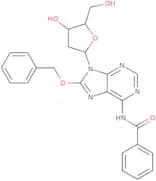
CAS:Please enquire for more information about 5-Methoxyuridine 5′-triphosphate sodium, 85mM/L aqueous solution including the price, delivery time and more detailed product information at the technical inquiry form on this pageFórmula:C10H17N2O16P3•NaxPureza:Min. 95%N6-Benzoyl-8-benzyloxy-2'-deoxyadenosine
CAS:<p>N6-Benzoyl-8-benzyloxy-2'-deoxyadenosine is a novel nucleoside with anticancer and antiviral properties. It is an antiviral that inhibits the synthesis of viral DNA by blocking the incorporation of ribonucleotide triphosphates into DNA, while leaving intact the synthesis of deoxyribonucleotides and phosphoramidites. In addition, it is a potent inhibitor of cellular DNA polymerases that catalyze synthesis of DNA from deoxyribonucleoside triphosphates. N6-Benzoyl-8-benzyloxy-2'-deoxyadenosine also has antitumor activity in animal models.</p>Fórmula:C24H23N5O5Pureza:Min. 95%Peso molecular:461.5 g/mol3'-Deoxythymidine-5'-triphosphate lithium salt - 100mM aqueous solution
CAS:3'-Deoxythymidine-5'-triphosphate lithium salt - 100mM aqueous solution is a phosphoramidite. It is an antiviral agent that inhibits the replication of DNA and RNA viruses by inhibiting the synthesis of viral nucleic acid. 3'-Deoxythymidine-5'-triphosphate lithium salt - 100mM aqueous solution has been shown to be effective against some cancer cells with high purity and novel properties.Fórmula:C10H17N2O13P3·xLiPureza:Min. 95%Peso molecular:466.17 g/mol2'-Deoxy-5'-O-DMT-guanosine-(DMF)-3'-Q Linker CPG; 1000 Å
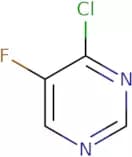
The 2'-Deoxy-5'-O-DMT-guanosine-(DMF)-3'-Q Linker CPG; 1000 Å is a synthetic, high quality, novel and high purity phosphoramidite that is activated with DMAP. The covalent linkage of the nucleoside to the CPG is made by an amidite coupling reaction. The following compounds have been synthesized on this support: ampicillin, chloramphenicol, gentamicin, kanamycin, neomycin and tetracycline. This product is used in anticancer and antiviral research.Pureza:Min. 95%4-Chloro-5-fluoropyrimidine
CAS:<p>4-Chloro-5-fluoropyrimidine is a fluoropyrimidine that is used in the synthesis of pharmaceuticals, such as 4-amino-2-chloro-5-fluoropyrimidine. This compound is synthesized by chlorinating 4-chloro-5-fluoropyrimidine with chlorine gas. The resulting product is hydrolyzed to yield 4-amino-2,4,5,6 tetrafluoro pyrimidines. 4CFP can also be obtained by hydrogenolysis of toluene with chlorine gas and sodium hydroxide or hydrolyzing an ammonium salt with hydrochloric acid.</p>Fórmula:C4H2ClFN2Pureza:Min. 95%Peso molecular:132.52 g/mol8-Bromoadenosine 3',5'-cyclic monophosphorothioate, Sp-isomer sodium salt
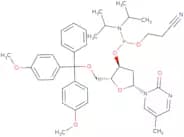
CAS:8-Bromoadenosine 3',5'-cyclic monophosphate is a nucleotide analog that binds to RNA polymerase and blocks the elongation of RNA. It has been shown to stimulate axonal regeneration in the rat spinal cord, by increasing the level of glutamate in the extracellular space. 8-Bromoadenosine 3',5'-cyclic monophosphate also stimulates nerve growth factor (NGF) production and activates protein kinase C (PKC). This drug also inhibits apoptosis by inhibiting the activity of Mcl-1 protein, which is involved in mitochondrial membrane permeability.Fórmula:C10H10BrN5O5PS·NaPureza:Min. 95%Cor e Forma:White to off-white solid.Peso molecular:446.51 g/mol2'-Deoxy-5'-O-DMT-5-methylzebularine 3'-CE phosphoramidite
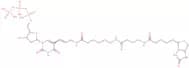
CAS:<p>2'-Deoxy-5'-O-DMT-5-methylzebularine 3'-CE phosphoramidite is a novel nucleoside that has been modified to contain a 5-methyl group at the 2′ position. It is phosphorylated with a phosphate group at the 3′ position and linked to an oligonucleotide via a 3′-O,O′-dimethoxytrityl (DMT) spacer. This novel nucleoside has antiviral activity against hepatitis C virus and cytomegalovirus, as well as anticancer properties. 2'-Deoxy-5'-O-DMT-5-methylzebularine 3'-CE phosphoramidite has shown antitumour activity in animal models of human breast cancer and melanoma.</p>Fórmula:C40H49N4O7PPureza:Min. 95%Cor e Forma:SolidPeso molecular:728.81 g/molBiotin-16-deoxyuridine-5'-triphosphate, lithium salt - 1 mM aqueous solution
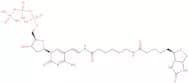
CAS:<p>Biotin-16-deoxyuridine-5'-triphosphate, lithium salt (Biotin-16-dUTP) is a nucleotide analog that is used in the detection of RNA and DNA. It is incorporated into the growing DNA or RNA strand by DNA polymerase and then detected by an enzyme that can detect biotin. Biotin-16-dUTP has been shown to be effective in identifying the occipital cortex during basic protein localization studies. The use of biotin-16-dUTP has also been shown to increase immune response as well as neuronal death in vivo models. This drug has also been shown to cause necrotic cell death in hl-60 cells, which may be due to its ability to inhibit creatine kinase and interfere with cellular ATP production. Biotin-16-dUTP has also been used for the detection of genome dna from HLA class I genes with monoclonal antibodies</p>Fórmula:C32H52N7O18P3S·xLiPureza:Min. 95%Cor e Forma:Colourless liquid.Peso molecular:947.78 g/mol6-Chloro-2-hydroxy-9-(2',3',5'-tri-O-acetyl-b-D-ribofuranosyl)purine
CAS:6-Chloro-2-hydroxy-9-(2',3',5'-tri-O-acetyl-b-D-ribofuranosyl)purine is a novel nucleoside that has been shown to have anticancer activity. It is synthesized by the condensation of 2,6 dichloropurine with 3,5 diacetyl b ribofuranosyl chloride in the presence of triethylamine and pyridine. The compound has been shown to inhibit viral replication and induce apoptosis in cancer cells. 6C2H9(2',3',5'-tri-O-acetylb-D-ribofuranosyl)purine may also be useful for the treatment of human immunodeficiency virus (HIV) infection.Fórmula:C16H17ClN4O8Pureza:Min. 95%Peso molecular:428.78 g/mol2'-Deoxy-2',2'-difluorocytidine 5'-monophosphate triethylammonium salt
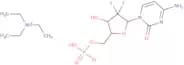
2'-Deoxy-2',2'-difluorocytidine 5'-monophosphate triethylammonium salt is an antiviral nucleotide that inhibits the synthesis of viral DNA by competing with natural substrates. It has been shown to be a potent activator of the phosphoramidite method, which is a synthetic method for the production of oligonucleotides. This nucleotide is synthesized by reacting 2-deoxy-2',2'-difluorocytidine 5'-triphosphate with TEA in DMF. The CAS number for this compound is 62533-81-7 and it has a molecular weight of 298.3 Da.Pureza:Min. 95%2,4,6-Trimethoxy-pyrimidine
CAS:Produto Controlado<p>2,4,6-Trimethoxy-pyrimidine is a heterobicyclic compound that contains three methoxy groups. It is a synthetic nucleobase that can be found in the nucleosides uridine and cytidine, as well as in other compounds such as pyrimidines. 2,4,6-Trimethoxy-pyrimidine has been shown to be reactive to nucleophilic solutes and has been used with success in the synthesis of lactams. The isomers of this compound have different efficiencies for reaction with nucleophilic solutes.</p>Pureza:Min. 95%N6-(4-Methyoxybenzoyl)adenosine
CAS:<p>N6-(4-Methoxybenzoyl)adenosine is an adenine base that is a furanose sugar, with a glycosidic bond. The furanose ring has a phenyl group and an adenine base in the conformation of pyranose. The phenyl ring is in the geometry of chair form and is bonded to the 6' position of the adenosine base. N6-(4-Methoxybenzoyl)adenosine has a glycosidic bond at C1' - C5'. It has an angstrom distance between C1'-C2' and C3'-C5'.</p>Fórmula:C18H19N5O6Pureza:Min. 95%Peso molecular:401.37 g/mol5'-O-DMT-2'-O-methylinosine
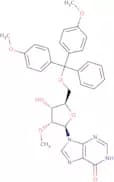
CAS:<p>5'-O-DMT-2'-O-methylinosine is a monophosphate nucleotide that has antiviral effects. It is synthesized from the synthetic nucleoside 5'-O-DMT-2'-deoxyuridine and 2'-O-methylinosine. The synthesis of 5'-O-DMT-2'-O-methylinosine is achieved through phosphoramidite chemistry, which produces a novel antiviral agent with high purity and quality. This compound has been shown to inhibit HIV replication in vitro, but further research is needed to determine its efficacy in vivo.</p>Fórmula:C32H32N4O7Pureza:Min. 95%Peso molecular:584.63 g/mol5-Aminoallyl- 2'-deoxyuridine 5'-triphosphate, labeled with 5/6-TAMRA - 1mM aqueous solution
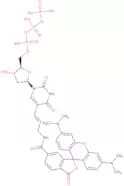
CAS:5-Aminoallyl-2'-deoxyuridine 5'-triphosphate is a novel chemical compound that is modified with 5/6-TAMRA and has anticancer, antiviral, and antitumor properties. It is an activator of ribonucleosides and deoxyribonucleosides. CAS No. 151345-35-6Fórmula:C37H40N5O18P3Pureza:Min. 95%Peso molecular:935.66 g/mol¹⁵N5, 2’-deoxy-8-oxoguanosine
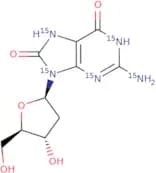
CAS:A 15N5 labelled version of 2'-Deoxy-8-oxoguanosine (8-OHdG) ND06344.Supplied as 30ug in 1ml waterFórmula:C10H13N5O5Pureza:Min. 95%Peso molecular:288.2 g/molBiotin-11-deoxycytidine-5'-triphosphate, lithium salt - 1 mM aqueous solution
CAS:Biotin-11-deoxycytidine-5'-triphosphate, lithium salt - 1 mM aqueous solution is an antiviral nucleoside that has been shown to inhibit HIV and HCV replication in vitro. It also inhibits the proliferation of cancer cells in vitro and induces apoptosis in vivo. Biotin-11-deoxycytidine-5'-triphosphate, lithium salt - 1 mM aqueous solution is a novel nucleoside that was designed for use as an anticancer agent. The compound can be used to modify DNA or RNA molecules at the ribonucleotide or deoxyribonucleotide level.Fórmula:C28H46N7O16P3SPureza:Min. 95%Peso molecular:861.69 g/molLutonarin
CAS:Lutonarin is a naturally occurring compound in the plant Pueraria lobata. It has been shown to have anti-cancer properties and can be used as an alternative to radiation therapy for cancer treatment. Lutonarin is a membrane-hyperpolarizing agent that is able to pass through the cell membrane, leading to membrane hyperpolarization. Lutonarin also inhibits the production of gamma-aminobutyric acid (GABA), which leads to increased cell proliferation and inhibition of root formation. Lutonarin has been found to inhibit enzyme activities, such as glucose monitoring and protocatechuic acid, phenolic acid, and crystalline cellulose degradation. This leads to reduced glucose levels in blood plasma and reduced degradation of polysaccharides in roots.Fórmula:C27H30O16Pureza:Min. 95%Peso molecular:610.5 g/mol7-Deaza-2'-deoxy-5'-O-DMT-xanthosine
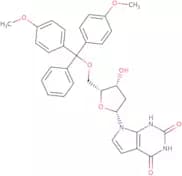
CAS:7-Deaza-2'-deoxy-5'-O-DMTxanthosine is a nucleoside analog with antiviral properties. It is an activator of the phosphoramidites and can be used in the synthesis of high quality, high purity, and novel nucleosides. 7-Deaza-2'-deoxy-5'-O-DMTxanthosine has been shown to inhibit the replication of DNA by forming a covalent bond with the deoxyribose sugar moiety of DNA. This modification prevents the polymerization of DNA, thereby inhibiting viral replication.Fórmula:C32H31N3O7Pureza:Min. 95%Peso molecular:569.6 g/mol5'-O-DMT-thymidine 3'-thiophosphoramidite
5'-O-DMT-thymidine 3'-thiophosphoramidite is a nucleoside that is used as a building block for the synthesis of DNA and RNA. The compound is also used to create antiviral drugs, anticancer agents, and novel drugs with antimicrobial properties. The chemical structure of 5'-O-DMT-thymidine 3'-thiophosphoramidite has been modified from the natural ribonucleoside thymidine. This modification prevents the phosphorylation of 5'-O-DMT-thymidine 3'-thiophosphoramidite by cellular kinases, which makes this compound more stable in vivo.Fórmula:C44H48N3O8PS2Pureza:Min. 95%Peso molecular:841.97 g/mol2'-Deoxycytidine-5'-carboxylic acid
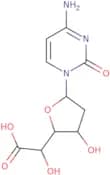
CAS:<p>2'-Deoxycytidine-5'-carboxylic acid (2'-DC) is a modified nucleoside that has been used as an anticancer, antiviral, and synthetic agent. 2'-DC inhibits the synthesis of DNA by binding to the enzyme DNA polymerase. It also inhibits viral replication by inhibiting the activity of reverse transcriptase and can be used as a potential anti-HIV drug. In addition, 2'-DC has been shown to have cytotoxic effects against cancer cells in vitro. This compound is synthesized from cytidine 5-monophosphate and phosphoramidite reagents in high purity and quantity. The CAS number for this compound is 4603-72-9.</p>Fórmula:C9H11N3O5Pureza:Min. 95%Peso molecular:241.2 g/mol5-Fluoro-2'-O-methyluridine
CAS:<p>5-Fluoro-2'-O-methyluridine is a nucleotide that can be used in the treatment of colorectal adenocarcinoma and other types of cancer. It inhibits the synthesis of DNA by blocking the activity of ribonucleotide reductase, an enzyme that converts ribonucleotides to deoxyribonucleotides. 5-Fluoro-2'-O-methyluridine has been shown to decrease the growth of human glioblastoma cells in cell culture and animal models. The effect is dose dependent and occurs through inhibition of RNA synthesis and protein synthesis, leading to cell death.</p>Fórmula:C10H13FN2O6Pureza:Min. 95%Peso molecular:276.22 g/mol5,6-Diaminouracil
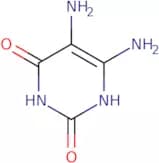
CAS:5,6-Diaminouracil is a nitrogen-containing heterocyclic compound that inhibits bacterial enzymes. 5,6-Diaminouracil is used as a pharmaceutical preparation for the treatment of cancer, and has been shown to be effective against various cancers, including colon cancer and breast cancer. 5,6-Diaminouracil can inhibit the growth of cells by binding to DNA and inhibiting DNA synthesis. This drug also has potent antitumor activity. 5,6-Diaminouracil has been used in analytical chemistry as an analytical method for determining the purity of products such as pharmaceuticals or dyes. The potency of this drug was determined electrochemically using cyclic voltammetry and it was found to have a constant inhibitory effect on tumor cell growth at low concentrations.Fórmula:C4H7ClN4O2Pureza:Min. 95%Peso molecular:178.58 g/mol2'-Deoxyguanosine-5'-monophosphate disodium salt hydrate
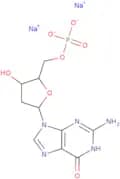
CAS:<p>2'-Deoxyguanosine-5'-monophosphate disodium salt hydrate is a novel nucleoside diphosphate that has antiviral and anticancer effects. It inhibits the synthesis of viral DNA, RNA, and proteins, which can lead to cell death by apoptosis. 2'-Deoxyguanosine-5'-monophosphate disodium salt hydrate also inhibits the proliferation of cancer cells and other malignant cells.</p>Fórmula:C10H12N5Na2O7PPureza:Min. 95%Peso molecular:391.19 g/molEmtricitabine-d2,15N
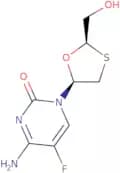
CAS:<p>Emtricitabine-d2,15N is a labelled version of emtricitabine. It is a nucleoside reverse transcriptase inhibitor that inhibits the HIV-1 virus by blocking the activity of the enzyme needed to convert RNA into DNA. This drug also offers long-term efficacy and can be used in combination with other antiretroviral agents including tenofovir alafenamide hemifumarate (TAF) and tenofovir disoproxil fumarate (TDF). The addition of TAF or TDF to emtricitabine-d2,15N provides an active antiretroviral therapy for HIV/AIDS patients. Emtricitabine-d2,15N has shown to reduce viral load significantly in people taking it as part of their treatment regimen.</p>Fórmula:C8D10FN3O3SPureza:Min. 95%Peso molecular:257.3 g/molN6-Benzoyl-5'-O-(4,4'-dimethoxytrityl) -2'-deoxyadenosine
CAS:<p>N6-Benzoyl-5'-O-(4,4'-dimethoxytrityl)-2'-deoxyadenosine is a versatile nucleoside building block.</p>Fórmula:C38H35N5O6Pureza:Min. 98 Area-%Peso molecular:657.71 g/molRef: 3D-W-104850
25gA consultar50gA consultar100gA consultar250gA consultar500gA consultar-Unit-ggA consultarPyrimidine-5-carboxamidine hydrochloride
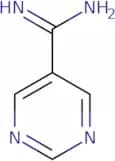
CAS:<p>Pyrimidine-5-carboxamidine hydrochloride (GC) is a guanosine analog that inhibits bacterial growth by binding to the anticodon region of ribosomes. GC has been shown to bind to the replicons of many organisms, including bacteria, and inhibit the formation of mRNA from DNA. This drug also inhibits methyltransferase, which prevents transfer RNA from being modified with methionine. GC may be used in research for eukaryotes and deamination reactions in trna modification.</p>Fórmula:C5H6N4·HClPureza:Min. 95%Peso molecular:158.59 g/molO6-Phenyl-2'-deoxyinosine
CAS:<p>O6-Phenyl-2'-deoxyinosine is a high purity, modified nucleoside that is a novel anticancer agent. It is used as a phosphoramidite in the synthesis of DNA and RNA. It has been shown to have cytotoxic effects against tumor cells and enhances the efficacy of chemotherapy. O6-Phenyl-2'-deoxyinosine has also been shown to be an activator of transcription factors, including NF-κB, AP-1, and STAT3.</p>Fórmula:C16H16N4O4Pureza:Min. 95%Peso molecular:328.32 g/mol2',3',5'-Tri-O-benzoyl-4'-C-fluoroadenosine
CAS:<p>2',3',5'-Tri-O-benzoyl-4'-C-fluoroadenosine is a novel nucleoside analogue that inhibits the proliferation of cancer cells. It is an activator of ribonucleotide reductase, which converts ribonucleosides to deoxyribonucleosides and thereby prevents viral replication. 2',3',5'-Tri-O-benzoyl-4'-C-fluoroadenosine has antiviral activity against influenza A virus and herpes simplex virus type 1 (HSV-1) in cell culture. This drug also has an inhibitory effect on the DNA polymerases and other enzymes involved in DNA synthesis. 2',3',5'-Tri-O-benzoyl-4'-C-fluoroadenosine is a high quality product with high purity, CAS No. 1000203-40-6.</p>Pureza:Min. 95%N6-Benzoyl-2',3'-dideoxyadenosine
CAS:N6-Benzoyl-2',3'-dideoxyadenosine is a nucleoside analog that inhibits the growth of Mycobacterium tuberculosis by preventing DNA replication. It is also a potent inhibitor of DNA synthesis, and binds to the beta-subunit of bacterial RNA polymerase, leading to inhibition of transcription. N6-Benzoyl-2',3'-dideoxyadenosine has shown in vitro activity against Mycobacterium tuberculosis and other bacteria that have been found to be resistant to conventional antibiotics.Fórmula:C17H17N5O3Pureza:Min. 95%Cor e Forma:White/Off-White SolidPeso molecular:339.36 g/mol8-Azidocyclic adenosine diphosphate ribose
CAS:8-Azidocyclic adenosine diphosphate ribose (8AADPR) is a molecule that is synthesized from ATP and ribose. It has been shown to inhibit the endoplasmic reticulum Ca2+-ATPase, which transports calcium ions out of the cell, leading to increased concentrations of calcium ions in the cytosol. 8AADPR also inhibits mitochondrial ATPase, which leads to an accumulation of ADP-ribose within mitochondria. This accumulation leads to the inhibition of protein synthesis within mitochondria and an activation of ryanodine receptors. There are no known adverse effects associated with 8AADPR at this time, but it should be used with caution due to its potential effects on cardiac function.Fórmula:C15H20N8O13P2Pureza:Min. 95%Peso molecular:582.31 g/mol2'-Deoxy-5-fluoroadenosine
<p>2'-Deoxy-5-fluoroadenosine is a nucleoside that is used in the synthesis of DNA and RNA. It has antiviral activity and can be used as an anticancer agent. This nucleoside is synthesized by reacting 2'-deoxyadenosine with 5-fluorouracil in a high-quality, high purity environment under stringent conditions. 2'-Deoxy-5-fluoroadenosine has also been shown to have antiretroviral activity against HIV and hepatitis B virus.</p>Pureza:Min. 95%Thymidine-a,a,a,6-D4
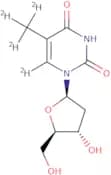
CAS:Produto Controlado<p>Thymidine-a,a,a,6-D4 is a nucleoside analogue that inhibits the replication of the hepatitis B virus. It is an analogue of thymidine and is activated by phosphorylation to its active form. This drug prevents viral replication by inhibiting early events in the viral life cycle. Thymidine-a,a,a,6-D4 has been shown to inhibit the synthesis of viral DNA and to inhibit the incorporation of thymidine into newly synthesized DNA. Thymidine-a,a,a,6-D4 also inhibits telbivudine resistance mutations in vitro.</p>Fórmula:C10H10N2O5D4Pureza:Min. 95%Peso molecular:246.25 g/molBiotin-11-uridine-5'-triphosphate, lithium salt - 1 mM aqueous solution
CAS:Biotin-11-uridine-5'-triphosphate, lithium salt (BUP) is a nucleoside analog that has been modified to allow the incorporation of BUP into DNA. The modification of BUP with lithium salts allows for the covalent attachment of BUP to DNA. This incorporation of BUP into DNA prevents the polymerase from binding to DNA and thus inhibits replication. Biotin-11-uridine-5'-triphosphate, lithium salt (BUP) has demonstrated anticancer and antiviral activity as well as being novel and high quality.Fórmula:C28H45N6O18P3S·xLiPureza:Min. 95%Peso molecular:878.67 g/mol9-(2'-Deoxy-5'-O-DMT-2'-fluoro-b-D-arabinofuranosyl)-N2-isobutyrylguanine 3'-CE phosphoramidite
CAS:<p>9-(2'-Deoxy-5'-O-DMT-2'-fluoro-b-D-arabinofuranosyl)-N2-isobutyrylguanine 3'-CE phosphoramidite is a novel nucleoside analogue that has shown to be effective against cancer. This product can also be used as an antiviral and antifungal agent. It is synthesized from 2,3,4,5,6-pentaacetoxybenzaldehyde and chloroacetamide. 9-(2'-Deoxy-5'-O-DMT-2'-fluoro-b-D-arabinofuranosyl)-N2-isobutyrylguanine 3'-CE phosphoramidite is a high quality product that is made of Ribonuclesides, Synthetic Monophosphate Nucleosides Diphosphate Modified Deoxyribonucleosides Activator.</p>Fórmula:C44H53FN7O8PPureza:Min. 95%Cor e Forma:White to off-white solid.Peso molecular:857.93 g/mol2',3',5'-Tri-O-benzoyl-2-thiouridine
CAS:<p>2',3',5'-Tri-O-benzoyl-2-thiouridine is an analog of the nucleoside thiouracil, which is a modified nucleoside. It inhibits the synthesis of DNA and RNA by competitively inhibiting the enzyme thymidylate synthase. 2',3',5'-Tri-O-benzoyl-2-thouridine has been shown to exhibit anticancer activity in vitro and in vivo. This compound also exhibits antiviral properties against herpes simplex virus type 1 (HSV1) and Herpes simplex virus type 2 (HSV2).</p>Fórmula:C30H24N2O8SPureza:Min. 95%Peso molecular:572.59 g/mol2',3'-Didehydro-2',3'-dideoxyuridine
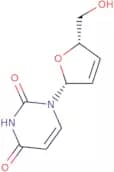
CAS:<p>2',3'-Didehydro-2',3'-dideoxyuridine (DDDU) is a nucleoside analog that inhibits the formation of HIV. It is a potent inhibitor of human immunodeficiency virus type 1 (HIV-1) replication in cell culture, and has been shown to inhibit the production of HIV-1 virions in vitro. 2',3'-Didehydro-2',3'-dideoxyuridine has been shown to bind to the enzyme glycosyltransferase, which is required for HIV-1 replication. DDU also binds to human CD4+ T cells, deflecting them from the HIV-infected target cell. This compound may be useful as an antiviral agent against HIV-1 infection by inhibiting viral replication and infectivity.</p>Fórmula:C9H10N2O4Pureza:Min. 95%Peso molecular:210.19 g/molGuanosine-5'-carboxylic acid
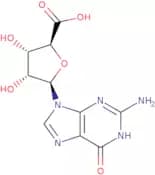
CAS:Guanosine-5'-carboxylic acid (GCA) is a nucleotide that interacts with mammalian cells. It reacts in a vessel to form the antigen, which can then be detected using an antibody. The conformational properties of this molecule are important for its function, and it has been shown to be effective against cancer cells in vivo. GCA has also been shown to interact with toll-like receptor 2 and induce an antibody response.Fórmula:C10H11N5O6Pureza:Min. 95%Peso molecular:297.22 g/molN2-DMF-9-(2'-deoxy-5'-O-DMT-b-D-ribofuranosyl)purine 3'-CE phosphoramidite
CAS:N2-DMF-9-(2'-deoxy-5'-O-DMT-b-D-ribofuranosyl)purine 3'-CE phosphoramidite is a novel, modified nucleoside analog with antiviral and anticancer properties. It is synthesized by the reaction of 2′,5′-O-(4,4′-dimethoxytrityl)-9-(2′deoxy-5′-O-DMT b D ribofuranosyl)purine 3′ with a phosphoramidite reagent in DMF at elevated temperature. The compound has been shown to inhibit viral replication in vitro and in vivo. In addition to its antiviral activity, N2DMFP3'-CE also inhibits tumor cell growth.Fórmula:C43H53N8O6PPureza:Min. 95%Cor e Forma:Off white solid.Peso molecular:808.93 g/mol3'-Deoxy-3'-fluorocytidine
CAS:<p>3'-Deoxy-3'-fluorocytidine is an activating agent that has been shown to inhibit coxsackie virus and other single-stranded RNA viruses. It is a nucleoside analogue that binds to the enzyme ribofuranoside, preventing the formation of the active site. 3'-Deoxy-3'-fluorocytidine has also been shown to inhibit the biochemical reactions involving S-adenosylhomocysteine hydrolase, which catalyzes the conversion of S-adenosylhomocysteine into adenosine, a precursor for DNA synthesis. Mechanistic studies have indicated that 3'-deoxy-3'-fluorocytidine inhibits enzymatic activity through stereochemical interactions with S-adenosylhomocysteine hydrolase.</p>Fórmula:C9H12FN3O4Pureza:Min. 95%Peso molecular:245.21 g/mol2’-Deoxy-N2-dimethylguanosine
CAS:<p>2’-Deoxy-N2-dimethylguanosine is a novel antiviral agent that inhibits the replication of human DNA viruses by binding to their diphosphate or monophosphate regions and inhibiting ribonucleotide reductase. It has also been shown to have anticancer properties in vitro.</p>Pureza:Min. 95%2'-O-tert-Butyldimethylsilyl-5'-O-DMT-3-methyluridine 3'-CE phosphoramidite
CAS:2'-O-tert-Butyldimethylsilyl-5'-O-DMT-3-methyluridine 3'-CE phosphoramidite is a modified nucleoside that has antiviral and anticancer properties. It is synthesized by the reaction of 2'-O-tert-butyldimethylsilyl-5'-O-DMT (2,6-dimethoxytrityl) with 3 methyluridine. The compound has been shown to be an activator for DNA polymerase, ribonucleases and deoxyribonucleases in vitro. It also inhibits tumor cell proliferation and induces apoptosis in cultured cells. This compound is a high quality product with CAS number 179762-50-6 and is available at high purity.Fórmula:C46H63N4O9PSiPureza:Min. 95%Peso molecular:875.07 g/mol2-Iodo-2’-deoxyadenosine
CAS:<p>2-Iodo-2’-deoxyadenosine is a novel nucleoside that is a modified adenosine. It has been shown to possess anticancer activity. 2-Iodo-2’-deoxyadenosine has a high degree of cytotoxicity and can induce apoptosis in cancer cells. This drug also inhibits the growth of herpes simplex virus type 1 (HSV) and HIV, which are both types of viruses that infect humans. The antiviral activity may be due to the inhibition of viral DNA synthesis or RNA transcription. 2-Iodo-2’-deoxyadenosine is synthesized from adenine, iodine, and sulfuric acid with high purity and quality. It is not active against bacteria because it does not inhibit bacterial DNA gyrase or topoisomerase IV enzymes.</p>Pureza:Min. 95%8-(p-Chlorophenylthio)-cGMP
CAS:<p>8-(p-Chlorophenylthio)-cGMP is a modified nucleoside that has anticancer activity. It inhibits DNA synthesis and the activation of protein kinases, which are enzymes that transmit signals from the cell surface to the nucleus. 8-(p-Chlorophenylthio)-cGMP can also inhibit viral replication by inhibiting the production of new virus particles and by inhibiting the action of reverse transcriptase, an enzyme that converts RNA into DNA.</p>Fórmula:C16H15ClN5O7PSPureza:Min. 95%Peso molecular:487.81 g/mol7-Deazapurine
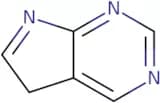
CAS:<p>7-Deazapurine is a cytostatic agent that inhibits the polymerase chain reaction by competitive inhibition of the incorporation of nucleotides into DNA. It has potent antitumor activity and significant cytotoxicity, which are due to its ability to inhibit DNA synthesis and cell division. 7-Deazapurine is also a nucleophilic compound that reacts with hydroxyl groups in DNA. The hydrolysis of 7-deazapurine by hydroxylases can be prevented by addition of high salt or trifluoroacetic acid, but this does not seem to affect its cytotoxic effects.<br>7-Deazapurine has been shown to have significant cytotoxicity against miapaca-2 cells and other cancer cell lines.</p>Fórmula:C6H5N3Pureza:Min. 95%Peso molecular:119.12 g/mol



![8-Bromo-9-[3',5'-O-(1,1,3,3-tetraisopropyl-1,3-disiloxanediyl)-2'-deoxy-b-D-ribofuranosyl]guanine](/_next/image/?url=https%3A%2Fstatic.cymitquimica.com%2Fproducts%2F3D%2Fthumb-webp%2FNB04668.webp&w=3840&q=75)