Nucleosídeos
Os nucleosídeos são building blocks fundamentais dos ácidos nucleicos, compostos por uma base nitrogenada ligada a uma molécula de açúcar. Nesta seção, você encontrará uma ampla variedade de nucleosídeos essenciais para pesquisas em biologia molecular, bioquímica e farmacologia. Esses compostos desempenham papéis cruciais na síntese de DNA e RNA, e também são vitais em vários processos metabólicos. Os nucleosídeos são usados para estudar material genético, desenvolver terapias antivirais e anticancerígenas, e entender os mecanismos celulares. Na CymitQuimica, fornecemos nucleosídeos de alta qualidade para apoiar suas necessidades de pesquisa e desenvolvimento, garantindo pureza e confiabilidade para suas aplicações experimentais.
Foram encontrados 3569 produtos de "Nucleosídeos"
Ordenar por
Pureza (%)
0
100
|
0
|
50
|
90
|
95
|
100
4’-a-C-Methyluridine
CAS:<p>4' - a-C-Methyluridine is a modified nucleoside that is used as a building block in the synthesis of DNA. It can be used for the treatment of viral infections and cancer. 4' - a-C-Methyluridine has antiviral activity against herpes simplex virus type 1 and cytomegalovirus. 4' - a-C-Methyluridine also has anticancer activity, which may be due to its ability to inhibit proliferation of cells by blocking the synthesis of DNA and RNA.</p>Pureza:Min. 95%2'-Deoxy-N2-isobutyryl-a-cytidine
<p>2'-Deoxy-N2-isobutyryl-a-cytidine (DBIC) is a modified nucleoside that is used in the synthesis of DNA. It is an activator that can be used to enhance the antitumor effects of other drugs. DBIC has been shown to inhibit the proliferation of human tumor cells by inactivating the p53 protein, which regulates cell cycle progression and suppresses tumorigenesis. This drug also has antiviral, anticancer, and anti-inflammatory properties.</p>Fórmula:C13H19N3O5Pureza:Min. 95%Peso molecular:297.31 g/molN4-Acetyl-2'-Deoxy-5'-O-DMT-cytidine 3'-succinyl CPG 1000 Å
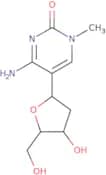
<p>N4-Acetyl-2'-Deoxy-5'-O-DMT-cytidine 3'-succinyl CPG 1000 Å is a nucleoside analog. It is an antiviral and anticancer agent that inhibits the synthesis of DNA. This compound has a high purity, reactivity and solubility. N4-Acetyl-2'-Deoxy-5'-O-DMT-cytidine 3'-succinyl CPG 1000 Å can be used in the synthesis of oligonucleotides for research purposes or as pharmaceutical ingredients.</p>Pureza:Min. 95%4-Amino-5-(2-deoxy-b-D-ribofuranosyl)-1-methyl-2(1H)-pyrimidinone
CAS:4-Amino-5-(2-deoxy-b-D-ribofuranosyl)-1-methyl-2(1H)-pyrimidinone is a novel activator that is a ribonucleoside and deoxyribonucleoside diphosphate, as well as phosphoramidite and modified nucleosides. It has been shown to have anticancer, antiviral, and antimalarial activities in vitro. This compound has been synthesized in high purity and high quality with CAS No. 1166395-05-6.Fórmula:C10H15N3O4Pureza:Min. 95%Peso molecular:241.24 g/mol3'-Deoxy-N6-propionyladenosine
CAS:3'-Deoxy-N6-propionyladenosine is a prodrug that is modified in the body to form adenosine. It has been shown to have a high bioavailability and pharmacokinetic profile, with a high initial concentration and rapid elimination. 3'-Deoxy-N6-propionyladenosine has been shown to be effective against tuberculosis and leprosy, with a half-life of approximately 1 hour. The pharmacokinetic curves for this drug have exceeded those of other drugs used for these diseases.Fórmula:C13H17N5O4Pureza:Min. 95%Peso molecular:307.31 g/mol2'-Deoxy-2'-fluoro-2'-C-methylcytidine
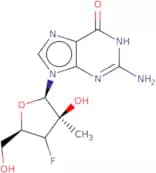
CAS:<p>2'-Deoxy-2'-fluoro-2'-C-methylcytidine is a nucleoside analog with modifications on both the sugar and the nucleobase. It is a derivative of cytidine, with fluorine attached to the 2' carbon of the sugar (deoxyribose) and a methyl group at the 2' carbon of the sugar as well. These modifications provide the compound with unique properties, such as potnetial increased resistance to enzymatic degradation, which can make it useful in antiviral and anticancer applications.</p>Fórmula:C10H14FN3O4Pureza:Min. 95%Cor e Forma:PowderPeso molecular:259.23 g/mol3'-Deoxy-3'-fluoro-2'-C-methylguanosine
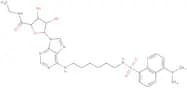
CAS:3'-Deoxy-3'-fluoro-2'-C-methylguanosine is a nucleoside analog that is used in the treatment of cancer. It is an activator of the anticancer drug 5-FU, which inhibits DNA synthesis and cell division. 3'-Deoxy-3'-fluoro-2'-C-methylguanosine may also be used as a starting material for the synthesis of other nucleosides, such as 2',3'-deoxyadenosine and 3',5' -deoxycytidine.Fórmula:C11H14FN5O4Pureza:Min. 95%Peso molecular:299.26 g/molN6-Dansylhexyl-5'-ethylcarboxamidoadenosine
CAS:N6-Dansylhexyl-5'-ethylcarboxamidoadenosine is a fluorescent molecule that can be used in the field of microscopy and cytometry. It has been shown to be an adenosine receptor agonist, which may be due to its ability to bind to the adenosine receptor and activate it. This ligand has also been shown to bind with high affinity to the fluorescence resonance transfer protein, resulting in a fluorescent signal. In addition, this molecule is a linker for fluorescence resonance energy transfer between two molecules that are not close enough for direct contact.Fórmula:C30H40N8O6SPureza:Min. 95%Peso molecular:640.75 g/mol3'-Azido-5'-O-tert-butyldimethylsilyl-2',3'-dideoxy-N2-isobutyrylguanosine
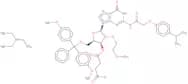
CAS:<p>3'-Azido-5'-O-tert-butyldimethylsilyl-2',3'-dideoxy-N2-isobutyrylguanosine is a novel nucleoside phosphoramidite. The 3'-azido group can be used to protect the 5' hydroxyl group during phosphitylation, which is essential for the synthesis of modified nucleosides. The 2',3'-dideoxy configuration ensures that the sugar moiety is not cleaved from the base during polymerization, and that no undesired side reactions occur during purification. This product has been shown to have antiviral and anticancer activity in vitro.</p>Fórmula:C20H32N8O4SiPureza:Min. 95%Peso molecular:476.61 g/mol5'-O-DMT-N2-isopropylphenoxyacetyl-2'-O-(2-methoxyethyl)guanosine 3'-O succinate TEA salt
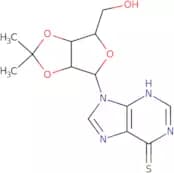
<p>5'-O-DMT-N2-isopropylphenoxyacetyl-2'-O-(2-methoxyethyl)guanosine 3'-O succinate TEA salt is a modified nucleoside with anticancer activity. It is a diphosphate that can be used for the synthesis of DNA and RNA. This product is synthesized by the reaction of 5'-O-dimethoxytritylthymidine (5'-DMTT), 2'-O-(2-methoxyethyl)hydroxylamine hydrochloride, and succinic anhydride in the presence of triethylamine. The product is purified by column chromatography, followed by recrystallization from hot acetonitrile. CAS No.: 102972-73-0</p>Fórmula:C49H52N5O13·C6H16NPureza:Min. 95%Peso molecular:1,021.16 g/mol2',3'-O-Isopropylidene-6-thioinosine
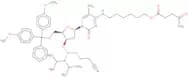
CAS:<p>2',3'-O-Isopropylidene-6-thioinosine is a fluorinated analogue of 6-thioguanine, which is an important precursor in the synthesis of nucleotides. The compound contains a fluorine atom at the 2' position and a sulfur atom at the 3' position of the ribose ring. It is soluble in organic solvents and can be used as a tracer for biochemical studies. The thermal stability of 2',3'-O-Isopropylidene-6-thioinosine has been demonstrated by molecular modelling and thermally induced filtration experiments. Molecular modeling has also shown that 2',3'-O-Isopropylidene-6-thioinosine binds to the active site of uridine phosphorylase, which is involved in pyrimidine salvage pathways in cells.<br>2',3'-O-Isopropylidene-6-thioinos</p>Fórmula:C13H16N4O4SPureza:Min. 95%Peso molecular:324.36 g/mol2'-Deoxy-5'-O-DMT-N4-(hexyloxylevulinyl)-5-methylcytidine 3'-CE phosphoramidite
<p>2'-Deoxy-5'-O-DMT-N4-(hexyloxylevulinyl)-5-methylcytidine 3'-CE phosphoramidite is a novel modified nucleoside that can be used in the synthesis of oligonucleotides. 2'-Deoxy-5'-O-DMT-N4-(hexyloxylevulinyl)-5-methylcytidine 3'-CE phosphoramidite is an activator of adenovirus, herpes simplex virus and human immunodeficiency virus type 1 (HIV-1). It is also an anticancer agent that has been shown to inhibit proliferation of various tumor cells. This product has high purity, high quality and is available at CAS No.<br>216837-27-3.</p>Fórmula:C51H68N5O10PPureza:Min. 95%Peso molecular:942.11 g/mol4-Amino-2,6-dimethyl-8-(2'-deoxy-3',5'-di-O-toluoyl-D-ribofuranosyl)-7-pteridone
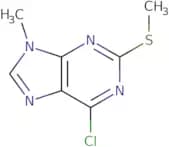
4-Amino-2,6-dimethyl-8-(2'-deoxy-3',5'-di-O-toluoyl-D-ribofuranosyl)-7-pteridone is an activator that has been shown to be a novel antiviral agent. It inhibits the activity of viral RNA polymerase and prevents the synthesis of viral RNA. This drug also has anticancer activity, which may be due to its ability to inhibit DNA synthesis. 4-Amino-2,6-dimethyl-8-(2'-deoxy-3',5'-di-O-toluoyl) -7 pteridone is a nucleoside with phosphoramidite chemistry.Fórmula:C29H29N5O6Pureza:Min. 95%Peso molecular:543.57 g/mol2-Methylthio-6-chloro-9-methylpurine
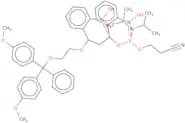
CAS:2-Methylthio-6-chloro-9-methylpurine is an activator that inhibits the enzyme ribonucleotide reductase, which is involved in the synthesis of DNA and RNA. 2-Methylthio-6-chloro-9-methylpurine has been shown to inhibit viral replication and may be used as a antiviral agent. This compound has novel properties and is a potential anticancer drug due to its ability to inhibit the growth of tumor cells.Fórmula:C7H7CIN4SPureza:Min. 95%Peso molecular:318.14 g/molCaged Strand-Breaker II CE-Phosphoramidite
CAS:When included in an oligonucleotide, irradiation at 365 nm causes strand cleavage. This will leave a hydroxyl residue on the 3' end and a phosphate on the 5' end.Fórmula:C47H53N4O10PPureza:Min. 95%Peso molecular:864.92 g/molN4-Benzoyl-2'-deoxy-3'-O-DMT-cytidine
CAS:<p>N4-Benzoyl-2'-deoxy-3'-O-DMT-cytidine is a novel nucleoside phosphoramidite with antiviral and anticancer activities. It is synthesized from 2'-deoxycytidine and 4-aminobenzoyl chloride in the presence of tetrazole as a catalyst. The cytidine moiety of N4-benzoyl-2'-deoxy-3'-O-DMT-cytidine is activated by diphosphate, which leads to phosphorylation. This nucleotide has shown potential in inhibiting cancer cell growth and may be used for treatment of leukemia, lymphomas, and myeloma.</p>Fórmula:C37H35N3O7Pureza:Min. 95%Peso molecular:633.69 g/mol3'-Deoxy-3'-fluoro-5'-O-tritylthymidine
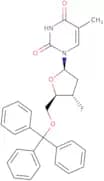
CAS:3'-Deoxy-3'-fluoro-5'-O-tritylthymidine is a monophosphate nucleoside that inhibits the viral DNA polymerase. It has antiviral activity against herpes viruses, including HSV-1 and HSV-2. 3'-Deoxy-3'-fluoro-5'-O-tritylthymidine is a synthetic nucleoside with modified phosphate groups to improve stability and purity. This product has shown anticancer effects in vitro and in vivo by inhibiting DNA synthesis and promoting apoptosis of cancer cells.Fórmula:C29H27FN2O4Pureza:Min. 95%Peso molecular:486.53 g/mol5-Chloro-5'-deoxycytidine
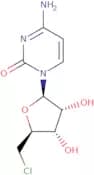
CAS:<p>5-Chloro-5'-deoxycytidine is a nucleoside with antiviral activity. It is used for the synthesis of phosphoramidites, which are used in DNA and RNA synthesis. 5-Chloro-5'-deoxycytidine has been shown to be an effective activator for novel DNA and RNA analogues, such as phosphorothioates, phosphotriesters, and phosphorodithioates. This compound is also widely used in the preparation of oligodeoxynucleotide analogues that are modified chemically or structurally to improve their biological properties. 5-Chloro-5'-deoxycytidine has been synthesized by modifying the nucleobase with a 5-chloro group at the 5' position on the ribose ring, making it more resistant to degradation by enzymes than other cytosine derivatives.</p>Fórmula:C9H12ClN3O4Pureza:Min. 95%Cor e Forma:White to off-white solid.Peso molecular:261.67 g/molN6-Benzoyl-3'-deoxy-5'-O-DMT-adenosine
CAS:<p>N6-Benzoyl-3'-deoxy-5'-O-DMT-adenosine is a modified nucleoside that has been synthesized to be an activator of ribonucleotide reductase. This product can be used in the preparation of oligoribonucleotides or phosphoramidites for therapeutic purposes. N6-Benzoyl-3'-deoxy-5'-O-DMT-adenosine is also a novel antiviral agent with anticancer activity.</p>Fórmula:C38H35N5O6Pureza:Min. 95%Peso molecular:657.71 g/mol2'-Deoxy-5'-O-DMT-N2-(4-isopropylphenoxyacetyl)guanosine
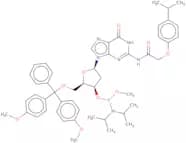
CAS:2'-Deoxy-5'-O-DMT-N2-(4-isopropylphenoxyacetyl)guanosine is a novel nucleoside analog. It is an activator of the ribonucleotide reductase and has antiviral activity. The phosphoramidite derivative of 2'-deoxy-5'-O-DMT-N2-(4-isopropylphenoxyacetyl)guanosine is used as a building block for oligodeoxynucleotides, phosphorothioate oligodeoxynucleotides, and phosphorodiamidate oligodeoxynucleotides. It has been shown to be active against human papilloma virus (HPV) type 16 in vitro and in vivo.Fórmula:C42H43N5O8Pureza:Min. 95%Peso molecular:745.82 g/molN3-Methyl-2'-O-methyluridine
CAS:<p>2'-O-methyluridine is an antiviral nucleoside that is used as a phosphoramidite in the synthesis of oligonucleotides. It has been shown to inhibit viral replication, and has been found to be effective in treating HIV-1 by inhibiting reverse transcriptase. N3-Methyl-2'-O-methyluridine also inhibits DNA synthesis and cell proliferation, and may be useful for the treatment of cancer. This modified nucleoside has been synthesized from uracil and contains a methyl group at the 3' position. The methyl group prevents 2'-O-methyluridine from being activated by cellular thymidylate synthase, which normally converts deoxyribonucleotides into ribonucleotides. This novel nucleotide has not yet been used in clinical trials but it may provide an alternative to other drugs used for cancer treatments.</p>Fórmula:C11H16N2O6Pureza:Min. 95 Area-%Cor e Forma:White Off-White PowderPeso molecular:272.25 g/mol3'-O-Propargylguanosine
<p>3'-O-Propargylguanosine is a ribonucleoside that is structurally related to guanosine. It has antiviral and anticancer activities, but its most important function is as a substrate for the synthesis of DNA and RNA. The compound is used in the preparation of nucleosides and nucleotides, which are used in DNA synthesis. 3'-O-Propargylguanosine can be synthesized from diphosphate, phosphoramidites, or modified monophosphate. The CAS number for this product is 583-85-4.</p>Fórmula:C13H15N5O5Pureza:Min. 95%Cor e Forma:PowderPeso molecular:321.29 g/mol5’-O-DMT-N2-isobutyryl-2’-O-propargylguanosine
CAS:5’-O-DMT-N2-isobutyryl-2’-O-propargylguanosine is an antiviral, anticancer, and nucleoside monophosphate. It is a novel and modified nucleoside. This product has high purity, high quality, and is also a phosphoramidite.Pureza:Min. 95%2,5'-Anhydro-5,6-didehydro-2'-deoxy-2',2'-difluorouridine
<p>2,5'-Anhydro-5,6-didehydro-2'-deoxy-2',2'-difluorouridine is a novel ribonucleoside that has been synthesized as a phosphoramidite. It is an anticancer agent with antiviral and antiretroviral properties. The 2,5'-Anhydro-5,6-didehydro-2'-deoxy-2',2'-difluorouridine is a modified nucleoside that has the potential to be used in the treatment of certain cancers. It can also be used to inhibit viral replication by inhibiting RNA synthesis. This compound inhibits the enzyme diphosphate kinase, which converts ATP into ADP and phosphate. This leads to an accumulation of ADP in cells and inhibition of DNA synthesis.</p>Fórmula:C9H10F2N2O5Pureza:Min. 95%Peso molecular:264.18 g/mol2'-O-tert-Butyldimethylsilyl-5'-O-DMT-N6-methyladenosine 3'-CE phosphoramidite
<p>2'-O-tert-Butyldimethylsilyl-5'-O-DMT-N6-methyladenosine 3'-CE phosphoramidite is a novel, synthetic phosphoramidite that is used as an activating group for the synthesis of DNA. This nucleoside has antiviral and anticancer properties. It is also a ribonucleoside that has been modified to include a tertiary butyl dimethyl silyl group and an N6 methyl adenosine moiety.</p>Fórmula:C47H64N7O7PSiPureza:Min. 95%Cor e Forma:White to off-white solid.Peso molecular:898.11 g/mol2'-Deoxyguanosine-5'-triphosphate sodium salt - 100mmol solution
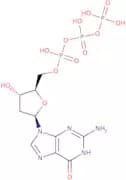
CAS:<p>2'-Deoxyguanosine-5'-triphosphate sodium salt is a triphosphate with antiviral and antifungal activity. It has been shown to inhibit the proliferation of HL60 cells and induce apoptosis in IL-2 receptor-bearing cells. The compound inhibits the growth of opportunistic fungi, such as Aspergillus niger and Candida albicans, by binding to deoxyguanosine residues in DNA. The compound also blocks polymerase activity, preventing DNA replication. 2'-Deoxyguanosine-5'-triphosphate sodium salt is used as a model system for studying the binding of nucleoside analogs to DNA. This drug is prepared as an injection solution for intravenous administration.</p>Fórmula:C10H16N5O13P3Pureza:Min. 95%Peso molecular:507.18 g/molMethyl 2,4-dimethoxypyrimidine-5-carboxylate
CAS:<p>Methyl 2,4-dimethoxypyrimidine-5-carboxylate is a novel anticancer drug that inhibits the growth of cancer cells by blocking DNA polymerase. It is a monophosphate nucleoside analogue that is phosphorylated to methyl 2,4-dimethoxypyrimidine-5′-diphosphate. This compound has been shown to be more effective than other nucleosides in inhibiting the growth of human leukemia cells and it may have potential as a therapeutic agent for treatment of some forms of cancer.</p>Pureza:Min. 95%1-(2'-Deoxy-5'-O-DMT-3'-O-nitrophenylsulphonyl-b-D-lyxofuranosyl)thymine
CAS:1-(2'-Deoxy-5'-O-DMT-3'-O-nitrophenylsulphonyl-b-D-lyxofuranosyl)thymine is a synthetic nucleoside that is used as an activator of phosphoramidites. It has been shown to be active against cancer cells and viruses. 1-(2'-Deoxy-5'-O-DMT-3'-O-nitrophenylsulphonyl-b-D-lyxofuranosyl)thymine can be modified to produce other nucleosides, including deoxyribonucleosides, ribonucleosides, or monophosphate nucleotides. 1-(2'-Deoxy-5'-O-DMT-3'-O-nitrophenylsulphonyl -b -D -lyxofuranosyl)thymine has not yet been approved for use in humans.Fórmula:C37H35N3O11SPureza:Min. 95%Peso molecular:729.75 g/mol2-Amino-5-pyrimidinesulfonamide
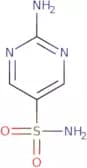
CAS:<p>2-Amino-5-pyrimidinesulfonamide is a synthetic nucleoside. It is an analog of cytidine and is used as a building block for the synthesis of modified nucleosides, phosphoramidites, diphosphate, and ribonucleosides. 2-Amino-5-pyrimidinesulfonamide is also known as an activator in DNA synthesis. The chemical compound has CAS number 99171-23-0 and molecular weight of 174.2 g/mol. This product is soluble in water or ethanol, but insoluble in ether or chloroform.</p>Fórmula:C4H6N4O2SPureza:Min. 95%Peso molecular:174.18 g/molN4-Benzoyl-5'-O-tert-butyldimethylsilyl-2'-deoxy-5-iodocytidine
<p>N4-Benzoyl-5'-O-tert-butyldimethylsilyl-2'-deoxy-5-iodocytidine is an antiviral drug that inhibits viral DNA synthesis by blocking the conversion of ribonucleotides to deoxyribonucleotides. It is a nucleoside analog that is used for the treatment of cancer and for the prevention of AIDS. N4-Benzoyl-5'-O-tert-butyldimethylsilyl-2'-deoxy-5 -iodocytidine is synthesized in high purity, with a purity level of > 98%. This product can be used as an activator or ligand in phosphoramidite synthesis.</p>Fórmula:C22H30IN3O5SiPureza:Min. 95%Cor e Forma:PowderPeso molecular:571.48 g/mol2'-Deoxy-5'-O-DMT-2'-fluoro-N6-phenoxyacetyladenosine 3'-CE phosphoramidite
<p>2'-Deoxy-5'-O-DMT-2'-fluoro-N6-phenoxyacetyladenosine 3'-CE phosphoramidite is a modified nucleoside that has been shown to inhibit the growth of cancer cells. It is synthesized by the reaction of 2'-deoxy-5'-O-dimethoxytriphenylmethyl adenosine 3'-chloroethylphosphoramidite and 2',6' -difluoroaniline in an organic solvent. The product is purified by silica gel column chromatography, followed by recrystallization from a mixture of methanol and water. This novel nucleoside may prove to be a useful anticancer agent as it inhibits the growth of cancer cells without producing any apparent toxicity for normal cells.</p>Pureza:Min. 95%2'-Deoxy-N2-isobutyryl-3'-O-levulinoylguanosine
CAS:<p>2'-Deoxy-N2-isobutyryl-3'-O-levulinoylguanosine is a monophosphate antiviral agent that inhibits the synthesis of viral RNA by blocking the activity of DNA polymerase. It has been shown to be active against Herpes simplex virus type 1 and 2 (HSV1, HSV2) and cytomegalovirus (CMV). This compound also has anticancer activity due to its ability to inhibit cell proliferation and induce apoptosis in cancer cells. The antiviral activity of 2'-deoxy-N2-isobutyryl-3'-O-levulinoylguanosine is not limited to herpes viruses and also includes HIV, human T lymphotropic virus type I (HTLV1), and human cytomegalovirus. This product is synthesized with high purity, high quality, and high yield.</p>Fórmula:C19H25N5O6Pureza:Min. 95%Peso molecular:419.44 g/molU-13C10, U-[15N2]-mono-Labelled Thymidylyl-3'-5'-thymidine ammonium (compound A)
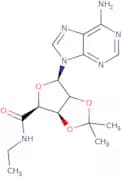
<p>U-13C10, U-[15N2]-mono-Labelled Thymidylyl-3'-5'-thymidine ammonium (compound A) is a novel anticancer drug that is synthesized by phosphoramidite chemistry. It is an activator of DNA synthesis and has been shown to be cytotoxic against cancer cells in vitro. This compound is also a high quality nucleoside analogue. The molecular weight of this compound is 434.4 g/mol and it has a CAS number of 81633-09-9.</p>Fórmula:C20H30N5O12PPureza:Min. 95%Peso molecular:563.45 g/mol5'-Ethylcarboxamido-2',3'-O-isopropylideneadenosine
CAS:<p>5'-Ethylcarboxamido-2',3'-O-isopropylideneadenosine is an activator that can be used to treat cancer. It is synthesized from the natural amino acid inosine by replacing the amine group with ethyl carboxamide. The synthesis of this molecule is currently in progress. This product has shown anticancer activity and antiviral effects, as well as high purity and novel properties.</p>Fórmula:C15H20N6O4Pureza:Min. 95%Peso molecular:348.36 g/molBiotin-5-uridine-5'-triphosphate, lithium salt - 1 mM aqueous solution
<p>Biotin-5-uridine-5'-triphosphate, lithium salt - 1 mM aqueous solution is a monoclonal antibody. It is used in the diagnosis of lung cancer. The antibody binds to markers present on the tumor cells and can be detected by immunohistochemistry (IHC) or immunofluorescence (IF). The antibody may also be used to identify submucosal tumors that are not palpable.</p>Fórmula:C22H34N5O17P3S·xLiPureza:Min. 95%Peso molecular:765.52 g/molBiotin-11-2-deoxyuridine-5-triphosphate tetralithium salt
CAS:Biotin-11-2-deoxyuridine-5-triphosphate tetralithium salt is a modified nucleoside that is used in antiviral and anticancer treatments. The deoxyribonucleosides are synthesized by coupling biotin to 2'-deoxyuridine 5'-triphosphate, which is then reacted with lithium tetralithium chloride. This product has been shown to be an activator of DNA synthesis and can induce the proliferation of cancer cells. Biotin-11-2-deoxyuridine-5-triphosphate tetralithium salt has been shown to inhibit the growth of both human immunodeficiency virus (HIV) and murine leukemia virus (MLV). Biotin-11-2-deoxyuridine-5-triphosphate tetralithium salt is also used in the synthesis of ribonucleosides for use in DNA research. ItFórmula:C24H41N6O17P3S·4LiPureza:Min. 95%Peso molecular:886.41 g/molThymidine 5'- triphosphate lithium salt - 100mM aqueous solution
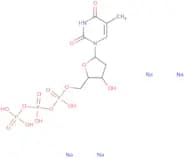
CAS:<p>Thymidine 5’-triphosphate tetralithium salt (dTTP) is a crucial component in chemical biology research. It is a modified form of thymidine, containing three phosphate groups. Important in DNA replication and repair, dTTP acts as a substrate for DNA polymerases during polymerase chain reactions (PCR), facilitating the amplification of specific DNA sequences. In addition, in DNA sequencing, dTTP is incorporated into newly synthesized DNA strands, allowing precise determination of nucleotide sequences.</p>Fórmula:C10H17N2O14P3·xLiPureza:Min. 95%Peso molecular:482.17 g/mol6-Bromo-4-chloropyrido[2,3-d]pyrimidine
CAS:6-Bromo-4-chloropyrido[2,3-d]pyrimidine is a pyrimidine derivative that has been synthesized using cyclization and condensation techniques. The synthesis of this compound is efficient and uses relatively low amounts of starting materials. It can be made using microwave irradiation in a high yield. 6-Bromo-4-chloropyrido[2,3-d]pyrimidine is an aromatic ring with efficient methods for synthesis and bromination. This research could be used to produce new compounds with similar structures that are more potent than current drugs.Pureza:Min. 95%N4-Benzoyl-5'-O-DMT-2'-O-methyl-5-methylcytidine
CAS:N4-Benzoyl-5'-O-DMT-2'-O-methyl-5-methylcytidine is a modified nucleoside that is used as an antiviral. It is phosphorylated by the enzyme kinase to form a diphosphate, which inhibits viral DNA synthesis by inhibiting the action of DNA polymerases. N4-Benzoyl-5'-O-DMT-2'-O-methyl-5-methylcytidine has been shown to have anticancer activity in vitro and in vivo. The drug also has high purity and quality, making it suitable for use in laboratory research.Fórmula:C39H39N3O8Pureza:Min. 95%Cor e Forma:Slightly Yellow PowderPeso molecular:677.74 g/molN6-Propargyladenosine
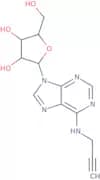
CAS:<p>N6-Propargyladenosine is an alkyne functionalised nucleoside.</p>Fórmula:C13H15N5O4Pureza:Min. 95%Cor e Forma:PowderPeso molecular:305.29 g/mol5-Amino-1-(b-D-ribofuranosyl)imidazole-4-carboxamide-5'-phosphate
5-Amino-1-(b-D-ribofuranosyl)imidazole-4-carboxamide-5'-phosphate is a ribonucleoside monophosphate. It is an antiviral agent that inhibits the synthesis of RNA by preventing the attachment of ribonucleotides to the 5' end of RNA. This drug is also used in anticancer therapy, as it has been shown to inhibit DNA synthesis and induce cell differentiation. 5-Amino-1-(b-D-ribofuranosyl)imidazole-4-carboxamide-5'-phosphate is synthesized from 1-(2'-deoxyribofuranosyl)-5-(2'-deoxyribofuranosyl)imidazole, which can be made from 2,4,6,-triaminopyrimidine and 2,3,-dideoxyribose. This product has CAS number 13Pureza:Min. 95%2'-Deoxy-5'-O-DMT-N2-(4-isopropylphenoxyacetyl)guanosine 3'-Me phosphoramidite
2'-Deoxy-5'-O-DMT-N2-(4-isopropylphenoxyacetyl)guanosine 3'-Me phosphoramidite is a modified nucleoside monophosphate with antiviral and anticancer activity. It is synthesized by the reaction of 2'-deoxyguanosine 5'-O-DMT (dG) with 4-isopropylphenoxyacetic acid in the presence of triethylamine and tetrazole. The product is purified by crystallization. This compound has been shown to inhibit replication of human immunodeficiency virus type 1 (HIV-1) in human lymphocytes, which may be due to its ability to inhibit the synthesis of DNA, RNA, or both.Fórmula:C49H59N6O9PPureza:Min. 95%Peso molecular:907.03 g/molN6-Benzoyl-5'-O-DMT-2'-O-(2-Ethoxy-2-oxoethyl)adenosine
N6-Benzoyl-5'-O-DMT-2'-O-(2-Ethoxy-2-oxoethyl)adenosine is a phosphoramidite that is used in the synthesis of oligonucleotides. It is an activator of ribonucleotides and diphosphate for RNA synthesis. Its high purity and quality make it suitable for use in the synthesis of DNA, RNA, or other nucleoside analogues.Pureza:Min. 95%3',5'-Di-O-benzoyl-5-fluoro-2'-O-methyluridine
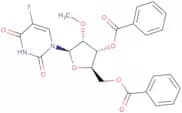
CAS:<p>3',5'-Di-O-benzoyl-5-fluoro-2'-O-methyluridine is a nucleoside that acts as an activator and phosphoramidite. The di-O-benzoyl group is used to protect the 2'-hydroxyl group during the synthesis of oligonucleotides. 3',5'-Di-O-benzoyl-5-fluoro-2'-O-methyluridine has been shown to have anticancer activity against human breast cancer cells. It also inhibits the replication of DNA viruses, such as HIV, hepatitis B virus and herpes simplex virus type 1, and is active against influenza A virus. This compound has also been shown to inhibit the production of inflammatory cytokines in vitro.</p>Fórmula:C24H21FN2O8Pureza:Min. 95%Peso molecular:484.44 g/mol2'-O-Hexylaminoguanosine
<p>2'-O-Hexylaminoguanosine is a modified nucleoside that has antiviral properties. It is an activator of the human immune system and is used to treat cancer. 2'-O-Hexylaminoguanosine inhibits the synthesis of DNA by phosphoramidite addition to the monophosphate form of guanosine, which prevents RNA synthesis and therefore also protein synthesis. It also has anticancer effects by inhibiting the growth of cells in culture.</p>Pureza:Min. 95%5'-O-DMT-2'-O-(2-methylacetamido)-5-methyluridine 3'-CE phosphoramidite
<p>5'-O-DMT-2'-O-(2-methylacetamido)-5-methyluridine 3'-CE phosphoramidite is a high purity, diphosphate, Anticancer, Modified, Phosphoramidites, DNA, High quality, Novel, Activator. It is CAS No. 106433-85-6 and has the molecular formula C15H14N4O8P. 5'-O-DMT-2'-O-(2-methylacetamido)-5-methyluridine 3'-CE phosphoramidite is not found in nature. This product is a monophosphate nucleoside that belongs to the group of nucleosides and deoxyribonucleosides. It can be used for synthesis of DNA and RNA, as well as for the treatment of cancer cells.</p>Pureza:Min. 95%N2-Isobutyl-2'-deoxyguanosine
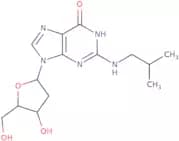
CAS:<p>N2-Isobutyl-2'-deoxyguanosine is a novel, synthetic nucleoside analogue that has been shown to inhibit cancer cells and also to be an antiviral and anticancer agent. It has been shown to induce dsDNA breaks in DNA strands of human leukemia cells and also inhibits the replication of the Influenza A virus. N2-Isobutyl-2'-deoxyguanosine is a high purity, deoxyribonucleoside with a CAS number of 142554-22-1.</p>Fórmula:C14H21N5O4Pureza:Min. 95%Peso molecular:323.35 g/mol5'-O-DMT-4-methoxythymidine 3'-CE phosphoramidite
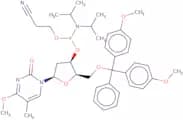
<p>5'-O-DMT-4-methoxythymidine 3'-CE phosphoramidite is a high purity, modified nucleoside with anticancer potential. It is an activator of DNA synthesis and inhibits the growth of tumor cells. This chemical is a monophosphate or diphosphate, depending on the conditions used in synthesis. 5'-O-DMT-4-methoxythymidine 3'-CE phosphoramidite is used to synthesize DNA, RNA, and deoxyribonucleosides. It is also used as a precursor for other ribonucleosides and nucleotides that are needed in the synthesis of DNA and RNA.<br>5'-O-DMT-4-methoxythymidine 3'-CE phosphoramidite can be synthesized from commercially available starting materials such as 4-(2-deoxyribofuranosyl)thymidine, 5-(3,</p>Fórmula:C41H51N4O8PPureza:Min. 95%Peso molecular:758.86 g/mol2'-Deoxy-5'-O-DMT-N6-phenoxyacetyladenosine 3'-Me phosphoramidite
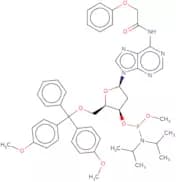
<p>2'-Deoxy-5'-O-DMT-N6-phenoxyacetyladenosine 3'-Me phosphoramidite is a novel nucleoside analog with antiviral and anticancer activities. It inhibits viral replication by inhibiting the viral polymerase and cellular DNA polymerases. 2'-Deoxy-5'-O-DMT-N6-phenoxyacetyladenosine 3'-Me phosphoramidite also inhibits tumor growth by arresting cells in the G2/M phase of the cell cycle. This compound has been shown to be effective against human leukemia, lymphoma, breast cancer, and colon cancer cells.</p>Fórmula:C46H53N6O8PPureza:Min. 95%Cor e Forma:SolidPeso molecular:848.94 g/mol3,4-Dihydro-3-oxo-4-b-D-ribofuranosyl-2-pyrazinecarboxamide
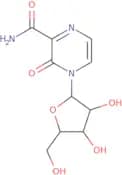
CAS:3,4-dihydro-3-oxo-4-(2-pyrimidinyl)-2,5-dioxopyrrolidine carboxamide is an analog of acyclovir that has antiviral activity against a variety of viruses. It binds to the receptor binding site on the virus and prevents viral replication. 3,4-Dihydro-3-oxo-4-(2-pyrimidinyl)-2,5-dioxopyrrolidine carboxamide is effective against human influenza A virus (H1N1) and hepatitis B virus. This drug also has been shown to inhibit the growth of phlebovirus in cell culture by preventing the synthesis of viral RNA.Fórmula:C10H13N3O6Pureza:Min. 95%Peso molecular:271.23 g/mol



















![U-13C10, U-[15N2]-mono-Labelled Thymidylyl-3'-5'-thymidine ammonium (compound A)](/_next/image/?url=https%3A%2Fstatic.cymitquimica.com%2Fproducts%2F3D%2Fthumb-webp%2FTM32169.webp&w=3840&q=75)


![6-Bromo-4-chloropyrido[2,3-d]pyrimidine](/_next/image/?url=https%3A%2Fstatic.cymitquimica.com%2Fproducts%2F3D%2Fthumb-webp%2FNB44335.webp&w=3840&q=75)