Nucleosídeos
Foram encontrados 3569 produtos de "Nucleosídeos"
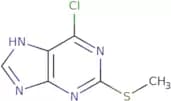
2-Methylthio-6-chloropurine
CAS:2-Methylthio-6-chloropurine riboside is a nucleotide analog that is used as a substrate to study the enzymatic modification of RNA. The compound has been synthesized by reacting 2-methylthio-6-chloropurine with ribose and purine bases in a postsynthetic modification. To detect the product, 2-methylthio-6-chloropurine riboside was labeled with 32P and then detected using mass spectrometry. In order to identify the structure of this compound, it was subjected to chromatography and spectroscopy. This process allowed for the identification of 2-methylthio-6-chloropurine riboside as an analog of N6 methyladenosine.
Fórmula:C6H5CIN4SPureza:Min. 95%Peso molecular:304.11 g/mol6-Benzyloxypurine
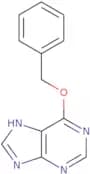
CAS:6-Benzyloxypurine is a fluorescent compound that can be used to measure the concentration of aqueous solutions. It is used in molecular modeling and as a tracer in bioassays. The binding constants for 6-benzyloxypurine have been determined by fluorescence spectrometry, and it has been shown to inhibit the growth of aerobacter aerogenes at concentrations greater than 0.5 mM. This inhibitor also has an inhibitory effect on the growth of tissue culture cells and wastewater treatment bacteria, such as enterococcus faecalis and pseudomonas aeruginosa. The optimum concentration of 6-benzyloxypurine to inhibit bacterial growth is 1 mM, which corresponds to a pH of ~8.2.
Fórmula:C12H10N4OPureza:Min. 95%Peso molecular:226.23 g/mol5'-Azido-5'-deoxy-2',3'-O-isopropylideneadenosine
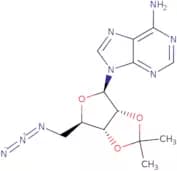
CAS:5'-Azido-5'-deoxy-2',3'-O-isopropylideneadenosine (5ADeA) is a novel nucleoside with antiretroviral and antitumor activity. It is an activator of the innate immune system, which stimulates the production of cytokines such as TNF-α and IL-1β. This agent also inhibits viral replication by inhibiting viral RNA synthesis through its effect on the enzyme ribonucleotide reductase. 5ADeA monophosphate has been shown to be an effective antiviral against HIV and hepatitis C virus, as well as being active against human papilloma virus and Epstein-Barr virus. 5ADeA is synthesized in high purity and has a CAS number of 34245-48-2.Fórmula:C13H16N8O3Pureza:Min. 95%Peso molecular:332.32 g/mol5'-O-(4,4'-Dimethoxy-4''-(1H,1H,2H,2H-perfluorodecyl)trityl)thymidine 3'-CE phosphoramidite
CAS:Produto Controlado5'-O-(4,4'-Dimethoxy-4''-(1H,1H,2H,2H-perfluorodecyl)trityl)thymidine 3'-CE phosphoramidite is a novel nucleoside with antiviral activity. It is synthesized through the condensation of 5-bromo-2′-deoxyuridine and 4,4′-dimethoxytrityl chloride. This compound has been shown to inhibit the synthesis of DNA and RNA in vitro. It also has anticancer properties and can be used for the treatment of leukemia.Fórmula:C50H52F17N4O9PPureza:Min. 95%Peso molecular:1,206.92 g/mol2'-Deoxy-5-iodouridine-5'-triphosphate sodium salt - 10mM aqueous solution
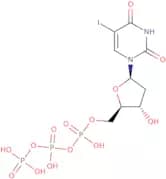
CAS:2'-Deoxy-5-iodouridine-5'-triphosphate sodium salt is a potent inhibitor of thymidylate synthase, an enzyme that catalyzes the conversion of deoxyuridine to thymidylate. 2'-Deoxy-5-iodouridine-5'-triphosphate sodium salt has been found to have a noncompetitive inhibition effect on bacterial DNA replication and is used as a chemotherapeutic agent in the treatment of cancer. It is also used as a radioprotectant during radiation therapy. The optimum concentration for 2'-deoxy-5-iodouridine-5'-triphosphate sodium salt is 10mM, which inhibits bacterial enzymes but does not inhibit mammalian enzymes.Fórmula:C9H10N2O14P3I·4NaPureza:Min. 95%Peso molecular:681.97 g/molN2-Benzoyl-9-(2'-deoxy-5'-O-DMT-2'-deoxy-b-D-ribofuranosyl)purine
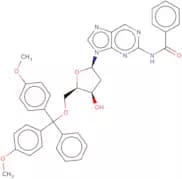
N2-Benzoyl-9-(2'-deoxy-5'-O-DMT-2'-deoxy-b-D-ribofuranosyl)purine is a phosphoramidite that is used as a precursor for the synthesis of modified oligonucleotides. It is also active against cancer and antiviral pathogens. N2-Benzoyl-9-(2'-deoxy-5'-O-DMT-2'-deoxy-b-D ribofuranosyl)purine has been shown to inhibit viral replication in vitro by inhibiting the formation of viral DNA, RNA, and protein. This drug has been shown to inhibit the growth of mouse leukemia cells in vivo. It also inhibits DNA synthesis by binding to the enzyme DNA polymerase, which is required for replication of bacterial and viral DNA.Fórmula:C38H35N5O6Pureza:Min. 95%Peso molecular:657.71 g/mol5'-O-DMT-5-methyl-(2'-O-4'-C-methylene)-uridine 3'-CE-phosphoramidite
5'-O-DMT-5-methyl-(2'-O-4'-C-methylene)-uridine 3'-CE-phosphoramidite is a nucleoside phosphoramidite and an anticancer drug. It is a modified nucleoside that has been synthesized by the chemical reaction of 5'-O-dimethoxytritylthymidine with 5'-O-DMT-5-methyl-(2'-O-4'-C-methylene)uridine 3' chloroformate. 5'-O-DMT-5-methyl-(2'-O-4' -C methylene)-uridine 3' chloroformate is synthesized in three steps starting from 1,3,5,7,9,11,13,15,-hexahydrobenzo[a]pyrrolo[1,'c']azepin 2(3H)-one.Pureza:Min. 95%2'-Deoxyuridine-5'-[(a,b)-imido]diphosphate sodium salt - 10mM aqueous solution
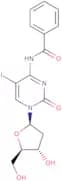
CAS:2'-Deoxyuridine-5'-[(a,b)-imido]diphosphate sodium salt - 10mM aqueous solution is an organic compound that is used as a plant growth regulator. It inhibits the activity of plant enzymes, such as adenylate cyclase and protein kinase C, thereby blocking the production of proteins in plants. 2'-Deoxyuridine-5'-[(a,b)-imido]diphosphate sodium salt - 10mM aqueous solution has been shown to be toxic to muscle tissue and can cause acute toxicity in mammals. However, it has been found to be safe for use on plants when diluted with water.Fórmula:C9H15N3O10P2Pureza:Min. 95%Peso molecular:387.18 g/molN4-Benzoyl-2'-deoxy-5-iodocytidine
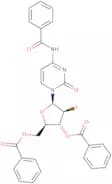
CAS:N4-Benzoyl-2'-deoxy-5-iodocytidine is a nucleoside that is used as an activator for RNA synthesis and in the synthesis of phosphoramidites. It has antiviral and anticancer properties and is novel for its potential use as a therapeutic agent.Fórmula:C16H18IN3O4Pureza:Min. 95%Peso molecular:443.24 g/mol3',5'-Di-O-Benzoyl-N4-benzoyl-2'-deoxy-2'-fluoroarabinocytidine
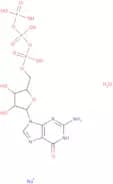
CAS:3',5'-Di-O-Benzoyl-N4-benzoyl-2'-deoxy-2'-fluoroarabinocytidine is a novel nucleoside analogue that has been synthesized to inhibit the activity of DNA polymerase. This compound is also an activator of diphosphate and ribonucleoside monophosphate. 3',5'-Di-O-Benzoyl-N4-benzoyl-2'-deoxy-2'-fluoroarabinocytidine has been shown to inhibit the replication of herpes simplex virus type 1 in cell culture and the replication of human cytomegalovirus in cell culture. 3',5'-Di-O-Benzoyl-N4-benzoyl-2'-deoxy-- 2'-fluoroarabinocytidine does not have any antiviral activity against HIV.Pureza:Min. 95%Guanosine 5'-triphosphate trisodium hydrate
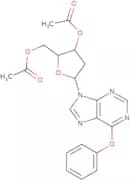
CAS:Guanosine 5'-triphosphate trisodium hydrate is a novel antiviral agent that was discovered in the course of a research program to find new antiviral agents. It is an activator of guanylyl cyclase and it has been shown to have high quality and high purity. Guanosine 5'-triphosphate trisodium hydrate binds to ribonucleosides and deoxyribonucleosides, preventing their incorporation into viral DNA or RNA. This compound also has anticancer activity.Fórmula:C10H18N5NaO15P3Pureza:Min. 95%Peso molecular:564.19 g/mol3',5'-Di-o-acetyl-O6-phenyl-2'-deoxyinosine
CAS:3',5'-Di-O-acetyl-O6-phenyl-2'-deoxyinosine is a nucleoside analog that has antiviral and anticancer activities. It is an activator of the enzyme ribonucleotide reductase and has been shown to be effective against herpes simplex virus type 1 and 2, cytomegalovirus, Epstein Barr virus, human immunodeficiency virus type 1, and Kaposi sarcoma cells. 3',5'-Di-O-acetyl-O6-phenyl-2'-deoxyinosine also inhibits the production of tumor necrosis factor alpha (TNFα), which can cause inflammatory reactions in the body. This compound is a modified nucleoside with high purity and quality. It has CAS number 133471-06-4.Fórmula:C20H20N4O6Pureza:Min. 95%Peso molecular:412.4 g/mol2',3'-Anhydroinosine
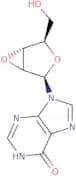
CAS:2',3'-Anhydroinosine is an analog of the purine nucleoside inosine, which has been synthesized by catalytic dehalogenation of 2-fluoro-adenosine. The synthesis of this compound is based on a chemical reaction between 2-fluoro-adenosine and sodium hydroxide. This reaction produces 2',3'-anhydroinosine as a byproduct. 2',3'-Anhydroinosine inhibits the enzyme purine nucleoside phosphorylase, which prevents the conversion of inosine to hypoxanthine. This prevents purines from being used for protein synthesis, leading to cell death.Fórmula:C10H10N4O4Pureza:Min. 95%Peso molecular:250.21 g/mol2'-O-tert-Butyldimethylsilyl-5'-O-DMT-N2-methylguanosine 3'-CE phosphoramidite
2'-O-tert-Butyldimethylsilyl-5'-0-DMT-N2-methylguanosine 3'-CE phosphoramidite can be used as a building block for the incorporation of N2-methylguanosine (m2G) into oligoribonucleotides by standard automated RNA solid-phase synthesis. Nucleosides that are methylated at their nucleobase account for the second largest number of naturally occurring nucleoside modifications after 2’-O methylation. They are encountered in all major RNA species, such as tRNA, rRNA, snRNA and mRNA.Fórmula:C47H64N7O8PSiPureza:Min. 95%Peso molecular:914.11 g/mol8-Aminoadenosine-5'-triphosphate sodium salt - 10mM aqueous solution
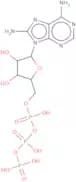
CAS:8-Aminoadenosine-5'-triphosphate sodium salt is a phosphoramidite that is used to synthesize antiviral nucleosides. It is a high quality product that can be used as an activator in the synthesis of ribonucleosides and deoxyribonucleosides. 8-Aminoadenosine-5'-triphosphate sodium salt has been shown to inhibit the growth of cancer cells.Fórmula:C10H17N6O13P3·xNaPureza:Min. 95%Peso molecular:522.2 g/molCytidine-5'-phosphate-3'-(6-aminohexyl)phosphate-biotin triethylammonium salt - 1 mM aqueous solution (10 mM Tris-HCl)
Cytidine-5'-phosphate-3'-(6-aminohexyl)phosphate-biotin triethylammonium salt - 1 mM aqueous solution (10 mM Tris-HCl) is a nucleoside phosphate activator with antiviral effects. It has been successfully synthesized and shown to be an effective anticancer agent. Cytidine-5'-phosphate-3'-(6-aminohexyl)phosphate-biotin triethylammonium salt - 1 mM aqueous solution (10 mM Tris-HCl) is modified from cytidine, which contains the amino acid L-alanine in place of D-alanine. This modification increases the stability and bioavailability of this molecule. Cytidine, or cytidylate, is a nucleoside phosphate that is widely used in biochemistry as an activator for other nucleosides or as a substrate for enzymesFórmula:C25H42N6O13P2S1Pureza:Min. 95%Cor e Forma:Colorless PowderPeso molecular:728.65 g/mol4-Methyl-2-(methylsulfanyl)-5-pyrimidinecarboxylic acid
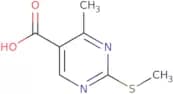
CAS:Ribonucleosides, deoxyribonucleosides, and their activated forms (e.g., 4-methyl-2-(methylsulfanyl)-5-pyrimidinecarboxylic acid) are all important intermediates for the synthesis of DNA and RNA. Ribonucleosides are the key building blocks for the synthesis of DNA. They can be converted to nucleosides by removal of the ribose moiety. Deoxyribonucleosides are synthesized from ribonucleosides by removal of the hydroxyl group from carbon 2' position of ribose. The activated forms (e.g., 4-methyl-2-(methylsulfanyl)-5-pyrimidinecarboxylic acid) are useful in phosphoramidite chemistry as they have a free amine group on one side and a free sulfonyl group on the other side that can be used to react with a growing oligo or polyphosph
Fórmula:C7H8N2O2SPureza:Min. 95%Peso molecular:184.22 g/mol5'-o-Methyl-dt cep
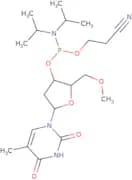
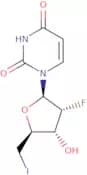
CAS:5'-o-Methyl-dt cep is a modified phosphoramidite that has been synthesized to provide a novel, highly active anticancer and antiviral agent. It is used as an activator for the synthesis of DNA or RNA in the nucleoside or deoxyribonucleoside pathway. 5'-o-Methyl-dt cep could be used in the treatment of HIV, Hepatitis C, and other viral infections.Fórmula:C20H33N4O6PPureza:Min. 95%Peso molecular:456.5 g/mol2',5'-Dideoxy-2'-fluoro-5'-iodouridine
CAS:2',5'-Dideoxy-2'-fluoro-5'-iodouridine is a modified nucleoside that is used in the synthesis of oligonucleotides. It can be used as an antiviral and anticancer agent. The drug has been shown to inhibit the replication of DNA and RNA, which may lead to cell death. 2',5'-Dideoxy-2'-fluoro-5'-iodouridine is also known for its high purity, novel structure and stability.
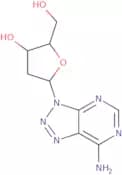
Fórmula:C9H10FIN2O4Pureza:Min. 95%Peso molecular:356.09 g/mol8-Aza-2'-deoxyadenosine
8-Aza-2'-deoxyadenosine is an anion that is cytotoxic to cells and can be activated to form a phosphate ester. It has been shown to have a higher cytotoxicity than adenosine in cell cultures, but is less effective in animal studies. 8-Aza-2'-deoxyadenosine has been shown to have a significant toxicity in rats and mice when administered at doses greater than 500 mg/kg body weight. The activation of 8-aza-2'-deoxyadenosine into the phosphate ester can be stereoselective. This activation has also been shown to cause enhancement of tumor growth inhibition.
Pureza:Min. 95%Adenosine 5'-difluoromethylene-5'-triphosphate triethylammonium salt
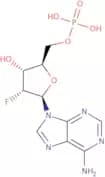
Adenosine 5'-difluoromethylene-5'-triphosphate triethylammonium salt is a novel nucleotide activator that has antiviral, anticancer, and ribonucleoside activities. This activator is a phosphoramidite monomer with an adenine base. The pharmaceutical industry uses this activator as a starting material in the synthesis of anticancer drugs and antiviral drugs. It is also used as a reagent in the production of modified DNA and RNA molecules for use in gene therapy and drug discovery.Pureza:Min. 95%2'-Deoxy-2'-fluoroadenosine-5'-monophosphate
CAS:2'-Deoxy-2'-fluoroadenosine-5'-monophosphate is a nucleotide that is used as an anthelmintic drug. It inhibits the synthesis of fatty acids and ATP levels in tissue culture cells. This nucleotide has also been shown to have immunomodulatory effects, which may be due to its ability to bind to receptor activity. 2'-Deoxy-2'-fluoroadenosine-5'-monophosphate binds with high affinity to the response elements of transcription factors such as NF-κB and AP1, which are involved in the regulation of gene expression and inflammatory responses.Fórmula:C10H13FN5O6PPureza:Min. 95%Peso molecular:349.21 g/mol2'-Deoxy-5'-DMT-5-[3-(trifluoroacetylamino)-1-E-propenyl]-uridine 3-CE phosphoramidite
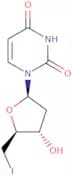
CAS:2'-Deoxy-5'-DMT-5-[3-(trifluoroacetylamino)-1-E-propenyl]-uridine 3-CE phosphoramidite is a synthetic nucleoside analog that has been modified to contain a triphosphate group. It is used in the synthesis of DNA or RNA. The compound is synthesized from 2,4-dichloro-N-(2,6-dimethoxybenzyl)phenylamine, which was reacted with ethyl (3-[(trifluoroacetyl)amino]propanoate) and deoxythymidine 3'-monophosphate. The CAS number for this product is 851520-76-8.Pureza:Min. 95%2’,5’-Dideoxy-5’-iodouridine
CAS:2’,5’-Dideoxy-5’-iodouridine is an antiviral drug that inhibits DNA synthesis. It is a modified nucleoside analog with a phosphoramidite derivative of the natural ribonucleosides and deoxyribonucleosides. This drug is synthesized through the reaction of 2’,5’-dideoxyadenosine with 5-iodo-2-deoxyuridine in the presence of a strong base such as sodium hydride. The resulting product has a high purity, high yield, and can be used for the synthesis of DNA. 2’,5’-Dideoxy-5’-iodouridine also has anticancer properties and has been shown to inhibit cell growth in vitro at concentrations ranging from 0.1 to 1 μM.
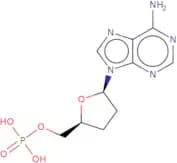
Pureza:Min. 95%2',3'-Dideoxyadenosine-5'-monophosphate
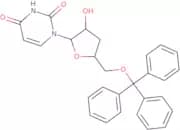
CAS:2',3'-Dideoxyadenosine-5'-monophosphate (ddAMP) is an adenosine analog that is a substrate for the enzyme dideoxyribonucleoside kinase. It is activated by phosphorylation to the 5' ends of DNA molecules and inhibits viral replication. ddAMP has been shown to be effective in treating human immunodeficiency virus (HIV) infection, at least in part, by inhibiting the production of p24 antigen levels and reducing the number of CD4+ lymphocytes. The mechanism of action may involve binding to HIV-1 RNA, which prevents it from interacting with cellular dsDNA and inhibits its transcription into DNA.Fórmula:C10H14N5O5PPureza:Min. 95%Peso molecular:315.22 g/mol3'-Deoxy-5'-O-trityluridine
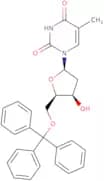
CAS:3'-Deoxy-5'-O-trityluridine is a nucleoside that is structurally related to uridine. It belongs to the class of nucleosides and has a hydroxyl group at the 3' position. The 5' position is modified by an anion (most often trityl) sterically, which prevents hydrolysis by esterases or phosphatases. The efficiency of this modification can be increased by using diethyl phosphate as the protecting agent. This modification also provides protection against nucleophiles, such as hydroxyl groups in nucleosides or phosphite triester derivatives. 3'-Deoxy-5'-O-trityluridine is used in the synthesis of other nucleosides and as a substrate for diffraction experiments.
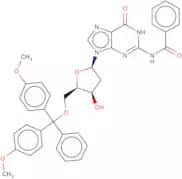
Fórmula:C28H26N2O5Pureza:Min. 95%Peso molecular:470.53 g/molN2-Benzoyl-2'-deoxy-5'-O-DMT-guanosine
CAS:N2-Benzoyl-2'-deoxy-5'-O-DMT-guanosine is a novel and potent anticancer nucleoside with antiviral activity. It is an analog of 2'-deoxy-5'-O-DMT guanosine, which was reported to be the first phosphoramidite nucleoside. N2-Benzoyl-2'-deoxy-5'-O-DMT-guanosine is an excellent candidate for DNA synthesis and has been shown to inhibit viral replication. This product is also of high purity and high quality, and can be used in research applications.Fórmula:C38H35N5O7Pureza:Min. 95%Peso molecular:673.71 g/mol4-Amino-1-(2',3',5'-tri-O-tert-butyldimethylsilyl-b-D-ribofuranosyl)-imidazo[4,5-c]pyridine
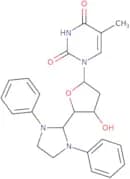
CAS:4-Amino-1-(2',3',5'-tri-O-tert-butyldimethylsilyl-b-D-ribofuranosyl)-imidazo[4,5-c]pyridine is a novel nucleoside analogue that has high purity and high quality. It is an activator of DNA synthesis, diphosphate and monophosphate of deoxyribonucleosides, ribonucleosides and analogues. 4-Amino-1-(2',3',5'-tri-O-tert-butyldimethylsilyl-b-D-ribofuranosyl)-imidazo[4,5-c]pyridine has been shown to have antiviral activities against herpes simplex virus type 1 (HSV1) in cell culture.Fórmula:C29H56N4O4Si3Pureza:Min. 95%Peso molecular:609.04 g/mol5'-Deoxy-5'-(1,3-diphenyl-2-imidazolidinyl)thymidine
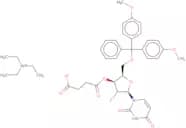
CAS:5'-Deoxy-5'-(1,3-diphenyl-2-imidazolidinyl)thymidine is a modified nucleoside analog that inhibits the growth of viruses. It has been shown to be active against herpes simplex virus type 1 and 2, varicella zoster virus, cytomegalovirus, and Epstein-Barr virus. This drug is used as an antiviral medication in the treatment of viral infections.Fórmula:C24H26N4O4Pureza:Min. 95%Peso molecular:434.5 g/mol2'-Deoxy-5'-O-DMT-2'-fluorouridine 3'-O-succinate triethylammonium salt
2'-Deoxy-5'-O-DMT-2'-fluorouridine 3'-O-succinate triethylammonium salt is a nucleoside that is modified with a 2,2,2-trifluoroethoxycarbonyl group on the 5' position of the sugar moiety. It is an activator for phosphoramidites in DNA synthesis and has been shown to have anticancer activity. It is also used as an antiviral agent and to treat HIV and herpes virus infections. This compound has a molecular weight of 439.5 g/mol and its CAS number is 62273-03-3.
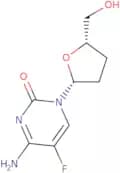
Fórmula:C34H32FN2O10·C6H16NPureza:Min. 95%Cor e Forma:SolidPeso molecular:749.84 g/mol2’,3’-Dideoxy-5-fluorocytidine
CAS:2’,3’-Dideoxy-5-fluorocytidine is a nucleoside analog that inhibits the growth of tumor cells in animals. It has been shown to inhibit the replication of hepatitis B virus and HIV without affecting normal cell division. 2′,3′-Dideoxy-5-fluorocytidine also has potent antitumor activity against human hematopoietic cells and induces apoptosis.
Fórmula:C9H12FN3O3Pureza:Min. 95%Peso molecular:229.21 g/mol2'-Deoxyadenosine 5'-a-thiotriphosphate sodium salt
2'-Deoxyadenosine 5'-a-thiotriphosphate sodium salt is an antiviral nucleotide analog that has been modified to have a novel structure. It is phosphorylated in vivo to form 2'-deoxyadenosine 5'-a-thiotriphosphate. The nucleoside can inhibit viral DNA synthesis and help prevent the spread of HIV, herpes virus type I, herpes virus type II, influenza virus, and other viruses. This compound also has anticancer activity and has been shown to be effective against leukemia cells.Pureza:Min. 95%Guanosine 3',5'-diphosphate tetralithium salt
CAS:Guanosine 3',5'-diphosphate tetralithium salt is a nucleoside that has antiviral and anticancer properties. It is synthesized by reacting guanosine with lithium tetrabutylammonium tetraiodide. This nucleotide can be used as a precursor for DNA synthesis, deoxyribonucleosides, and phosphoramidites. Guanosine 3',5'-diphosphate tetralithium salt has been shown to activate the synthesis of proteins in the absence of adenosine triphosphate (ATP).Fórmula:C10H11Li4N5O11P2Pureza:Min. 95%Peso molecular:466.93 g/mol5'-O-Trityl-3'-b-hydroxythymidine
CAS:5'-O-Trityl-3'-b-hydroxythymidine is a nucleoside that is synthesized by the reduction of a pyrimidine with xylene. This molecule has been shown to have antibacterial activity, and also activates p53 in human cells. 5'-O-Trityl-3'-b-hydroxythymidine has been shown to inhibit the growth of cancer cells in a dose dependent manner. The functional theory for this finding is that 5'-O-Trityl-3'-b-hydroxythymidine may bind to DNA, preventing RNA polymerase from transcribing DNA into mRNA.
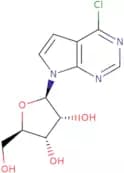
Fórmula:C29H28N2O6Pureza:Min. 95%Peso molecular:500.54 g/mol6-Chloro-7-deaza-9-(a-D-ribofuranosyl)purine
CAS:6-Chloro-7-deaza-9-(a-D-ribofuranosyl)purine is an anticancer drug that belongs to the class of nucleosides. It inhibits DNA and RNA synthesis by blocking the incorporation of nucleotides into DNA or RNA. This drug may also inhibit viral replication by blocking viral polymerase activity. 6-Chloro-7-deaza-9-(a-D-ribofuranosyl)purine has been shown to be a potent activator of phosphoramidites, which are used in chemical synthesis. This novel compound is synthesized using modified diphosphate chemistry and purified to high purity.Fórmula:C11H12ClN3O4Pureza:Min. 95%Peso molecular:285.68 g/molγ-(BBT)-ATP
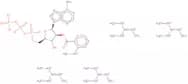
gamma-(BBT)-ATP is a novel ATP analog that has been shown to activate the purine nucleotide receptor and cause tumor cell death. It is a deoxyribonucleoside, phosphoramidite, and monophosphate that can be used as an activator for DNA synthesis. gamma-(BBT)-ATP inhibits the growth of tumor cells in culture and has antiviral activity against herpes simplex virus type-1.Fórmula:C24H22N7O13P3S2·xNaPureza:Min. 95%Cor e Forma:PowderPeso molecular:773.52 g/mol2'/3'-(N-Methylanthraniloyl)-adenosine-5'-triphosphate triethylammonium salt
CAS:2'/3'-(N-Methylanthraniloyl)-adenosine-5'-triphosphate triethylammonium salt is a phosphoramidite, deoxyribonucleoside that is active as an antiviral. It inhibits the production of viral DNA and RNA by binding to the polymerase enzyme that copies the viral genome. This drug has been shown to be effective in vitro and in vivo against a wide range of viruses, including HIV, herpes simplex virus type 1 and 2, cytomegalovirus, varicella zoster virus, influenza A virus, and poliovirus. It also has anticancer activity by inhibiting cell proliferation.
Fórmula:C18H23N6O14P3Pureza:Min. 95%Peso molecular:640.33 g/molTert-Butyl 2-Phenyl-4-(P-Tolylsulfonyloxy)-7,8-Dihydropyrido[4,3-D]Pyrimidine-6(5H)-Carboxylate
CAS:Tert-Butyl 2-Phenyl-4-(P-tolylsulfonyloxy)-7,8-dihydropyrido[4,3-D]pyrimidine-6(5H)-carboxylate is an antiviral agent that inhibits the replication of DNA and RNA. It is a phosphoramidate nucleoside analog and a novel compound that has been modified to improve its stability. Tert-butyl 2-phenyl-4-(P-tolylsulfonyloxy)-7,8-dihydropyrido[4,3-D]pyrimidine-6(5H)-carboxylate is currently being investigated for use as a drug to treat HIV/AIDS. This compound has been shown to inhibit HIV protease by binding to the active site of the enzyme and preventing it from cutting the polypeptide chain into smaller pieces. Tert butyl 2 phenyl 4Fórmula:C25H27N3O5SPureza:Min. 95%Peso molecular:481.57 g/molN4-Benzoyl-3'-O-tert-butyldimethylsilyl-2'-deoxycytidine
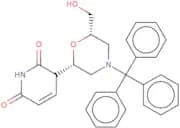
N4-Benzoyl-3'-O-tert-butyldimethylsilyl-2'-deoxycytidine is a monophosphate nucleoside analogue. It has antiviral and anticancer properties, as well as the ability to activate DNA synthesis. This product is synthesized from 2'-deoxycytidine and 4-benzoyl chloride in the presence of tert-butyldimethylsilyl chloride. It is available for sale as a white powder with a purity of 99%.Fórmula:C22H31N3O5SiPureza:Min. 95%Cor e Forma:PowderPeso molecular:445.58 g/mol7’-OH-N-trityl morpholino uracil
CAS:Please enquire for more information about 7’-OH-N-trityl morpholino uracil including the price, delivery time and more detailed product information at the technical inquiry form on this page
Fórmula:C28H27N3O4Peso molecular:469.53 g/molN6-Benzoyl-5'-O-DMT-adenosine 3'-CE phosphoramidite
N6-Benzoyl-5'-O-DMT-adenosine 3'-CE phosphoramidite is a novel nucleoside that has been modified to protect the 2' hydroxyl group from attack by nucleases. This modification makes N6-Benzoyl-5'-O-DMT-adenosine 3'-CE phosphoramidite resistant to degradation and allows for its use in a variety of applications, such as anticancer, antiviral, and DNA sequencing.Pureza:Min. 95%E-5-(2-Carbomethoxyvinyl)-2'-deoxy-5'-O-DMT-uridine
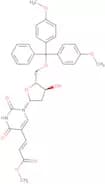
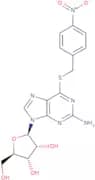
CAS:E-5-(2-Carbomethoxyvinyl)-2'-deoxy-5'-O-DMT-uridine is a monophosphate nucleoside analog that has been modified to be resistant to antiviral ribonucleases. This drug is phosphorylated in vivo to the corresponding diphosphate and triphosphate, which inhibits viral DNA synthesis and thus prevents the virus from replicating. E-5-(2-Carbomethoxyvinyl)-2'-deoxy-5'-O-DMT-uridine can be used as an antiviral agent against herpes simplex virus (HSV).Fórmula:C34H34N2O9Pureza:Min. 95%Peso molecular:614.66 g/molS-(4-Nitrobenzyl)-6-thioguanosine
CAS:S-(4-Nitrobenzyl)-6-thioguanosine is a transport inhibitor that has been shown to be active against leukemia. This drug inhibits the uptake of leukocytes into the bone marrow, which prevents their proliferation and development. S-(4-Nitrobenzyl)-6-thioguanosine also inhibits the synthesis of adenosine in erythrocytes, which leads to the accumulation of uridine and then to an increase in the levels of ATP. This drug can be used to treat chronic lymphocytic leukemia.Fórmula:C17H18N6O6SPureza:Min. 95%Peso molecular:434.43 g/molN6-Benzoyl-2'-deoxy-3'-O-levulinoyladenosine
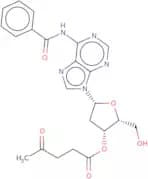
N6-Benzoyl-2'-deoxy-3'-O-levulinoyladenosine is an antiviral monophosphate nucleoside that has been shown to have significant activity against HIV and herpes simplex virus. It is also an anticancer drug and a novel synthetic nucleoside. N6-Benzoyl-2'-deoxy-3'-O-levulinoyladenosine has been shown to inhibit the growth of cancer cells in culture, as well as in animal models. It also inhibits the production of DNA and RNA, which may be due to its ability to act as a competitive inhibitor of DNA polymerase or RNA polymerase.
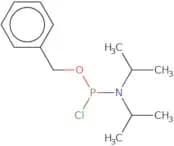
Fórmula:C22H23N5O6Pureza:Min. 95%Peso molecular:453.46 g/molBenzyl-N, N-diisopropylchlorophosphoramidite
CAS:Benzyl-N, N-diisopropylchlorophosphoramidite is a novel nucleoside phosphoramidite with anticancer activity. It is synthesized from benzyl alcohol and diisopropylamine by reaction with phosphorus oxychloride in the presence of a base. This compound can be used to activate DNA for subsequent coupling reactions or for modification of DNA. Benzyl-N, N-diisopropylchlorophosphoramidite has been shown to have antiviral and antitumour activities in vitro and in vivo.Fórmula:C13H21NOPClPureza:Min. 95%Peso molecular:273.74 g/mol5-[N-(2-Aminoethyl)-3-E-acrylamido]-2'-deoxy-5'-O-DMT-uridine
CAS:5-[N-(2-Aminoethyl)-3-E-acrylamido]-2'-deoxy-5'-O-DMT-uridine is a novel, activator ribonucleoside phosphoramidite. It is used in the synthesis of oligodeoxynucleotides and has antiviral, anticancer, and antimalarial activities. 5-[N-(2-Aminoethyl)-3-E-acrylamido]-2'-deoxy-5'-O-DMT-uridine is synthesized from 2'-deoxyadenosine monophosphate (dAMP) and N-(2 aminopropyl)-3-(E acryloyl) aminopropylphosphoramidite (APEAP). This nucleoside can be used as a building block for DNA synthesis or for other purposes such as the treatment of cancer and HIV.Fórmula:C35H38N4O8Pureza:Min. 95%Peso molecular:642.72 g/mol2'-Deoxyuridine-5'-diphosphate sodium
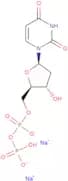
CAS:2'-Deoxyuridine-5'-diphosphate sodium salt is a novel antiviral agent that inhibits viral replication by inhibiting the activity of viral DNA polymerase. It is a synthetic nucleoside that is not found in nature, but is an analog of deoxyuridine monophosphate. This compound has been shown to be effective against tumor cells and has high purity with a CAS number 102814-06-2. 2'-Deoxyuridine-5'-diphosphate sodium salt is also used as an activator for phosphoramidites and modified nucleosides.Fórmula:C9H14N2O11P2•Na2Pureza:Min. 95%Cor e Forma:PowderPeso molecular:434.14 g/mol4-(Dimethoxymethyl)pyrimidine
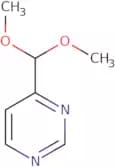
CAS:4-(Dimethoxymethyl)pyrimidine is a nitrogen heterocycle that is prepared by the reaction of formamide and nitrate. This compound has been shown to inhibit the replication of viruses such as HIV, herpes simplex virus type 2 (HSV-2), or vesicular stomatitis virus (VSV). 4-(Dimethoxymethyl)pyrimidine also binds to uracil in RNA, inhibiting RNA synthesis and leading to cell death. This compound can also be used as a precursor for the preparation of 2-aminopyrimidine, which is used in the synthesis of other compounds. 4-(Dimethoxymethyl)pyrimidine is used in organic synthesis for the preparation of benzene derivatives, such as nitrobenzene. This compound can also be synthesized by reacting formamide with toluene in an ultrasonic bath.Fórmula:C7H10N2O2Pureza:Min. 95%Peso molecular:154.17 g/mol4-Amino-2,6-dimethyl-8-(2'-deoxy-3',5'-di-O-toluoyl-b-D-ribofuranosyl)-7-pteridone
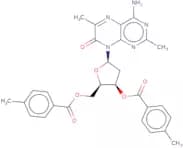
4-Amino-2,6-dimethyl-8-(2'-deoxy-3',5'-di-O-toluoyl-b-D-ribofuranosyl)-7-pteridone is a high purity, modified nucleoside that is synthesized from 2,4,6,8 tetramethylpyridine and 2'-deoxyribofuranosyl bromide. 4ADTP is an antiviral and anticancer agent that inhibits the viral DNA polymerase in the herpes family of viruses and the DNA polymerase in cancer cells. This drug has been shown to be active against HIV type 1 (HIV1) and HIV type 2 (HIV2).Fórmula:C29H29H5O6Pureza:Min. 95%Peso molecular:543.57 g/mol2'-Amino-2'-deoxyuridine-5'-triphosphate
CAS:2'-Amino-2'-deoxyuridine-5'-triphosphate (2dUDP) is a nucleotide that has been shown to be a potent inhibitor of cytosolic Ca2+ release. 2dUDP binds to the Ryanodine receptor (RYR) and inhibits the release of Ca2+ from the sarcoplasmic reticulum. It is also fluorescent, and can be used to detect Ca2+ in cells. This nucleotide has been shown to inhibit populations of heterologous and homologous RYR receptors.Fórmula:C9H16N3O14P3Pureza:Min. 95%Peso molecular:483.16 g/mol



![2'-Deoxyuridine-5'-[(a,b)-imido]diphosphate sodium salt - 10mM aqueous solution](/_next/image/?url=https%3A%2Fstatic.cymitquimica.com%2Fproducts%2F3D%2Fthumb-webp%2FND45195.webp&w=3840&q=75)



![2'-Deoxy-5'-DMT-5-[3-(trifluoroacetylamino)-1-E-propenyl]-uridine 3-CE phosphoramidite](/_next/image/?url=https%3A%2Fstatic.cymitquimica.com%2Fproducts%2F3D%2Fthumb-webp%2FPD138043.webp&w=3840&q=75)
![4-Amino-1-(2',3',5'-tri-O-tert-butyldimethylsilyl-b-D-ribofuranosyl)-imidazo[4,5-c]pyridine](/_next/image/?url=https%3A%2Fstatic.cymitquimica.com%2Fproducts%2F3D%2Fthumb-webp%2FNA04493.webp&w=3840&q=75)


![Tert-Butyl 2-Phenyl-4-(P-Tolylsulfonyloxy)-7,8-Dihydropyrido[4,3-D]Pyrimidine-6(5H)-Carboxylate](/_next/image/?url=https%3A%2Fstatic.cymitquimica.com%2Fproducts%2F3D%2Fthumb-webp%2FNB57393.webp&w=3840&q=75)


![5-[N-(2-Aminoethyl)-3-E-acrylamido]-2'-deoxy-5'-O-DMT-uridine](/_next/image/?url=https%3A%2Fstatic.cymitquimica.com%2Fproducts%2F3D%2Fthumb-webp%2FNA08231.webp&w=3840&q=75)