Nucleosídeos
Foram encontrados 3569 produtos de "Nucleosídeos"
N2-Isobutyryl-2'-O-(2-methylacetamido)guanosine
N2-Isobutyryl-2'-O-(2-methylacetamido)guanosine is a modified nucleoside with antiviral, anticancer and antiretroviral activity. It is a novel monophosphate that has been shown to be effective against hepatitis B and HIV. N2-Isobutyryl-2'-O-(2-methylacetamido)guanosine inhibits the synthesis of viral DNA by acting as an activator of DNA polymerases.Pureza:Min. 95%9-(2'-Deoxy-2'-fluoro-b-D-ribofuranosyl)-2-fluoroadenine
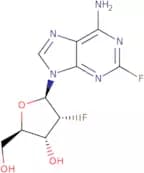
CAS:9-(2'-Deoxy-2'-fluoro-b-D-ribofuranosyl)-2-fluoroadenine is a modified nucleoside that is used as an antiviral and anticancer agent. It acts as an activator for the synthesis of DNA, RNA, and protein. 9-(2'-Deoxy-2'-fluoro-b-D-ribofuranosyl)-2-fluoroadenine also inhibits the growth of cancer cells by interfering with the division process. This drug is synthesized from 9-(5'-deoxy-5'-iodo-b-D-ribofuranosyl) -2,6 difluoro adenine (diFdA). The Ribonucleosides are then prepared in a similar manner to other nucleosides by using phosphoramidites. The product is then purified using HPLC.
Fórmula:C10H11F2N5O3Pureza:Min. 95%Cor e Forma:White PowderPeso molecular:287.23 g/molThymidine-5'-diphosphate-6-deoxy-D-allose
Thymidine-5'-diphosphate-6-deoxy-D-allose (TDP) is a high quality monophosphorylated nucleoside that is used as an activator, anticancer, and antiviral agent. TDP has been modified to improve the efficacy and safety of cancer treatments by enhancing the cytotoxicity of chemotherapeutics. TDP also has antiviral properties and can be used in the treatment of HIV infections by inhibiting viral replication.
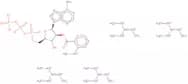
Pureza:Min. 95%2'/3'-(N-Methylanthraniloyl)-adenosine-5'-triphosphate triethylammonium salt
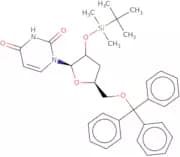
CAS:2'/3'-(N-Methylanthraniloyl)-adenosine-5'-triphosphate triethylammonium salt is a phosphoramidite, deoxyribonucleoside that is active as an antiviral. It inhibits the production of viral DNA and RNA by binding to the polymerase enzyme that copies the viral genome. This drug has been shown to be effective in vitro and in vivo against a wide range of viruses, including HIV, herpes simplex virus type 1 and 2, cytomegalovirus, varicella zoster virus, influenza A virus, and poliovirus. It also has anticancer activity by inhibiting cell proliferation.Fórmula:C18H23N6O14P3Pureza:Min. 95%Peso molecular:640.33 g/mol2'-O-(tert-Butyldimethylsilyl)-3'-deoxy-5'-O-trityluridine
CAS:2'-O-(tert-Butyldimethylsilyl)-3'-deoxy-5'-O-trityluridine is a nucleoside that has antiviral and anticancer properties. It is a monophosphate of uridine, which is an important precursor in the synthesis of DNA and RNA. This product has been modified to improve its purity and quality, making it suitable for use in laboratory research.Fórmula:C34H40N2O5SiPureza:Min. 95%Peso molecular:584.78 g/molN4-Benzoyl-3'-O-tert-butyldimethylsilyl-2'-deoxycytidine
N4-Benzoyl-3'-O-tert-butyldimethylsilyl-2'-deoxycytidine is a monophosphate nucleoside analogue. It has antiviral and anticancer properties, as well as the ability to activate DNA synthesis. This product is synthesized from 2'-deoxycytidine and 4-benzoyl chloride in the presence of tert-butyldimethylsilyl chloride. It is available for sale as a white powder with a purity of 99%.Fórmula:C22H31N3O5SiPureza:Min. 95%Cor e Forma:PowderPeso molecular:445.58 g/molN6-Benzoyl-5'-O-DMT-adenosine 3'-CE phosphoramidite
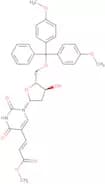
N6-Benzoyl-5'-O-DMT-adenosine 3'-CE phosphoramidite is a novel nucleoside that has been modified to protect the 2' hydroxyl group from attack by nucleases. This modification makes N6-Benzoyl-5'-O-DMT-adenosine 3'-CE phosphoramidite resistant to degradation and allows for its use in a variety of applications, such as anticancer, antiviral, and DNA sequencing.Pureza:Min. 95%E-5-(2-Carbomethoxyvinyl)-2'-deoxy-5'-O-DMT-uridine
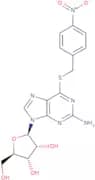
CAS:E-5-(2-Carbomethoxyvinyl)-2'-deoxy-5'-O-DMT-uridine is a monophosphate nucleoside analog that has been modified to be resistant to antiviral ribonucleases. This drug is phosphorylated in vivo to the corresponding diphosphate and triphosphate, which inhibits viral DNA synthesis and thus prevents the virus from replicating. E-5-(2-Carbomethoxyvinyl)-2'-deoxy-5'-O-DMT-uridine can be used as an antiviral agent against herpes simplex virus (HSV).Fórmula:C34H34N2O9Pureza:Min. 95%Peso molecular:614.66 g/molS-(4-Nitrobenzyl)-6-thioguanosine
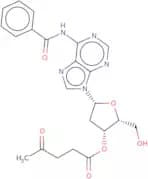
CAS:S-(4-Nitrobenzyl)-6-thioguanosine is a transport inhibitor that has been shown to be active against leukemia. This drug inhibits the uptake of leukocytes into the bone marrow, which prevents their proliferation and development. S-(4-Nitrobenzyl)-6-thioguanosine also inhibits the synthesis of adenosine in erythrocytes, which leads to the accumulation of uridine and then to an increase in the levels of ATP. This drug can be used to treat chronic lymphocytic leukemia.Fórmula:C17H18N6O6SPureza:Min. 95%Peso molecular:434.43 g/molN6-Benzoyl-2'-deoxy-3'-O-levulinoyladenosine
N6-Benzoyl-2'-deoxy-3'-O-levulinoyladenosine is an antiviral monophosphate nucleoside that has been shown to have significant activity against HIV and herpes simplex virus. It is also an anticancer drug and a novel synthetic nucleoside. N6-Benzoyl-2'-deoxy-3'-O-levulinoyladenosine has been shown to inhibit the growth of cancer cells in culture, as well as in animal models. It also inhibits the production of DNA and RNA, which may be due to its ability to act as a competitive inhibitor of DNA polymerase or RNA polymerase.
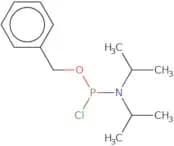
Fórmula:C22H23N5O6Pureza:Min. 95%Peso molecular:453.46 g/molBenzyl-N, N-diisopropylchlorophosphoramidite
CAS:Benzyl-N, N-diisopropylchlorophosphoramidite is a novel nucleoside phosphoramidite with anticancer activity. It is synthesized from benzyl alcohol and diisopropylamine by reaction with phosphorus oxychloride in the presence of a base. This compound can be used to activate DNA for subsequent coupling reactions or for modification of DNA. Benzyl-N, N-diisopropylchlorophosphoramidite has been shown to have antiviral and antitumour activities in vitro and in vivo.Fórmula:C13H21NOPClPureza:Min. 95%Peso molecular:273.74 g/mol5-[N-(2-Aminoethyl)-3-E-acrylamido]-2'-deoxy-5'-O-DMT-uridine
CAS:5-[N-(2-Aminoethyl)-3-E-acrylamido]-2'-deoxy-5'-O-DMT-uridine is a novel, activator ribonucleoside phosphoramidite. It is used in the synthesis of oligodeoxynucleotides and has antiviral, anticancer, and antimalarial activities. 5-[N-(2-Aminoethyl)-3-E-acrylamido]-2'-deoxy-5'-O-DMT-uridine is synthesized from 2'-deoxyadenosine monophosphate (dAMP) and N-(2 aminopropyl)-3-(E acryloyl) aminopropylphosphoramidite (APEAP). This nucleoside can be used as a building block for DNA synthesis or for other purposes such as the treatment of cancer and HIV.Fórmula:C35H38N4O8Pureza:Min. 95%Peso molecular:642.72 g/mol2'-Deoxyuridine-5'-diphosphate sodium
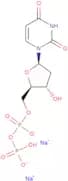
CAS:2'-Deoxyuridine-5'-diphosphate sodium salt is a novel antiviral agent that inhibits viral replication by inhibiting the activity of viral DNA polymerase. It is a synthetic nucleoside that is not found in nature, but is an analog of deoxyuridine monophosphate. This compound has been shown to be effective against tumor cells and has high purity with a CAS number 102814-06-2. 2'-Deoxyuridine-5'-diphosphate sodium salt is also used as an activator for phosphoramidites and modified nucleosides.Fórmula:C9H14N2O11P2•Na2Pureza:Min. 95%Cor e Forma:PowderPeso molecular:434.14 g/mol3'-Chloro-3'-deoxy-5'-O-tritylthymidine
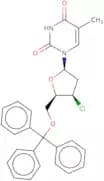
CAS:3'-Chloro-3'-deoxy-5'-O-tritylthymidine (3CT) is an antiviral and anticancer drug that is a modified nucleoside. It is synthesized by reacting 3'-chloro-5'-O-tritylthymidine with trichloroacetonitrile. 3CT inhibits the synthesis of DNA and RNA, which may have antiviral and anticancer effects. It can be used to treat hepatitis B virus, herpes simplex virus, human papillomavirus, Epstein-Barr virus, and Kaposi's sarcoma. 3CT has been shown to be effective in treating cancer cells in culture by inhibiting DNA synthesis.Fórmula:C29H27ClN2O4Pureza:Min. 95%Peso molecular:503 g/mol4-Amino-2,6-dimethyl-8-(2'-deoxy-3',5'-di-O-toluoyl-b-D-ribofuranosyl)-7-pteridone
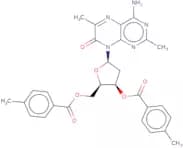
4-Amino-2,6-dimethyl-8-(2'-deoxy-3',5'-di-O-toluoyl-b-D-ribofuranosyl)-7-pteridone is a high purity, modified nucleoside that is synthesized from 2,4,6,8 tetramethylpyridine and 2'-deoxyribofuranosyl bromide. 4ADTP is an antiviral and anticancer agent that inhibits the viral DNA polymerase in the herpes family of viruses and the DNA polymerase in cancer cells. This drug has been shown to be active against HIV type 1 (HIV1) and HIV type 2 (HIV2).Fórmula:C29H29H5O6Pureza:Min. 95%Peso molecular:543.57 g/mol2'-Amino-2'-deoxyuridine-5'-triphosphate
CAS:2'-Amino-2'-deoxyuridine-5'-triphosphate (2dUDP) is a nucleotide that has been shown to be a potent inhibitor of cytosolic Ca2+ release. 2dUDP binds to the Ryanodine receptor (RYR) and inhibits the release of Ca2+ from the sarcoplasmic reticulum. It is also fluorescent, and can be used to detect Ca2+ in cells. This nucleotide has been shown to inhibit populations of heterologous and homologous RYR receptors.Fórmula:C9H16N3O14P3Pureza:Min. 95%Peso molecular:483.16 g/mol2'-Deoxy-5'-O-DMT-N6-isobutyryladenosine 3'-CE phosphoramidite
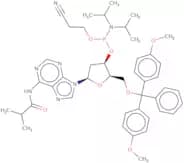
2'-Deoxy-5'-O-DMT-N6-isobutyryladenosine 3'-CE phosphoramidite is a novel and high quality anticancer agent that is used in the synthesis of DNA. This compound has shown potent cytotoxic activity against various cancer cell lines, including human leukemia cells, human breast carcinoma cells, and human colon carcinoma cells. 2'-Deoxy-5'-O-DMT-N6-isobutyryladenosine 3'-CE phosphoramidite inhibits DNA synthesis by inhibiting the enzyme DNA polymerase. It also inhibits protein synthesis and has been shown to be toxic to the mitochondria, which may be responsible for its anti-cancer effects.Fórmula:C44H54N7O7PPureza:Min. 95%Peso molecular:823.94 g/mol(5'S)-8,5'-Cyclodeoxyadenosine CE phosphoramidite
CAS:(5'S)-8,5'-Cyclodeoxyadenosine CE phosphoramidite is a nucleoside that is used in the synthesis of DNA. It is an analog of adenosine and has antiviral and anticancer properties. It also has been shown to inhibit the growth of certain types of cancer cells by inhibiting the production of deoxyribonucleosides. (5'S)-8,5'-Cyclodeoxyadenosine CE phosphoramidite can be used as a monophosphate or as a diphosphate for incorporation into DNA strands. This compound belongs to the group of modified nucleosides, which are synthetically produced compounds that are different from naturally occurring nucleosides found in DNA. (5'S)-8,5'-Cyclodeoxyadenosine CE phosphoramidite is purified and has high purity when purchased from us.Fórmula:C47H50N7O7PPureza:Min. 95%Peso molecular:855.92 g/mol7-Benzyl-4-chloro-5-iodo-7H-pyrrolo[2,3-d]pyriMidine
CAS:7-Benzyl-4-chloro-5-iodo-7H-pyrrolo[2,3-d]pyriMidine is an antiviral agent that is a modified nucleoside. It has shown to be a novel activator of the immune system. 7BICP has been shown to have high antiviral activity against herpes simplex virus type 1 (HSV1) and type 2 (HSV2) in cell cultures. It also inhibits the replication of HIV and influenza A virus in cell cultures. This drug is synthesized from deoxyribonucleosides, phosphoramidites, or nucleosides. 7BICP is a monophosphate and diphosphate, which are used as substrates for DNA synthesis by DNA polymerase. The CAS number for 7BICP is 1244855-59-1.Pureza:Min. 95%2,6-Diamino-9-(2'-O-methyl-b-D-ribofuranosyl)purine
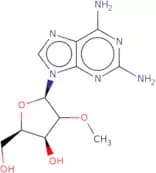
CAS:2,6-Diamino-9-(2'-O-methyl-b-D-ribofuranosyl)purine is a synthetic nucleoside that is used as an antiviral and antitumor agent. It is a modified nucleoside with a purine base. It has been shown to be effective against certain cancer cells in vitro and in vivo. This drug also has antiviral properties, which may be due to its ability to inhibit DNA synthesis through the inhibition of viral RNA replication. 2,6-Diamino-9-(2'-O-methyl-b-D-ribofuranosyl)purine is resistant to phosphorylation by kinase enzymes and it can be used as a precursor for the preparation of other nucleosides.Fórmula:C11H16N6O4Pureza:Min. 95%Cor e Forma:White to off-white solid.Peso molecular:296.29 g/mol2'-O-(2-Ethoxy-2-oxoethyl)adenosine
2'-O-(2-Ethoxy-2-oxoethyl)adenosine is a nucleoside that is a modified version of adenosine. It is phosphorylated to form 2'-O-(2-ethoxy-2-oxoethyl)adenosin-5'-yl monophosphate, which has antiviral activity and is used as an antiviral agent in the treatment of herpes simplex virus. The chemical structure of this nucleoside is novel, and it binds to the ribonucleotide reductase enzyme to prevent the synthesis of DNA and RNA. This drug also has anticancer properties, but it is not active against bacterial infections.
Pureza:Min. 95%4-Amino-6-hydroxy-2-methylpyrimidine
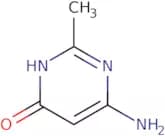
CAS:4-Amino-6-hydroxy-2-methylpyrimidine (4AMMP) is a heterocyclic compound that belongs to the group of pyrimidines. It has been shown to react with morpholine and acrylic acid in an oxidation sequence. The reaction proceeds through an elimination, forming formaldehyde, which condenses with hydrolyzed piperazine to give the final product. 4AMMP can also be alkylated with a variety of reagents such as methyl iodide or dimethyl sulfate.Fórmula:C5H7N3OPureza:Min. 95%Cor e Forma:PowderPeso molecular:125.13 g/molN6-Benzoyl-5'-chloro-5'-deoxy-2',3'-O-isopropylideneadenosine
N6-Benzoyl-5'-chloro-5'-deoxy-2',3'-O-isopropylideneadenosine is a novel nucleoside that has the potential to be a therapeutic agent for cancer and antiviral therapy. It is an analog of adenosine that inhibits viral replication by inhibiting the viral enzyme RNA-dependent DNA polymerase. N6-Benzoyl-5'-chloro-5'-deoxy-2',3'-O-isopropylideneadenosine also inhibits tumor growth by inducing apoptosis. The compound has been shown to inhibit human leukemia cells in vitro, as well as mouse leukemia cells in vivo. This novel nucleoside is synthesized through a two step process starting with 5'-chloroadenosine and converting it to 5'-chloroinosidine with potassium cyanide, followed by deoxygenation at the 6 position with benzoyl chloride and sodium hydroxide.Pureza:Min. 95%2',3'-Di-O-acetyl-5'-deoxy-5-fluoro-N4-(isopentyloxycarbonyl)cytidine
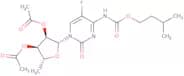
CAS:2',3'-Di-O-acetyl-5'-deoxy-5-fluoro-N4-(isopentyloxycarbonyl)cytidine is an antiviral nucleoside. It is a novel nucleotide analog that inhibits human immunodeficiency virus (HIV). The cytidine monophosphate moiety of 2',3'-Di-O-acetyl-5'-deoxy-5-fluoro-N4-(isopentyloxycarbonyl)cytidine has been modified with the substitution of the acetyl group at the 2' position with a deoxyribose group, and the 5' fluoro group with a 5'-deoxyfluro group. This modification prevents phosphodiesterases from hydrolyzing it to its monophosphate form, which leads to higher antiviral activity. 2',3'-Di-O-acetyl-5'-deoxy-5-fluoro -Fórmula:C19H26FN3O8Pureza:Min. 95%Peso molecular:443.42 g/mol8-(2-Amino-1-methyl-D3-6-phenylimidazo[4,5-b]pyridyl-2'-deoxyguanosine
CAS:Produto Controlado8-(2-Amino-1-methyl-D3-6-phenylimidazo[4,5-b]pyridyl-2'-deoxyguanosine) is a modified nucleoside that is used as an antiviral agent. It is not active against DNA viruses but has been shown to inhibit the replication of RNA viruses such as human immunodeficiency virus type 1 (HIV). 8-(2-Amino-1-methyl-D3-6-phenylimidazo[4,5-b]pyridyl)-2'-deoxyguanosine has been found to be more effective than acyclovir (Zovirax), a commonly used antiviral drug. This nucleoside also has anticancer properties, which may be due to its ability to inhibit the synthesis of DNA and RNA.Fórmula:C23H20D3N9O4Pureza:Min. 95%Peso molecular:492.5 g/mol6-Methyl-3-(β-D-2-deoxyribofuranosyl)furano-[2,3-d]pyrimidin-2-one
CAS:6-Methyl-3-(β-D-2-deoxyribofuranosyl)furano-[2,3-d]pyrimidin-2-one is a novel nucleoside analog that has been modified to contain an antiviral agent. It is phosphorylated at the 2' position to form a monophosphate. This compound is a potent inhibitor of HIV reverse transcriptase and human DNA polymerases α and β. The structure of this compound contains a furano ring fused with the pyrimidine moiety, which is substituted with methyl groups on C6 and C3 positions. The CAS number for 6-Methyl-3-(β-D-2-deoxyribofuranosyl)furano-[2,3-d]pyrimidin-2-one is 383897−60−7.Fórmula:C12H14N2O5Pureza:Min. 95%Peso molecular:266.25 g/mol5'-O-DMT-thymidine 3'-Q Linker CPG 1000 Å
5'-O-DMT-thymidine 3'-Q Linker CPG 1000 Å is an Activator that is a monophosphate and synthesized through the modification of nucleosides. It has novel anticancer properties and is a high quality, high purity, and modified nucleotide. The 5'-O-DMT-thymidine 3'-Q Linker CPG 1000 Å has been shown to have antiviral activity against herpes simplex virus type 1 (HSV-1) in human cells. It also has anticancer effects on human leukemia cells by inhibiting the growth of cancer cells.Pureza:Min. 95%2'-O-tert-Butyldimethylsilyl-N6-chloroacetyl-N1-methyl-5'-O-MMT-adenosine 3'-CE phosphoramidite
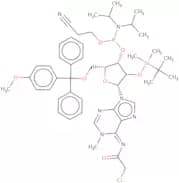
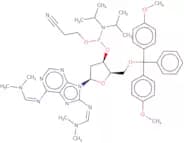
2'-O-tert-Butyldimethylsilyl-N6-chloroacetyl-N1-methyl-5'-O-MMT-adenosine 3'-CE phosphoramidite is an activated monophosphate chemical compound. It is a modified nucleoside that has been used for the synthesis of oligonucleotides and DNA. It also has anticancer, antiviral, and other pharmacological activities.Fórmula:C48H63ClN7O7PSiPureza:Min. 95%Peso molecular:944.57 g/mol8-Amino-2'-deoxy-N6,N8-di-DMF-5'-O-DMT-adenosine 3'-CE phosphoramidite
CAS:8-Amino-2'-deoxy-N6,N8-di-DMF-5'-O-DMT-adenosine 3'-CE phosphoramidite is a novel nucleoside analog with antiviral and anticancer properties. It is synthesized by reacting 8-aminoimidazo[2,1-b]thiazole 1,3(2H)-dione (AITD) with N6,N8-diisopropyl dATP to form the aminothiazole phosphate intermediate. This intermediate is then reacted with 5'-O-(4,4'-dimethoxytrityl)-2',3',5' triphosphate (DMTrP) to produce the desired product. The synthesis of 8AAODMTAP has been shown to be more efficient than other synthesized nucleosides due to its high purity and lack of impurities.Fórmula:C46H59N10O6PPureza:Min. 95%Peso molecular:879 g/mol2',3'-Dideoxyguanosine-5'-O-(1-thiotriphosphate)
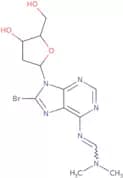
CAS:2',3'-Dideoxyguanosine-5'-O-(1-thiotriphosphate) (2,3'-ddGTP) is a nucleoside that is synthesized using phosphoramidite chemistry. It has antiviral and anticancer activity, as well as the ability to activate cellular transcription. 2,3'-Dideoxyguanosine-5'-O-(1-thiotriphosphate) can be used in the synthesis of modified nucleosides or in the synthesis of novel nucleosides. The compound was found to inhibit DNA replication by binding to the enzyme ribonucleotide reductase. 2,3'-Dideoxyguanosine-5'-O-(1-thiotriphosphate) can also be used for DNA sequencing and as a cytotoxic agent in cancer chemotherapy.Fórmula:C10H16N5O11P3SPureza:Min. 95%Peso molecular:507.25 g/mol8-Bromo-N6-(dimethylaminomethylidene)-2'-deoxyadenosine
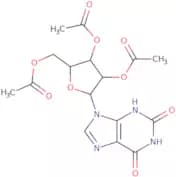
CAS:8-Bromo-N6-(dimethylaminomethylidene)-2'-deoxyadenosine is a phosphoramidite that is used in the preparation of antiviral nucleosides and monophosphate. It has been shown to have anticancer activity. 8-Bromo-N6-(dimethylaminomethylidene)-2'-deoxyadenosine is synthesized by reacting an acid halide with a 2'-deoxyribonucleotide. This reaction produces a 2'-bromo adenosine derivative, which is then reacted with dimethylamine to produce the desired product. The synthesis of 8-bromo-N6-(dimethylaminomethylidene)-2'-deoxyadenosine can be performed on a large scale using an automated process.Fórmula:C13H17BrN6O3Pureza:Min. 95%Peso molecular:385.22 g/mol2,6-Dihydro-9-(2',3',5'-tri-O-acetyl-b-D-ribofuranosyl)purine
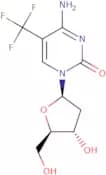
CAS:Produto Controlado2,6-Dihydro-9-(2',3',5'-tri-O-acetyl-b-D-ribofuranosyl)purine is a synthetic activator that is used in the synthesis of nucleosides and nucleotide phosphoramidites. It has been shown to have antiviral activity against herpes simplex virus type 1, herpes simplex virus type 2, and vesicular stomatitis virus.Fórmula:C16H22N4O7Pureza:Min. 95%Peso molecular:382.37 g/mol2'-Deoxy-5-(trifluoromethyl)cytidine
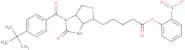
CAS:2'-Deoxy-5-(trifluoromethyl)cytidine is a synthetic nucleoside analogue that inhibits the cytidine deaminase enzyme. It is used in the treatment of some types of leukemia and other cancers. The compound, which has a trifluoromethyl group on the 2' position, binds to the active site of cytidine deaminase and prevents it from functioning. This leads to an accumulation of thymidylate, which is required for DNA synthesis. The tumor tissue also contains high concentrations of this drug and its metabolites, making it more effective against cancer cells than normal cells. 2'-Deoxy-5-(trifluoromethyl)cytidine has been shown to inhibit anabolism in tumor tissue in the presence of high concentrations of phosphorylases, which are enzymes that catalyze reactions that break down carbohydrates and proteins into smaller molecules such as glucose or amino acids.Fórmula:C10H12F3N3O4Pureza:Min. 95%Peso molecular:295.22 g/molN1-(4-(t-Butyl)benzoyl)-D-(+)biotin 2-nitrophenyl ester
CAS:N1-(4-(t-Butyl)benzoyl)-D-(+)biotin 2-nitrophenyl ester is a novel nucleoside analogue and phosphoramidite. It has been modified to have an acyclic carbon chain with a 4-hydroxybenzoyl group at the C2 position. This compound is an activator of DNA synthesis, and it can be used for the synthesis of deoxyribonucleosides. The purity of this compound is 99%. The CAS number for this compound is 869354-61-0.
Fórmula:C27H31N3O6SPureza:Min. 95%Peso molecular:525.6 g/mol5'-O-DMT-N2-DMF-guanosine-3'-succinyl CPG 1000 Å
5'-O-DMT-N2-DMF-guanosine-3'-succinyl CPG 1000 Å is a nucleoside, modified with succinyldiimidazopropylcarbodiimide. It is an activator of phosphoramidites and is used in the synthesis of DNA and RNA. 5'-O-DMT-N2-DMF-guanosine-3'-succinyl CPG 1000 Å has shown anticancer and antiviral properties in vitro.Pureza:Min. 95%Chemical phosphorylating reagent (cpr)
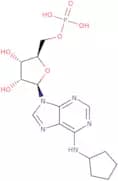
CAS:Chemical phosphorylating reagent (CPR) is a powerful tool for the study of kinases, which are enzymes that regulate cellular processes such as cell division and apoptosis. CPR has been shown to be effective in inhibiting the activity of certain kinases that are involved in tumor growth and progression. It has also been used as an anticancer agent, inducing apoptosis in cancer cells. CPR is an analog of toxaphene and labetalol, two compounds with known kinase inhibitor activity. This reagent has been tested on human urine samples and Chinese hamster ovary cells, demonstrating its potential as a valuable research tool for studying kinase signaling pathways and developing new cancer therapies.Fórmula:C5H10O5Pureza:Min. 95%Peso molecular:150.13 g/molN6-Cyclopentyladenosine-5'-O-monophosphate
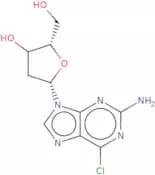
CAS:N6-Cyclopentyladenosine-5'-O-monophosphate is a nucleoside that is a substrate for RNA polymerase and is involved in the regulation of transcription. It also has been shown to be localized in the nucleus, cytoplasm, and cell membrane. N6-Cyclopentyladenosine-5'-O-monophosphate is used in diagnosis as an immunochemical reagent for the detection of matrix metalloproteinases (MMPs) and it can be used to measure MMP-9 activity. The monoclonal antibody (mAb) against this nucleoside can be used to detect N6-Cyclopentyladenosine-5'-O-monophosphate in biological samples such as human serum or cell culture.Fórmula:C15H22N5O7PPureza:Min. 95%Peso molecular:415.34 g/mol6-Chloro-9-(2-deoxy-b-L-erythro-pentofuranosyl)-9H-purin-2-amine
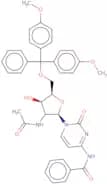
CAS:6-Chloro-9-(2-deoxy-b-L-erythro-pentofuranosyl)-9H-purin-2-amine is a novel antiviral and anticancer agent. It is an analog of adenosine that inhibits viral replication by inhibiting DNA synthesis. 6CePP2A is an activator of nucleoside deoxyribonucleotidyltransferase, which converts dATP to dTTP.Fórmula:C10H12ClN5O3Pureza:Min. 95%Peso molecular:285.69 g/molN4-Benzoyl-2'-deoxy-5'-O-DMT-2'-trifluoroacetamidocytidine
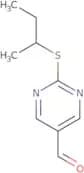
N4-Benzoyl-2'-deoxy-5'-O-DMT-2'-trifluoroacetamidocytidine is a novel nucleoside analog that is activated by ribonucleotide reductase. This compound inhibits the synthesis of DNA and RNA in cells, which leads to the inhibition of cellular proliferation. N4-Benzoyl-2'-deoxy-5'-O-DMT-2'-trifluoroacetamidocytidine has been shown to be effective against cancer cells, as well as antiviral and antiretroviral activity. It is also active against drug resistant strains of HIV.Fórmula:C39H35F3N4O8Pureza:Min. 95%Peso molecular:744.71 g/mol2-(sec-Butylthio)pyrimidine-5-carbaldehyde
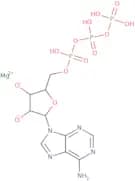
CAS:2-(sec-Butylthio)pyrimidine-5-carbaldehyde is a molecule that inhibits cell growth and angiogenesis. It was found to inhibit the phosphorylation of specific proteins, leading to the inhibition of cell growth and angiogenesis. This compound has been shown to be effective against prostate cancer cells in vitro and in vivo, as well as in a mouse model for breast cancer. In this model, the drug inhibited tumor growth without any apparent toxicity to normal tissues. 2-(sec-Butylthio)pyrimidine-5-carbaldehyde has been tested as a potential antiangiogenic agent in mice, with results showing no adverse effects on animals.Fórmula:C9H12N2OSPureza:Min. 95%Peso molecular:196.27 g/molAdenosine 5'-(tetrahydrogen triphosphate)
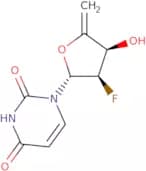
CAS:Adenosine is a nucleoside consisting of adenine and ribose. It is used in biochemical analysis to quantify the cytosolic Ca2+ concentration, which is an important cellular signal that regulates many cellular processes. Adenosine stimulates the uptake of Ca2+ by binding to the monophosphate-activated protein (AMPAR), which results in the opening of voltage-gated calcium channels. These channels allow Ca2+ to enter the cell, increasing its intracellular concentration. Adenosine also has been shown to stimulate muscle contraction through increased release of Ca2+. This drug also possesses inhibitory effects on synaptic transmission and may have anti-inflammatory properties due to its ability to inhibit proteolytic enzymes in muscle cells.Fórmula:C10H14MgN5O13P3Pureza:Min. 95%Peso molecular:529.47 g/mol4',5'-Didehydro-2',5'-dideoxy-2'-fluorouridine
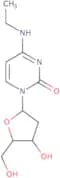
CAS:4',5'-Didehydro-2',5'-dideoxy-2'-fluorouridine is a monophosphate of the nucleoside 5FU. It is an antiviral and anticancer agent that inhibits viral DNA synthesis by competitively inhibiting the activity of thymidylate synthase, which converts dUMP to dTMP. 4',5'-Didehydro-2',5'-dideoxy-2'-fluorouridine also induces apoptosis in neoplastic cells. This compound has high purity and quality, and can be used as a phosphoramidite for the synthesis of modified oligonucleotides.Fórmula:C10H10FNO4Pureza:Min. 95%Peso molecular:227.19 g/molN4-Ethyl-2'-deoxycytidine
CAS:N4-Ethyl-2'-deoxycytidine is a novel nucleoside analog that inhibits the activity of DNA polymerase. It is used as an anticancer, antiviral and antiretroviral agent. N4-Ethyl-2'-deoxycytidine has been shown to be active against herpes simplex virus type 1 (HSV-1), HSV-2, cytomegalovirus (CMV), human immunodeficiency virus type 1 (HIV-1) and HIV-2 in vitro. This drug also has antiangiogenic properties due to its ability to inhibit the synthesis of vascular endothelial growth factor A. N4-Ethyl-2'-deoxycytidine is a modified nucleoside that can be phosphorylated by cellular enzymes, which activates it by converting it into a monophosphate or diphosphate form. This drug inhibits the production of RNA from DNA and also prevents proteinFórmula:C11H17N3O4Pureza:Min. 95%Peso molecular:255.27 g/mol5-Azido-2'-deoxyuridine
CAS:5-Azido-2'-deoxyuridine is a diazonium salt that inhibits the replication of DNA. This compound is synthesized using natural compounds, including 5-azidouracil and formamide. The structure of this compound has been shown to be chromatographically similar to uridine and binds to DNA in vitro. It also has been shown to have biological properties that inhibit the growth of trichomonas vaginalis and dna replication. 5-Azido-2'-deoxyuridine is not very stable in dimethylformamide but can be stored at −20°C for up to two years.Pureza:Min. 95%N6-Monobutyryl-2'-deoxyadenosine 3',5'-cyclic monophosphate sodium salt
CAS:N6-Monobutyryl-2'-deoxyadenosine 3',5'-cyclic monophosphate sodium salt is a novel antiviral and anticancer agent that is a synthetic nucleoside analogue. It has been shown to be effective at inhibiting the growth of human cancer cells in vitro and in vivo. N6-Monobutyryl-2'-deoxyadenosine 3',5'-cyclic monophosphate sodium salt binds to viral RNA, resulting in inhibition of protein synthesis and cell death.Fórmula:C14H18N5O6P·NaPureza:Min. 95%Peso molecular:406.29 g/mol2,2-Crylo-5-methyluridine
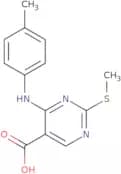
2,2-Crylo-5-methyluridine is a synthetic diphosphate nucleotide that has been shown to be an activator of DNA synthesis. It is used in the synthesis of oligonucleotides and as a monophosphate for the synthesis of 2'-O-methyl ribonucleosides. 2,2-Crylo-5-methyluridine has been shown to have anticancer activity, which may be due to its ability to inhibit tumor proliferation or induce apoptosis.Pureza:Min. 95%2-(Methylthio)-4-(P-Tolylamino)Pyrimidine-5-Carboxylic Acid
CAS:2-(Methylthio)-4-(P-tolylamino)pyrimidine-5-carboxylic acid is an anticancer drug that is a novel, modified nucleoside. It has been shown to be active as a monophosphate and diphosphate in vitro. 2-(Methylthio)-4-(P-tolylamino)pyrimidine-5-carboxylic acid has also been shown to have antiviral activity against HIV and herpes simplex virus type 1 (HSV1).Fórmula:C13H13N3O2SPureza:Min. 95%Peso molecular:275.33 g/mol2'-Deoxy-5'-DMT-5-[3-(trifluoroacetylamino)-1-propynyl]-uridine 3'-CE phosphoramidite
CAS:2'-Deoxy-5'-DMT-5-[3-(trifluoroacetylamino)-1-propynyl]-uridine 3'-CE phosphoramidite is a novel modified nucleoside that is synthesized by the reaction of 2'-deoxy-5'-DMT-5-[3-(trifluoroacetylamino)-1-propynyl] uridine with bis(2,4,6-trimethylbenzoyl)phosphine and then with tetrazole. This product inhibits the synthesis of viral RNA and DNA and has been shown to be effective against cancer cells in vitro.Fórmula:C44H49F3N5O9PPureza:Min. 95%Peso molecular:879.86 g/mol8-Bromoguanosine-5'-triphosphate sodium salt - 10 mM aqueous solution
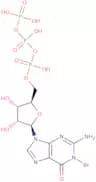
CAS:8-Bromoguanosine-5'-triphosphate sodium salt is a nucleotide analog that inhibits the enzyme ribonucleotide reductase. This drug inhibits bacterial growth by interfering with protein synthesis and cell division. It binds to the purine riboswitch, which is an allosteric regulatory binding site on the ribosome, inactivating it. 8-Bromoguanosine-5'-triphosphate sodium salt also binds to the active site of bacterial RNA polymerase and inhibits DNA synthesis. The activity of this drug has been shown using a bacteriophage system in which the enzyme protein synthesis was inhibited by 8-bromoguanosine-5'-triphosphate sodium salt.Fórmula:C10H15N5O14P3Br·xNaPureza:Min. 95%Peso molecular:602.08 g/mol2,6-Dichloro-9-(3',5'-di-O-benzoyl-2'-deoxy-2'-fluoro-a-D-arabinofuranosyl)purine
2,6-Dichloro-9-(3',5'-di-O-benzoyl-2'-deoxy-2'-fluoro-a-D-arabinofuranosyl)purine is a nucleoside that is used in the synthesis of antiviral drugs. It is a modified monophosphate with a 3',5'-di-O-benzoyl group and 2'-deoxyribose. This substance can be prepared from the corresponding 2,6-dichloropurine by reaction with chloroacetaldehyde diethyl acetal. 2,6 Dichloro 9-(3',5'-di-O-benzoyl) purine has been shown to have anticancer activity against various human cancer cell lines in vitro and in vivo.Pureza:Min. 95%





![5-[N-(2-Aminoethyl)-3-E-acrylamido]-2'-deoxy-5'-O-DMT-uridine](/_next/image/?url=https%3A%2Fstatic.cymitquimica.com%2Fproducts%2F3D%2Fthumb-webp%2FNA08231.webp&w=3840&q=75)


![7-Benzyl-4-chloro-5-iodo-7H-pyrrolo[2,3-d]pyriMidine](/_next/image/?url=https%3A%2Fstatic.cymitquimica.com%2Fproducts%2F3D%2Fthumb-webp%2FNB44294.webp&w=3840&q=75)


![8-(2-Amino-1-methyl-D3-6-phenylimidazo[4,5-b]pyridyl-2'-deoxyguanosine](/_next/image/?url=https%3A%2Fstatic.cymitquimica.com%2Fproducts%2F3D%2Fthumb-webp%2FNA05715.webp&w=3840&q=75)
![6-Methyl-3-(β-D-2-deoxyribofuranosyl)furano-[2,3-d]pyrimidin-2-one](/_next/image/?url=https%3A%2Fstatic.cymitquimica.com%2Fproducts%2F3D%2Fthumb-webp%2FIQA89760.webp&w=3840&q=75)







![2'-Deoxy-5'-DMT-5-[3-(trifluoroacetylamino)-1-propynyl]-uridine 3'-CE phosphoramidite](/_next/image/?url=https%3A%2Fstatic.cymitquimica.com%2Fproducts%2F3D%2Fthumb-webp%2FPD138044.webp&w=3840&q=75)