Nucleosídeos
Foram encontrados 3569 produtos de "Nucleosídeos"
2-Deoxy-2-fluoro-b-D-arabinofuranosylamine
CAS:2-Deoxy-2-fluoro-b-D-arabinofuranosylamine (2DF) is a monophosphate nucleoside analog that is chemically modified to form 2DF. The 2DF has shown antiviral, anticancer, and anti-inflammatory activities. It inhibits the proliferation of cancer cells by blocking the synthesis of DNA and RNA, which are necessary for cellular reproduction. This drug also has been shown to have an activator effect on diphosphate nucleotide incorporation into DNA.Fórmula:C5H10FNO3Pureza:Min. 95%Peso molecular:151.14 g/mol2'-Deoxy-5'-O-DMT-N2-ethylguanosine 3'-CE phosphoramidite
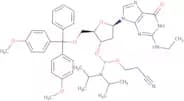
CAS:2'-Deoxy-5'-O-DMT-N2-ethylguanosine 3'-CE phosphoramidite is a novel nucleoside analogue. It is a nucleotide analog with potent antiviral and anticancer activities. This compound has been shown to be an activator of deoxyribonucleosides and ribonucleosides, which may lead to the activation of their respective polymerases. It also has high purity, quality, and stability, as well as being inexpensive. Rifapentine is an anti-tuberculosis drug that belongs to the class of rifamycins. It is the most active of the rifamycins for the treatment of tuberculosis. Rifapentine inhibits bacterial growth by binding to DNA-dependent RNA polymerase, thereby preventing transcription and replication. The high frequency of human activity has been shown using a patch-clamp technique on human erythrocytes. This active formFórmula:C42H52N7O7PPureza:Min. 95%Cor e Forma:SolidPeso molecular:797.88 g/mol2',3',5'-Tri-O-acetylguanosine
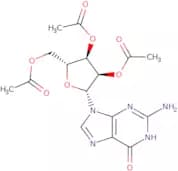
CAS:2',3',5'-Tri-O-acetylguanosine is a protected form of the nucleoside guanosine which has potential application as a synthetic intermediate in nucleic acid and nucleoside chemistry.Fórmula:C16H19N5O8Pureza:Min. 95%Cor e Forma:White PowderPeso molecular:409.35 g/mol3'-O-Methyladenosine
CAS:3'-O-Methyladenosine (3'OMeA) is a monomethylated adenosine that belongs to the group of nucleosides. It has been found to inhibit the activity of adenosine receptors, which are important for the regulation of blood pressure and central nervous system function. 3'OMeA also inhibits virus replication in human lymphocytes. 3'OMeA is synthesized by reaction with methylamine and purification by column chromatography. The molecule is a potential therapeutic target for HIV/AIDS, as it can be used as a specific agonist in order to block viral entry into cells.
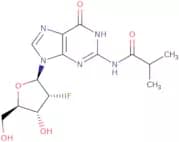
Fórmula:C11H15N5O4Pureza:Min. 95%Cor e Forma:White PowderPeso molecular:281.27 g/mol2'-Deoxy-2'-fluoro-N2-isobutyrylguanosine
CAS:2'-Deoxy-2'-fluoro-N2-isobutyrylguanosine is a modified nucleoside analog for research applicationsFórmula:C14H18FN5O5Pureza:Min. 95%Cor e Forma:White PowderPeso molecular:355.33 g/mol2’,3’-Bis-O-tert-butyldimethylsilyl-5-methoxyuridine
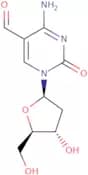
2’,3’-Bis-O-tert-butyldimethylsilyl-5-methoxyuridine is an antiviral nucleoside that is chemically synthesized from 5-methoxyuridine. It has been shown to inhibit the replication of HIV in cell cultures and animal models. This drug can be used as a phosphoramidite for the synthesis of oligonucleotides. 2’,3’-Bis-O-tert-butyldimethylsilyl-5-methoxyuridine is a novel nucleoside that has not been previously reported in the chemical literature.Pureza:Min. 95%2'-Deoxy-5-formylcytidine
CAS:2'-Deoxy-5-formylcytidine is a nucleoside analog that is used as a chemotherapeutic agent. It is cytotoxic to cells by binding to DNA and preventing the synthesis of DNA, RNA, and protein. The drug has been shown to induce cellular senescence in human fibroblasts, which can be reversed by the addition of deuterium. 2'-Deoxy-5-formylcytidine also inhibits the production of reactive oxygen species (ROS) by inducing the expression of antioxidant enzymes such as superoxide dismutase 2 and glutathione peroxidase 1. The oxidation products are misincorporated into DNA strands, leading to intramolecular hydrogen bonds with cytosine bases. These modifications lead to denaturation of DNA and inhibition of transcription and replication. 2'-Deoxy-5-formylcytidine also interacts with oligodeoxynucleotides, which leads to misincFórmula:C10H13N3O5Pureza:Min. 97 Area-%Cor e Forma:White PowderPeso molecular:255.23 g/molPalmitoyl coenzyme A potassium salt
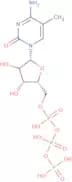
CAS:Palmitoyl coenzyme A potassium salt is a novel, modified nucleoside that has antiviral and anticancer activities. It is a phosphoramidite with a phosphate group at one end and a palmitoyl group at the other. The phosphate group is attached to the 5' position of the sugar, while the palmitoyl group is attached to the 3' position of the sugar. Palmitoyl coenzyme A potassium salt can be used in DNA synthesis.Fórmula:C37H65N7O17P3SKPureza:Min. 95%Cor e Forma:White PowderPeso molecular:1,044.03 g/mol5-Methylcytidine-5'-triphosphate sodium salt - 100mM aqueous solution
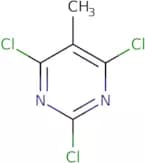
CAS:5-Methylcytidine-5'-triphosphate sodium salt is a nucleoside diphosphate that is used as an activator in the synthesis of DNA. It is also used as a building block in the synthesis of anticancer agents, such as 5-methylcytosine monophosphate and phosphoramidites. The chemical name for this product is 5-methylcytidine-5'-triphosphate sodium salt and its CAS number is 327174-86-7. This product is available for purchase at Sigma Aldrich with a purity of 99%.Fórmula:C10H18N3O14P3·xNaPureza:Min. 95%Cor e Forma:PowderPeso molecular:497.18 g/mol2,4,6-Trichloro-5-methylpyrimidine
CAS:2,4,6-Trichloro-5-methylpyrimidine is a nucleoside for use in research applicationsFórmula:C5H3Cl3N2Pureza:Min. 95%Cor e Forma:PowderPeso molecular:197.45 g/mol10-O-[1-Propyl-3-N-carbamoylcholesteryl]-TEG-CE phosphoramidite
CAS:10-O-[1-Propyl-3-N-carbamoylcholesteryl]-TEG-CE phosphoramidite is a cholesterol-conjugated phosphoramidite. The cholesteryl group is a lipophilic moiety which can be used to enhance cellular uptake of oligonucleotides.Fórmula:C46H82N3O7PPureza:(31P-Nmr) Min. 95 Area-%Cor e Forma:Colorless PowderPeso molecular:820.13 g/mol2-Amino-9-(β-D-ribofuranosyl)purine
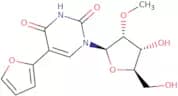
CAS:2-Amino-9-(β-D-ribofuranosyl)purine is a purine nucleoside consisting of the base 2-aminopurine linked via an N9-glycosidic bond to β-D-ribofuranose. As an analog of adenosine, it retains structural compatibility with nucleic acids but exhibits distinct biochemical properties, most notably intrinsic fluorescence. This makes it a valuable probe in molecular biology for studying nucleic acid structure, base pairing, and conformational changes, as its fluorescence is sensitive to local stacking interactions and environmental conditions.Fórmula:C10H13N5O4Pureza:Min. 95%Cor e Forma:White PowderPeso molecular:267.24 g/mol5'-(Furan-2-yl)-2’-O-methyluridine
CAS:5'-(Furan-2-yl)-2’-O-methyluridine is a modified nucleoside that is used as an antiviral agent. It is a monophosphate nucleotide analog and has been shown to be active against HIV, herpes simplex virus, cytomegalovirus, and Epstein Barr virus. 5'-(Furan-2-yl)-2’-O-methyluridine is synthesized by the phosphoramidite method and has high purity and quality. The CAS number for this compound is 2095417-32-4.Pureza:Min. 95%Kinetin riboside
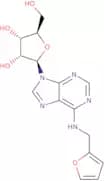
CAS:Kinetin is a plant hormone that regulates cell proliferation and differentiation. Kinetin riboside is a derivative of kinetin in which the ribose moiety has been converted to ribosyl-ribitol. Kinetin riboside has shown the ability to inhibit cancer cells by inducing apoptosis, which may be related to its ability to inhibit cyclin D2 and mitochondrial membrane potential. In addition, kinetin riboside has been shown to protect against oxidative stress and decrease mitochondrial function in cells. This compound may have therapeutic potential for cancer treatment and other diseases caused by oxidative stress or mitochondrial dysfunction.Fórmula:C15H17N5O5Pureza:Min. 98 Area-%Cor e Forma:White PowderPeso molecular:347.33 g/mol3’-Deoxy-3’-fluoro-2-thiouridine
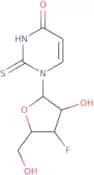
CAS:3’-Deoxy-3’-fluoro-2-thiouridine is a nucleoside analog that has been modified to have antiviral and anticancer activity. It is an activator of the ribonucleotide reductase enzyme, which is involved in DNA synthesis. 3’-Deoxy-3’-fluoro-2-thiouridine has been used successfully as an antiviral agent against HIV and other viruses, and as an anticancer agent against leukemia. The monophosphate form of this drug has been shown to inhibit DNA replication in vitro.
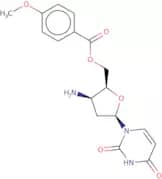
Pureza:Min. 95%3'-Amino-5'-O-p-anisoyl-2',3'-dideoxyuridine
3'-Amino-5'-O-p-anisoyl-2',3'-dideoxyuridine is a novel compound that has been synthesized. This compound is a diphosphate, which can be used as an activator for the synthesis of modified nucleosides and antiviral agents. It is also a DNA phosphoramidite, which can be used in the synthesis of oligonucleotides with high purity and high quality.
Fórmula:C17H19N3O6Pureza:Min. 95%Peso molecular:361.35 g/molN1-Ethylpseudouridine
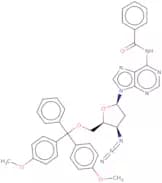
CAS:N1-Ethylpseudouridine is a synthetic RNA molecule that has been shown to be an effective antiviral agent against influenza virus in cell culture. It inhibits viral replication by binding to the ribonucleic acid (RNA) of the virus and preventing its translation into protein. N1-Ethylpseudouridine is being developed as a potential treatment for influenza A and B.Pureza:Min. 95%3'-Azido-N6-benzoyl-5'-O-DMT-2',3'-dideoxyadenosine
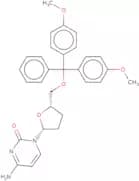
3'-Azido-N6-benzoyl-5'-O-DMT-2',3'-dideoxyadenosine is a nucleoside analog and activator that inhibits the replication of DNA. It is a novel antiviral drug that has antiproliferative properties and may be useful in the treatment of cancer. 3'-Azido-N6-benzoyl-5'-O-DMT-2',3'-dideoxyadenosine is synthesized by reacting an activated phosphoramidite with 2',3'-dideoxyadenosine monophosphate to produce 3',5' dideoxythymidine 5'-monophosphate, which is then converted to 3',5' dideoxyuridine 5'-monophosphate. The last step involves the conversion of 3',5' dideoxyuridine 5'-monophosphate to 3' azidouridine 5'-monophFórmula:C38H34N8O5Pureza:Min. 95%Peso molecular:682.73 g/mol2',3'-Dideoxy-5'-O-DMT-cytidine
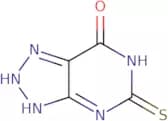
CAS:2',3'-Dideoxy-5'-O-DMT-cytidine is a chemically modified cytidine nucleoside which can be used in synthetic chemistry, especially in nucleic acid synthesis. A dimethoxytrityl (DMT) protecting group is attached to the 5'-oxygen of the sugar. This is not biologically active, but it’s commonly used in solid-phase oligonucleotide synthesis to protect the 5' end during step-by-step DNA or RNA construction.Fórmula:C30H31N3O5Pureza:Min. 95%Cor e Forma:PowderPeso molecular:513.6 g/mol8-Aza-6-hydroxy-2-mercaptopurine
CAS:8-Aza-6-hydroxy-2-mercaptopurine (8AzaMP) is a novel nucleoside analog that is an activator of the thymidylate synthase enzyme. It has been shown to inhibit the replication of many DNA viruses and to inhibit tumor growth in animal models. 8AZA MP has been evaluated in Phase I and II clinical trials for the treatment of various cancers, including malignant melanoma, renal cell carcinoma, and chronic lymphocytic leukemia. This drug has also shown promise as a chemotherapeutic agent for AIDS patients with HIV infection or AIDS-related complex.Fórmula:C4H3N5OSPureza:Min. 95%Cor e Forma:PowderPeso molecular:169.17 g/mol3'-Azido-3'-deoxy-b-L-cytidine
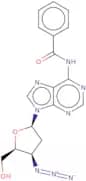
CAS:3'-Azido-3'-deoxy-b-L-cytidine is a novel nucleoside that has been shown to be an activator of the ribonuclease activity of purified RNase A in vitro. This product is suitable for use in synthesis of oligodeoxynucleotides and phosphoramidites. 3'-Azido-3'-deoxy-b-L-cytidine can be used as a potential anticancer drug or antiviral agent.Pureza:Min. 95%3'-Azido-N6-benzoyl-2',3'-dideoxyadenosine
CAS:3'-Azido-N6-benzoyl-2',3'-dideoxyadenosine is an antiviral drug that inhibits the synthesis of viral DNA and RNA. This antiviral drug is a novel synthetic nucleoside analogue that is phosphorylated to form monophosphate, which inhibits the synthesis of RNA. 3'-Azido-N6-benzoyl-2',3'-dideoxyadenosine has been shown to be effective against cancer cells by inhibiting ribonucleotide reductase and DNA synthesis. 3'-Azido-N6-benzoyl-2',3'-dideoxyadenosine also inhibits DNA synthesis by blocking the enzymes DNA polymerase and deoxyribonucleoside kinase.Fórmula:C17H16N8O3Pureza:Min. 95%Cor e Forma:PowderPeso molecular:380.36 g/mol2'-Deoxy-2'-fluoro-5-methyluridine
CAS:2'-Deoxy-2'-fluoro-5-methyluridine is a nucleoside analog that is a modified version of uridine, where the sugar (deoxyribose) has a fluoro modification at the 2' position and a methyl group is attached at the 5' position of the uracil base.
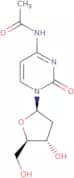
Fórmula:C10H13FN2O5Pureza:Min. 95%Cor e Forma:White PowderPeso molecular:260.22 g/molN4-Acetyl-2'-deoxycytidine
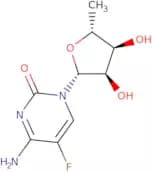
CAS:N4-Acetyl-2'-deoxycytidine is a nucleoside analogue that acts as an inhibitor of DNA synthesis. It binds to the active site of the enzyme ribonucleotide reductase, blocking the conversion of ribonucleotides to deoxyribonucleotides. This prevents DNA synthesis and replication, which leads to cell death. N4-Acetyl-2'-deoxycytidine has been shown to be more efficient than other analogues in terms of energy efficiency, control levels, and constant linear model. This compound is reactive and can cause low yields when isolated from solutions with high concentrations. A diode can be used for analytical purposes, while calcium binding may be used as a mathematical model in order to analyze this drug.Fórmula:C11H15N3O5Pureza:Min. 98 Area-%Cor e Forma:PowderPeso molecular:269.25 g/mol5'-Deoxy-5-fluorocytidine
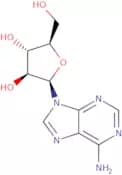
CAS:5'-Deoxy-5-fluorocytidine is a cytosolic nucleoside analogue that is phosphorylated by cellular enzymes to the active form 5'-deoxy-5-fluorouridine monophosphate. It is a prodrug, which is activated in the body to release 5-FU and inhibits the growth of cancer cells. 5'-Deoxy-5-fluorocytidine has been shown to be effective against metastatic colorectal cancer in humans and resistant breast cancer in mice. The drug can also be used as an oral prodrug for 5-FU, which has a wide therapeutic index and low toxicity. Studies have shown that it selectively inhibits proliferation of solid tumours through inhibition of protein synthesis and cell division. The drug also has antiangiogenic effects, which are thought to contribute to its antitumor activity.Fórmula:C9H12FN3O4Pureza:Min. 98 Area-%Cor e Forma:White PowderPeso molecular:245.21 g/mol9-(b-D-Arabinofuranosyl)adenine
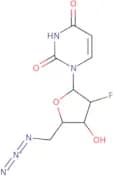
CAS:9-(b-D-Arabinofuranosyl)adenine is a nucleoside that is used as an antiviral agent. It binds to viral RNA and inhibits viral replication. 9-(b-D-Arabinofuranosyl)adenine has been shown to have potent side-effect profiles, including myocardial infarct, neuronal death, and immunological reactions. These effects are due to its ability to inhibit the synthesis of guanine nucleotides in the heart and brain cells, which are essential for energy production and neurotransmitter release respectively. 9-(b-D-Arabinofuranosyl)adenine also binds to toll-like receptors (TLRs), which are proteins found on the surface of cells that recognize invading microbes or foreign substances. This binding leads to activation of immune response pathways.Fórmula:C10H13N5O4Pureza:Min. 95%Cor e Forma:White PowderPeso molecular:267.24 g/mol5'-Azido-2',5'-dideoxy-2'-fluorouridine
CAS:5'-Azido-2',5'-dideoxy-2'-fluorouridine is a novel nucleoside that is a phosphoramidite. It is an antiviral agent that has been shown to inhibit the synthesis of RNA in cells. This drug also inhibits the growth of cancer cells and can be used for the treatment of leukemia, lymphoma, and myeloma. 5'-Azido-2',5'-dideoxy-2'-fluorouridine has been shown to bind to DNA through its azide group and form a stable covalent bond with the N7 position of guanine. This bond prevents the incorporation of adenosine triphosphate (ATP) into DNA, which prevents DNA transcription and replication.Fórmula:C9H10FN5O4Pureza:Min. 95%Peso molecular:271.21 g/mol5-Carbamoylmethyluridine
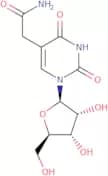
CAS:5-Carbamoylmethyluridine is a nucleoside that is structurally related to uridine. It is synthesized from uridine by methyl esterification with carbamic acid and methoxycarbonyl chloride. 5-Carbamoylmethyluridine interacts with actin filaments and has been shown to alter the expression of messenger RNA in eukaryotes. 5-Carbamoylmethyluridine also acts as a competitive inhibitor of the formation of a ternary complex, which includes ATP, GTP, and UTP, at the level of ribonucleotide reductase. This inhibition leads to decreased synthesis of messenger RNA in cells.Fórmula:C11H15N3O7Pureza:Min. 95 Area-%Cor e Forma:White PowderPeso molecular:301.25 g/molCytidine 5'-monophosphate disodium salt
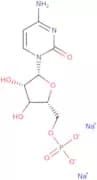
CAS:Cytidine 5'-monophosphate disodium salt (CMPDS) is a prodrug that is converted to cytidine 5'-monophosphate, an active form, in the acidic environment of cancer cells. CMPDS has been shown to inhibit the growth of squamous carcinoma and other solid tumours by binding to survivin, which regulates cell growth and apoptosis. CMPDS also inhibits the activity of matrix metalloproteinases-9 (MMP-9), an enzyme that promotes tumor growth by breaking down connective tissue. This drug can be used as a therapeutic agent for treatment of congestive heart failure due to its ability to increase mitochondrial membrane potential and decrease myocardial infarct size.Fórmula:C9H12N3Na2O8PPureza:Min. 95 Area-%Cor e Forma:White PowderPeso molecular:367.16 g/molCyclopentenyl cytosine
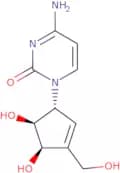
CAS:Cyclopentenyl cytosine is a cytotoxic drug that inhibits the synthesis of DNA, RNA, and proteins. It is a nucleoside analogue that inhibits the enzyme activity of ribonucleotide reductase. Cyclopentenyl cytosine has significant cytotoxicity against hl-60 cells, as well as squamous carcinoma and MDA-MB-231 breast cancer cells. It also has significant activity against cyclopentenyl, dextran sulfate, and mitochondrial functions in vivo in human cells. Cyclopentenyl cytosine binds to the response element on the DNA strand, preventing transcription of genes for protein synthesis and cell division.
Fórmula:C10H13N3O4Pureza:Min. 95%Cor e Forma:PowderPeso molecular:239.23 g/mol2,2'-Anhydro-6-methoxycarbonyl-b-D-arabinofuranosyl uracil
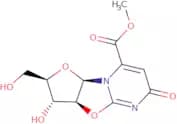
CAS:2,2'-Anhydro-6-methoxycarbonyl-b-D-arabinofuranosyl uracil is a novel and high purity anticancer and antiviral agent. It is an activator that has been shown to exhibit antineoplastic activity in vitro. The compound also inhibits the formation of RNA and DNA, which are necessary for the replication of cells. 2,2'-Anhydro-6-methoxycarbonyl-b-D-arabinofuranosyl uracil is a modified nucleoside that has been synthesized by phosphoramidite chemistry. This product can be used for research purposes and as a starting material for the synthesis of other compounds with similar structures.Fórmula:C11H12N2O7Pureza:Min. 95%Peso molecular:284.22 g/molGuanosine 5'-O-(2-thiodiphosphate) trilithium salt
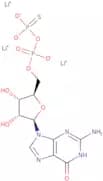
CAS:Guanosine 5'-O-(2-thiodiphosphate) trilithium salt (GTPTS) is a membrane-permeable molecule that hyperpolarizes cells by inhibiting the movement of ions through the cell membrane. GTPTS is activated by extracellular calcium and potassium ions, which are involved in signal transduction pathways. It has been shown to inhibit the release of neurotransmitters, such as acetylcholine, dopamine, serotonin, and norepinephrine. GTPTS also blocks voltage-gated sodium channels, which leads to a reduction in neuronal excitability. The drug has been shown to have analgesic effects in animal models of pain and can be used to treat chronic pain due to nerve damage.Fórmula:C10H12Li3N5O10P2SPureza:Min. 85 Area-%Cor e Forma:PowderPeso molecular:477.06 g/mol3'-Azido-3'-deoxy-5-fluoro-b-L-cytidine
CAS:3'-Azido-3'-deoxy-5-fluoro-b-L-cytidine is an antiviral drug. It is a modified nucleoside with phosphoramidite and azido groups. This product can be used as an activator for DNA synthesis, in anticancer drug development, as well as in the treatment of HIV. 3'-Azido-3'-deoxy-5-fluoro-b-L-cytidine has been shown to inhibit the growth of human tumor cells by inhibiting protein synthesis and enhancing the production of reactive oxygen species (ROS). It also inhibits the activity of ribonucleotide reductase, which is a critical enzyme for DNA synthesis.Pureza:Min. 95%5’-O-Benzoyl-3’-O-(4-methoxybenzoyl)-2’-O,4’-C- methyleneuridine
5'-O-Benzoyl-3'-O-(4-methoxybenzoyl)-2'-O,4'-C-methyleneuridine is a nucleoside that is synthesized from 5'-O-benzoyl-2'-deoxyadenosine and 4'-methoxybenzoyl chloride. It has antiviral and anticancer properties. 5' - O - benzoyl - 3' - O - (4-methoxybenzoyl) - 2' - O,4' - C methyleneuridine is a novel nucleoside with anti-cancer and antiviral effects. It can also be used as an activator for the synthesis of oligonucleotides or as a ribonucleotide phosphoramidite. The chemical name for this compound is 5’ – O – benzoyl – 3’ – O – (4 methoxybenzoyl) – 2Pureza:Min. 95%N4,N4,2’-O-Trimethylcytidine
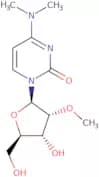
CAS:N4,N4,2’-O-Trimethylcytidine is a novel nucleoside that has been shown to be an anticancer drug. It inhibits the growth of cells by selectively inhibiting their DNA synthesis. N4,N4,2’-O-Trimethylcytidine is also active against viruses and is able to inhibit viral replication by blocking the synthesis of deoxyribonucleosides and phosphoramidites. This compound has been synthesized in high purity and quality with CAS No. 34218-81-0.Fórmula:C12H19N3O5Pureza:Min. 95%Cor e Forma:White PowderPeso molecular:285.3 g/molCytidine 3'-monophosphate lithium salt
CAS:Cytidine 3'-monophosphate lithium salt is a synthetic nucleoside that is used to inhibit the synthesis of DNA in cells. It is an analog of cytidine, with a phosphate group at the 3' position and a lithium cation at the 5' position. Cytidine 3'-monophosphate lithium salt has been shown to be effective in treating cancer and viral infections, although it does not have antiviral activity against influenza A virus.Fórmula:C9H14N3O8P·xLiPureza:Min. 95%Peso molecular:323.2 g/mol8-(4-Chlorophenylthio)-2'-O-methyladenosine 3',5'-cyclic monophosphate sodium salt
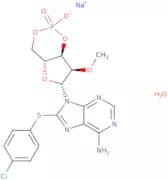
CAS:8-(4-Chlorophenylthio)-2'-O-methyladenosine 3',5'-cyclic monophosphate sodium salt (8-CPT-cAMP) is a cyclic nucleotide that activates adenyl cyclase, which increases intracellular levels of the second messenger cAMP. It also inhibits P2Y receptors and other ion channels. 8-CPT-cAMP has been shown to be effective in activating cells expressing the enzyme camp levels, such as those found in heart muscle cells. This drug is used clinically to lower blood pressure, as it has been shown to activate amp-activated protein kinase and calcium chelator. 8-CPT-cAMP may have clinical applications for the treatment of cancer due to its ability to induce cell cycle arrest and apoptosis.Fórmula:C17H16ClN5O6PS·NaPureza:Min. 95%Cor e Forma:PowderPeso molecular:507.82 g/molN3-Methyl-2’-O-(2-methoxyethyl)uridine
CAS:N3-Methyl-2’-O-(2-methoxyethyl)uridine is a modified nucleoside that is synthesized from deoxyribonucleosides and ribonucleosides. It has antiviral, anticancer, and antifungal properties. N3-Methyl-2’-O-(2-methoxyethyl)uridine has been shown to be an effective inhibitor of HIV replication in vitro and in vivo. This drug also inhibits the growth of human cancer cells in vitro and has been shown to be active against breast cancer cells. N3-Methyl-2’-O-(2-methoxyethyl)uridine is phosphorylated by cellular enzymes to form its active form, which binds to the viral reverse transcriptase enzyme and prevents DNA synthesis.Fórmula:C13H20N2O7Pureza:Min. 95%Peso molecular:316.31 g/mol2'-Deoxy-5'-O-MMT-uridine
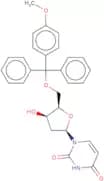
CAS:2'-Deoxy-5'-O-MMT-uridine is a monophosphate nucleoside that is an antiviral and anticancer drug. It is synthesized from the pentaphosphate derivative of cytosine and uracil, and inhibits RNA synthesis by forming a covalent bond with the enzyme ribonucleotide reductase. This product can be used as a starting material for the synthesis of other nucleosides, such as 2'-deoxy-5'-O-methylcytidine. 2'-Deoxy-5'-O-MMT-uridine can also be used to modify DNA by replacing uracil residues in DNA with their corresponding 2'-deoxy counterparts.Fórmula:C29H28N2O6Pureza:Min. 95%Peso molecular:500.56 g/mol3'-Deoxy-3'-fluoroadenosine
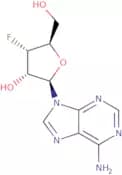
CAS:3'-Deoxy-3'-fluoroadenosine is a potent inhibitor of the phosphodiesterase enzyme, which is an important component of many different cellular processes. It has been shown to inhibit the activity of phosphodiesterase in cell culture and in serum alanine. 3'-Deoxy-3'-fluoroadenosine also inhibits the synthesis of uridine triphosphate, which is required for DNA replication and protein synthesis. The acid complex form has potent inhibition properties against viruses such as alphaviruses, and it also inhibits transport of nucleic acids into cells. 3'-Deoxy-3'-fluoroadenosine can act as an analog to adenosine and may be used to treat viral infections such as HIV or herpes simplex virus.Fórmula:C10H12FN5O3Pureza:Min. 95%Cor e Forma:White PowderPeso molecular:269.23 g/mol2'-Deoxy-5'-O-pixylinosine
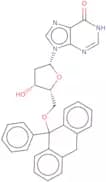
2'-Deoxy-5'-O-pixylinosine is a nucleoside that is structurally similar to the natural nucleosides. It is modified with an o-pixyl group at the 2' position of the sugar moiety and contains a phosphate group at the 5' position of the sugar moiety. 2'-Deoxy-5'-O-pixylinosine has antiviral, anticancer, and high purity properties due to its ability to inhibit viral DNA polymerases. This compound has been shown to be active against a broad spectrum of viruses including HIV and herpes simplex virus types 1 and 2 (HSV1 and HSV2). This compound is also able to inhibit tumor growth in vitro.Fórmula:C30H26N4O4Pureza:Min. 95%Peso molecular:506.57 g/mol(R)-N-(2,3-Dihydro-1H-indenyl)adenosine
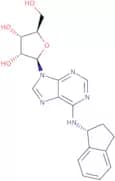
CAS:(R)-N-(2,3-Dihydro-1H-indenyl)adenosine is a purine nucleoside with the attachment of a 2,3-dihydro-1H-indenyl group via a nitrogen atom. This adenosine-based product can be used for research purposesFórmula:C19H21N5O4Pureza:Min. 95 Area-%Cor e Forma:White PowderPeso molecular:383.4 g/mol5-(Cyanomethyl)-uridine
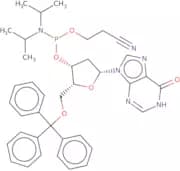
CAS:5-(Cyanomethyl)-uridine (5-CMU) is a monophosphate nucleoside that is synthetically derived from uracil. This nucleoside has antiviral activity and can be used to treat infections caused by the herpesviridae family, such as herpes simplex virus type 1 and 2. 5-CMU is modified with cyanomethyl groups on the ribose moiety. It is also a phosphoramidite building block for DNA synthesis and can be used in the preparation of oligonucleotides. The CAS number for 5-CMU is 58479-73-5.Fórmula:C11H13N3O6Pureza:Min. 95%Cor e Forma:PowderPeso molecular:283.24 g/mol2'-Deoxy-5'-O-tritylinosine 3'-CE phosphoramidite
2'-Deoxy-5'-O-tritylinosine 3'-CE phosphoramidite is an anticancer drug that inhibits the growth of cancer cells. It is a modified nucleoside that is synthesized by reacting 2'-deoxy-5'-O-tritylinosine with a phosphoramidite. This product can be used for the synthesis of DNA, RNA and deoxyribonucleic acid (DNA).Fórmula:C38H43N6O5PPureza:Min. 95%Peso molecular:694.78 g/mol5,6-Dihydro-5-azacytidine acetate
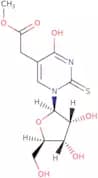
5,6-Dihydro-5-azacytidine acetate is a monophosphate nucleoside that is used in the synthesis of DNA and RNA. It is an antiviral agent that inhibits the synthesis of DNA by preventing the conversion of deoxyribonucleotides to diphosphates. 5,6-Dihydro-5-azacytidine acetate has been found to have anticancer properties and is used in cancer treatment. This chemical also has a high purity and quality, making it a suitable reagent for use in phosphoramidite coupling reactions for oligonucleotide synthesis. 5,6-Dihydro-5-azacytidine acetate has been shown to be active against a variety of human tumor cell lines, including leukemia cells.Fórmula:C10H17N4O7Pureza:Min. 95%Cor e Forma:White PowderPeso molecular:305.26 g/mol5-Methoxycarbonylmethyl-2-thiouridine
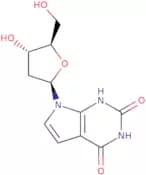
CAS:Nucleoside functionalised on the baseFórmula:C12H16N2O7SPureza:Min. 95 Area-%Cor e Forma:White Off-White PowderPeso molecular:332.33 g/mol7-Deaza-2'-deoxyxanthosine
CAS:7-Deaza-2'-deoxyxanthosine is an oligodeoxynucleotide that is a substrate for the enzyme dUTPase. The allyl group on 7-deaza-2'-deoxyxanthosine is used to attach it to the 3' end of DNA, where it acts as a competitive inhibitor of RNA synthesis. The ethyl group at the end of the molecule is used to attach it to the 5' end of DNA, where it inhibits transcription and replication by binding with RNA polymerase. 7-Deaza-2'-deoxyxanthosine has been shown to be effective in preventing stenosis following coronary bypass surgery, as well as in treating heart disease by reducing levels of xanthosine.
Fórmula:C11H13N3O5Pureza:Min. 95%Cor e Forma:Beige PowderPeso molecular:267.24 g/molN3-Methyl-2'-O-methyluridine
CAS:2'-O-methyluridine is an antiviral nucleoside that is used as a phosphoramidite in the synthesis of oligonucleotides. It has been shown to inhibit viral replication, and has been found to be effective in treating HIV-1 by inhibiting reverse transcriptase. N3-Methyl-2'-O-methyluridine also inhibits DNA synthesis and cell proliferation, and may be useful for the treatment of cancer. This modified nucleoside has been synthesized from uracil and contains a methyl group at the 3' position. The methyl group prevents 2'-O-methyluridine from being activated by cellular thymidylate synthase, which normally converts deoxyribonucleotides into ribonucleotides. This novel nucleotide has not yet been used in clinical trials but it may provide an alternative to other drugs used for cancer treatments.
Fórmula:C11H16N2O6Pureza:Min. 95 Area-%Cor e Forma:White Off-White PowderPeso molecular:272.25 g/mol2'-C-Methylguanosine
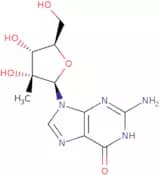
CAS:2'-C-Methylguanosine is a synthetic nucleoside analog of guanosine, modified at the 2'-carbon of the ribose sugar with a methyl group. This modification changes the molecule's biological behavior, making it potential useful in antiviral research and biochemical studies, especially those involving RNA synthesis.Fórmula:C11H15N5O5Pureza:Min. 95%Cor e Forma:PowderPeso molecular:297.27 g/mol5'-O-Tritylthymidine
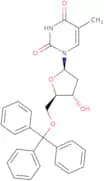
CAS:5'-O-Tritylthymidine is a nucleoside that is found in human mitochondrial DNA. It is synthesized from uridine by the enzyme thymidylate synthase and can be converted to thymine by the enzyme thymidine phosphorylase. 5'-O-Tritylthymidine has been shown to inhibit cancer cell growth, but its mechanism of action is not clear. It may inhibit xylene production. 5'-O-Tritylthymidine also causes an increase in p53 activity, which may lead to apoptosis of cancer cells.Fórmula:C29H28N2O5Pureza:Min. 95%Peso molecular:484.54 g/mol





![10-O-[1-Propyl-3-N-carbamoylcholesteryl]-TEG-CE phosphoramidite](/_next/image/?url=https%3A%2Fstatic.cymitquimica.com%2Fproducts%2F3D%2Fthumb-webp%2FPP138032.webp&w=3840&q=75)