Nucleosídeos
Foram encontrados 3569 produtos de "Nucleosídeos"
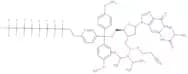
2'-Deoxy-5'-O-FDMT-N2-isobutyryl-guanosine 3'-CE phosphoramidite
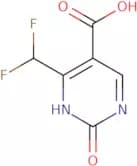
CAS:Produto Controlado2'-Deoxy-5'-O-FDMT-N2-isobutyryl-guanosine 3'-CE phosphoramidite is a modified nucleoside that is used as an antiviral agent. It is synthesized by modifying the 2'-deoxyribose sugar with a 2'-deoxy-5'-O-(4,4'-dimethoxytrityl)-N2-isobutyrylguanosine 3' phosphate. This compound has shown anticancer activity in vitro and has been studied in animal models. The synthesis of this compound can be accomplished through the use of diphosphate, which gives it an advantage over natural nucleosides because it does not require ribonucleotides.Fórmula:C54H57F17N7O8PPureza:Min. 95%Peso molecular:1,286.02 g/mol4-(difluoromethyl)-2-hydroxy-pyrimidine-5-carboxylic acid
CAS:4-(difluoromethyl)-2-hydroxy-pyrimidine-5-carboxylic acid is a novel monophosphate and nucleotide analogue, which can activate the HIV reverse transcriptase. It has been shown to be cytotoxic to cancer cells in vitro. 4-(difluoromethyl)-2-hydroxy-pyrimidine-5-carboxylic acid has been used for the synthesis of phosphoramidites and DNA and RNA analogues.Fórmula:C6H4F2N2O3Pureza:Min. 95%Peso molecular:190.1 g/molGuanosine 5'-[beta,gamma-imido]triphosphate tetralithium hydrate
CAS:Guanosine 5'-[beta,gamma-imido]triphosphate tetralithium hydrate (GTP) is a nucleotide that is synthesized from guanosine 5'-diphosphate. GTP is an effector molecule that regulates the cytosolic protein synthesis and transport pathways. It binds to a number of proteins, including the guanine nucleotide-binding protein, which regulates the metabolic processes in cells. GTP has been shown to be beneficial in treating cancer by inducing apoptosis and inhibiting tumor growth. In addition, Guanosine 5'-[beta,gamma-imido]triphosphate tetralithium hydrate has been shown to inhibit congestive heart failure by reducing free radical production and increasing intracellular adenosine levels.
Fórmula:C10H13Li4N6O13P3Pureza:Min. 95%Peso molecular:546 g/mol7-Benzyl-4-chloro-5-iodo-7H-pyrrolo[2,3-d]pyriMidine
CAS:7-Benzyl-4-chloro-5-iodo-7H-pyrrolo[2,3-d]pyriMidine is an antiviral agent that is a modified nucleoside. It has shown to be a novel activator of the immune system. 7BICP has been shown to have high antiviral activity against herpes simplex virus type 1 (HSV1) and type 2 (HSV2) in cell cultures. It also inhibits the replication of HIV and influenza A virus in cell cultures. This drug is synthesized from deoxyribonucleosides, phosphoramidites, or nucleosides. 7BICP is a monophosphate and diphosphate, which are used as substrates for DNA synthesis by DNA polymerase. The CAS number for 7BICP is 1244855-59-1.Pureza:Min. 95%3,5-Di-o-(p-toluoyl)-5-(2-hydroxyethyl)-2-deoxyuridine
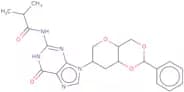
CAS:3,5-Di-o-(p-toluoyl)-5-(2-hydroxyethyl)-2-deoxyuridine is a nucleoside analogue that has antiviral and anticancer activities. It is synthesized by the condensation of orotic acid with 2'-deoxyuridine in the presence of N,N'-dicyclohexylcarbodiimide (DCC). 3,5-Di-o-(p-toluoyl)-5-(2-hydroxyethyl)-2-deoxyuridine is an activator of ribonucleotide reductase, which is an enzyme involved in DNA synthesis and repair. 3,5-Di-o-(p-toluoyl)-5-(2-hydroxyethyl)-2-deoxyuridine is also capable of inhibiting DNA polymerases and RNA polymerases. This drug can be used for treatment against cancer and antiviral infections.Fórmula:C27H28N2O8Pureza:Min. 95%Peso molecular:508.50 g/mol1,5-Anhydro-4,6-O-benzylidene-2,3-dideoxy-2-(N2-isobutyrylguanidin-1-yl)-D-glucitol
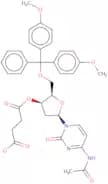
1,5-Anhydro-4,6-O-benzylidene-2,3-dideoxy-2-(N2-isobutyrylguanidin-1-yl)-D-glucitol is an activator that can be used in the synthesis of DNA and RNA. It is a novel compound with antiviral properties and anticancer effects. It has been shown to have high purity and quality. This activator is a phosphoramidite that can be used in the synthesis of DNA or RNA and has been modified to have antiviral properties. It is synthesized using deoxyribonucleosides as starting materials, which are obtained from natural sources such as yeast extract or tryptophan.Fórmula:C22H25N5O5Pureza:Min. 95%Peso molecular:439.48 g/molN4-Acetyl-2'-deoxy-5'-O-DMT-cytidine 3'-succinyl CPG 2000 Å
N4-Acetyl-2'-deoxy-5'-O-DMT-cytidine 3'-succinyl CPG 2000 Å is a novel and modified nucleoside with anticancer and antiviral properties. Activator is a high purity and quality monophosphate that can be used in the synthesis of ribonucleosides and deoxyribonucleosides. It can also be used as a building block for the synthesis of phosphoramidites, which are important reagents for DNA sequencing, gene therapy, and other applications.Pureza:Min. 95%3-(2'-Deoxy-β-D-2-ribofuranosyl)pyrido[2,3-d]pyrimidine-2,7(8H)-dione
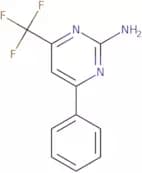
CAS:3-(2'-Deoxy-β-D-2-ribofuranosyl)pyrido[2,3-d]pyrimidine-2,7(8H)-dione is a synthetic nucleoside analogue that has been modified by the replacement of the 2' oxygen atom. The phosphoramidite is used to produce 3-(2'-Deoxy-β-D-2-ribofuranosyl)pyrido[2,3-d]pyrimidine-2,7(8H)-dione in high purity and high quality. This product can be used as an antiviral agent and as an anticancer agent. It has also been shown to inhibit DNA synthesis and RNA synthesis.Fórmula:C12H13N3O5Pureza:Min. 95%Peso molecular:279.25 g/mol2-Amino-4-phenyl-6-(trifluoromethyl)pyrimidine
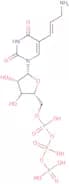
CAS:2-Amino-4-phenyl-6-(trifluoromethyl)pyrimidine is a nucleoside analog that acts as a DNA and RNA activator. It is used as a component in antiviral drugs, anticancer drugs, and antiretroviral drugs. This compound is structurally similar to the natural nucleosides adenosine and cytidine. It has been shown to inhibit the growth of various cancer cell lines with IC50 values ranging from 6.5 to 25 nM.Fórmula:C11H8F3N3Pureza:Min. 95%Peso molecular:239.2 g/mol5-Aminoallyluridine 5'-triphosphate sodium salt - 100mM aqueous solution
CAS:5-Aminoallyluridine 5'-triphosphate sodium salt is a modified nucleoside that has antiviral and anticancer activity. It is a prodrug of 5-aminoallyluridine and is activated by deoxyribonucleotide ribonucleotides in the cell. This drug also can be used as an activator for other drugs, such as cytosine arabinoside, which are inactive or less active when administered alone.Fórmula:C12H20N3O15P3·xNaPureza:Min. 95%Peso molecular:539.22 g/molN4-Acetyl-5'-O-DMT-2'-O-triisopropylsilyloxymethyl-5-methylcytidine 3'-CE phosphoramidite
CAS:N4-Acetyl-5'-O-DMT-2'-O-triisopropylsilyloxymethyl-5-methylcytidine 3'-CE phosphoramidite is a novel nucleoside phosphoramidite. It has been synthesized and purified by using the latest technology. It is a monophosphate, which is used in the synthesis of DNA, RNA, and other nucleic acids. It can be used for anticancer research and as a pharmaceutical intermediate.Fórmula:C52H74N5O10PSiPureza:Min. 95%Cor e Forma:White/Off-White SolidPeso molecular:988.23 g/mol5,6-Dihydro-2'-deoxy-5'-O-DMT-uridine 3'-CE phosphoramidite
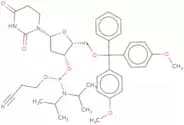
5,6-Dihydro-2'-deoxy-5'-O-DMT-uridine 3'-CE phosphoramidite is a modified nucleoside that is used as an activator in DNA synthesis. It has been shown to have anticancer properties by inhibiting the growth of cancer cells. 5,6-Dihydro-2'-deoxy-5'-O-DMT-uridine 3'-CE phosphoramidite is synthesized from the monophosphate form and can be used for the synthesis of both DNA and RNA.
Fórmula:C39H49N4O8PPureza:Min. 95%Peso molecular:732.82 g/mol8-Methoxyadenosine
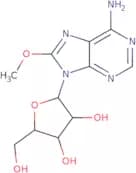
CAS:8-Methoxyadenosine is an acidic adenosine that acts as a competitive antagonist of the A1 receptor. It has a high affinity for this receptor and blocks the binding of adenosine to the receptor, thereby inhibiting its function. 8-Methoxyadenosine is also a competitive antagonist of the uridine nucleotide, which inhibits enzymatic catalysis by ribonucleoside kinase and ribonucleotide reductase. It has been shown to have properties similar to those of other pyrimidine nucleosides such as cytidine, thymine, and uridine. This molecule has a hydroxyl group in its structure, which is essential for binding to these enzymes. 8-Methoxyadenosine also has a phosphate group in its structure, which is necessary for the synthesis of DNA or RNA from deoxyribonucleotides. The benzoate group in 8-methoxyadenosine's structure makesPureza:Min. 95%2'-Deoxy-N7-methylguanosine
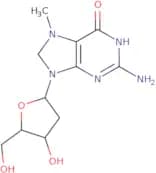
CAS:2'-Deoxy-N7-methylguanosine is a hydrogenolysis product of guanosine. It can be synthesized in four steps from glycosyl chloride, glycosylamine, and methyl iodide. The catalytic hydrogenolysis of 2'-deoxy-N7-methylguanosine with Raney Ni gives the corresponding 6-amino derivative. Hydrolysis of this amino group converts it to a nucleoside. This nucleoside has been shown to hydrolyze with half-life of about 1 hour at pH 8.5 and 37°C. The hydrolysis of purines by 2'-deoxy-N7-methylguanosine is inhibited by adenosine analogues like 2',3'-dideoxyadenosine and 3',4'-dideoxyadenosine.
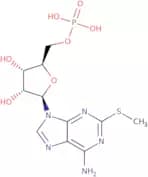
Fórmula:C11H17N5O4Pureza:Min. 95%Peso molecular:283.28 g/mol2-Methylthioadenosine 5-monophosphate
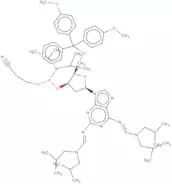
CAS:2-Methylthioadenosine 5-monophosphate (2MTA) is an intermediate in purine metabolism that can be synthesized from adenosine monophosphate and methyl mercaptan. 2MTA inhibits the platelet aggregation by inhibiting the function of the P2Y12 receptor, which is a member of the G protein-coupled receptor family. It has been shown to inhibit tumor growth and tumor vasculature, as well as to induce apoptosis in cancer cells. 2MTA also has antiplatelet activity, which may be due to its ability to inhibit cyclooxygenase-1 (COX-1) and cyclooxygenase-2 (COX-2).Fórmula:C11H16N5O7PSPureza:Min. 95%Peso molecular:393.31 g/mol2-Amino-2'-deoxy-N2,N6-bis(diisobutylaminomethylidene)-5'-O-DMT-adenosine 3'-CE phosphoramidite
CAS:2-Amino-2'-deoxy-N2,N6-bis(diisobutylaminomethylidene)-5'-O-DMT-adenosine 3'-CE phosphoramidite is a phosphoramidite that is used for the synthesis of nucleosides and nucleotides. The 2-Amino-2'-deoxy-N2,N6-bis(diisobutylaminomethylidene)-5'-O-DMT-adenosine 3'-CE phosphoramidite can be used in the synthesis of DNA, RNA, and other nucleic acids. It also has antiviral and anticancer properties.Fórmula:C58H83N10O6PPureza:Min. 95%Peso molecular:1,047.32 g/mol2',3'-Dideoxycytidine-5'-triphosphate N,N-diethylethanamine
CAS:Please enquire for more information about 2',3'-Dideoxycytidine-5'-triphosphate N,N-diethylethanamine including the price, delivery time and more detailed product information at the technical inquiry form on this pageFórmula:C9H16N3O12P3•(C6H15N)xPureza:Min. 95%[U-¹³C10, U-¹⁵N2]-labelled thymidylyl-3'-5'-thymidine ammonium
CAS:U-13C10, U-[15N2]-Labelled Thymidylyl-3'-5'-thymidine ammonium is a novel antiviral and anticancer agent. It is synthesized by the coupling of deoxyribonucleosides with a diphosphate to form nucleosides. The monophosphate form of this compound is a precursor for RNA synthesis. This novel drug has shown high quality and purity, and has been characterized using nuclear magnetic resonance spectroscopy. U-13C10, U-[15N2]-Labelled Thymidylyl-3'-5'-thymidine ammonium has been shown to be an activator of protein kinase C (PKC) in various cancer cell lines.Fórmula:C10C10H27N2N2O12P·NH3Pureza:Min. 95%Peso molecular:575.36 g/molLamivudine 5'-monophosphate sodium salt
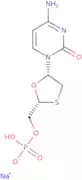
Lamivudine 5'-monophosphate sodium salt is a diphosphate nucleoside analog. It is active against HIV and is also used as an antiviral agent for the treatment of hepatitis B virus infection. Lamivudine 5'-monophosphate sodium salt binds to viral DNA, preventing the progression of viral replication. The drug is phosphorylated by cellular enzymes to its active form, lamivudine triphosphate (3TC).
Fórmula:C8H11N3O6PSNaPureza:Min. 95%Peso molecular:331.22 g/mol8-Benzyloxy-N2-isobutyryl-2-deoxyguanosine
CAS:8-Benzyloxy-N2-isobutyryl-2-deoxyguanosine is a novel, potent and selective anticancer drug that has been shown to inhibit the growth of a variety of human tumor cells in vitro and in vivo. It also has antiviral activity against herpes simplex virus type 1. The drug is an analog of 8-benzyloxyguanosine, a nucleoside which is structurally related to guanine. This compound is synthesized from the corresponding diphosphate and monophosphate derivatives by the action of DNA polymerase and DNA ligase. 8-Benzyloxy-N2-isobutyryl-2-deoxyguanosine inhibits viral replication by binding to the viral DNA polymerase and preventing further synthesis, as well as inhibiting cellular RNA synthesis.
Fórmula:C21H25N5O6Pureza:Min. 95%Peso molecular:443.50 g/mol

![Guanosine 5'-[beta,gamma-imido]triphosphate tetralithium hydrate](/_next/image/?url=https%3A%2Fstatic.cymitquimica.com%2Fproducts%2F3D%2Fthumb-webp%2FPCA56403.webp&w=3840&q=75)
![7-Benzyl-4-chloro-5-iodo-7H-pyrrolo[2,3-d]pyriMidine](/_next/image/?url=https%3A%2Fstatic.cymitquimica.com%2Fproducts%2F3D%2Fthumb-webp%2FNB44294.webp&w=3840&q=75)
![3-(2'-Deoxy-β-D-2-ribofuranosyl)pyrido[2,3-d]pyrimidine-2,7(8H)-dione](/_next/image/?url=https%3A%2Fstatic.cymitquimica.com%2Fproducts%2F3D%2Fthumb-webp%2FZDA51798.webp&w=3840&q=75)


![[U-¹³C10, U-¹⁵N2]-labelled thymidylyl-3'-5'-thymidine ammonium](/_next/image/?url=https%3A%2Fstatic.cymitquimica.com%2Fproducts%2F3D%2Fthumb-webp%2FNL31906.webp&w=3840&q=75)