Nucleosídeos
Os nucleosídeos são building blocks fundamentais dos ácidos nucleicos, compostos por uma base nitrogenada ligada a uma molécula de açúcar. Nesta seção, você encontrará uma ampla variedade de nucleosídeos essenciais para pesquisas em biologia molecular, bioquímica e farmacologia. Esses compostos desempenham papéis cruciais na síntese de DNA e RNA, e também são vitais em vários processos metabólicos. Os nucleosídeos são usados para estudar material genético, desenvolver terapias antivirais e anticancerígenas, e entender os mecanismos celulares. Na CymitQuimica, fornecemos nucleosídeos de alta qualidade para apoiar suas necessidades de pesquisa e desenvolvimento, garantindo pureza e confiabilidade para suas aplicações experimentais.
Foram encontrados 3569 produtos de "Nucleosídeos"
Ordenar por
Pureza (%)
0
100
|
0
|
50
|
90
|
95
|
100
Uridine 5'-triphosphate tris salt
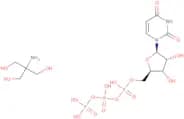
CAS:<p>Uridine 5'-triphosphate tris salt is a pyrimidine nucleotide that is used in the synthesis of RNA. It has been shown to be an effective inhibitor of hamster ovary and human ovarian cells. Uridine 5'-triphosphate tris salt is water-soluble and does not interfere with cellular assays or microfluidic devices. Uridine 5'-triphosphate tris salt has also been shown to have potential as a model system for analytical chemistry and pharmacological research.</p>Fórmula:C13H26N3O18P3Pureza:Min. 95%Cor e Forma:White PowderPeso molecular:484.14 g/molN6-(6-Aminohexyl)-2'-deoxyadenosine
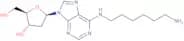
CAS:<p>N6-(6-Aminohexyl)-2'-deoxyadenosine is a novel nucleoside that is structurally related to the natural nucleosides, dATP and dGTP. It has been shown to be an activator of ribonucleosides and phosphoramidites, which are used in the synthesis of DNA and RNA. N6-(6-Aminohexyl)-2'-deoxyadenosine has also been shown to inhibit cancer cells as well as antiviral activity against HIV-1.</p>Fórmula:C16H26N6O3Pureza:Min. 95%Cor e Forma:Slightly Yellow PowderPeso molecular:350.43 g/mol2'-Deoxy-N4-DMF-5'-O-DMT-pseudoisocytidine 3'-CE phosphoramidite
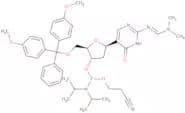
CAS:2'-Deoxy-N4-DMF-5'-O-DMT-pseudoisocytidine 3'-CE phosphoramidite is a fluorescent DNA probe that can be used for the detection of specific sequence mismatches in target DNA. This probe contains a linker, which is a short oligonucleotide, and a fluorescent label at the 5' end. The probe has been designed to hybridize to its complementary sequence in the target DNA. When it detects mismatches, it becomes fluorescent because of increased stacking interactions between the bases. This allows for easy detection of mismatches in target sequences without the need for PCR amplification or gel electrophoresis.Fórmula:C42H53N6O7PPureza:Min. 95%Cor e Forma:PowderPeso molecular:784.88 g/mol3'-Deoxyadenosine-5'-triphosphate sodium salt - 10mM aqueous solution
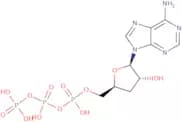
CAS:3'-Deoxyadenosine-5'-triphosphate sodium salt is a nucleotide that has been shown to be effective in chemotherapy. It is a substrate for the synthesis of DNA, RNA, and ATP. 3'-Deoxyadenosine-5'-triphosphate sodium salt is also a building block for DNA polymerase, which is an enzyme that synthesizes DNA from a template. It has been shown to have anticancer activity in drug-resistant cells and can be used as an alternative to purine analogs such as 6-mercaptopurine or cladribine. 3'-Deoxyadenosine-5'-triphosphate sodium salt has been shown to inhibit the production of nucleotides by blocking their conversion into triphosphates, which are necessary for DNA replication and repair. This inhibition leads to apoptosis in cells with high levels of nucleotide turnover such as cardiac and myeloid cells. The drug interactions may depend on theFórmula:C10H16N5O12P3Pureza:Min. 95%Cor e Forma:Colorless PowderPeso molecular:491.18 g/mol5′-O-DMT-LNA N-Bz 5-Me cytidine
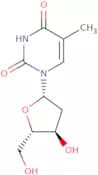
CAS:<p>5′-O-DMT-LNA N-Bz 5-Me cytidine is a protected LNA cytidine nucleoside.</p>Fórmula:C39H37N3O8Pureza:Min. 95%Peso molecular:675.73 g/mol5-Methyl-L-uridine
CAS:<p>5-Methyl-L-uridine is an antiviral drug which belongs to a class of compounds called nucleoside analogues. It is used in the treatment of chronic hepatitis B and C, as well as for prevention of hepatitis A and B. 5-Methyl-L-uridine inhibits the virus by turning off the production of viral DNA and RNA, through interactions with the virus's polymerase chain reaction process. This drug also prevents protein synthesis in cells infected with viruses such as HIV, herpes simplex virus type 1, and influenza A virus. 5-Methyl-L-uridine is a prodrug that is converted to its active form, uridine monophosphate, by enzymes in the liver. The cytotoxic effects of 5-methyluridine on cancer cells have been shown to be due to inhibition of cellular DNA synthesis and repair pathways.</p>Fórmula:C10H14N2O6Pureza:Min. 95%Cor e Forma:White PowderPeso molecular:258.23 g/mol1-b-D-Arabinofuranosyluracil 5'-monophosphate
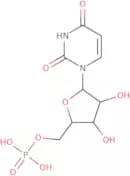
CAS:<p>1-b-D-Arabinofuranosyluracil 5'-monophosphate is a pyrimidine nucleotide analog. Because of its structural similarity to natural nucleotides, it can interact with enzymes involved in nucleic acid synthesis. It is also a metabolite of Ara-U (arabinosyluracil), which is itself a compound studied for its biological activity. Scientists could potentially use this molecule in research to study how cells process and use nucleotides, and to understand how changes in nucleotide structure can affect biological processes.</p>Fórmula:C9H13N2O9PPureza:Min. 95%Cor e Forma:PowderPeso molecular:324.18 g/molm-Methoxytopolin riboside
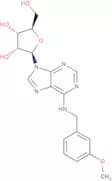
CAS:m-Methoxytopolin riboside is a nucleoside that is a phosphoramidite derivative of the natural nucleoside, topolin riboside. This compound has antiviral and anticancer activities. It inhibits viral DNA synthesis and also induces apoptosis in cancer cells. m-Methoxytopolin riboside is modified with a methoxy group at the 3' position of the sugar moiety. This modification prevents incorporation into DNA and RNA, thereby inhibiting viral replication and inducing apoptosis in cancer cells.Fórmula:C18H21N5O5Pureza:Min. 95%Cor e Forma:PowderPeso molecular:387.39 g/molN6-Benzyladenosine 5'-triphosphate sodium salt - 10 mM aqueous solution
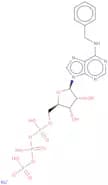
CAS:<p>N6-Benzyladenosine 5'-triphosphate sodium salt - 10 mM aqueous solution is an analog of adenosine triphosphate (ATP). It is used in the study of protein kinase C. ATP and its analogs are able to phosphorylate proteins and regulate their activity. This study has shown that N6-benzyladenosine 5'-triphosphate sodium salt - 10 mM aqueous solution is an atp analog that activates protein kinase C, leading to the phosphorylation of proteins. This analog also inhibits tyrosine kinases, which may be due to its ability to inhibit the reuptake of serotonin and other transmitters.</p>Fórmula:C17H22N5O13P3·xNaPureza:Min. 95%Cor e Forma:Colorless PowderPeso molecular:597.3 g/molUridine-3',5'-cyclic monophosphate sodium salt
CAS:<p>Uridine-3',5'-cyclic monophosphate sodium salt is a phosphotriester that is an intermediate in the biosynthesis of nucleosides. It is also a phosphodiesterase inhibitor, which means it inhibits the breakdown of cyclic nucleotides and allows them to accumulate. This drug has been shown to increase platelet production and has anti-inflammatory effects. Uridine-3',5'-cyclic monophosphate sodium salt is a human metabolite that can be synthesized from uridine, which is present in DNA, RNA, and food sources such as meat, eggs, and milk. The synthesis of uridine-3',5'-cyclic monophosphate sodium salt requires phosphoramidite as a precursor.</p>Fórmula:C9H10N2O8P·NaPureza:Min. 98 Area-%Cor e Forma:White PowderPeso molecular:328.2 g/molFludarabine phosphate
CAS:<p>Fludarabine phosphate is an antileukemic drug that inhibits DNA polymerase α and β, as well as other enzymes in the nucleotide synthesis pathway. It is used to treat patients with chronic myelogenous leukemia (CML) who have developed resistance to other treatments. Fludarabine phosphate has been shown to induce a cytotoxic effect against tumor cells by binding to ATP-binding cassette transporter proteins on the cell membrane and inhibiting intracellular targets such as DNA, RNA, and protein synthesis. Fludarabine phosphate has also been shown to inhibit the growth of tumor cells through synergistic interactions with other anticancer drugs such as hydroxyurea or busulfan, which may be due to its ability to inhibit enzyme activities such as erythrocyte alkaline phosphatase.</p>Fórmula:C10H13FN5O7PPureza:Min. 98 Area-%Cor e Forma:PowderPeso molecular:365.21 g/mol5-Aminoallyl uridine 5'-triphosphate sodium salt
CAS:<p>5-Aminoallyl uridine 5'-triphosphate sodium salt is used in Nucleic Acid Sequence Based Amplification or RNA labelling.</p>Fórmula:C12H20N3O15P3·xNaPureza:Min. 95%Peso molecular:539.22 g/mol2'-Deoxy-3',5'-O-(1,1,3,3-tetraisopropyl-1,3-disiloxanediyl)uridine
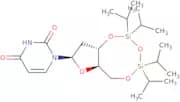
CAS:2'-Deoxy-3',5'-O-(1,1,3,3-tetraisopropyl-1,3-disiloxanediyl)uridine is a novel and synthetic nucleoside analog with antiviral activity. It inhibits the synthesis of DNA by binding to the enzyme ribonucleotide reductase. This compound has been shown to be an activator of PPARs in vitro.Fórmula:C21H38N2O6Si2Pureza:Min. 95%Peso molecular:470.72 g/mol5-Bromo-2'-deoxycytidine
CAS:5-Bromo-2'-deoxycytidine is a synthetic nucleoside analogue that is used to treat diabetic neuropathy. It is structurally similar to cytidine, and inhibits the enzyme DNA polymerase by intramolecular catalysis. This causes deamination of the 5-bromo group, which prevents further synthesis of DNA. 5-Bromo-2'-deoxycytidine has been shown to be effective in vivo in a mouse model for inflammatory bowel diseases, including colitis and eosinophilic enteritis. The drug was also found to inhibit the production of Eosinophil peroxidase from HL-60 cells in vitro.Fórmula:C9H12BrN3O4Pureza:Min. 95%Cor e Forma:Off-White PowderPeso molecular:306.11 g/molN6-Methyl-N6-threonylcarbamoyladenosine
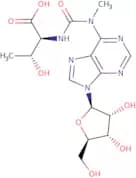
CAS:<p>N-(N'-Methyl-N-(9 beta-D-ribofuranosylpurin-6-yl)carbamyl)threonine is a nucleoside that is used in research.</p>Fórmula:C16H22N6O8Pureza:Min. 95%Peso molecular:426.38 g/mol2'-Deoxyuridine-5'-monophosphate disodium salt
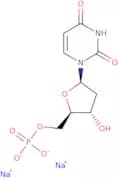
CAS:<p>2'-Deoxyuridine-5'-monophosphate disodium salt (2DUMP) is a nucleoside analog that inhibits the synthesis of DNA and RNA by inhibiting the enzyme thymidylate synthase. 2DUMP is a covalent inhibitor of thymidylate synthase, which prevents the formation of dTMP from deoxyuridine 5'-triphosphate. This compound has been shown to be effective in treating squamous cell cancer and hyperproliferative diseases such as chronic myelogenous leukemia. 2DUMP is also used as an antiviral agent against HIV, herpes simplex virus, and varicella zoster virus. It has been shown to bind to benzalkonium chloride (BAK) in biological samples such as serum or plasma.<br>2DUMP binds to BAK through a covalent linkage between the 3' hydroxyl group on BAK and the phosphate group on 2DUMP</p>Fórmula:C9H11N2O8PNa2Pureza:Min. 95%Cor e Forma:PowderPeso molecular:352.15 g/molThymidine-5'-triphosphate sodium salt - 100mM aqueous solution
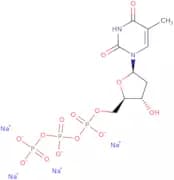
CAS:<p>Thymidine-5'-triphosphate sodium salt is a modified nucleoside with anticancer properties. It is a high-quality, high-purity ribonucleoside that can be used as an activator for the synthesis of deoxyribonucleosides and phosphoramidites. Thymidine-5'-triphosphate sodium salt has antiviral activity, which is due to its ability to inhibit viral DNA replication and transcription. This compound also has the potential to be used in the treatment of cancer cells by inhibiting DNA synthesis and cell division.</p>Fórmula:C10H17N2O14P3·xNaPureza:Min. 95%Cor e Forma:PowderPeso molecular:482.17 g/mol2'-Deoxy-3,4,5,6-tetrahydrouridine
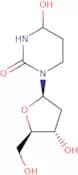
CAS:<p>2'-Deoxy-3,4,5,6-tetrahydrouridine (2DTHR) is a cytidine deaminase inhibitor that is used in vitro to inhibit the production of tumor necrosis factor (TNF). 2DTHR has been shown to be active against hepatocellular carcinoma cells. It is also reactive with tumor tissue and can be eliminated at a rate similar to that of deoxycytidine kinase. This drug binds to the enzyme target and inhibits its activity by increasing enzyme levels, which causes cell death. 2DTHR inhibits TNF production in tumor tissue by binding to cytidine deaminase and preventing conversion of cytidine into uracil. This drug has been shown to cause tumor inhibition in vitro.</p>Fórmula:C9H16N2O5Pureza:Min. 95%Cor e Forma:PowderPeso molecular:232.23 g/molCaffeoyl-coenzym A
CAS:<p>Please enquire for more information about Caffeoyl-coenzym A including the price, delivery time and more detailed product information at the technical inquiry form on this page</p>Fórmula:C30H42N7O19P3SPureza:Min. 95%Peso molecular:929.68 g/mol2-Chloroadenosine
CAS:2-Chloroinosine is an adenosine receptor agonist; metabolically stable analog of adenosineFórmula:C10H12ClN5O4Pureza:Min. 95%Cor e Forma:PowderPeso molecular:301.69 g/mol