Nucleosídeos
Os nucleosídeos são building blocks fundamentais dos ácidos nucleicos, compostos por uma base nitrogenada ligada a uma molécula de açúcar. Nesta seção, você encontrará uma ampla variedade de nucleosídeos essenciais para pesquisas em biologia molecular, bioquímica e farmacologia. Esses compostos desempenham papéis cruciais na síntese de DNA e RNA, e também são vitais em vários processos metabólicos. Os nucleosídeos são usados para estudar material genético, desenvolver terapias antivirais e anticancerígenas, e entender os mecanismos celulares. Na CymitQuimica, fornecemos nucleosídeos de alta qualidade para apoiar suas necessidades de pesquisa e desenvolvimento, garantindo pureza e confiabilidade para suas aplicações experimentais.
Foram encontrados 3569 produtos de "Nucleosídeos"
Ordenar por
Pureza (%)
0
100
|
0
|
50
|
90
|
95
|
100
2'-Deoxy-5-ethyluridine
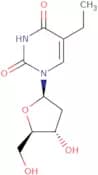
CAS:2'-Deoxy-5-ethyluridine is a nucleoside analog that is used in cancer gene therapy. It is an analog of the natural pyrimidine base uracil and inhibits RNA synthesis by competing with natural nucleosides for incorporation into the growing RNA chain. 2'-Deoxy-5-ethyluridine is cytotoxic to cervical cancer cells, inhibiting cell growth and proliferation at inhibitory doses of 0.1 μM. This drug has also been shown to have synergistic effects with other drugs such as trifluoroacetic acid, monoclonal antibody, tissue culture, glycosidic bond, biological properties, cancer tissues, and polymerase chain reaction (PCR).Fórmula:C11H16N2O5Pureza:Min. 95%Cor e Forma:PowderPeso molecular:256.26 g/mol2'-O-Methyl-5-propynylcytidine
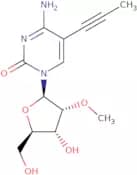
CAS:2'-O-Methyl-5-propynylcytidine is an antiviral drug that inhibits the replication of retroviruses by competitive inhibition of the viral RNA polymerase. It has been shown to be effective against HIV, HSV and CMV. This drug also has shown anticancer activity in vitro and in vivo. 2'-O-Methyl-5-propynylcytidine has a novel mechanism of action and is used as a building block for oligonucleotide synthesis because it is resistant to degradation by nucleases.Fórmula:C13H17N3O5Pureza:Min. 95%Cor e Forma:PowderPeso molecular:295.29 g/molGuanosine 3', 5'- bisdiphosphate lithium salt
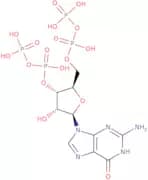
CAS:Regulates gene transcription; inhibits the synthesis of tRNA and rRNAFórmula:C10H17N5O17P4·xLiPureza:Min. 95%Peso molecular:603.16 g/mol2'-Deoxy-6-methylthioguanosine
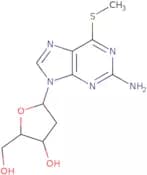
CAS:2'-Deoxy-6-methylthioguanosine is a novel nucleoside and nucleotide analog with antiviral and anticancer activities. It has been shown to inhibit the replication of DNA by inhibiting the activity of DNA polymerase. The target of this drug is not related to any virus or bacterial species, but it inhibits the growth of cancer cells in vitro. The synthesis of 2'-deoxy-6-methylthioguanosine can be achieved by modifying commercially available phosphoramidites.Fórmula:C11H15N5O3SPureza:Min. 95%Cor e Forma:PowderPeso molecular:297.33 g/mol2-[(Benzo[b]thien-2-ylcarbonyl)amino]benzoic acid
CAS:2-[(Benzo[b]thien-2-ylcarbonyl)amino]benzoic acid is a benzoic acid derivative for use in researchFórmula:C16H11NO3SPureza:Min. 95%Cor e Forma:PowderPeso molecular:297.33 g/moltrans-Zeatin-o-glucoside riboside
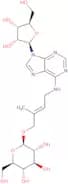
CAS:Trans-Zeatin-o-glucoside riboside is a nucleotide that is found in protonemata and is involved in the regulation of cell division, cytokinin production, and responses to light. It is a cytokinin that regulates the pathways of nitrogen metabolism and other metabolic pathways. Trans-Zeatin-o-glucoside riboside has been detected at detectable levels in cells, tissues, and fluids. It has been shown to be involved in the evolution of plants. It has been shown to regulate cell division by inhibiting the phosphorylation of fibrillarin protein kinase, which leads to an increase in cyclins D1/D2 with no change in cyclin E1/E2. This nucleotide may also play a role in regulating cytokinin production by binding to DNA and influencing gene transcription.Fórmula:C21H31N5O10Pureza:Min. 95 Area-%Cor e Forma:PowderPeso molecular:513.5 g/mol1-(2’-Deoxy-2’-fluoro-b-D-arabinofuranosyl)-N3-(2S)-(2-amino-3-carbonyl]propyluracil
CAS:1-(2’-Deoxy-2’-fluoro-β-D-arabinofuranosyl)-N3-(2S)-(2-amino-3-carbonyl]propyluracil is a novel, anticancer drug. It is active against both RNA and DNA viruses, such as HIV, influenza virus and herpes virus. 1-(2’-Deoxy-2’-fluoro-β-D-arabinofuranosyl)-N3-(2S)-(2-amino-3-carbonyl]propyluracil has been shown to be an activator for phosphoramidites in aqueous solution. This compound is of high purity with CAS No. 2072145–25–4. It is also a synthesized, monophosphate nucleoside that can be used in the production of modified nucleosides for therapeutic purposes or as antiviral agentsPureza:Min. 95%3',5'-O-(1,1,3,3-Tetraisopropyldisiloxane-1,3-diyl)-2'-ketouridine
CAS:Used as a protected 2'-ketouridine nucleoside in the synthesis of modified RNA oligonucleotides. The 1,1,3,3-tetraisopropyldisiloxane-1,3-diyl (TIPDS or TBDPSi2) group protects the 3' and 5' hydroxyl groups, while the 2'-keto (or 2'-oxo) modification introduces a specific functional group at the 2' position of the ribose sugar.Fórmula:C21H36N2O7Si2Pureza:Min. 95%Cor e Forma:White PowderPeso molecular:484.69 g/molN4-Benzoyl-3'-deoxy-5'-O-DMT-cytidine
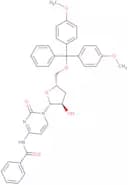
CAS:N4-Benzoyl-3'-deoxy-5'-O-DMT-cytidine is a synthetic nucleoside that is used as an activator for DNA synthesis. It is also used in the preparation of diphosphate derivatives for use as antiviral and anticancer agents or as probes for DNA and RNA research. N4-Benzoyl-3'-deoxy-5'-O-DMT-cytidine is a novel, high purity, and high quality chemical with CAS No. 86234-45-9.
Fórmula:C37H35N3O7Pureza:Min. 95%Peso molecular:633.69 g/mol2'-Deoxyguanosine 3'-O-L-valinyl ester
2'-Deoxyguanosine 3'-O-L-valinyl ester is a synthetic nucleoside obtained from 2'-deoxyguanosine and valine. It has antiviral activity against DNA viruses, such as herpes simplex virus and vaccinia virus, and anticancer activity. 2'-Deoxyguanosine 3'-O-L-valinyl ester is an analog of guanosine that has been modified to contain an L-valyl group at the 3' position. This modification increases the stability of this nucleoside in aqueous solutions and provides potent antiviral and anticancer activity.Pureza:Min. 95%Polyinosinic acid-polycytidylic acid, homopolymer (1:1)
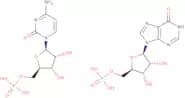
CAS:Polyinosinic acid-polycytidylic acid (Poly I:C), an agonist of TLR3 toll-like receptors, is a synthetic double-stranded RNA analog, consisting of polyinosinic acid (poly I) paired with polycytidylic acid (poly C), forming a stable duplex structure.PolyI:C stimulates the secretion of pro-inflammatory cytokines and type I interferon through its interaction with endosomal Toll-like receptor 3 (TLR-3) and the cytoplasmic receptors melanoma differentiation-associated gene 5 (MDA-5) and retinoic acid-inducible gene I (RIG-I). This immunostimulant activity makes Poly I:C a useful vaccine adjuvant and is used in vaccine formulations. Poly I:C and its stabilized analogs (e.g., poly-ICLC) are also being actively researched for their dual role in oncology: directly targeting tumors and acting as immune potentiators. For example Poly I:C can induce apoptosis in tumor cells and stimulate immunogenic cell death and is therefore being explored alongside chemotherapy, radiotherapy, and checkpoint inhibitors, helping to overcome resistance mechanisms and strengthen treatment outcomes.We can supply PolyI:C to all stages of your project - from R&D and preclinical phases right up to GMP commercial manufacture. Contact our team for custom Poly I:C products. For more on poly I:C read out blog 'Poly I:C: A Vaccine Adjuvant With Oncological Potential.'Fórmula:(C10H13N4O8P)x•(C9H14N3O8P)xCor e Forma:PowderN4-Acetyl-5'-O-DMT-cytidine
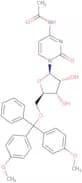
CAS:N4-Acetyl-5'-O-DMT-cytidine is an antiviral drug that inhibits the viral DNA polymerase. It is a modified nucleoside, which is activated by phosphorylation. N4-Acetyl-5'-O-DMT-cytidine is used in research for its anticancer properties and has shown to inhibit the growth of cancer cells in vitro. The compound was found to be more potent than cytidine and other modified nucleosides.Fórmula:C32H33N3O8Pureza:Min. 98 Area-%Cor e Forma:White PowderPeso molecular:587.63 g/mol2'-O-Benzoyl-5'-O-DMT-4-thiouridine
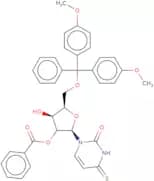
2'-O-Benzoyl-5'-O-DMT-4-thiouridine is a phosphoramidite monophosphate nucleoside analog. It has antiviral and anticancer properties, and has been shown to activate the immune system in mice. 2'-O-Benzoyl-5'-O-DMT-4-thiouridine is also novel because it is structurally different from all other nucleosides that have been studied for antiviral and anticancer activity. This drug can be used as an activator of DNA synthesis in vitro.Fórmula:C37H34N2O8SPureza:Min. 95%Cor e Forma:Yellow SolidPeso molecular:666.76 g/mol2'-C-Methylcytidine
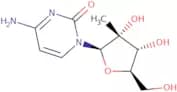
CAS:Broad-spectrum anti-viral; inhibitor of HCV NS5B RNA polymeraseFórmula:C10H15N3O5Pureza:Min. 98 Area-%Cor e Forma:White Off-White PowderPeso molecular:257.25 g/mol2-Chloro-2'-deoxyadenosine 5'-triphosphate sodium salt
2-Chloro-2'-deoxyadenosine 5'-triphosphate sodium salt is a nucleoside that can be used in the synthesis of DNA and RNA. It is a synthetic, high quality, and novel compound that has been shown to have antiviral, anticancer, and anti-inflammatory properties. This compound has been shown to inhibit the growth of cancer cells by inhibiting the production of proteins vital for cell division. 2-Chloro-2'-deoxyadenosine 5'-triphosphate sodium salt has also been shown to be an activator of nucleoside phosphorylase and deoxynucleotide kinase, which are enzymes that catalyze the conversion of nucleosides into their corresponding monophosphates.Pureza:Min. 95%2'-O-Methyladenosine
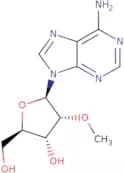
CAS:2'-O-Methyladenosine (2'-OMeA) is a nucleoside that is a low-energy analog of adenosine. It has been shown to be an effective inhibitor of protein synthesis in vitro, by inhibiting RNA polymerase in the process of transcription. 2'-OMeA has also been shown to inhibit virus replication in vitro and to have potent inhibitory activity against human immunodeficiency virus type 1 (HIV-1). 2'-OMeA inhibits viral replication by binding to the viral ribonucleotide reductase enzyme and blocking the conversion of ribonucleotides into deoxyribonucleotides. The chemical structures of 2'-OMeA are similar to those found in fatty acids and can be detected using chemical ionization mass spectroscopy. The sequence for 2'-OMeA was determined through sequencing methods including NMR spectroscopy and nuclear magnetic resonance data analysis.Fórmula:C11H15N5O4Pureza:Min. 98 Area-%Cor e Forma:White Off-White PowderPeso molecular:281.27 g/mol8-Hydrazinoadenosine
CAS:8-Hydrazinoadenosine is an inhibitor of phosphodiesterase, which is a key enzyme in the regulation of cellular processes. 8-Hydrazinoadenosine binds to the active site of the enzyme and inhibits its function. This binding prevents hydrolysis of the phosphate bond between two nucleotides and so prevents the formation of a new nucleotide from a nucleoside and a phosphate molecule. 8-Hydrazinoadenosine has been shown to inhibit phosphodiesterases in vitro and in animals, including rat brain and mouse lung. Strategies for 8-hydrazinoadenosine commercialization have been investigated, including attaching it to other molecules that are more easily absorbed by cells or using irradiation to produce 8-aminoadenosine, which can be converted into 8-hydrazinoadenosine.Pureza:Min. 95%2,2'-Anhydrocytidine HCl
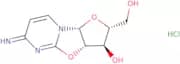
CAS:2,2'-Anhydrocytidine HCl is a nucleoside for use as a DNA synthesis inhibitor
Fórmula:C9H11N3O4·HClPureza:Min. 98 Area-%Cor e Forma:White PowderPeso molecular:261.66 g/mol2'-Deoxypseudoisocytidine
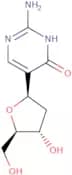
CAS:2'-Deoxypseudoisocytidine is a synthetic nucleoside that is structurally similar to pseudoisocytidine. It is used as an anti-cancer agent in labeling studies. The compound exhibits cytotoxic activity against tumor cells and inhibits the growth of cultured human cancer cell lines. 2'-Deoxypseudoisocytidine has been shown to be effective in preventing the growth of brain tumors in mice by targeting DNA synthesis, which may be due to its ability to act as an analog of cytosine and bind to DNA. This drug also has potential for use as a chemotherapeutic agent for leukemia and other cancers.Fórmula:C9H13N3O4Pureza:Min. 95%Cor e Forma:PowderPeso molecular:227.22 g/mol8-Azidoadenosine
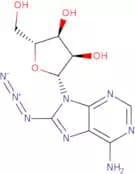
CAS:8-Azidoadenosine is an adenosine analogue conjugated with an azido group which can be used for oligonucleotide labelling. The azido group reacts with a terminal alkyne via a click reaction, forming the labelled nucleotide containing a triazole linker.
Fórmula:C10H12N8O4Pureza:Min. 95%Cor e Forma:PowderPeso molecular:308.25 g/mol

![2-[(Benzo[b]thien-2-ylcarbonyl)amino]benzoic acid](/_next/image/?url=https%3A%2Fstatic.cymitquimica.com%2Fproducts%2F3D%2Fthumb-webp%2FNB181580.webp&w=3840&q=75)
![1-(2’-Deoxy-2’-fluoro-b-D-arabinofuranosyl)-N3-(2S)-(2-amino-3-carbonyl]propyluracil](/_next/image/?url=https%3A%2Fstatic.cymitquimica.com%2Fproducts%2F3D%2Fthumb-webp%2FND162854.webp&w=3840&q=75)