Enzimas em Proteínas Recombinantes
Foram encontrados 3319 produtos de "Enzimas em Proteínas Recombinantes"
Glucosyltransferase 203-freeze dried
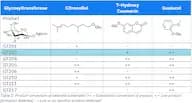
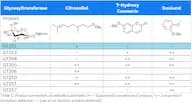
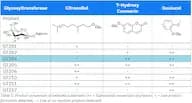
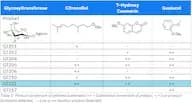
CAS:Glucosyltransferase (GTase) is the enzyme that transfers glucose to another organic molecule (aglycon), establishing glycosidic linkage. UDP-glucose dependent GTases are part of the enzyme family of glucosyltransferases, they are versatile tools in glucosylation reactions. Different GTases have different substrate specificities. For the specificity of GT203 Glucosyltransferase, please see Table 1 that lists the available GTases with GT203 highlighted.Color: beigeForm: lyophilisateProtein content: 0.5 mg/mgThe glucosyltransferase was tested in a glucosylation reaction of a preferred substrate. High conversion after up to 24 h reaction time was observed.
Not sure which GTase to choose? Consider our Glucosyltransferase kit, which contains all 8 Glucosyltransferases.Peroxidase Kit, 2 peroxidases with different substrate specificities
Peroxidases can be utilized as enzymes catalyzing e.g. aromatic ring hydroxylation, epoxidation, halogenation, N- or S-oxidation, ether cleavage and alcohol/aldehyde oxidation reactions. The Peroxidase Kit contains 2 recombinant peroxidases of bacterial and fungal origin with a temperature optimum in the 20-40 °C range and pH optimum between pH 5 and 8.Pureza:Min. 95%Glucosyltransferase 201-freeze dried
CAS:Glucosyltransferase (GTase) is the enzyme that transfers glucose to another organic molecule (aglycon), establishing glycosidic linkage. UDP-glucose dependent GTases are part of the enzyme family of glucosyltransferases, they are versatile tools in glucosylation reactions. Different GTases have different substrate specificities. For the specificity of GT201 Glucosyltransferase, please see Table 1 that lists the available GTases with GT201 highlighted.Color: beigeForm: lyophilisateProtein content: 0.5 mg/mgThe glucosyltransferase was tested in a glucosylation reaction of a preferred substrate. High conversion after up to 24 h reaction time was observed. Not sure which GTase to choose? Consider our Glucosyltransferase kit, which contains all 8 Glucosyltransferases.Glucosyltransferase 204-freeze dried
CAS:Glucosyltransferase (GTase) is the enzyme that transfers glucose to another organic molecule (aglycon), establishing glycosidic linkage. UDP-glucose dependent GTases are part of the enzyme family of glucosyltransferases, they are versatile tools in glucosylation reactions. Different GTases have different substrate specificities. For the specificity of GT204 Glucosyltransferase, please see Table 1 that lists the available GTases with GT204 highlighted.Color: beigeForm: lyophilisateProtein content: 0.5 mg/mgThe glucosyltransferase was tested in a glucosylation reaction of a preferred substrate. High conversion after up to 24 h reaction time was observed. Not sure which GTase to choose? Consider our Glucosyltransferase kit, which contains all 8 Glucosyltransferases.Glucosyltransferase 211-freeze dried
CAS:Glucosyltransferase (GTase) is the enzyme that transfers glucose to another organic molecule (aglycon), establishing glycosidic linkage. UDP-glucose dependent GTases are part of the enzyme family of glucosyltransferases, they are versatile tools in glucosylation reactions. Different GTases have different substrate specificities. For the specificity of GT211 Glucosyltransferase, please see Table 1 that lists the available GTases with GT211 highlighted.Color: beigeForm: lyophilisateProtein content 0.7 mg/mgThe glucosyltransferase was tested in a glucosylation reaction of a preferred substrate. High conversion after up to 24 h reaction time was observed.
Not sure which GTase to choose? Consider our Glucosyltransferase kit, which contains all 8 Glucosyltransferases.Glucosyltransferase 206-freeze dried
CAS:Glucosyltransferase (GTase) is the enzyme that transfers glucose to another organic molecule (aglycon), establishing glycosidic linkage. UDP-glucose dependent GTases are part of the enzyme family of glucosyltransferases, they are versatile tools in glucosylation reactions. Different GTases have different substrate specificities. For the specificity of GT206 Glucosyltransferase, please see Table 1 that lists the available GTases with GT206 highlighted.Color: beigeForm: lyophilisateProtein content: 0.5 mg/mgThe glucosyltransferase was tested in a glucosylation reaction of a preferred substrate. High conversion after up to 24 h reaction time was observed.
Not sure which GTase to choose? Consider our Glucosyltransferase kit, which contains all 8 Glucosyltransferases.NEK9 Protein, Human, Recombinant (His)
Expression system: E. coli
Length: 52-308, Partial
Activity: Not TestedPureza:85%Cor e Forma:SoildPeso molecular:36.5 kDa (Predicted); 37 kDa (Reducing conditions)Glucosyltransferase 227-freeze dried
CAS:Glucosyltransferase (GTase) is the enzyme that transfers glucose to another organic molecule (aglycon), establishing glycosidic linkage. UDP-glucose dependent GTases are part of the enzyme family of glucosyltransferases, they are versatile tools in glucosylation reactions. Different GTases have different substrate specificities. For the specificity of GT227 Glucosyltransferase, please see Table 1 that lists the available GTases with GT227 highlighted.Color: beigeForm: lyophilisateProtein content: 0.8 mg/mgThe glucosyltransferase was tested in a glucosylation reaction of a preferred substrate. High conversion after up to 24 h reaction time was observed. Not sure which GTase to choose? Consider our Glucosyltransferase kit, which contains all 8 Glucosyltransferases.Urease from Canavalia ensiformis
CAS:Urease from Canavalia ensiformis (Jack bean urease, EC 3.5.1.5) is an enzyme that catalyses the following reaction: (NH2)2CO + H2O → CO2 + 2 NH3 One unit of urease will yield 1.0 µmole of NH3 from urea per min at pH 7.0 and 25 °C.
Peso molecular:480 g/molAldolase from rabbit muscle
CAS:One unit of aldolase (EC 4.1.2.13) will convert 1.0 µmol of Fructose-1,6-Diphosphate to Dihydroxyacetone phosphate and Glyceraldehyde-3-phosphate per min at 25 °C and pH 7.4. Lyophilized Powder.
Peso molecular:161 g/molCarboxypeptidase A from bovine pancreas
CAS:Carboxypeptidase A (EC 3.4.17.1) is an exopeptidase enzyme. It hydrolyzes peptide bonds of C-terminal residues with aliphatic or aromatic side-chains. One unit of Carboxypeptidase A will hydrolyze 1.0 μmole of hippuryl-L-phenylalanine per min at pH 7.5 and 25 °C.EUCODIS® Nitrilhydratase 05, recombinant enzyme - ENH005
Nitrile hydratase 05 recombinantly expressed in E. coli comes in a freeze-dried formulation. Nitrile hydratases can be utilized to convert nitriles into their corresponding amides, e.g. to produce acrylamide from acrylonitrile. Additional applications include the removal of nitriles from industrial wastewater. Our nitrile hydratases have been tested for hydrolysis of the following substrates:cyclohexanecarbonitrile, cinnamonitrile, benzonitrile, methacrylonitrile, pivalonitrile.
LacBuster® - S 2000 IU, beta-lactamase I & II, lyophilized, gamma irradiated - EBL023.2
LacBuster®-S 2000 is a solid and Gamma-irradiated, freeze-dried, broad range beta-lactamase formulation with 2000 IU beta-lactamase II and 20000 IU beta-lactamase I activity per vial.EUCODIS® Nitrilhydratase 22, recombinant enzyme - ENH022
Nitrile hydratase 22 recombinantly expressed in E. coli comes in a freeze-dried formulation. Nitrile hydratases can be utilized to convert nitriles into their corresponding amides, e.g. to produce acrylamide from acrylonitrile. Additional applications include the removal of nitriles from industrial wastewater. Our nitrile hydratases have been tested for hydrolysis of the following substrates:cyclohexanecarbonitrile, cinnamonitrile, benzonitrile, methacrylonitrile, pivalonitrile.
Pureza:Min. 95%EUCODIS® Nitrilhydratase 19, recombinant enzyme - ENH019
Nitrile hydratase 19 recombinantly expressed in E. coli comes in a freeze-dried formulation. Nitrile hydratases can be utilized to convert nitriles into their corresponding amides, e.g. to produce acrylamide from acrylonitrile. Additional applications include the removal of nitriles from industrial wastewater. Our nitrile hydratases have been tested for hydrolysis of the following substrates:cyclohexanecarbonitrile, cinnamonitrile, benzonitrile, methacrylonitrile, pivalonitrile.
Heparinase I from flavobacterium heparinum
CAS:Heparinase I (heparin lyase I, heparin eliminase; EC 4.2.2.7) in an enzyme that specifically cleaves oligosaccharides to remove heparan sulfate residues. One unit will form 1.0 μmole of unsaturated uronic acid per minute at pH 7.5 and 25 °C.
Pureza:Min. 95%Neuraminidase from Vibrio Chloerae
CAS:Neuraminidase (Exo-α-sialidase, sialidase, systematic name acetylneuraminyl hydrolase; EC 3.2.1.18) is an enzyme that catalyzes hydrolysis of glycosidic linkages of neuraminic acids. As it is exo-hydrolase, it hydrolyzes terminal N- or O- acylneuramic acid units, that are linked by α2,3-, α2,6-, and α2,8- glycosidic bonds. One unit of neuraminidase will hydrolyze 1 μmol N-acetyl-neuraminosyl-D-lactose under optimal conditions.Fórmula:C21H25NO11Pureza:(Activity U/Ml) ≥ 0.00Peso molecular:467.42 g/molEUCODIS® Nitrilhydratase 20, recombinant enzyme - ENH020
Nitrile hydratase 20 recombinantly expressed in E. coli comes in a freeze-dried formulation. Nitrile hydratases can be utilized to convert nitriles into their corresponding amides, e.g. to produce acrylamide from acrylonitrile. Additional applications include the removal of nitriles from industrial wastewater. Our nitrile hydratases have been tested for hydrolysis of the following substrates:cyclohexanecarbonitrile, cinnamonitrile, benzonitrile, methacrylonitrile, pivalonitrile.
Pureza:Min. 95%Thioglucosidase from Sinapis alba (white mustard) seed
CAS:Thioglucosidase (thioglucoside glucohydrolase, Myrosinase, sinigrinase, sinigrase; EC 3.2.1.147) is an enzyme that cleaves thio-linked glucosides:a thioglucoside + H2O ⇌ a sugar + a thiol (the thiol formed is usually unstable and undergoes spontaneous re-arrangement into a isothiocyanate through a loss of a sulfate group)One unit will produce 1.0 μmole glucose per min from sinigrin (a thio-linked glucoside) at pH 6.0 and 25 °C.Enteropeptidase
CAS:Enteropeptidase (historic name entorokinase; EC 3.4.21.9) is a proteolytic enzyme (proteinase) that activates trypsinogen into its active form, trypsin. One unit of enteropeptidase will produce 1.0 nmole of trypsin from trypsinogen per min at pH 5.6 and 25 °C.Pureza:Min. 95%