Enzimas em Proteínas Recombinantes
Foram encontrados 3320 produtos de "Enzimas em Proteínas Recombinantes"
COX-2 Protein, Human, Recombinant (His)
PTGS2, also known as COX-2, is s component of Prostaglandin-endoperoxide synthase (PTGS).Pureza:92.1% - > 90 % as determined by SDS-PAGECor e Forma:Lyophilized PowderPeso molecular:68.5 kDa (predicted); 66 kDa (reducing conditions)Ref: TM-TMPY-01736
5µg162,00€10µg250,00€20µg400,00€50µg743,00€100µg1.190,00€200µg1.848,00€500µg3.518,00€TPSAB1 protein, Cynomolgus, Recombinant (His)
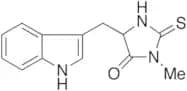
TPSAB1, namely tryptase alpha/beta-1, is a serine protease with trypsinlike activity.Cor e Forma:Lyophilized PowderPeso molecular:28.57kDa (predicted). The protein migrates to 30-33kDa based on Tris-Bis PAGE result.Necrostatin-1
CAS:Produto ControladoApplications Necroptosis is a regulated caspase-independent cell death mechanism that results in morphological features resembling necrosis. Necrostatin-1 is an inhibitor of RIP1 kinase that prevents the death of TNF-α-treated FADD-deficient Jurkat cells. Necrostatin-1 has been used to investigate the pathological importance of necroptosis in ischemic brain injury and myocardial infarction.
References Foresti, R., et al: J. Biol. Chem., 272, 18411 (1997); Cardenas, A., et al.: J. Neurochem., 74, 2041 (2000); Degterev, et al.: Nat. Chem. Biol., 1, 112 (2005); Hitomi, J., et al.: Cell, 135, 1311 (2008);Fórmula:C13H13N3OSCor e Forma:NeatPeso molecular:259.33Penase (Penicillinase)
CAS:Penase is an enzyme, specifically a type of beta-lactamase, which is derived from bacterial sources. Its mode of action involves the hydrolysis of the beta-lactam ring present in penicillin molecules. This enzymatic activity renders penicillin inactive by breaking its critical structural component that is essential for its antibacterial activity.SPM-1 (β-Lactamase)
CAS:SPM-1 (β-Lactamase) is an enzyme, which is a type of metallo-beta-lactamase enzyme, derived from bacterial origins, specifically from pathogens associated with nosocomial infections. This enzyme acts by hydrolyzing the amide bond in the beta-lactam ring of antibiotics, rendering β-lactam antibiotics ineffective. SPM-1 participates in antibiotic resistance by facilitating the degradation of a wide range of β-lactam antibiotics, including penicillins and cephalosporins, thereby nullifying their therapeutic effects.
OXA-11 (β-Lactamase)
CAS:OXA-11 is a β-lactamase enzyme, which is a type of protein produced by certain bacteria. These enzymes are derived from the bacterial source and are responsible for antibiotic resistance. The primary mode of action of OXA-11 is the hydrolysis of the β-lactam ring found in various antibiotics, such as penicillins and cephalosporins, rendering them ineffective. This enzymatic activity allows bacteria to survive exposure to these antimicrobial agents, posing a significant challenge in clinical settings.KPC-1 (β-Lactamase)
CAS:KPC-1 (β-Lactamase) is an enzyme that breaks down β-lactam antibiotics, rendering them ineffective. It originates from strains of bacteria, particularly Klebsiella pneumoniae, which are significant sources of hospital-acquired infections. The mode of action involves hydrolyzing the β-lactam ring found in antibiotics such as penicillins and cephalosporins, neutralizing their antibacterial effects.EUCODIS® Lipase 003, screening grade, recombinant, from microbial sources - EL003
Lipase 03 recombinantly expressed in E. coli comes in a spray-dried formulation. It has its pH optimum at 6-7 and temp. optimum at 20-50°C. Lipases belong to the family of esterases and naturally act on triglycerides at lipid-water interfaces catalyzing hydrolytic reactions, esterifications and transesterification reactions in industrial and food applications. Lipase 03 was shown to hydrolyze p-Nitrophenyl esters of butyrate (100 % activity), octanoate (90 %), laurate (28 %), palmitate (14 %), stearate (9 %), arachidate (2 %) and behenate (3 %).EUCODIS® Peroxidase 13, from bacterial, fungal and plant origin, recombinant - EP013
Peroxidase 013 belongs to the class of the heme-family peroxidases and can be utilized for catalyzing oxidation/epoxidation of unsaturated C-C bonds, N- or S-oxidation, ether cleavage and alcohol/aldehyde oxidation reactions. The Peroxidase 12 has a temperature optimum in the 20 - 40 °C range and pH optimum between pH 5 and 8.VIM-15 (β-Lactamase)
CAS:VIM-15 (β-Lactamase) is a metallo-β-lactamase enzyme, which is derived from bacterial sources, particularly Gram-negative bacteria. Its mode of action involves the hydrolysis of β-lactam antibiotics, facilitating bacterial resistance. This enzyme employs zinc ions as cofactors to break the β-lactam ring, rendering these antibiotics ineffective against the bacteria that produce the enzyme. The hydrolysis process disrupts the antibiotic's structural integrity, crucial for its antibacterial activity, thereby nullifying its therapeutic effects.LacBuster™-L bulk (β-lactamase)
CAS:Ready to use beta-lactamase solution targeting beta-lactam antibiotics such as penicillins, carbapenems and cephalosporins. According to US Pharmacopeia (USP <71>) and EP, LacBusterTM-L is suitable for sterility testing methods such as membrane filtration and direct inoculation.Bromelain
CAS:Bromelain is a group of proteolytic enzymes found in the fruit and stem of pineapple plants. It is used in a topical drug product approved by the FDA to treat severe burns. However, its oral consumption to treat sinusitis, postoperative pain after the extraction of wisdom teeth, and osteoarthritis is still being researched.Cor e Forma:PowderCarboxypeptidase G from pseudomonas sp.
CAS:Carboxypeptidase G (EC 3.4.17.11, alternative name γ-Glutamyl hydrolase) is a protease that cuts γ-glutamyl bonds with high specificity. One unit of Carboxypeptidase G will hydrolyze (+)amethopterin to generate 1.0 μmole of L-glutamic acid.Pureza:Min. 95%NMCA (β-Lactamase)
CAS:NMCA (β-Lactamase) is an enzyme, specifically acclaimed for its role in conferring antibiotic resistance. It is derived from bacterial sources, where it naturally occurs as part of the bacterial defense mechanism against β-lactam antibiotics. NMCA (β-Lactamase) functions by hydrolyzing the β-lactam ring present in these antibiotics, effectively rendering them inactive. This mode of action disrupts the antibiotic's ability to inhibit cell wall synthesis within bacteria, thereby permitting bacterial survival and proliferation.Cor e Forma:PowderKPC-1 (β-Lactamase)
CAS:KPC-1 (β-Lactamase) is a specialized enzyme, which is produced by certain Gram-negative bacteria, notably Klebsiella pneumoniae. It functions by hydrolyzing the β-lactam ring found in a wide range of β-lactam antibiotics, such as penicillins and cephalosporins. This enzymatic action effectively neutralizes the antibiotic's antimicrobial properties, rendering the drugs ineffective against bacteria that produce KPC-1.SPM-1 (β-Lactamase)
CAS:SPM-1 (β-Lactamase) is a metallo-β-lactamase enzyme, which is derived from certain Gram-negative bacteria, such as Pseudomonas aeruginosa. This enzyme is characterized by its ability to hydrolyze a broad spectrum of β-lactam antibiotics, including penicillins, cephalosporins, and carbapenems, due to the presence of a zinc ion in its active site. The zinc ion plays a crucial role in the catalytic mechanism by facilitating the cleavage of the β-lactam ring, rendering the antibiotic ineffective against bacterial cell wall synthesis.OXA-11 (β-Lactamase)
CAS:OXA-11 (β-Lactamase) is an enzyme of the β-lactamase class, which is primarily derived from Gram-negative bacteria. This enzyme is characterized by its ability to hydrolyze β-lactam antibiotics, rendering them ineffective by breaking the β-lactam ring, a crucial component of these antibiotics. OXA-11 is a notable member of the oxacillinase group within class D β-lactamases, known for its resistance to penicillins and cephalosporins.Glucosyltransferase211-freeze dried
CAS:Glucosyltransferase211-freeze dried is an enzyme preparation which is derived from microbial fermentation. This enzyme functions by catalyzing the transfer of glucosyl groups from activated donor molecules to specific acceptor substrates. Its mechanism of action involves the formation of glycosidic bonds, facilitating the synthesis of various oligosaccharides and polysaccharides.Glucosyltransferase204-freeze dried
CAS:Glucosyltransferase204-freeze dried is an enzyme preparation, derived from specific strains of Streptococcus bacteria, which plays a crucial role in catalyzing the transfer of glucosyl units from donor molecules to acceptor carbohydrates, predominantly in the formation of glucans. This enzymatic activity results in complex carbohydrate structures essential for various biological processes.