Outros
Foram encontrados 6279 produtos de "Outros"
Ordenar por
Pureza (%)
0
100
|
0
|
50
|
90
|
95
|
100
4-Nitrophenyl 2,3-di-O-(2,3,4,6-tetra-O-acetyl-b-D-glucopyranosyl)-b-D-glucopyranoside
<p>4-Nitrophenyl 2,3-di-O-(2,3,4,6-tetra-O-acetyl-b-D-glucopyranosyl)-b-D-glucopyranoside is a fluorogenic substrate that is used in biochemistry as an enzyme substrate. It is a colorless solid that has high purity and high quality. This product is a ligand that binds to the enzyme beta glucosidase. The conjugate of this product with beta glucosidase can be used in diagnostics for the detection of glucose levels in culture media or food testing. This product also has chromogenic and chemiluminescent properties that are used in environmental testing and staining. CAS No.: 54323-05-8</p>Pureza:Min. 95%Peso molecular:961.82 g/mol4-Nitrophenyl 2-O-(a-L-fucopyranosyl)-a-D-galactopyranoside
CAS:<p>4-Nitrophenyl 2-O-(a-L-fucopyranosyl)-a-D-galactopyranoside is a chromogenic pNP enzyme substrate consisting of a fucose and galactose moieties. Upon enzymatic hydrolysis by specific fucosidases or galactosidases, it releases the highly chromogenic molecule 4-nitrophenol, which exhibits a distinct yellow color that can be monitored spectrophotometrically. This substrate is frequently used to study enzyme specificity, kinetics, and inhibition, and it plays a critical role in the investigation of carbohydrate active enzymes (CAZymes), the screening of enzyme inhibitors, and the development of novel analytical methods for the detection and quantitation of enzyme activities.</p>Pureza:Min. 95%Peso molecular:447.39 g/mol4-Nitrophenyl 6-O-trityl-a-D-glucopyranoside
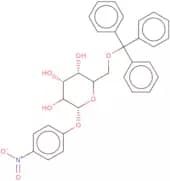
CAS:<p>4-Nitrophenyl 6-O-trityl-a-D-glucopyranoside is a high-quality trityl pNP substrate that performs excellently in various enzymatic assays. Containing a trityl-protected sugar moiety, this substrate is perfect for investigating alpha-D-glucopyranoside-specific enzymes and providing precise data for your experiments.</p>Pureza:Min. 95%Peso molecular:543.56 g/mol4-Nitrophenyl 2-O-(2,3,4-tri-O-acetyl-a-L-fucopyranosyl)-6-O-benzoyl-3,4-O-isopropylidene-a-D-galactopyranoside
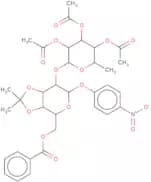
CAS:<p>4-Nitrophenyl 2-O-(2,3,4-tri-O-acetyl-a-L-fucopyranosyl)-6-O-benzoyl-3,4-O-isopropylidene a D galactopyranoside is an analog of galactose that binds to the DNA and regulates gene expression. This compound has been shown to be able to regulate gene expression levels in cells. 4NP2B6OB was used as a probe for microarray analysis of gene expression profiles from environmental samples. It was found that 4NP2B6OB could be used as a probe for the identification of genes in high density arrays.</p>Pureza:Min. 95%Peso molecular:717.67 g/mol5-Bromo-4-chloro-1H-indol-3-yl-b-D-glucuronide
CAS:<p>5-Bromo-4-chloro-3-indolyl β-D-glucuronide (BCIG) is an chromogenic enzyme substrate used to detect the presence of glucuronidase enzyme activity. The reaction occurs when BCIG reacts with the enzyme beta-glucuronidase yielding an intense blue color. It is used in a variety of biochemical and biomedical applications, such as the detection of pathogenic bacteria, the diagnosis of genetic disorders, and the isolation of recombinant proteins.</p>Fórmula:C14H13BrClNO7Pureza:Min. 95%Peso molecular:422.61 g/mol4-Nitrophenyl 2-O-(2,3,4,6-tetra-O-acetyl-b-D-glucopyranosyl)-4,6-O-benzylidene-b-D-glucopyranoside
CAS:<p>4-Nitrophenyl 2-O-(2,3,4,6-tetra-O-acetyl-b-D-glucopyranosyl)-4,6-O-benzylidene-b-D-glucopyranoside is a compound that is used in gene expression profiling. It has been shown to be an effective inhibitor of glutamicum and corynebacterium glutamicum. 4NPBG can inhibit the production of acid molecules by blocking the activity of cytochrome P450 enzymes in the cells of these bacteria. The compound also inhibits cellular transport and membrane transport genes in these species. This inhibition prevents the synthesis of nucleic acid molecules such as RNA and DNA.</p>Pureza:Min. 95%Peso molecular:719.64 g/mol4-Nitrophenyl 2-acetamido-3-O-acetyl-2-deoxy-b-D-glucopyranoside
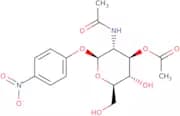
CAS:<p>4-Nitrophenyl 2-acetamido-3-O-acetyl-2-deoxy-b-D-glucopyranoside is a fluorogenic substrate for the enzyme acetylcholinesterase. It can be used in food testing, environmental testing and diagnostics. 4NP2A2DGBG is a high purity, high quality product with a CAS number of 23262-57-9.</p>Pureza:Min. 95%Peso molecular:384.34 g/mol4-Nitrophenyl 2-acetamido-4-O-(2-acetamido-3,4,6-tri-O-acetyl-2-deoxy-b-D-glucopyranosyl)-3,6-di-O-acetyl-2-deoxy-b-D-glucopyranosid e
CAS:<p>4-Nitrophenyl 2-acetamido-4-O-(2-acetamido-3,4,6-tri-O-acetyl-2-deoxy-b-D-glucopyranosyl)-3,6-di-O -acetyl2 deoxy b D glucopyranosid e is a chemiluminescence substrate that reacts with hydrogen peroxide to produce light. It is used in diagnostics for the detection of bacterial and fungal cultures. The reaction between 4NPAA and hydrogen peroxide generates light at 540 nm. This product has been tested for purity and quality using various methods including culture media, environmental testing, bioluminescence, staining, fluorogenic substrate, enzyme substrate, food testing and conjugate.</p>Pureza:Min. 95%Peso molecular:755.68 g/molAldol® 470 L-pyroglutamic acid amide, Biosynth Patent: EP 2427431 and US 8940909
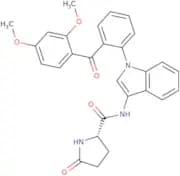
CAS:Produto Controlado<p>Aldol® 470 L-pyroglutamic acid amide is a chromogenic and fluorogenic enzyme substrate used for detection of pyrrolidonyl peptidase (PYRase) activity. The colorless enzyme substrate is cleaved by PYRase-producing bacteria grown in liquid or solid media, yielding orange color. In addition, green fluorescence is generated when a suitable matrix is present, such as, the surface of cellulose acetate filters, polypropylene tubes or microplates, and polyethylene vials. Aldol® 470 L-pyroglutamic acid amide is suitable for use under aerobic and anaerobic conditions.</p>Fórmula:C28H25N3O5Pureza:Min. 95.0 Area-%Peso molecular:483.52 g/mol4-Nitrophenyl 2-O-(a-D-mannopyranosyl)-a-D-mannopyranoside
CAS:<p>4-Nitrophenyl 2-O-(a-D-mannopyranosyl)-a-D-mannopyranoside is a chromogenic substrate for the enzyme, beta-glucosidase. It is used as a food additive to test for the presence of alpha and beta glucosidases in foods. This product is also commonly used as an enzyme substrate and conjugate in biochemical research and diagnostic applications.</p>Pureza:Min. 95%Cor e Forma:White To Off-White SolidPeso molecular:463.39 g/mol4-Nitrophenyl 2,3-di-O-(b-D-glucopyranosyl)-b-D-glucopyranoside
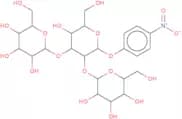
<p>4-Nitrophenyl 2,3-di-O-(b-D-glucopyranosyl)-b-D-glucopyranoside is a chromogenic substrate that can be used to detect the presence of β-glucuronidase in human and animal tissue. The compound is also a fluoroquinolone substrate for the detection of β-lactamase activity. 4NPBG is used in diagnostics as well as food testing, due to its ability to detect bacteria in both food and water samples. 4NPBG is a chemiluminescent substrate that emits light upon hydrolysis by β-glucuronidase or β-lactamase. The compound has been shown to be an excellent ligand for binding to protein A or protein G and can be used for immunoassays such as ELISA or Western blotting.</p>Pureza:Min. 95%Peso molecular:625.53 g/mol4-Nitrophenyl 2-acetamido-2-deoxy-4,6-O-benzylidene-b-D-glucopyranoside
CAS:<p>4-Nitrophenyl 2-acetamido-2-deoxy-4,6-O-benzylidene-b-D-glucopyranoside is a fluorescent substrate for beta amylase and other glycosidases. It has been used as a fluorogenic substrate for food testing and as a chromogenic substrate for environmental testing. 4NPB has also been used in diagnostic applications such as enzyme substrates, ligands, and chemiluminescent substrates. This product is of high purity and quality with a conjugate that can be used in biotechnology applications.</p>Pureza:Min. 95%Peso molecular:430.41 g/mol4-Nitrophenyl 2-acetamido-2-deoxy-4-O-[2-O-(a-L-fucopyranosyl)-b-D-galactopyranosyl]-b-D-glucopyranoside
CAS:<p>The 4-Nitrophenyl 2-acetamido-2-deoxy-4-O-[2-O-(a-L-fucopyranosyl)-b-D-galactopyranosyl]-b-D-glucopyranoside is a specialized pNP enzyme substrate designed to study fucosyl-galactose-dependent enzymes. This chromogenic substrate is valuable for researchers investigating glycosyltransferase activity, structure-function relationships of glycan-binding proteins, and regulation of cellular signaling pathways involving fucose modifications. Its high specificity and sensitivity ensure accurate measurements in diverse experimental setups, and its chromogenic detection system facilitates rapid and reliable analysis.</p>Pureza:Min. 95%Peso molecular:650.58 g/mol2-Nitrophenyl 6-O-DMT-b-D-galactopyranoside
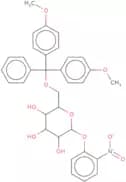
<p>N-Acetyl-2-nitrophenyl 6-O-DMT-b-D-galactopyranoside is a fluorogenic substrate that is used in enzyme and chromogenic assays, including the determination of aminoglycoside activity. This product has been shown to be suitable for detection of bacterial contamination in food products and environmental samples. N-Acetyl-2-nitrophenyl 6-O-DMT-b-D-galactopyranoside reacts with aminoglycosides at the O4 position, forming a fluorescent product that can be measured using a fluorometer.</p>Pureza:Min. 95%Peso molecular:603.62 g/mol5-Bromo-4-chloro-3-indoxyl sulfate p-toluidine salt
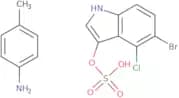
CAS:<p>5-Bromo-4-chloro-3-indoxyl sulfate p-toluidine salt is a staining agent used for the detection of glucose in urine and tissues. It is also an enzyme substrate that can be used to detect the presence of lipases, amylases, esterases, phosphatases, and proteases. This product has a CAS number of 6581-23-3 and comes in high quality.</p>Pureza:Min. 95%Peso molecular:433.71 g/mol2-Nitrophenyl b-D-glucuronide
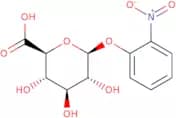
CAS:<p>2-Nitrophenyl-b-D-glucuronide is a chromogenic substrate used to detect the activity of beta-glucuronidase in various biological samples. Upon hydrolysis by the enzyme, the substrate releases 2-nitrophenol, which can be spectrophotometrically measured at 405 nm. The substrate is commonly used in clinical assays to evaluate liver and kidney function, as well as in drug metabolism studies. It is also used in environmental monitoring to assess the presence of microbial activity in soil and water samples. Overall, 2-Nitrophenyl-b-D-glucuronide is a widely used substrate with excellent sensitivity and specificity, making it a valuable tool in enzymology research and diagnostic testing.</p>Pureza:Min. 95%Cor e Forma:Off-white solid.Peso molecular:315.23 g/mol4-Nitrophenyl 2-acetamido-3-O-(3,4,6-tri-O-acetyl-2-deoxy-2-phthalimido-b-D-glucopyranosyl)-2-deoxy-a-D-galactopyranoside
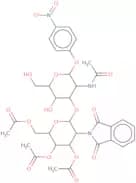
<p>4-Nitrophenyl 2-acetamido-3-O-(3,4,6-tri-O-acetyl-2-deoxy-2-phthalimido-b-D-glucopyranosyl)-2-deoxy -a -D -galactopyranoside is a Fluorogenic substrate that is used in the detection of beta glucuronidase activity. It can be used for food testing, staining, environmental testing and chromogenic substrate for diagnostic purposes. It has a CAS number of 184840–55–9 and is available in high purity and quality. 4NPPAG is an enzyme substrate that is used to measure the amount of beta glucuronidase activity in culture media by chemiluminescence or bioluminescence.</p>Pureza:Min. 95%Peso molecular:759.67 g/mol2-Chloro-4-nitrophenyl b-D-cellobioside
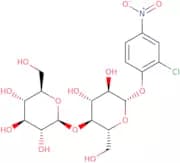
CAS:<p>2-Chloro-4-nitrophenyl b-D-cellobioside (CNPG) is a chromogenic enzyme substrate that is commonly used to detect and measure the activity of β-glucosidases. CNPG is cleaved by the enzyme into the chromogenic product, which can be detected spectrophotometrically. β-glucosidases are important enzymes in the breakdown of cellulose, and CNPG is a widely used substrate for the detection and quantification of these enzymes in various research studies.</p>Pureza:Min. 95%Cor e Forma:PowderPeso molecular:497.83 g/molTetrabutylphosphonium p-toluenesulfonate
CAS:<p>Tetrabutylphosphonium p-toluenesulfonate is a fluorogenic substrate that is used in the diagnosis of cytochrome P450 enzymes. It is a ligand that binds to metal ions, such as copper and zinc. This compound is also used for the preparation of bioluminescent substrates for use in diagnostics and research.</p>Fórmula:C16H36P•C7H7O3SPureza:Min. 95%Peso molecular:430.63 g/mol2-Nitrophenyl caprylate
CAS:<p>2-Nitrophenyl caprylate is a potent inhibitor of gram-negative bacteria. It has been shown to inhibit the enzymatic activity of certain bacterial enzymes, such as the modification of cellular fatty acids. 2-Nitrophenyl caprylate has also been shown to inhibit in vitro growth of various gram-negative bacteria, including E. coli and Salmonella enterica serovar Typhimurium, through detergent compositions and enzymatic reactions (e.g., aminopeptidases). 2-Nitrophenyl caprylate may be useful for the treatment of pancreatitis due to its inhibition of pancreatic secretions and inhibition of pancreatic lipase activity. Transposable sequences have been found in the 2-nitrophenyl caprylate gene cluster, which may be related to its regulatory properties.</p>Pureza:Min. 95%Cor e Forma:PowderPeso molecular:265.31 g/mol







![4-Nitrophenyl 2-acetamido-2-deoxy-4-O-[2-O-(a-L-fucopyranosyl)-b-D-galactopyranosyl]-b-D-glucopyra…](/_next/image/?url=https%3A%2Fstatic.cymitquimica.com%2Fproducts%2F3D%2Fthumb-webp%2FEN04931.webp&w=3840&q=75)