Outros
Foram encontrados 6270 produtos de "Outros"
Ordenar por
Pureza (%)
0
100
|
0
|
50
|
90
|
95
|
100
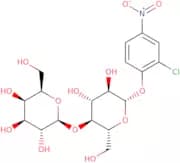
2-Chloro-4-nitrophenyl b-D-lactoside
CAS:<p>2-Chloro-4-nitrophenyl b-D-galactopyranoside is a chromogenic enzyme substrate used to study the activity of beta-lactoside. It produces a yellow color when cleaved by the enzyme, making it a useful tool in enzyme assays and screening experiments.</p>Pureza:Min. 95%Cor e Forma:PowderPeso molecular:497.83 g/mol5-Bromo-4-chloro-3-indoxyl nonanoate
CAS:<p>5-Bromo-4-chloro-3-indoxyl nonanoate (5BCNI) is a chromogenic substrate for the detection of alkaline phosphatase. It is soluble in most organic solvents and is stable at room temperature for up to 30 days. 5BCNI has been shown to be a high quality, sensitive and specific substrate for the detection of alkaline phosphatase in culture media, diagnostics, conjugates, environmental testing and chemiluminescence. It has also been used as an enzyme substrate in bioluminescence studies. The CAS number for 5BCNI is 133950-77-3.</p>Fórmula:C17H21BrClNO2Peso molecular:386.72 g/molAldol® 515 propionate, Biosynth Patent: EP 2427431 and US 8940909
CAS:<p>Aldol® 515 propionate is a chromogenic substrate that is used as a reagent in food testing, diagnostics, and environmental testing. It reacts with an enzyme to form a fluorescent product that can be detected with a spectrophotometer. The substrate has been shown to have high purity and high quality.</p>Fórmula:C26H24N2O3Pureza:Min. 95.0 Area-%Peso molecular:412.48 g/molTetrabutylphosphonium p-toluenesulfonate
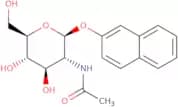
CAS:<p>Tetrabutylphosphonium p-toluenesulfonate is a fluorogenic substrate that is used in the diagnosis of cytochrome P450 enzymes. It is a ligand that binds to metal ions, such as copper and zinc. This compound is also used for the preparation of bioluminescent substrates for use in diagnostics and research.</p>Fórmula:C16H36P•C7H7O3SPureza:Min. 95%Peso molecular:430.63 g/mol2-Naphthyl 2-acetamido-2-deoxy-β-D-glucopyranoside
CAS:<p>2-Naphthyl 2-acetamido-2-deoxy-b-D-glucopyranoside is a chromogenic substrate used for staining and diagnostic purposes. It is a ligand that has been shown to bind to certain enzymes and can be used for the detection of those enzymes. This product is also a chemiluminescence substrate, which can be used in bioluminescent reactions. This product has been shown to have high purity and quality, as well as being a conjugate.</p>Fórmula:C18H21NO6Pureza:Min. 95%Peso molecular:347.36 g/molAldol® 484 acetate, Biosynth Patent: EP 2427431 and US 8940909
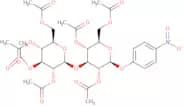
CAS:Produto Controlado<p>Aldol® 484 acetate is a chromogenic substrate for carboxylesterases yielding a red precipitate. In contrast to classical indoxyl substrates, Aldol substrates work not only under aerobic but also under anaerobic conditions</p>Fórmula:C22H16ClFN2O3Pureza:Min. 95.0 Area-%Peso molecular:410.83 g/mol4-Nitrophenyl b-D-cellobioside heptaacetate
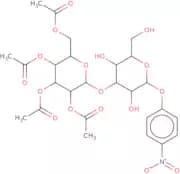
<p>4-Nitrophenyl b-D-cellobioside heptaacetate is a chromogenic substrate for enzymes that catalyze the hydrolysis of glycosidic bonds. This product is used as a diagnostic tool for identifying and characterizing glycosidases and other enzymes that degrade glycosidic bonds. 4-Nitrophenyl b-D-cellobioside heptaacetate is also used in culture media to measure the activity of cellulase enzymes by measuring the release of reducing sugars. The color change of this substrate can be detected at 405 nm, 490 nm, or 550 nm.</p>Pureza:Min. 95%Peso molecular:757.65 g/mol4-Nitrophenyl b-lacto-N-neotetraoside
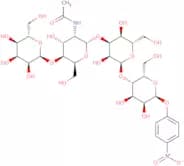
CAS:<p>4-Nitrophenyl b-lacto-N-neotetraoside is a potent antibiotic that inhibits bacterial growth by binding to the beta subunit of DNA gyrase. This drug has been shown to be effective against methicillin resistant Staphylococcus aureus (MRSA) and Clostridium perfringens, although is not active against acid-fast bacteria such as Mycobacterium tuberculosis or Mycobacterium avium complex. Gatifloxacin has shown anti-inflammatory properties, which may be due to its inhibition of prostaglandin synthesis.</p>Pureza:Min. 95%Peso molecular:828.72 g/mol4-Nitrophenyl 3-O-(2,3,4,6-tetra-O-acetyl-b-D-glucopyranosyl)-b-D-glucopyranoside
<p>4-Nitrophenyl 3-O-(2,3,4,6-tetra-O-acetyl-b-D-glucopyranosyl)-b-D-glucopyranoside is a chromogenic substrate that is used to test for the presence of an enzyme. It reacts with the enzyme to produce a light signal that can be detected by a spectrophotometer. The CAS number for this compound is 832476-41-8. This compound has been tested and found to be of high quality and purity. 4NP3OBG is also suitable for use in culture media, food testing, and as a fluorogenic substrate.</p>Pureza:Min. 95%Peso molecular:631.54 g/mol4-Nitrophenyl D-maltopentaoside
CAS:<p>Chromogenic substrate targeting amylase and maltase</p>Fórmula:C36H55NO28Pureza:Min. 95%Peso molecular:949.81 g/mol4-Nitrophenyl b-D-galactopyranoside hydrate
CAS:<p>4-Nitrophenyl b-D-galactopyranoside hydrate is a water-soluble pNP-based enzyme substrate ideal for quantifying b-galactosidase activity in a variety of sample types. This chromogenic substrate features a unique hydrate composition, which allows for enhanced solubility and stability when compared to standard pNP-galactosides. With its high sensitivity and robust performance, this substrate is widely used in biotechnology, biochemistry, and molecular biology fields, including the investigation of enzyme kinetics, characterization of glycoside hydrolase specificity, and assessment of gene expression levels.</p>Pureza:Min. 95%Peso molecular:319.27 g/molVerapamil
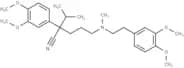
CAS:<p>Verapamil (CP-16533-1), an oral calcium channel blocker, inhibits P-gp and CYP3A4, used for hypertension, arrhythmias, and angina research.</p>Fórmula:C27H38N2O4Pureza:99.61% - 99.93%Cor e Forma:OilPeso molecular:454.64-Nitrophenyl 2-acetamido-2-deoxy-4,6-O-p-methoxybenzylidene-a-D-galactopyranoside
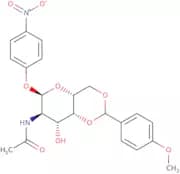
CAS:<p>4-Nitrophenyl 2-acetamido-2-deoxy-4,6-O-p-methoxybenzylidene-a-D-galactopyranoside is a chromogenic substrate designed for the detection and quantification of enzyme activity. This methoxybenzylidene-protected compound is specifically designed to be cleaved by enzymes, releasing a yellow 4-nitrophenol product that can be easily measured spectrophotometrically. This allows for accurate and sensitive analysis of enzyme kinetics, inhibition studies, and substrate specificity determination in various applications.</p>Pureza:Min. 95%Peso molecular:460.43 g/mol4-Nitrophenyl 2,3,4,6-tetra-O-acetyl-a-D-galactopyranoside
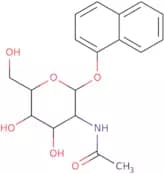
CAS:<p>4-Nitrophenyl 2,3,4,6-tetra-O-acetyl-a-D-galactopyranoside is a chemiluminescent substrate that is used as a fluorescence indicator for the detection of β-galactosidase activities. This substrate has been shown to be useful for the detection of β-galactosidase in various types of samples such as culture media, environmental testing and food testing. 4NPTAG can also be used to detect β-galactosidase activity using fluorogenic substrates or chromogenic substrates. The enzyme activity can be detected by measuring the change in absorbance at 410 nm and the increase in luminescence at 460 nm.</p>Fórmula:C20H23NO12Pureza:Min. 95%Cor e Forma:PowderPeso molecular:469.4 g/mol1-Naphthyl 2-acetamido-2-deoxy-b-D-glucopyranoside
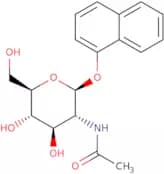
CAS:<p>1-Naphthyl 2-acetamido-2-deoxy-b-D-glucopyranoside is a chromogenic substrate commonly used to assay the activity of enzymes that cleave N-acetyl-beta-D-glucosaminide, such as beta-N-acetylglucosaminidase. Upon cleavage by the enzyme of interest, the substrate releases a yellow-colored 1-naphthylamine, which can be measured spectrophotometrically. This substrate is widely used in biomedical research and drug discovery for studying lysosomal storage disorders, bacterial infections, and neurological diseases.</p>Pureza:Min. 95%Peso molecular:347.36 g/molOstazin brilliant red H-3B hydroxyethylcellulose
<p>Ostazin brilliant red H-3B hydroxyethylcellulose is a chromogenic enzyme substrate that produces a bright red color upon reaction with specific enzymes. This substrate is particularly useful for the detection and visualization of enzyme activity in histochemical and cytochemical staining techniques. The vibrant red color produced by the reaction allows for easy observation and analysis of enzyme distribution and localization in cells and tissues. Ostazin brilliant red H-3B hydroxyethylcellulose is often used in combination with other substrates to study the presence and activity of multiple enzymes simultaneously, providing valuable insights into the complex interactions and functions of enzymes in biological systems.</p>Pureza:Min. 95%2-Methyl-4-nitrophenyl b-D-galactopyranoside
<p>2-Methyl-4-nitrophenyl b-D-galactopyranoside is a chemiluminescent substrate that is used in various applications. It is a ligand that binds to the enzyme beta-galactosidase and is used in diagnostics for detecting the presence of the enzyme. 2-Methyl-4-nitrophenyl b-D-galactopyranoside has been shown to be an appropriate substrate for chemiluminescence reactions, such as those used in diagnostic or research applications. The product also has been tested for potential toxicity and found not to be toxic at concentrations up to 100mg/mL. This product can be used in a variety of applications, including food testing, bacterial culture media, and environmental testing.</p>Pureza:Min. 95%Peso molecular:315.28 g/mol2-Chloro-4-nitrophenyl a-D-fucopyranoside
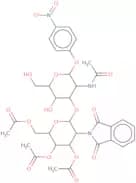
CAS:<p>2-Chloro-4-nitrophenyl a-D-fucopyranoside (CNPF) is a chromogenic enzyme substrate used primarily to detect fucosidase activity. CNPF is cleaved by the enzyme, which results in the release of a colored product that can be measured spectrophotometrically. Fucosidases are important enzymes that catalyze the hydrolysis of fucose-containing oligosaccharides, and CNPF is a commonly used substrate for the detection and quantification of these enzymes in various research studies.</p>Pureza:Min. 95%Peso molecular:319.69 g/mol4-Nitrophenyl 2-acetamido-3-O-(3,4,6-tri-O-acetyl-2-deoxy-2-phthalimido-b-D-glucopyranosyl)-2-deoxy-a-D-galactopyranoside
<p>4-Nitrophenyl 2-acetamido-3-O-(3,4,6-tri-O-acetyl-2-deoxy-2-phthalimido-b-D-glucopyranosyl)-2-deoxy -a -D -galactopyranoside is a Fluorogenic substrate that is used in the detection of beta glucuronidase activity. It can be used for food testing, staining, environmental testing and chromogenic substrate for diagnostic purposes. It has a CAS number of 184840–55–9 and is available in high purity and quality. 4NPPAG is an enzyme substrate that is used to measure the amount of beta glucuronidase activity in culture media by chemiluminescence or bioluminescence.</p>Pureza:Min. 95%Peso molecular:759.67 g/mol2,4-Dinitrophenyl b-D-cellobioside
CAS:<p>2,4-Dinitrophenyl b-D-cellobioside is a chemiluminescent substrate that is used to detect the activity of enzymes and other proteins. It can be conjugated with an antibody or other ligand for use in diagnostic purposes. 2,4-DNPBC is a pure compound with a high quality that does not contain any other impurities. Its CAS number is 157956-96-2.</p>Pureza:Min. 95%5-Bromo-4-chloro-3-indolyl b-D-galactopyranoside-6-sulphate
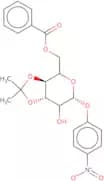
CAS:<p>5-Bromo-4-chloro-3-indolyl b-D-galactopyranoside 6-sulphate (BCIGS) is a chemiluminescent substrate that reacts with an enzyme to produce light. It has been used for the detection of various substances, including 5'-nucleotidase, 5'-adenosine monophosphate phosphohydrolases, and alkaline phosphatase. BCIGS can be used as a chromogenic substrate in the fluorometric assay of glucose oxidase and galactose oxidase. BCIGS is also used as a ligand in immunological reactions such as immunodiffusion, immunoelectrophoresis, and radioimmunoassay.</p>Fórmula:C14H15BrClNO9SPureza:Min. 95%Peso molecular:488.69 g/mol4-Nitrophenyl 6-O-benzoyl-3,4-O-isopropylidene-a-D-galactopyranoside
CAS:<p>4-Nitrophenyl 6-O-benzoyl-3,4-O-isopropylidene-a-D-galactopyranoside (4NBP) is a fluorogenic substrate for β-galactosidase. It has been used as an enzyme substrate in the detection of β-galactosidase activity. 4NBP is also used to detect the presence of galactose in culture media and as a chromogenic substrate in diagnostics.</p>Pureza:Min. 95%Peso molecular:445.42 g/mol4-Nitrophenyl 2-acetamido-2-deoxy-4,6-O-benzylidene-b-D-glucopyranoside
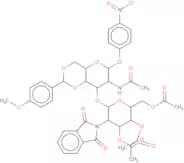
CAS:<p>4-Nitrophenyl 2-acetamido-2-deoxy-4,6-O-benzylidene-b-D-glucopyranoside is a fluorescent substrate for beta amylase and other glycosidases. It has been used as a fluorogenic substrate for food testing and as a chromogenic substrate for environmental testing. 4NPB has also been used in diagnostic applications such as enzyme substrates, ligands, and chemiluminescent substrates. This product is of high purity and quality with a conjugate that can be used in biotechnology applications.</p>Pureza:Min. 95%Peso molecular:430.41 g/mol4-Nitrophenyl 2-acetamido-3-O-(3,4,6-tri-O-acetyl-2-deoxy-2-phthalimido-b-D-glucopyranosyl)-2-deoxy-4,6-O-4-methoxybenzylidene-a-D-g alactopyranoside
<p>4-Nitrophenyl 2-acetamido-3-O-(3,4,6-tri-O-acetyl-2-deoxy-2-phthalimido-b-D-glucopyranosyl)-2-deoxy--4,6--O--4--methoxybenzylidene--a--D--galactopyranoside is a chemiluminescent substrate for the enzyme beta galactosidase. It reacts with this enzyme to form 4 nitrophenol and acetamide. 4 Nitrophenyl 2 acetamido 3 O (3,4,6 tri O acetyl 2 deoxy 2 phthalimido b D glucopyranosyl) 2 deoxy 4 6 O 4 methoxybenzylidene a D galactopyranoside is used as a chromogenic substrate in diagnostics and as an environmental testing agent. It can be used as an imaging</p>Pureza:Min. 95%Peso molecular:877.8 g/mol5-Bromo-6-chloro-3-indoxyl nonanoate
CAS:<p>5-Bromo-6-chloro-3-indoxyl nonanoate is a chemical compound that is used in the detection of bioluminescence. It is a substrate for enzymes, such as luciferase, and can be used to measure the amount of light emitted during the reaction. The CAS number for this molecule is 682802-80-8.</p>Pureza:Min. 95%Peso molecular:386.71 g/molAldol® 470 L-pyroglutamic acid amide, Biosynth Patent: EP 2427431 and US 8940909
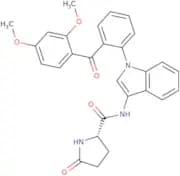
CAS:Produto Controlado<p>Aldol® 470 L-pyroglutamic acid amide is a chromogenic and fluorogenic enzyme substrate used for detection of pyrrolidonyl peptidase (PYRase) activity. The colorless enzyme substrate is cleaved by PYRase-producing bacteria grown in liquid or solid media, yielding orange color. In addition, green fluorescence is generated when a suitable matrix is present, such as, the surface of cellulose acetate filters, polypropylene tubes or microplates, and polyethylene vials. Aldol® 470 L-pyroglutamic acid amide is suitable for use under aerobic and anaerobic conditions.</p>Fórmula:C28H25N3O5Pureza:Min. 95.0 Area-%Peso molecular:483.52 g/mol4-Nitrophenyl 4,6-O-benzylidene-b-D-glucopyranoside
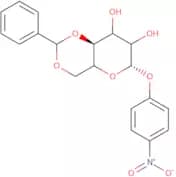
CAS:<p>4-Nitrophenyl 4,6-O-benzylidene-b-D-glucopyranoside is a fluorescent compound that is used in diagnostics and research. The compound is an enzyme substrate, a ligand for metal ions, and a chromogenic substrate. It can be used to test cultures of bacteria in culture media, as well as for food testing and environmental testing. 4-Nitrophenyl 4,6-O-benzylidene-b-D-glucopyranoside has high purity and quality due to its high fluorescence intensity. This product has been shown to be highly stable in various conditions and may be used in conjugates with other compounds.</p>Pureza:Min. 95%Peso molecular:389.36 g/mol3-Nitrophenyl 2-acetamido-2-deoxy-b-D-glucopyranoside
CAS:<p>3-Nitrophenyl 2-acetamido-2-deoxy-b-D-glucopyranoside is a chemiluminescent substrate that is used for the detection of glycosidases. It has been shown to be a good ligand for the study of nucleic acid hybridization, and it can also be used in enzyme assays. 3NPPAG is available in high purity and high quality. This product has been tested for use in culture media, environmental testing, bioluminescence, staining, fluorogenic substrate, CAS No. 61894-63-1, diagnostics, chromogenic substrate, enzyme substrate, food testing and conjugate applications.</p>Pureza:Min. 95%Aldol® 496 acetate, Biosynth Patent: EP 2427431 and US 8940909
CAS:<p>Aldol 496 acetate is a chromogenic substrate for the enzyme Aldolase. It is also used as a ligand to detect the presence of Aldolase in biological fluids and tissues. This product is designed for Food testing, Diagnostics, Chromogenic substrate, Staining, Enzyme substrate, Bioluminescence, Fluorogenic substrate, Chemiluminescence, and Culture media. Aldol 496 acetate is an organic chemical with high purity and high quality.</p>Fórmula:C27H24N2O4Pureza:Min. 95.0 Area-%Peso molecular:440.49 g/mol4-Nitrophenyl 2-O-(2,3,4,6-tri-O-acetyl-a-D-mannopyranosyl)-4,6-O-benzylidene-a-D-mannopyranoside
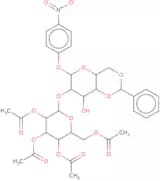
<p>4-Nitrophenyl 2-O-(2,3,4,6-tri-O-acetyl-a-D-mannopyranosyl)-4,6-O-benzylidene-a-D-mannopyranoside is a fluorogenic substrate that is used for the detection of alpha amylase activity in food testing. It is also used as a chromogenic substrate for the detection of beta amylase activity. 4NP2ODM is a conjugate that can be used for the detection of alpha or beta amylases in environmental testing. This compound has high purity and quality and CAS No. 90105037.</p>Pureza:Min. 95%Peso molecular:719.64 g/mol4-Nitrophenyl b-D-cellobioside heptacetate
CAS:<p>4-Nitrophenyl b-D-cellobioside heptacetate is a fluorogenic substrate that is used in food testing and environmental testing. The product is an enzyme substrate that can be used as a conjugate to produce chemiluminescence or bioluminescence. 4-Nitrophenyl b-D-cellobioside heptacetate has CAS number 69948-03-4 and is of high purity and quality. It has been shown to have good fluorescence properties, which makes it ideal for use in fluorescence microscopy applications.</p>Pureza:Min. 95%Peso molecular:757.65 g/mol4-Nitrophenyl 6'-deoxy-6'-(2-pyridylamino)-a-D-penta-(1-4)-glucopyranoside
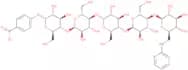
CAS:<p>4-Nitrophenyl 6'-deoxy-6'-(2-pyridylamino)-a-D-penta-(1-4)-glucopyranoside is a fluorescent substrate for the enzyme beta glucosidase. It is a chemiluminescent reagent that can be used to measure beta glucosidase activity. The substrate is an excellent high quality chemical and has been tested for environmental safety, heavy metal content and staining. 4-Nitrophenyl 6'-deoxy-6'-(2-pyridylamino)-a-D-penta-(1-4)-glucopyranoside is a chromogenic substrate that can be used in diagnostic testing, such as bioluminescence or fluorogenic assay. This product can also be used as a culture media additive or food testing agent.</p>Pureza:Min. 95%Peso molecular:1,025.91 g/mol4-Nitrophenyl 2-acetamido-3-O-(2,3,4,6-tetra-O-acetyl-b-D-galactopyranosyl)-2-deoxy-a-D-galactopyranoside
CAS:<p>4-Nitrophenyl 2-acetamido-3-O-(2,3,4,6-tetra-O-acetyl-b-D-galactopyranosyl)-2-deoxy-a-D-galactopyranoside is a chromogenic substrate designed for the detection and quantification of enzyme activity. This tetra-acetylated compound is specifically designed to be cleaved by enzymes, releasing a yellow 4-nitrophenol product that can be easily measured spectrophotometrically, allowing for accurate and sensitive analysis of enzyme kinetics and inhibition studies.</p>Pureza:Min. 95%Peso molecular:672.59 g/mol4-Nitrophenyl 2-O-(2,3,4,6-tetra-O-acetyl-b-D-glucopyranosyl)-b-D-glucopyranoside
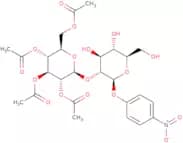
CAS:<p>4-Nitrophenyl 2-O-(2,3,4,6-tetra-O-acetyl-b-D-glucopyranosyl)-b-D-glucopyranoside is a state-of-the-art chromogenic substrate designed for rapid and sensitive enzyme activity detection. As a versatile pNP substrate, it produces a noticeable color change upon enzyme-catalyzed hydrolysis, facilitating easy monitoring and quantification of enzyme levels in research and diagnostic applications. The substrate's acetylated glucose moiety ensures specificity and stability, allowing for precise and reliable results across a range of experimental conditions.</p>Pureza:Min. 95%Peso molecular:631.54 g/mol2-Nitrophenyl 2,3-di-O-acetyl-b-D-xylopyranoside
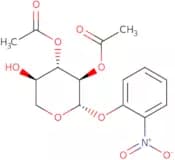
CAS:<p>2-Nitrophenyl 2,3-di-O-acetyl-b-D-xylopyranoside is a chromogenic substrate used to assay the activity of xylosidase enzymes. It is hydrolyzed by xylosidase to yield a yellow-colored product, 2-nitrophenol, which absorbs light at 405 and 410 nm. This substrate is used in research to study the function of xylosidase enzymes and their role in various biological processes. It is also used in diagnostic tests for the detection of xylosidase activity in different microorganisms, including bacteria and fungi.</p>Pureza:Min. 95%Peso molecular:355.3 g/mol4-Nitrophenyl 2-acetamido-3-azido-2,3-dideoxy-b-D-galactopyranoside
<p>4-Nitrophenyl 2-acetamido-3-azido-2,3-dideoxy-b-D-galactopyranoside is a fluorogenic substrate for beta-galactosidase. It has been used in the detection of beta-galactosidase activity in culture media, and for the detection of beta-galactosidase activity in environmental samples. 4NPAG can be conjugated to a variety of molecules, including antibodies, proteins, nucleotides, and oligonucleotides. 4NPAG can be used as an enzyme substrate for both chromogenic and fluoroquinolone substrates.</p>Pureza:Min. 95%2-Nitrophenyl 2-acetamido-3,4,6-tri-O-acetyl-2-deoxy-a-D-glucopyranoside
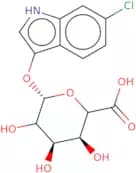
CAS:<p>2-Nitrophenyl 2-acetamido-3,4,6-tri-O-acetyl-2-deoxy-a-D-glucopyranoside is a chromogenic substrate commonly used in enzyme assays for the detection and quantification of enzyme activity. It is a colorless substrate that is enzymatically converted into a yellowish product, the intensity of which is directly proportional to the enzyme activity present in the sample.</p>Pureza:Min. 95%Peso molecular:468.41 g/mol6-Chloro-1H-indol-3-yl b-D-glucuronide
CAS:<p>6-Chloro-1H-indol-3-yl b-D-glucuronide is a chemiluminescence substrate that can be used in immunoassays and other biochemical analyses. 6CIG is a highly purified, high quality product with a CAS No. 138182-19-1. This product has been tested for bacterial contamination and found to be free of detectable levels of mycoplasma, yeast, mold, or other microbial agents. It has also been tested for its ability to support the growth of various types of cells and found to be suitable for cell culture media. This chemical has been shown to produce an intense blue chemiluminescent reaction when reacted with horseradish peroxidase enzyme and hydrogen peroxide.</p>Pureza:Min. 95%Peso molecular:343.72 g/molAldol® 484 β-D-galactopyranoside, Biosynth Patent: EP 2427431 and US 8940909
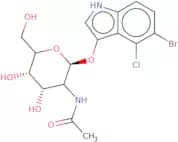
CAS:<p>Aldol® 484 beta-D-galactopyranoside is a chromogenic enzyme substrate for beta-galactosidase activity. The colorless product is cleaved by lactose-utilizing bacteria in liquid or solid media, yielding intense red color. Aldol® 484 beta-D-galacto-pyranoside can also be used in beta-gal reporter gene assays or for identification of beta-gal positive transformants on agar. Aldol® 484 beta-D-galactopyranoside can be used under aerobic and anaerobic conditions.</p>Fórmula:C26H24ClFN2O7Pureza:Min. 95.0 Area-%Peso molecular:530.93 g/mol5-Bromo-4-chloro-3-indolyl 2-acetamido-2-deoxy-a-D-glucopyranoside
<p>5-Bromo-4-chloro-3-indolyl 2-acetamido-2-deoxy-a-D-glucopyranoside is a fluorogenic substrate that reacts with horseradish peroxidase to produce light. It is used in the detection of β-galactosidase activity in food testing, staining, and environmental testing. This product is also used as a chromogenic substrate for the determination of β-galactosidase activity in immunological assays. 5BICAPG is a conjugate that can be used as a diagnostic ligand for the detection of β -galactosidase enzyme activity. This product has been shown to react with horseradish peroxidase and produce chemiluminescence or bioluminescence when exposed to oxygen. 5BICAPG has also been found to be an excellent enzyme substrate for various enzymes including alkaline phosphatase</p>Fórmula:C16H18BrClN2O6Pureza:Min. 95%Peso molecular:449.68 g/mol4-Nitrophenyl 2,4,6-tri-O-acetyl-3-O-(2,3,4,6-tetra-O-acetyl-b-D-glucopyranosyl)-b-D-glucopyranoside
CAS:<p>4-Nitrophenyl 2,4,6-tri-O-acetyl-3-O-(2,3,4,6-tetra-O-acetyl-β-D-glucopyranosyl)-β-D-glucopyranoside is an advanced bifunctional chromogenic pNP substrate specifically tailored for the simultaneous detection and quantification of multiple glycosidase enzymes. This dual-action substrate undergoes cleavage by two separate enzymatic reactions, which increases the range and sensitivity of detection. The resulting 4-Nitrophenol release can be easily measured spectrophotometrically, providing rapid and reliable enzyme analysis for advanced enzymology studies, enabling new discoveries in biochemistry and biotechnology.</p>Pureza:Min. 95%Peso molecular:757.65 g/mol1-Naphthyl 2-acetamido-2-deoxy-b-D-galactopyranoside
CAS:<p>1-Naphthyl 2-acetamido-2-deoxy-b-D-galactopyranoside (1NADG) is a fluorogenic substrate that reacts with an enzyme to produce light. It is used in diagnostic tests for the detection of bacteria, and can be used as a chromogenic substrate in biochemical assays. 1NADG has also been shown to be useful in staining bacterial cells grown on agar plates. Additionally, this compound is used as a bioluminescent probe for detecting bacteria with luciferase activity.<br>br>br></p>Pureza:Min. 95%Peso molecular:347.4 g/mol2,4-Dinitrophenyl 2-deoxy-2-fluoro-b-xylobioside
CAS:<p>2,4-Dinitrophenyl 2-deoxy-2-fluoro-beta-xylobioside, also known as DNFPX, is a substrate to study the activity of glycosidases. It is a derivative of xylobiose, which is a disaccharide composed of two xylose units. The 2-deoxy-2-fluoro modification on one of the xylose units makes the compound resistant to further hydrolysis by the enzyme, allowing it to be used as a reporter of enzyme activity. The 2,4-Dinitrophenyl group is used as a chromogenic group that enables rapid detection and measurement of the enzyme activity that can be quantitatively measured by monitoring the appearance of the yellow 2,4-dinitrophenyl group when cleavage of the glycosidic bond.</p>Pureza:Min. 95%Peso molecular:450.33 g/mol2-Bromo-4-nitrophenyl b-D-galactopyranoside
<p>2-Bromo-4-nitrophenyl b-D-galactopyranoside is a chemiluminescent substrate that is used for the detection of β-galactosidase activity in the biochemical reaction. It has been shown to be an excellent ligand for metal ions and can be used as a reagent in the determination of metal ions in biological systems. This product is manufactured with high purity and quality, which ensures its suitability for use in culture media, environmental testing, and diagnostics. 2-Bromo-4-nitrophenyl b-D-galactopyranoside has been tested as a fluorogenic substrate for β-galactosidase. It has also been used as a chromogenic substrate for β-galactosidase and an enzyme substrate for β-galactosidase. This product can be conjugated with other molecules such as biotin to enable rapid analysis of proteins or</p>Fórmula:C12H14BrNO8Pureza:Min. 95%Peso molecular:380.15 g/mol4-Nitrophenyl 2,3,4,6-tetra-O-acetyl-a-D-glucopyranoside
CAS:<p>4-Nitrophenyl 2,3,4,6-tetra-O-acetyl-a-D-glucopyranoside is a useful substrate for enzymatic assays. This high-sensitivity chromogenic pNP substrate offers enhanced selectivity and increased detection ability, allowing for a broad range of applications in the field of glycosidase research. Featuring rapid colorimetric readouts with easily detectable endpoint determination, this substrate delivers clear and accurate results every time.</p>Pureza:Min. 95%Peso molecular:469.4 g/molAldol® 515 N-glutaryl-L-phenylalanine amide potassium salt, Biosynth Patent: EP 2427431 and US 8940909
CAS:<p>Aldol® 515 N-glutaryl-L-phenylalanine amide is a chromogenic and fluorogenic enzyme substrate used for detection of L-glutamate-phenylalanine (GluPhe)-specific peptidase activity. The colorless enzyme substrate is cleaved the GluPhe-specific peptidase, yielding development of orange-red coloration. In addition, red fluorescence is generated when Aldol® 355 fluorescence enhancer or a suitable matrix is present. Aldol® 515 N-glutaryl-L-phenylalanine amide can be used in enzyme assays and live bacterial cultures. Aldol® 515 N-glutaryl-L-phenylalanine amide is suitable for use in liquid and solid media, under aerobic as well as anaerobic conditions.</p>Fórmula:C37H35KN4O5Pureza:Min. 95.0 Area-%Peso molecular:654.80 g/mol4-Nitrophenyl 2,3,4-tri-O-acetyl-b-D-glucuronide methyl ester
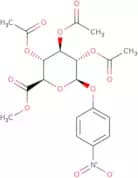
CAS:<p>4-Nitrophenyl 2,3,4-tri-O-acetyl-b-D-glucuronide methyl ester is a fluorescent substrate for the beta-glucuronidase enzyme. It can be used to detect the presence of this enzyme in bacteria and other microorganisms by means of fluorometric or colorimetric assays. It has been shown to have an excellent stability in a variety of culture media and food testing applications. This product is available in high purity and quality, with a CAS number of 18472-49-6.</p>Pureza:Min. 95%Peso molecular:455.37 g/mol4-Nitrophenyl 2-acetamido-3-O-(2-acetamido-3,4,6-tri-O-acetyl-b-D-glucopyranosyl)-4,6-di-O-acetyl-2-deoxy-a-D-galactopyranoside
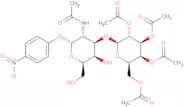
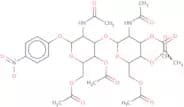
<p>4-Nitrophenyl 2-acetamido-3-O-(2-acetamido-3,4,6-tri-O-acetyl-b-D-glucopyranosyl)-4,6-di-O-acetyl-2deoxy--aDgalactopyranoside is a substrate for enzymes such as beta galactosidase and alpha amylase. It can be used for the detection of these enzymes in biological samples, including culture media and body fluids. 4NPAG has also been used as a chromogenic substrate to measure the activity of NADH oxidase in neutrophils. 4NPAG is fluorescent in aqueous solution and can be used to detect bioluminescence reactions.</p>Pureza:Min. 95%Peso molecular:755.68 g/molOctyl 4-nitrophenyl hexyl phosphonate
CAS:<p>Octyl 4-nitrophenyl hexyl phosphonate is a lipase suicide inhibitor that is a chromogenic substrate for lipases which upon enzymatic action, binds irreversibly to the lipase and inactivates it. The substrate can be used for the determination of active sites in lipases, especially in lipases preferring hydrophobic leaving groups.</p>Pureza:Min. 95%Peso molecular:399.464-Nitrophenyl b-D-cellohexaoside
CAS:<p>4-Nitrophenyl b-D-cellohexaoside is a substrate for many enzymes and can be used to detect the presence of these enzymes in biological samples. It can also be used to detect the presence of bacteria, fungi, parasites, and viruses. 4-Nitrophenyl b-D-cellohexaoside is an excellent substrate for enzyme reactions that produce a chromogenic or fluorogenic product. This product is often conjugated with other compounds such as antibodies or antigens to form an immunoassay. 4-Nitrophenyl b-D-cellohexaoside is made from a high purity chemical by a process called nitration with sodium nitrate and sulfuric acid.</p>Pureza:Min. 95%Peso molecular:1,111.95 g/mol