Outros
Foram encontrados 6300 produtos de "Outros"
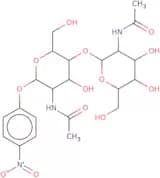
4-Nitrophenyl-N-acetyl-beta-D-glucosaminide
CAS:Chromogenic β-glucosaminidase substrate yielding a yellow solution upon cleavage, used particularly in yeasts and molds.Fórmula:C14H18N2O8Pureza:Min. 99.0 Area-%Peso molecular:342.31 g/molAldol® 518 alpha-D-galactopyranoside, Biosynth Patent: EP 2427431 and US 8940909
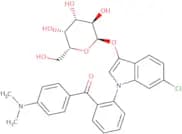
CAS:Aldol® 518 alpha-D-galactopyranoside is a chromogenic and fluorogenic enzyme substrate used for detection of alpha-galactosidase activity. The enzyme substrate is cleaved by alpha-galactosidase positive bacteria and yeasts in liquid or solid media, yielding red color and red fluorescence signal. Aldol® 518 alpha-D-galactopyranoside can also be used to detect alpha-galactosidase (encoded by the Mel1 gene) in yeast gene reporter assays or for identification of alpha-gal positive transformants on agar plates. Aldol® 518 alpha-D-galactopyranoside can be used under aerobic and anaerobic conditions.Fórmula:C29H29ClN2O7Pureza:Min. 95.0 Area-%Peso molecular:553.01 g/mol2-Nitrophenyl-1-thio-β-D-galactopyranoside
CAS:2-Nitrophenyl-1-thio-beta-D-galactopyranoside is a nitroaryl compound that can be synthesized from beta-D-galactopyranosides and nitric acid. It has a molecular conformation that is stabilized by hydrogen bonds, which allows it to form supramolecular assemblies with other molecules. The nitro group in this molecule is responsible for the formation of the nitro group in 1,2,4,5,-tetranitrobenzene.
Fórmula:C12H15NO7SPeso molecular:317.32 g/molRef: 3D-N-5100
1gA consultar5gA consultar10gA consultar500mgA consultar2500mgA consultar-Unit-ggA consultar2-Naphthyl b-D-galactopyranoside
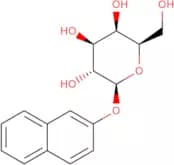
CAS:2-Naphthyl beta-D-galactopyranoside is a glycoside that is found in the flowers of the plant Eschscholzia californica. It is used as a localizer for bacterial strains and can be hydrolyzed by enzymes to release naphthalene. 2-Naphthyl beta-D-galactopyranoside has been shown to inhibit the growth of corynebacterium and diazonium salt, which may be due to its ability to bind to DNA and disrupt protein synthesis. The potential use of this molecule is for its insolubility, which prevents it from being absorbed by skin cells.
Fórmula:C16H18O6Pureza:Min. 99 Area-%Cor e Forma:PowderPeso molecular:306.31 g/mol4-Nitrophenyl-beta-D-lactopyranoside
CAS:Chromogenic substrate for cellobiohydrolase and endoglucanase.Fórmula:C18H25NO13Pureza:Min. 99.0 Area-%Peso molecular:463.40 g/mol6-Chloro-3-indoxyl nonanoate
CAS:Chromogenic substrate for esterase with C9 activity yielding a salmon colored precipitate upon cleavage.
Fórmula:C17H22ClNO2Pureza:Min. 98 Area-%Peso molecular:307.82 g/molNaphthol AS-BI-beta-D-glucuronic acid
CAS:Naphthol AS-BI-beta-D-glucuronic acid is a β-glucuronidase substrate. The substrate is used in combination with stabilized diazonium salts such as Fast Red Violet LB salt (5-chloro-4-benzamido-2-methylbenzenediazonium chloride). Free Naphthol AS and Fast Red Violet undergo a chemical reaction to yield intensely colored azo-dyes.Fórmula:C24H22BrNO9Pureza:Min. 98 Area-%Peso molecular:548.35 g/mol5-Bromo-6-chloro-3-indoxylphosphat, disodium salt trihydrate
5-Bromo-6-chloro-3-indoxylphosphate, disodium salt trihydrate is a bioluminescent substrate that can be used in a variety of diagnostic applications. This compound reacts with luciferase to yield light and can serve as an indicator for various enzymes and chemical reactions. 5-Bromo-6-chloro-3-indoxylphosphate, disodium salt trihydrate has been shown to be compatible with both culture media and food testing.Pureza:Min. 95%2-Nitrophenyl-beta-D-cellobioside
CAS:Chromogenic substrate for β-D-Cellobiosidase yielding a yellow solution upon cleavage.
Fórmula:C18H25NO13Pureza:Min. 98.0 Area-%Peso molecular:463.4 g/mol6-Chloro-3-indoxyl-alpha-D-galactopyranoside
CAS:Chromogenic substrate for α-galactosidase yielding a salmon-colored precipitate.Fórmula:C14H16ClNO6Peso molecular:329.74 g/mol2-Nitrophenyl b-D-arabinopyranoside
2-Nitrophenyl b-D-arabinopyranoside is a chemical compound that is used in the detection of ATP by chemiluminescence. It acts as a substrate for enzymes such as luciferase and catalase, which catalyze the oxidation of 2-nitrophenyl b-D-arabinopyranoside to phenol and carbon dioxide with the release of light. This reaction can be used in diagnostic applications such as detecting bacteria in culture media or diagnosing food spoilage. 2-Nitrophenyl b-D-arabinopyranoside can also be used as a conjugate to detect proteins or nucleic acids by fluorescence spectroscopy. The CAS number for this compound is 107772-06-1.
Pureza:Min. 95%Peso molecular:271.22 g/mol6-Bromo-2-naphthyl-alpha-D-galactopyranoside
CAS:6-Bromo-2-naphthyl-alpha-D-galactopyranoside is a bioluminescent substrate for the enzyme luciferase that has been shown to be useful in detection of phenazines, antibiotics and other compounds in environmental testing. 6-Bromo-2-naphthyl-alpha-D-galactopyranoside can also be used for measurements of total microbial counts and for the measurement of the activity of enzymes such as beta galactosidase. It is also a ligand for the peroxidase enzyme, which makes it useful in staining techniques. 6BARG can be used as a fluorogenic substrate or as an indicator in chromogenic substrates. It is an important reagent for chemiluminescence and can also be used to measure the concentration of various substances.Fórmula:C16H17BrO6Pureza:Min. 98 Area-%Peso molecular:385.22 g/mol4-Nitrophenyl 2-acetamido-4-O-(2-acetamido-2-deoxy-b-D-glucopyranosyl)-2-deoxy-a-D-galactopyranoside
4-Nitrophenyl 2-acetamido-4-O-(2-acetamido-2-deoxy-b-D-glucopyranosyl)-2-deoxy-a-D-galactopyranoside is an enzyme substrate that is used in the detection of phenylalanine, tyrosine, and tryptophan. It is also used for environmental testing, bioluminescence, culture media, chemiluminescence, fluorogenic substrate, food testing, diagnostics and other applications.Pureza:Min. 95%Cor e Forma:Off-White PowderPeso molecular:545.49 g/mol4-Nitrophenyl N,N',N''-triacetyl-b-D-chitotriose
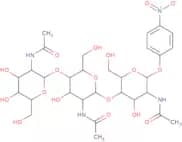
CAS:Substrate for determining hydrolytic activity of chitinasePureza:Min. 95%Cor e Forma:White PowderPeso molecular:748.69 g/mol4-Nitrophenyl α-D-glucuronide
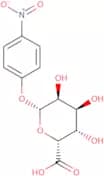
CAS:4-Nitrophenyl alpha-D-glucuronide is a chromogenic substrate widely used for detecting and quantifying the activity of alpha glucuronidase enzyme. Upon cleavage by the enzyme, it releases the yellow-colored 4-nitrophenol, whose absorbance can be monitored spectrophotometrically. This substrate is routinely employed in biochemistry and molecular biology applications, such as enzyme assays, enzyme kinetics studies, and characterization of recombinant enzymes. As a non-toxic and easy-to-use reagent, 4-Nitrophenyl alpha-D-glucuronide provides a convenient and sensitive method for studying alpha-glucuronidase activity in various biological samples, including cell extracts, tissue homogenates, and purified enzyme preparations.
Fórmula:C12H13NO9Pureza:Min. 97 Area-%Cor e Forma:Off-White PowderPeso molecular:315.23 g/molAldol® 484 alpha-D-glucopyranoside, Biosynth Patent: EP 2427431 and US 8940909
CAS:Aldol® 484 alpha-D-glucopyranoside is a chromogenic and fluorogenic enzyme substrate for alpha-glucosidase activity (EC 3.2.1.20, alpha-1,4-glucosidase, also known as maltase). The colorless enzyme substrate is cleaved by bacteria producing this enzyme in liquid or solid media, yielding orange color. Green fluorescence is also generated if a suitable matrix is present such as: cellulose acetate filters, polypropylene tubes or microplates and polyethylene vials. Aldol® 484 alpha-D-glucopyranoside can be used under aerobic and anaerobic conditions.
Fórmula:C26H24ClFN2O7Pureza:Min. 95%Cor e Forma:PowderPeso molecular:530.93 g/mol5-Bromo-4-chloro-3-indoxyl oleate
CAS:5-Bromo-4-chloro-3-indoxyl oleate is a chromogenic substrate used to detect the specific enzymatic activity of lipase. After cleavage, 5-bromo-4-chloro-indoxyl is released, resulting in a blue to blue-green color change in bacterial colonies or media. 5-Bromo-4-chloro-3-indoxyl oleate is used in lipid metabolism disorder screening.Fórmula:C26H37BrClNO2Pureza:Min. 95%Cor e Forma:PowderPeso molecular:510.93 g/molAldol® 470 phosphate, disodium salt, Biosynth Patent: EP 2427431 and US 8940909
CAS:Aldol 470 phosphate is a chromogenic substrate for phosphatases yielding a yellow precipitate. Furthermore it shows some fluorescence (excitationat 320 nm to 490 nm). In contrast to classical indoxyl substrates, Aldolsubstrates work not only under aerobic but also under anaerobic conditions.Fórmula:C23H18NNa2O7PPureza:Min. 95.0 Area-%Peso molecular:497.34 g/mol5-Bromo-3-indolyl phosphate disodium salt
CAS:5-Bromo-3-indolyl phosphate disodium salt is a chemiluminescent substrate that is used for the detection of bacterial activity. It reacts with oxygen to produce light, which can be measured using a luminometer. It is also used as a chromogenic substrate for detection of bacterial activity in culture media. The enzyme reaction produces an intense blue fluorescence and is used for diagnostic purposes in food testing and medical diagnostics. 5-Bromo-3-indolyl phosphate disodium salt has been shown to be effective against many bacteria and fungi, including Staphylococcus aureus, Streptococcus pyogenes, Escherichia coli, Pseudomonas aeruginosa, Candida albicans and Aspergillus niger. This product is chemically stable at room temperature but should be stored at 4°C or below.
Fórmula:C8H5BrNO4PNa2Pureza:Min. 95%Cor e Forma:PowderPeso molecular:335.99 g/mol6-Chloro-3-indoxyl phosphate, p-toluidine salt
CAS:A substrate for visualising alkaline phosphatase activity. Produces a red colored insoluble end product that is detected visually, when used together with nitroblue tetrazolium. The substrate system is versatile and functions in a variety of applications, including Northern, Southern, and Western blotting, in situ hybridization, ELISAs and immunohistochemistry. DMF soluble.Fórmula:C15H16ClN2O4PPureza:Min. 98.0 Area-%Peso molecular:354.73 g/molBCM® Histamine-producing bacteria Broth
Growth medium for the detection of histamine-producing bacteria in food and water samples. The medium contains an indicator that turns orange/red (absorbance at 555 nm) due to metabolites released by histidine decarboxylase. The BCM® Histamine-producing bacteria Broth contains tryptone (FT09555) and yeast extract, together with the chromogenic agent. High-level histamine-producing bacteria yield orange to red coloration in less than 2 days and even after 24 hours, while cultures of other bacteria remain yellow.Pureza:Min. 95%4-Nitrophenyl b-D-arabinopyranoside
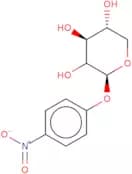
CAS:Chromogenic substrate targeting beta-L-arabinofuranosidasePureza:Min. 95%Peso molecular:271.22 g/mol6-Chloro-3-indoxyl-beta-D-galactopyranoside, plant origin
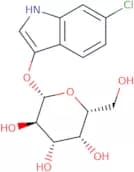
CAS:6-Chloro-3-indoxyl-beta-D-galactopyranoside is a chromogenic substrate for beta-galactosidase that yields a salmon or rose-coloured precipitate and hence is also known as Salmon-Gal. It can be used in conjunction with isopropyl-beta-D-thiogalactopyranoside (IPTG) as an alternative to the chromogenic substrate 5-bromo-4-chloro-3-indolyl beta-D-galactopyranoside (X-Gal) for detection of beta-galactosidase activity in bacterial colonies in colorimetric assays. Where beta-galactosidase expressed from a reporter gene in molecular biology experiments, recombinant colonies on growth plates are salmon-coloured while non-recombinants appear as white. Use of nitroblue tetrazolium salt (NBT) with Salmon-Gal may provide faster results, yielding a clear, purple precipitate, than for Salmon-Gal alone. In conjunction with 5-bromo-4-chloro-3-indolyl-beta-D-glucoside (X-Glc), Salmon-Gal is useful for simultaneous detection of GUS and Lac activities in the same medium.Fórmula:C14H16ClNO6Pureza:Min. 98.0 Area-%Peso molecular:329.74 g/mol4-Nitrophenyl b-D-thioglucopyranoside
CAS:4-Nitrophenyl b-D-thioglucopyranoside is a highly sensitive chromogenic substrate designed for the colorimetric detection and quantification of thioglucosidase enzymes. Upon enzymatic cleavage, it releases a highly absorbing 4-nitrophenyl moiety, generating a yellow color that can be readily measured spectrophotometrically. This substrate is widely utilized in the study of enzyme kinetics, substrate specificity, and inhibitor screening for thioglucosidases involved in various metabolic pathways and biological processes.Fórmula:C12H15NO7SPureza:Min. 95%Cor e Forma:White PowderPeso molecular:317.32 g/mol4-Nitrophenyl b-L-arabinofuranoside
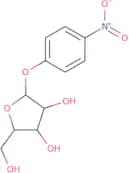
CAS:Chromogenic substrate targeting alpha-L-arabinofuranosidase
Pureza:Min. 95%Cor e Forma:White/Off-White SolidPeso molecular:271.22 g/molOstazin brilliant red H-3B starch
Ostazin Brilliant Red H-3B is a water soluble, non-toxic, and non-hazardous substrate for enzymes that catalyze reactions involving the cleavage of β-D-glucosides. It is used as a chromogenic or fluorogenic substrate in diagnostic tests. Ostazin Brilliant Red H-3B can also be used in bioluminescence reaction with luciferase to measure ATP levels in living cells.Pureza:Min. 95%5-Bromo-4-chloro-3-indoxyl-beta-D-glucopyranoside
CAS:Chromogenic substrate for beta-D-glucosidase, yielding a blue precipitate and contained in a chromogenic culture media for the detection of Enterococci, Streptococci, Klebsiella species, Enterobacter species and Listeria species. It is an indolyl carbohydrate that is the beta-D-glucoside of 3-hydroxy-1H-indole, in which the indole moiety is substituted at positions 4 and 5 by chlorine and bromine, respectively. It is used to test for the presence of the enzyme, beta-glucosidase, which cleaves the glycosidic bond to give 5-bromo-4-chloro-3-hydroxy-1H-indole; this immediately dimerises to give an intensely blue product.
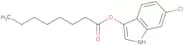
Fórmula:C14H15BrClNO6Pureza:Min. 98.0 Area-%Peso molecular:408.64 g/mol6-Chloro-1H-indol-3-yl octanoate
CAS:6-Chloro-1H-indol-3-yl octanoate is a fluorogenic substrate that can be used to detect enzymes such as phosphatases, lipases, esterases, and proteases. 6-Chloro-1H-indol-3-yl octanoate is a ligand for metal ions such as Cu(II), Ni(II) and Zn(II). This product has high purity and quality. It is an enzyme substrate for many enzymes such as phosphatases, lipases, esterases, and proteases. This product can be used in diagnostics of various substances including food testing, environmental testing and staining. 6CIO is a chromogenic substrate that can be used to detect bioluminescence reactions.
6CIO is CAS No. 159954-35-5.Pureza:Min. 95%Peso molecular:293.79 g/mol5-Bromo-6-chloro-3-indoxyl-beta-D-glucopyranoside
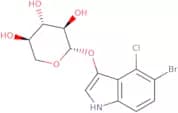
CAS:Chromogenic substrate for β-D-glucosidase yielding a magenta precipitate. Differentiation of Salmonella spp. (negative) from other Enterobacteriaceae.Fórmula:C14H15BrClNO6Pureza:Min. 99 Area-%Peso molecular:408.64 g/mol5-Bromo-4-chloro-3-indolyl β-D-xylopyranoside
CAS:5-Bromo-4-chloro-3-indolyl b-D-xylopyranoside is an enzyme substrate. This chromogenic substrate is used for beta-D-xylosidase enzyme. In culture media, 5-Bromo-4-chloro-3-indolyl b-D-xylopyranoside is utilised for identification of bacteria such as Klebsiella and Enterobacter.
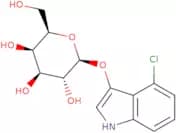
Fórmula:C13H13BrClNO5Pureza:Min. 95%Cor e Forma:PowderPeso molecular:378.6 g/mol4-Chloro-3-indolyl β-D-galactopyranoside
CAS:2-Chloro-4-nitrophenyl b-D-lactoside is a chromogenic enzyme substrate used to study the activity of enzymes. It produces a color when hydrolyzed, which makes it a valuable tool in screening for enzyme activity and studying enzyme kinetics.Fórmula:C14H16ClNO6Pureza:Min. 95%Cor e Forma:SolidPeso molecular:329.73 g/mol4-Nitrophenyl 2-acetamido-3-O-[2-O-a-L-fucopyranosyl-b-D-galactopyranosyl)-2-deoxy-b-D-galactopyranoside
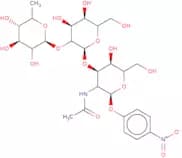
CAS:4-Nitrophenyl 2-acetamido-3-O-[2-O-a-L-fucopyranosyl-b-D-galactopyranosyl)-2-deoxyb-D-galactopyranoside is a water soluble, fluorescent probe that can be used for detecting the presence of β-(1→4) -linked galactosaminoglycans. The dye is a substrate for enzymes such as α--mannosidase, β--glucuronidase and β--galactosidase. The dye is also an excellent ligand for lectins such as concanavalin A and wheat germ agglutinin. This product is a diagnostic reagent that has been shown to have high purity and quality. It has CAS No. 93496-53-8 and can be used in food testing, bioluminescence, environmental testing, or high purity applications.
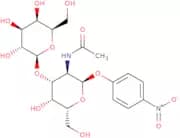
Fórmula:C26H38N2O17Pureza:Min. 95%Peso molecular:650.58 g/mol4-Nitrophenyl 2-acetamido-2-deoxy-3-O-(b-D-galactopyranosyl)-a-D-galactopyranoside
CAS:4-Nitrophenyl 2-acetamido-2-deoxy-3-O-(b-D-galactopyranosyl)-a-D-galactopyranoside is a superior chromogenic pNP enzyme substrate designed to deliver enhanced enzyme detection and outstanding assay performance. This cutting-edge substrate boasts excellent specificity, sensitivity, and stability, making it a powerful tool in the measurement of enzyme activity, substrate profiles, and inhibitor characterization. This premium substrate is perfect for researchers and professionals seeking reliable and efficient results for their enzyme-based investigations.Fórmula:C20H28N2O13Pureza:Min. 98 Area-%Cor e Forma:White PowderPeso molecular:504.44 g/molAldol® 484 acetate, Biosynth Patent: EP 2427431 and US 8940909
CAS:Produto ControladoAldol® 484 acetate is a chromogenic substrate for carboxylesterases yielding a red precipitate. In contrast to classical indoxyl substrates, Aldol® substrates can be used under aerobic and anaerobic conditions.Fórmula:C22H16ClFN2O3Pureza:Min. 95%Cor e Forma:PowderPeso molecular:410.83 g/mol2-Fluoro-4-nitrophenyl b-D-galactopyranoside
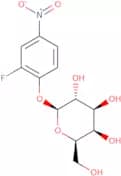
CAS:2-Fluoro-4-nitrophenyl b-D-galactopyranoside is a chromogenic substrate in enzymatic assays with β-galactosidase. Commonly abbreviated as PFONPG, it is a hydrophilic compound that can be dissolved in saline and blood samples, which makes it a suitable candidate for diagnostic applications as a gene reporter probe by simple analytic methodologies. 2-Fluoro-4-nitrophenyl b-D-galactopyranoside have been used to detect and monitor the growth of prostate tumor cells.Pureza:Min. 95%Cor e Forma:PowderPeso molecular:319.24 g/mol2-Chloro-4-nitrophenyl phosphate
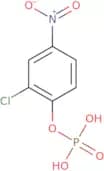
CAS:2-Chloro-4-nitrophenyl phosphate is a chromogenic substrate for phosphatases. Afer cleavage of the substrate, 2-chloro-4-nitrophenol is released, which can be quantified at 405 nm. 2-Chloro-4-nitrophenyl phosphate is used in clinical diagnostics to for prostate cancer, diagnosis of liver and bone diseases.Fórmula:C6H5ClNO6PPureza:Min. 95 Area-%Peso molecular:253.53 g/mol4-(Hydroxymethyl)phenyl-α-D-galactopyranoside tetraacetate
CAS:4-(Hydroxymethyl)phenyl-alpha-D-galactopyranoside tetraacetate is a substrate for enzymes that catalyze the hydroxylation of carbohydrates. It can be used as a substrate for peroxidase and beta-glucosidase, which are important in the production of natural products such as resveratrol, catechins, and lignin. 4-(Hydroxymethyl)phenyl-alpha-D-galactopyranoside tetraacetate is also a chromogenic substrate for chemiluminescence reactions. The product is available as a powder and can be used in diagnostic kits to detect the presence of enzymes or other substances in food or environmental samples.Fórmula:C21H26O11Peso molecular:454.43 g/mol4-Nitrophenyl β-D-galactofuranoside
CAS:Chromogenic substrate for beta-galactofuranosidaseFórmula:C12H15NO8Pureza:Min. 98 Area-%Cor e Forma:White PowderPeso molecular:301.25 g/mol4-Nitrophenyl-α-D-maltopyranoside
CAS:Chromogenic α-maltosidase substrate yielding a yellow solution upon cleavage.Fórmula:C18H25NO13Pureza:Min. 98.0 Area-%Peso molecular:463.40 g/molAldol® 484 beta-D-glucopyranoside, Biosynth Patent: EP 2427431 and US 8940909
CAS:Aldol® 484 beta-D-glucopyranoside is a chromogenic and fluorogenic enzyme substrate used for detection of beta-glucosidase activity. The colorless enzyme substrate is cleaved by bacteria producing beta-glucosidase in liquid or solid media, yielding intense red color and green fluorescent signal. Aldol® 484 beta-D-glucopyranoside can be used under aerobic and anaerobic conditions.Fórmula:C26H24ClFN2O7Pureza:Min. 95%Cor e Forma:PowderPeso molecular:530.93 g/molNaphthol AS-BI β-L-fucopyranoside
CAS:Substrate for the detection of beta-D-fucosidaseFórmula:C24H24BrNO7Pureza:Min. 95%Peso molecular:518.35 g/molNaphthol AS-BI sulphate potassium
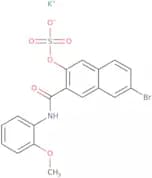
CAS:Naphthol AS-BI sulphate potassium salt is a modified naphtol AS substrate used for alkaline and acid phosphatase.Fórmula:C18H14BrNO6S•KPureza:Min. 95%Peso molecular:491.38 g/molN-Acetylmemantine
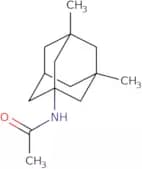
CAS:N-Acetylmemantine is a drug that inhibits the activity of acetylcholinesterase in the brain. It has been shown to inhibit cancer cell growth and induce apoptosis, as well as inhibit the reaction of hydrolysis of acetonitrile with hydrochloric acid in an organic solvent. N-Acetylmemantine is synthesized by heating ethylene in the presence of hydrochloric acid. The synthesis yields a white solid that consists mainly of N-acetylmethamphetamine. This drug interacts with cellular membranes, which may be due to its ability to react with cholesterol or phospholipids. The interaction leads to changes in membrane permeability, which can result in apoptosis.Fórmula:C14H23NOPureza:Min. 95%Cor e Forma:White PowderPeso molecular:221.34 g/mol5-Bromo-4-chloro-3-indoxyl-3-acetate
CAS:5-Bromo-4-chloro-3-indolyl acetate (5BCIA) is an enzyme substrate that has been shown to inhibit the activity of a number of enzymes, such as proteases and phosphatases. It has also been shown to inhibit the growth of a number of human pathogens, including Staphylococcus aureus, Escherichia coli, Salmonella enterica, Pseudomonas aeruginosa, and Mycobacterium tuberculosis. 5BCIA inhibits bacterial growth by binding to the active site of the enzyme phosphatase and preventing it from hydrolyzing a phosphate group from ATP. This process is necessary for energy metabolism in all living cells. 5BCIA has been shown to be effective against methicillin resistant Staphylococcus aureus (MRSA).
Fórmula:C10H7BrClNO2Pureza:Min. 98 Area-%Peso molecular:288.53 g/mol6-Chloro-3-indoxyl butyrate
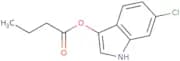
CAS:6-Chloro-3-indoxyl butyrate is a chemiluminescent substrate that is used in diagnostics and research. It has been shown to be an excellent ligand for the detection of DNA and protein. 6-Chloro-3-indoxyl butyrate can also be used as a chromogenic substrate for the detection of alkaline phosphatase, acid phosphatase, or beta-galactosidase. This product is also used in food testing, enzyme substrates, and fluorogenic substrates.Fórmula:C12H12ClNO2Pureza:Min. 99.0 Area-%Peso molecular:237.69 g/mol6-Fluoro-3-indoxyl-beta-D-galactopyranoside
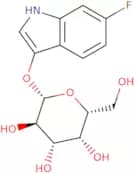
CAS:6-Fluoro-3-indoxyl-beta-D-galactopyranoside is a fluorescent chromogenic substrate that is commonly used for the detection and quantification of beta-galactosidase activity. When this substrate is hydrolyzed by beta-galactosidase, it produces a fluorescent blue product that can be easily detected and measured using a fluorometer or spectrophotometer. This substrate is often used in microbiology and molecular biology research to study gene expression and enzyme kinetics, and is also used in medical diagnostics as a marker for specific diseases and conditions.Fórmula:C14H16FNO6Pureza:Min. 98.0 Area-%Peso molecular:313.29 g/mol6-Chloro-3-indolyl b-D-glucuronide sodium salt
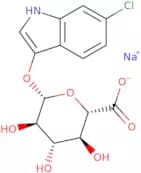
CAS:6-Chloro-3-indolyl b-D-glucuronide sodium salt is a chromogenic substrate for beta-glucuronidase, a reporter gene used to monitor gene expression by detecting the enzyme's activity. It yields a salmon colored precipitate upon cleavage.
Pureza:Min. 95%Cor e Forma:PowderPeso molecular:365.7 g/mol5-Bromo-6-chloro-3-indolyl α-D-glucopyranoside
CAS:5-Bromo-6-chloro-3-indolyl α-D-glucopyranoside is a chromogenic substrate that yields a magenta-colored product after cleavage. The chromophore 5-bromo-6-chloro-indoxyl is released, generating the observable color. It is used in Pompe disease diagnostics, a glycogen storage disorder, that measures the deffiency of alpha-glucosidase (GAA) that could lead to the accumulation of glycogen in lysosomes.
Fórmula:C14H15BrClNO6Pureza:Min. 95%Cor e Forma:PowderPeso molecular:408.63 g/mol4-Nitrophenyl phosphate disodium hexahydrate
CAS:4-Nitrophenyl phosphate disodium salt hexahydrate is a substrate of the hydrolase alkaline phosphatase. The products of the enzymatic reaction are 4-nitrophenol and phosphate.Fórmula:C6H16NNa2O12PCor e Forma:PowderPeso molecular:371.15 g/molAldol® 515 caprylate hydrochloride
CAS:Aldol 515 caprylate hydrochloride is a high-quality fluorogenic substrate that is used for the detection of enzymes in culture media and enzyme substrates. The product has a CAS number of 2484873-14-3 and can be used for food testing, diagnostics, and environmental testing. Aldol 515 caprylate hydrochloride can also be used as a ligand or chromogenic substrate to measure bioluminescence.Fórmula:C31H35ClN2O3Pureza:Min. 95 Area-%Peso molecular:519.08 g/mol