Outros
Foram encontrados 6302 produtos de "Outros"
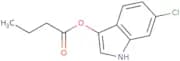
6-Chloro-3-indoxyl butyrate
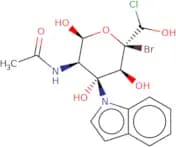
CAS:6-Chloro-3-indoxyl butyrate is a chemiluminescent substrate that is used in diagnostics and research. It has been shown to be an excellent ligand for the detection of DNA and protein. 6-Chloro-3-indoxyl butyrate can also be used as a chromogenic substrate for the detection of alkaline phosphatase, acid phosphatase, or beta-galactosidase. This product is also used in food testing, enzyme substrates, and fluorogenic substrates.Fórmula:C12H12ClNO2Pureza:Min. 99.0 Area-%Peso molecular:237.69 g/mol5-Bromo-6-chloro-3-indolyl-2-acetamido-2-deoxy-a-D-glucopyranoside
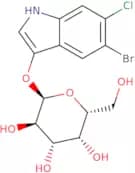
5-Bromo-6-chloro-3-indolyl-2-acetamido-2-deoxy-a-D-glucopyranoside is a chemiluminescent substrate that is used as an indicator in diagnostic tests. This compound reacts with an oxidizing agent, such as hydrogen peroxide, to generate light. It is also used as a chromogenic substrate for the detection of bioluminescence and it can be applied in culture media or food testing. 5Bromo-6Chloro-3Indolyl2Acetamido2DeoxyA1DGlucopyranoside has a CAS number, which means that it meets the standards set by the Chemical Abstracts Service. It also has a high purity and quality, making it suitable for use in laboratories.Pureza:Min. 95%5-Bromo-6-chloro-3-indoxyl-beta-D-glucopyranoside
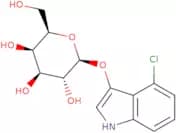
CAS:Chromogenic substrate for β-D-glucosidase yielding a magenta precipitate. Differentiation of Salmonella spp. (negative) from other Enterobacteriaceae.Fórmula:C14H15BrClNO6Pureza:Min. 99 Area-%Peso molecular:408.64 g/mol4-Chloro-3-indolyl β-D-galactopyranoside
CAS:2-Chloro-4-nitrophenyl b-D-lactoside is a chromogenic enzyme substrate used to study the activity of enzymes. It produces a color when hydrolyzed, which makes it a valuable tool in screening for enzyme activity and studying enzyme kinetics.Fórmula:C14H16ClNO6Pureza:Min. 95%Cor e Forma:SolidPeso molecular:329.73 g/molAldol® 455 beta-D-glucopyranoside, Biosynth Patent: EP 2427431 and US 8940909
CAS:Aldol® 455 beta-D-glucopyranoside is a chromogenic and fluorogenic enzyme substrate used for detection of beta-glucosidase activity. The colorless enzyme substrate is cleaved by beta-glucosidase producing bacteria grown in liquid or solid media, yielding a yellow color and green to orange fluorescence. Aldol® 455 beta-D-glucopyranoside can be used under aerobic and anaerobic conditions.
Fórmula:C27H24ClNO7Pureza:Min. 95%Cor e Forma:PowderPeso molecular:509.94 g/molbeta-Epoxyabiraterone acetate
CAS:Beta-Epoxyabiraterone acetate is a synthetic and natural metabolite of abiraterone that is used as an API impurity in the synthesis of abiraterone acetate. The drug product is a niche compound with CAS No. 52464-96-6. The Metabolite is an impurity found in the synthesis of beta-epoxyabiraterone acetate. Drug development research and development, analytical methods, and pharmacopoeia are all involved in the production of this compound.Fórmula:C26H33NO3Pureza:Min. 90 Area-%Cor e Forma:White Off-White PowderPeso molecular:407.55 g/mol4-Nitrophenyl 4,6-benzylidene-α-D-maltoheptaoside
CAS:4-Nitrophenyl 4,6-benzylidene-alpha-D-maltoheptaoside is a chromogenic substrate for alpha-amylase. Upon hydrolysis, para-nitrophenol is released yielding a yellowish colour. 4-Nitrophenyl 4,6-benzylidene-alpha-D-maltoheptaoside is used in different applications such as the Starch digestion studies, industrial enzyme optimizationFórmula:C55H79NO38Pureza:Min. 95%Cor e Forma:PowderPeso molecular:1,362.2 g/mol2-Nitrophenyl α-D-glucopyranoside
CAS:2-Nitrophenyl a-D-glucopyranoside is a chromogenic substrate commonly used to assay the activity of glucosidases. Upon cleavage of the glycosidic bond by glucosidases, the released 2-nitrophenyl group yields a yellow color detectable by spectrophotometry. This substrate has high sensitivity and is widely used in a variety of applications, including drug discovery and enzyme kinetics studies.
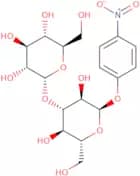
Fórmula:C12H15NO8Pureza:Min. 95%Cor e Forma:White to off-white solid.Peso molecular:301.25 g/mol4-Nitrophenyl 2-O-(β-D-glucopyranosyl)-β-D-glucopyranoside
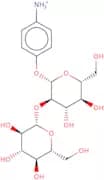
CAS:4-Nitrophenyl 2-O-(beta-D-glucopyranosyl)-beta-D-glucopyranoside is a chromogenic substrate for beta-glucosidase. Upon hydrolysis, para-nitrophenol is released yielding a yellowish colour. 4-Nitrophenyl 2-O-(beta-D-glucopyranosyl)-beta-D-glucopyranoside is used in different applications such as the Cellulose degradation studies, biofuel researchFórmula:C18H25NO13Pureza:Min. 95%Cor e Forma:White solid.Peso molecular:463.39 g/mol5-Bromo-4-chloro-3-indolyl myristate
CAS:5-Bromo-4-chloro-3-indolyl myristate is a chromogenic substrate used to detect the specific enzymatic activity of lipase or esterase. After cleavage, 5-bromo-4-chloro-indoxyl is released, resulting in a blue to blue-green color change in bacterial colonies or media. 5-Bromo-4-chloro-3-indolyl myristate is used in screening assays for pancreatic lipase deficiency and lipid metabolism studies.Fórmula:C22H31BrClNO2Pureza:Min. 95%Cor e Forma:PowderPeso molecular:456.84 g/molN-α-CBZ-L-citrulline-p-nitroanilide
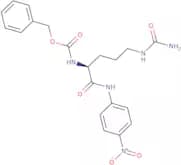
CAS:Nalpha-CBZ-L-Citrulline-p-nitroanilide is a synthetic chromogenic enzyme substrate used in protease enzymatic stutides. After hydrolysis, p-nitroaniline is released, which produces a yellow color detectable spectrophotometrically at 405 nm.
Fórmula:C20H23N5O6Pureza:Min. 95%Peso molecular:429.43 g/mol6-Chloro-3-indoxyl-N-acetyl-β-D-galactosaminide
CAS:Chromogenic substrate for N-Acetyl-β-D-galactosaminidase yielding a salmon-colored precipitate.Fórmula:C16H19ClN2O6Pureza:Min. 98.0 Area-%Peso molecular:370.79 g/molRef: 3D-C-4762
1gA consultar50mgA consultar100mgA consultar250mgA consultar500mgA consultar-Unit-ggA consultarPhosphoric acid, mono(4-nitrophenyl) ester
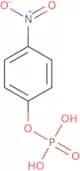
CAS:Phosphatase substrate
Fórmula:C6H6NO6PPureza:Min. 95%Cor e Forma:White PowderPeso molecular:219.09 g/molAldol® 495 acetate, Biosynth Patent: EP 2427431 and US 8940909
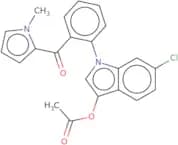
CAS:Produto ControladoAldol 495 is a chemiluminescent substrate for the detection of aldehyde reductase (ALR) activity. It is an acetate ester that reacts with ALR to form an aldehyde product, which then reacts with luminol in the presence of hydrogen peroxide to produce light. Aldol 495 is used in the diagnosis of ALR deficiency, which can cause acute intermittent porphyria and other diseases. Aldol 495 has been shown to be non-toxic and non-mutagenic.Fórmula:C22H17ClN2O3Pureza:Min. 95%Cor e Forma:PowderPeso molecular:392.83 g/mol5-Bromo-4-chloro-3-indoxyl-beta-D-glucuronic acid, cyclohexylammonium salt monohydrate
CAS:Chromogenic substrate for β-glucuronidase (GUS) yieldinga blue precipitate. It is used for detection of GUS+ bacterial colonies and has been reported as chromogenic substrate in a number of chromogenic E. coli / coliform culture media. About 95% of common E. coli possess β-D-glucuronidase activity. Such chromogenic culture media are used for detection and enumeration of E. coli in food samples such as meat, dairy products, shellfish and have clinical applications in the assessment of urinary infections. It has gained international acceptance as highly accurate test for the presence of E. coli in drinking water samples. It is also used for the detection of the expression of GUS (E. coli β-glucuronidase) gene fusion marker constructs in plants.Fórmula:C20H28BrClN2O8Pureza:Min. 99.0 Area-%Peso molecular:539.81 g/mol3-Indolyl 2-acetamido-2-deoxy-b-D-glucopyranoside
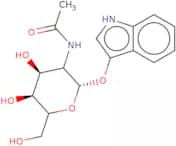
CAS:3-Indolyl 2-acetamido-2-deoxy-b-D-glucopyranoside is a substrate used for the detection of the enzyme N-acetylglucosaminidase (NAG). The enzyme hydrolyzes the NAG conjugate, releasing indole that can be detected through a colorimetric assay. This method is commonly used in clinical chemistry to evaluate kidney function, as NAG is excreted in urine and increased levels may indicate renal injury or disease. The indole NAG assay is also used in microbiology to detect the presence of NAG-producing bacteria.Pureza:Min. 95%Peso molecular:336.34 g/mol3-Indoxyl choline phosphate
CAS:Please enquire for more information about 3-Indoxyl choline phosphate including the price, delivery time and more detailed product information at the technical inquiry form on this pageFórmula:C13H19N2O4PPureza:Min. 99 Area-%Peso molecular:298.28 g/molRef: 3D-I-5696
1gA consultar5gA consultar10gA consultar500mgA consultar2500mgA consultar-Unit-ggA consultar5-Bromo-4-chloro-3-indoxyl phosphate, p-toluidine salt, high grade
CAS:A substrate for visualising alkaline phosphatase activity. It produces a purple insoluble end product that is detected visually, when used together with nitroblue tetrazolium. The substrate system is versatile and has functions in a variety of applications, including Northern, Southern, and Western blotting, in situ hybridization, ELISAs, microarray and immunohistochemistry. DMF soluble.Fórmula:C15H15BrClN2O4PPureza:Min. 98.0 Area-%Peso molecular:433.63 g/mol2-Nitrophenyl b-D-galactopyranoside-6-phosphate cyclohexylammonium salt
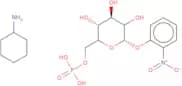
CAS:2-Nitrophenyl beta-D-galactopyranoside-6-phosphate cyclohexylammonium salt is a chromogenic substrate used to detect the enzymatic activity of beta-galactosidase-6-phosphatase. After cleavage, the nitrophenyl moiety is released exhibiting a light yellowish color. 2-Nitrophenyl beta-D-galactopyranoside-6-phosphate cyclohexylammonium salt is used in diagnostic assays such as lysosomal storage disorder.Pureza:Min. 95%Cor e Forma:PowderPeso molecular:480.4 g/mol4-Nitrophenyl 3-O-(a-D-glucopyranosyl)-a-D-glucopyranoside
CAS:4-Nitrophenyl 3-O-(a-D-glucopyranosyl)-a-D-glucopyranoside (pNP-Glc-Glc) is a highly sensitive and potent chromogenic substrate for the enzymatic detection and measurement of alpha-glucosidase activity. The rapid color change triggered by the hydrolysis of pNP-Glc-Glc provides a clear and efficient method for monitoring enzyme kinetics, screening inhibitors, and functional characterization of α-glucosidases. This substrate is soluble in aqueous and polar organic solvents and yields a detectable 4-nitrophenol product with a distinct yellow color under both visible and ultraviolet light, enabling quantitative spectrophotometric measurements. With a superior signal-to-noise ratio and maximal sensitivity, pNP-Glc-Glc is a reliable and robust option for biochemical and biomedical research involving glucosidase enzymes.Pureza:Min. 95%Cor e Forma:PowderPeso molecular:463.39 g/mol5-Bromo-6-chloro-3-indolyl a-D-galactopyranoside
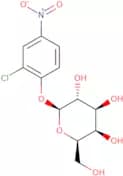
CAS:5-Bromo-6-chloro-3-indolyl a-D-galactopyranoside is a chromogenic substrate that yields a magenta-colored product after cleavage. The chromophore 5-bromo-6-chloro-indoxyl is released, generating the observable color. It is used in glycolipid metabolism studies.Fórmula:C14H15BrClNO6Cor e Forma:White to off-white solid.Peso molecular:408.63 g/mol2-Chloro-4-nitrophenyl b-D-galactopyranoside
CAS:2-Chloro-4-nitrophenyl-beta-D-galactopyranoside is a chromogenic substrate used to test enzyme activities. It is commonly used in molecular biology research for the detection and measurement of beta-galactosidase activity.Fórmula:C12H14ClNO8Pureza:Min. 95%Cor e Forma:White PowderPeso molecular:335.69 g/molAldol® 470 acetate, Biosynth Patent: EP 2427431 and US 8940909
CAS:Produto ControladoAldol® 470 acetate is a Fluorogenic substrate that is used in enzymatic reactions to produce a fluorescent product. Aldol® 470 acetate can be used as a ligand or a chromogenic substrate. This product is also used in diagnostic tests, such as conjugates and chemiluminescence, to detect the presence of certain enzymes or microorganisms. It can be used in culture media to measure the amount of certain enzymes, such as phosphatases or proteases, and has been shown to have high purity and quality. This product has CAS No. 1318785-37-3, 1318785-38-4, 1318785-39-5, 1318785-40-6 and 1318785-41-7.
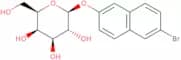
Fórmula:C25H21NO5Pureza:Min. 95%Cor e Forma:PowderPeso molecular:415.44 g/mol6-Bromo-2-naphthyl β-D-galactopyranoside
CAS:6-Bromo-2-naphthyl β-D-galactopyranoside is a chromogenic substrate commonly used for the detection of the enzymatic activity of β-galactosidase. It can produce a yellow precipitate upon hydrolysis by β-galactosidase, indicating the presence of the enzyme. It is often used in molecular biology applications to detect gene expression or to monitor cloning efficiency.Fórmula:C16H17BrO6Pureza:Min. 98 Area-%Cor e Forma:PowderPeso molecular:385.21 g/mol4-Nitrophenyl-beta-L-fucopyranoside
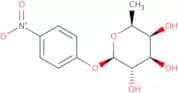
CAS:4-Nitrophenyl-beta-L-fucopyranoside is a high-quality pNP enzyme substrate developed for the sensitive detection and quantification of Beta-L-fucosidase activity. The enzymatic hydrolysis of the substrate generates 4-nitrophenol, a yellow chromogenic component that can be conveniently measured spectrophotometrically, allowing for accurate determination of enzyme concentration and kinetics. This substrate finds applications in various research fields, diagnostics, and industrial enzyme production.Fórmula:C12H15NO7Pureza:Min. 95%Cor e Forma:White PowderPeso molecular:285.25 g/mol2-Nitrophenyl b-L-fucopyranoside
CAS:2-Nitrophenyl beta-L-fucopyranoside is a chromogenic substrate used to detect the enzymatic activity of beta-L-fucosidase. After cleavage, the nitrophenyl moiety is released exhibiting a light yellowish color. 2-Nitrophenyl beta-L-fucopyranoside is used in bacterial fucose metabolism studies to identify and quantify the enzymatic activity in, for example, Bacteroides spp..Pureza:Min. 98 Area-%Cor e Forma:PowderPeso molecular:285.25 g/molAldol® 515 L-alanine amide, hydrochloride, Biosynth Patent: EP 2427431 and US 8940909
CAS:Aldol® 515 L-alanine amide is a chromogenic and fluorogenic enzyme substrate used for detection of L-alanine aminopeptidase activity. The colorless enzyme substrate is cleaved by L-alanine aminopeptidase produced by microorganisms, grown in liquid or solid media yielding red color. In addition, red fluorescence is generated when a fluorescence enhancer or a suitable matrix is present. Aldol® 515 L-alanine amide can be used under aerobic and anaerobic conditions.
Fórmula:C26H27ClN4O2Pureza:Min. 95.0 Area-%Peso molecular:462.97 g/mol1-Naphthyl β-D-mannopyranoside
CAS:1-Naphthyl β-D-mannopyranoside is a chromogenic (also fluorogenic) substrate. After cleavage, 1-naphthol is released and is used to quantify beta-mannosidase activity.Fórmula:C16H18O6Pureza:Min. 95%Cor e Forma:PowderPeso molecular:306.31 g/mol5-Bromo-4-chloro-3-indoxyl butyrate
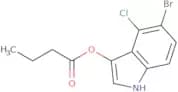
CAS:5-Bromo-4-chloro-3-indoxyl butyrate is a colorimetric substrate used to detect and quantify esterase activity. Upon hydrolysis by esterases, it yields a blue-green dye, allowing the detection and quantification of enzyme activity. It is commonly used in assays for the screening of esterase-producing microorganisms and in research aimed at understanding the role of esterases in various cellular processes.
Fórmula:C12H11BrClNO2Pureza:Min. 95%Cor e Forma:PowderPeso molecular:316.58 g/mol5-Bromo-4-chloro-3-indoxyl-beta-D-cellobioside
CAS:Chromogenic substrate for β-D-Cellobiosidase yielding a blue precipitate.Fórmula:C20H25BrClNO11Pureza:Min. 99.0 Area-%Peso molecular:570.78 g/mol6-Chloro-3-indoxyl-beta-D-glucuronic acid, cyclohexylammonium salt
CAS:6-Chloro-3-indoxyl-beta-D-glucuronic acid (cyclohexylammonium salt) is a chromogenic substrate for beta-glucuronidase yielding a salmon colored precipitate upon cleavage.Fórmula:C20H27ClN2O7Pureza:Min. 98.0 Area-%Peso molecular:442.90 g/mol5-Bromo-4-chloro-3-indolyl a-D-maltopyranoside
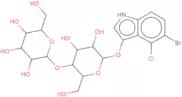
CAS:5-Bromo-4-chloro-3-indolyl a-D-maltopyranoside is a chromogenic substrate used to detect the specific enzymatic activity of alpha-glucosidase. After cleavage, 5-bromo-4-chloro-indoxyl is released, resulting in a blue to blue-green color change in bacterial colonies or media. 5-Bromo-4-chloro-3-indolyl a-D-maltopyranoside is used in Pompe disease screening and glycogen storage disorder diagnosis.Fórmula:C20H25BrClNO11Pureza:Min. 95%Cor e Forma:PowderPeso molecular:570.77 g/mol4-Nitrophenyl butyrate
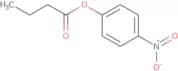
CAS:Chromogenic substrate for esterasesFórmula:C10H11NO4Pureza:Min. 98%Cor e Forma:Slightly Yellow Yellow Green Clear LiquidPeso molecular:209.2 g/mol6-Chloro-3-indolyl 2-acetamido-2-deoxy-b-D-galactopyranoside
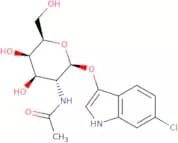
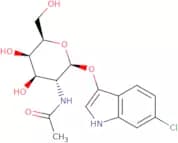
CAS:6-Chloro-3-indolyl 2-acetamido-2-deoxy-b-D-galactopyranoside is a chromogenic substrate for N-acetyl-beta-galactosaminidase. It produces a salmon-pink color after enzymatic cleavage.
Pureza:Min. 95%Cor e Forma:White PowderPeso molecular:370.78 g/mol4-Nitrophenyl-N-acetyl-beta-D-glucosaminide
CAS:Chromogenic β-glucosaminidase substrate yielding a yellow solution upon cleavage, used particularly in yeasts and molds.Fórmula:C14H18N2O8Pureza:Min. 99.0 Area-%Peso molecular:342.31 g/molAldol® 470 beta-D-galactopyranoside, Biosynth Patent: EP 2427431 and US 8940909
CAS:Aldol® 470 beta-D-galactopyranoside is a chromogenic and fluorogenic enzyme substrate used for detection of beta-galactosidase activity. The colorless enzyme substrate is cleaved by lactose-utilizing bacteria grown in liquid or solid media, yielding yellow coloration and green fluorescence. Aldol® 470 beta-D-galactopyranoside can also be used in beta-galactosidase gene reporter assays or immunoassay applications (ELISA). Aldol® 470 beta-D-galactopyranoside can be used under aerobic and anaerobic conditions.Fórmula:C29H29NO9Pureza:Min. 95 Area-%Cor e Forma:PowderPeso molecular:535.54 g/mol5-Bromo-3-indoxyl nonanoate
CAS:Chromogenic substrate for esterase with C9 activity yielding a lapis colored precipitate upon cleavage.Fórmula:C17H22BrNO2Pureza:Min. 99 Area-%Peso molecular:352.28 g/mol5-Bromo-4-chloro-3-indoxyl phosphate p-toluidine, micronized
CAS:A substrate for alkaline phosphatase yielding a blue insoluble product upon cleavage. Colour can be further enhanced when used together with Nitroblue tetrazolium. The substrate system is versatile and has functions in a variety of applications, including Northern, Southern, and Western blotting, in situ hybridization, ELISAs, microarray and immunohistochemistry. The micronized structure enhances solubility.Fórmula:C8H6BrClNO4P•C7H9NPureza:Min. 95%Cor e Forma:PowderPeso molecular:433.63 g/mol5-Bromo-4-chloro-3-indolyl β-D-lactopyranoside
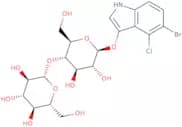
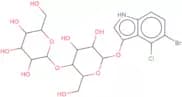
CAS:5-Bromo-4-chloro-3-indolyl b-D-lactopyranoside is a chromogenic substrate used to detect the specific enzymatic activity of beta-galactosidase. After cleavage, 5-bromo-4-chloro-indoxyl is released, resulting in a blue to blue-green color change in bacterial colonies or media. 5-Bromo-4-chloro-3-indolyl b-D-lactopyranoside is used in lactose intolerance screening.Fórmula:C20H25BrClNO11Pureza:Min. 95%Cor e Forma:PowderPeso molecular:570.77 g/mol4-Nitrophenyl 6-O-(a-D-glucopyranosyl)-b-D-glucopyranoside
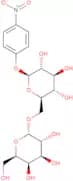
CAS:4-Nitrophenyl 6-O-(alpha-D-glucopyranosyl)-beta-D-glucopyranoside is a chromogenic substrate for beta-glucosidase. Upon hydrolysis, para-nitrophenol is released yielding a yellowish colour. 4-Nitrophenyl 6-O-(alpha-D-glucopyranosyl)-beta-D-glucopyranoside is used in different applications such as the Cellulose metabolism research, biofuel productionPureza:Min. 95%Cor e Forma:PowderPeso molecular:463.39 g/molAldol® 518 beta-D-galactopyranoside, Biosynth Patent: EP 2427431 and US 8940909
CAS:Aldol® 518 beta-D-galactopyranoside is a chromogenic and fluorogenic enzyme substrate used for detection of beta-galactosidase activity. The colorless enzyme substrate is cleaved by lactose-utilizing bacteria in liquid or solid media, yielding intense red color as well as red fluorescence when a fluorescence enhancer or a suitable matrix is present. Aldol® 518 beta-D-galactopyranoside can also be used in beta-gal reporter gene assays or for identification of beta-gal positive transformants on agar plates. Aldol® 518 beta-D-galactopyranoside can be used under aerobic and anaerobic conditions.
Fórmula:C29H29ClN2O7Pureza:Min. 95 Area-%Peso molecular:553.01 g/mol5-Bromo-4-chloro-3-indoxyl-1-acetate
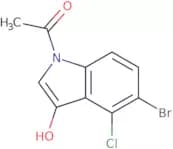
CAS:5-Bromo-4-chloro-3-indoxyl-1-acetate is a chromogenic substrate used to detect the specific enzymatic activity of esterase. After cleavage, 5-bromo-4-chloro-indoxyl is released, resulting in a blue to blue-green color change in bacterial colonies or media. 5-Bromo-4-chloro-3-indoxyl-1-acetate is used in bacterial esterase activity assays (e.g. Pseudomonas spp.).
Pureza:Min. 95%Cor e Forma:PowderPeso molecular:288.52 g/molCalcium 2-naphthylphosphate
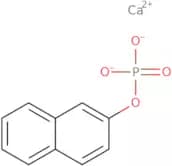
CAS:Calcium 2-naphthylphosphate, which is the calcim salt of 2-naphthylphosphate, is a chromogenic substrate to measure alkaline phosphatase activity. After enzymatic cleavage, the product yielded (2-naphthol) generates a red-colored complex upon reaction with a diazonium salt like Fast Blue RR or Fast Garnet GBC.
Pureza:(%) Min. 95%Cor e Forma:PowderPeso molecular:282.24 g/molAldol® 518 choline phosphate, Biosynth Patent: EP 2427431 and US 8940909
Aldol® 518 choline phosphate is a fluorogenic substrate that is used in the detection of enzyme activity. It has been shown to be an effective substrate for enzymes such as beta-galactosidase and phosphatases, and can be used in the detection of bacterial growth. Aldol® 518 choline phosphate is also a chromogenic substrate for the detection of alkaline phosphatase. It has been shown to have high purity and bioluminescence properties, making it useful for detecting bacteria in culture media or environmental testing. The conjugate of Aldol® 518 choline phosphate with various ligands can be used to detect specific proteins or antibodies.Fórmula:C28H31ClN3O5PPureza:Min. 95 Area-%Peso molecular:556 g/molN-Acetylmemantine
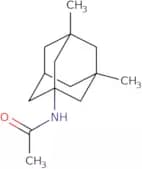
CAS:N-Acetylmemantine is a drug that inhibits the activity of acetylcholinesterase in the brain. It has been shown to inhibit cancer cell growth and induce apoptosis, as well as inhibit the reaction of hydrolysis of acetonitrile with hydrochloric acid in an organic solvent. N-Acetylmemantine is synthesized by heating ethylene in the presence of hydrochloric acid. The synthesis yields a white solid that consists mainly of N-acetylmethamphetamine. This drug interacts with cellular membranes, which may be due to its ability to react with cholesterol or phospholipids. The interaction leads to changes in membrane permeability, which can result in apoptosis.Fórmula:C14H23NOPureza:Min. 95%Cor e Forma:White PowderPeso molecular:221.34 g/molAldol® 515 caprylate solution, 0.50 M in DMSO, Biosynth Patent: EP 2427431 and US 8940909
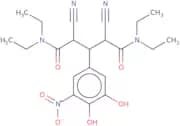
CAS:Aldol® 515 caprylate is a chromogenic and fluorogenic enzyme substrate used for detection of lipase activity. The colorless enzyme substrate is cleaved by C8 esterases, yielding development of red coloration. In addition, red fluorescence is generated when Aldol® 355 fluorescence enhancer or a suitable matrix is present. Aldol® 515 caprylate can be used in enzyme assays and live bacterial cultures. Aldol® 515 caprylate is suitable for use in liquid and solid media, under aerobic as well as anaerobic conditions.Fórmula:C31H34N2O3Pureza:Of Solute (Hplc) Min. 90.0 Area-%Peso molecular:482.62 g/mol2,4-Dicyano-3-(3,4-dihydroxy-5-nitrophenyl)-N1,N1,N5,N5-tetraethylpentanediamide
2,4-Dicyano-3-(3,4-dihydroxy-5-nitrophenyl)-N1,N1,N5,N5-tetraethylpentanediamide is a white crystalline solid that is used as an analytical reference standard in HPLC. It is used for the determination of purity and impurities in pharmaceuticals and drug products. This compound can be custom synthesized or obtained from natural sources. It can be found in the USP Drug Impurity Standards and the European Pharmacopoeia.Fórmula:C21H27N5O6Pureza:Min. 95%Peso molecular:445.47 g/mol5-Nitro-3-indoxyl-β-D-galactopyranoside
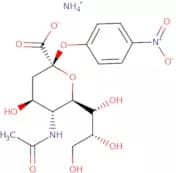
For the detection of beta-galactosidase activityFórmula:C14H16N2O8Peso molecular:340.29 g/mol2-O-(4-Nitrophenyl)-a-D-N-acetylneuraminic acid ammonium salt
CAS:2-O-(4-Nitrophenyl)-a-D-N-acetylneuraminic acid ammonium salt is a chromogenic substrate commonly used in the detection and quantification of sialidase activity. Sialidases are a family of enzymes that hydrolyze sialic acid residues from glycoconjugates. This substrate is used to detect bacterial and viral sialidases, which play an important role in pathogen infectivity. The ammonium salt form of the substrate is preferred for its solubility in water-based assay systems.Pureza:Min. 95%Peso molecular:447.39 g/molAldol® 495 nonanoate solution, 0.75 M in DMSO, Biosynth Patent: EP 2427431 and US 8940909
CAS:Produto ControladoAldol® 495 nonanoate is a chromogenic and fluorogenic enzyme substrate used for detection of lipase activity. The colorless enzyme substrate is cleaved by C9 esterases, yielding development of an orange coloration. In addition, green fluorescence is generated when Aldol® 355 fluorescence enhancer or a suitable matrix is present. Aldol® 495 nonanoate can be used in enzyme assays and live bacterial cultures. Aldol® 495 nonanoate is suitable for use in liquid and solid media, under aerobic as well as anaerobic conditions.Fórmula:C29H31ClN2O3Pureza:Min. 95%Peso molecular:491.02 g/mol