Outros
Foram encontrados 6302 produtos de "Outros"
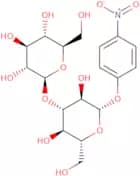
4-Nitrophenyl 3-O-(β-D-glucopyranosyl)-β-D-glucopyranoside
CAS:Chromogenic substrate for beta-glucanaseFórmula:C18H25NO13Pureza:Min. 95 Area-%Cor e Forma:PowderPeso molecular:463.39 g/mol4-Nitrophenyl-beta-D-galactopyranoside
CAS:Chromogenic β-galactosidase substrate yielding a yellow solution upon cleavage. Can be used for the detection of coliforms due to their β-galactosidase activity.Fórmula:C12H15NO8Pureza:Min. 98.0 Area-%Peso molecular:301.26 g/mol4-Nitrophenyl-beta-D-glucopyranoside
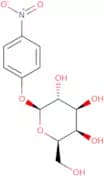
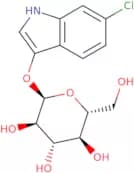
CAS:Chromogenic β-glucosidase substrate yielding a yellow solution upon cleavage.Fórmula:C12H15NO8Pureza:Min. 99.0 Area-%Peso molecular:301.25 g/mol6-Chloro-3-indoxyl-beta-D-galactopyranoside, plant origin
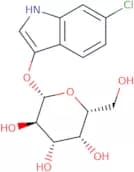
CAS:6-Chloro-3-indoxyl-beta-D-galactopyranoside is a chromogenic substrate for beta-galactosidase that yields a salmon or rose-coloured precipitate and hence is also known as Salmon-Gal. It can be used in conjunction with isopropyl-beta-D-thiogalactopyranoside (IPTG) as an alternative to the chromogenic substrate 5-bromo-4-chloro-3-indolyl beta-D-galactopyranoside (X-Gal) for detection of beta-galactosidase activity in bacterial colonies in colorimetric assays. Where beta-galactosidase expressed from a reporter gene in molecular biology experiments, recombinant colonies on growth plates are salmon-coloured while non-recombinants appear as white. Use of nitroblue tetrazolium salt (NBT) with Salmon-Gal may provide faster results, yielding a clear, purple precipitate, than for Salmon-Gal alone. In conjunction with 5-bromo-4-chloro-3-indolyl-beta-D-glucoside (X-Glc), Salmon-Gal is useful for simultaneous detection of GUS and Lac activities in the same medium.Fórmula:C14H16ClNO6Pureza:Min. 98.0 Area-%Peso molecular:329.74 g/mol5-Bromo-4-chloro-3-indolyl a-L-arabinofuranoside
5-Bromo-4-chloro-3-indolyl a-L-arabinofuranoside is a chromogenic substrate used to detect the specific enzymatic activity of alpha-L-arabinofuranosidase. After cleavage, 5-bromo-4-chloro-indoxyl is released, resulting in a blue to blue-green color change in bacterial colonies or media. 5-Bromo-4-chloro-3-indolyl a-L-arabinofuranoside is used in bacterial arabinan degradation assays (e.g. Bacillus spp.).Fórmula:C13H13BrClNO5Pureza:Min. 98.0 Area-%Cor e Forma:PowderPeso molecular:378.6 g/molAldol® 470 acetate, Biosynth Patent: EP 2427431 and US 8940909
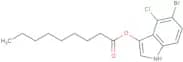
CAS:Produto ControladoAldol 470 acetate is a chromogenic substrate for carboxylesterases yielding a yellow precipitate. Furthermore it shows some fluorescence(excitation at 320 nm to 490 nm). In contrast to classical indoxylsubstrates, Aldol substrates work not only under aerobic but also under anaerobic conditions.Fórmula:C25H21NO5Pureza:Min. 95.0 Area-%Peso molecular:415.44 g/mol5-Bromo-4-chloro-3-indolyl nonanoate
CAS:5-Bromo-4-chloro-3-indolyl nonanoate is a fluorogenic substrate that is used in the detection of enzymes. The substrate reacts with various enzymes and produces a fluorescent product, which can be detected using a fluorimeter or luminometer. It has been shown to be active against β-galactosidase, α-chymotrypsin, and β-glucuronidase. This compound may also be used as an enzyme substrate for the detection of bacteria in culture media or for food testing. 5-Bromo-4-chloro-3 indolyl nonanoate is not mutagenic or genotoxic when tested on bacterial cells.Fórmula:C17H21BrClNO2Pureza:Min. 95%Peso molecular:386.71 g/mol4-Nitrophenyl b-L-arabinopyranoside
CAS:4-Nitrophenyl beta-L-arabinopyranoside is a chromogenic substrate for beta-L-arabinosidase. Upon hydrolysis, para-nitrophenol is released yielding a yellowish colour. 4-Nitrophenyl beta-L-arabinopyranoside is used in different applications such as the Bacterial arabinan degradation assays, gut microbiome analysis
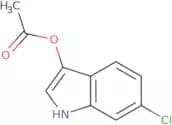
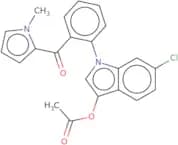
Fórmula:C11H13NO7Pureza:Min. 98 Area-%Cor e Forma:White PowderPeso molecular:271.22 g/mol6-Chloro-3-indoxyl-3-acetate
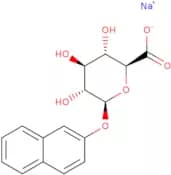
CAS:6-Chloro-3-indoxyl-3-acetate is a chromogenic substrate for carboxylesterase yielding a salmon colored precipitate upon cleavage. Mainly used in histochemistry.Pureza:Min. 95%Cor e Forma:White PowderPeso molecular:209.63 g/mol2-Naphthyl-Beta-D-Glucuronide Sodium Salt
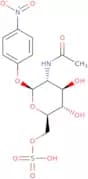
CAS:2-Naphthyl-beta-D-glucuronide sodium salt is an enzyme substrate to detect beta-glucuronidase. The enzyme cleaves the glycosidic bond in 2-naphthyl-beta-D-glucuronide to release 2-naphtol and glucuronic acid. Beta-glucuronidase activity assays are important in many fields such as cancer research, as the enzyme is expressed in some tumors and its activity can be targeted for cancer therapy. The enzyme has also an important role in drug metabolism as it recognizes and binds to drug glucuronide conjugate (as 2-naphthyl-beta-D-glucuronide) facilitating its hydrolysis to release the active part. 2-Naphthyl-beta-D-glucuronide sodium salt has a higher solubility as it is in its salt form.Fórmula:C16H15NaO7Pureza:Min. 95%Cor e Forma:PowderPeso molecular:342.28 g/mol4-Nitrophenyl 2-acetamido-2-deoxy-β-D-glucopyranoside-6-sulfate potassium
CAS:4-Nitrophenyl 2-acetamido-2-deoxy-beta-D-glucopyranoside-6-sulfate potassium is a chromogenic substrate for N-acetylglucosamine-6-sulfatase. Upon hydrolysis, para-nitrophenol is released yielding a yellowish colour. 4-Nitrophenyl 2-acetamido-2-deoxy-beta-D-glucopyranoside-6-sulfate potassium is used in different applications such as the Mucopolysaccharidosis IIID (Sanfilippo D) screeningFórmula:C14H17N2O11S•KPureza:Min. 95%Cor e Forma:PowderPeso molecular:460.46 g/mol4-(Hydroxymethyl)phenyl-β-D-glucopyranoside tetraacetate
CAS:4-(Hydroxymethyl)phenyl-beta-D-glucopyranoside tetraacetate is a drug that has been shown to have antidiabetic effects in diabetic patients. It has been shown to inhibit tyrosinase activity and increase the production of gamma-aminobutyric acid (GABA) in brain cells. This compound also has a protective effect against glutamate toxicity, and is being studied as a potential treatment for epilepsy. 4-(Hydroxymethyl)phenyl-beta-D-glucopyranoside tetraacetate inhibits the production of tyrosinase, which is an enzyme responsible for the conversion of tyrosine to melanin. This process can be inhibited by inhibiting tyrosinase activity with 4-(hydroxymethyl)phenyl-beta-D-glucopyranoside tetraacetate.Fórmula:C21H26O11Peso molecular:454.43 g/mol2-Nitrophenyl b-D-arabinopyranoside
2-Nitrophenyl b-D-arabinopyranoside is a chemical compound that is used in the detection of ATP by chemiluminescence. It acts as a substrate for enzymes such as luciferase and catalase, which catalyze the oxidation of 2-nitrophenyl b-D-arabinopyranoside to phenol and carbon dioxide with the release of light. This reaction can be used in diagnostic applications such as detecting bacteria in culture media or diagnosing food spoilage. 2-Nitrophenyl b-D-arabinopyranoside can also be used as a conjugate to detect proteins or nucleic acids by fluorescence spectroscopy. The CAS number for this compound is 107772-06-1.
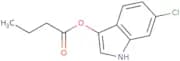
Pureza:Min. 95%Peso molecular:271.22 g/mol6-Chloro-3-indoxyl butyrate
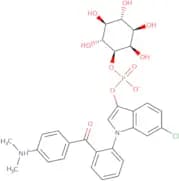
CAS:6-Chloro-3-indoxyl butyrate is a chemiluminescent substrate that is used in diagnostics and research. It has been shown to be an excellent ligand for the detection of DNA and protein. 6-Chloro-3-indoxyl butyrate can also be used as a chromogenic substrate for the detection of alkaline phosphatase, acid phosphatase, or beta-galactosidase. This product is also used in food testing, enzyme substrates, and fluorogenic substrates.Fórmula:C12H12ClNO2Pureza:Min. 99.0 Area-%Peso molecular:237.69 g/molAldol® 518 myo-inositol-1-phosphate - Biosynth Patent: EP 2427431 and US 8940909
CAS:Aldol® 518 myo-inositol-1-phosphate is a chromogenic and fluorogenic enzyme substrate used for detection of phosphatidyl-inositol specific phospholipase C activity (PI-PLC, EC 4.6.1.13). The colorless enzyme substrate is cleaved by PI-PLC or PI-PLC-positive microorganisms grown in liquid or solid media, yielding an intense red coloration. In combination with Aldol® 355 fluorescence enhancer, red fluorescence can also obtained. Aldol® 518 myo-inositol-1-phosphate is suitable for use in liquid and solid media, under aerobic as well as anaerobic conditions.Fórmula:C29H33ClN3O10PPureza:Min. 95 Area-%Cor e Forma:PowderPeso molecular:650.02 g/mol5-Bromo-4-chloro-3-indoxyl-β-D-xylopyranoside
CAS:5-Bromo-4-chloro-3-indoxyl-beta-D-xylopyranoside is a fluorogenic substrate that can be used to measure the activity of bacterial esterases. The enzyme cleaves the xylose moiety from 5-bromo-4-chloro-3-indoxyl, yielding indoxyl as an intermediate product. This reaction can be catalyzed by esterases found in bacteria, which hydrolyze esters containing a single hydroxyl group at one end and a carboxylic acid or alcohol at the other end. Indoxyl is fluorescent and can be detected using a fluorimeter. 5BX is also chromogenic, so it can be used as an enzyme substrate for detecting beta galactosidase activity in bacteria such as Mycobacterium smegmatis or Escherichia coli. 5BX is also used to detect chemiluminesFórmula:C13H13BrClNO5Peso molecular:378.61 g/molRef: 3D-B-7750
-Unit-ggA consultar1gA consultar5gA consultar10gA consultar500mgA consultar2500mgA consultar5-Cyano-3-indoxyl-β-D-galactopyranoside
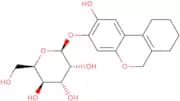
For detection of beta-galactosidase activity. The colors of the chromogen can be adjusted by incorporating different functional groups, e.g. cyano or nitro group, which yields purple or black green colonies with beta-galactosidase positive strain.Fórmula:C15H16N2O6Peso molecular:320.3 g/mol3,4-Cyclohexenoesculetin β-D-galactopyranoside
CAS:Chromogenic substrate for beta-galactosidase
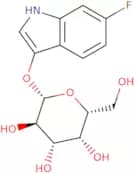
Fórmula:C19H22O9Pureza:Min. 95 Area-%Peso molecular:394.37 g/mol6-Fluoro-3-indoxyl-beta-D-galactopyranoside
CAS:6-Fluoro-3-indoxyl-beta-D-galactopyranoside is a fluorescent chromogenic substrate that is commonly used for the detection and quantification of beta-galactosidase activity. When this substrate is hydrolyzed by beta-galactosidase, it produces a fluorescent blue product that can be easily detected and measured using a fluorometer or spectrophotometer. This substrate is often used in microbiology and molecular biology research to study gene expression and enzyme kinetics, and is also used in medical diagnostics as a marker for specific diseases and conditions.Fórmula:C14H16FNO6Pureza:Min. 98.0 Area-%Peso molecular:313.29 g/molAldol® 458 nonanoate, Biosynth Patent: EP 2427431 and US 8940909
CAS:Produto ControladoAldol 458 nonanoate is a fluorogenic substrate that can be used in the detection of enzyme activity particularly C8/C9-esterases, lipases activity producing a yellow/green-orange color. Aldol 458 nonanoate reacts with enzymes, such as oxidoreductases and hydrolases, to produce light. This product is a conjugate of aldol 458 nonanoate and an enzyme substrate for the detection of these enzymes. It has been shown to be useful in food testing, staining, fluorogenic substrate, environmental testing, chromogenic substrate, conjugate, high purity, enzyme substrate for diagnostics and ligand.
Fórmula:C25H29NO4Pureza:Min. 95%Peso molecular:407.5 g/mol5-Bromo-4-chloro-3-indoxyl-N-acetyl-beta-D-glucosaminide
CAS:Chromogenic substrate for N-acetyl-β-D-glucosaminidase yielding a blue precipitate. Contained in certain mycological culture media. Used in histochemistry.
Fórmula:C16H18BrClN2O6Pureza:Min. 99.5 Area-%Peso molecular:449.69 g/mol4-Nitrophenyl N,N'-diacetyl-b-D-chitobioside
CAS:4-Nitrophenyl N,N'-diacetyl-beta-D-chitobioside is a chromogenic substrate for chitinase. Upon hydrolysis, para-nitrophenol is released yielding a yellowish colour. 4-Nitrophenyl N,N'-diacetyl-beta-D-chitobioside is used in different applications such as the Fungal infection detection, chitin degradation assaysPureza:Min. 95%Cor e Forma:PowderPeso molecular:545.49 g/molNaphthol AS-BI sulphate potassium
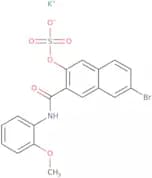
CAS:Naphthol AS-BI sulphate potassium salt is a modified naphtol AS substrate used for alkaline and acid phosphatase.Fórmula:C18H14BrNO6S•KPureza:Min. 95%Peso molecular:491.38 g/molNaphthol AS-BI N-acetyl-beta-D-glucosaminide
CAS:Naphthol AS-BI N-acetyl-beta-D-glucosaminide is a fluorogenic substrate for the pararosaniline-glyoxalase (PG) reaction. This substrate is used to study enzymatic activity in two human isoenzymes of PG, PG I and PG II. The conversion of this substrate by PG I or PG II results in a color change from yellow to red. Naphthol AS-BI N-acetyl-beta-D-glucosaminide may be used as an experimental tool to measure the activity of these enzymes and to study the effect of inhibitors on their activity. It can also be used as a marker for studying enzyme transfer between cells.Fórmula:C26H27BrN2O8Pureza:Min. 97.0 Area-%Peso molecular:575.42 g/mol1-Naphthyl β-D-mannopyranoside
CAS:1-Naphthyl β-D-mannopyranoside is a chromogenic (also fluorogenic) substrate. After cleavage, 1-naphthol is released and is used to quantify beta-mannosidase activity.Fórmula:C16H18O6Pureza:Min. 95%Cor e Forma:PowderPeso molecular:306.31 g/mol5-Bromo-4-chloro-3-indoxyl-3-acetate
CAS:5-Bromo-4-chloro-3-indolyl acetate (5BCIA) is an enzyme substrate that has been shown to inhibit the activity of a number of enzymes, such as proteases and phosphatases. It has also been shown to inhibit the growth of a number of human pathogens, including Staphylococcus aureus, Escherichia coli, Salmonella enterica, Pseudomonas aeruginosa, and Mycobacterium tuberculosis. 5BCIA inhibits bacterial growth by binding to the active site of the enzyme phosphatase and preventing it from hydrolyzing a phosphate group from ATP. This process is necessary for energy metabolism in all living cells. 5BCIA has been shown to be effective against methicillin resistant Staphylococcus aureus (MRSA).
Fórmula:C10H7BrClNO2Pureza:Min. 98 Area-%Peso molecular:288.53 g/mol5-Bromo-3-indolyl phosphate disodium salt
CAS:5-Bromo-3-indolyl phosphate disodium salt is a chemiluminescent substrate that is used for the detection of bacterial activity. It reacts with oxygen to produce light, which can be measured using a luminometer. It is also used as a chromogenic substrate for detection of bacterial activity in culture media. The enzyme reaction produces an intense blue fluorescence and is used for diagnostic purposes in food testing and medical diagnostics. 5-Bromo-3-indolyl phosphate disodium salt has been shown to be effective against many bacteria and fungi, including Staphylococcus aureus, Streptococcus pyogenes, Escherichia coli, Pseudomonas aeruginosa, Candida albicans and Aspergillus niger. This product is chemically stable at room temperature but should be stored at 4°C or below.
Fórmula:C8H5BrNO4PNa2Pureza:Min. 95%Cor e Forma:PowderPeso molecular:335.99 g/mol5-Bromo-4-chloro-3-indoxyl-beta-D-glucuronic acid, cyclohexylammonium salt monohydrate
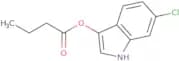
CAS:Chromogenic substrate for β-glucuronidase (GUS) yieldinga blue precipitate. It is used for detection of GUS+ bacterial colonies and has been reported as chromogenic substrate in a number of chromogenic E. coli / coliform culture media. About 95% of common E. coli possess β-D-glucuronidase activity. Such chromogenic culture media are used for detection and enumeration of E. coli in food samples such as meat, dairy products, shellfish and have clinical applications in the assessment of urinary infections. It has gained international acceptance as highly accurate test for the presence of E. coli in drinking water samples. It is also used for the detection of the expression of GUS (E. coli β-glucuronidase) gene fusion marker constructs in plants.Fórmula:C20H28BrClN2O8Pureza:Min. 99.0 Area-%Peso molecular:539.81 g/mol6-Chloro-3-indolyl butyrate
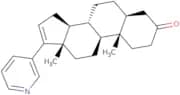
CAS:6-Chloro-3-indolyl butyrate is a chromogenic substrate for lipases. Use in lipid digestion and metabolism studies, it produces a salmon-pink color when 6-chloro-3-indolyl is released after enzymatic cleavage.Fórmula:C12H12ClNO2Pureza:Min. 95%Cor e Forma:PowderPeso molecular:237.68 g/mol(5α)-17-(3-Pyridinyl)androst-16-en-3-one
CAS:Produto Controlado(5α)-17-(3-Pyridinyl)androst-16-en-3-one is a natural metabolite of testosterone that is produced in the liver. It has been identified as an impurity in API, which can be found in drugs used for the treatment of high blood pressure and prostate cancer. (5α)-17-(3-Pyridinyl)androst-16-en-3-one is not active as a drug itself, but it can be used as a standard to study the metabolism of testosterone and other steroids.Fórmula:C24H31NOPureza:Min. 98 Area-%Cor e Forma:White PowderPeso molecular:349.51 g/mol5-Bromo-4-chloro-3-indolyl β-D-lactopyranoside
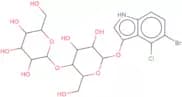
CAS:5-Bromo-4-chloro-3-indolyl b-D-lactopyranoside is a chromogenic substrate used to detect the specific enzymatic activity of beta-galactosidase. After cleavage, 5-bromo-4-chloro-indoxyl is released, resulting in a blue to blue-green color change in bacterial colonies or media. 5-Bromo-4-chloro-3-indolyl b-D-lactopyranoside is used in lactose intolerance screening.Fórmula:C20H25BrClNO11Pureza:Min. 95%Cor e Forma:PowderPeso molecular:570.77 g/mol5-Bromo-4-chloro-3-indoxyl phosphate p-toluidine, micronized
CAS:A substrate for alkaline phosphatase yielding a blue insoluble product upon cleavage. Colour can be further enhanced when used together with Nitroblue tetrazolium. The substrate system is versatile and has functions in a variety of applications, including Northern, Southern, and Western blotting, in situ hybridization, ELISAs, microarray and immunohistochemistry. The micronized structure enhances solubility.Fórmula:C8H6BrClNO4P•C7H9NPureza:Min. 95%Cor e Forma:PowderPeso molecular:433.63 g/mol2-Nitrophenyl-beta-D-galactopyranoside
CAS:Chromogenic β-galactosidase substrate yielding a yellow solution upon cleavage. Can be used for the detection of coliforms due to their beta-galactosidase activity.Fórmula:C12H15NO8Pureza:Min. 99.0 Area-%Peso molecular:301.26 g/mol4-Nitrophenyl 2-acetamido-2-deoxy-a-D-glucopyranoside
CAS:4-Nitrophenyl 2-acetamido-2-deoxy-a-D-glucopyranoside is a chromogenic pNP substrate specifically designed for the analysis of N-acetylglucosaminidase activity. Upon enzyme action, the substrate releases 4-nitrophenol, a yellow compound that can be detected by spectrophotometric methods, providing a reliable and sensitive means of quantifying enzyme activity. This versatile substrate is widely used in biochemical studies, disease diagnostics, and the enzyme production industry.Fórmula:C14H18N2O8Cor e Forma:White Off-White PowderPeso molecular:342.3 g/mol4-Nitrophenyl 2-acetamido-2-deoxy-b-D-glucopyranoside-6-sulfate sodium salt
CAS:4-Nitrophenyl 2-acetamido-2-deoxy-beta-D-glucopyranoside-6-sulfate sodium salt is a chromogenic substrate for N-acetylglucosamine-6-sulfatase. Upon hydrolysis, para-nitrophenol is released yielding a yellowish colour. 4-Nitrophenyl 2-acetamido-2-deoxy-beta-D-glucopyranoside-6-sulfate sodium salt is used in different applications such as the Mucopolysaccharidosis IIID (Sanfilippo D) diagnosis
Fórmula:C14H17N2O11S·NaPureza:Min. 95 Area-%Cor e Forma:PowderPeso molecular:444.35 g/mol4-Nitrophenyl phosphate mono(2-amino-2-ethyl-1,3-propanediol) salt monohydrate
CAS:4-Nitrophenyl phosphate mono(2-amino-2-ethyl-1,3-propanediol) salt monohydrate is a chromogenic substrate that can be used to detect the presence of alkaline phosphatase. It is also used in food testing and diagnostics. 4NPPMD is a substrate for the enzyme alkaline phosphatase, which has been shown to play a role in the inflammatory response. The production of 4NPPMD by bacteria in the environment can be detected with chemiluminescence or bioluminescence. This product has been shown to react with both horseradish peroxidase and alkaline phosphatase, as well as other enzymes that are involved in metabolic pathways. This substrate also has high purity and fluorescence properties.Fórmula:C11H21N2O9PPureza:Min. 95 Area-%Peso molecular:356.26 g/mol2-Chloro-4-nitrophenyl b-D-maltoheptaoside
CAS:2-Chloro-4-nitrophenyl b-D-maltoheptaoside is a fluorescent compound that is used in medical research for the visualization of muscle glycogen. It is also used to study the binding of molecules to proteins, as well as to measure enzyme activity. The compound has been shown to be insensitive to changes in pH and temperature, so it can be used at different pH levels and temperatures without affecting its function. 2-Chloro-4-nitrophenyl b-D-maltoheptaoside can be detected by titration calorimetry due to its high molecular weight. The molecule's affinity for carbohydrates also allows it to be used in optimization studies of carbohydrate molecules.Pureza:Min. 95%Peso molecular:1,308.54 g/molAldol® 515 4-acetoxybutyrate solution, 0.75 M in DMSO, Biosynth Patent: EP 2427431 and US 8940909
CAS:Produto ControladoAldol® 515 4-acetoxybutyrate solution, 0.75 M in DMSO, is a chromogenic substrate that can be used to measure the activity of aldolase. It is a liquid at room temperature and has a pH of 7.2. The Aldol® 515 4-acetoxybutyrate solution, 0.75 M in DMSO, is soluble in water and organic solvents such as DMSO and ethanol. This product does not contain any preservatives or additives and is suitable for use with humans and animals. Aldol® 515 4-acetoxybutyrate solution, 0.75 M in DMSO, is manufactured by Cymit Quimica under patents EP 2427431 and US 8940909.br>br> Aldolase catalyzes the conversion of dihydroxyacetone phosphate (DHAP) to glyceraldehyde 3-phosphateFórmula:C29H28N2O5Pureza:Min. 95 Area-%Peso molecular:484.54 g/mol1-Naphthyl β-D-galactopyranoside
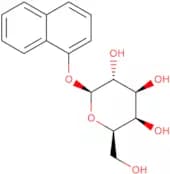
CAS:1-Naphthyl b-D-galactopyranoside is a chromogenic substrate used to detect the presence of beta-galactosidase enzymes. The enzyme cleaves the substrate to produce a colored product that can be quantified and visualized. This substrate is commonly used in applications such as the detection of lacZ gene expression in bacterial colonies or in histochemical staining of tissues to identify beta-galactosidase activity.Fórmula:C16H18O6Pureza:Min. 95%Cor e Forma:PowderPeso molecular:306.32 g/mol2,4-Dinitrophenyl 2-deoxy-2-fluoro-b-D-glucopyranoside
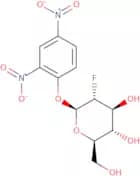
CAS:2,4-Dinitrophenyl 2-deoxy-2-fluoro-β-D-glucopyranoside, sometimes referred as 2F-DNPG, is an enzyme substrate for measuring beta-glucosidase activity. It is a mechanism-based inactivator of glycosidases, including beta-glucocerebrosidase (Gcase), a lysosomal enzyme encoded by the GBA1 gene responsible for breaking down glucosylceramide into ceramide and glucose. The use of 2,4-dinitrophenyl 2-deoxy-2-fluoro-β-D-glucopyranoside as an enzyme substrate permits the study of the catalytic mechanism and reaction intermediate of these enzymes.Fórmula:C12H13FN2O9Pureza:Min. 98 Area-%Cor e Forma:PowderPeso molecular:348.24 g/mol5-Bromo-4-chloro-3-indolyl myristate
CAS:5-Bromo-4-chloro-3-indolyl myristate is a chromogenic substrate used to detect the specific enzymatic activity of lipase or esterase. After cleavage, 5-bromo-4-chloro-indoxyl is released, resulting in a blue to blue-green color change in bacterial colonies or media. 5-Bromo-4-chloro-3-indolyl myristate is used in screening assays for pancreatic lipase deficiency and lipid metabolism studies.Fórmula:C22H31BrClNO2Pureza:Min. 95%Cor e Forma:PowderPeso molecular:456.84 g/mol4-Nitrophenyl 4,6-benzylidene-α-D-maltoheptaoside
CAS:4-Nitrophenyl 4,6-benzylidene-alpha-D-maltoheptaoside is a chromogenic substrate for alpha-amylase. Upon hydrolysis, para-nitrophenol is released yielding a yellowish colour. 4-Nitrophenyl 4,6-benzylidene-alpha-D-maltoheptaoside is used in different applications such as the Starch digestion studies, industrial enzyme optimizationFórmula:C55H79NO38Pureza:Min. 95%Cor e Forma:PowderPeso molecular:1,362.2 g/molAldol® 495 acetate, Biosynth Patent: EP 2427431 and US 8940909
CAS:Produto ControladoAldol 495 is a chemiluminescent substrate for the detection of aldehyde reductase (ALR) activity. It is an acetate ester that reacts with ALR to form an aldehyde product, which then reacts with luminol in the presence of hydrogen peroxide to produce light. Aldol 495 is used in the diagnosis of ALR deficiency, which can cause acute intermittent porphyria and other diseases. Aldol 495 has been shown to be non-toxic and non-mutagenic.Fórmula:C22H17ClN2O3Pureza:Min. 95%Cor e Forma:PowderPeso molecular:392.83 g/mol6-Chloro-3-indoxyl-alpha-D-glucopyranoside
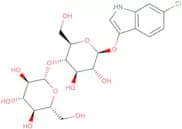
CAS:Chromogenic substrate for α-glucosidase yielding a salmon-colored precipitate.Fórmula:C14H16ClNO6Pureza:Min. 98 Area-%Peso molecular:329.74 g/mol6-Chloro-3-indolyl β-D-cellobioside
CAS:6-Chloro-3-indolyl b-D-cellobioside is a chromogenic substrate that produces a salmon-pink color after enzymatic cleavage. It is used for detecting the activity of beta-D-cellobiosidase in enzyme assays.
Pureza:Min. 95%Cor e Forma:White To Off-White SolidPeso molecular:491.87 g/mol3,4-Cyclohexenoesculetin beta-D-galactopyranoside
CAS:Chromogenic substrate for beta-galactosidaseFórmula:C19H22O9Pureza:Min. 95 Area-%Cor e Forma:PowderPeso molecular:394.37 g/mol5-Bromo-4-chloro-3-indoxyl-β-D-glucuronic acid, sodium salt anhydrous
CAS:5-Bromo-4-chloro-3-indoxyl-beta-D-glucuronic acid, sodium salt anhydrous is a potent inhibitor of histidine decarboxylase (HDC). It is used in the histochemical staining of dehydrogenase and effector proteins in urine samples. This compound has been shown to inhibit the growth of macroalgae and can be used as a selective agent for phylogenetic tree construction. 5BDG,Sr with its high specificity for HDC, also inhibits cell proliferation in plant cells and ovules.Fórmula:C14H12BrClNNaO7Pureza:Min. 98.0 Area-%Peso molecular:444.60 g/molAldol® 470 L-alanine amide, acetate salt, Biosynth Patent: EP 2427431 and US 8940909
CAS:Produto ControladoAldol® 470 L-alanine amide is a chromogenic and fluorogenic enzyme substrate used for detection of L-alanine aminopeptidase activity. The colorless enzyme substrate is cleaved by L-alanine aminopeptidase, yielding orange-yellow coloration. In addition, green fluorescence is generated when Aldol® 355 fluorescence enhancer or a suitable matrix is present. Aldol® 470 L-alanine amide can also be used in enzymatic assays or within live bacterial cultures. Aldol® 470 L-alanine amide is suitable for use in liquid and solid media, under aerobic as well as anaerobic conditions.Fórmula:C28H29N3O6Pureza:Min. 95.0 Area-%Peso molecular:503.55 g/mol6-Bromo-2-naphthyl α-D-mannopyranoside
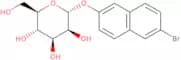
CAS:Chromogenic substrate to visualize the activity of alpha-D-mannopyranoside; red color producedFórmula:C16H17BrO6Pureza:Min. 95%Cor e Forma:PowderPeso molecular:385.21 g/mol8-Hydroxyquinoline-beta-D-glucuronic acid, sodium salt
CAS:8-Hydroxyquinoline-beta-D-glucuronic acid, sodium salt is a fluorogenic substrate that can be used for enzymatic detection of peroxidase. The substrate is available in a variety of forms, including powder and liquid. This product has been tested for environmental and bioluminescence activity, as well as food safety. It has also been shown to be a useful ligand in immunoassays.
Fórmula:C15H14NNaO7Pureza:Min. 98 Area-%Cor e Forma:White PowderPeso molecular:343.26 g/mol