Carboidratos e Glicoconjugados
Os carboidratos são compostos orgânicos formados por carbono, hidrogénio e oxigénio, cuja estrutura básica é composta por monossacarídeos. Estes podem ligar-se para formar dissacarídeos, oligossacarídeos ou polissacarídeos, dependendo do número de unidades monoméricas. Os carboidratos desempenham um papel fundamental no armazenamento de energia, na estrutura celular e na comunicação celular. Os seus derivados são utilizados em produtos farmacêuticos, como adoçantes e excipientes.
Na CymitQuimica, oferecemos uma ampla variedade de carboidratos e seus derivados para investigação e aplicações industriais.
Foram encontrados 5010 produtos de "Carboidratos e Glicoconjugados"
Ordenar por
Pureza (%)
0
100
|
0
|
50
|
90
|
95
|
100
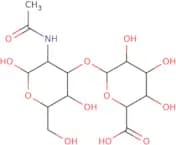
2-(Acetylamino)-2-deoxy-3-O-β-D-glucopyranuronosyl-β-D-glucopyranose
CAS:<p>2-(Acetylamino)-2-deoxy-3-O-β-D-glucopyranuronosyl-β-D-glucopyranose is an analog of atropine that has shown potential as an anticancer agent. It acts as a kinase inhibitor, specifically targeting protein kinases involved in cancer cell growth and survival. This compound has been found in Chinese urine and has been shown to induce apoptosis in human tumor cells. As a potent inhibitor of kinases, it may have potential as a therapeutic agent for the treatment of various types of cancer.</p>Fórmula:C14H23NO12Pureza:Min. 95%Peso molecular:397.33 g/molDisialyl, monofucosyllacto-N-hexaose
CAS:<p>Disialyl, monofucosyllacto-N-hexaose is a synthetic oligosaccharide also found in human milk</p>Fórmula:C68H112N4O51Pureza:Min. 95%Peso molecular:1,801.61 g/molPidotimod diketopiperazine-6-propanoic acid
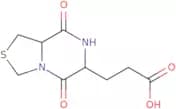
CAS:<p>Pidotimod is an impurity in the drug product, which is a synthetic diketopiperazine-6-propanoic acid. Pidotimod is an impurity standard that is used in the development of drugs and as a pharmacopoeia. It has been shown to be metabolized by human liver microsomes and human erythrocytes.</p>Fórmula:C9H12N2O4SPureza:Min. 95%Peso molecular:244.27 g/molb-D-Gentiotriose
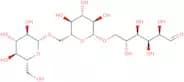
CAS:<p>b-D-Gentiotriose is a synthetic fluorinated monosaccharide that is used in the synthesis of oligosaccharides and polysaccharides. This product can be customized for glycosylation, methylation, or click modification. The purity level of this product is greater than 99%, making it suitable for use in pharmaceuticals, food additives, and other applications.</p>Fórmula:C18H32O16Pureza:Min. 95%Peso molecular:504.44 g/molMethyl a-D-laminaribioside
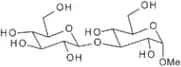
CAS:<p>Methyl a-D-laminaribioside is a modified glycosylation product of D-Laminaribiose. It is an oligosaccharide that has been modified with methyl and fluorine groups. The modification of the sugars with these functional groups increases the stability and solubility of the molecule. Methyl a-D-laminaribioside is used in research for its ability to be click modified, polysaccharides, or saccharides, as well as being used in synthetic chemistry as a sugar to modify other molecules. Methyl a-D-laminaribioside is also used in medicine as an anti-inflammatory agent. Methyl a-D-laminaribioside can be synthesized by custom synthesis and has CAS number 7115-19-7.</p>Fórmula:C13H24O11Pureza:Min. 95%Cor e Forma:PowderPeso molecular:356.32 g/molAcarbose EP Impurity H
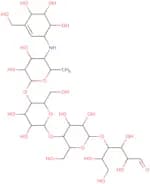
CAS:<p>Acarbose EP Impurity H is an impurity of acarbose, a drug product used in the treatment of type II diabetes. Acarbose is a natural product and its synthesis starts from a chemical called alpha-D-glucopyranosyl-3-O-[2,4,6-trichloro-3-(trifluoromethyl)phenyl]pyridine. Acarbose is metabolized by the liver to form Acarbose EP Impurity H. The metabolism studies of this impurity have shown that it has niche pharmacological properties. Acarbose EP Impurity H can be used as an analytical or API impurity for HPLC standard or as a synthetic intermediate for pharmaceutical research and development.</p>Fórmula:C25H43NO17Pureza:Min. 95%Peso molecular:629.61 g/molHeparin disaccharide I-H trisodium salt
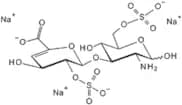
CAS:<p>Heparin disaccharide I-H trisodium salt is a high purity, custom synthesis, methylated, glycosylated, fluorinated, complex carbohydrate with a CAS number of 136098-04-9. It has been modified by the addition of a saccharide group and can be used for research purposes.</p>Fórmula:C12H16NNa3O16S2Pureza:Min. 95 Area-%Cor e Forma:PowderPeso molecular:563.35 g/molAcarbose EP Impurity F
CAS:<p>Acarbose EP Impurity F is an analytical impurity that is found in Acarbose EP, a drug product. Acarbose EP Impurity F is a synthetic compound and is not present in any natural products. The CAS number for this impurity is 83116-09-0. Acarbose EP Impurity F has been shown to be pharmacologically active in animal studies, but the specific activity of this impurity has not been determined. Acarbose EP Impurity F is used as an impurity standard in HPLC analysis of Acarbose EP and as a custom synthesis. Acarbose EP Impurity F may also be used as a research and development phase, niche product or as a drug development research compound.</p>Fórmula:C31H53NO23Pureza:Min. 95%Peso molecular:807.75 g/molAcarbose EP Impurity G
CAS:<p>Acarbose EP Impurity G is a pharmaceutical grade impurity that is used as a reference standard for HPLC and LC-MS analysis. Acarbose EP Impurity G is a metabolite of acarbose and can be found in human plasma. It has been shown that Acarbose EP Impurity G induces the metabolism of glucose, which may be due to its ability to inhibit the activity of alpha-glucosidase. Acarbose EP Impurity G also inhibits the activity of pancreatic beta-cells, leading to impaired insulin secretion.</p>Fórmula:C31H53NO23Pureza:Min. 95%Peso molecular:807.75 g/molBlood Group A type III/IV linear trisaccharide
<p>GalNAca1-3Galb1-3GalNAc</p>Fórmula:C22H38N2O16Pureza:Min. 95%Peso molecular:586.54 g/molAMG 837 calcium hydrate
CAS:<p>AMG 837 calcium hydrate is a potent GPR40 agonist with an EC50 of 13 nM.</p>Fórmula:C52H44CaF6O8Pureza:98.07%Cor e Forma:SolidPeso molecular:950.97Neu5Ac(a2-6)Gal(b1-4)GalNAc
CAS:<p>Neu5Ac(a2-6)Gal(b1-4)GalNAc is a synthetic, fluorinated monosaccharide. It is an oligosaccharide that has been custom synthesized and glycosylated. It is a complex carbohydrate that has been modified with methylation and click chemistry. Neu5Ac(a2-6)Gal(b1-4)GalNAc has CAS number 383365-43-3. This product is available in high purity and can be used in the synthesis of polysaccharides.</p>Fórmula:C25H42N2O19Pureza:Min. 95%Peso molecular:674.6 g/molNeolactotetraosylceramide
CAS:<p>Neolactotetraosylceramide (NT4) is a glycoconjugate that is found in human serum. It has been shown to bind to the receptor site of monoclonal antibodies and inhibit the binding of tumor necrosis factor-α (TNF-α), which is involved in immune system regulation. NT4 has also been shown to block the activity of receptors on human neutrophils, which may be due to its structural similarity to lactotetraosylceramide. NT4 has been implicated as a potential cause for autoimmune diseases and cancer tissues, due to its structural similarity with glycoproteins that are found on cell surfaces. The optimum pH for NT4 is 7.5 and its glycan structure consists of two mannose residues linked by an alpha-1,6 linkage. This glycoconjugate binds well with blood group A and B antigens, but not with blood group O antigen. NT4 elicits antibody response</p>Fórmula:C62H114N2O23Pureza:Min. 95%Peso molecular:1,255.57 g/molb-D-Fructofuranosyl a-D-glucopyranoside 6-octanoate
CAS:<p>b-D-Fructofuranosyl a-D-glucopyranoside 6-octanoate is a saccharide that is used as an intermediate for the synthesis of polysaccharides. This compound can be used to synthesize glycosylated oligosaccharides with high purity and good yields. It can also be used in the preparation of complex carbohydrates, including fluorinated sugar derivatives.</p>Pureza:Min. 95%α,β-Trehalose
CAS:<p>α,β-Trehalose is a carbohydrate that is found in many organisms and has been shown to have biochemical properties such as energy metabolism, enzyme activities, and x-ray diffraction data. Trehalose has a phase transition temperature of around 98°C, which makes it an ideal sugar for food preservation. Trehalose can also be used as a sugar substitute with the same sweetness level as sucrose. The chemical stability of trehalose allows it to be used as a preservative in food and beverages. Trehalose has been shown to be nontoxic in animal studies with doses up to 2000 mg/kg body weight. It also has an optimum pH of 7 and is stable at high temperatures.</p>Fórmula:C12H22O11Pureza:Min. 95 Area-%Cor e Forma:White PowderPeso molecular:342.3 g/mola-D-Galactosyl-mannotriose
CAS:<p>a-D-Galactosyl-mannotriose is a complex oligosaccharide, which is derived from plant materials such as leguminous seeds. Its mode of action involves selectively promoting the growth of beneficial gut bacteria, particularly bifidobacteria and lactobacilli, through its structural composition that resists hydrolysis by human digestive enzymes. This non-digestibility allows it to reach the colon intact, where it can exert its prebiotic effects.</p>Fórmula:C24H42O21Pureza:Min. 95 Area-%Cor e Forma:White PowderPeso molecular:666.58 g/molNA3F N-Glycan
CAS:<p>NA3F is a N-glycan that is found on various glycoproteins and glycolipids. It consists of sialic acid, galactose, and fucose sugars in the ratio 3:2:1. NA3F N-glycans are synthesized by the removal of the terminal sialic acid residue from an Asn-linked oligosaccharide precursor. These types of glycans are found on high mannose (HMan) and hybrid (HHyb) glycans. The synthesis of NA3F N-glycan requires the activity of two enzymes: peptidase and sialyltransferase. The enzyme peptidase cleaves an α(1,4)-linked oligosaccharide at the nonreducing end to form a free α(1,6) linked oligosaccharide with a terminal α(1,2) linked mannose residue. This process releases the terminal</p>Fórmula:C82H137N5O60Pureza:Min. 95%Peso molecular:2,152.96 g/molXyloglucan heptasaccharide
CAS:<p>Xyloglucan is a heptasaccharide that is an important component of the plant cell wall. Xyloglucan heptasaccharides are found in the cell walls of many plants, including banana and potato. Xyloglucan heptasaccharides are composed of alternating glucose and xylose residues, with a glycosidic linkage between two xylose residues. This linkage can be hydrolyzed by α-amyrinase to yield two xylose monomers. The conformational properties of xyloglucan depend on its stereochemistry, which has been shown to affect its ability to inhibit inflammatory bowel disease (IBD). Xyloglucan heptasaccharides have also been shown to bind to bacterial cells, inhibiting their growth.</p>Fórmula:C39H66O33Pureza:Min. 95%Cor e Forma:PowderPeso molecular:1,062.92 g/molCellobiose-6'-phosphate
CAS:<p>produced as the sodium salt</p>Fórmula:C13H25O14PPureza:Min. 95%Peso molecular:436.3 g/molGalactostatin
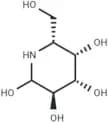
CAS:<p>Galactostatin is an inhibitor of β-galactosidase.</p>Fórmula:C6H13NO5Cor e Forma:SolidPeso molecular:179.171