Detergentes
Os detergentes, classificados sob surfactantes e detergentes, são compostos essenciais projetados para reduzir a tensão superficial em vários produtos, facilitando os processos de limpeza e emulsificação. Esta seção inclui uma ampla gama de surfactantes, conhecidos por sua alta eficácia em alterar as propriedades de superfície. Entre eles, os detergentes zwitteriônicos se destacam devido à sua natureza mais suave e não desnaturante, tornando-os ideais para aplicações que exigem uma ação suave, mas eficaz. Esses detergentes são cruciais tanto em ambientes industriais quanto laboratoriais, onde ajudam a limpar, emulsionar e estabilizar produtos sem comprometer sua integridade. Sua versatilidade e eficácia os tornam indispensáveis em inúmeras aplicações, desde produtos de limpeza doméstica até reagentes de laboratório especializados.
Subcategorias de "Detergentes"
Foram encontrados 746 produtos de "Detergentes"
Ordenar por
Pureza (%)
0
100
|
0
|
50
|
90
|
95
|
100
Cocamidopropyl Betaine (~30% aqueous solution)
CAS:<p>Applications Cocamidopropyl Betaine is a medium strength surfactant.<br></p>Fórmula:C19H38N2O3Cor e Forma:ColourlessPeso molecular:342.52N-(3-Aminopropyl)-n-dodecylpropane-1,3-diamine
CAS:Produto Controlado<p>Stability Hygroscopic<br>Applications N-(3-Aminopropyl)-n-dodecylpropane-1,3-diamine is a reactant used in the synthesis of gluconamide derivatives as cationic surfactants with antimicrobial properties.<br> Not a dangerous good if item is equal to or less than 1g/ml and there is less than 100g/ml in the package<br>References Prieto-Blanco, M. et al.: J. Chrom., 1431, 176 (2016); Zhi, L. et al.: J. Surf. Deter., 19, 337 (2016);<br></p>Fórmula:C18H41N3Cor e Forma:ColourlessPeso molecular:299.54Hexyl b-D-maltopyranoside
CAS:<p>Hexyl b-D-maltopyranoside is a biopharmaceutical that is used in drug development. It is used as a ligand for the μ-opioid receptor, which is a class of opioid receptors that are activated by morphine and endogenous peptides such as endorphins, dynorphins, and enkephalins. This ligand can be immobilized on a surface for use in immunoassays or other methods of detection. Hexyl b-D-maltopyranoside has been shown to have pharmacological effects in animal studies, although it has not yet been approved for clinical use in humans.</p>Fórmula:C18H34O11Pureza:Min. 95%Cor e Forma:White PowderPeso molecular:426.46 g/molNonyl b-D-maltopyranoside
CAS:<p>Nonyl b-D-maltopyranoside is a high purity custom synthesis sugar. The CAS number is 106402-05-5 and the molecular weight is 396.2 g/mol. This product has been synthesized using Click modification, Fluorination, Glycosylation, Synthetic, Methylation, Modification, Oligosaccharide, Monosaccharide and saccharide. This product can be used in the preparation of complex carbohydrate.</p>Fórmula:C21H40O11Pureza:Min. 95%Cor e Forma:White/Off-White SolidPeso molecular:468.54 g/molN,N-Bis[3-D-gluconamidopropyl]cholamide
CAS:<p>N,N-Bis[3-D-gluconamidopropyl]cholamide is a potent inhibitor of the cytochrome P450 enzyme. It has been shown to bind to peptides and monoclonal antibodies. This drug also inhibits the acyl chain elongation in the chemical process that produces prostaglandins, leading to their depletion. N,N-Bis[3-D-gluconamidopropyl]cholamide is also an inhibitor of plant α subunit, which is involved in the synthesis of fatty acids and phytohormones. This agent has a high affinity for solanum tuberosum (potato) and can be used as a marker for this species. The kinetic energy of particles enhanced by N,N-bis[3-D-gluconamidopropyl]cholamide was found to be dependent on the fatty acid content of the molecule. The optimum</p>Fórmula:C42H75N3O16Pureza:Min. 95%Cor e Forma:PowderPeso molecular:878.06 g/molOctyl 4-O-(b-D-galactopyranosyl)-b-D-glucopyranoside
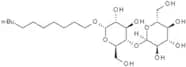
CAS:<p>Octyl 4-O-(b-D-galactopyranosyl)-b-D-glucopyranoside is a galactose derivative of octyl 4-O-(b-D-glucopyranosyl)-b-D-glucopyranoside. It has been used to immobilize the enzyme phospholipase A2 in an exothermic reaction. This product is a white solid that is soluble in water. Octyl 4-O-(b-D-galactopyranosyl)-b-D-glucopyranoside has been shown to be effective against mycobacteria such as Mycobacterium avium complex and Mycobacterium tuberculosis, but not against other bacteria. This product may be useful for the treatment of mycobacterial infections because it exhibits excisional activity and can cleave phospholipid membranes.</p>Fórmula:C20H38O11Pureza:Min. 95%Cor e Forma:PowderPeso molecular:454.51 g/molDecyl b-D-thioglucopyranoside
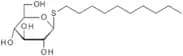
CAS:<p>Decyl b-D-thioglucopyranoside is a saccharide that is a methylated derivative of the sugar glucose. It is used in the synthesis of oligosaccharides, glycosylations, and fluorinated carbohydrates. The compound can be custom synthesized to suit specific needs and has high purity.</p>Fórmula:C16H32O5SPureza:Min. 95%Cor e Forma:PowderPeso molecular:336.49 g/molTetraethylene glycol monooctyl ether
CAS:<p>Tetraethylene glycol monooctyl ether (TEGMOOE) is a surfactant and antimicrobial agent. It is a non-ionic surfactant that is used in many industrial applications, including as an emulsifier, dispersing agent, wetting agent, and defoamer. TEGMOOE has been shown to inhibit the multidrug efflux pump in some bacterial cells by binding to the signal peptide. This binding prevents the formation of an antibiotic-inhibitor complex with the enzyme cell wall synthesis that is required for cell wall biosynthesis, inhibiting protein synthesis and cell division. TEGMOOE also has been shown to have antimicrobial properties against tissue culture bacteria such as Staphylococcus aureus and Enterococcus faecalis. TEGMOOE can also be used as a calibration standard for titration calorimetry or flow systems by adding fatty acid to TEGMOOE solution</p>Fórmula:C16H34O5Pureza:Min. 95%Cor e Forma:LiquidPeso molecular:306.44 g/molDecyl b-D-thiomaltopyranoside
CAS:<p>Decyl b-D-thiomaltopyranoside is a glycosylation product of the monosaccharide, maltose. It is a complex carbohydrate that consists of two glucose molecules linked by alpha (1-4) glycosidic bonds. Decyl b-D-thiomaltopyranoside has been modified with methyl groups and fluorine atoms. This product is CAS No. 148565-56-4, and it can be custom synthesized to meet your specifications. The purity of this product ranges from 98% to 99%.</p>Fórmula:C22H42O10SPureza:Min. 95%Cor e Forma:White To Off-White SolidPeso molecular:498.63 g/molN-Methyl-N-octanoylglucamine
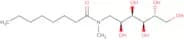
CAS:<p>N-Methyl-N-octanoylglucamine is a chemical compound that inhibits the activity of the enzyme diacylglycerol lipase, which breaks down the lipid diacylglycerol. This leads to an accumulation of diacylglycerols in the cellular membrane and increased permeability of the cell, which results in physiological effects such as increased release of neurotransmitters. N-Methyl-N-octanoylglucamine has been shown to bind to peptides and inhibit their proteolytic degradation by peptidases. It also has been shown to have an effect on monoclonal antibodies with a high affinity for fatty acids. This compound is used for sample preparation prior to analysis by MALDI mass spectrometry.</p>Fórmula:C15H31NO6Pureza:Min. 95 Area-%Cor e Forma:White PowderPeso molecular:321.41 g/molHexadecyl 2-acetamido-2-deoxy-b-D-glucopyranoside
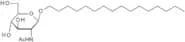
CAS:<p>Hexadecyl 2-acetamido-2-deoxy-b-D-glucopyranoside is a monosaccharide that is mediated by the enzyme 2,3-bisphosphoglycerate (2,3BPG) synthase. It is a key intermediate in the synthesis of glycerol 3 phosphate, which is a precursor for glycerol and phosphoglycerides in plants. Hexadecyl 2-acetamido-2-deoxy-b-D-glucopyranoside can be found in chloroplasts and leaves. This compound is also used as a spacer in liposomes, as well as to clone DNA sequences.</p>Fórmula:C24H47NO6Pureza:Min. 95%Peso molecular:445.63 g/mol2-((4,4,5,5,5-Pentafluoropentyl)oxy)octyl b-D-maltopyranoside
<p>2-((4,4,5,5,5-Pentafluoropentyl)oxy)octyl ?-D-maltopyranoside is a fluorinated surfactant that can be used as a substitute for traditional detergents in holding membranes proteins in the soluble fraction and improve their stability.</p>Fórmula:C25H43F5O12Pureza:Min. 95%Cor e Forma:SolidPeso molecular:630.59 g/mol2-((4,4,5,5,5-Pentafluoropentyl)oxy)dodecanyl b-D-maltopyranoside
<p>2-((4,4,5,5,5-Pentafluoropentyl)oxy)dodecanyl ?-D-maltopyranoside is a fluorinated form of Dodecyl ?-D-maltopyranoside (DDM). Fluorinated detergents are extremely bulky and hydrophobic. These types of detergents are not necessarily suitable for membrane protein extraction, but can stabilize proteins during the purification stages and during crystallization.</p>Fórmula:C29F5H52O12Pureza:Min. 95%Cor e Forma:SolidPeso molecular:687.71 g/molOctyl 2,3,4,6-tetra-O-acetyl-b-D-glucopyranoside
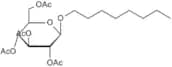
CAS:<p>Octyl 2,3,4,6-tetra-O-acetyl-b-D-glucopyranoside is an analog of 6-(trifluoromethyl)indoxyl beta-D-galactopyranoside. It is a potent antituberculosis agent that inhibits the growth of Mycobacterium tuberculosis and has been shown to be active against other bacteria in vitro. Octyl 2,3,4,6-tetra-O-acetyl-b-D-glucopyranoside inhibits bacterial growth by binding to DNA dependent RNA polymerase and prevents transcription and replication. This compound has been tested for its ability to inhibit neoplastic cell proliferation in humans.</p>Fórmula:C22H36O10Pureza:(%) Min. 95%Cor e Forma:PowderPeso molecular:460.52 g/molUndecyl a-D-maltopyranoside
CAS:<p>Undecyl a-D-maltopyranoside is a fluorescent dye that is used in immunohistochemical and immunocytochemical techniques. It has been shown to have excellent photostability, and is also useful for the detection of sulfides. This dye emits light at 520 nm when excited with laser light. The emission spectrum can be changed by adding other dyes, such as fluorescein or rhodamine, to the molecule. The addition of these dyes can also increase its photostability, which makes it an excellent candidate for use in confocal microscopy techniques. Undecyl a-D-maltopyranoside has been shown to react with proteins through an immunoreaction technique.</p>Fórmula:C23H44O11Pureza:Min. 95%Cor e Forma:PowderPeso molecular:496.59 g/mol2-(N-Octylcarboamido)phenyl-2-acetamido-3,4,6-tri-O-acetyl-2-deoxy-b-D-glucopyranoside
<p>2-(N-Octylcarboamido)phenyl-2-acetamido-3,4,6-tri-O-acetyl-2-deoxy-b-D-glucopyranoside is a synthetic compound that is used in the modification of carbohydrates. It is a fluorinated saccharide with an acetamide substituent and an acetyl group on the sugar ring. 2-(N-Octylcarboamido)phenyl-2-acetamido-3,4,6-triOacetyl2deoxybDglucopyranoside has been shown to be useful for glycosylation reactions. This compound may be modified with methyl groups or other modifications such as click chemistry.</p>Fórmula:C29H42N2O11Pureza:Min. 95%Peso molecular:594.65 g/molOctyl 3,6-di-O-(a-D-mannopyranosyl)-b-D-mannopyranoside
CAS:<p>Octyl 3,6-di-O-(a-D-mannopyranosyl)-b-D-mannopyranoside is an anti-infective agent that belongs to the functional group of mannosides. It is used as a model system for investigating the inhibitory effects of chemical structures on enzymatic activity. Octyl 3,6-di-O-(a-D-mannopyranosyl)-b-D-mannopyranoside has been shown to have inhibitory effects on alzheimer's disease and other neurodegenerative diseases. The octyl 3,6 di O-(a D mannopyranosyl) b D mannopyranoside molecule can be broken down into two parts: octyl 3,6 di O-(a D mannopyranosyl) b D mannose and octyl 6 b D manno pyranose. The octyl 6 b D manno pyr</p>Fórmula:C26H48O16Pureza:Min. 95%Cor e Forma:White To Off-White SolidPeso molecular:616.65 g/molOctyl glucose neopentyl glycol
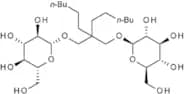
CAS:<p>Octyl glucose neopentyl glycol is a ubiquitin ligase inhibitor that prevents the ubiquitination and degradation of target proteins. It has been shown to inhibit protein synthesis in bacteria. Octyl glucose neopentyl glycol has been used to study the role of cytosolic proteins in emphysema. It was found that octyl glucose neopentyl glycol inhibits the production of these proteins by preventing the interaction between an ubiquitin-like protein and its substrate, thereby inhibiting protein synthesis. Octyl glucose neopentyl glycol also inhibits cancer cells by blocking fatty acid synthase, which is necessary for cell proliferation. This inhibitor can be used as a structural probe to determine enzyme-substrate interactions, such as those that occur with bacterial strain and protein synthesis. It can also be used to study the structure of proteins by exposing them to light or using inhibitors drugs.</p>Fórmula:C27H52O12Pureza:Min. 98 Area-%Cor e Forma:PowderPeso molecular:568.69 g/molOctadecylthioethyl 4-O-(4-O[6-O-a-D-glucopyranosyl-a-D-glucopyranosyl]-a-D-glucopyranosyl)-b-D-glucopyranoside
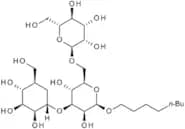
CAS:<p>Octadecylthioethyl 4-O-(4-O[6-O-a-D-glucopyranosyl-a-D-glucopyranosyl]-a-D-glucopyranosyl)-b-D-glucopyranoside is a methylated, fluorinated complex carbohydrate that has been custom synthesized. It is an oligosaccharide with a saccharide and monosaccharides. The chemical name for this compound is 2-[2-(2,3,4,6,7,8,9,10,11,12,13) -octadecylthioethyl] -1-[(6Z)-6-[(4Z)-4-[(4E)-4-(3S)-3-[(R)-1-(2S) -2-(2S) -3-(2S) -5(R) -5(R) -5(R) -</p>Fórmula:C44H82O21SPureza:Min. 95%Cor e Forma:SolidPeso molecular:979.18 g/molOctyl α-D-mannopyranoside
CAS:<p>Octyl α-D-mannopyranoside is an organic chemical compound that is a methylated saccharide. It is the product of the reaction of octanol with mannose and can be used for glycosylation, fluorination, and complex carbohydrate synthesis. This product has high purity, custom synthesis, and CAS No. 124650-29-9. It is also a methylated saccharide that belongs to the group of Polysaccharides. Octyl α-D-mannopyranoside can also be modified by click chemistry or Click modification.</p>Fórmula:C14H28O6Pureza:Min. 95%Cor e Forma:White PowderPeso molecular:292.37 g/mol




![N,N-Bis[3-D-gluconamidopropyl]cholamide](/_next/image/?url=https%3A%2Fstatic.cymitquimica.com%2Fproducts%2F3D%2Fthumb-webp%2FDB18793.webp&w=3840&q=75)





![Octadecylthioethyl 4-O-(4-O[6-O-a-D-glucopyranosyl-a-D-glucopyranosyl]-a-D-glucopyranosyl)-b-D-glu…](/_next/image/?url=https%3A%2Fstatic.cymitquimica.com%2Fproducts%2F3D%2Fthumb-webp%2FDO05214.webp&w=3840&q=75)