Aconitum carmichaelii Debx.
Aconitum carmichaelii, também conhecido como acônito chinês ou Fu Zi, é uma espécie amplamente utilizada na medicina tradicional chinesa por suas propriedades aquecedoras e analgésicas. Os compostos ativos, incluindo a aconitina, são altamente potentes e são objeto de pesquisa por seus potenciais benefícios terapêuticos, apesar de sua toxicidade. Na CymitQuimica, oferecemos extratos padronizados e compostos ativos de Aconitum carmichaelii para apoiar sua pesquisa em medicina herbal, toxicologia e farmacologia.
Foram encontrados 27 produtos de "Aconitum carmichaelii Debx."
Ordenar por
Pureza (%)
0
100
|
0
|
50
|
90
|
95
|
100
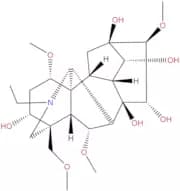
Aconine
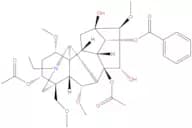
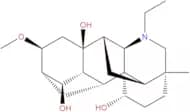
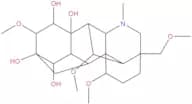
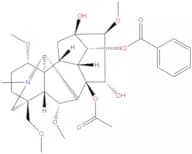
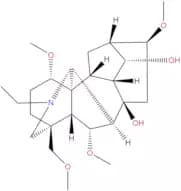
CAS:Aconine can inhibit RANKL-induced osteoclast differentiation in RAW264.7 cells by suppressing NF-κB and NFATc1 activation and DC-STAMP expression.Fórmula:C25H41NO9Pureza:95%~99%Cor e Forma:PowderPeso molecular:499.601Hypaconitine
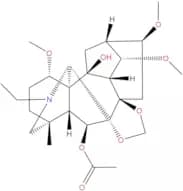
CAS:Hypaconitine (HA), an active and highly toxic constituent derived from Aconitum species, is widely used to treat rheumatism, the hepatic cytochrome P450-catalyzed metabolism of HA.Fórmula:C33H45NO10Pureza:95%~99%Cor e Forma:White powderPeso molecular:615.72Mesaconitine
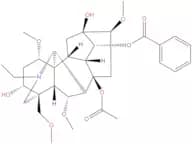
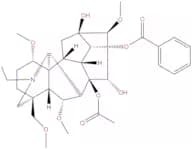
CAS:Mesaconitine increases the [Ca2+]i level in endothelial cells by influx of Ca2+ from extracellular spaces, suggests that mesaconitine-induced Ca2+ influx and activation of nitric-oxide synthase in endothelial cells and, thus, induced vasorelaxation in rat aorta.Fórmula:C33H45NO11Pureza:95%~99%Cor e Forma:White powderPeso molecular:631.71914-Benzoylaconine
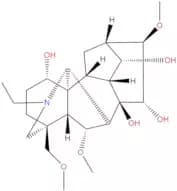
CAS:Benzoylaconine and aconitine can induce reproductive toxicity in BeWo Cell, the amino acid metabolism was the main metabolic pathway and responsible for the placental and fetal toxicity of them.Fórmula:C32H45NO10Pureza:95%~99%Cor e Forma:PowderPeso molecular:603.709