Metais
Os metais são elementos conhecidos por suas propriedades características, como alta condutividade elétrica e térmica, maleabilidade, ductilidade e brilho, tornando-os essenciais em uma ampla gama de aplicações industriais e de pesquisa. Esses elementos, incluindo ferro, cobre, alumínio e ouro, desempenham papéis críticos em setores como construção, eletrônica, transporte e manufatura. Na CymitQuimica, oferecemos uma seleção diversificada de metais de alta pureza, desenvolvidos para atender aos rigorosos requisitos de aplicações de pesquisa e industriais. Nosso catálogo inclui metais puros, ligas metálicas e compostos metálicos, todos rigorosamente testados quanto à qualidade e desempenho. Ao fornecer metais de alta qualidade, apoiamos pesquisadores e profissionais da indústria na obtenção de resultados precisos e eficientes em seus projetos, facilitando avanços em tecnologia, ciência dos materiais e engenharia.
Subcategorias de "Metais"
Foram encontrados 4493 produtos de "Metais"
Ordenar por
Pureza (%)
0
100
|
0
|
50
|
90
|
95
|
100
Dichloro[rel-[N(S)]-N-[2-(diphenylphosphinyl-κO)ethyl]-2-[(R)-methylthio-κS]ethanamine-κN](triphenylphosphine) ruthenium
CAS:Fórmula:C35H37Cl2NOP2RuSCor e Forma:brick red solidPeso molecular:753.66Bis(pentamethylcyclopentadienyl)magnesium, elec. gr. (99.999%-Mg) PURATREM
CAS:<p>Bis(pentamethylcyclopentadienyl)magnesium, elec. gr. (99.999%-Mg) PURATREM</p>Fórmula:(CH3)5C5MgPureza:(99.999%-Mg)Cor e Forma:white to yellow xtl.Peso molecular:294.77Dichloro[rel-[N2(S)]-N1,N1-dimethyl-N2-[2-[(R)-phenylthio-κS]ethyl]-1,2-ethanediamine-κNN1,κN2](triphenylphosphine)ruthenium(II), compd. with dichloromethane
CAS:<p>Dichloro[rel-[N2(S)]-N1,N1-dimethyl-N2-[2-[(R)-phenylthio-κS]ethyl]-1,2-ethanediamine-κNN1,κN2](triphenylphosphine)ruthenium(II), compd. with dichloromethane</p>Fórmula:C30H35Cl2N2PRuSCH2Cl2Cor e Forma:burgundy xtl.Peso molecular:658.63Tris(2,2,6,6-tetramethyl-3,5-heptanedionato)aluminum, 99% (99.9%-Al) [Al(TMHD)₃]
CAS:<p>Tris(2,2,6,6-tetramethyl-3,5-heptanedionato)aluminum, 99% (99.9%-Al) [Al(TMHD)3]</p>Fórmula:Al(C11H19O2)3Pureza:(99.9%-Al)Cor e Forma:white xtl.Peso molecular:576.80Diacetato{(S)-(-)-5,5'-bis[di(3,5-xylyl)phosphino]-4,4'-bi-1,3-benzodioxole}ruthenium(II) Ru(OAc)₂[(S)-dm-segphos®]
CAS:<p>Diacetato{(S)-(-)-5,5'-bis[di(3,5-xylyl)phosphino]-4,4'-bi-1,3-benzodioxole}ruthenium(II) Ru(OAc)2[(S)-dm-segphos®]</p>Fórmula:C50H50O8P2RuCor e Forma:yellow to brownish-red to dark green solidPeso molecular:941.95Copper(II) Acetate Monohydrate
CAS:Produto Controlado<p>Applications Copper(II) Acetate Monohydrate is a versatile and cost-effective reagent that is used as a catalyst for N-monoalkylation of amino derivatives that are poor nucleophiles, and also for the synthesis of symmetrical 1,3-diynes. Copper(II) Acetate is also used as a mild caustic in the medical field.<br> Not a dangerous good if item is equal to or less than 1g/ml and there is less than 100g/ml in the package<br>References Balaraman, K. & Kesavan, V.: Synthesis, 2010, 3461 (2010); Martinez-Ascencio, A., et al.: Tetrahedron Lett., 51, 325 (2010); Theophanides, T. & Anastassopoulou, J.: Crit. Rev. Oncol. Hematol., 42, 57 (2002)<br></p>Fórmula:C4H8O4·Cu·H2OCor e Forma:NeatPeso molecular:183.65 + (18.02)Bis(N,N’-di-t-butylacetamidinato)ruthenium(II) dicarbonyl, 98% (99.99%-Ru) PURATREM
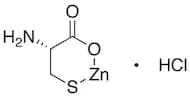
CAS:<p>Bis(N,N-di-t-butylacetamidinato)ruthenium(II) dicarbonyl, 98% (99.99%-Ru) PURATREM</p>Fórmula:C22H42N4O2RuPureza:98% (99.99%-Ru)Cor e Forma:beige to yellow solidPeso molecular:495.67Zinc Cysteinate Hydrochloride
CAS:Produto Controlado<p>Applications Increases activity of the antioxidative enzymes Catalase and Glutathione Peroxidase, thereby protecting retinal epithelial cells from high hydrogen peroxide concentrations.<br>References Hanley, W., et al.: Chem-Biol. Interactions, 21, 263 (1978),<br></p>Fórmula:C3H5NO2S·HCl·ZnCor e Forma:NeatPeso molecular:221.012Bis(ethylcyclopentadienyl)ruthenium(II), 98% (99.9%-Ru), 44-0040, contained in high-temp 50 ml Swagelok® cylinder (96-1071) for CVD/ALD
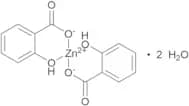
CAS:<p>Bis(ethylcyclopentadienyl)ruthenium(II), 98% (99.9%-Ru), 44-0040, contained in high-temp 50 ml Swagelok® cylinder (96-1071) for CVD/ALD</p>Fórmula:(CH3CH2)C5H4RuPureza:(99.9%-Ru)Cor e Forma:pale yellow liq.Peso molecular:287.37Zinc Salicylate Hydrate
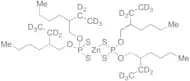
CAS:<p>Applications Zinc salicylate trihydrate (CAS# 16283-36-6) is a useful research chemical compound.<br></p>Fórmula:C14H10O6Zn·2H2OCor e Forma:NeatPeso molecular:375.665Zinc Bis(2-Ethylhexyl) Phosphorodithioate-d20
CAS:Produto Controlado<p>Applications Isotope labelled Zinc Bis(2-Ethylhexyl) Phosphorodithioate is an analytical standard with antioxidant properties.<br>References Cermak, S. et al.: J. Am. Oil Chem. Soc., 91, 2101 (2014); Chemija. et al.: 25, 161 (2014);<br></p>Fórmula:C32D20H48O4P2S4ZnCor e Forma:NeatPeso molecular:792.62Iron Triabietate
CAS:Produto ControladoFórmula:C20H30O2FeCor e Forma:NeatPeso molecular:321.0633333333Magnesium (N,N,N',N'-tetramethylethylenediamine)bis[BREW] (99.99+%-Mg) PURATREM
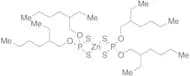
<p>Magnesium (N,N,N',N'-tetramethylethylenediamine)bis[BREW] (99.99+%-Mg) PURATREM</p>Fórmula:Mg(C6H16N2)CHyC(O)CHC(O)CHy(xyxPureza:(99.99+%-Mg)Cor e Forma:pale yellow liq.Zinc Bis(2-Ethylhexyl) Phosphorodithioate
CAS:Produto Controlado<p>Applications Zinc Bis(2-Ethylhexyl) Phosphorodithioate is an analytical standard with antioxidant properties.<br>References Cermak, S. et al.: J. Am. Oil Chem. Soc., 91, 2101 (2014); Chemija. et al.: 25, 161 (2014);<br></p>Fórmula:C32H68O4P2S4ZnCor e Forma:NeatPeso molecular:772.47Bis(2,2,6,6-tetramethyl-3,5-heptanedionato)magnesium, anhydrous, min. 98% [Mg(TMHD)2] , 12-0900, contained in high-temp 50 ml Swagelok® cylinder (96-1071) for CVD/ALD
CAS:<p>Bis(2,2,6,6-tetramethyl-3,5-heptanedionato)magnesium, anhydrous, min. 98% [Mg(TMHD)2] , 12-0900, contained in high-temp 50 ml Swagelok® cylinder (96-1071) for CVD/ALD</p>Fórmula:Mg(C11H19O2)2Pureza:min. 98%Cor e Forma:white pwdr.Peso molecular:390.85Zinc citrate dihydrate
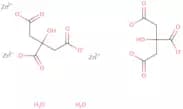
CAS:<p>Zinc citrate dihydrate is a photocatalyst that can be used to clean contaminated materials. It has been shown to have strong disinfectant properties, especially in the presence of sodium carbonate or citric acid. This substance is also used as a structural analysis agent for fabricating cavities and for gravimetric analysis of carbon sources. Zinc citrate dihydrate has also been found to have phototoxic effects, which are due to its ability to generate reactive oxygen species such as singlet oxygen and superoxide anion radicals. The active substances in zinc citrate dihydrate may cause genetic damage, as well as changes in the NMR spectra of rat primary hepatocytes.</p>Fórmula:(C6H8O7)2•Zn3•(H2O)2Pureza:Min. 95%Cor e Forma:PowderPeso molecular:616.46 g/molZinc (II) Protoporphyrin IX
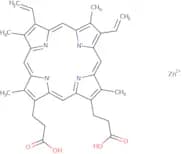
CAS:<p>Zinc protoporphyrin is a heme-based biochemical compound that is used as a calibration standard for spectrophotometric analysis. It has been shown to have an adverse effect on the cardiovascular system, such as atherosclerotic lesion formation in response to oxidative injury. Zinc protoporphyrin also has an effect on brain functions and bowel disease, which may be due to its ability to inhibit iron absorption and promote iron homeostasis.</p>Fórmula:C34H32N4O4ZnPureza:Min. 95%Peso molecular:626.03 g/molCopper(II) Bis(trifluoromethanesulfonyl)imide
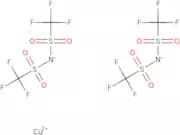
CAS:<p>Please enquire for more information about Copper(II) Bis(trifluoromethanesulfonyl)imide including the price, delivery time and more detailed product information at the technical inquiry form on this page</p>Fórmula:C4CuF12N2O8S4Pureza:Min. 95%Peso molecular:623.82 g/molCopper(II) nitrate hydrate
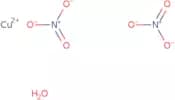
CAS:<p>Copper nitrate hydrate is an isomeric mixture of copper(II) nitrate and copper(I) nitrate. It is a diazonium salt that contains two aminoterephthalate ligands. The reaction mechanism of this compound involves the formation of a copper complex with sodium hydroxide. The product is an insoluble hydrated copper oxide, which can be precipitated from the solution by adding an acid or base. Copper nitrate hydrate can also be obtained by reacting copper(II) chloride with sodium hydroxide in water. This compound has been shown to have antimicrobial properties against Escherichia coli and Staphylococcus aureus, although it does not show any significant activity against Bacillus subtilis or Pseudomonas aeruginosa. Copper nitrate hydrate has been used as a precursor for the synthesis of nanotubes and polycarboxylic acids with molecular weights up to 6 kDa.</p>Fórmula:Cu•(HNO3)2•(H2O)xPureza:Min. 95%Cor e Forma:Powder2-Bromohexane (contains 3-Bromohexane) (stabilized with Copper chip)
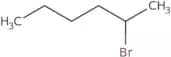
CAS:<p>2-Bromohexane is an organic compound and a chemical building block. It is produced by the reaction of 1,3-dibromohexane with copper. 2-Bromohexane is used in the production of epoxides and other chemicals. The synthesis of 2-bromohexane starts with the addition of bromine to 1,3-dibromohexane followed by the addition of copper (II) chloride. This reaction produces 3-bromohexane as a byproduct which can be removed from the reaction mixture using a Dean–Stark trap. In this process, two moles of hydrogen are used to convert one mole of bromine into one mole of hydrogen bromide gas, which can be easily condensed into liquid form. The monoalkylation product 2-bromohexane reacts with an alkyl halide to produce a mixture containing two different alkyl halides. These</p>Fórmula:C6H13BrPureza:85%Peso molecular:165.07 g/mol
![Dichloro[rel-[N(S)]-N-[2-(diphenylphosphinyl-κO)ethyl]-2-[(R)-methylthio-κS]ethanamine-κN](triphen…](/_next/image/?url=https%3A%2Fstatic.cymitquimica.com%2Fproducts%2F08%2Fthumb-webp%2F44-3230.webp&w=3840&q=75)


![Dichloro[rel-[N2(S)]-N1,N1-dimethyl-N2-[2-[(R)-phenylthio-κS]ethyl]-1,2-ethanediamine-κNN1,κN2](tr…](/_next/image/?url=https%3A%2Fstatic.cymitquimica.com%2Fproducts%2F08%2Fthumb-webp%2F44-0575.webp&w=3840&q=75)
![Tris(2,2,6,6-tetramethyl-3,5-heptanedionato)aluminum, 99% (99.9%-Al) [Al(TMHD)₃]](/_next/image/?url=https%3A%2Fstatic.cymitquimica.com%2Fproducts%2F08%2Fthumb-webp%2F13-5000.webp&w=3840&q=75)
![Diacetato{(S)-(-)-5,5'-bis[di(3,5-xylyl)phosphino]-4,4'-bi-1,3-benzodioxole}ruthenium(II) Ru(OAc)₂…](/_next/image/?url=https%3A%2Fstatic.cymitquimica.com%2Fproducts%2F08%2Fthumb-webp%2F44-0176.webp&w=3840&q=75)





![Bis(2,2,6,6-tetramethyl-3,5-heptanedionato)magnesium, anhydrous, min. 98% [Mg(TMHD)2] , 12-0900, c…](/_next/image/?url=https%3A%2Fstatic.cymitquimica.com%2Fproducts%2F08%2Fthumb-webp%2F98-4069.webp&w=3840&q=75)