Monossacáridos
Monossacarídeos são a forma mais simples de carboidratos e servem como building blocks fundamentais para açúcares mais complexos e polissacarídeos. Essas moléculas de açúcar único desempenham papéis críticos no metabolismo energético, na comunicação celular e nos componentes estruturais das células. Nesta seção, você encontrará uma ampla variedade de monossacarídeos essenciais para pesquisas em bioquímica, biologia molecular e glicociência. Esses compostos são cruciais para estudar vias metabólicas, processos de glicosilação e desenvolvimento de agentes terapêuticos. Na CymitQuimica, oferecemos monossacarídeos de alta qualidade para apoiar suas necessidades de pesquisa, garantindo precisão e confiabilidade em suas investigações científicas.
Subcategorias de "Monossacáridos"
- Aloses(11 produtos)
- Arabinoses(21 produtos)
- Eritroses(11 produtos)
- Frutoses(9 produtos)
- Fucoses(36 produtos)
- Galactosamina(41 produtos)
- Galactoses(261 produtos)
- Glucoses(365 produtos)
- Ácidos Glucurónicos(51 produtos)
- Glico-substratos para enzimas(77 produtos)
- Guloses(6 produtos)
- Idoses(4 produtos)
- Inositóis(15 produtos)
- Lixoses(4 produtos)
- Mannoses(65 produtos)
- O-Glicanos(48 produtos)
- Psicoses(3 produtos)
- Ramnoses(10 produtos)
- Riboses(61 produtos)
- Ácidos siálicos(100 produtos)
- Sorboses(4 produtos)
- Açúcares(173 produtos)
- Tagatoses(4 produtos)
- Taloses(8 produtos)
- Xiloses(20 produtos)
Exibir 17 mais subcategorias
Foram encontrados 6088 produtos de "Monossacáridos"
Ordenar por
Pureza (%)
0
100
|
0
|
50
|
90
|
95
|
100
2,3-O-Isopropylidene-1,4-di-O-tosyl-D-threitol
CAS:<p>Please enquire for more information about 2,3-O-Isopropylidene-1,4-di-O-tosyl-D-threitol including the price, delivery time and more detailed product information at the technical inquiry form on this page</p>Fórmula:C21H26O8S2Pureza:Min. 95%Cor e Forma:PowderPeso molecular:470.56 g/mol2-Acetamido-4,6-O-benzylidene-2-deoxy-D-galactopyranose
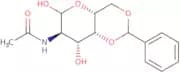
CAS:<p>2-Acetamido-4,6-O-benzylidene-2-deoxy-D-galactopyranose is a fluorescent dye that binds to the hydroxyl group of nucleic acids. It can be used for microscopy of cells and bacteria in culture. This dye is also used for the measurement of cavitation activity. The dye is added at a concentration of 0.1% to the cell culture media. After 24 hours, it can then be observed with a microscope under UV light. 2-Acetamido-4,6-O-benzylidene-2-deoxy-D-galactopyranose has been shown to have lysis effects on cells such as agarose gels and mammalian cells, leading to cell death by apoptosis or necrosis. It's also used as an indicator in gel electrophoresis experiments because it can bind to DNA and RNA molecules, which makes</p>Fórmula:C15H19NO6Pureza:Min. 95%Cor e Forma:White PowderPeso molecular:309.31 g/molBenzyl 2-acetamido-2-deoxy-b-D-glucopyranoside
CAS:<p>The family of sporadically occurring benzyl 2-acetamido-2-deoxy-b-D-glucopyranoside is characterized by chromosome terminal deletions, cytogenetic abnormalities, and phenotypes. The sporadically occurring benzyl 2-acetamido-2-deoxy-b-D-glucopyranoside is a member of the glucosamine family. It is characterized by chromosome terminal deletions, cytogenetic abnormalities, and phenotypes.</p>Fórmula:C15H21NO6Pureza:Min. 95%Cor e Forma:White PowderPeso molecular:311.33 g/mol2’-(N-Hexadecanoylamino)-4’-nitrophenyl-β-D-galactopyranoside
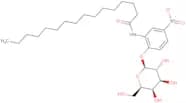
CAS:<p>2’-(N-Hexadecanoylamino)-4’-nitrophenyl-b-D-galactopyranoside is a synthetic substrate that is used to diagnose and monitor brain diseases. It can be used in the diagnosis of Alzheimer's disease by measuring the amount of amniotic fluid that leaks into the brain. The rate of hydrolysis of this substrate has been shown to be higher in patients with Alzheimer's disease than in healthy controls. This synthetic substrate is also useful for monitoring the activity of taurocholate galactohydrolase, which is an enzyme that breaks down bile salts and plays a role in cholesterol metabolism. The rate of hydrolysis has been found to be increased in patients with Parkinson's disease, but not in those with Alzheimer's disease or healthy controls. 2’-(N-Hexadecanoylamino)-4’-nitrophenyl-b-D-galactop</p>Fórmula:C28H46N2O9Pureza:Min. 95%Cor e Forma:PowderPeso molecular:554.67 g/mol2-Amino-2-deoxy-L-arabinose hydrochloride
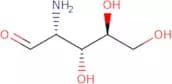
CAS:<p>2-Amino-2-deoxy-L-arabinose hydrochloride is an amino sugar that is used in the synthesis of glycoproteins and polysaccharides. This compound has been shown to be a potential lead for novel anticancer agents, as it can inhibit the growth of tumor cells by impairing glycolysis. 2-Amino-2-deoxy-L-arabinose hydrochloride has also been used in click chemistry to modify proteins with alkyne groups.</p>Fórmula:C5H11NO4·HClPureza:Min. 95%Peso molecular:185.61 g/molPhenylethyl-β-D-glucopyranoside
CAS:<p>Phenylethyl-beta-D-glucopyranoside is a phenolic compound that is found in plants such as Echinacea. Phenylethyl-beta-D-glucopyranoside has been shown to inhibit tumor cell proliferation by increasing the levels of enzyme catalysis and enzyme activity, and decreasing the levels of protocatechuic acid. This compound also inhibits fatty acid synthesis, which may be due to its ability to inhibit the production of 4-hydroxycinnamic acid via inhibition of the enzyme acyl coenzyme A:cholesterol acyltransferase. The cyanobacterial strain Synechococcus elongatus PCC 7942 was found to produce phenylethyl glucoside, an iridoid glucoside with high cytotoxic activity against human tumor cells.</p>Fórmula:C14H20O6Pureza:Min. 95%Cor e Forma:PowderPeso molecular:284.31 g/mol1,2,5-Tri-O-benzoyl-3-methyl-D-xylofuranose
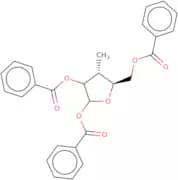
CAS:<p>1,2,5-Tri-O-benzoyl-3-methyl-D-xylofuranose is a triol that is a methyl glycoside of 3,4,6-trihydroxybenzoic acid. It is an important building block in the synthesis of various saccharides and oligosaccharides. This product is often used as a precursor in the modification of saccharides to produce new products with different properties. This molecule has been shown to be resistant to degradation by enzymes such as glycosidases and oxidases. 1,2,5-Tri-O-benzoyl-3-methyl-D-xylofuranose can also be fluorinated or modified with other chemical groups.<br>1,2,5-Tri -O -benzoyl -3 -methyl -D -xylofuranose may be available from one or more custom synthesis providers.</p>Fórmula:C27H24O7Pureza:Min. 95%Peso molecular:460.48 g/molSimvastatin acyl-b-D-glucuronide
CAS:<p>Simvastatin acyl-b-D-glucuronide is a synthetic compound that is not naturally occurring. It has a molecular weight of 571.67 and the CAS number 463962-56-3. The chemical formula for this compound is C30H44O8 and its structural formula is shown below. The purity of this product is >99% and it has been modified with fluorination to improve solubility in water.</p>Fórmula:C31H48O12Pureza:Min. 95%Peso molecular:612.71 g/molPhenyl α-D-galactopyranoside
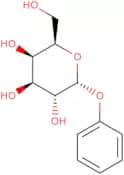
CAS:<p>Phenyl a-D-galactopyranoside is a pesticide that is used to control the growth of endophytic fungi. It has been shown to have an antibacterial effect against Gram-positive bacteria and can be used as a fungicide. Phenyl a-D-galactopyranoside can be synthesized from the corresponding synthons, which are 3-hydroxybenzoic acid and 4-methylphenol. This compound contains a carbonyl group and hydroxyl group that are reactive with enzymes such as esterases, glucuronidases, and glutathione reductase, which hydrolyzes it into its inactive form.</p>Fórmula:C12H16O6Pureza:Min. 95%Cor e Forma:PowderPeso molecular:256.25 g/mol1,2-O-Di-O-acetyl-5-O-benzoyl-3-deoxy-D-ribofuranose
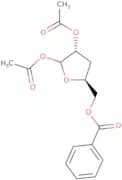
CAS:<p>1,2-O-Di-O-acetyl-5-O-benzoyl-3-deoxy-D-ribofuranose is a carbohydrate that is used as a building block in the synthesis of oligosaccharides and polysaccharides. The compound is also used to modify glycoproteins to increase their stability and to improve their solubility. 1,2-O-Di-O-acetyl-5-O-benzoyl--3 -deoxy--D--ribofuranose has been modified with fluorination, saccharide methylation, glycosylation and polysaccharide synthesis.</p>Fórmula:C16H18O7Pureza:Min. 90%Cor e Forma:PowderPeso molecular:322.31 g/mol2,3,4,6-Tetra-O-acetyl-β-D-galactopyranosyl azide
CAS:<p>2,3,4,6-Tetra-O-acetyl-β-D-galactopyranosyl azide is a catalyst that has been used in the production of carbonate catalysts. It can also be used to reoxidize metallic catalysts.</p>Fórmula:C14H19N3O9Pureza:Min. 95%Cor e Forma:White PowderPeso molecular:373.32 g/molneo-Inositol
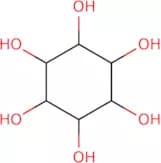
CAS:<p>Neo-inositol is a type of inositol that is not found naturally in the body, but can be synthesized. It has been shown to inhibit the growth of cancer cells and have a physiological effect on ovarian cells. Neo-inositol has also been shown to inhibit certain types of cancer cells by interfering with their ability to produce energy. Neo-inositol was also shown to increase levels of cytosolic Ca2+ in a model system, which may contribute to its cytotoxic effects.</p>Fórmula:C6H12O6Pureza:Min. 95 Area-%Cor e Forma:White PowderPeso molecular:180.16 g/mol1,3,4,6-Tetra-O-acetyl-2-deoxy-2-phthalimido-b-D-glucopyranoside
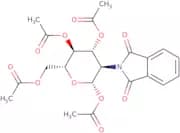
CAS:<p>The interaction of 1,3,4,6-tetra-O-acetyl-2-deoxy-2-phthalimido-b-D-glucopyranoside with DNA is selective for the hydroxyl group and for the stacking of its glycosidic bonds. The data obtained from the spectra show that this compound interacts with the sugar moiety of nucleosides to yield a product with a lower melting point. The binding constants are high and the yields are low.</p>Fórmula:C22H23NO11Pureza:Min. 95%Cor e Forma:White PowderPeso molecular:477.42 g/molD-Glucose 1-13C
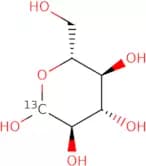
CAS:<p>D-Glucose 1-13C is a kinetic isotope that is used to study the metabolic pathways of glucose. The presence of 13C in the molecule allows for the identification of metabolites and provides an accurate measurement of metabolic rate. This isotope has been used to study lipid metabolism in exudates from animals, as well as fatty acid synthesis in microsomes from rats. D-Glucose 1-13C has also been used in studies on yeast, specifically Saccharomyces cerevisiae strain and Saccharomyces cerevisiae strain.</p>Fórmula:CC5H12O6Pureza:Min. 95%Cor e Forma:White PowderPeso molecular:181.15 g/molD-Glucopyranosyl thiosemicarbazide
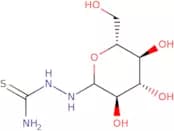
CAS:<p>D-Glucopyranosyl thiosemicarbazide is a synthetic molecule that reacts with halides to produce regiospecifically substituted aldehydes. It has been used in the synthesis of glycosylated heterocycles and for the conversion of amines into reactive intermediates. D-Glucopyranosyl thiosemicarbazide can be prepared by reacting 2,3-dichloro-5,6-dicyanobenzoquinone with sodium nitrite in methanol followed by hydrolysis with water. This reaction produces an intermediate that reacts with sulfur dioxide to form the desired product. The structure of this molecule was determined using X-ray crystallography on crystals obtained from aspergillus mold.</p>Fórmula:C7H15N3O5SPureza:Min. 95%Cor e Forma:White to off-white powder.Peso molecular:253.28 g/mol3,4-Di-O-acetyl-L-arabinal
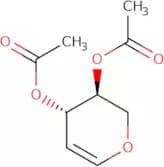
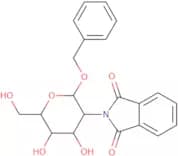
CAS:<p>3,4-Di-O-acetyl-L-arabinal is a synthetic compound that belongs to the class of monofluorides. It has been synthesized from l-arabinose by a stereoselective process, with triflic acid as the catalyst and propargylation as the key step. The synthetic pathway starts from an acid hydrolysis of L-arabinose to yield 3,4-di-O-acetyl-L-arabinonic acid. This acid is then converted to 3,4 diacetyl L arabinonic acid with acetic anhydride and acetic acid in the presence of triethylamine. The final product is then obtained by reacting this intermediate with 1 equivalent of sodium fluoride in tetrahydrofuran (THF) using catalytic reduction with sodium borohydride at 0 °C. The major advantage of this synthetic process is that it provides two stereoisomers: (</p>Fórmula:C9H12O5Pureza:Min. 95%Cor e Forma:Yellow Clear LiquidPeso molecular:200.19 g/molBenzyl 2-deoxy-2-phthalimido-β-D-glucopyranoside
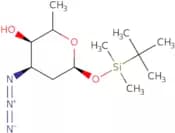
CAS:<p>Benzyl 2-deoxy-2-phthalimido-b-D-glucopyranoside is a custom synthesis that belongs to the group of complex carbohydrates. It is an oligosaccharide or polysaccharide that is modified with methylation, glycosylation, and carbamylation, and has a CAS number of 80035-32-1. This compound has been used in the synthesis of saccharides for the preparation of an antibody drug conjugate. Benzyl 2-deoxy-2-phthalimido-b-D-glucopyranoside is also known as 6Fluoro 3 indoxyl beta D galactopyranoside.</p>Fórmula:C21H21NO7Pureza:Min. 95%Peso molecular:399.39 g/mol3-Azido-1-O-t-butyldimethylsilyl-2,3,6-trideoxy-b-L-arabino-hexopyranose
<p>3-Azido-1-O-t-butyldimethylsilyl-2,3,6-trideoxy-b-L-arabinohexopyranose is a modified sugar. It is used as a building block in the synthesis of oligosaccharides and polysaccharides. This product is custom synthesized to customer's specifications and is available in high purity.</p>Fórmula:C12H25N3O3SiPureza:Min. 95%Peso molecular:287.43 g/molL-Xylonic acid-1,4-lactone
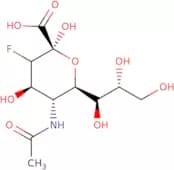
CAS:<p>L-Xylonic acid-1,4-lactone is an enzyme that functions as a glycolytic enzyme. It catalyzes the conversion of D-xylose to L-xylonic acid and L-xylonic acid-1,4-lactone. This enzyme is expressed in leukemia HL60 cells and is activated by acidic conditions. L-Xylonic acid-1,4-lactone has been shown to be catabolized by the enzyme xylanase. The kinetic properties of this reaction have been studied using mass spectrometric techniques and biochemical methods. The rate of the reaction was found to be dependent on the presence of divalent cations (Mg2+ or Ca2+) or monovalent ions (Na+ or K+). L-Xylonic acid 1,4 lactone also catabolizes glucose with a similar rate constant.</p>Fórmula:C5H8O5Pureza:Min. 95 Area-%Cor e Forma:White PowderPeso molecular:148.11 g/molN-Acetyl-3-fluoro-neuraminic acid sodium
CAS:<p>N-Acetyl-3-fluoro-neuraminic acid sodium (AFNA) is an inhibitor that binds to the terminal sialic acid residue of the glycoprotein neuraminidase in influenza viruses, preventing the virus from attaching to cells. AFNA is a fluorinated derivative of mannosamine and is synthesized by reacting an aldolase with sulfur trifluoride. AFNA has been shown to inhibit sialidases and utilising enzymes, which are necessary for viral replication. AFNA also inhibits bacterial sialidases, which are required for the synthesis of cell wall components.</p>Fórmula:C11H18FNO9•Nax327Pureza:Min. 95%Cor e Forma:PowderPeso molecular:326.25 g/mol