Monossacáridos
Monossacarídeos são a forma mais simples de carboidratos e servem como building blocks fundamentais para açúcares mais complexos e polissacarídeos. Essas moléculas de açúcar único desempenham papéis críticos no metabolismo energético, na comunicação celular e nos componentes estruturais das células. Nesta seção, você encontrará uma ampla variedade de monossacarídeos essenciais para pesquisas em bioquímica, biologia molecular e glicociência. Esses compostos são cruciais para estudar vias metabólicas, processos de glicosilação e desenvolvimento de agentes terapêuticos. Na CymitQuimica, oferecemos monossacarídeos de alta qualidade para apoiar suas necessidades de pesquisa, garantindo precisão e confiabilidade em suas investigações científicas.
Subcategorias de "Monossacáridos"
- Aloses(11 produtos)
- Arabinoses(21 produtos)
- Eritroses(11 produtos)
- Frutoses(9 produtos)
- Fucoses(36 produtos)
- Galactosamina(41 produtos)
- Galactoses(260 produtos)
- Glucoses(365 produtos)
- Ácidos Glucurónicos(51 produtos)
- Glico-substratos para enzimas(77 produtos)
- Guloses(6 produtos)
- Idoses(4 produtos)
- Inositóis(15 produtos)
- Lixoses(4 produtos)
- Mannoses(65 produtos)
- O-Glicanos(48 produtos)
- Psicoses(3 produtos)
- Ramnoses(10 produtos)
- Riboses(61 produtos)
- Ácidos siálicos(100 produtos)
- Sorboses(4 produtos)
- Açúcares(173 produtos)
- Tagatoses(4 produtos)
- Taloses(8 produtos)
- Xiloses(20 produtos)
Exibir 17 mais subcategorias
Foram encontrados 6088 produtos de "Monossacáridos"
Ordenar por
Pureza (%)
0
100
|
0
|
50
|
90
|
95
|
100
Neoandrographolide
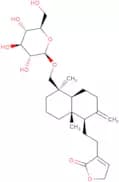
CAS:<p>Neoandrographolide is a diterpene compound that has been shown to have a significant cytotoxic effect on HL-60 cells. It also shows matrix effects in body formation and chemiluminescence. Neoandrographolide is extracted from the plant Andrographis paniculata, which belongs to the family Acanthaceae. This plant has been used historically as a medical herb in China and India for centuries. The extract of this plant has shown anti-inflammatory properties and can be used to treat infectious diseases such as bowel disease.</p>Fórmula:C26H40O8Pureza:Min. 95%Cor e Forma:White PowderPeso molecular:480.6 g/molN-Acetyl-D-mannosaminuronic acid sodium
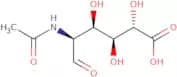
CAS:<p>N-Acetyl-D-mannosaminuronic acid sodium (NAMSA) is a precursor to uridine and fatty acids. It is synthesized in vivo by the enzyme mannosaminase, which cleaves the glycosidic linkage of NAMSA to form uridine and mannose. NAMSA has been shown to be an essential gene product for S. aureus strains. The activity of NAMSA can be monitored using the assay of radioactive incorporation into sialic acid, which is coupled with gel chromatography. This compound has also been used as a monoclonal antibody to detect CD4+ cells in vitro, and was shown to inhibit the growth of infectious diseases such as Mycobacterium tuberculosis, Neisseria meningitidis, and Salmonella typhimurium.</p>Fórmula:C8H12NO7NaPureza:Min. 95%Cor e Forma:PowderPeso molecular:257.17 g/molneo-Inositol
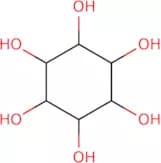
CAS:<p>Neo-inositol is a type of inositol that is not found naturally in the body, but can be synthesized. It has been shown to inhibit the growth of cancer cells and have a physiological effect on ovarian cells. Neo-inositol has also been shown to inhibit certain types of cancer cells by interfering with their ability to produce energy. Neo-inositol was also shown to increase levels of cytosolic Ca2+ in a model system, which may contribute to its cytotoxic effects.</p>Fórmula:C6H12O6Pureza:Min. 95 Area-%Cor e Forma:White PowderPeso molecular:180.16 g/mol1,2,5-Tri-O-benzoyl-3-methyl-D-xylofuranose
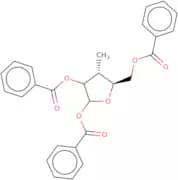
CAS:<p>1,2,5-Tri-O-benzoyl-3-methyl-D-xylofuranose is a triol that is a methyl glycoside of 3,4,6-trihydroxybenzoic acid. It is an important building block in the synthesis of various saccharides and oligosaccharides. This product is often used as a precursor in the modification of saccharides to produce new products with different properties. This molecule has been shown to be resistant to degradation by enzymes such as glycosidases and oxidases. 1,2,5-Tri-O-benzoyl-3-methyl-D-xylofuranose can also be fluorinated or modified with other chemical groups.<br>1,2,5-Tri -O -benzoyl -3 -methyl -D -xylofuranose may be available from one or more custom synthesis providers.</p>Fórmula:C27H24O7Pureza:Min. 95%Peso molecular:460.48 g/mol2,3-O-Isopropylidene-1,4-di-O-tosyl-D-threitol
CAS:<p>Please enquire for more information about 2,3-O-Isopropylidene-1,4-di-O-tosyl-D-threitol including the price, delivery time and more detailed product information at the technical inquiry form on this page</p>Fórmula:C21H26O8S2Pureza:Min. 95%Cor e Forma:PowderPeso molecular:470.56 g/molMethyl 3,4-O-isopropylidene-β-D-arabinopyranoside
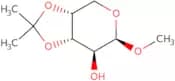
CAS:<p>Methyl 3,4-O-isopropylidene-b-D-arabinopyranoside is a custom synthesis that has been modified with fluorination, methylation and click modification. It can be found in the CAS registry as 4594-60-9. This compound is a monosaccharide. Methyl 3,4-O-isopropylidene-b-D-arabinopyranoside is synthetically produced and can be used for glycosylation reactions. This compound has been shown to have a saccharide structure, which includes sugar or carbohydrates. It also has an oligosaccharide structure, which includes polysaccharides or complex carbohydrates.</p>Fórmula:C9H16O5Pureza:Min. 95%Cor e Forma:Clear LiquidPeso molecular:204.22 g/mol(3R,4R)-2-Methyl-2,3,4,5-tetrahydroxypentane
<p>(3R,4R)-2-Methyl-2,3,4,5-tetrahydroxypentane is a synthetic compound. It is a glycosylation reagent that can be used to modify the sugar moiety in oligosaccharides and complex carbohydrates. (3R,4R)-2-Methyl-2,3,4,5-tetrahydroxypentane is also used for fluorination reactions and click chemistry modifications. This product has been shown to have high purity and can be custom synthesized. The CAS number for this compound is 36610-02-6.</p>Pureza:Min. 95%2,3-O-Isopropylidene-5-O-tosyl-D-ribonic acid-1,4-lactone
CAS:<p>2,3-O-Isopropylidene-5-O-tosyl-D-ribonic acid-1,4-lactone is a synthetic 2,3:5,6-diisopropylidene glycoside of D-ribose. It is a methylated sugar with an alpha-(2,3)-linked D-(+)-glucopyranosyl moiety and an alpha-(2,5)-linked L(+)-fucopyranosyl moiety. This compound can be used as a building block for the synthesis of polysaccharides and glycoconjugates. 2,3:5,6-Diisopropylidene glycoside of D-ribose is also used to synthesize oligosaccharides in carbohydrate chemistry.</p>Fórmula:C12H14O7SPureza:Min. 95%Cor e Forma:White PowderPeso molecular:302.04 g/molD-Mannosaminuronic acid
<p>D-Mannosaminuronic acid is a monosaccharide that has been isolated from the seed of the African plant, Acacia drepanolobium. It is found to be an antigenic component of shigella and related enterobacteria and plays an important role in the biosynthesis of glycolipids. D-Mannosaminuronic acid can be hydrolyzed by acidic enzymes such as lipases, esterases, phosphatases, or proteases. This process may lead to the liberation of fatty acids and sugars. The purified enzyme preparations have been shown to catalyze the synthesis of D-mannosaminuronic acid from mannose and fructose.</p>Pureza:Min. 95%D-Ribose, 99.0%+
CAS:<p>D-Ribose is a pentose sugar that is the ribose sugar of D-arabinose. It is an inhibitor of bacterial growth and has been shown to inhibit binding of adenine nucleotides to their receptors in the human erythrocyte membrane. Ribose plays a vital role in energy metabolism, as it is a component of ATP and NADH. It also participates in the synthesis of DNA and RNA. Ribose can be found in many foods, such as pears, apples, potatoes, and rice. D-ribose has been shown to have significant cytotoxicity against cancer cells that are dependent on glycolysis for their energy needs.<br>D-Ribose may also be used as a polymerase chain reaction (PCR) substrate to determine the presence of infectious diseases such as HIV or hepatitis C virus in human serum samples.</p>Fórmula:C5H10O5Pureza:Min. 99.0 Area-%Peso molecular:150.13 g/molRef: 3D-R-5495
1kgA consultar100gA consultar250gA consultar500gA consultar2500gA consultar-Unit-kgkgA consultarFructosazine
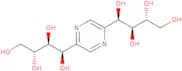
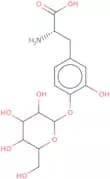
CAS:<p>Fructosazine is a natural compound that is found in the bark of the fructus quinquefoliae tree. It has been shown to have antimicrobial properties when it reacts with hydrochloric acid. Fructosazine inhibits the growth of bacteria by reacting with their cell walls and interfering with their metabolism. Fructosazine may also have physiological effects, such as reducing blood pressure and body weight gain, which are not fully understood. The reaction mechanism for fructosazine is not yet known, but it may be due to its reactive nature. More research needs to be done on this compound before we can understand its full potential.</p>Fórmula:C12H20N2O8Pureza:Min. 96 Area-%Cor e Forma:PowderPeso molecular:320.3 g/mol4'-O-(β-D-Glucopyranosyl)-L-DOPA
Produto Controlado<p>4'-O-(b-D-Glucopyranosyl)-L-DOPA is a custom synthesis, modification, fluorination, methylation, monosaccharide, synthetic, click modification, oligosaccharide saccharide. 4'-O-(b-D-Glucopyranosyl)-L-DOPA may be used in the treatment of certain cancers and for other conditions as determined by your doctor. 4'-O-(b-D-Glucopyranosyl)-L-DOPA may also be used for purposes not listed in this medication guide.</p>Fórmula:C15H21NO9Pureza:Min. 95%Cor e Forma:White to off-white solid.Peso molecular:359.33 g/mol2-Acetamido-2-deoxy-D-mannono-1,4-lactone
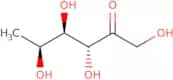
CAS:<p>2-Acetamido-2-deoxy-D-mannono-1,4-lactone is a chemical compound that is an aldonic acid and is classified as an ester. It has a molecular formula of C8H10O5 and it has the following structural formula:<br>This product can be synthesized from benzoic acid and glyceraldehyde. 2-Acetamido-2-deoxy-D-mannono-1,4-lactone is also known as benzoylated mannose. It has been reconfirmed to have high yield in acetylation reactions with molybdate. 2-Acetamido-2deoxy-Dmannono1,4lactone can also undergo epimerization to form the optical antipode of 2,3,4,6tetraacetyloxybenzoic acid (2,3,4,6tetraacetyl</p>Fórmula:C8H13NO6Pureza:Min. 95%Cor e Forma:White to off-white solid.Peso molecular:219.19 g/molL-Fuculose - aqueous solution
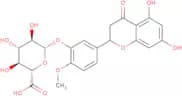
CAS:<p>Fuculose is a monosaccharide that is a constituent of fucose-containing glycoproteins. It is found in the blood and urine, as well as in various tissues, such as liver, lung, kidney, and spleen. The biological properties of L-fuculose are related to its ability to form hydrogen bonds with other molecules. Fuculose has been shown to be an effective activator for cutaneous lesions in mice models. The structural analysis of L-fuculose has revealed that it contains a reactive site for the synthesis of glycosaminoglycans and polysaccharides. Fuculose has also been shown to increase the proliferation of some cells, including corynebacterium glutamicum and human umbilical vein endothelial cells (HUVECs). This property may be due to its ability to activate growth factors or interfere with cell signaling pathways.</p>Fórmula:C6H12O5Pureza:Min. 95%Cor e Forma:Clear LiquidPeso molecular:164.16 g/molHesperetin 3'-O-b-D-glucuronide
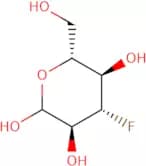
CAS:<p>Hesperetin 3'-O-b-D-glucuronide is a natural product that is synthesized by glycosylation of hesperidin with 3,4,5-trihydroxybenzoic acid. It is a synthetic and complex carbohydrate that can be modified to include fluorination, monosaccharide, oligosaccharide, methylation, and click modification. Hesperetin 3'-O-b-D-glucuronide can also be used in the synthesis of polysaccharides with glycosylations. This product has high purity and can be custom synthesized for customers.</p>Fórmula:C22H22O12Pureza:Min. 95%Cor e Forma:Slightly Yellow PowderPeso molecular:478.4 g/mol3-Deoxy-3-fluoro-D-glucose
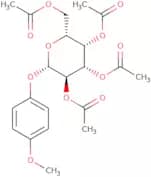
CAS:<p>Fluorinated glucose analog</p>Fórmula:C6H11FO5Pureza:Min. 95%Cor e Forma:White PowderPeso molecular:182.15 g/mol4-Methoxyphenyl 2,3,4,6-tetra-O-acetyl-β-D-galactopyranoside
CAS:<p>4-Methoxyphenyl 2,3,4,6-tetra-O-acetyl-b-D-galactopyranoside is a white crystalline powder. It is soluble in water and ethanol. This chemical has been used as a reagent for the methylation of saccharides and oligosaccharides with 4-methoxybenzene sulfonate. It is also an excellent substrate for click chemistry reactions.</p>Fórmula:C21H26O11Pureza:Min. 95%Cor e Forma:White to off-white solid.Peso molecular:454.42 g/molAstragalus polysaccharide
CAS:<p>The chemical structure of Astragalus polysaccharide is complex and consists of an α-D-(1,4)-Glc and (1,6)-α-D-Glcp backbone, and a branch point at O-6. The molecular weight is approximately 3.01 × 10⁵ Da from Mongolian Astragalus using low concentration of ethanol for precipitation and gel chromatography for purification. Spectral analysis results of 1H NMR and 13C NMR showed that the polysaccharide backbone has a 1,3-linked β-D-Gal residue and the branched portion has β-Glc, 1,6-linked α-Gal; 1,5-linked β-Xyl; 1,4-linked β-Gal; β-D-Gal, 1,2-linked α-Rha; and 1,2,4-linked α-Rha residues.</p>Fórmula:C10H7ClN2O2SPureza:Min. 95%Cor e Forma:Brown PowderPeso molecular:254.69 g/molb-D-Glucose - 95%
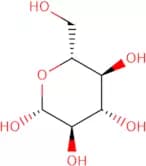
CAS:<p>B-D-glucose is a monosaccharide with the molecular formula C6H12O6. It is the major form of glucose in plants, and is one of the simplest carbohydrates. B-D-glucose is synthesized by photosynthesis in plants and used as an energy source for cellular respiration. The hydroxyl group of b-D-glucose reacts with p-hydroxybenzoic acid to form a new compound called glucopyranosiduronic acid. The hydroxyl group also reacts with sodium citrate to form sodium hydrogen citrate. This reaction can be used to measure the concentration of b-D-glucose in an unknown solution using high performance liquid chromatography (HPLC). B-D-glucose has been shown to have antidiabetic activity, as it improves insulin sensitivity, reduces blood glucose levels, and decrease body mass index (BMI) in animal models. A model system</p>Fórmula:C6H12O6Pureza:Min. 95 Area-%Cor e Forma:PowderPeso molecular:180.16 g/molL-Rhamnose diethyl mercaptal
CAS:<p>L-Rhamnose diethyl mercaptal is an antiperspirant and deodorant that is used in combination with other ingredients to reduce or eliminate body odor. It is a supplement, often found in combinations with other compounds such as neodymium and radium. This compound works by preventing the formation of sweat from the apocrine glands, which reduces underarm wetness and body odor. L-Rhamnose diethyl mercaptal also has antimicrobial properties that help prevent bacterial growth on the skin surface.</p>Fórmula:C10H22O4S2Pureza:Min. 95%Cor e Forma:PowderPeso molecular:270.41 g/mol