Monossacáridos
Monossacarídeos são a forma mais simples de carboidratos e servem como building blocks fundamentais para açúcares mais complexos e polissacarídeos. Essas moléculas de açúcar único desempenham papéis críticos no metabolismo energético, na comunicação celular e nos componentes estruturais das células. Nesta seção, você encontrará uma ampla variedade de monossacarídeos essenciais para pesquisas em bioquímica, biologia molecular e glicociência. Esses compostos são cruciais para estudar vias metabólicas, processos de glicosilação e desenvolvimento de agentes terapêuticos. Na CymitQuimica, oferecemos monossacarídeos de alta qualidade para apoiar suas necessidades de pesquisa, garantindo precisão e confiabilidade em suas investigações científicas.
Subcategorias de "Monossacáridos"
- Aloses(11 produtos)
- Arabinoses(21 produtos)
- Eritroses(11 produtos)
- Frutoses(9 produtos)
- Fucoses(36 produtos)
- Galactosamina(41 produtos)
- Galactoses(261 produtos)
- Glucoses(365 produtos)
- Ácidos Glucurónicos(52 produtos)
- Glico-substratos para enzimas(78 produtos)
- Guloses(6 produtos)
- Idoses(4 produtos)
- Inositóis(15 produtos)
- Lixoses(4 produtos)
- Mannoses(65 produtos)
- O-Glicanos(48 produtos)
- Psicoses(3 produtos)
- Ramnoses(10 produtos)
- Riboses(61 produtos)
- Ácidos siálicos(100 produtos)
- Sorboses(4 produtos)
- Açúcares(173 produtos)
- Tagatoses(4 produtos)
- Taloses(8 produtos)
- Xiloses(20 produtos)
Exibir 17 mais subcategorias
Foram encontrados 6088 produtos de "Monossacáridos"
Ordenar por
Pureza (%)
0
100
|
0
|
50
|
90
|
95
|
100
(5R, 8S, 9R) -8- [(4R) - 2, 2-Dimethyl- 1, 3- dioxolan- 4- yl] - 9- hydroxy- 2, 2- dimethyl- 1, 3, 7- trioxaspiro[4.4] nonan- 6- one
(5R, 8S, 9R) -8- [(4R) - 2, 2-Dimethyl- 1, 3- dioxolan- 4- yl] - 9- hydroxy- 2, 2- dimethyl- 1, 3, 7- trioxaspiro[4.4] nonan- 6- one is a monosaccharide that has been synthesized and modified. The synthesis of this compound was achieved by reacting 5-(2-(benzyloxy)ethoxy)-1-(3-(dimethylamino)propoxy)-2-(4-[(2S)-2,2,-dimethylpropanoyl]phenyl)pentaone (1), with the corresponding bromoacetate or chloroacetate in the presence of base to give the desired product (2). This compound has been methylated and glycosylated. It is a white solid that is soluble in water and DMSOPureza:Min. 95%(1S) -1- [(2S, 3R) - 3-Hydroxy-2- azetidinyl] -1, 2- ethanediol
Glycosylation of azetidinol is a chemical reaction in which a glycosylate group is transferred from an activated sugar to the nitrogen atom of an azetidinone. It can be used for the synthesis of oligosaccharides and polysaccharides by transferring the glycosyl group to their nitrogen atoms. Click modification refers to a type of chemical reaction that was developed by K. Barry Sharpless in 1996, which uses copper-catalyzed azide-alkyne cycloaddition. This type of reaction has been used for the synthesis of complex carbohydrates with high purity and low cost, as well as for modifying sugars with methyl groups or fluorine atoms.
Pureza:Min. 95%alpha-D-Galactose 1-phosphate, dipotassium salt pentahydrate
CAS:Alpha-D-galactose 1-phosphate, dipotassium salt pentahydrate is a carbon source that can be used in biochemical and chemical ionization methods. It has been shown to inhibit the growth of lung fibroblasts. This compound is an inhibitor of glycolysis and inhibits the biosynthesis of galactose residues. Alpha-D-galactose 1-phosphate, dipotassium salt pentahydrate also inhibits the formation of glycogen and glucose from galactose residues as well as inhibiting the activity of enzymes involved in galactose metabolism. The inhibition of these enzymes leads to decreased galactose levels in diabetic patients.Fórmula:C6H21K2O14PPeso molecular:426.40 g/mol5-Azido-5-deoxy-2,3-O-isopropylidene-1-C-phenyl-L-lyxofuranose
5-Azido-5-deoxy-2,3-O-isopropylidene-1-C-phenyl-L-lyxofuranose is a fluorinated monosaccharide that can be synthesized by the reaction of 5 azidoacetone with 5 deoxyribose in the presence of sodium hydroxide. This compound is used for glycosylation, polysaccharide modification, and click chemistry. It is also used as a sugar source in the preparation of oligosaccharides and complex carbohydrates. 5 Azido-5 deoxy -2,3 O isopropylidene -1 C phenyl L L lyxofuranose has CAS number 8068635-52-8.Pureza:Min. 95%(5R, 8S, 9S) -8- [(4R) - 2, 2- Dimethyl- 1, 3- dioxolan- 4- yl] - 9- hydroxy- 2, 2- dimethyl- 1, 3, 7- trioxaspiro[4.4] nonan- 6- on e
(5R, 8S, 9S) -8- [(4R)-2,2-Dimethyl-1,3-dioxolan-4-yl] -9-hydroxy-2, 2-dimethyl-1,3, 7-trioxaspiro[4.4] nonan-6-on e is a synthetic compound that is used in the synthesis of oligosaccharides and glycosylations. It can be used as a building block for modification of saccharides and polysaccharides with click chemistry and fluorination. This product has high purity and is suitable for custom synthesis.Pureza:Min. 95%7, 8, 9, 10- Tetradeoxy- 1, 2- O- isopropylidene-D- glycero- a- D- gluco- decofuranose
7, 8, 9, 10-Tetradeoxy-1, 2-O-isopropylidene-D-glycero-a-D-gluco-decofuranose is a carbohydrate that has been modified to include fluorine atoms. This compound is a complex carbohydrate with a CAS number and is available for custom synthesis. It can be used as an oligosaccharide or sugar and has high purity and methylation. The compound can also be glycosylated and click modified.Pureza:Min. 95%2-C-Hydroxymethyl-2,3:5,6-di-O-isopropylidene-D-manno-1.4-lactone
2-C-Hydroxymethyl-2,3:5,6-di-O-isopropylidene-D-manno-1.4-lactone is a synthetic sugar that has been modified by fluorination and methylation. It is a high purity product with custom synthesis. This carbohydrate has been glycosylated and click modified.Pureza:Min. 95%3-O-Benzyl-1,2:5,6-di-O-isopropylidene-D-allofuranose
3-O-Benzyl-1,2:5,6-di-O-isopropylidene-D-allofuranose is a modification of the carbohydrate that is produced synthetically. It belongs to the group of modified carbohydrates and can be used as a monosaccharide or an oligosaccharide. 3-O-Benzyl-1,2:5,6-di-O-isopropylidene-D allofuranose has been shown to have high purity and can be methylated and glycosylated for custom synthesis. This compound has CAS number 93343-70-2.Pureza:Min. 95%N-[2-(4'-Fluorobenzylacetonitrile)]-2,3,4,6-tetra-O-pivaloyl-b-D-glucopyranoside
This product is a custom synthesis. It is a complex carbohydrate with a CAS No., Polysaccharide, Modification, saccharide, Methylation, Glycosylation, Click modification and Carbohydrate. It is a sugar with high purity and Fluorination. The product has been synthetically made.Fórmula:C34H49FN2O9Pureza:Min. 95%Peso molecular:648.76 g/mol2,3,4,6-Tetra-O-acetyl-b-D-galactopyranosyl isothiocyanate
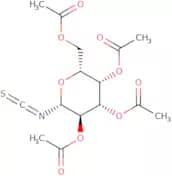
CAS:2,3,4,6-Tetra-O-acetyl-b-D-galactopyranosyl isothiocyanate is a custom synthesis that belongs to the group of complex carbohydrates. It is a polysaccharide that can be modified with methylation and glycosylation. 2,3,4,6-Tetra-O-acetyl-b-D-galactopyranosyl isothiocyanate has been shown to have high purity and CAS number 41135-18-6.Fórmula:C15H19NO9SPureza:Min. 95%Peso molecular:389.38 g/mol2,3,5-Tri-O-benzyl-β-D-arabinofuranose
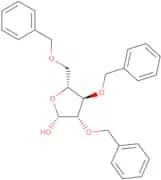
CAS:2,3,5-Tri-O-benzyl-b-D-arabinofuranose is a stereoselective analog that inhibits human maltase glucoamylase and acetylation. It is also a potent nucleophile that reacts with the hydroxyl group of dimethyl fumarate to form an acetal linkage. This compound is used in the stereoselective synthesis of oligosaccharides and carbohydrates.Fórmula:C26H28O5Pureza:Min. 99 Area-%Cor e Forma:White PowderPeso molecular:420.5 g/molb-D-Glucopyranosyl amine
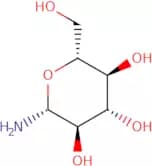
CAS:The b-D-glucopyranosyl amine is a glucose analogue that has been shown to have biochemical properties. It is the hydrochloride salt form of the molecule, which can be found in human liver cells. B-D-glucopyranosyl amine has been shown to inhibit the growth of bacteria and fungi. This compound also has anti-inflammatory activities, as it inhibits the release of reactive oxygen species from neutrophils. B-D-glucopyranosyl amine is an anti-infective agent that specifically targets bacterial cell wall synthesis and inhibits their growth by binding to the enzyme β1-glycosidase. This compound is also able to bind to lipid membranes and induce membrane leakage, leading to cell death.Fórmula:C6H13NO5Pureza:Min. 98 Area-%Cor e Forma:White Off-White PowderPeso molecular:179.17 g/molL-Glucosamine hydrochloride
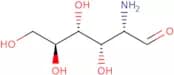
CAS:L-Glucosamine hydrochloride is a fluorescent derivative of L-glucosamine, which is an amino sugar that occurs naturally in the human body. L-glucosamine hydrochloride can be used to measure the uptake of glucose by cells and tissues. The hydroxyl group on the glucosamine molecule is responsible for this activity. L-glucosamine hydrochloride has been shown to have anticancer activity against leukemia cells in tissue cultures and it may be useful as a cancer treatment. It is also capable of inducing cytokine responses when it binds to antigen sites on T cells, which may lead to its use as an immunotherapy agent.Fórmula:C6H13NO5•HClPureza:Min. 95%Cor e Forma:PowderPeso molecular:215.63 g/molD-Glucose-6-phosphate disodium hydrate
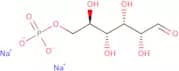
CAS:Glucose 6-phosphatase substrateFórmula:C6H11Na2O9P•(H2O)xPureza:(%) Min. 98%Cor e Forma:PowderPeso molecular:304.1 g/mol4-Methoxyphenyl 2,4,6-tri-O-acetyl-b-D-galactopyranoside
CAS:4-Methoxyphenyl 2,4,6-tri-O-acetyl-b-D-galactopyranoside is a synthetic carbohydrate that can be modified to meet your requirements. It is also known as Glycosylation, Oligosaccharide, sugar, Synthetic, Fluorination, Custom synthesis, Methylation, CAS No. 383905-62-2 and Monosaccharide Polysaccharide Saccharide. This product has been Click modification and complex carbohydrate. We offer this product at high purity and with modification.Fórmula:C19H24O10Pureza:Min. 95%Peso molecular:412.39 g/molD-Fructose-¹³C6
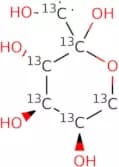
CAS:D-Fructose-¹³C6 is a liquid chromatograph that can be used for the analysis of alditols. It can also be used as a cavity, dissolvable, or quadrupole mass spectrometer. The chemical diversity of D-fructose-¹³C6 makes it an important research tool that can be used to study different products. Its use in tobacco and humectant production is also quite common. The quadrupole mass spectrometer has been shown to have a global reach in its applications.Fórmula:C6H12O6Pureza:Min. 95%Cor e Forma:White PowderPeso molecular:186.11 g/molN- [(3R, 4S, 5R, 6S) - 4, 5- Dihydroxy- 6- (hydroxymethyl) - 3- piperidinyl] -acetamide
CAS:N- [(3R, 4S, 5R, 6S) - 4, 5- Dihydroxy- 6- (hydroxymethyl) - 3- piperidinyl] -acetamide is a fluorinated N-acyl derivative of an aminomethyl oxazolidinone. It is synthesized by the reaction of acetamide with 5-(hydroxymethyl)-3-(piperidin-4-yloxy)oxazolidine and bromofluoride. The product was purified by column chromatography to yield a white solid. The purity of the final product was checked by HPLC and found to be 99%.Pureza:Min. 95%2,4-Dihydroxy-2-hydroxymethylbutanoic acid 1,4-lactone
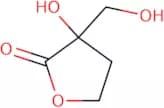
CAS:2,4-Dihydroxy-2-hydromethylbutanoic acid-1,4-lactone is a hydroxy anion that can be synthesized by the lactonization of 2,4-dihydroxybutanoic acid. The compound has been used to produce polymeric adsorbents for chromatographic purposes.Fórmula:C5H8O4Pureza:Min. 95%Cor e Forma:White PowderPeso molecular:132.11 g/molL-Arabinose diethyldithioacetal
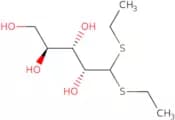
CAS:L-Arabinose diethyldithioacetal is a potassium carbonate derivative of L-arabinose that reacts with sulfur to form 1,2-dithioketals. These dithioketals are used as glycosyl donors in the synthesis of L-fucitol and d-xylose. This reaction is catalyzed by acetobacter, which converts L-arabinose and carbon dioxide into acetaldehyde and acetic acid. The reaction mechanism for this transformation includes an epimerization of the hydroxyl group on the C5 position of L-arabinose to a hydroxyl group on C6, followed by glycosidation with sulfuric acid. The glycosidic bond formed between the hydroxyl group on C6 and the carbonyl group at C1 (in this case, from L-arabinose) is called an acetal linkage. In addition to being antithromboticFórmula:C9H20O4S2Pureza:Min. 95%Cor e Forma:PowderPeso molecular:256.38 g/mol2,3-O-Carbonyl-a-D-mannopyranose
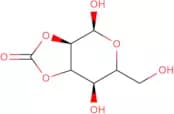
CAS:2,3-O-Carbonyl-a-D-mannopyranose is a modified sugar that can be synthesized from D-mannose. It is used to produce oligosaccharides and polysaccharides. This compound has been shown to be useful for the fluorination of proteins and for click modification reactions. 2,3-O-Carbonyl-a-D-mannopyranose has high purity and can be custom synthesized for quality assurance purposes.Fórmula:C7H10O7Pureza:Min. 95%Cor e Forma:PowderPeso molecular:206.15 g/mol
![(5R, 8S, 9R) -8- [(4R) - 2, 2-Dimethyl- 1, 3- dioxolan- 4- yl] - 9- hydroxy- 2, 2- dimethyl- 1, 3,…](/_next/image/?url=https%3A%2Fstatic.cymitquimica.com%2Fproducts%2F3D%2Fthumb-webp%2FMD170672.webp&w=3840&q=75)

![(1S) -1- [(2S, 3R) - 3-Hydroxy-2- azetidinyl] -1, 2- ethanediol](/_next/image/?url=https%3A%2Fstatic.cymitquimica.com%2Fproducts%2F3D%2Fthumb-webp%2FMH163530.webp&w=3840&q=75)

![(5R, 8S, 9S) -8- [(4R) - 2, 2- Dimethyl- 1, 3- dioxolan- 4- yl] - 9- hydroxy- 2, 2- dimethyl- 1, 3…](/_next/image/?url=https%3A%2Fstatic.cymitquimica.com%2Fproducts%2F3D%2Fthumb-webp%2FMD170675.webp&w=3840&q=75)

![N-[2-(4'-Fluorobenzylacetonitrile)]-2,3,4,6-tetra-O-pivaloyl-b-D-glucopyranoside](/_next/image/?url=https%3A%2Fstatic.cymitquimica.com%2Fproducts%2F3D%2Fthumb-webp%2FMF08491.webp&w=3840&q=75)

![N- [(3R, 4S, 5R, 6S) - 4, 5- Dihydroxy- 6- (hydroxymethyl) - 3- piperidinyl] -acetamide](/_next/image/?url=https%3A%2Fstatic.cymitquimica.com%2Fproducts%2F3D%2Fthumb-webp%2FMD163561.webp&w=3840&q=75)