Monossacáridos
Subcategorias de "Monossacáridos"
- Aloses(11 produtos)
- Arabinoses(21 produtos)
- Eritroses(11 produtos)
- Frutoses(9 produtos)
- Fucoses(36 produtos)
- Galactosamina(41 produtos)
- Galactoses(261 produtos)
- Glucoses(365 produtos)
- Ácidos Glucurónicos(52 produtos)
- Glico-substratos para enzimas(78 produtos)
- Guloses(6 produtos)
- Idoses(4 produtos)
- Inositóis(15 produtos)
- Lixoses(4 produtos)
- Mannoses(65 produtos)
- O-Glicanos(48 produtos)
- Psicoses(3 produtos)
- Ramnoses(10 produtos)
- Riboses(61 produtos)
- Ácidos siálicos(100 produtos)
- Sorboses(4 produtos)
- Açúcares(173 produtos)
- Tagatoses(4 produtos)
- Taloses(8 produtos)
- Xiloses(20 produtos)
Foram encontrados 6088 produtos de "Monossacáridos"
6-O-Desmethyl donepezil glucuronide sodium (Mixture of Diastereomers)
CAS:Please enquire for more information about 6-O-Desmethyl donepezil glucuronide sodium (Mixture of Diastereomers) including the price, delivery time and more detailed product information at the technical inquiry form on this pageFórmula:C29H35NO9•NaPureza:Min. 95%Peso molecular:540.59 g/molD-Glucosamine-3-O-sulphate
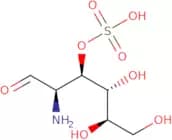
CAS:D-Glucosamine-3-O-sulphate is a naturally occurring sugar found in the human body. It is a structural component of a number of important molecules, such as glycoproteins, heparin, and glycosaminoglycans. D-Glucosamine-3-O-sulphate has been shown to inhibit the growth of mouse tumor cells by activating effector proteins that induce apoptosis and inhibit axonal growth. It also promotes oligodendrocyte differentiation, which may be due to its ability to increase heparin levels and reduce hepcidin expression.Fórmula:C6H13NO8SPureza:Min. 95%Cor e Forma:White PowderPeso molecular:259.23 g/molD-Sorbitol
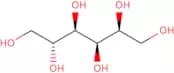
CAS:Sorbitol, also known as glucitol, occurs widely in plants, such as, the fruits of the Sorbus and Crataegus spp. Commercially it is produced by the catalytic hydrogenation of glucose (Collins, 2006). Sorbitol is approved as a sugar substitute with the E number 420 and has âgenerally recognized as safeâ status (GRAS) from the US Food and Drug Administration. It is about 60% as sweet as sucrose and is a mild laxative. Sorbitol has a wide range of other functional properties, including: humectancy, plasticizing ability, non-cariogenicity, and good chemical stability in harsh conditions, such as, alkaline pH and heat. Toothpaste production is the second largest application of sorbitol, accounting for 50,000 tons a year in Western Europe alone. Other important uses of sorbitol as a humectant, include: formulation of cough syrups, multivitamin preparations, emulsions, and suspensions (OâNeil, 2013).
Fórmula:C6H14O6Pureza:Min. 98 Area-%Cor e Forma:White PowderPeso molecular:182.17 g/mol1,2,3,5-Tetra-O-acetyl-b-L-ribofuranose
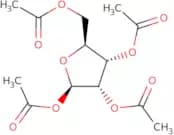
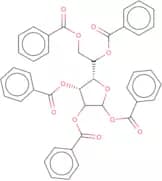
CAS:1,2,3,5-Tetra-O-acetyl-b-L-ribofuranose is a synthetic carbohydrate that can be modified with fluorination, methylation, or monosaccharide. It is a monomeric sugar that is used in the synthesis of oligosaccharides and polysaccharides. The compound has been shown to have antiviral properties against human immunodeficiency virus type 1 (HIV-1).Fórmula:C13H18O9Pureza:Min. 95%Cor e Forma:White PowderPeso molecular:318.3 g/mol1,2,3,5,6-Penta-O-benzoyl-D-galactofuranose
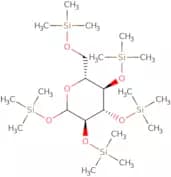
CAS:1,2,3,5,6-Penta-O-benzoyl-D-galactofuranose is a sugar that is custom synthesized and can be modified with fluorination. This product has a CAS number of 138811-45-7 and is high purity. It can be used in glycosylation, oligosaccharide synthesis, methylation, monosaccharide synthesis and polysaccharide synthesis. It is an important building block for the modification of complex carbohydrates.Fórmula:C41H32O11Pureza:Min. 95%Cor e Forma:White PowderPeso molecular:700.69 g/mol1,2,3,4,6-Penta-O-trimethylsilyl-D-glucopyranose
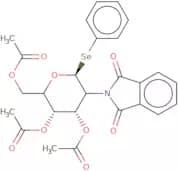
CAS:1,2,3,4,6-Penta-O-trimethylsilyl-D-glucopyranose is a high purity product custom synthesized for research purposes. It is a sugar that has been modified by the Click modification and fluorination. 1,2,3,4,6-Penta-O-trimethylsilyl-D-glucopyranose is an oligosaccharide with a complex carbohydrate structure that can be used in glycosylation reactions. This product is a saccharide with a CAS number of 19126-99-9.Fórmula:C21H52O6Si5Pureza:Min. 95%Cor e Forma:Colorless PowderPeso molecular:541.07 g/molPhenyl 3,4,6-tri-O-acetyl-2-deoxy-2-phthalimido-b-D-selenoglucopyranoside
CAS:Phenyl 3,4,6-tri-O-acetyl-2-deoxy-2-phthalimido b-D-selenoglucopyranoside is a chemical compound that is used in the synthesis of saccharides and oligosaccharides. It has been modified with the Click reaction to give it a reactive group. This modification can be used for glycosylation or for incorporation into polysaccharides such as starch. Phenyl 3,4,6-tri-O-acetyl-2-deoxy b -D selenoglucopyranoside is a high purity synthetic compound that is available in custom synthesis quantities.Fórmula:C26H25NO9SePureza:Min. 95%Peso molecular:574.44 g/molAllyl 2-acetamido-2-deoxy-?-D-glucopyranoside
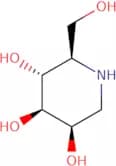
CAS:Allyl 2-acetamido-2-deoxy-a-D-glucopyranoside is a synthetic oligosaccharide that has the ability to bind to the O antigen of bacterial cells. It is used in vaccines as an adjuvant and has been shown to increase antibody production and provide protection against Shigella, a bacterial infection. This compound also shows chemoenzymatic activity, which allows for regiospecifically catalytic conversion of glycosides. Allyl 2-acetamido-2-deoxy-a-D-glucopyranoside binds to specific microbial enzymes that contain an acceptor site, with its catalytic function being activated by these enzymes.Fórmula:C11H19NO6Pureza:Min. 95%Cor e Forma:PowderPeso molecular:261.27 g/mol1-Deoxymannojirimycin HCl
CAS:Potent and specific inhibitor of α-mannosidase I. It is active against the Golgi isoform (GMI) of the enzyme and blocks carbohydrate branch elongation from immature to complex and hybrid N-glycans. Its anti-viral activity against HIV-1 is characterized by the alteration of N-glycan pattern and shift to high-mannose glycans on viral glycoprotein gp120, resulting in decreased infectivity of newly synthesized virions.
Fórmula:C6H13NO4·HClPureza:Min. 98 Area-%Cor e Forma:White Off-White PowderPeso molecular:199.63 g/mol2,3,4-Tri-O-benzyl-L-rhamnopyranose
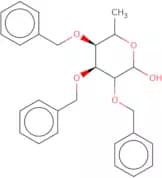
CAS:2,3,4-Tri-O-benzyl-L-rhamnopyranose is a chemical compound that belongs to the family of carbohydrates known as rhamnopyranoses. It is a derivative of L-rhamnose, which is a naturally occurring aldohexose sugar. The compound is often used as a glycosyl donor in the synthesis of oligosaccharides and glycoconjugates. The three benzyl groups in the molecule provide protection for the hydroxyl groups, allowing for selective deprotection and glycosylation. 2,3,4-Tri-O-benzyl-L-rhamnopyranose is also used as a precursor in the synthesis of various natural products.
Fórmula:C27H30O5Pureza:Min. 95%Cor e Forma:PowderPeso molecular:434.52 g/mol4-Methoxyphenyl 3-O-benzyl-a-D-mannopyranoside
CAS:4-Methoxyphenyl 3-O-benzyl-a-D-mannopyranoside is a synthetic carbohydrate that has been modified with a click reaction. It is an Oligosaccharide, which is a type of Carbohydrate, and has a saccharide sequence. This product is used in the synthesis of complex carbohydrates. The product has high purity and custom synthesis capabilities.Fórmula:C20H24O7Pureza:Min. 95%Peso molecular:376.4 g/molEmodin 1-glucoside
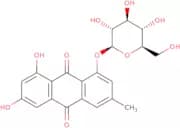
CAS:Emodin 1-glucoside is a natural anthraquinone glycoside that is produced by plants and has been shown to have cytotoxic effects against human cells. Emodin 1-glucoside inhibits the function of enzymes, such as glycosidases, phosphatases, and proteases. This compound is activated by calcium ions and has been shown to disrupt mitochondrial membrane potential. Emodin 1-glucoside also inhibits sugar residues and has shown significant cytotoxicity against cultured human cells at higher concentrations. It may be used as a medicine for the treatment of inflammation or cancer.Fórmula:C21H20O10Pureza:Min. 95%Cor e Forma:PowderPeso molecular:432.38 g/mol2,3,5-Tri-O-benzyl-b-D-ribofuranose
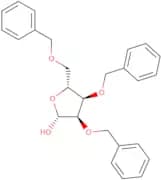
CAS:2,3,5-Tri-O-benzyl-b-D-ribofuranose is a synthetic monosaccharide that is used in the synthesis of complex carbohydrates such as glycosylation and polysaccharides. One use for this chemical is to modify the sugar moiety with methyl groups, yielding 2,3,5-tri-O-methyl b-D-ribofuranose. This modification helps prevent the sugar from being metabolized by enzymes in the body. The chemical can also be fluorinated to yield 2,3,5-trifluoro b-D-ribofuranose.
Fórmula:C26H28O5Pureza:Min. 95%Cor e Forma:White PowderPeso molecular:420.5 g/molPhenyl-β-D-thioglucuronic acid
CAS:Phenyl-beta-D-thioglucuronic acid is a drug that is used to treat inflammatory diseases and autoimmune diseases. It is a basic structure that has been shown to have anti-estrogenic effects in vitro, although the mechanism of action is not well understood. Phenyl-beta-D-thioglucuronic acid can be crosslinked with proteins to form a matrix for wound healing. This drug has also been shown to be a potent inhibitor of proteases, and may inhibit other enzymes such as matrix metalloproteinases and serine proteases.
Fórmula:C12H14O6SPeso molecular:286.31 g/molRef: 3D-P-4300
-Unit-ggA consultar1gA consultar5gA consultar10gA consultar500mgA consultar2500mgA consultar3-Hydroxydesloratadine b-D-glucuronide sodium salt
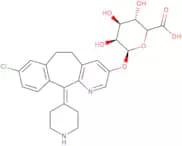
CAS:3-Hydroxydesloratadine b-D-glucuronide sodium salt is a carbohydrate that is used as an intermediate in the synthesis of saccharides. It can be modified to make it more soluble in water by adding fluorine atoms, which increases its solubility and bioavailability. 3-Hydroxydesloratadine b-D-glucuronide sodium salt is synthesized using a custom synthesis method with high purity and high yield. It has glycosylation, methylation, and click modification done on it during the synthesis process.Fórmula:C25H26ClN2O7·NaPureza:Min. 95%Cor e Forma:PowderPeso molecular:524.93 g/molTelmisartan acyl-b-D-glucuronide
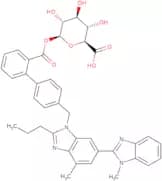
CAS:Telmisartan acyl-b-D-glucuronide is a drug metabolite that is formed by the conjugation of telmisartan with glucuronic acid. Telmisartan acyl-b-D-glucuronide is activated in vivo and reversibly inhibits the enzyme creatine kinase, which is involved in the metabolism of creatine to creatinine. The effective dose for this compound has been shown to be 10 mg/kg (orally) in humans. Telmisartan acyl-b-D-glucuronide has been shown to be an at1 receptor antagonist and may have some antihypertensive effects via modulation of ion channels. This drug also appears to have some proliferative effects on cells that are inhibited by radiation.Fórmula:C39H38N4O8Pureza:Min. 95%Cor e Forma:Off-White PowderPeso molecular:690.74 g/mol2,3,5-Tri-O-benzyl-1-O-(4-nitrobenzoyl)-D-arabinofuranose
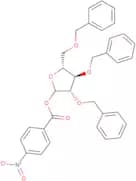
CAS:2,3,5-Tri-O-benzyl-1-O-(4-nitrobenzoyl)-D-arabinofuranose is an organic compound that belongs to the group of furan derivatives. The configuration of this molecule was determined to be (2S,3S) by the use of stereoselective synthesis. It can be synthesized from a benzaldehyde and a ribofuranosyl chloride with a yield of about 95%. This compound has been shown to react with azides in a catalytic transfer reaction yielding yields of up to 100%.Fórmula:C33H31NO8Pureza:Min. 95%Cor e Forma:PowderPeso molecular:569.6 g/mol1,4:3,6-Dianhydro-D-mannitol
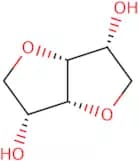
CAS:Building block for polymers synthesis, ionic liquids and chiral auxiliaries
Fórmula:C6H10O4Pureza:Min. 95%Cor e Forma:PowderPeso molecular:146.14 g/molPeonidin-3-O-arabinoside chloride
CAS:Peonidin-3-O-arabinoside chloride is a flavonol glycoside that is found in the plant peony and inhibits lipid absorption. It has inhibitory properties on fat absorption in vitro. Peonidin-3-O-arabinoside chloride also inhibits the activity of enzymes that break down dietary fats, such as pancreatic lipase, thereby preventing fat absorption. This compound has been shown to lower serum cholesterol levels and reduce blood pressure in vivo human trials. Peonidin-3-O-arabinoside chloride is extracted from the bark of the tree species Paeonia suffruticosa and is used as an ingredient in some weight loss supplements.Fórmula:C21H21O10·ClPureza:Min. 95%Cor e Forma:White Off-White PowderPeso molecular:468.84 g/mol4-Methoxyphenyl 3-O-benzyl-4,6-O-benzylidene-2-deoxy-2-phthalimido-β-D-glucopyranoside
CAS:4-Methoxyphenyl 3-O-benzyl-4,6-O-benzylidene-2-deoxy-2-phthalimido-b-D-glucopyranoside is a complex carbohydrate that has been modified with methylation and glycosylation. It has been synthesized using the following reactants: 4-(methoxy)phenol, benzaldehyde, and 2,3,4,6,-tetraacetylpiperidine. This product has a CAS number of 129575–88–8 and is available for custom synthesis in quantities from 1 gram to 50 kilograms. This product is used as a custom synthesis for oligosaccharides or polysaccharides.Fórmula:C35H31NO8Pureza:Min. 95%Peso molecular:593.62 g/mol