Monossacáridos
Monossacarídeos são a forma mais simples de carboidratos e servem como building blocks fundamentais para açúcares mais complexos e polissacarídeos. Essas moléculas de açúcar único desempenham papéis críticos no metabolismo energético, na comunicação celular e nos componentes estruturais das células. Nesta seção, você encontrará uma ampla variedade de monossacarídeos essenciais para pesquisas em bioquímica, biologia molecular e glicociência. Esses compostos são cruciais para estudar vias metabólicas, processos de glicosilação e desenvolvimento de agentes terapêuticos. Na CymitQuimica, oferecemos monossacarídeos de alta qualidade para apoiar suas necessidades de pesquisa, garantindo precisão e confiabilidade em suas investigações científicas.
Subcategorias de "Monossacáridos"
- Aloses(11 produtos)
- Arabinoses(21 produtos)
- Eritroses(11 produtos)
- Frutoses(9 produtos)
- Fucoses(36 produtos)
- Galactosamina(41 produtos)
- Galactoses(260 produtos)
- Glucoses(365 produtos)
- Ácidos Glucurónicos(51 produtos)
- Glico-substratos para enzimas(77 produtos)
- Guloses(6 produtos)
- Idoses(4 produtos)
- Inositóis(15 produtos)
- Lixoses(4 produtos)
- Mannoses(65 produtos)
- O-Glicanos(48 produtos)
- Psicoses(3 produtos)
- Ramnoses(10 produtos)
- Riboses(61 produtos)
- Ácidos siálicos(100 produtos)
- Sorboses(4 produtos)
- Açúcares(173 produtos)
- Tagatoses(4 produtos)
- Taloses(8 produtos)
- Xiloses(20 produtos)
Exibir 17 mais subcategorias
Foram encontrados 6088 produtos de "Monossacáridos"
Ordenar por
Pureza (%)
0
100
|
0
|
50
|
90
|
95
|
100
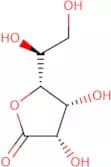
L-Gulonic acid-1,4-lactone
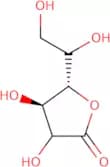
CAS:<p>L-Gulonic acid-1,4-lactone is an ascorbic acid derivative that inhibits the production of matrix metalloproteinases (MMPs) and other enzymes. L-Gulonic acid-1,4-lactone has been shown to inhibit the activity of MMPs in hl-60 cells, which may be due to its ability to chelate metal ions, such as zinc and copper. This molecule also has a stabilizing effect on collagen type I because it prevents cross linking between lysine amino acids. The discovery process for this molecule was found by screening clones from a cDNA library with biochemical properties similar to those of ascorbic acid. This molecule has been shown to inhibit the activation of protein kinase C (PKC) and phosphorylation of extracellular signal regulated kinase (ERK). L-Gulonic acid-1,4-lactone is metabolized through plant metabolism</p>Fórmula:C6H10O6Pureza:Min. 95 Area-%Cor e Forma:White PowderPeso molecular:178.14 g/mol1,3,4,6-Tetra-O-acetyl-2-[[2-(acetylthio)acetyl]amino]-2-deoxy-D-galactopyranose
CAS:<p>1,3,4,6-Tetra-O-acetyl-2-[[2-(acetylthio)acetyl]amino]-2-deoxy-D-galactopyranose is a modified GalNAc analogue</p>Fórmula:C18H25NO11SPureza:Min. 95%Cor e Forma:PowderPeso molecular:463.46 g/mol4-Deoxy-4-fluoro-D-glucopyranose
CAS:<p>4-Deoxy-4-fluoro-D-glucopyranose is a fluorinated sugar that is found in the roots of Glycyrrhiza uralensis. It can inhibit glycosylation by blocking the stepwise addition of glucose to the growing oligosaccharide chain. 4-Deoxy-4-fluoro-D-glucopyranose also has biological activities, such as antiinflammatory and antitumor properties. This compound is an analog of D-arabinose and D-xylulose, which are found in many plants. 4DFG can be used to synthesize glycosides with various substituents on the hydroxyl group.</p>Pureza:Min. 95%Medicagenic acid 3,28-di-O-glucoside
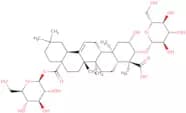
CAS:<p>Medicagenic acid 3,28-di-O-glucoside is a synthetic compound that is the product of a custom synthesis. It is a sugar with 1,2-linked glucose units. Medicagenic acid 3,28-di-O-glucoside is an intermediate in the synthesis of glycoconjugates. Medicagenic acid 3,28-di-O-glucoside can be modified to produce saccharides with various properties and functions. This compound has been modified by fluorination, methylation and click chemistry to produce medicagenic acid 3,28-di-O-[(2-(4′-[N′-(3′,5′'-dimethoxytrityl)-3H]thiophenyl)carbonyl]-6′-(4′-[N′-(3',5'-dimethoxytrityl)-3H]thiophenyl)methyl] glucopyranoside.</p>Fórmula:C42H66O16Pureza:Min. 95%Peso molecular:826.96 g/mol1-Deoxy-L-mannitol
CAS:<p>1-Deoxy-L-mannitol is an effective oral hypoglycemic agent that has been used in the treatment of diabetes. It is a sugar alcohol with a chemical structure similar to glucose and erythritol. 1-Deoxy-L-mannitol is absorbed by the small intestine and enters the bloodstream after being hydrolyzed by pancreatic enzymes. It inhibits fatty acid synthesis, which leads to decreased levels of acetyl coenzyme A and increased levels of carnitine, leading to activation of fatty acid oxidation in liver cells. This drug also inhibits phosphatase activity, which leads to decreased production of glycerophosphate from triphosphate. This process results in an increase in intracellular pH and a decrease in plasma glucose concentration. The use of 1-deoxy-L-mannitol for the treatment of diabetes was first reported by George Cahill and his colleagues at Harvard University in 1967. It was shown that this drug could reduce blood sugar</p>Fórmula:C6H14O5Pureza:Min. 95%Cor e Forma:PowderPeso molecular:166.17 g/molAustraline
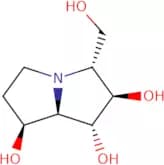
CAS:<p>Inhibitor of alpha-glucosidase II</p>Fórmula:C8H15NO4Pureza:Min. 95%Cor e Forma:PowderPeso molecular:189.21 g/mol1,2,4,6-Tetra-O-acetyl-3-azido-3-deoxy-D-galactopyranose
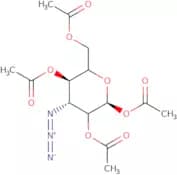
CAS:<p>Building block for galectin-3 inhibitors based on 3â-modified LacNAc</p>Fórmula:C14H19N3O9Pureza:Min. 98 Area-%Cor e Forma:White PowderPeso molecular:373.32 g/mol2-Acetamido-3,4,6-tri-O-acetyl-2-deoxy-β-D-glucopyranosyl azide
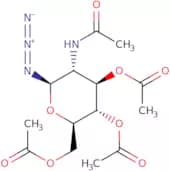
CAS:<p>2-Acetamido-3,4,6-tri-O-acetyl-2-deoxy-β-D-glucopyranosyl azide is a custom synthesis that is a complex carbohydrate. It is a glycosylation product of 2,3,4,6-tetraacetyl α--D--glucose and 2,3,6 -tri--O--acetyl--2--deoxy--β--D--glucopyranose. This compound has been modified by Click chemistry with 4-(dimethylamino)pyridine (DMAP). The modification has produced an acetamido group at the C2 position of the glucopyranoside moiety. The compound is available in high purity for research purposes.</p>Fórmula:C14H20N4O8Pureza:Min. 95%Cor e Forma:White PowderPeso molecular:372.33 g/molD-Glucosamine sulfate sodium chloride
CAS:<p>D-Glucosamine sulfate is a sugar that belongs to the group of polysaccharides. It is a natural compound that is found in the human body and is important for the synthesis of glycosaminoglycans, which are found in cartilage and synovial fluid. D-Glucosamine sulfate can also be used as a raw material for the production of methylated compounds or saccharides. This product can be custom synthesized in different forms (D-glucosamine sulfate sodium chloride, D-glucosamine sulfate potassium salt, D-glucosamine sulfate calcium salt) and with different purity levels depending on your requirements.</p>Fórmula:C6H13NO5xNaClxH2SO4Pureza:Min. 98 Area-%Cor e Forma:White PowderPeso molecular:179.17 g/molPhenyl 4-deoxy-4-fluoro-α-D-glucopyranoside
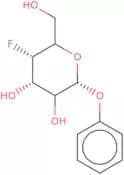
<p>Phenyl 4-deoxy-4-fluoro-a-D-glucopyranoside is a custom synthesis that can be modified with fluorination, methylation, monosaccharide and oligosaccharide. It has CAS No. and is a polysaccharide. Phenyl 4-deoxy-4-fluoro-a-D-glucopyranoside is a sugar that is glycosylated and complexed with carbohydrates.</p>Fórmula:C12H15FO5Pureza:Min. 95%Cor e Forma:White to off-white solid.Peso molecular:258.24 g/mol2,3,4,5-Tetra-O-acetyl-D-ribononitrile
CAS:<p>2,3,4,5-Tetra-O-acetyl-D-ribononitrile is a custom synthesis chemical. It is an Oligosaccharide, Polysaccharide, Modification and has the CAS No. 25546-50-3. It can be used as a Fluorination reagent in Synthetic Chemistry and Click modification. The purity of this chemical is high and it has a Custom synthesis. 2,3,4,5-Tetra-O-acetyl-D-ribononitrile is synthesized by Methylation and Glycosylation of sugar molecule with acetyl group. This chemical can be used to modify saccharide and carbohydrate molecules.</p>Fórmula:C13H17NO8Pureza:Min. 95%Cor e Forma:PowderPeso molecular:315.28 g/mol2-Deoxy-L-ribose-anilide
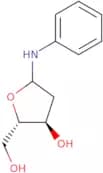
CAS:<p>2-Deoxy-L-ribose-anilide is a chemical compound that has been patented for its use in the detection of magnetic fields. The patent claims that this compound can be used as an intermediate in the preparation of other compounds. 2DRA has different transition temperatures, depending on whether it is in the solid or liquid state. When 2DRA is heated, it changes from a colorless liquid to a yellow crystal at around 100°C and then becomes a white solid at around 150°C. The magnetic properties of 2DRA arise from its ability to form strong bonds with other molecules, which are broken by external magnetic fields.</p>Fórmula:C11H15NO3Pureza:Min. 98 Area-%Cor e Forma:PowderPeso molecular:209.12 g/molL-Altrose
CAS:<p>L-Altrose is a carbohydrate that is used as a nutrient and sweetener. It is a dextrose monomer with an L-arabinose side chain. L-Altrose has been shown to be a stereoselective carbon source that can be used in the synthesis of various biologically active compounds, such as antibiotics. L-Altrose has also been shown to stimulate growth of yeast cells in the absence of oxygen by providing an extracellular carbon source. This compound can be hydrolyzed by ring-opening or benzoylation reactions to yield dextrose.</p>Fórmula:C6H12O6Pureza:Min. 99 Area-%Cor e Forma:White PowderPeso molecular:180.16 g/molEthyl b-D-galactopyranoside
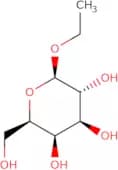
CAS:<p>Ethyl b-D-galactopyranoside is a galactosylated glycoside that can be synthesized by the transfer of an acetyl group from ethyl alcohol to a sugar. It has antibacterial activity and is used in solvents as a stabilizer. The chemical structure of this compound consists of two benzene rings with an -OH group on one end, which are linked together by a covalent bond. The spacing between these two benzene rings is important for the stability of this compound, and it will break down when there is not enough space for the electron clouds to interact with each other. Ethyl b-D-galactopyranoside has been shown to be effective against tuberculosis bacteria, Mycobacterium tuberculosis, and Mycobacterium avium complex.</p>Fórmula:C8H16O6Cor e Forma:White PowderPeso molecular:208.21 g/molD-Lyxosylamine
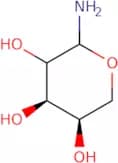
CAS:<p>D-Lyxosylamine is a drug that has been shown to have anticancer activity against leishmania species. It inhibits the growth of the parasite by binding to the lectin, sialic, and glycoconjugates on the surface of cells. This inhibition leads to a blockage in the transport of glucose and amino acids, which are essential for cell growth and replication. D-Lyxosylamine has also been shown to have anti-leukemic effects, which may be due to its ability to kill lymphocytic leukemia cells. The drug was administered orally in a clinical trial with human volunteers in order to test its effectiveness against Leishmania major infections. D-Lyxosylamine administered at 50mg/kg/day for 28 days had no significant effect on Leishmania major infection rates.</p>Fórmula:C5H11NO4Pureza:Min. 95%Cor e Forma:White PowderPeso molecular:149.1 g/molmuco-Inositol
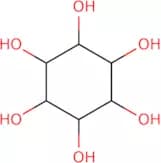
CAS:<p>Muco-Inositol is a compound that is involved in the metabolism of glucose, lipid and protein. It can be synthesized from myo-inositol and plays an important role in the synthesis of phosphatidylinositols. Muco-Inositol has been shown to inhibit enzyme activities in a wild type strain of E. coli. This inhibition may be due to its ability to bind to the active site of these enzymes, thereby inhibiting their activity. Muco-Inositol also inhibits the growth of ovarian cancer cells, as well as myo-inositol levels in maternal blood.</p>Fórmula:C6H12O6Pureza:Min. 95%Cor e Forma:PowderPeso molecular:180.16 g/molL-Rhamnose monohydrate
CAS:<p>L-rhamnose (Rha, 6-deoxy-L-mannose) (Collins, 2006) is normally bound to other sugars as a glycoside in many plant oligosaccharides and in polysaccharides. Rhamnose is also a component of the cell wall of Mycobacterium. In plants, rhamnose is found in the polysaccharide rhamnogalacturonan I, a branched pectic polysaccharide that accounts for 7â14% of the primary wall (Oomen, 2002). Rhamnose is also found in rhamnogalacturonan II, a complex polysaccharide that accounts for âŒ4% of the wall in dicots (Vidal, 2000). Rhamnose is also found in chacotriose and solatriose, the glycan components of solamargine and solasonine, two glycoalkaloids with anticancer properties (Al Sinani, 2017). An understanding of the rhamnose-containing polysaccharides of the gram positive cell wall has identified the biosynthetic pathway as an attractive therapeutic target for antimicrobial drug development (Mistou, 2016).</p>Fórmula:C6H12O5•H2OPureza:Min. 98 Area-%Cor e Forma:Off-White PowderPeso molecular:182.17 g/molD-Gulonic acid-1,4-lactone
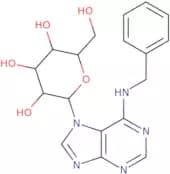
CAS:<p>D-Gulonic acid-1,4-lactone is a naturally occurring compound that is formed from L-gulonic acid and a 1,4-lactone ring. It has been shown to have inhibitory properties against the matrix metalloproteinases MMP-2 and MMP-9. It also has an effect on dehydroascorbic acid, which plays an important role in the regulation of bioavailability of vitamin C. D-Gulonic acid-1,4-lactone has been found to stimulate collagen synthesis in human skin cells, which may be due to its ability to increase the activity of enzymes such as pyruvate kinase and lactate dehydrogenase. The structural analysis of this compound reveals a pyrazole ring with two hydroxyl groups (OH).</p>Fórmula:C6H10O6Pureza:Min. 98 Area-%Cor e Forma:White PowderPeso molecular:178.14 g/molN6-Benzyladenine-7-glucoside
CAS:<p>N6-Benzyladenine-7-glucoside is a benzyladenine derivative that is the major precursor of dihydrozeatin, an important plant growth regulator. N6-Benzyladenine-7-glucoside has been shown to be a potent inhibitor of the uptake of radioactive n6-benzyladenine in tobacco leaves. It also inhibits the uptake of radioactive adenine and guanine in tabacum l. explants and tissues. The compound can inhibit cell division by interfering with hormonal treatments that promote growth and development. The inhibition of cell division may be due to interference with the auxin transport system in plants, which leads to decreased levels of endogenous auxins and growth regulators, such as cytokinins, gibberellins, abscisic acid, and ethylene.</p>Fórmula:C18H21N5O5Pureza:Min. 95%Cor e Forma:PowderPeso molecular:387.39 g/molGlupentaacetate
<p>Glupentaacetate is a synthetic, fluorinated sugar that is used in the synthesis of complex carbohydrates. It has been shown to be a useful tool for the modification of glycosylations, polysaccharides and saccharides. Glupentaacetate has been modified with a methyl group at the C-2 position. This modification leads to increased reactivity and stability, in addition to being useful for click chemistry. Glupentaacetate is also stable under acidic conditions, making it an excellent choice for use in organic synthesis.</p>Pureza:Min. 95%

![1,3,4,6-Tetra-O-acetyl-2-[[2-(acetylthio)acetyl]amino]-2-deoxy-D-galactopyranose](/_next/image/?url=https%3A%2Fstatic.cymitquimica.com%2Fproducts%2F3D%2Fthumb-webp%2FMT145185.webp&w=3840&q=75)