Monossacáridos
Monossacarídeos são a forma mais simples de carboidratos e servem como building blocks fundamentais para açúcares mais complexos e polissacarídeos. Essas moléculas de açúcar único desempenham papéis críticos no metabolismo energético, na comunicação celular e nos componentes estruturais das células. Nesta seção, você encontrará uma ampla variedade de monossacarídeos essenciais para pesquisas em bioquímica, biologia molecular e glicociência. Esses compostos são cruciais para estudar vias metabólicas, processos de glicosilação e desenvolvimento de agentes terapêuticos. Na CymitQuimica, oferecemos monossacarídeos de alta qualidade para apoiar suas necessidades de pesquisa, garantindo precisão e confiabilidade em suas investigações científicas.
Subcategorias de "Monossacáridos"
- Aloses(11 produtos)
- Arabinoses(21 produtos)
- Eritroses(11 produtos)
- Frutoses(9 produtos)
- Fucoses(36 produtos)
- Galactosamina(41 produtos)
- Galactoses(261 produtos)
- Glucoses(365 produtos)
- Ácidos Glucurónicos(51 produtos)
- Glico-substratos para enzimas(77 produtos)
- Guloses(6 produtos)
- Idoses(4 produtos)
- Inositóis(15 produtos)
- Lixoses(4 produtos)
- Mannoses(65 produtos)
- O-Glicanos(48 produtos)
- Psicoses(3 produtos)
- Ramnoses(10 produtos)
- Riboses(61 produtos)
- Ácidos siálicos(100 produtos)
- Sorboses(4 produtos)
- Açúcares(173 produtos)
- Tagatoses(4 produtos)
- Taloses(8 produtos)
- Xiloses(20 produtos)
Exibir 17 mais subcategorias
Foram encontrados 6088 produtos de "Monossacáridos"
Ordenar por
Pureza (%)
0
100
|
0
|
50
|
90
|
95
|
100
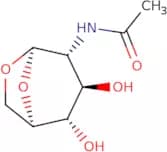
2-Acetamido-1,6-anhydro-2-deoxy-β-D-glucopyranose
CAS:<p>2-Acetamido-1,6-anhydro-2-deoxy-b-D-glucopyranose is widely used in carbohydrate chemistry. It is used as reagent for the synthesis of oligosaccharides and also as a precursor in the synthesis of oligopeptides. 2-Acetamido-1,6-anhydro-2-deoxy-b-D-glucopyranose is an analog of levoglucosan, a compound that is often used to trace for biomass burning in enviromental chemistry studies.</p>Fórmula:C8H13NO5Pureza:Min. 95%Cor e Forma:PowderPeso molecular:203.19 g/mol2,3,4,6-Tetra-O-pivaloyl-D-glucopyranosyl azide
CAS:<p>2,3,4,6-Tetra-O-pivaloyl-D-glucopyranosyl azide is an oligosaccharide that has been modified for use in the synthesis of complex carbohydrates. It is synthesized through a methylation reaction and then click chemistry. The resulting product is a high purity chemical that can be used to modify saccharides or sugars. 2,3,4,6-Tetra-O-pivaloyl-D-glucopyranosyl azide is a white crystalline solid with CAS No. 1251910-91-4.</p>Fórmula:C26H43N3O9Pureza:Min. 95%Cor e Forma:White SolidPeso molecular:541.63 g/molN-Acetyl-2-O-methyl-b-D-neuraminic acid
CAS:<p>N-Acetyl-2-O-methyl-b-D-neuraminic acid (AOMBNA) is a modification of sialic acid. It is an N-acetylated, O-methylated analogue of b-D-neuraminic acid. AOMBNA is synthesized by the chemical modification of D,L -erythro -2,3,4,6 tetra hydro sialic acid with methyl bromo acetate in the presence of sodium methoxide. The product can be purified by crystallization from dichloromethane and methanol mixture. AOMBNA has been used in complex carbohydrate synthesis and glycosylation reactions.</p>Fórmula:C12H21NO9Pureza:Min. 95%Cor e Forma:PowderPeso molecular:323.3 g/mol1,5-Anhydro-D-fructose
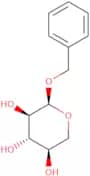
CAS:<p>Antioxidant; antibacterial; suppresses LPS-induced inflammatory response</p>Fórmula:C6H10O5Pureza:Min. 95%Cor e Forma:PowderPeso molecular:162.14 g/molBenzyl a-D-xylopyranoside
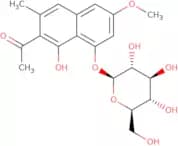
CAS:<p>Benzyl a-D-xylopyranoside is a benzyl galactofuranose that is synthesized from the condensation of benzaldehyde and D-xylose. This compound has been shown to be an excellent target molecule for the detection of Mycobacterium tuberculosis, as it constitutes about 10% of the mycolic acid in this organism. Benzyl a-D-xylopyranoside can also be used to detect other bacteria such as Actinomyces, Streptomyces, and Corynebacterium. The yield of this compound is high and its regiospecificity is complete.</p>Fórmula:C12H16O5Pureza:Min. 95%Cor e Forma:PowderPeso molecular:240.25 g/molTorachrysone 8-O-glucoside
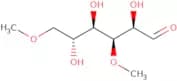
CAS:<p>Torachrysone 8-O-glucoside is a natural product found in the rhizome of Chinese medicinal plant Rhubarb. It is an antiinflammatory that has been shown to be effective in vitro against inflammation induced by spleen, blood, and the stomach. Torachrysone 8-O-glucoside has also been shown to have protective effects on the kidney and bladder.</p>Fórmula:C20H24O9Pureza:Min. 95%Cor e Forma:White PowderPeso molecular:408.4 g/mol3,6-Di-O-methyl-D-glucose
CAS:<p>3,6-Di-O-methyl-D-glucose is a glycopeptide sugar that is used as a terminal sugar in the cell wall of many gram-positive bacteria. It is found on the surface of most strains of Streptococcus pneumoniae and Staphylococcus aureus. 3,6-Di-O-methyl-D-glucose is an antigen for monoclonal antibodies against the streptococcal M protein and has been used to identify the carbohydrate chemistry of Streptococcus pneumoniae. 3,6-Di-O-methyl glucose may also be useful in the detection of cellulose derivatives by magnetic resonance spectroscopy or nitrocellulose membranes. The terminal sugars found on these membranes are hydrolyzed by acid and dry weight methods before being analyzed by gas chromatography or high performance liquid chromatography.</p>Fórmula:C8H16O6Pureza:Min. 95%Peso molecular:208.21 g/molZiyuglycoside I
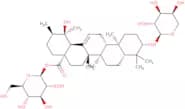
CAS:<p>Ziyuglycoside I is a naturally occurring compound that has been shown to have physiological effects on skin cells. It has been found to bind to collagen and the matrix of skin cells, which may be its mechanism of action. Ziyuglycoside I also has an anti-inflammatory effect, which may be due to its ability to inhibit transcription-polymerase chain reactions (PCR). It has been shown to have antimicrobial activity against some strains of bacteria that are resistant to antibiotics such as erythromycin and tetracycline. Ziyuglycoside I has potential applications in the treatment of infectious diseases and inflammatory skin diseases.</p>Fórmula:C41H66O13Pureza:Min. 95%Cor e Forma:White PowderPeso molecular:766.95 g/molQuercetin-3-O-a-L-arabinoside
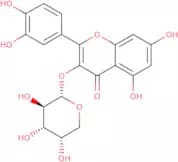
CAS:<p>Quercetin-3-O-a-L-arabinoside is a flavonoid that has been shown to be active against human colorectal adenocarcinoma cells. Quercetin 3-O-a-L-arabinoside inhibits the proliferation of hl60 cells by inducing apoptosis and inhibiting protein synthesis. The biological properties of quercetin 3-O-a-L-arabinoside are not well understood, but it may work as an antioxidant due to its ability to scavenge free radicals. Quercetin 3-O-a-L-arabinoside has also been found to have antimicrobial activity against bacteria, fungi, and viruses. Quercetin 3 O a L arabinoside is able to inhibit the growth of various strains of Mycobacterium tuberculosis, including drug resistant strains. This compound is also shown to be effective in the treatment of platinum resistant</p>Fórmula:C20H18O11Pureza:Min. 98 Area-%Cor e Forma:Yellow PowderPeso molecular:434.35 g/molN-Nonyldeoxynojirimycin
CAS:<p>Inhibitor and pharmacological chaperone of lysosomal β-glucosidase (glucosylceramidase). The compound binds to the unstable glucosidase active site during the folding and post-translational processing in Golgi apparatus and endoplasmatic reticulum. It is effective in stabilising the enzyme and preventing accumulation of glucosylceramides in models for Gaucher disease, especially in the ones carrying N370S mutation. In addition, it has antiviral activity against Hepatitis C virus, which is mediated by misfolding of viral glycoproteins in the presence of the inhibitor.</p>Fórmula:C15H31NO4Pureza:Min. 95%Cor e Forma:White PowderPeso molecular:289.41 g/molL-Rhamnose monohydrate
CAS:<p>L-rhamnose (Rha, 6-deoxy-L-mannose) (Collins, 2006) is normally bound to other sugars as a glycoside in many plant oligosaccharides and in polysaccharides. Rhamnose is also a component of the cell wall of Mycobacterium. In plants, rhamnose is found in the polysaccharide rhamnogalacturonan I, a branched pectic polysaccharide that accounts for 7â14% of the primary wall (Oomen, 2002). Rhamnose is also found in rhamnogalacturonan II, a complex polysaccharide that accounts for âŒ4% of the wall in dicots (Vidal, 2000). Rhamnose is also found in chacotriose and solatriose, the glycan components of solamargine and solasonine, two glycoalkaloids with anticancer properties (Al Sinani, 2017). An understanding of the rhamnose-containing polysaccharides of the gram positive cell wall has identified the biosynthetic pathway as an attractive therapeutic target for antimicrobial drug development (Mistou, 2016).</p>Fórmula:C6H12O5•H2OPureza:Min. 98 Area-%Cor e Forma:Off-White PowderPeso molecular:182.17 g/mol2,3,4,5-Tetra-O-acetyl-D-ribononitrile
CAS:<p>2,3,4,5-Tetra-O-acetyl-D-ribononitrile is a custom synthesis chemical. It is an Oligosaccharide, Polysaccharide, Modification and has the CAS No. 25546-50-3. It can be used as a Fluorination reagent in Synthetic Chemistry and Click modification. The purity of this chemical is high and it has a Custom synthesis. 2,3,4,5-Tetra-O-acetyl-D-ribononitrile is synthesized by Methylation and Glycosylation of sugar molecule with acetyl group. This chemical can be used to modify saccharide and carbohydrate molecules.</p>Fórmula:C13H17NO8Pureza:Min. 95%Cor e Forma:PowderPeso molecular:315.28 g/mol4-Deoxy-4-fluoro-D-glucopyranose
CAS:<p>4-Deoxy-4-fluoro-D-glucopyranose is a fluorinated sugar that is found in the roots of Glycyrrhiza uralensis. It can inhibit glycosylation by blocking the stepwise addition of glucose to the growing oligosaccharide chain. 4-Deoxy-4-fluoro-D-glucopyranose also has biological activities, such as antiinflammatory and antitumor properties. This compound is an analog of D-arabinose and D-xylulose, which are found in many plants. 4DFG can be used to synthesize glycosides with various substituents on the hydroxyl group.</p>Pureza:Min. 95%1,2,3,4,6-Penta-O-acetyl-β-D-mannopyranose
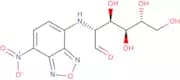
CAS:<p>1,2,3,4,6-Penta-O-acetyl-β-D-mannopyranose is a custom synthesis of an oligosaccharide that is used in the modification of saccharides and complex carbohydrates. It has been used in the synthesis of glycosylations and methylations. This product is a fluorinated monosaccharide with high purity.</p>Fórmula:C16H22O11Pureza:Min. 98 Area-%Cor e Forma:PowderPeso molecular:390.34 g/mol2-NBDG
CAS:<p>Fluorescent substrate used to monitor glucose uptake</p>Fórmula:C12H14N4O8Pureza:Min. 95%Cor e Forma:Red SolidPeso molecular:342.26 g/molD-Mannurono-6,3-lactone
CAS:<p>D-Mannurono-6,3-lactone is a carbohydrate that can be found in plants. The compound is a monosaccharide and an isomer of D-mannose. It consists of 6 carbon atoms, 3 oxygen atoms, and 1 nitrogen atom. D-Mannurono-6,3-lactone has been shown to have kinetic properties that are different from other carbohydrates. The chromatographic method used to isolate the compound was based on its acidic properties. This acid hydrolysis allowed for the separation of the molecule into two components: one with a pK value of 4.5 and another with a pK value of 2.5. These components were then separated using a fluorimetric method due to their differing fluorescence intensities at 490 nm and 530 nm wavelengths. <br>D-Mannurono-6,3-lactone has been shown to interact with fulvellum (an antibiotic). This interaction</p>Fórmula:C6H8O6Pureza:Min. 95%Cor e Forma:PowderPeso molecular:176.12 g/mol2-Azidoethyl 2,3,4,6-tetra-O-acetyl-a-D-mannopyranoside
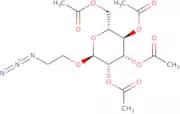
CAS:<p>2-Azidoethyl 2,3,4,6-tetra-O-acetyl-a-D-mannopyranoside is a custom synthesis. It is a complex carbohydrate that has been modified with glycosylation and methylation. This saccharide is a glycoside of the simple sugar mannose and the amino acid 2-azidoethanol. The compound has been fluorinated to yield a stable molecule. This product is of high purity and can be used in the synthesis of other compounds.</p>Fórmula:C16H23N3O10Pureza:Min. 95 Area-%Cor e Forma:PowderPeso molecular:417.37 g/molPhenyl 3-deoxy-3-fluoro-α-D-glucopyranoside
<p>Phenyl 3-deoxy-3-fluoro-a-D-glucopyranoside is a modified oligosaccharide, which is synthesized by the glycosylation of 3,6-diaminohexanoic acid with phenyl boronic acid. This compound is also known as an anti-tuberculosis drug. It has been shown to inhibit bacterial growth by binding to DNA dependent RNA polymerase, thereby preventing transcription and replication. The high frequency of human activity has been shown using a patch clamp technique on human erythrocytes. Phenyl 3-deoxy-3-fluoro-a-D-glucopyranoside also specifically binds to markers expressed at high levels in Mycobacterium tuberculosis strains (e.g., ESX1 secretion system protein) and inhibits cell growth in culture.</p>Fórmula:C12H15FO5Pureza:Min. 95%Cor e Forma:White to off-white solid.Peso molecular:258.24 g/molBenzyl-alpha-S-GalNAc
CAS:<p>Please enquire for more information about Benzyl-alpha-S-GalNAc including the price, delivery time and more detailed product information at the technical inquiry form on this page</p>Fórmula:C15H21NO5SPureza:Min. 98 Area-%Peso molecular:327.4 g/mol2-Azidoethyl 2-acetamido-3,4,6-tri-O-acetyl-2-deoxy-β-D-glucopyranoside
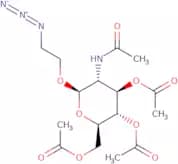
CAS:<p>The 2-azidoethyl 2-acetamido-3,4,6-tri-O-acetyl-2-deoxy-b-D-glucopyranoside is a custom synthesis in a high purity that can be methylated and modified for glycosylation. It is an azide sugar with the CAS number 142072-11-5. The product can be used for saccharide and polysaccharides modifications or click chemistry. This product is also available for custom synthesis.</p>Fórmula:C16H24N4O9Pureza:Min. 95%Peso molecular:416.38 g/mol