Monossacáridos
Subcategorias de "Monossacáridos"
- Aloses(11 produtos)
- Arabinoses(21 produtos)
- Eritroses(11 produtos)
- Frutoses(9 produtos)
- Fucoses(36 produtos)
- Galactosamina(41 produtos)
- Galactoses(261 produtos)
- Glucoses(365 produtos)
- Ácidos Glucurónicos(52 produtos)
- Glico-substratos para enzimas(78 produtos)
- Guloses(6 produtos)
- Idoses(4 produtos)
- Inositóis(15 produtos)
- Lixoses(4 produtos)
- Mannoses(65 produtos)
- O-Glicanos(48 produtos)
- Psicoses(3 produtos)
- Ramnoses(10 produtos)
- Riboses(61 produtos)
- Ácidos siálicos(100 produtos)
- Sorboses(4 produtos)
- Açúcares(173 produtos)
- Tagatoses(4 produtos)
- Taloses(8 produtos)
- Xiloses(20 produtos)
Foram encontrados 6088 produtos de "Monossacáridos"
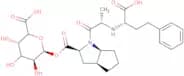
Ramiprilat acyl-b-D-glucuronide
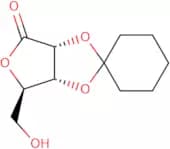
CAS:Ramiprilat acyl-b-D-glucuronide is a modified form of ramipril, an angiotensin converting enzyme inhibitor that belongs to the class of angiotensin II receptor antagonists. It is used in the treatment of hypertension and congestive heart failure. The modifications are performed by methylation, saccharide, polysaccharide, click modification, and modification. This active compound has CAS number 1357570-22-9. The chemical formula for this product is C37H53NO4. Ramiprilat acyl-b-D-glucuronide has high purity and is a complex carbohydrate with glycosylation on the sugar moiety that contains a fluorination at the 3 position on the glucose ring.Fórmula:C27H36N2O11Pureza:Min. 95%Peso molecular:564.59 g/molD-Ribonolactone 2,3-cyclohexyl ketal
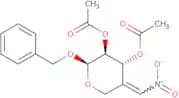
CAS:D-Ribonolactone 2,3-cyclohexyl ketal is a custom synthesis. It is a synthetic modification of the natural D-ribose sugar molecule. It has been modified by methylation and glycosylation to yield a complex carbohydrate with a high degree of purity. The fluorination process has been used to introduce fluorine atoms into the molecule.Fórmula:C11H16O5Pureza:Min. 95%Peso molecular:228.24 g/molBenzyl 2,3-di-O-acetyl-4-deoxy-4-C-nitromethylene-b-D-arabinopyranoside
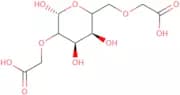
CAS:Benzyl 2,3-di-O-acetyl-4-deoxy-4-C-nitromethylene-b-D-arabinopyranoside is a synthetic sugar. It is a complex carbohydrate with two saccharides and one monosaccharide. The saccharides are glucose and galactose, and the monosaccharide is arabinose. Benzyl 2,3-di-O-acetyl-4-deoxy-4C nitromethylene bD arabinopyranoside has been modified by fluorination, methylation, glycosylation and click chemistry to create a high purity product.Fórmula:C17H19NO8Pureza:Min. 95%Peso molecular:365.33 g/mol2,6-Di-O-Carboxymethyl-D-glucose
CAS:2,6-di-O-carboxymethyl-D-glucose (2,6-CMG) is a modification of D-glucose. 2,6-CMG is a complex carbohydrate with CAS No. 95350-37-1 and has the molecular formula C8H14O9. It is an oligosaccharide that can be custom synthesized to meet customer specifications. 2,6-CMG has high purity and can be used as a sugar or polysaccharide. It also has been fluorinated to meet customer requirements. The glycosylation of 2,6-CMG is methylated and saccharides are then added to it in order to produce a monosaccharide or polysaccharide. This product can be used in the synthesis of glycoproteins and other biomolecules.Fórmula:C10H16O10Pureza:Min. 95%Cor e Forma:Colourless LiquidPeso molecular:296.23 g/molD-Glucaro-1,5-lactam potassium salt
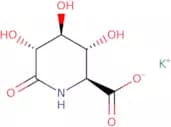
CAS:D-Glucaro-1,5-lactam potassium salt is a synthetic compound that can be used as a building block for the synthesis of glycosylated carbohydrates. It is fluorinated to prevent hydrolysis and methylated to protect against oxidation. This product is also suitable for click modification, polysaccharide synthesis, and glycosylation reactions. D-Glucaro-1,5-lactam potassium salt has CAS No. 53834-55-2 and can be custom synthesized in high purity.Fórmula:C6H9NO6·xKPureza:Min. 95%Cor e Forma:PowderPeso molecular:191.14 g/molFosinoprilat acyl-b-D-glucuronide
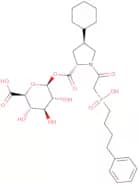
CAS:Fosinoprilat acyl-b-D-glucuronide is a modified fosinoprilat which is an orally active, potent and long lasting inhibitor of angiotensin-converting enzyme (ACE) with a high degree of selectivity for ACE. It has been shown to be effective in the treatment of hypertension, congestive heart failure, and diabetic nephropathy. Fosinoprilat acyl-b-D-glucuronide has been synthesized by click modification from L-fosinoprilat. The carbohydrate moiety is attached to the methyl group of the amine group on the saccharide backbone. This drug exhibits low toxicity and good stability in vivo.Fórmula:C29H42NO11PPureza:Min. 95%Peso molecular:611.62 g/mol6-O-Benzoyl-3-O-triisopropylsilyl-D-galactal
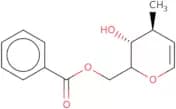
This is a synthetic sugar that can be custom synthesized based on the customer's specifications. 6-O-Benzoyl-3-O-triisopropylsilyl-D-galactal is a monosaccharide and an oligosaccharide that can be modified with a click modification, methylation, and glycosylation. It is a complex carbohydrate that has been shown to have anti-inflammatory properties. The glycosylation of this sugar can also be customized for specific purposes. This product has CAS number 132702-24-2 and is available at 95% purity or higher.Fórmula:C22H34O5SiPureza:Min. 95%Peso molecular:406.59 g/molUDP-D-galactosamine disodium salt
CAS:UDP-D-galactosamine disodium salt is a type of sugar that is a substrate for UDP-glucuronosyltransferase (UGT), which catalyzes the transfer of galactose from UDP-D-galactose to other molecules. The product of this reaction is UDP-D-galacturonic acid. It is produced in the liver, where it participates in the synthesis of glycoproteins, glycolipids, and glycosaminoglycans. In addition, it can be found in the distal tubule of the kidney and in leukemia cells. The histological analysis of rat liver tissue showed that UDP-D-galactosamine disodium salt is present in hepatocytes. This sugar also helps with protein synthesis and activates uridine, which can be used as a carbon source. Histological analysis also revealed that UDP-D-galactosamine disodium salt plays an important role in glucose metabolism, as well as
Fórmula:C15H23N3O16P2Na2Pureza:Min. 95%Cor e Forma:PowderPeso molecular:609.28 g/molIsofagomine hydrochloride
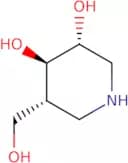
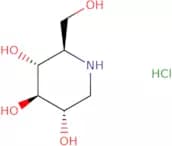
CAS:Inhibitor of lysosomal acid β-glucosidase (GlcCerase/glucocerebrosidase) with IC50 in nanomolar range for wildtype and mutant enzyme. It behaves as pharmacological chaperon by binding to instable GlcCerase active site at neutral pH values and facilitating the protein folding. In acidic lysosomes, isofagomine gets release from the enzyme active site. This results in increased levels of functional glucocerebrosidase and brings therapeutic benefits to patients with Gaucher disease.
Fórmula:C6H13NO3·HClPureza:Min. 95%Cor e Forma:PowderPeso molecular:183.63 g/mol6-O-Benzoylphlorigidoside B
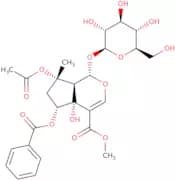
CAS:6-O-Benzoylphlorigidoside B is a natural product that belongs to the class of iridoid glycosides. It is found in plants such as callicarpa, which are members of the asterid clade. 6-O-Benzoylphlorigidoside B was isolated from iridoid glycosides in leaves of Formosana, a plant family native to Taiwan. This compound has been shown to have anti-inflammatory and anti-ulcer activities, as well as potential antiviral activity against herpes simplex virus type 1 (HSV1) and Epstein-Barr virus (EBV).Pureza:Min. 95%Gemfibrozil b-D-glucuronide-D6
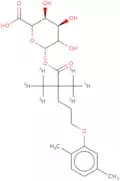
Produto ControladoGemfibrozil b-D-glucuronide-D6 is a methylated, saccharide, Polysaccharide. It is a custom synthesis of the synthetic and fluorinated gemfibrozil b-D-glucuronide. The product is purified by HPLC to >98% purity and supplied as a white powder.Fórmula:C21H24D6O9Pureza:Min. 95%Cor e Forma:White to off-white solid.Peso molecular:432.49 g/mol1,6:3,4-Dianhydro-b-D-altropyranose
CAS:1,6:3,4-Dianhydro-b-D-altropyranose is a sugar that has been modified by methylation. It is a white powder with a melting point of 197°C. This product can be used as an intermediate in the synthesis of saccharides and polysaccharides. It can also be used as an intermediate for glycosylations and fluorinations. 1,6:3,4-Dianhydro-b-D-altropyranose is available in high purity and custom synthesis options.Fórmula:C6H8O4Pureza:Min. 95%Peso molecular:144.13 g/molL-Idonic acid-1,4-lactone
CAS:L-Idonic acid-1,4-lactone is a custom synthesis that is a glycoconjugate with a carbohydrate moiety. It can be used for the modification of glycoproteins and glycopeptides, and has shown to have anti-inflammatory properties. L-Idonic acid-1,4-lactone is a sugar that is made up of an idonic acid attached to an alpha (1→4)-linked D-glucose molecule. This product can be methylated or glycosylated and has been shown to have anticancer activity in animal models. L-Idonic acid-1,4-lactone is soluble in water and has been fluorinated at the 4 position on the glucose unit.Fórmula:C6H10O6Pureza:Min. 95%Peso molecular:178.14 g/mol1,2,3,4-Tetra-O-acetyl-b-D-arabinopyranose
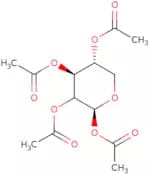
CAS:1,2,3,4-Tetra-O-acetyl-b-D-arabinopyranose is a custom synthesis of a carbohydrate. It is a tetra acetylated form of arabinopyranose that has been fluorinated. The fluorination process increases the reactivity of the sugar and allows for it to be glycosylated or methylated. This sugar can be used in the synthesis of oligosaccharides and complex carbohydrates. These can be used as sweeteners or functional food additives.Fórmula:C13H18O9Pureza:Min. 95%Peso molecular:318.28 g/mol3,4-Di-O-benzyl-L-rhamnal
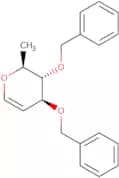
CAS:3,4-Di-O-benzyl-L-rhamnal is a high purity Glycosylation Oligosaccharide with a CAS No. 117249-17-9 that is synthesized by Click modification and methylation. It can be used as a raw material in the synthesis of complex carbohydrate. 3,4-Di-O-benzyl-L-rhamnal is water soluble and has an excellent stability in acidic conditions.Pureza:Min. 95%4,7,8,9-Tetra-O-acetyl-N-acetyl-D-neuraminic acid methyl ester
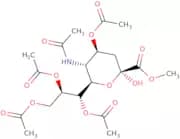
CAS:4,7,8,9-Tetra-O-acetyl-N-acetyl-D-neuraminic acid methyl ester is a modified form of sialic acid. This compound is a glycosylation product that has been modified with methyl groups and fluorine atoms. The fluorination of the molecule increases its stability and prevents it from being hydrolyzed by enzymes such as β-galactosidase. 4,7,8,9-Tetra-O-acetyl-N-acetyl-D-neuraminic acid methyl ester is often used in the synthesis of polysaccharides and oligosaccharides for medical purposes. This compound can be custom synthesized for research purposes or to meet special requirements.
Fórmula:C20H29NO13Pureza:Min. 95%Cor e Forma:White to off-white solid.Peso molecular:491.44 g/mol2-Deoxy-2-fluoro-2-C-methyl-D-ribofuranose
2-Deoxy-2-fluoro-2-C-methyl-D-ribofuranose is a carbohydrate that contains a single sugar (monosaccharide) with the chemical formula C5H8O4. This compound is a synthetic monosaccharide that has been modified by fluorination, methylation, and glycosylation. It is often used in custom synthesis to create oligosaccharides or complex carbohydrates. 2DFFR can be ordered in high purity and has CAS No. 59737-89-7.Pureza:Min. 95%3-Deoxy-3-fluoro-D-glucitol
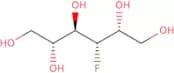
CAS:3-Deoxy-3-fluoro-D-glucitol is a glucose analog that is used as a marker for glycogen in tissue extracts. 3-Deoxy-3-fluoro-D-glucitol has been shown to be the most sensitive molecular marker for muscle glycogen concentrations, although it does not react with all types of muscle. It can also be used as a marker for glycogen content in extracts of tissue or cells because it reacts with locusta migratoria fat body. In addition, 3-deoxy-3-fluoro-D-glucitol can be used as a nuclear magnetic resonance (NMR) probe to study the structure of trehalose and fructose. The compound has been shown to bind to locusta migratoria fat body and can be used as an NMR probe to study the structure of trehalose and fructose.Fórmula:C6H13FO5Pureza:Min. 95%Peso molecular:184.16 g/molD-Tagatose-6-phosphate barium salt
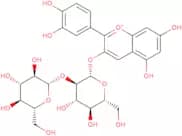
D-Tagatose-6-phosphate barium salt is a custom synthesis, modification, fluorination, methylation, and monosaccharide. It has CAS No. and is a polysaccharide. D-tagatose-6-phosphate barium salt is a complex carbohydrate with glycosylation and sugar.Pureza:Min. 95%Cyanidin-3-O-sophoroside chloride
CAS:Cyanidin-3-O-sophoroside chloride (CAS: 6279-21-6) is a naturally occurring phenolic compound that has been isolated from the roots of Sophora flavescens. This compound is a glycosylated form of protocatechuic acid, which is an organic compound with antioxidant properties. The surface methodology on tissue structure showed that this compound can react with nucleophilic radicals and scavenge free radicals in the presence of chloride ions, which is important for its dietary and medicinal value. COS has also been shown to have anti-inflammatory activities in a model system by inhibiting the production of prostaglandins. COS can be extracted from plants by acidic hydrolysis or preparative high performance liquid chromatography.
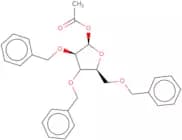
Fórmula:C27H31O16ClPureza:Min. 95%Cor e Forma:PowderPeso molecular:646.98 g/mol1-O-Acetyl-2,3,5-tri-O-benzyl-L-ribofuranose
1-O-Acetyl-2,3,5-tri-O-benzyl-L-ribofuranose is a modified form of ribofuranose. It is a polymer that contains three or more monosaccharides linked together by glycosidic bonds. It has been modified with methyl groups and fluorine atoms to enhance its properties. This compound can be used in the synthesis of oligosaccharides, which are complex carbohydrates that are not found in nature and have potential applications as drugs.
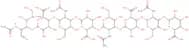
Fórmula:C28H30O6Pureza:Min. 95%Peso molecular:462.53 g/molHyaluronate octasaccharide
CAS:Hyaluronate octasaccharide is a regulatory molecule that has been found to be useful for staining and as a chondrocyte culture supplement. Hyaluronate octasaccharide is composed of two sugar molecules: glucuronic acid and N-acetylglucosamine. The molecular weight of this compound is about 5000 Daltons, and it has been found to show high levels of proton hydrogen bonding interactions with other molecules in the extracellular matrix. It also contains oligosaccharides and disaccharides. Hyaluronate octasaccharide can be used in vitro to stimulate cell growth, which may be due to its ability to stabilize collagen and elastin fibers by binding with collagenase.Fórmula:C56H86N4O45Pureza:Min. 95%Peso molecular:1,535.3 g/molADP-4-deoxy-D-glucose
ADP-4-deoxy-D-glucose is a carbohydrate derivative that has been modified with fluorination. ADP-4 is a methylated, custom synthesized oligosaccharide that contains saccharide and polysaccharide chains. It is not commercially available and must be custom synthesized. The modification of the sugar to ADP-4 involves the addition of one or more atoms of fluorine and may be accomplished by click chemistry. This product has high purity and can be used as a research reagent in the synthesis of complex carbohydrates.
Pureza:Min. 95%1,2,3-Tri-O-Acetyl-5-deoxy-D-ribose
CAS:1,2,3-Tri-O-acetyl-5-deoxy-D-ribose is an efficient and environmentally benign method for the synthesis of acyclic acetals. The condensation process involves the use of a chloroformate to introduce the carbonyl group into a hydroxyl group on the sugar. This reaction can be carried out in an organic solvent or water as well. The reaction rate is fast due to a high nucleophilicity of the chloride ion. The product can then be converted into an amide by reacting it with ammonia in a basic medium. This reaction results in a high yield and is useful for recycling acetonitrile that would otherwise be released into the environment.Fórmula:C11H16O7Pureza:Min. 95%Peso molecular:260.24 g/molEthyl a-D-thioglucopyranoside
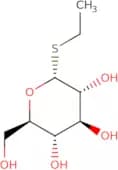
CAS:Ethyl a-D-thioglucopyranoside is an organic compound that is used as a precursor in the synthesis of complex sugars. Ethyl a-D-thioglucopyranoside is an oligosaccharide that contains a methylated and glycosylated sugar. The glycosidic bond in this product can be modified by fluorination to give ethyl 2,3,4,5-tetrafluorothioglucopyranoside.
Fórmula:C8H16O5SPureza:Min. 95%Peso molecular:224.28 g/molGlycosaminoglycan related oligosaccharides
Glycosaminoglycan related oligosaccharides are a family of complex carbohydrates that are found in the extracellular matrix. They consist of a monosaccharide, methylation, and glycosylation. Glycosaminoglycan related oligosaccharides have been shown to be effective in modifying cells, as well as in inhibiting bacterial growth. The fluorination of glycosaminoglycan related oligosaccharides has been shown to increase the stability and inhibit bacterial growth.Pureza:Min. 95%Astragaloside II
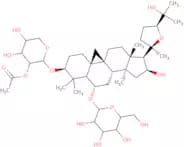
CAS:Astragaloside II is a natural compound that has been shown to have anti-inflammatory effects in vitro and in vivo. Astragaloside II inhibits the production of inflammatory mediators by inhibiting phosphodiesterase and cyclooxygenase pathways. It also has a matrix effect on the cells, which may be due to its ability to activate protein kinase C. This compound also has an analytical method, which consists of HPLC with UV detection at 210 nm.
Fórmula:C43H70O15Pureza:Min. 95%Cor e Forma:White To Off-White SolidPeso molecular:827.01 g/molL-Rhamnal
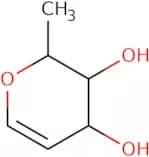
CAS:L-Rhamnal is a sodium sulfide that is used in the synthesis of stereoselective compounds. It has been shown to have anti-leukemic properties and may be useful for the treatment of lymphocytic leukemia. L-Rhamnal has been shown to inhibit tumor growth and metastasis in animal models of cancer, as well as being cytotoxic to human leukemic cells. L-Rhamnal inhibits the proliferation of these cells by blocking DNA synthesis and preventing cell division. The hydroxymethyl group on L-rhamnal interacts with chloride ions to form a salt that can be degraded into hydrogen sulfide gas, which is known to be toxic to some organisms. The chloride ion also reacts with triterpene alcohols, glycosidic bonds, potassium phosphate, or borohydride reduction agents like sodium borohydride or lithium aluminum hydride. These reactions are used in carbohydrate chemistry and aldehydeFórmula:C6H10O3Pureza:Min. 95%Peso molecular:130.14 g/molSedoheptulose-1-phosphate
CAS:Sedoheptulose-1-phosphate is a ribosomal metabolite that is produced by marine microorganisms. It is catabolized by sedoheptulose-7-phosphate kinase and converted to the pentose phosphate pathway. The metabolic profile of sedoheptulose-1-phosphate has been shown to be altered in response to environmental stress, such as changes in pH, oxygen levels, and temperature. Sedoheptulose-1-phosphate has also been shown to have structural properties similar to those of ATP and ADP, which may make it an important target for the development of antibiotics.Fórmula:C7H15O10PPureza:Min. 95%Peso molecular:290.16 g/mol1,2,3,4-Tetra-O-acetyl-a-L-rhamnopyranose
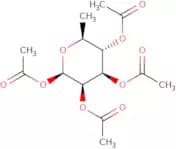
CAS:1,2,3,4-Tetra-O-acetyl-a-L-rhamnopyranose is a modified carbohydrate with the general structure of an oligosaccharide. It is a synthetic compound that has been modified with methylation and glycosylation. The purity of this product is high and it can be synthesized to order. This product has a CAS number of 27821-11-0 and can be found in the Carbohydrate section.Fórmula:C14H20O9Pureza:Min. 95%Peso molecular:332.3 g/molD-Fructose-6-phosphate sodium hydrate
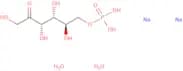
CAS:D-Fructose-6-phosphate sodium hydrate is a polyvalent bioactive compound that can be found in plants, fungi, and bacteria. It has been used as a sealant for wounds and to treat damaged skin. D-Fructose-6-phosphate sodium hydrate is also used to activate the hydrophobic or dextran molecules in some drug delivery systems. This compound can be found in many products such as polyester fabrics, thermoplastic materials, and hydrophilic plastics. D-Fructose-6-phosphate sodium hydrate is an important intermediate in the metabolic pathways of glucose and sucrose.Fórmula:C6H13O9P·2NaH2O)Pureza:Min. 95%Peso molecular:342.1 g/mol2,3,4-Triacetate-beta- D- glucopyranosyl bromide
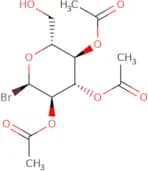
CAS:2,3,4-Triacetate-beta-D-glucopyranosyl bromide is a custom synthesis of an oligosaccharide. It is a complex carbohydrate that can be modified to create a saccharide with methylation and glycosylation. This product has CAS No. 13032-61-6 and can be used in research for the modification of saccharides and carbohydrates.Pureza:Min. 95%2-Acetyl-5-methoxyphenyl beta-D-Glucopyranoside
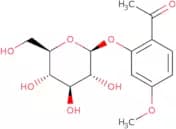
CAS:2-Acetyl-5-methoxyphenyl beta-D-glucopyranoside is a flavonoid that belongs to the group of dihydroquercetin. It can be prepared by liquid chromatography. 2-Acetyl-5-methoxyphenyl beta-D-glucopyranoside inhibits tumor cells in vitro and in vivo, through the inhibition of protein synthesis and DNA replication. In addition, it has been shown to inhibit the growth of leptadenia species with a high degree of selectivity. It also exhibits an antitumor effect on mouse sarcoma 180 cells, as well as on human melanoma cells. This compound binds to macroporous adsorbents such as sephadex and tricusposide, which are used for purification purposes.Fórmula:C15H20O8Pureza:Min. 95%Peso molecular:328.31 g/molEstriol 16-glucuronide
CAS:Estriol 16-glucuronide is a synthetic, fluorinated and methylated estriol glucuronide. It has been modified with a click modification and contains an oligosaccharide. The saccharides in this compound are glycosylated with sugar.Fórmula:C24H32O9Pureza:Min. 95%Peso molecular:464.51 g/molSodium L-rhamnonate
CAS:Sodium L-rhamnonate is an organic compound that is a monosaccharide with the molecular formula CHONa. It can be synthesized from D-ribose, which is a pentose sugar, and rhamnose, which is a hexose sugar. Sodium L-rhamnonate has been used in click chemistry to modify oligosaccharides and glycosylate proteins. This compound also has applications in pharmaceuticals and as a food additive.Fórmula:C6H11NaO6Pureza:Min. 95%Peso molecular:202.14 g/molNaloxone 3-β-D-glucuronide
CAS:Produto ControladoPlease enquire for more information about Naloxone 3-β-D-glucuronide including the price, delivery time and more detailed product information at the technical inquiry form on this pageFórmula:C25H29NO10Pureza:Min. 95%Peso molecular:503.51 g/mol1-Deoxy-L-altronojirimycin hydrochloride
CAS:L-altronojirimycin is a diterpene glycoside that belongs to the group of natural products that have inhibitory properties against lipid peroxidation. It has been shown to decrease the concentration of 1,2-dipalmitoylglycerophosphocholine (DPPC) in primary cells and reduce the rate of lipid peroxidation in a concentration-dependent manner. L-altronojirimycin inhibits the activity of enzymes such as acetylcholinesterase and phospholipase A2, which are involved in inflammation. This drug has also been shown to have cardioprotective effects and inhibit mutations in cardiac muscle cells. L-altronojirimycin has been tested for its long-term efficacy and shown to be effective against both bowel disease and cardiac effects.
Fórmula:C6H13NO4•HClPureza:Min. 95%Cor e Forma:PowderPeso molecular:199.63 g/mol6-O-Feruloylsucrose
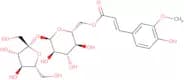
CAS:6-O-Feruloylsucrose is a phenylpropanoid glycoside that has been shown to inhibit the growth of Gram-positive and Gram-negative bacteria. It is also hepatoprotective and has been shown to have antimicrobial activity against fungi, such as Candida albicans. The 6-O-feruloylsucrose inhibits microbial infections by binding to metal cations, which are essential for bacterial cell wall synthesis. This leads to a decrease in the production of microbial cell walls, inhibiting their growth. 6-O-Feruloylsucrose can be used as an additive in food products or as a preservative in cosmetics.Fórmula:C22H30O14Pureza:Min. 95%Cor e Forma:White To Off-White SolidPeso molecular:518.47 g/mol2-Amino-2-deoxy-D-idose
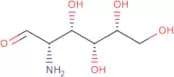
CAS:2-Amino-2-deoxy-D-idose is a sugar that is found in the cell walls of bacteria. It has been shown to be an inhibitor of the enzymes that catalyze the acetylation and methylenecyclopropanes reactions, which are necessary for bacterial growth. 2-Amino-2-deoxy-D-idose binds to copper ions, preventing them from binding with the enzymes. This drug also chelates metals such as zinc, iron, and manganese to prevent their use by bacteria.
Fórmula:C6H13NO5Pureza:Min. 95%Peso molecular:179.17 g/mola-L-Fucose-1-phosphate
a-L-Fucose-1-phosphate is a Glycosylation, complex carbohydrate, Methylation, Click modification, Polysaccharide, Fluorination, saccharide, Modification, sugar, Oligosaccharide and Synthetic product. a-L-Fucose-1-phosphate is available for custom synthesis and can be ordered with high purity.
Pureza:Min. 95%2-Bromoethyl 2,3,4,6-tetra-O-acetyl-b-D-glucopyranoside
CAS:2-Bromoethyl 2,3,4,6-tetra-O-acetyl-b-D-glucopyranoside is a modified form of D-(+)-glucose. The modification has been accomplished through the use of a click chemistry reaction with an azide and alkyne. This product is offered for custom synthesis and can be used in glycosylation reactions.Fórmula:C16H23BrO10Pureza:Min. 95%Peso molecular:455.25 g/molBenzyl b-D-xylopyranoside
CAS:Benzyl b-D-xylopyranoside is an inorganic compound that is used as a radioactive tracer to study the movement of fluid and macromolecules in the apical membrane of the chondrocyte. It was shown to be effective in preventing the formation of tissue-damaging acute phase proteins when administered at a time point corresponding to the onset of an acute inflammatory response. Benzyl b-D-xylopyranoside has also been shown to have regulatory effects on untreated control cells, but not on untreated control cells. This drug inhibits biosynthesis of GAGs, which are molecules that provide structural support for cells and tissues. The mechanism by which benzyl b-D-xylopyranoside exerts its effect is not yet known.Fórmula:C12H16O5Pureza:Min. 95%Peso molecular:240.25 g/mol2-Keto-D-galactonic acid
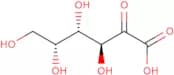
CAS:2-Keto-D-galactonic acid is a chemical compound that is used as an intermediate in the synthesis of antibiotics. It has been found to inhibit the growth of bacteria, such as Erwinia carotovora and Escherichia coli. The 2-keto-d-galactonic acid can be crystallized in two forms: an amorphous form or a crystalline form.Pureza:Min. 95%UDP-6-deoxy-6-fluoro-D-glucose
CAS:UDP-6-deoxy-6-fluoro-D-glucose is a chemical compound that is an intermediate in glucosyltransferase and 4 epimerase reactions. UDP-6-deoxy-6-fluoro-D-glucose is used in the enzymatic synthesis of oligosaccharides, which are important to the biology of E. coli. The structure of this compound has been determined by X ray crystallography, revealing that it is a beta anomer. UDP-6 deoxy 6 fluoro D glucose also shows promiscuity with other enzymes, such as kinases, and can be used as a substrate for profiling.Pureza:Min. 95%1,2-Dideoxy-2-fluoronojirimycin
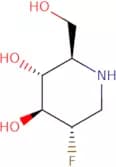
CAS:1,2-Dideoxy-2-fluoronojirimycin is a synthetic alkenyl compound that inhibits the HIV-1 virus by competitively inhibiting the enzyme reverse transcriptase. It has been shown to inhibit the synthesis of viral DNA and RNA. 1,2-Dideoxy-2-fluoronojirimycin is an aralkyl compound with a hydroxyl group at position 1 and a fluorine atom at position 2. It also has sulfinyl groups in positions 3 and 4. The natural product is synthesised from glucose via glycosidase inhibition. This compound has shown potent antiviral activity against HIV-1 strains with high levels of resistance to other compounds such as AZT.Fórmula:C6H12NO3FPureza:Min. 95%Peso molecular:165.16 g/molMethyl 2-deoxy-b-D-ribofuranoside
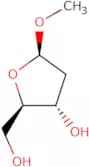
CAS:Methyl 2-deoxy-b-D-ribofuranoside is a methylglucoside that is used in the synthesis of thiourea. Methyl 2-deoxy-b-D-ribofuranoside inhibits the production of an atypical nucleotide, 5'-methylthioadenosine, which is used to synthesize thymine. It has been shown to be catalytic and may play a role in the biosynthesis of methionine and histidine. The chloride ion causes the reaction to proceed via an S N 2 mechanism. Methyl 2-deoxy-b-D-ribofuranoside can also be used in the synthesis of chloroacetic acid, azide, dimethylformamide, fluoride, anomeric alcohols, hydantoins and thionyl chloride. Methyl 2-deoxy-b-D-ribofuranoside can be chromatographically separated using silicaFórmula:C6H12O4Pureza:Min. 95%Peso molecular:148.16 g/molFusidic acid acyl glucuronide
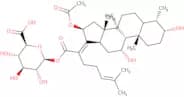
CAS:Fusidic acid acyl glucuronide is a high purity, custom synthesis, click modification of fusidic acid. It has been modified by fluorination and methylation. Fusidic acid acyl glucuronide is an Oligosaccharide, Polysaccharide, saccharide, sugar with a CAS No. 13013-66-6. It is a complex carbohydrate that has been synthesized using high purity, monosaccharides and polysaccharides.Fórmula:C37H56O12Pureza:Min. 95%Peso molecular:692.83 g/molN-Methylglucamine antimonate
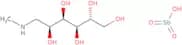
CAS:N-Methylglucamine antimonate is a drug that is used to treat cutaneous leishmaniasis. It is not active against the visceral form of the disease. The drug binds to antimony in a 1:1 stoichiometry and inhibits the polymerase chain reaction (PCR) in the parasite, which prevents DNA replication and transcription. This inhibition leads to cell death and eventual elimination of Leishmania parasites from the host. N-Methylglucamine antimonate is only effective against Leishmania parasites and has no effect on other bacteria or viruses, such as bowel disease. The drug can be given orally or intravenously, but should not be given to patients with bowel diseases because this may lead to intestinal ulceration or perforation.Fórmula:C7H17NO5·HSbO3Pureza:Min. 95%Cor e Forma:White PowderPeso molecular:365.98 g/molAlphadolone 3-b-D-glucuronide
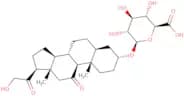
CAS:Alphadolone 3-b-D-glucuronide is a compound that is synthetically derived from alphadolone. This product can be used for the synthesis of saccharides, polysaccharides, and oligosaccharides with click modification or glycosylation. It can also be used as a starting material for the preparation of methylated saccharides or glycopeptides. The chemical formula is C12H14O6F2, and it has a molecular weight of 290.20 g/mol. Alphadolone 3-b-D-glucuronide is soluble in water, methanol, and ethanol. It's CAS number is 70522-56-4.Fórmula:C27H40O10Pureza:Min. 95%Peso molecular:524.6 g/molPentaric acid
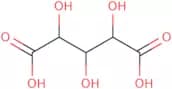
CAS:Pentaric acid is a crystalline, monocarboxylic acid with a hydroxyl group. It is used as an inhibitor of corrosion in metal and as a disinfectant. Pentaric acid can be found in urine samples and has been shown to be an effective inhibitor of the enzymatic reaction that produces azobenzene, which is associated with the development of bladder cancer. This compound also inhibits the growth of bacteria. Pentaric acid is used as an additive in some detergents and soaps because it can inhibit the growth of bacteria on surfaces.
Pentaric acid was first synthesized by German chemist Otto Wohlert in 1834. Hydrogen ions are released when pentaric acid dissolves in water, lowering the pH level and causing corrosion to metal surfaces. The corrosion inhibition properties of pentaric acid have been known since its discovery, but its anti-bacterial properties were not discovered until recently when researchers found that pentarFórmula:C5H8O7Pureza:Min. 95%Peso molecular:180.11 g/mol