Monossacáridos
Subcategorias de "Monossacáridos"
- Aloses(11 produtos)
- Arabinoses(21 produtos)
- Eritroses(11 produtos)
- Frutoses(9 produtos)
- Fucoses(36 produtos)
- Galactosamina(41 produtos)
- Galactoses(261 produtos)
- Glucoses(365 produtos)
- Ácidos Glucurónicos(52 produtos)
- Glico-substratos para enzimas(78 produtos)
- Guloses(6 produtos)
- Idoses(4 produtos)
- Inositóis(15 produtos)
- Lixoses(4 produtos)
- Mannoses(65 produtos)
- O-Glicanos(48 produtos)
- Psicoses(3 produtos)
- Ramnoses(10 produtos)
- Riboses(61 produtos)
- Ácidos siálicos(100 produtos)
- Sorboses(4 produtos)
- Açúcares(173 produtos)
- Tagatoses(4 produtos)
- Taloses(8 produtos)
- Xiloses(20 produtos)
Foram encontrados 6088 produtos de "Monossacáridos"
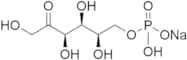
2-Deoxy-D-Ribose 5-Phosphate-13C5 Disodium Salt
CAS:Fórmula:C5H9O7P2·2NaPeso molecular:217.06 2*22.99L-Iduronic Acid Sodium Salt
CAS:Stability Hygroscopic
Applications A constituent of certain mucopolysaccharides.
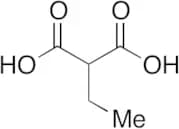
References Hoffman, P., et al.: Science, 124, 1252 (1956), Meyer, K: Biochim et Biophys. Acta, 21, 506 (1956), Cifonelli, J.A., et al.: Federation Proc., 16, 165 (1957), Cifonelli, J.A., et al.: J. Biol. Chem., 233, 541 (1958)Fórmula:C6H9NaO7Cor e Forma:Light Orange Colour To Dark BrownPeso molecular:216.12Ethylmalonic Acid
CAS:Applications Ethylmalonic Acid is used as a diagnostic agent used in the diagnosis of Ethylmalonic encephalopathy which is a rare autosomal recessive inborn error of metabolism.
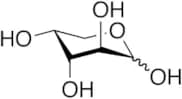
References Baertling, F. et al.: Eur. J. Pediat., 173, 1719 (2014); Sudo, Y. et al.: Hu,am Genome Var., 1, 15016 (2014);Fórmula:C5H8O4Cor e Forma:NeatPeso molecular:132.12D-Arabinose
CAS:Applications An inhibitor of the enzyme glucose dehydrogenase.
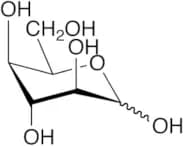
References Cozier, G.E. et al.: Biochem. J., 340, 639 (1999);Fórmula:C5H10O5Cor e Forma:White SolidPeso molecular:150.131,6-Anhydro-β-D-galactose
CAS:Produto ControladoApplications 1,6-Anhydro-β-D-glucopyranose is a carbohydrate contains in liquid smoke flavorings.
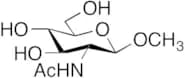
References Kim, K., et al.: Agric. Biol. Chem., 38, 53 (1974), Guillen, M., et al.: Food Chem., 58, 97 (1997), Guillen, M., et al.: J. Agric. Food Chem., 46, 1276 (1998),Fórmula:C6H10O5Cor e Forma:White To BeigePeso molecular:162.14Methyl 2-Acetamido-2-deoxy-β-D-glucopyranoside
CAS:Produto ControladoFórmula:C9H17NO6Cor e Forma:NeatPeso molecular:235.23D-Gulose
CAS:Applications D-Glucose is a aldohexose sugar that is very rare in nature but has been found in archaea, bacteria and other eukaryotes. Gulose is the C-3 Epimer of galactose (G155250).
References Sun, Y.X., et al.: Biosci. Biotech. Biochem., 70, 598 (2006); Bhuiyan, S.H., et al.: J. Biosci. Bioengin., 88, 567 (1999);Fórmula:C6H12O6Cor e Forma:Off White SolidPeso molecular:180.1559D-Idose (0.141M Solution)
CAS:Applications D-Idose is a monosaccharide that is an important component of dermatan sulfate and heparan sulfate.
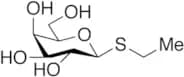
References Olsen, S.G., et al.: J. Biol. Chem., 264, 15982 (1989);Fórmula:C6H12O6Cor e Forma:Single SolutionPeso molecular:180.1559Ethyl β-D-Thiogalactopyranoside
CAS:Produto ControladoApplications Ethyl β-D-Thiogalactopyranoside (cas# 56245-60-4) is a compound useful in organic synthesis.
Fórmula:C8H16O5SCor e Forma:NeatPeso molecular:224.27Oxalic Acid Ethyl Ester
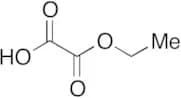
CAS:Produto ControladoApplications Oxalic Acid Ethyl Ester is a useful synthetic intermediate. It is used to synthesize 2-substituted 3-aryl-4(3H)-quinazolinones with anticonvulsant activities. It is also used to prepare nonbenzamidine tetrazole derivatives as factor Xa inhibitors.
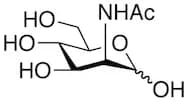
References Wolfe, J., et al.: J. Med. Chem., 33, 161 (1009); Quan, M., et al.: bioorg. Med. Chem. Lett., 13, 369 (2003)Fórmula:C4H6O4Cor e Forma:NeatPeso molecular:118.09N-Acetyl-D-mannosamine
CAS:Produto ControladoStability Hygroscopic
Applications A derivative of D-Mannosamine (M167000).
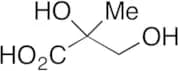
References Pukanud, P. et al.: Drug Delivery, 16, 289 (2009);Fórmula:C8H15NO6Cor e Forma:NeatPeso molecular:221.21α-Methylglyceric Acid
CAS:Produto ControladoApplications α-Methylglyceric Acid is a biogenic secondary organic aerosol used in air quality diagnosis.
References Ru, P., et. al.: Environ. Sci. Technol., 48, 8491 (2014); Napelenok, S.L., et. al.: Environ. Sci. Technol., 48, 464 (2014); Stone, E.A., et. al.: Environ. Chem., 9, 263 (2012)Fórmula:C4H8O4Cor e Forma:NeatPeso molecular:120.12,5-Anhydro-D-mannitol
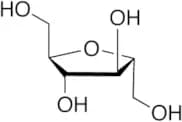
CAS:Produto ControladoApplications A carbohydrate metabolism regulator that has been shown to inhibit gluconeogenesis from lactate plus pyruvate and from substrates that enter the gluconeogenic pathway as triose phosphate.
References Joet, T., et al.: Biochem. J., 381, 905 (2004), Girardin, E., et al.: J. Biol. Chem., 280, 38059 (2005), Nghiem, N., et al.: App. Biochem. Biotechnol., 141, 335 (2007),Fórmula:C6H12O5Cor e Forma:NeatPeso molecular:164.16Benzyl beta-D-Glucopyranoside
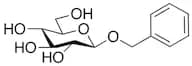
CAS:Produto ControladoApplications Benzyl β-D-Glucopyranoside (cas# 4304-12-5) is a compound useful in organic synthesis.
References Yoshikawa, M., et al.: Chem. Pharm. Bull., 56, 1297 (2008), Takeda, Y., et al.: J. Nat. Med., 62, 476 (2008),Fórmula:C13H18O6Cor e Forma:Off WhitePeso molecular:270.281,6-Anhydro-β-D-mannopyranose
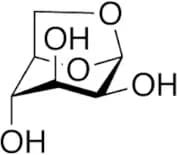
CAS:Produto ControladoApplications Monosaccharide anhydrides, new markers of toasted oak wood used for ageing wines and distillates.
References Goldberg, D., et al.: J. Agric. Food Chem., 47, 3978 (1999), Fu, P., et al.: Environ. Sci. Technol., 43, 286 (2009),Fórmula:C6H10O5Cor e Forma:Off-WhitePeso molecular:162.144-O-Acetyl-2,5-anhydro-1,3-isopropylidene-D-glucitol
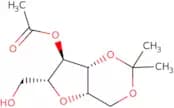
CAS:4-O-Acetyl-2,5-anhydro-1,3-isopropylidene-D-glucitol (4AIG) is a modification of glucose. 4AIG is a white to light yellow crystalline solid that melts with decomposition at 150°C. It is soluble in water and acetone but insoluble in ether. 4AIG can be used as a raw material for the synthesis of oligosaccharides and polysaccharides.Fórmula:C11H18O6Pureza:Min. 95%Peso molecular:246.26 g/mol1,3,4,6-Tetra-O-acetyl-2-deoxy-2-iodo-β-D-galactopyranose
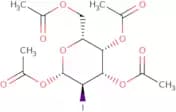
CAS:Synthetic carbohydrate building blockFórmula:C14H19IO9Pureza:Min. 95%Peso molecular:458.2 g/molDL-Glyceraldehyde 3-phosphate - 45-55 mg/mL aqueous solution
CAS:Glyceraldehyde 3-phosphate (G3P) is an intermediate in the glycolytic pathway. It is also a component of polysaccharides and glycosaminoglycans. G3P is synthesized from glucose by the enzyme triose phosphate isomerase. The synthesis of G3P can be achieved by a number of methods, including methylation, fluorination, and click chemistry. This product contains 45-55 mg/mL of Glyceraldehyde 3-phosphate in water solution at pH 7.0 and at a temperature range of 2-8°C.Fórmula:C3H7O6PPureza:Min. 95 Area-%Peso molecular:170.06 g/mol1,3,4,6-Tetra-O-acetyl-2-azido-2-deoxy-L-mannopyranose
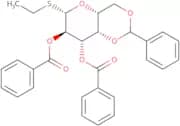
1,3,4,6-Tetra-O-acetyl-2-azido-2-deoxy-L-mannopyranose is a carbohydrate that is synthesized by the modification of the glycosylation process. It is a methylated and fluorinated oligosaccharide with a high purity. This product is available for custom synthesis in order to meet specific customer requirements.Fórmula:C14H19N3O9Pureza:Min. 95%Cor e Forma:White To Off-White SolidPeso molecular:373.32 g/molEthyl 2,3-di-O-benzoyl-4,6-O-benzylidene-β-D-thiogalactopyranoside
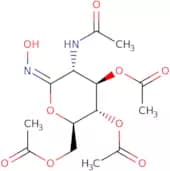
CAS:Ethyl 2,3-di-O-benzoyl-4,6-O-benzylidene-b-D-thiogalactopyranoside is a high purity custom synthesis sugar. This product contains the Click modification, fluorination and glycosylation modifications. It can be used in the synthesis of oligosaccharides, monosaccharides and saccharides. Ethyl 2,3-di-O-benzoyl-4,6-O-benzylidenebDthiogalactopyranoside is used to synthesize complex carbohydrates.Fórmula:C29H28O7SPureza:Min. 98 Area-%Cor e Forma:PowderPeso molecular:520.59 g/mol2-Acetamido-3,4,6-tri-O-acetyl-2-deoxy-D-glucohydroximo-1,5-lactone
CAS:2-Acetamido-3,4,6-tri-O-acetyl-2-deoxy-D-glucohydroximo-1,5-lactone is a methylated sugar. It is a white to off white powder with a molecular weight of 518. The chemical formula for 2-Acetamido-3,4,6-tri-O-acetyl-2-deoxy--D--glucohydroximo--1,5--lactone is C16H26N2O8 and the structural formula is as follows:br>Fórmula:C14H20N2O9Pureza:Min. 95%Cor e Forma:White PowderPeso molecular:360.32 g/molChitobiose dihydrochloride
CAS:Chitobiose 2HCl is a synthetic sugar that has been modified using Click chemistry. It is a fluorescent sugar that can be used as an indicator for protein-sugar interactions. Chitobiose 2HCl is soluble in water and has a molecular weight of 258.078 g/mol.Fórmula:C12H24N2O9•(HCl)2Pureza:Min. 95%Peso molecular:413.25 g/molL-Guluronic acid sodium
CAS:L-Guluronic acid sodium is a monosaccharide that plays a crucial role in cardiac health. It is involved in the uptake and utilization of polyene carbohydrates, carotenoids, and fatty acids by human myocardial cells. L-Guluronic acid sodium has been shown to enhance the bioavailability of these essential nutrients, promoting optimal heart function. Additionally, this compound acts as a reactive analog, mimicking the effects of certain molecules involved in mammalian cell signaling pathways. This unique property makes L-Guluronic acid sodium a potential therapeutic agent for various cardiovascular conditions and may have implications in other areas such as stent technology and cancer research.
Fórmula:C6H9O7NaPureza:Min. 98 Area-%Cor e Forma:PowderPeso molecular:216.12 g/molD-Glucose-1,6-13C2
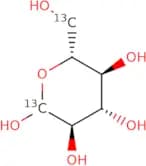
CAS:D-Glucose is a sugar that is used in the production of polysaccharides and glycosylations. It can be modified with fluorination, saccharide methylation, or glycosylation. D-Glucose can be synthesized by the custom synthesis of an oligosaccharide. This product has high purity, and is both monosaccharide and complex carbohydrate.Fórmula:C2C4H12O6Pureza:Min. 95%Cor e Forma:White PowderPeso molecular:182.14 g/molMitiglinide-acyl-b-D-glucuronide
Mitiglinide-acyl-b-D-glucuronide is a custom synthesis of an oligosaccharide and polysaccharide that has been fluorinated, modified and then acylated. This reagent is available in high purity and with a modification of methylation. It is a complex carbohydrate with high purity that is obtained by modifying the sugar monomer. Mitiglinide-acyl-b-D-glucuronide is a synthetic monosaccharide that has been modified with polysaccharides and saccharides to produce a product with high purity.Fórmula:C25H33NO9Pureza:Min. 95%Peso molecular:491.53 g/molD-Talose
CAS:Unnatural hexose used for the investigation of clostridial Rib-5-P-isomerasesFórmula:C6H12O6Pureza:Min. 99 Area-%Cor e Forma:White PowderPeso molecular:180.16 g/molEsculin sesquihydrate
CAS:Sugars formed by photosynthesis are essential for plants nutrition and they can be carried by a sophisticated system called phloem from the leaves to the root tips. Since the phloem is a delicate tissue composed of various specialized cell types, the study of its structure and functions remains a challenging task. Recently, fluorescent coumarin glucoside derivatives, including esculin (Plant Physiology 2015, 1211-1220) have been used as phloem probes. Among the probes tested, only esculin and fraxin are transported, while skimmin is not, suggesting a certain specifity of natural coumarin glucosides for the transporter AtSUC2.Fórmula:C30H38O21Pureza:Min. 98.0 Area-%Peso molecular:734.62 g/mol1,2,3,4-Tetra-O-acetyl-6-O-(tert-butyldiphenylsilyl)-b-D-glucopyranose
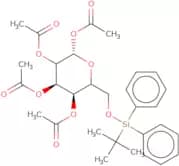
CAS:1,2,3,4-Tetra-O-acetyl-6-O-(tert-butyldiphenylsilyl)-b-D-glucopyranose is a synthetic oligosaccharide that has been modified by fluorination and methylation. It is used as a building block for the synthesis of complex carbohydrates. This product has a CAS number of 224778-57-8 and can be custom synthesized to meet your specifications.Fórmula:C30H38O10SiPureza:Min. 95%Peso molecular:586.72 g/mol1,3,4,6-Tetra-O-acetyl-b-D-glucosamine HCl
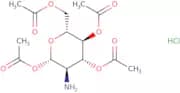
CAS:1,3,4,6-Tetra-O-acetyl-b-D-glucosamine HCl is a compound that can be used in the production of bacterial cellulose. It is a white powder with a molecular weight of 536.2. 1,3,4,6-Tetra-O-acetyl-b-D-glucosamine HCl has been shown to be effective in the cultivation of microorganisms such as bacteria and fungi. This product is also an additive for deionized water and deionized sucrose solutions. Tetraacetylated glucosamine hydrochloride is used to produce bacterial cellulose through the action of cellulase enzymes on sucrose solutions containing NaOH. In addition, this product has been shown to inhibit the proliferation of fibroblasts and epithelial cells when cultured in vitro.Fórmula:C14H21NO9·HClPureza:Min. 95.0 Area-%Cor e Forma:PowderPeso molecular:383.78 g/mol3-O-Methyl-α-D-glucopyranose
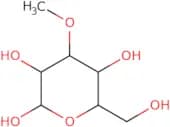
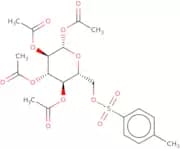
CAS:3-O-Methyl-α-D-glucopyranose is a synthetic, fluorinated monosaccharide. This compound is a custom synthesis, and it can be used as an intermediate in glycosylation reactions. 3-O-Methyl-α-D-glucopyranose is typically used for the modification of polysaccharides by methylation or fluorination. It also has potential applications in the production of high purity sugar compounds.Fórmula:C7H14O6Pureza:Min. 95%Peso molecular:194.18 g/mol1,2,3,4-Tetra-O-acetyl-6-O-tosyl-b-D-glucopyranose
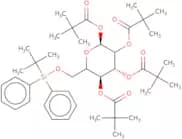
CAS:The tetra-acetyl-6-tosyl-b-D-glucopyranose is a modification of the natural 1,2,3,4-tetra-O-acetyl-6-O-tosyl--D glucopyranose. It is synthesized by reacting the 1,2,3,4 tetra acetyl b glucopyranose with tosyl chloride and anhydrous pyridine in dry dichloromethane. The product is purified by column chromatography on silica gel using a solvent system consisting of ethyl acetate and methanol. The yield of this reaction is about 60%. The molecular weight of this compound is 876.7 g/mol and its melting point is 253°C. The CAS No. for this compound is 661910-9 and its IUPAC name is (1R*, 2S*, 4R*)-1,2,Fórmula:C21H26O12SPureza:Min. 95%Cor e Forma:White PowderPeso molecular:502.49 g/mol1,2,3,4-Tetra-O-pivaloyl-6-O-(tert-butyldiphenylsilyl)-b-D-galactopyranose
CAS:1,2,3,4-Tetra-O-pivaloyl-6-O-(tert-butyldiphenylsilyl)-b-D-galactopyranose is a high purity custom synthesis of a sugar. It is a fluorinated tetra saccharide with an unusual 1,2,3,4 linkage that has been modified with methyl groups at the 2 and 6 positions. The modification of this compound with silylation has made it resistant to enzymatic degradation. This compound has shown anti-inflammatory activities in animal models and can be used as an adjuvant therapy for inflammatory bowel disease.Fórmula:C42H62O10SiPureza:Min. 95%Peso molecular:755.04 g/mol2-Deoxy-2-fluoro-D-glucose 6-phosphate dipotassium
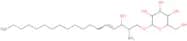
CAS:2-Deoxy-2-fluoro-D-glucose 6-phosphate dipotassium is a fluorinated sugar that is used as a building block in the synthesis of complex carbohydrates. 2-Deoxy-2-fluoro-D-glucose 6-phosphate dipotassium can be modified to produce glycosylations, methylations, and click chemistry modifications. This product is sold as a custom synthesis and can be used for any desired modification.Fórmula:C6H10FK2O8PPureza:Min. 95 Area-%Cor e Forma:PowderPeso molecular:338.31 g/molGlucosylsphingosine
CAS:Glucosylsphingosine is a modified carbohydrate that belongs to the group of complex carbohydrates. It is a custom synthesis and has high purity with no detectable impurities. Glucosylsphingosine is an oligosaccharide, which is a polysaccharide composed of three or more monosaccharides. This compound can be methylated, glycosylated, or fluorinated in order to change its properties. Glucosylsphingosine has been synthesized from glucose and sphinganine, which are both monosaccharides. Glucose can be synthesized by the reduction of glucose-6-phosphate using glucose-6-phosphate dehydrogenase or it can be obtained from hydrolysis of starch. Sphinganine can be obtained by hydrolysis of sphingomyelin, which is a phospholipid found in cell membranes or by deacylation of N-acetylFórmula:C24H47NO7Pureza:Min. 95%Peso molecular:461.63 g/moltrans,trans-3,4-Dihydroxy-D-proline
Trans,trans-3,4-Dihydroxy-D-proline is a custom synthesis that has been fluorinated and methylated. It is a polysaccharide with a sugar backbone of an oligosaccharide or saccharide. The carbons in the backbone are connected by glycosylation to form a complex carbohydrate. This product has CAS No.
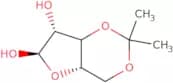
Pureza:Min. 95%3,5-O-Isopropylidene-a-L-xylofuranose
3,5-O-Isopropylidene-a-L-xylofuranose is a Custom synthesis, modification, fluorination and methylation of a monosaccharide. 3,5-O-Isopropylidene-a-L-xylofuranose is a synthetic oligosaccharide that has been modified by click chemistry with the addition of an acetate group.Fórmula:C8H14O5Pureza:Min. 95%Peso molecular:190.19 g/mol2-Keto-D-gluconic acid
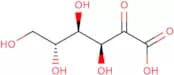
CAS:2-Keto-D-gluconic acid is a naturally occurring compound that can be synthesized from sodium carbonate and 2-keto-d-gluconic acid. 2-Keto-D-gluconic acid has been shown to have antimicrobial properties against many bacterial strains, including its ability to inhibit the growth of wild type strains of Staphylococcus aureus, Streptococcus pneumoniae, Escherichia coli, and Pseudomonas aeruginosa. It has also been shown to have antiinflammatory properties. The synthesis of 2-keto-D-gluconic acid requires optimization of the process with respect to the monoclonal antibody surface methodology used.Fórmula:C6H10O7Pureza:Min. 95%Cor e Forma:PowderPeso molecular:194.14 g/mol5-Deoxy-L-ribose
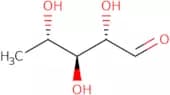
CAS:5-Deoxy-L-ribose is found in a variety of organisms, including humans. It is stereoselective, with the (-) form being more common than the (+) form. 5-Deoxy-L-ribose is synthesized by the glycosidic bond between l-arabinose and D-ribose. This compound is an inexpensive way to produce 5-deoxy analogs of other sugars, such as glucose, fructose, and mannose. The biosynthesis of 5-deoxy-L-ribose relies on a molybdenum cofactor and involves oxidation of L-arabinonate by aldehyde oxidase to give L-xylulose. Lactate dehydrogenase converts this into D-xylulose. Dihydroorotate reductase then reduces this to give D-(+)-5--deoxy--D--erythro--pentitol phosphate, which cyclFórmula:C5H10O4Pureza:Min. 95%Cor e Forma:Slightly Yellow Clear LiquidPeso molecular:134.13 g/mol6-Phosphogluconic acid, trisodium salt dihydrate
CAS:6-Phosphogluconic acid, trisodium salt dihydrate is a custom synthesis that has been made to order. It is a complex carbohydrate that can be modified with methylation, glycosylation and other modifications. 6-Phosphogluconic acid, trisodium salt dihydrate is an Oligosaccharide and Polysaccharide of Modification saccharides. It can be made as an Methylated Glycosylated Carbohydrate or a Click Modified Sugar. It can be Fluorinated or Synthetically made for high purity.Fórmula:C6H14Na3O12PPeso molecular:378.11 g/mol1,2:5,6-Di-O-isopropylidene-α-D-gulofuranose
CAS:1,2:5,6-Di-O-isopropylidene-alpha-D-gulofuranose is a sugar molecule that has a carbon and oxygen atoms in the 1,2 positions and an oxygen atom in the 5,6 position. It is an intermediate in the synthesis of lipids. The kinetic and clinical relevance of this compound have not been fully studied. 1,2:5,6-Di-O-isopropylidene-alpha-D-gulofuranose binds to fatty acid receptors on liver cells and initiates a cascade of events that lead to inflammation and cell death. This sugar molecule also inhibits hepatitis C virus RNA replication by binding to specific sequences on the virus’s RNA genome. The molecular interactions between 1,2:5,6-Di-O-isopropylidene alpha D gulofuranose and other molecules are determined by steric interactions with its hydroxyl group asFórmula:C12H20O6Pureza:Min. 98.0 Area-%Peso molecular:260.28 g/molRef: 3D-W-200121
-Unit-ggA consultar5gA consultar10gA consultar25gA consultar50gA consultar100gA consultar5-Deoxy-iso-DMDP HCl
5-Deoxy-iso-DMDP HCl is a custom synthesis sugar that can be modified with Click chemistry. It is fluorinated, glycosylated, and methylated. The CAS number for 5-Deoxy-iso-DMDP HCl is 97790-10-2. This oligosaccharide has a molecular weight of about 607.5 Daltons and contains monosaccharides and saccharides. The carbohydrate complex has a molecular weight of about 1201 Daltons and includes complex carbohydrates such as polysaccharides, glycoproteins, glycogen, and polysaccharolytic enzymes.Pureza:Min. 95%2,3,4,6-Tetra-O-acetyl-β-D-glucopyranosyl trichloroacetimidate
CAS:Gadolinium is a magnetic, paramagnetic metal that is used to enhance the contrast in magnetic resonance imaging (MRI) and has been shown to be effective in ectopic expression of gene products. Gadolinium-enhanced MRI has been shown to be a more sensitive method for detection of pancreatic cancer cells than CT scans. Gadolinium also binds to monoclonal antibodies and can be detected using immunohistochemical staining. Gadolinium is a prohormone that is converted into its active form by cleavage of the glycosidic bond between carbons 2 and 3 in the 6-phosphate position. The gadolinium ion is chemically neutral, which may account for its lack of toxicity in vivo.Fórmula:C16H20Cl3NO10Pureza:Min. 98 Area-%Cor e Forma:PowderPeso molecular:492.69 g/molMethyl (phenyl 2,3-di-O-benzyl-1-thio-b-D-glucopyranoside)uronate
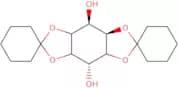
CAS:Methyl (phenyl 2,3-di-O-benzyl-1-thio-b-D-glucopyranoside)uronate is a synthetic glycosylation product. It is the methyl ester of 2,3,4,6-tetra-O-benzylated glucuronic acid. This product can be used for the modification of polysaccharides and saccharides with click chemistry. The synthesis of this compound can be customized to meet your needs.Pureza:Min. 95%1,2:4,5-Biscyclohexylidene-DL-myo-inositol
CAS:1,2:4,5-Biscyclohexylidene-DL-myo-inositol is an Oligosaccharide that is synthetically made. It belongs to the group of Glycosylation and can be used in a variety of applications. This compound can be used as a sugar in protein glycosylation, or it can act as an initiator for polysaccharide synthesis. 1,2:4,5-Biscyclohexylidene-DL-myo-inositol has been modified with Click chemistry and has been shown to be high purity and complex carbohydrate.Fórmula:C18H28O6Pureza:Min. 95%Cor e Forma:PowderPeso molecular:340.41 g/mol