Monossacáridos
Monossacarídeos são a forma mais simples de carboidratos e servem como building blocks fundamentais para açúcares mais complexos e polissacarídeos. Essas moléculas de açúcar único desempenham papéis críticos no metabolismo energético, na comunicação celular e nos componentes estruturais das células. Nesta seção, você encontrará uma ampla variedade de monossacarídeos essenciais para pesquisas em bioquímica, biologia molecular e glicociência. Esses compostos são cruciais para estudar vias metabólicas, processos de glicosilação e desenvolvimento de agentes terapêuticos. Na CymitQuimica, oferecemos monossacarídeos de alta qualidade para apoiar suas necessidades de pesquisa, garantindo precisão e confiabilidade em suas investigações científicas.
Subcategorias de "Monossacáridos"
- Aloses(11 produtos)
- Arabinoses(21 produtos)
- Eritroses(11 produtos)
- Frutoses(9 produtos)
- Fucoses(36 produtos)
- Galactosamina(41 produtos)
- Galactoses(261 produtos)
- Glucoses(365 produtos)
- Ácidos Glucurónicos(51 produtos)
- Glico-substratos para enzimas(77 produtos)
- Guloses(6 produtos)
- Idoses(4 produtos)
- Inositóis(15 produtos)
- Lixoses(4 produtos)
- Mannoses(65 produtos)
- O-Glicanos(48 produtos)
- Psicoses(3 produtos)
- Ramnoses(10 produtos)
- Riboses(61 produtos)
- Ácidos siálicos(100 produtos)
- Sorboses(4 produtos)
- Açúcares(173 produtos)
- Tagatoses(4 produtos)
- Taloses(8 produtos)
- Xiloses(20 produtos)
Exibir 17 mais subcategorias
Foram encontrados 6090 produtos de "Monossacáridos"
Ordenar por
Pureza (%)
0
100
|
0
|
50
|
90
|
95
|
100
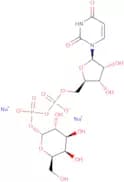
UDP-Gal 2Na
CAS:<p>UDP-a-D-galactose disodium salt (UDP-Gal) is a sugar-nucleotide substrate of galactosyltransferases. It’s used as the donor of galactose in the biosyntheses of glycoproteins and glycolipids. Its low cellular content is also hypothetically linked to the defective galactosylation in galactosemia.</p>Fórmula:C15H22N2O17P2·2NaPureza:Min. 95 Area-%Cor e Forma:PowderPeso molecular:610.27 g/molRef: 3D-MU06699
Produto descontinuado2-[(1E)-2-[6-(β-D-Galactopyranosyloxy)-2,3-dihydro-1H-xanthen-4-yl]ethenyl]-3,3-dimethyl-1-propyl-3H-indolium iodide
CAS:<p>Please enquire for more information about 2-[(1E)-2-[6-(β-D-Galactopyranosyloxy)-2,3-dihydro-1H-xanthen-4-yl]ethenyl]-3,3-dimethyl-1-propyl-3H-indolium iodide including the price, delivery time and more detailed product information at the technical inquiry form on this page</p>Fórmula:C34H40NO7•IPureza:Min. 95%Peso molecular:701.59 g/molD-Galactal
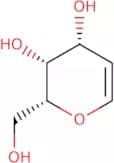
CAS:<p>Building block for oligosaccharide synthesis</p>Fórmula:C6H10O4Pureza:Min. 98 Area-%Cor e Forma:White Off-White PowderPeso molecular:146.14 g/mol5,6-O-Isopropylidene-L-gulonic acid-1,4-lactone
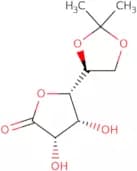
CAS:<p>5,6-O-Isopropylidene-L-gulonic acid-1,4-lactone is a synthetic monosaccharide with the molecular formula C8H14O5. It has a CAS number of 94697-68-4 and is available for custom synthesis. The chemical structure of 5,6-O-Isopropylidene-L-gulonic acid-1,4-lactone consists of a methyl group attached to the hydroxyl at position 1 and a fluoro group attached to the hydroxyl at position 4. 5,6--O--Isopropylidene--L--gulonic acid--1,4--lactone is not naturally occurring and is made by modification of glycosides. This compound can be used in click chemistry or complex carbohydrate reactions.</p>Fórmula:C9H14O6Pureza:Min. 99 Area-%Cor e Forma:White PowderPeso molecular:218.2 g/molRef: 3D-MI04758
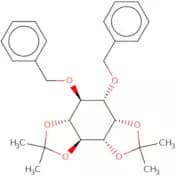
Produto descontinuado2,3:4,5-Di-O-isopropylidene-1,6-di-O-benzyl-D-myo-inositol
<p>2,3:4,5-Di-O-isopropylidene-1,6-di-O-benzyl-D-myo-inositol is a complex carbohydrate and a sugar. It is an oligosaccharide with two monosaccharides and a glycosidic linkage. It has been modified by methylation, fluorination and Click chemistry. This compound has been custom synthesized for high purity.</p>Fórmula:C26H32O6Pureza:Min. 95%Peso molecular:440.53 g/mol2-Keto-L-gluconic acid
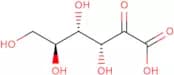
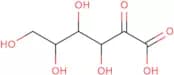
CAS:<p>Please enquire for more information about 2-Keto-L-gluconic acid including the price, delivery time and more detailed product information at the technical inquiry form on this page</p>Fórmula:C6H10O7Pureza:Min. 95%Peso molecular:194.14 g/molD-Allose pentaacetate
CAS:<p>D-Allose pentaacetate is a modified oligosaccharide that can be used as a synthetic intermediate in the production of complex carbohydrates. It has been shown to have high purity and is easily synthesized in a laboratory setting. D-Allose pentaacetate is a monosaccharide with five acetate groups that can be methylated or glycosylated, which makes it an ideal candidate for modification. D-Allose pentaacetate has CAS No. 144071-49-8 and can be found on PubChem CID: 1215965.</p>Fórmula:C16H22O11Pureza:Min. 95%Cor e Forma:PowderPeso molecular:390.34 g/mol1-Deoxy-L-allitol
CAS:<p>1-Deoxy-L-allitol is a naturally occurring compound found in human urine. It has been shown to have a role in the regulation of glucose metabolism, as it is catalysed by liver enzymes and can affect the synthesis of glycogen. 1-Deoxy-L-allitol also has been found to be an activator of t-cells, which are immune cells that help regulate the body's response to infection.</p>Fórmula:C6H14O5Pureza:Min. 95%Peso molecular:166.17 g/mol3-Deoxy-L- threo- 2- hexulosaric acid
CAS:<p>3-Deoxy-L-threo-2-hexulosaric acid is a sugar that is modified by the addition of a fluorine atom to one of its hydroxyl groups. 3-Deoxy-L-threo-2-hexulosaric acid is used in the synthesis of complex carbohydrates and oligosaccharides. It is also used in the modification of saccharides, sugars, and polysaccharides. 3-Deoxy-L-threo-2-hexulosaric acid can be custom synthesized according to your specifications. It can be synthesized with high purity at our labs.</p>Pureza:Min. 95%GDP-L-fucose disodium
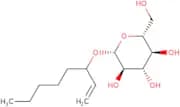
CAS:<p>Please enquire for more information about GDP-L-fucose disodium including the price, delivery time and more detailed product information at the technical inquiry form on this page</p>Fórmula:C16H23N5O15P2Na2Pureza:Min. 90 Area-%Peso molecular:633.31 g/mol1-Octen-3-ol glucoside
CAS:<p>1-Octen-3-ol glucoside is a synthetic, fluorinated sugar that is modified with glycosylation, methylation, and click chemistry. It contains a high degree of purity and is custom synthesized to order. This product can be used as a substitute for other sugars in the production of oligosaccharides, saccharides, and polysaccharides.<br>1-Octen-3-ol glucoside has been shown to have various modifications including glycosylation, methylation, and click chemistry. It is often used when there are restrictions on the types of sugars that can be used in the synthesis of complex carbohydrates.</p>Fórmula:C14H26O6Pureza:Min. 95%Cor e Forma:PowderPeso molecular:290.35 g/molRef: 3D-MO182722
Produto descontinuado2-Keto-L-galactonic acid
CAS:<p>2-Keto-L-galactonic acid is a chemical compound that belongs to the group of fatty acids. It is produced by the degradation of polyunsaturated fatty acids and has been shown to be a potential control agent for hepatic steatosis. 2-Keto-L-galactonic acid also inhibits the synthesis of dinucleotide phosphate in rat liver cells, leading to an accumulation of intracellular potassium ion. This compound inhibits the uptake of glucose by activating ATPase, which leads to an increase in intracellular pH. The uptake of 2-keto-L-galactonic acid into cells has been shown using cell culture experiments with wild type and mutant strains.</p>Fórmula:C6H10O7Pureza:Min. 95%Peso molecular:194.14 g/mol1-O-Methyl-α-D-glucopyranoside
CAS:<p>Methyl α-D- glucopyranoside is a methylated sugar used as an inhibitor of lectin-conjugate binding. Methyl α-D- glucopyranoside is commonly used in protein purification for eluting glycoproteins and other glycoconjugates from affinity chromatography columns of agarose lectin. Methyl α-D- glucopyranoside is also known as Methyl alpha-D-glucoside or alpha-Methyl-glucoside.</p>Fórmula:C7H14O6Pureza:Min. 99.0 Area-%Peso molecular:194.19 g/molRef: 3D-M-3593
Produto descontinuadoIsopropyl-beta-D-thioglucuronic acid, sodium salt
CAS:<p>Isopropyl-β-D-thioglucuronic acid is a β-D-glucuronidase inducer. It enhances the sensitivity of β-glucuronidase assays in E. coli.</p>Fórmula:C9H15NaO6SPureza:Min. 98 Area-%Peso molecular:274.27 g/molb-D-Glucose - 85%
CAS:<p>Glycol ethers are compounds that are used as solvents and plasticizers. They have been shown to inhibit the activity of enzymes, such as glucose-6-phosphate dehydrogenase, which is involved in the conversion of glucose to phosphate. Glycol ethers also promote sugar transport by inhibiting the sodium-dependent glucose transporter (SGLT). This transport mechanism is important for maintaining normal blood sugar levels and preventing diabetic neuropathy. Glycol ethers are also anti-diabetic agents that can increase insulin sensitivity by stimulating insulin release from pancreatic beta cells and improving the response of peripheral tissues to insulin stimulation.</p>Fórmula:C6H12O6Pureza:Min. 95%Cor e Forma:White PowderPeso molecular:180.16 g/molRef: 3D-MG09278
Produto descontinuadoGDP-D-mannose disodium salt
CAS:<p>GDP-D-mannose is a natural mannosyl donor and substrate for mannosyltransferases that catalyses mannosylation, for instance during the synthesis of the trimannoside core of complex, high-mannose or hybrid N-glycans. GDP-D-mannose is widely used in (chemo)enzymatic synthesis of oligosaccharides and its biosynthesis occurs from glucose-6-phosphate over several steps. GDP-D-mannose consists of a D-mannose unit, α-glycosydically linked to the nucleotide guanosine diphosphate (GDP). Examples of this important reaction would be the transfer of mannosyl moieties onto the dolichol-P-P-GlcNAc2 precursor of N-glycans in the endoplasmatic reticulum, with release of GDP, or the mannosylation reactions during GPI-anchor (bio)synthesis. GDP-D-mannose has also been used for the in vitro synthesis of b-mannan oligosaccharides.</p>Fórmula:C16H23N5O16P2Na2Pureza:Min. 95 Area-%Peso molecular:649.3 g/mol1-Azido- 1- deoxy- 2- C- hydroxymethyl - 2, 3-O-isopropylidene-D- glucitol
<p>1-Azido-1-deoxy-2-C-hydroxymethyl-2,3-O-isopropylidene -D-glucitol is a synthetic monosaccharide that can be used for glycosylation, methylation, and click modification. It is a complex carbohydrate with an Oligosaccharide structure. 1-Azido -1-deoxy -2 -C -hydroxymethyl -2,3 -O -isopropylidene D glucitol has been fluorinated. This compound is a sugar that has been modified with a Click modification. It is a sugar that has been synthesized and custom synthesized by high purity.</p>Pureza:Min. 95%D-Ribulose 5-phosphate sodium
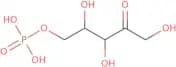
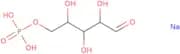
CAS:<p>Ribulose 5-phosphate sodium is a chemical that can be used to inhibit the enzyme ribulose phosphate reductase. Ribulose 5-phosphate sodium has been shown to inhibit glycolaldehyde production in the chloroplasts of plants, effectively reducing the amount of carbon dioxide produced. This chemical has also been shown to have an inhibitory effect on other enzymes involved in carbon fixation and assimilation. The effectiveness of this chemical is dependent on the specific plant species and environmental conditions.</p>Fórmula:C5H11O8P•NaxPureza:Min. 95%Cor e Forma:PowderPeso molecular:230.11 g/molRef: 3D-AAA09387
Produto descontinuadoD-Ribulose 5-phosphate sodium salt
CAS:<p>Reference compound for metabolites of the pentosephosphate pathway</p>Fórmula:C5H11O8P·xNaPureza:Min. 96 Area-%Cor e Forma:White Yellow PowderPeso molecular:230.11 g/molRef: 3D-MR45852
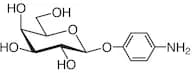
Produto descontinuado4-Aminophenyl β-D-Galactopyranoside
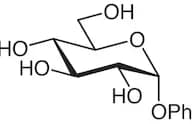
CAS:Fórmula:C12H17NO6Pureza:>98.0%(HPLC)Cor e Forma:White to Almost white powder to crystalPeso molecular:271.27Phenyl α-D-Glucopyranoside
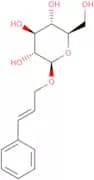
CAS:Fórmula:C12H16O6Pureza:>97.0%(GC)Cor e Forma:White to Light yellow powder to crystalPeso molecular:256.253-Phenyl-2-propenylbeta-D-glucopyranoside
CAS:<p>3-Phenyl-2-propenylbeta-D-glucopyranoside is a flavonoid that has been shown to have inhibitory properties. It has been used as an analytical method for the diagnosis of bronchial reactivity. The high resistance of 3-phenyl-2-propenylbeta-D-glucopyranoside to oxidation and reduction make it an interesting candidate for antiinflammatory agents. When testing the effects of this compound on human bronchial tissue, it was found that 3-phenyl-2-propenylbeta-D-glucopyranoside inhibited allergic symptoms by inhibiting the release of inflammatory mediators such as histamine and leukotrienes, which are released in response to allergens and other irritants in the airways. The use of this compound may be useful in the treatment of asthma patients who suffer from allergic reactions to dust, pollen, or animal dander.</p>Fórmula:C15H20O6Pureza:Min. 95%Cor e Forma:PowderPeso molecular:296.32 g/molRef: 3D-FP152931
Produto descontinuadoD-Xylulose 5-phosphate sodium
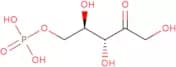
CAS:<p>D-Xylulose 5-phosphate sodium salt is a synthetic monosaccharide that can be used in the synthesis of oligosaccharides, polysaccharides, and complex carbohydrates. It is also used in glycosylation reactions. D-Xylulose 5-phosphate sodium salt has been fluorinated to provide better stability and solubility. The compound has a molecular weight of 206.06 g/mol and a CAS number of 105931-44-0. This product is available for custom synthesis upon request.</p>Fórmula:C5H11O8PNaPureza:Min. 95%Cor e Forma:PowderPeso molecular:252.09 g/molRef: 3D-MX182933
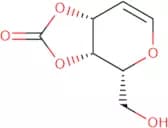
Produto descontinuado3,4-O-Carbonyl-D-galactal
CAS:<p>3,4-O-Carbonyl-D-galactal is a custom synthesis that can be used to modify oligosaccharides, carbohydrates or complex carbohydrates. It has a high purity and is non-toxic in humans. 3,4-O-Carbonyl-D-galactal has been fluorinated and saccharide modified. This product has CAS No. 149847-26-7 and can be synthesized with methylation and glycosylation.</p>Pureza:Min. 95%N’-Nitrosonornicotine N-β-D-glucuronide (mixture of diastereomers) hydrate
CAS:<p>Please enquire for more information about N’-Nitrosonornicotine N-β-D-glucuronide (mixture of diastereomers) hydrate including the price, delivery time and more detailed product information at the technical inquiry form on this page</p>Fórmula:C15H19N3O7•(H2O)xPureza:Min. 95%Ref: 3D-MN183993
Produto descontinuado2-Acetamido-1,3,4,6-tetra-O-acetyl-2-deoxy-a-D-galactopyranose
CAS:<p>2-Acetamido-1,3,4,6-tetra-O-acetyl-2-deoxy-a-D-galactopyranose is a fluorinated complex carbohydrate that has been modified by methylation and acetylation. This product is a custom synthesis that has not been previously described in the scientific literature. It is synthesized from 2, 3, 4, 6 tetraacetyl alpha D galactopyranoside and 2 deoxy alpha D galactopyranose. The chemical properties of this compound are similar to those of other complex carbohydrates such as glycogen and heparin.</p>Fórmula:C16H23NO10Pureza:Min. 90.0 Area-%Peso molecular:389.35 g/molPropranolol-2-O-b-D-glucuronide
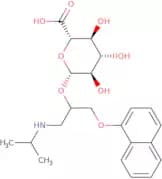
CAS:<p>Propranolol-2-O-b-D-glucuronide is a metabolite of propranolol hydrochloride. It has been shown to have low bioavailability in humans and rats. Propranolol-2-O-b-D-glucuronide is eliminated via the kidney, with an elimination rate that is faster than the parent drug propranolol hydrochloride. The glucuronide conjugate of propranolol, which is found in urine samples, has been shown to be a potential biomarker for glomerular filtration rate and renal function.</p>Fórmula:C22H29NO8Pureza:Min. 95%Cor e Forma:White to off-white solid.Peso molecular:435.47 g/molRef: 3D-MP09955
Produto descontinuadoD-Ribulose-5-phosphate sodium
CAS:<p>D-ribulose-5-phosphate sodium is a nucleotide sugar that is one of the ribonucleotides, which are fundamental components of RNA. D-ribulose 5-phosphate sodium has been shown to be an intermediate in the metabolism of ribulose and catalyzes the oxidation of d-arabinose. This enzyme also catalyses the synthesis of fatty acids and participates in reactions involving glycerolipids and phospholipids. The reaction mechanism involves a double displacement with simultaneous attack by a water molecule on C2' and C3'. When deuterium is present, it affects the rate of these reactions in a way that depends on the orientation of the substrate to the enzyme.</p>Fórmula:C5H11NaO8PPureza:Min. 95%Peso molecular:253.1 g/molRef: 3D-BDA05475
Produto descontinuado4-Deoxy-D-glucose
CAS:<p>4-Deoxy-D-glucose is a sugar that is synthesized by the condensation of two molecules of erythrose. It has been shown to be an efficient donor substrate for nucleophilic attack, which can lead to the synthesis of glycosides and other natural products. 4-Deoxy-D-glucose is also a competitive inhibitor of uridine diphosphate (UDP) glucose, which is an enzyme involved in the biosynthesis of UDP sugars and glycoproteins. The concentration of 4-deoxy-D-glucose affects its catalytic mechanism, as it acts as a competitive inhibitor at high concentrations. Molecular modeling has revealed that this molecule adopts a chair conformation with significant solvent exposure.</p>Fórmula:C6H12O5Pureza:Min. 98 Area-%Cor e Forma:PowderPeso molecular:164.16 g/molRef: 3D-MD180432
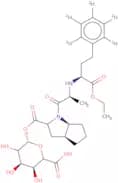
Produto descontinuadoRamipril-D5 acyl-b-D-glucuronide
Produto Controlado<p>Ramipril-D5 acyl-b-D-glucuronide is a custom synthesis of the complex carbohydrate, oligosaccharide. It has been modified with saccharide, methylation, glycosylation, and click modification. Ramipril-D5 acyl-b-D-glucuronide is a high purity product that has been fluorinated and synthesized.</p>Fórmula:C29H35D5N2O11Pureza:Min. 95%Peso molecular:597.66 g/mol2-O-Benzoyl-4,6-O-benzylidene-a-D-glucopyranoside
<p>2-O-Benzoyl-4,6-O-benzylidene-a-D-glucopyranoside is a synthetic carbohydrate with a structure that is similar to that of glucose. It has been shown to have anti-inflammatory properties in animal models and can be used for the treatment of inflammatory bowel disease and Crohn's disease. This compound has also been shown to inhibit the growth of bacteria such as Streptococcus pyogenes, Staphylococcus aureus, and Escherichia coli. 2-O-Benzoyl-4,6-O-benzylidene--aD glucopyranoside is soluble in water and has high purity with an average of 98%.</p>Fórmula:C20H20O7Pureza:Min. 95%Peso molecular:372.37 g/molMethyl D-arabinofuranoside
CAS:<p>Methyl D-arabinofuranoside is an antimycobacterial agent that inhibits the synthesis of mycolic acids, which are important components of the cell wall of Mycobacterium tuberculosis. Methyl D-arabinofuranoside has been shown to be active against drug-resistant strains and has been well tolerated by animals. This compound can be synthesized from 2,4-dichlorophenylacetic acid and arabinose in two steps. The first step involves a three-component condensation reaction with sodium hydroxide, hydrochloric acid, and 2,4-dichlorophenylacetic acid. The second step is a nucleophilic attack on the pyran ring of methyl D-arabinofuranoside with hypophosphorous acid. Methyl D-arabinofuranoside can also be prepared by reacting sodium nitrosobenzene with sodium benzene sulfinate in alcoholic solution</p>Fórmula:C6H12O5Pureza:Min. 95%Cor e Forma:Off-White PowderPeso molecular:164.16 g/molRef: 3D-MM31839
Produto descontinuado10-Beta-D-glucopyranosyl-1,8-dihydroxy-3-(hydroxymethyl)-anthrone heptaacetate
CAS:<p>10-Beta-D-glucopyranosyl-1,8-dihydroxy-3-(hydroxymethyl)-anthrone heptaacetate is a synthetic saccharide that can be used as a fluorescent probe. It is synthesized by reacting methyl anthrone with 10-beta-D-glucopyranosyl chloride and sodium hydroxide under basic conditions. The fluorination of the compound leads to its fluorescent properties. This product has been custom synthesized for use in click chemistry reactions.</p>Fórmula:C35H36O16Pureza:Min. 95%Peso molecular:712.60 g/molRef: 3D-NAA92872
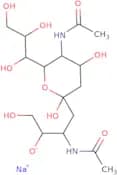
Produto descontinuado3'-a-Sialyl-N-acetyllactosamine sodium salt
CAS:<p>3'-a-Sialyl-N-acetyllactosamine sodium salt is a high purity, custom synthesis sugar. It has been modified with fluorination, glycosylation, and methylation to provide the desired properties. This product is also available in other forms such as monosaccharide and saccharide. 3'-a-Sialyl-N-acetyllactosamine sodium salt can be used in various applications including Click modification, fluoroamination, glycosylation, carbonylation and methylation. CAS No. 350697-53-9</p>Fórmula:C25H42N2O19NaPureza:Min. 95%Peso molecular:697.59 g/molRef: 3D-MS182937
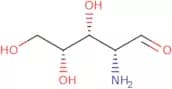
Produto descontinuado2-Amino-2-deoxy-D-xylose
CAS:<p>2-Amino-2-deoxy-D-xylose is a metal chelator that can be used in the treatment of infections caused by bacteria. It has been shown to have synergistic effects with metaperiodate, a compound that inhibits bacterial growth by blocking the synthesis of folic acid. 2-Amino-2-deoxy-D-xylose also chelates and removes heavy metals such as mercury and lead from the bloodstream and other tissues. In addition, this drug is an efficient method for producing amino function pyrimidine nucleosides, which are precursors to DNA and RNA synthesis. The metal chelate ring is formed through dehydration of a furanose molecule with a chloride ion. This leads to an advanced carbohydrate product that contains chlorine.</p>Pureza:Min. 95%4,7,8,9-Tetra-O-acetyl-N-acetyl-D-neuraminic acid methyl ester
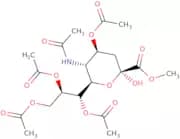
CAS:<p>4,7,8,9-Tetra-O-acetyl-N-acetyl-D-neuraminic acid methyl ester is a modified form of sialic acid. This compound is a glycosylation product that has been modified with methyl groups and fluorine atoms. The fluorination of the molecule increases its stability and prevents it from being hydrolyzed by enzymes such as β-galactosidase. 4,7,8,9-Tetra-O-acetyl-N-acetyl-D-neuraminic acid methyl ester is often used in the synthesis of polysaccharides and oligosaccharides for medical purposes. This compound can be custom synthesized for research purposes or to meet special requirements.</p>Fórmula:C20H29NO13Pureza:Min. 95%Cor e Forma:White to off-white solid.Peso molecular:491.44 g/mol1-Deoxy-1-nitro-L-glucitol
CAS:<p>1-Deoxy-1-nitro-L-glucitol is a potent apoptosis-inducing compound that has shown promising results in cancer research. It is an analog of vanillin and nintedanib, two well-known cancer cell inhibitors. 1-Deoxy-1-nitro-L-glucitol has been shown to inhibit the activity of several kinases, including those involved in tumor growth and progression. In addition, it has been found to be effective against various types of cancer cells, including Chinese hamster ovary cells and human bladder cancer cells. This compound also exhibits synergistic effects with other anti-cancer drugs such as glimepiride and apomorphine. The presence of 1-Deoxy-1-nitro-L-glucitol in urine may serve as a potential biomarker for the diagnosis and monitoring of certain cancers.</p>Fórmula:C6H13NO7Pureza:Min. 95%Peso molecular:211.17 g/molRef: 3D-MD183192
Produto descontinuadoDecyl D-glucopyranoside
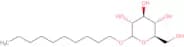
CAS:<p>Decyl D-glucopyranoside is a sodium salt of decyl D-glucopyranoside that is used as a detergent additive in cleaning compositions. Decyl D-glucopyranoside has shown antimicrobial activity against both Gram-positive and Gram-negative bacteria, including methicillin resistant Staphylococcus aureus (MRSA) and Clostridium perfringens. Decyl D-glucopyranoside has also been shown to have chemical stability at high temperatures, making it useful in the manufacture of lacrimal gland preparations and cationic surfactants.</p>Fórmula:C16H32O6Peso molecular:320.42 g/molRef: 3D-MD11310
Produto descontinuadoSalacinol
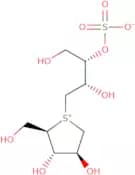
CAS:<p>Salacinol is a naturally occurring sulfonium ion, which is a bioactive compound found primarily in the roots and stems of the plant Salacia reticulata. This plant is native to regions of South Asia, particularly India and Sri Lanka, and is traditionally used in Ayurvedic medicine. Salacinol's mode of action involves the inhibition of alpha-glucosidase, an enzyme responsible for breaking down carbohydrates into glucose. By inhibiting this enzyme, salacinol reduces the postprandial rise in blood glucose levels, thus demonstrating antidiabetic potential.</p>Fórmula:C9H18O9S2Pureza:Min. 95%Peso molecular:334.37 g/molRef: 3D-MS27780
Produto descontinuadoD-Ribitol-5-phosphate
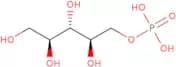
CAS:<p>Ribitol is a sugar alcohol that is found in all living organisms. It is also used as a source of carbon and energy in the form of D-ribitol-5-phosphate, which can be synthesized from ribose 5-phosphate by means of an enzymatic reaction. Ribitol 5 phosphate is used for the synthesis of monoclonal antibodies, which are useful for studying enzyme activities, immunoassays, and cell surface receptors. This compound has been shown to have regulatory effects on the expression of genes encoding fatty acid biosynthesis enzymes. Ribitol 5 phosphate has been detected using magnetic resonance spectroscopy techniques in glycan structures and galacturonic acid residues.</p>Fórmula:C5H13O8PPureza:Min. 95%Peso molecular:232.13 g/mol

![2-[(1E)-2-[6-(β-D-Galactopyranosyloxy)-2,3-dihydro-1H-xanthen-4-yl]ethenyl]-3,3-dimethyl-1-propyl-…](/_next/image/?url=https%3A%2Fstatic.cymitquimica.com%2Fproducts%2F3D%2Fthumb-webp%2FMG183953.webp&w=3840&q=75)