Monossacáridos
Subcategorias de "Monossacáridos"
- Aloses(11 produtos)
- Arabinoses(21 produtos)
- Eritroses(11 produtos)
- Frutoses(9 produtos)
- Fucoses(36 produtos)
- Galactosamina(41 produtos)
- Galactoses(262 produtos)
- Glucoses(365 produtos)
- Ácidos Glucurónicos(52 produtos)
- Glico-substratos para enzimas(78 produtos)
- Guloses(6 produtos)
- Idoses(4 produtos)
- Inositóis(15 produtos)
- Lixoses(4 produtos)
- Mannoses(65 produtos)
- O-Glicanos(48 produtos)
- Psicoses(3 produtos)
- Ramnoses(10 produtos)
- Riboses(61 produtos)
- Ácidos siálicos(100 produtos)
- Sorboses(4 produtos)
- Açúcares(174 produtos)
- Tagatoses(4 produtos)
- Taloses(8 produtos)
- Xiloses(20 produtos)
Foram encontrados 6138 produtos de "Monossacáridos"
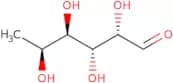
L-Fucose - non animal origin
CAS:L-Fucose is an aldohexose that is used as the building block for various glycoproteins and glycolipids. It is found in human serum and human pathogens. L-Fucose can be isolated from the hybridoma cell line by apical chromatography. The analytical method of L-fucose includes body formation, oligosaccharides, and glycan titration calorimetry. Structural analysis of L-fucose includes glycosylation, sugar analysis, and carbohydrate analysis. Fucose can also be used to produce oligosaccharides through enzymatic reactions with other sugars including glucose and galactose. This reaction produces a linkage between fucose and other sugars that are called glycosidic bonds.Fórmula:C6H12O5Pureza:Min. 98 Area-%Cor e Forma:PowderPeso molecular:164.16 g/molD-Ribose
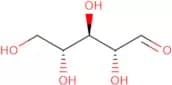
CAS:D-ribose (Rib) is an aldopentose, a component of RNA and a constituent of numerous cofactors, and certain vitamins. (Collins, 2006). Ribose is a component of bacterial polysaccharides found in Salmonella (Lindberg, 1990). Ribosylation leads to the production of significant amounts of advanced glycation end products, both extracellularly and intracellularly, it may be involved in cell dysfunction and subsequent cognitive impairments (Wei, 2012).
Fórmula:C5H10O5Pureza:Min. 98 Area-%Cor e Forma:White Off-White PowderPeso molecular:150.13 g/molIndole-3-acetyl β-D-glucopyranose
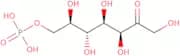
CAS:Indole-3-acetyl b-D-glucopyranose is a synthetic substrate that is used in the enzyme catalysis of indole glucosyl transferase. This enzyme catalyzes the reaction between indole and D-glucose to form an acetylated glucose. The gene product for this enzyme has a low expression in tissues, but high expression in plants. The gene product for this enzyme has been shown to be involved in plant physiology, where it may play a role in population growth.Fórmula:C16H19NO7Pureza:Min. 95%Peso molecular:337.33 g/molD-Sedoheptulose-7-phosphate barium salt
CAS:Substrate of phosphofructokinase; pentose phosphate pathway intermediateFórmula:C7H13O10PBaPureza:Min. 75 Area-%Cor e Forma:White PowderPeso molecular:425.47 g/molL-Erythrono-1,4-lactone
CAS:L-Erythrono-1,4-lactone is a dicarboxylic acid that is synthesized from l-threonic acid and d-arabinose. L-Erythrono-1,4-lactone is biosynthesized by the conversion of l-serine to pyruvate and then to erythrose 4-phosphate. This compound is also produced by the oxidation of ascorbic acid and can be used for the synthesis of dermatan sulfates. The accumulation of L-Erythrono-1,4-lactone in high concentrations has been found in patients with dermatan sulfate deficiency.Fórmula:C4H6O4Pureza:Min. 95%Cor e Forma:PowderPeso molecular:118.09 g/mol2-Deoxy-D-ribose
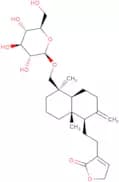
CAS:High purity grade. Used in synthetic organic chemistry and natural product synthesis. Induces apoptosis by inhibiting the synthesis and increasing the efflux of glutathione. It is used for synthesis of optically active dipyrrolyl alkanols from pyrroles on the surface of montmorillonite KSF clay.Due to its integral role in the formation of DNA, 2-Deoxy-D-ribose is critical in studies of genetic expression, DNA repair mechanisms, and the synthesis of nucleotides. Researchers utilize it extensively in molecular biology and biochemistry to understand cell replication and gene function, and it serves as a standard in research pertaining to oxidative stress, where its degradation may indicate the presence of reactive oxygen species. Additionally, it is involved in the development of various pharmacological agents, particularly those targeting cancer and viral infections, where the synthesis and function of DNA are pivotal aspects of pathogenesis and treatment response.Fórmula:C5H10O4Pureza:Min. 99.0 Area-%Peso molecular:134.13 g/molNeoandrographolide
CAS:Neoandrographolide is a diterpene compound that has been shown to have a significant cytotoxic effect on HL-60 cells. It also shows matrix effects in body formation and chemiluminescence. Neoandrographolide is extracted from the plant Andrographis paniculata, which belongs to the family Acanthaceae. This plant has been used historically as a medical herb in China and India for centuries. The extract of this plant has shown anti-inflammatory properties and can be used to treat infectious diseases such as bowel disease.Fórmula:C26H40O8Pureza:Min. 95%Cor e Forma:White PowderPeso molecular:480.6 g/molN-Acetyl-D-mannosaminuronic acid sodium
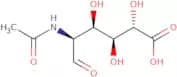
CAS:N-Acetyl-D-mannosaminuronic acid sodium (NAMSA) is a precursor to uridine and fatty acids. It is synthesized in vivo by the enzyme mannosaminase, which cleaves the glycosidic linkage of NAMSA to form uridine and mannose. NAMSA has been shown to be an essential gene product for S. aureus strains. The activity of NAMSA can be monitored using the assay of radioactive incorporation into sialic acid, which is coupled with gel chromatography. This compound has also been used as a monoclonal antibody to detect CD4+ cells in vitro, and was shown to inhibit the growth of infectious diseases such as Mycobacterium tuberculosis, Neisseria meningitidis, and Salmonella typhimurium.Fórmula:C8H12NO7NaPureza:Min. 95%Cor e Forma:PowderPeso molecular:257.17 g/molneo-Inositol
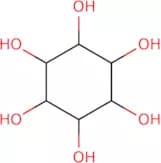
CAS:Neo-inositol is a type of inositol that is not found naturally in the body, but can be synthesized. It has been shown to inhibit the growth of cancer cells and have a physiological effect on ovarian cells. Neo-inositol has also been shown to inhibit certain types of cancer cells by interfering with their ability to produce energy. Neo-inositol was also shown to increase levels of cytosolic Ca2+ in a model system, which may contribute to its cytotoxic effects.Fórmula:C6H12O6Pureza:Min. 95 Area-%Cor e Forma:White PowderPeso molecular:180.16 g/mol1,2,5-Tri-O-benzoyl-3-methyl-D-xylofuranose
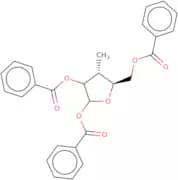
CAS:1,2,5-Tri-O-benzoyl-3-methyl-D-xylofuranose is a triol that is a methyl glycoside of 3,4,6-trihydroxybenzoic acid. It is an important building block in the synthesis of various saccharides and oligosaccharides. This product is often used as a precursor in the modification of saccharides to produce new products with different properties. This molecule has been shown to be resistant to degradation by enzymes such as glycosidases and oxidases. 1,2,5-Tri-O-benzoyl-3-methyl-D-xylofuranose can also be fluorinated or modified with other chemical groups. 1,2,5-Tri -O -benzoyl -3 -methyl -D -xylofuranose may be available from one or more custom synthesis providers.Fórmula:C27H24O7Pureza:Min. 95%Peso molecular:460.48 g/mol2,3-O-Isopropylidene-1,4-di-O-tosyl-D-threitol
CAS:Please enquire for more information about 2,3-O-Isopropylidene-1,4-di-O-tosyl-D-threitol including the price, delivery time and more detailed product information at the technical inquiry form on this page
Fórmula:C21H26O8S2Pureza:Min. 95%Cor e Forma:PowderPeso molecular:470.56 g/molMethyl 3,4-O-isopropylidene-β-D-arabinopyranoside
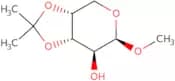
CAS:Methyl 3,4-O-isopropylidene-b-D-arabinopyranoside is a custom synthesis that has been modified with fluorination, methylation and click modification. It can be found in the CAS registry as 4594-60-9. This compound is a monosaccharide. Methyl 3,4-O-isopropylidene-b-D-arabinopyranoside is synthetically produced and can be used for glycosylation reactions. This compound has been shown to have a saccharide structure, which includes sugar or carbohydrates. It also has an oligosaccharide structure, which includes polysaccharides or complex carbohydrates.Fórmula:C9H16O5Pureza:Min. 95%Cor e Forma:Clear LiquidPeso molecular:204.22 g/molL-Glycero-D-manno-heptose
CAS:L-Glycero-D-manno-heptose is a polymyxin B antimicrobial agent that has been shown to have significant activity against Gram-positive bacteria, including Staphylococcus aureus and Streptococcus pneumoniae. This compound also has an inhibitory effect on the growth of Gram-negative species such as Salmonella enterica. L-Glycero-D-manno-heptose inhibits the synthesis of bacterial cell wall peptidoglycan by binding to the terminal residues of oligosaccharides, which are linked to D-alanine in the peptidoglycan chain. The terminal residues of oligosaccharides are transferred from the lipid carrier to L-glycero-D manno heptose, forming a stable acylated glycoside. This reaction mechanism is similar to that of polymyxin B, but with a difference in reactivity due to steric hindrance.
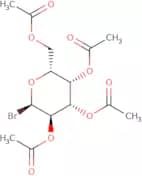
Fórmula:C7H14O7Pureza:Min. 95%Cor e Forma:White PowderPeso molecular:210.18 g/mol1-Bromo-2,3,4,6-tetra-O-acetyl-α-D-galactopyranoside
CAS:Donor for Koenigs-Knorr type galactosylation and other anomeric substitutionsFórmula:C14H19BrO9Peso molecular:411.21 g/molRef: 3D-B-8975
-Unit-ggA consultar1kgA consultar100gA consultar250gA consultar500gA consultar2500gA consultarAdonitol
CAS:Used to differentiate bacteria on the basis of carbohydrate fermentation abilities.
Fórmula:C5H12O5Pureza:Min. 98.0 Area-%Peso molecular:152.15 g/molD-Ribose, 99.0%+
CAS:D-Ribose is a pentose sugar that is the ribose sugar of D-arabinose. It is an inhibitor of bacterial growth and has been shown to inhibit binding of adenine nucleotides to their receptors in the human erythrocyte membrane. Ribose plays a vital role in energy metabolism, as it is a component of ATP and NADH. It also participates in the synthesis of DNA and RNA. Ribose can be found in many foods, such as pears, apples, potatoes, and rice. D-ribose has been shown to have significant cytotoxicity against cancer cells that are dependent on glycolysis for their energy needs. D-Ribose may also be used as a polymerase chain reaction (PCR) substrate to determine the presence of infectious diseases such as HIV or hepatitis C virus in human serum samples.Fórmula:C5H10O5Pureza:Min. 99.0 Area-%Peso molecular:150.13 g/molRef: 3D-R-5495
-Unit-kgkgA consultar1kgA consultar100gA consultar250gA consultar500gA consultar2500gA consultarD-Arabitol
CAS:D-Arabitol (or D-Arabinitol) is the reduced alcohol form of Arabinose. Arabitol is a commonly used food supplement, it is comparably sweet to sucrose but the oral flora cannot metabolize Arabitol, and hence protects from caries. Arabitol plays also an important role in energy controlled diets since it is absorbed slowly by the human digestive tract and has a low caloric content. The differential metabolism of the Arabitol D- and L-forms suggested its use in microbiological diagnostics (Bernard, E.M. et al. 1981) and became a routine urine laboratory test: L-Arabitol is metabolized by a variety of different bacteria and fungi utilizing an arabitol dehydrogenase enzyme. Therefore, it serves as a biomarker for, e.g., invasive candidiasis, since an infection results in an elevated urine D-Arabitol/L-Arabitol (DA/LA) ratio. Cymit Quimica offers both isomers in research grade: D-Arabitol (A-8270) and L-Arabitol (A-8280).Fórmula:C5H12O5Pureza:Min. 99.0 Area-%Peso molecular:152.15 g/molRef: 3D-A-8270
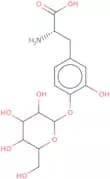
-Unit-kgkgA consultar1kgA consultar10gA consultar250gA consultar500gA consultar2500gA consultar4'-O-(β-D-Glucopyranosyl)-L-DOPA
Produto Controlado4'-O-(b-D-Glucopyranosyl)-L-DOPA is a custom synthesis, modification, fluorination, methylation, monosaccharide, synthetic, click modification, oligosaccharide saccharide. 4'-O-(b-D-Glucopyranosyl)-L-DOPA may be used in the treatment of certain cancers and for other conditions as determined by your doctor. 4'-O-(b-D-Glucopyranosyl)-L-DOPA may also be used for purposes not listed in this medication guide.Fórmula:C15H21NO9Pureza:Min. 95%Cor e Forma:White to off-white solid.Peso molecular:359.33 g/mol2-Acetamido-2-deoxy-D-mannono-1,4-lactone
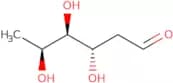
CAS:2-Acetamido-2-deoxy-D-mannono-1,4-lactone is a chemical compound that is an aldonic acid and is classified as an ester. It has a molecular formula of C8H10O5 and it has the following structural formula: This product can be synthesized from benzoic acid and glyceraldehyde. 2-Acetamido-2-deoxy-D-mannono-1,4-lactone is also known as benzoylated mannose. It has been reconfirmed to have high yield in acetylation reactions with molybdate. 2-Acetamido-2deoxy-Dmannono1,4lactone can also undergo epimerization to form the optical antipode of 2,3,4,6tetraacetyloxybenzoic acid (2,3,4,6tetraacetylFórmula:C8H13NO6Pureza:Min. 95%Cor e Forma:White to off-white solid.Peso molecular:219.19 g/mol2-Deoxy-L-fucose
CAS:2-Deoxy-L-fucose is a sugar that is found in the human body. It has been shown to have anti-tumour properties and can be used as a chemotherapeutic agent in the treatment of solid tumours. 2DFL binds to the receptor for fucose, which is expressed in many types of cancer cells. It also inhibits DNA synthesis by stabilizing a complex between the sugar and dna template, inhibiting the binding of monoclonal antibodies to cancer cells, and preventing glycosidic bond formation on cancer cells. 2DFL has also been shown to inhibit microbial biotransformation and cell culture.
Fórmula:C6H12O4Pureza:Min. 95%Cor e Forma:PowderPeso molecular:148.16 g/mol