Monossacáridos
Subcategorias de "Monossacáridos"
- Aloses(11 produtos)
- Arabinoses(21 produtos)
- Eritroses(11 produtos)
- Frutoses(9 produtos)
- Fucoses(36 produtos)
- Galactosamina(41 produtos)
- Galactoses(261 produtos)
- Glucoses(365 produtos)
- Ácidos Glucurónicos(52 produtos)
- Glico-substratos para enzimas(78 produtos)
- Guloses(6 produtos)
- Idoses(4 produtos)
- Inositóis(15 produtos)
- Lixoses(4 produtos)
- Mannoses(65 produtos)
- O-Glicanos(48 produtos)
- Psicoses(3 produtos)
- Ramnoses(10 produtos)
- Riboses(60 produtos)
- Ácidos siálicos(100 produtos)
- Sorboses(4 produtos)
- Açúcares(173 produtos)
- Tagatoses(4 produtos)
- Taloses(8 produtos)
- Xiloses(20 produtos)
Foram encontrados 6083 produtos de "Monossacáridos"
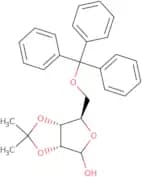
2,3-O-Isopropylidene-5-O-trityl-D-ribofuranose
CAS:2,3-O-Isopropylidene-5-O-trityl-D-ribofuranose is a metal complex that can be used as an antitumor agent. It has been shown to have antimicrobial activity against Gram positive and Gram negative bacteria and fungi. 2,3-O-Isopropylidene-5-O-trityl-D-ribofuranose is also active against Gram negative bacteria such as Escherichia coli and Pseudomonas aeruginosa. This compound is easily synthesized from acetoacetic acid by the reaction with trifluoroacetic anhydride followed by ammonolysis or azide coupling. The product is then amidated or tosylated to give the desired product.
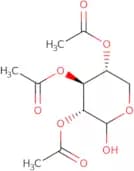
2,3-O-Isopropylidene - 5 - O - trityl - D - ribofuranose has also been shown to inhibit tumor growth inFórmula:C27H28O5Pureza:Min. 95%Cor e Forma:SolidPeso molecular:432.51 g/mol2,3,4-Tri-O-acetyl-D-xylopyranose
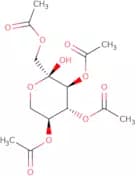
CAS:2,3,4-Tri-O-acetyl-D-xylopyranose is a lactide sugar that is found in the cell walls of many plants. It is synthesized from D-xylose by enzymatic condensation with acetylated L-malic acid and has been shown to be biodegradable. 2,3,4-Tri-O-acetyl-D-xylopyranose has been shown to have physical properties that are similar to those of cellulose, such as crystallization and solubility in water. The compound also has an NMR spectrum that contains peaks at δ = 0.8 (triplet), 1.1 (singlet) and 1.5 ppm (doublet). The hydrophobic group on the molecule is thought to contribute to its hydrophilicity.Fórmula:C11H16O8Pureza:Min. 95%Peso molecular:276.24 g/molEthyl-3,6-di-O-benzoyl-2-trifluoromethanesulfonyl-4-O-(2,3,4,6-tetra-O-acetyl-b-D-galactopyranosyl)-b-D-mannopyranoside
CAS:Ethyl-3,6-di-O-benzoyl-2-trifluoromethanesulfonyl-4-O-(2,3,4,6-tetra-O-acetyl-b-D-galactopyranosyl)-b-D-mannopyranoside is a synthetic modified oligosaccharide that has been fluorinated. It is a complex carbohydrate that has a CAS number of 1008750-65-9. The modification of the monosaccharides in this product are methylation and click modification.Fórmula:C37H41F3O19SPureza:Min. 95%Peso molecular:878.77 g/molMethyl 2,3:4,6-di-O-benzylidene-α-D-mannopyranoside
CAS:Methyl 2,3:4,6-di-O-benzylidene-a-D-mannopyranoside is a cyclic peptide that was developed for the treatment of tropical diseases. It has been shown to be a potent inhibitor of protein synthesis and an absorber of amino acids in experimental infections. Comparative studies have shown that this drug inhibits protein synthesis more than other cyclic peptides. Methyl 2,3:4,6-di-O-benzylidene-a-D-mannopyranoside has also been shown to have antiinflammatory properties in inflammatory bowel disease and may be useful as a therapeutic agent for Alzheimer’s disease or cancer.Fórmula:C21H22O6Pureza:Min. 95%Peso molecular:370.4 g/mol1,2,3,4-Tetra-O-acetyl-D-[6-13C]glucuronide methyl ester
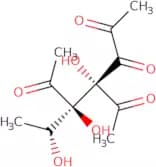
1,2,3,4-Tetra-O-acetyl-D-[6-13C]glucuronide methyl ester is a custom synthesis that can be used for the methylation of saccharides and polysaccharides. It is also used to modify glycosides and oligosaccharides. This compound has a CAS number and can be modified with click chemistry. It is a high purity product that can be synthesized with fluorination or complex carbohydrates.
Pureza:Min. 95%Peso molecular:376.31 g/molSilodosin b-D-glucuronide sodium salt
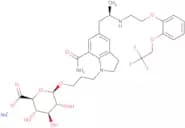
CAS:Silodosin b-D-glucuronide sodium salt is a glycoconjugate of silodosin and glucuronic acid. It is a white to off-white crystalline powder that is soluble in water. Silodosin b-D-glucuronide sodium salt has been custom synthesized for the modification of saccharides and polysaccharides, which are an important part of our diet. The compound is used as a reagent for click chemistry, glycosylation, and oligosaccharide synthesis.Fórmula:C31H39F3N3NaO10Pureza:Min. 95%Cor e Forma:Off-White PowderPeso molecular:693.64 g/molPhenyl 2,3,4-tri-O-benzyl-b-L-thiorhamnopyranose
CAS:Phenyl 2,3,4-tri-O-benzyl-b-L-thiorhamnopyranose is a custom synthesis of a carbohydrate which is modified with fluorine. This compound has been used for the synthesis of saccharides and oligosaccharides. Phenyl 2,3,4-tri-O-benzyl-b-L-thiorhamnopyranose has high purity and is methylated. It can be glycosylated and click modified with ease.Fórmula:C33H34O4SPureza:Min. 95%Peso molecular:526.69 g/mol3-Deoxy-1,2:5,6-di-O-isopropylidene-a-D-gulofuranose
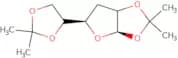
3-Deoxy-1,2:5,6-di-O-isopropylidene-a-D-gulofuranose is a synthetic sugar that is used in the production of glycoproteins. It is an important component of glycosaminoglycans, which are complex carbohydrates that are responsible for the formation and maintenance of connective tissue. 3DG has been modified by fluorination, glycosylation, methylation, and modification. It can be used to synthesize oligosaccharides and monosaccharides. It can also be used as a raw material for the synthesis of saccharides. 3DG has been shown to inhibit tumor growth in animal models because it decreases protein synthesis in cancer cells.Fórmula:C12H20O5Pureza:Min. 95%Peso molecular:244.28 g/molN-Acetylserotonin β-D-glucuronide
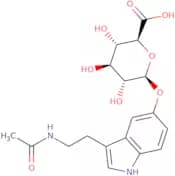
CAS:N-Acetylserotonin β-D-glucuronide is a metabolite of melatonin, which is synthesized in the pineal gland. It is excreted in human urine and can be used as a biomarker for melatonin synthesis. N-Acetylserotonin β-D-glucuronide has been shown to have pharmacologic effects on humans and other species, but its health effects are not well understood. The use of this compound as a biomarker for human melatonin synthesis has been validated in vitro and in vivo. It is also used as a marker for kidney function, particularly chronic kidney disease (CKD). This analysis can be performed using urinary samples that contain glucuronide conjugates of N-acetylserotonin β-D-glucuronide.Fórmula:C18H22N2O8Pureza:Min. 97 Area-%Cor e Forma:Off-White PowderPeso molecular:394.38 g/mol1,2,3-Tri-O-Acetyl-5-deoxy-D-ribose
CAS:1,2,3-Tri-O-acetyl-5-deoxy-D-ribose is an efficient and environmentally benign method for the synthesis of acyclic acetals. The condensation process involves the use of a chloroformate to introduce the carbonyl group into a hydroxyl group on the sugar. This reaction can be carried out in an organic solvent or water as well. The reaction rate is fast due to a high nucleophilicity of the chloride ion. The product can then be converted into an amide by reacting it with ammonia in a basic medium. This reaction results in a high yield and is useful for recycling acetonitrile that would otherwise be released into the environment.Fórmula:C11H16O7Pureza:Min. 95%Peso molecular:260.24 g/mol2-Deoxy-2-fluoro-b-D-galactopyranosyl azide
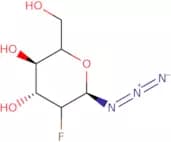
CAS:2-Deoxy-2-fluoro-b-D-galactopyranosyl azide is a synthetic modification of the sugar 2,3,4,6-tetraacetamido-2,3,4,6-tetraazido-b-D-galactopyranose. It is used as a chemical probe for the study of glycosylation reactions and carbohydrate synthesis. 2-Deoxy-2-fluoro b D galactopyranosyl azide has been shown to be an efficient reagent for the methylation of saccharides. This compound is also used in the modification of polysaccharides. Methylation reactions are often used to prepare modified carbohydrates that are difficult to synthesize by other methods. These compounds can be used as chemical probes for studying glycosylation reactions and carbohydrate synthesis.Fórmula:C6H10FN3O4Pureza:Min. 95%Peso molecular:207.16 g/mol6-O-Tosyl-D-glucopyranose
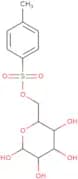
CAS:6-O-Tosyl-D-glucopyranose is an Oligosaccharide, Carbohydrate and Custom synthesis. It is a complex carbohydrate. This product is a monosaccharide that has been methylated, glycosylated, and polysaccharide modified. The CAS No. for this product is 26391-80-0 and its molecular weight is 598.6 g/mol. This product can be used in the synthesis of 6-O-Tosyl-D-[3H]glucopyranose (CAS No. 131552-01-8) which can be used as a radioactive marker in biological research or in the diagnosis of diseases such as cancer.Pureza:Min. 95%7-Hydroxy coumarin 2,3,4-tri-O-acetyl-b-D-glucuronide methyl ester
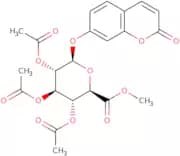
CAS:7-Hydroxy coumarin 2,3,4-tri-O-acetyl-b-D-glucuronide methyl ester is a high purity custom synthesis sugar. The synthesis of this product is achieved by the Click modification, fluorination, and glycosylation. This product has a CAS number 168286-97-3. It is also a synthetic product that was created by methylation and modification. This product can be used in complex carbohydrate research as it is an oligosaccharide and monosaccharide saccharide. END>Fórmula:C22H22O12Pureza:Min. 95%Peso molecular:478.4 g/mol9,10-Dimethoxy-pterocarpane-3-O-b-D-glucoside
9,10-Dimethoxy-pterocarpane-3-O-b-D-glucoside is a custom synthesis that is a polysaccharide with a complex carbohydrate structure. The chemical name for this compound is 9,10-dimethoxy-pterocarpane-3-O-[4′″-(1″″′′)-b′″'-D-glucopyranosyl]-3′′′,4′″’,6′"’] bibenzyl. This compound has been modified by methylation and glycosylation. It can be used in the treatment of cancer and diabetes due to its high purity and fluorination. 9,10-Dimethoxy pterocarpane 3β O glucoside is a sugar or saccharide that can be found in plants such as the roots of tobacco plants. The modification of this sugar by methylation and glycosylation makes it more
Pureza:Min. 95%1,3,4,5-Tetra-O-acetyl-L-sorbopyranose
CAS:1,3,4,5-Tetra-O-acetyl-L-sorbopyranose is a modified and complex carbohydrate. It is an oligosaccharide that has been synthesized from D-glucose. The modification of this sugar is accomplished by acetylation of the hydroxyl groups on the 2' and 3' positions of the glucose ring followed by fluorination with elemental fluorine to yield 1,3,4,5-tetra-O-acetyl-L-sorbopyranose. This compound is a white crystalline solid with a melting point of 145–147°C. 1,3,4,5-Tetra-O-acetyl-L-sorbopyranose has been shown to inhibit bacterial growth in vitro and in vivo through glycosylation inhibition.Fórmula:C14H20O10Pureza:Min. 95%Peso molecular:348.3 g/molSennoside b calciumsalt
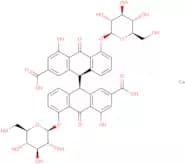
CAS:Sennoside b is a natural compound found in the plant Senna obtusifolia and has been shown to have an effect on myeloma cells, as well as on enzyme activities and energy metabolism. Sennoside b has also been shown to inhibit phospholipase A2 (PLA2) activity and prostaglandin E2 (PGE2) levels in a mouse myeloma cell line. The pathogenic mechanism of sennoside b is unclear, but it may be due to its locomotor activity-reducing effects or due to its effect on gut motility. The optimum extraction process for sennoside b is not clear, but it should be carried out with care due to its chemical stability. Sennoside b has also been shown to have beneficial effects on hepatic steatosis and bowel disease, thus making it a potential treatment for these conditions. Multivariate logistic regression analysis was used to identify factors that may predictFórmula:C42H36CaO20Pureza:Min. 95%Peso molecular:900.8 g/molD-Galactosamine-6-O-sulphate
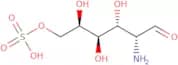
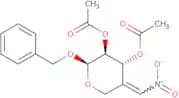
CAS:D-Galactosamine-6-O-sulphate is a synthetic, fluorinated carbohydrate that has been modified by the Click reaction. It is used as a methylating agent and can be used in the synthesis of polysaccharides and oligosaccharides. This compound is also used to modify saccharides, glycosylations, and other carbohydrates. D-Galactosamine-6-O-sulphate is water soluble and can be used for custom synthesis. It can also be modified with other reagents for various purposes.Fórmula:C6H13NO8SPureza:Min. 95%Peso molecular:259.23 g/molBenzyl 2,3-di-O-acetyl-4-deoxy-4-C-nitromethylene-b-D-arabinopyranoside
CAS:Benzyl 2,3-di-O-acetyl-4-deoxy-4-C-nitromethylene-b-D-arabinopyranoside is a synthetic sugar. It is a complex carbohydrate with two saccharides and one monosaccharide. The saccharides are glucose and galactose, and the monosaccharide is arabinose. Benzyl 2,3-di-O-acetyl-4-deoxy-4C nitromethylene bD arabinopyranoside has been modified by fluorination, methylation, glycosylation and click chemistry to create a high purity product.Fórmula:C17H19NO8Pureza:Min. 95%Peso molecular:365.33 g/molLumefantrine glucuronide - (mixture of diasteromers)
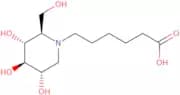
Lumefantrine glucuronide is a sugar molecule that is glycosylated. It is the active form of lumefantrine and has been shown to be effective against malaria. Lumefantrine glucuronide binds to the parasite's RBCs, inhibiting the conversion of glucose into glycogen, thus preventing the production of ATP. Lumefantrine glucuronide is synthesized by attaching a sugar molecule to an amino acid backbone through an amide bond. The sugar molecule in this case is known as Glucuronic acid and it can be methylated or fluorinated. Lumefantrine glucuronide is also modified with Click chemistry, which involves attaching a reactive group to a chemical species that reacts with other chemical species at a distance. This modification allows for the attachment of polymers such as saccharides or oligosaccharides onto lumefantrine glucuronide.Fórmula:C36H40Cl3NO7Pureza:Min. 95%Peso molecular:705.06 g/molN-(5-Carboxypentyl)-deoxynojirimycin
CAS:N-(5-Carboxypentyl)-deoxynojirimycin is a synthetic glycosylation agent that is used in the preparation of oligosaccharides, polysaccharides and saccharide complexes. This compound is also a potential therapeutic agent for cancer, as it can inhibit tumor cell growth by inhibiting protein synthesis. N-(5-Carboxypentyl)-deoxynojirimycin can be used as an intermediate in the synthesis of other fluorinated sugars. When modified with methyl groups, this compound has shown anticancer activity against human breast cancer cells.Fórmula:C12H23NO6Pureza:Min. 95 Area-%Cor e Forma:Beige PowderPeso molecular:277.31 g/mol


![1,2,3,4-Tetra-O-acetyl-D-[6-13C]glucuronide methyl ester](/_next/image/?url=https%3A%2Fstatic.cymitquimica.com%2Fproducts%2F3D%2Fthumb-webp%2FMT08063.webp&w=3840&q=75)