Monossacáridos
Monossacarídeos são a forma mais simples de carboidratos e servem como building blocks fundamentais para açúcares mais complexos e polissacarídeos. Essas moléculas de açúcar único desempenham papéis críticos no metabolismo energético, na comunicação celular e nos componentes estruturais das células. Nesta seção, você encontrará uma ampla variedade de monossacarídeos essenciais para pesquisas em bioquímica, biologia molecular e glicociência. Esses compostos são cruciais para estudar vias metabólicas, processos de glicosilação e desenvolvimento de agentes terapêuticos. Na CymitQuimica, oferecemos monossacarídeos de alta qualidade para apoiar suas necessidades de pesquisa, garantindo precisão e confiabilidade em suas investigações científicas.
Subcategorias de "Monossacáridos"
- Aloses(11 produtos)
- Arabinoses(21 produtos)
- Eritroses(11 produtos)
- Frutoses(9 produtos)
- Fucoses(36 produtos)
- Galactosamina(41 produtos)
- Galactoses(261 produtos)
- Glucoses(365 produtos)
- Ácidos Glucurónicos(51 produtos)
- Glico-substratos para enzimas(77 produtos)
- Guloses(6 produtos)
- Idoses(4 produtos)
- Inositóis(15 produtos)
- Lixoses(4 produtos)
- Mannoses(65 produtos)
- O-Glicanos(48 produtos)
- Psicoses(3 produtos)
- Ramnoses(10 produtos)
- Riboses(61 produtos)
- Ácidos siálicos(100 produtos)
- Sorboses(4 produtos)
- Açúcares(173 produtos)
- Tagatoses(4 produtos)
- Taloses(8 produtos)
- Xiloses(20 produtos)
Exibir 17 mais subcategorias
Foram encontrados 6090 produtos de "Monossacáridos"
Ordenar por
Pureza (%)
0
100
|
0
|
50
|
90
|
95
|
100
2,3,5-Tri-O-benzyl-L-lyxono-1,4-lactone
Tri-O-benzyl-L-lyxono-1,4-lactone is a methylated saccharide. It can be used as a building block for the synthesis of oligosaccharides and glycosylations. It can also be used as a click modification to modify proteins and polymers.Fórmula:C26H26O5Pureza:Min. 95%Cor e Forma:PowderPeso molecular:418.48 g/molThyroxine acyl-b-D-glucuronide
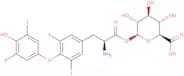
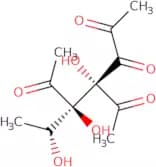
CAS:<p>Thyroxine acyl-b-D-glucuronide is a synthetic, modified thyroxine that has been modified with a saccharide moiety. The saccharide moiety is an oligosaccharide containing glucose, mannose and galactose residues. This product is a sugar with the molecular formula C24H40O14. Thyroxine acyl-b-D-glucuronide is soluble in water and alcohol. It has a molecular weight of 562.5 g/mol and a melting point of 230°C.</p>Fórmula:C21H19I4NO10Pureza:Min. 95%Peso molecular:952.99 g/mol2,4-O-Ethylidene-D-erythrose
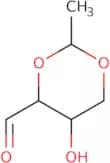
CAS:<p>2,4-O-Ethylidene-D-erythrose is a trimerization product of glyoxal and acetaldehyde. It is an aldehyde that can be used as a precursor to other compounds. The hydrated form of 2,4-O-ethylidene-D-erythrose has been rationalized by the mesoxalic acid and water molecules to form the trimer. This compound can be produced from the glycolaldehyde and sulfoxide in an oxidation reaction with hydrogen peroxide. The acetylation of 2,4-O-ethylidene-D-erythrose produces isoxazolidines which are stereoselective.</p>Fórmula:C6H10O4Pureza:Min. 95%Peso molecular:146.14 g/molGemfibrozil b-D-glucuronide-D6
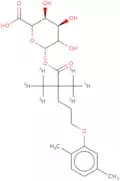
Produto ControladoGemfibrozil b-D-glucuronide-D6 is a methylated, saccharide, Polysaccharide. It is a custom synthesis of the synthetic and fluorinated gemfibrozil b-D-glucuronide. The product is purified by HPLC to >98% purity and supplied as a white powder.Fórmula:C21H24D6O9Pureza:Min. 95%Cor e Forma:White to off-white solid.Peso molecular:432.49 g/molD-Tagatose-6-phosphate barium salt
D-Tagatose-6-phosphate barium salt is a custom synthesis, modification, fluorination, methylation, and monosaccharide. It has CAS No. and is a polysaccharide. D-tagatose-6-phosphate barium salt is a complex carbohydrate with glycosylation and sugar.Pureza:Min. 95%1,2,3-Tri-O-Acetyl-5-deoxy-D-ribose
CAS:<p>1,2,3-Tri-O-acetyl-5-deoxy-D-ribose is an efficient and environmentally benign method for the synthesis of acyclic acetals. The condensation process involves the use of a chloroformate to introduce the carbonyl group into a hydroxyl group on the sugar. This reaction can be carried out in an organic solvent or water as well. The reaction rate is fast due to a high nucleophilicity of the chloride ion. The product can then be converted into an amide by reacting it with ammonia in a basic medium. This reaction results in a high yield and is useful for recycling acetonitrile that would otherwise be released into the environment.</p>Fórmula:C11H16O7Pureza:Min. 95%Peso molecular:260.24 g/molEthyl a-D-thioglucopyranoside
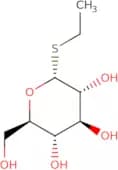
CAS:<p>Ethyl a-D-thioglucopyranoside is an organic compound that is used as a precursor in the synthesis of complex sugars. Ethyl a-D-thioglucopyranoside is an oligosaccharide that contains a methylated and glycosylated sugar. The glycosidic bond in this product can be modified by fluorination to give ethyl 2,3,4,5-tetrafluorothioglucopyranoside.</p>Fórmula:C8H16O5SPureza:Min. 95%Peso molecular:224.28 g/molL-Rhamnal
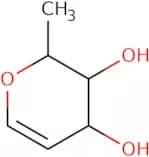
CAS:L-Rhamnal is a sodium sulfide that is used in the synthesis of stereoselective compounds. It has been shown to have anti-leukemic properties and may be useful for the treatment of lymphocytic leukemia. L-Rhamnal has been shown to inhibit tumor growth and metastasis in animal models of cancer, as well as being cytotoxic to human leukemic cells. L-Rhamnal inhibits the proliferation of these cells by blocking DNA synthesis and preventing cell division. The hydroxymethyl group on L-rhamnal interacts with chloride ions to form a salt that can be degraded into hydrogen sulfide gas, which is known to be toxic to some organisms. The chloride ion also reacts with triterpene alcohols, glycosidic bonds, potassium phosphate, or borohydride reduction agents like sodium borohydride or lithium aluminum hydride. These reactions are used in carbohydrate chemistry and aldehydeFórmula:C6H10O3Pureza:Min. 95%Peso molecular:130.14 g/molDipalmitin
CAS:<p>Dipalmitin is a chemical substance that belongs to the group of fatty acid esters. It has been shown to inhibit the activity of a number of enzymes, including proteases and lipases. Dipalmitin also inhibits the production of diacylglycerol and glycerides in cells, which are necessary for cellular growth. The exact mechanism by which dipalmitin inhibits these enzymes is unknown, but it has been hypothesized that it may function as a competitive inhibitor or an allosteric inhibitor. Dipalmitin also has been shown to have antiviral properties against HIV infection in model systems. The antiviral activity has been attributed to its ability to inhibit viral protein synthesis and block the assembly of viral particles at the cell membrane.</p>Fórmula:C35H68O5Pureza:Min. 95%Peso molecular:568.91 g/mol2-Acetyl-5-methoxyphenyl β-D-Glucopyranoside
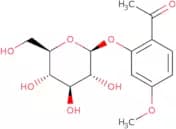
CAS:2-Acetyl-5-methoxyphenyl beta-D-glucopyranoside is a flavonoid that belongs to the group of dihydroquercetin. It can be prepared by liquid chromatography. 2-Acetyl-5-methoxyphenyl beta-D-glucopyranoside inhibits tumor cells in vitro and in vivo, through the inhibition of protein synthesis and DNA replication. In addition, it has been shown to inhibit the growth of leptadenia species with a high degree of selectivity. It also exhibits an antitumor effect on mouse sarcoma 180 cells, as well as on human melanoma cells. This compound binds to macroporous adsorbents such as sephadex and tricusposide, which are used for purification purposes.Fórmula:C15H20O8Pureza:Min. 95%Peso molecular:328.31 g/molSodium L-rhamnonate
CAS:<p>Sodium L-rhamnonate is an organic compound that is a monosaccharide with the molecular formula CHONa. It can be synthesized from D-ribose, which is a pentose sugar, and rhamnose, which is a hexose sugar. Sodium L-rhamnonate has been used in click chemistry to modify oligosaccharides and glycosylate proteins. This compound also has applications in pharmaceuticals and as a food additive.</p>Fórmula:C6H11NaO6Pureza:Min. 95%Peso molecular:202.14 g/molNaloxone 3-β-D-glucuronide
CAS:Produto ControladoPlease enquire for more information about Naloxone 3-β-D-glucuronide including the price, delivery time and more detailed product information at the technical inquiry form on this pageFórmula:C25H29NO10Pureza:Min. 95%Peso molecular:503.51 g/mol4-Epi-daunosamine
CAS:<p>4-Epi-daunosamine is a glycopeptide antibiotic that is used to treat infections caused by Gram-positive bacteria. It binds to the cell wall of these bacteria and inhibits the synthesis of new cell walls. This causes the cells to burst and die, which leads to bacterial death. 4-Epi-daunosamine has been shown to be effective against animal pathogens such as Streptococcus pneumoniae, Haemophilus influenzae, and Clostridium perfringens. 4-Epi-daunosamine also has a low level of toxicity in humans, but can cause adverse effects such as nausea and vomiting if taken in large doses.</p>Fórmula:C6H11NO3Pureza:Min. 95%Peso molecular:145.16 g/mol1,2-Dideoxy-2-fluoronojirimycin
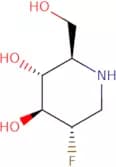
CAS:1,2-Dideoxy-2-fluoronojirimycin is a synthetic alkenyl compound that inhibits the HIV-1 virus by competitively inhibiting the enzyme reverse transcriptase. It has been shown to inhibit the synthesis of viral DNA and RNA. 1,2-Dideoxy-2-fluoronojirimycin is an aralkyl compound with a hydroxyl group at position 1 and a fluorine atom at position 2. It also has sulfinyl groups in positions 3 and 4. The natural product is synthesised from glucose via glycosidase inhibition. This compound has shown potent antiviral activity against HIV-1 strains with high levels of resistance to other compounds such as AZT.Fórmula:C6H12NO3FPureza:Min. 95%Peso molecular:165.16 g/molMethyl 2-deoxy-b-D-ribofuranoside
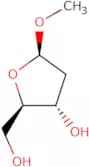
CAS:Methyl 2-deoxy-b-D-ribofuranoside is a methylglucoside that is used in the synthesis of thiourea. Methyl 2-deoxy-b-D-ribofuranoside inhibits the production of an atypical nucleotide, 5'-methylthioadenosine, which is used to synthesize thymine. It has been shown to be catalytic and may play a role in the biosynthesis of methionine and histidine. The chloride ion causes the reaction to proceed via an S N 2 mechanism. Methyl 2-deoxy-b-D-ribofuranoside can also be used in the synthesis of chloroacetic acid, azide, dimethylformamide, fluoride, anomeric alcohols, hydantoins and thionyl chloride. Methyl 2-deoxy-b-D-ribofuranoside can be chromatographically separated using silicaFórmula:C6H12O4Pureza:Min. 95%Peso molecular:148.16 g/molScopoletin b-D-glucuronide
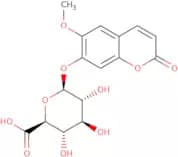
CAS:Scopoletin b-D-glucuronide is a synthetic compound that is modified by the addition of a fluorine atom to the methyl group in scopoletin. Scopoletin b-D-glucuronide has shown antiviral activity against herpes simplex virus type 1 and 2, with an IC50 value of 1.6 μM. It also has antiviral activity against HIV type 1 and HIV type 2, with an IC50 value of 0.5 μM. This compound also inhibits viral DNA synthesis, which may be due to its inhibition of host cell protein synthesis and subsequent inhibition of viral protein synthesis. Scopoletin b-D-glucuronide has been shown to have anti-inflammatory effects in a mouse model for rheumatoid arthritis, and it may be due to its suppression of prostaglandin synthesis or interference with leukocyte chemotaxis.Fórmula:C16H16O10Pureza:Min. 95%Peso molecular:368.29 g/molNaltrexone 3-D-glucuronide-D4
<p>Naltrexone 3-D-glucuronide-D4 is a carbohydrate. It is a glycosylation product of naltrexone. The compound has been synthesized by the methylation of naltrexone and the glycosylation of the resultant product with glucose. Naltrexone 3-D-glucuronide-D4 is a high purity, custom synthesis, synthetic carbohydrate with a CAS number.</p>Pureza:Min. 95%L-Xylose-BSA
L-Xylose-BSA is a glycosylation product that has been modified with methylation, click modification, and fluorination. The compound is a complex carbohydrate that is classified as a polysaccharide. L-Xylose-BSA is a monosaccharide that has been synthesized using the Custom synthesis and high purity techniques. This saccharide is used in various types of research including glycosylation, methylation, click modification, and fluorination. L-Xylose-BSA can also be found under CAS No. 6525-83-8 or EC No. E 1451/1.Pureza:Min. 95%Methyl a-D-mannofuranoside
CAS:Methyl a-D-mannofuranoside is a synthetic sugar that has been modified by the addition of fluorine at C-1 and methylation at C-2. This modification provides the compound with desired physical properties, such as increased stability and solubility. Methyl a-D-mannofuranoside can be used in the synthesis of oligosaccharides, which are complex carbohydrates consisting of three to ten monosaccharides linked together by glycosidic bonds. It is also used for click chemistry modifications.Fórmula:C7H14O6Pureza:Min. 95%Peso molecular:194.18 g/mol5-Deoxy-L-lyxono-1,4-lactone
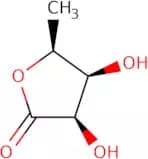
CAS:<p>5-Deoxy-L-lyxono-1,4-lactone is a crystalline solid that belongs to the class of hydroxamic acids. This compound has been shown to react with hydroxylamine in an aldonic reaction and to inhibit the enzyme xanthin oxidase. The monoclinic crystal structure of 5-Deoxy-L-lyxono-1,4-lactone was determined by XRD analysis. This compound is synthesized from glyoxylate and malonitrile in an efficient manner. It also inhibits glucose oxidation and can be used as an additive for food products.</p>Fórmula:C5H8O4Pureza:Min. 95%Peso molecular:132.12 g/mol