Monossacáridos
Monossacarídeos são a forma mais simples de carboidratos e servem como building blocks fundamentais para açúcares mais complexos e polissacarídeos. Essas moléculas de açúcar único desempenham papéis críticos no metabolismo energético, na comunicação celular e nos componentes estruturais das células. Nesta seção, você encontrará uma ampla variedade de monossacarídeos essenciais para pesquisas em bioquímica, biologia molecular e glicociência. Esses compostos são cruciais para estudar vias metabólicas, processos de glicosilação e desenvolvimento de agentes terapêuticos. Na CymitQuimica, oferecemos monossacarídeos de alta qualidade para apoiar suas necessidades de pesquisa, garantindo precisão e confiabilidade em suas investigações científicas.
Subcategorias de "Monossacáridos"
- Aloses(11 produtos)
- Arabinoses(21 produtos)
- Eritroses(11 produtos)
- Frutoses(9 produtos)
- Fucoses(36 produtos)
- Galactosamina(41 produtos)
- Galactoses(261 produtos)
- Glucoses(365 produtos)
- Ácidos Glucurónicos(51 produtos)
- Glico-substratos para enzimas(77 produtos)
- Guloses(6 produtos)
- Idoses(4 produtos)
- Inositóis(15 produtos)
- Lixoses(4 produtos)
- Mannoses(65 produtos)
- O-Glicanos(48 produtos)
- Psicoses(3 produtos)
- Ramnoses(10 produtos)
- Riboses(61 produtos)
- Ácidos siálicos(100 produtos)
- Sorboses(4 produtos)
- Açúcares(173 produtos)
- Tagatoses(4 produtos)
- Taloses(8 produtos)
- Xiloses(20 produtos)
Exibir 17 mais subcategorias
Foram encontrados 6090 produtos de "Monossacáridos"
Ordenar por
Pureza (%)
0
100
|
0
|
50
|
90
|
95
|
100
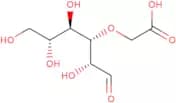
3-O-Carboxymethyl-D-glucose
CAS:3-O-Carboxymethyl-D-glucose (3CMG) is a humectant that can be used to replace glycerol in tobacco. 3CMG has the same chemical formula as D-glucose, but it has a hydroxy group at position 3 instead of 2. This structural difference leads to different properties, such as the ability to form hydrogen bonds with water molecules, which makes it an excellent humectant for use in tobacco products. 3CMG is also used in the food industry as a sugar substitute and sweetener due to its low caloric content and increased sweetness.Fórmula:C8H14O8Pureza:Min. 95%Cor e Forma:White To Off-White SolidPeso molecular:238.19 g/molD-Glucoheptose
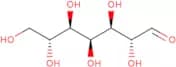
CAS:<p>D-Glucoheptose is a sugar that can be used as an alternative to sucrose in the food industry. It is obtained by hydrolysis of inulin, which is a complex carbohydrate that consists of chains of fructose molecules with terminal d-glucose residues. D-Glucoheptose has been shown to be metabolized by lysine residues, which are present in many proteins and enzymes that are involved in glucose metabolism. D-Glucoheptose also participates in reactions involving chondroitin sulfate and type strain interactions. It has been shown to have a hydroxyl group on the C2 position and methyl glycosides on the C3 position, as well as benzyl groups on the C6 position. The chemical composition of D-glucoheptose can be determined using chromatographic methods or analytical methods.</p>Fórmula:C7H14O7Pureza:Min. 95%Cor e Forma:PowderPeso molecular:210.18 g/molrac-Hesperetin-d3 3’-O-bea-D-glucuronide
<p>Hesperetin-3-O-beta-D-glucuronide is a synthetic derivative of hesperidin that can be used as a metabolite marker for the assessment of drug metabolism in humans. Hesperetin-3-O-beta-D-glucuronide is an oligosaccharide that contains three sugar units: D-galactopyranosyl, D-glucopyranosyl, and D-(+)-lactose. This compound has been shown to inhibit the activity of alpha amylase and alpha glucosidase.</p>Fórmula:C22H19D3O12Pureza:Min. 95%Peso molecular:481.42 g/molFurosemide acyl-b-D-glucuronide
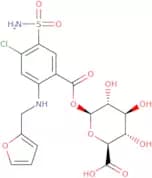
CAS:<p>Furosemide acyl-b-D-glucuronide is a derivative of Furosemide. It is a potent diuretic that has been used in the treatment of hypertension and congestive heart failure. The drug is excreted by the kidney, and its clearance is dependent on urine flow rate. Furosemide acyl-b-D-glucuronide can be detected in human serum and urine samples following oral administration, but its detection in urine may be delayed due to its low solubility. This active form of the drug may also cause drug reactions, such as nausea and vomiting, which are most likely due to the acidic nature of this form. Hydrochloric acid increases the absorption of Furosemide acyl-b-D-glucuronide, so it is recommended to take this medication with an acidic beverage containing hydrochloric acid or food high in pyridinium content. The elimination half life for this active</p>Fórmula:C18H19ClN2O11SPureza:Min. 95%Cor e Forma:Yellow PowderPeso molecular:506.87 g/molFluoxetine D-glucuronide (mixture of isomers)
CAS:Fluoxetine D-glucuronide is a glycosylated, fluorinated, custom-synthesized compound. It is composed of the methyl ester and glucuronide moiety of fluoxetine. The synthesis of this compound starts with the oxidation of fluoxetine to form an aldehyde intermediate. This intermediate is then condensed with chloroacetic acid to form the desired product. Fluoxetine D-glucuronide has shown efficacy in animal models for its ability to inhibit serotonin reuptake and block 5HT2A receptors. This drug is also used as a tracer in positron emission tomography (PET) imaging studies for serotonin transporters.Pureza:Min. 95%2,3,4-Tri-O-acetyl-b-D-xylopyranosyl-Fmoc-L-serine
2,3,4-Tri-O-acetyl-b-D-xylopyranosyl-Fmoc-L-serine is a carbohydrate which is modified by fluorination and methylation. It is a complex carbohydrate that can be custom synthesized to include saccharide or oligosaccharide. 2,3,4-Tri-O-acetyl-b-D-xylopyranosyl Fmoc L serine has CAS No. 1807631–35–0 and molecular weight of 703. It also has high purity and custom synthesis capabilities.Fórmula:C29H31NO12Pureza:Min. 95%Peso molecular:585.56 g/mol4'-O-(b-D-2,3,4,6-Tetra-O-acetyl-glucopyranosyl)-4-nitrophloretin
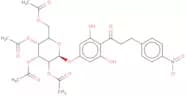
CAS:<p>4'-O-(b-D-2,3,4,6-Tetra-O-acetyl-glucopyranosyl)-4-nitrophloretin is a custom synthesis with Modification. This product was prepared by fluorination and methylation of 4'-O-(b-D-2,3,4,6-tetra-O-[1,2:1,3]triazolium chloride)-4' nitrophloretin. The molecular formula is C21H18N8O12 and molecular weight is 524.32. CAS No. 82628-87-3.</p>Fórmula:C29H31NO15Pureza:Min. 95%Peso molecular:633.55 g/molL-[2-13C]Xylose
CAS:<p>Please enquire for more information about L-[2-13C]Xylose including the price, delivery time and more detailed product information at the technical inquiry form on this page</p>Fórmula:C5H10O5Pureza:Min. 95%Peso molecular:151.12 g/molXylaric acid disodium salt
CAS:<p>Xylaric acid disodium salt is a meso oxidised xylose analogue</p>Fórmula:C5H6Na2O7Pureza:Min. 98 Area-%Cor e Forma:PowderPeso molecular:224.08 g/mol1,2,6-Tri-O-benzyl-2-deoxy-4-O-[phenoxy(thiocarbonyl)]-2-phthalimido-b-D-glucopyranoside
This compound is a modification of a complex carbohydrate, which is a saccharide with one or more sugar molecules. It has been synthesized by custom synthesis and is pure, but not monosaccharide. It has been fluorinated and methylated and glycosylated. The CAS number for this compound isFórmula:C42H37NO8SPureza:Min. 95%Peso molecular:715.81 g/molm-Methoxytopolin-9-glucoside
CAS:<p>M-methoxytopolin-9-glucoside is a synthetic oligosaccharide that has been modified with fluorination and methylation. It is an important intermediate for the synthesis of complex carbohydrates. M-methoxytopolin-9-glucoside can be used in the production of glycosylated polysaccharides, including glycoproteins, proteoglycans, and mucopolysaccharides. This product is offered at a purity level of > 98% and can be used for custom synthesis.</p>Fórmula:C19H23N5O6Pureza:Min. 95%Peso molecular:417.42 g/mol(S)-Propranolol glucuronide
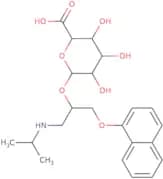
CAS:<p>(S)-Propranolol glucuronide is a custom-synthesized sugar that has been modified with fluorination and methylation. It is also a polysaccharide that has been glycosylated and carbamoylated. This compound is a white crystalline solid that can be used as an intermediate in the synthesis of saccharides, oligosaccharides, and polysaccharides.</p>Fórmula:C22H29NO8Pureza:Min. 95%Peso molecular:435.47 g/mol3,4-Di-O-acetyl-2-O-benzyl-L-rhamnopyranoside
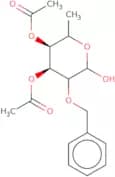
<p>3,4-Di-O-acetyl-2-O-benzyl-L-rhamnopyranoside is a custom synthesized, fluorinated, methylated, monosaccharide that can be used as a synthetic building block for the synthesis of saccharides. This compound has been shown to have a CAS number and is classified as an oligosaccharide. 3,4-Di-O-acetyl-2-O-benzyl-L-rhamnopyranoside is recommended for use in glycosylation reactions. It has been shown to react with other saccharides at the C1 position in the presence of various conditions such as mild alkaline or acid conditions.</p>Fórmula:C17H22O7Pureza:Min. 95%Peso molecular:338.35 g/molAllyl 3-O-benzyl-a-L-rhamnopyranoside
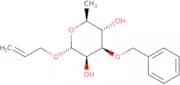
CAS:<p>Allyl 3-O-benzyl-a-L-rhamnopyranoside is an oligosaccharide that is a modification of the disaccharide, allyl 3-O-benzyl-a-D-galactopyranoside. Allyl 3-O-benzyl-a-L-rhamnopyranoside has been synthesized from D-(+)-glucose and L-(+)-rhamnose. The compound has a molecular weight of 756.40 g/mol. It is a white to off white powder that is soluble in water, but insoluble in ethanol at low concentrations. It can be used as a carbohydrate or sugar for research purposes.</p>Fórmula:C16H22O5Pureza:Min. 95%Peso molecular:294.35 g/molMethyl 1-thiolincosaminide
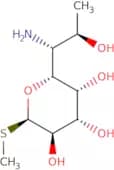
CAS:<p>Intermediate in the production of biosynthetic antibiotics</p>Fórmula:C9H19NO5SPureza:Min. 95%Peso molecular:253.32 g/mol5-Deoxy-1,2-O-isopropylidene-5-[(2R-pyridin-2-yl-pyrrolidine)-1-yl]-a-D-xylofuranose
CAS:<p>5-Deoxy-1,2-O-isopropylidene-5-[(2R-pyridin-2-yl-pyrrolidine)-1-yl]-a-D-xylofuranose is a custom synthesis that has been modified by fluorination, methylation, and monosaccharide addition. This chemical is also known as 5DIPXF.</p>Fórmula:C17H24N2O4Pureza:Min. 95%Peso molecular:320.39 g/molPinitol diacetonide
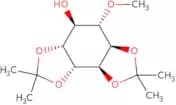
CAS:<p>Pinitol diacetonide is an acceptor substrate for β-galactosidase, a glycosyl hydrolase that catalyzes the hydrolysis of terminal galactose residues from the non-reducing end of certain glycolipids. Pinitol diacetonide has been shown to be enzymatically active in both aerobic and anaerobic conditions. This product can also be used as a substrate for 1,4-β-D-galactosyltransferase, which catalyzes the transfer of D-galactose from 1,4-β-D-glucose to the nonreducing end of certain glycolipids. Pinitol diacetonide is not a suitable substrate for p-nitrophenyl galactosyltransferase, an enzyme that catalyzes the transfer of p-nitrophenol from L -pyranosides to the nonreducing end of certain glycolipids.<br>Pin</p>Fórmula:C13H22O6Pureza:Min. 95%Peso molecular:274.31 g/molOlmesartan N2-glucuronide
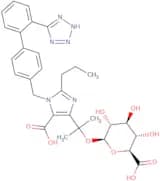
CAS:Olmesartan N2-glucuronide is a methylated metabolite of olmesartan, which is an angiotensin II receptor blocker. Olmesartan glucuronide is a high purity chemical compound with CAS No. 369395-57-3. It can be custom synthesized to order and has been used in glycosylation reactions as a sugar donor or acceptor. This product is also useful for the Click modification of oligosaccharides and polysaccharides, as well as for the modification of saccharides with fluorination and other chemical reactions.Fórmula:C30H34N6O9Pureza:Min. 95%Peso molecular:622.63 g/mol5-Deoxy-L-lyxono-1,4-lactone
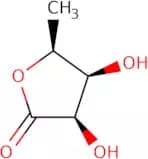
CAS:<p>5-Deoxy-L-lyxono-1,4-lactone is a crystalline solid that belongs to the class of hydroxamic acids. This compound has been shown to react with hydroxylamine in an aldonic reaction and to inhibit the enzyme xanthin oxidase. The monoclinic crystal structure of 5-Deoxy-L-lyxono-1,4-lactone was determined by XRD analysis. This compound is synthesized from glyoxylate and malonitrile in an efficient manner. It also inhibits glucose oxidation and can be used as an additive for food products.</p>Fórmula:C5H8O4Pureza:Min. 95%Peso molecular:132.12 g/mol




![L-[2-13C]Xylose](/_next/image/?url=https%3A%2Fstatic.cymitquimica.com%2Fproducts%2F3D%2Fthumb-webp%2FDUA50663.webp&w=3840&q=75)
![1,2,6-Tri-O-benzyl-2-deoxy-4-O-[phenoxy(thiocarbonyl)]-2-phthalimido-b-D-glucopyranoside](/_next/image/?url=https%3A%2Fstatic.cymitquimica.com%2Fproducts%2F3D%2Fthumb-webp%2FMT07405.webp&w=3840&q=75)
![5-Deoxy-1,2-O-isopropylidene-5-[(2R-pyridin-2-yl-pyrrolidine)-1-yl]-a-D-xylofuranose](/_next/image/?url=https%3A%2Fstatic.cymitquimica.com%2Fproducts%2F3D%2Fthumb-webp%2FMD07487.webp&w=3840&q=75)