Monossacáridos
Monossacarídeos são a forma mais simples de carboidratos e servem como building blocks fundamentais para açúcares mais complexos e polissacarídeos. Essas moléculas de açúcar único desempenham papéis críticos no metabolismo energético, na comunicação celular e nos componentes estruturais das células. Nesta seção, você encontrará uma ampla variedade de monossacarídeos essenciais para pesquisas em bioquímica, biologia molecular e glicociência. Esses compostos são cruciais para estudar vias metabólicas, processos de glicosilação e desenvolvimento de agentes terapêuticos. Na CymitQuimica, oferecemos monossacarídeos de alta qualidade para apoiar suas necessidades de pesquisa, garantindo precisão e confiabilidade em suas investigações científicas.
Subcategorias de "Monossacáridos"
- Aloses(11 produtos)
- Arabinoses(21 produtos)
- Eritroses(11 produtos)
- Frutoses(9 produtos)
- Fucoses(36 produtos)
- Galactosamina(41 produtos)
- Galactoses(261 produtos)
- Glucoses(365 produtos)
- Ácidos Glucurónicos(51 produtos)
- Glico-substratos para enzimas(77 produtos)
- Guloses(6 produtos)
- Idoses(4 produtos)
- Inositóis(15 produtos)
- Lixoses(4 produtos)
- Mannoses(65 produtos)
- O-Glicanos(48 produtos)
- Psicoses(3 produtos)
- Ramnoses(10 produtos)
- Riboses(61 produtos)
- Ácidos siálicos(100 produtos)
- Sorboses(4 produtos)
- Açúcares(173 produtos)
- Tagatoses(4 produtos)
- Taloses(8 produtos)
- Xiloses(20 produtos)
Exibir 17 mais subcategorias
Foram encontrados 6090 produtos de "Monossacáridos"
Ordenar por
Pureza (%)
0
100
|
0
|
50
|
90
|
95
|
100
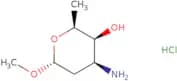
Methyl α-L-daunosamide hydrochloride
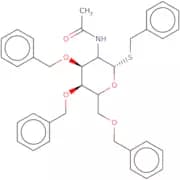
CAS:<p>Methyl α-L-daunosamide hydrochloride is a drug that inhibits the production of DNA. It is used to treat infectious diseases such as malaria, in which it can inhibit the growth of the parasite by preventing DNA replication and transcription. The methyl α-L-daunosamide hydrochloride molecule is a polymerase chain inhibitor that binds to the enzyme adriamycin synthetase, which catalyzes the conversion of daunosamine into adriamycin. This binding prevents the formation of stable complexes with the target enzymes and blocks their activity, leading to inhibition of DNA synthesis and transcription. Methyl α-L-daunosamide hydrochloride has been shown to inhibit glycan biosynthesis in rat liver microsomes and does not have significant interactions with other drugs or with glycan in human serum.</p>Fórmula:C7H15NO3•HClPureza:Min. 85 Area-%Cor e Forma:PowderPeso molecular:197.66 g/mol2-Acetamido-1,3,4,6-tetra-O-benzyl-2-deoxy-β-D-thioglucopyranose
<p>2-Acetamido-1,3,4,6-tetra-O-benzyl-2-deoxy-b-D-thioglucopyranose is a modification of the natural molecule glucose. It is an Oligosaccharide with a complex carbohydrate structure. The molecule has been custom synthesized and is synthesized to be of high purity. It has CAS No.: 52268-42-9. 2-Acetamido-1,3,4,6-tetra-O-benzyl-2-deoxyglucopyranose is a Monosaccharide that can be methylated and glycosylated to form Polysaccharides. This molecule can be used as a sugar in food products or as a Fluorination agent for other molecules.</p>Fórmula:C36H39NO5SPureza:Min. 95%Peso molecular:597.76 g/mol6-O-Malonylgenistin, free acid
CAS:<p>Genistin is an isoflavone found in soybeans and other plants. It has antioxidative properties, which may be due to its ability to scavenge free radicals. Genistin also has protein-binding activity, and it can inhibit the growth of certain insects by binding to their DNA. Genistin can also bind to a number of enzymes and affect their activities, including amylase, chymotrypsin, trypsin, and lipase. It is also involved in energy metabolism and protein synthesis. The physiological effects of genistin are not well understood but may be related to its ability to act as a phytoestrogen or mimic estrogen.</p>Fórmula:C24H22O13Pureza:Min. 95%Cor e Forma:Slightly Brown PowderPeso molecular:518.42 g/molN-Methyl-D-glucamine HCl
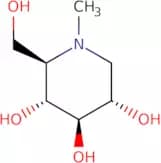
CAS:N-Methyl-D-glucamine HCl is a salt of N-methylglucamine and hydrochloric acid. It is used as a buffer to maintain the pH of solutions at a desired level. N-Methyl-D-glucamine HCl has an inhibition constant (Ki) of 0.5 mM for glutamate, which can be used to measure the concentration of glutamate in tissue samples or reaction mixtures. This compound also inhibits locomotor activity, and its effect on blood pressure may be due to its ability to inhibit amines. The Ki for chloride is approximately 2 mM, and it can be used to measure the concentration of chloride in solution.Fórmula:C7H17NO5·HClCor e Forma:PowderPeso molecular:231.67 g/molN-Methyldeoxynojirimycin
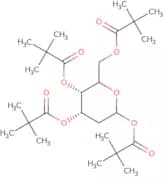
CAS:<p>N-Methyldeoxynojirimycin is a monoclonal antibody that is a competitive inhibitor of the melanoma antigen gp75. It is also an inhibitor of oligosaccharide synthesis and has been shown to have anti-inflammatory properties. N-Methyldeoxynojirimycin binds to the golgi alpha-mannosidases, preventing them from processing high-mannose type oligosaccharides. This leads to decreased chemoattractant protein production by neutrophils, which are important in the inflammatory process. N-Methyldeoxynojirimycin has also been shown to inhibit myocardial infarct size and glomerular filtration rate in rats, as well as increase biochemical markers for inflammation, such as α subunit of α1 acid glycoprotein and basic fibroblast growth factor.</p>Fórmula:C7H15NO4Pureza:Min. 95%Cor e Forma:White PowderPeso molecular:177.2 g/mol2-Deoxy-1,3,4,6-tetra-O-pivaloyl-D-glucopyranose
<p>2-Deoxy-1,3,4,6-tetra-O-pivaloyl-D-glucopyranose is a glycosylation sugar that belongs to the category of complex carbohydrates. It is a methylated sugar that can be fluorinated or modified with other saccharides. This product can be custom synthesized and has high purity.</p>Fórmula:C26H44O9Pureza:Min. 95%Peso molecular:500.64 g/mol2-Acetamido-2,6-dideoxy-D-galactose
CAS:<p>2-Acetamido-2,6-dideoxy-D-galactose (2ADG) is a structural analogue of the natural monosaccharide 2,6-dideoxy-D-galactose. It has been shown to have an antimicrobial effect against aerobacter aerogenes in vitro. 2ADG is metabolized by glycosidases and methyl glycosides to form 1,4-anhydro-2,3,4,6 tetraacetamido-2,4,6 dideoxy D galactose. This compound inhibits the growth of bacterial strains that are resistant to polymyxin b., such as Pseudomonas aeruginosa. The inhibition of these bacteria is due to the inhibition of the synthesis of their outer membrane lipopolysaccharides by 2ADG. The antibacterial activity is also attributed to its ability to inhibit the metabolism of glycan molecules in some bacteria</p>Fórmula:C8H15NO5Pureza:Min. 95%Cor e Forma:White PowderPeso molecular:205.21 g/mol2,3,5-Tri-O-benzyl-b-D-xylofuranose
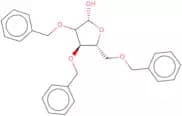
CAS:<p>2,3,5-Tri-O-benzyl-b-D-xylofuranose is a synthetic carbohydrate with a complex structure. It is an oligosaccharide that has been modified by methylation and glycosylation. It has a molecular weight of 582.16 g/mol and the CAS number is 1174234-12-8.</p>Fórmula:C26H28O5Pureza:Min. 95%Cor e Forma:PowderPeso molecular:420.5 g/molD-Glucosamine-2-N,3-O-disulphate disodium salt
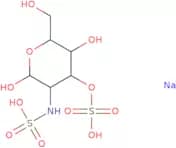
CAS:<p>D-Glucosamine-2-N,3-O-disulphate disodium salt is a carbohydrate that is a modification of the saccharide D-glucosamine. It can be synthesized by modification and fluorination of the saccharide. The complex carbohydrate is a methylated glycosylated oligosaccharide that is custom synthesized and has high purity. This product contains no detectable impurities, such as other sugars or amino acids. This carbohydrate also undergoes methylation and glycosylation to provide stability to the molecule in the presence of water or heat.</p>Fórmula:C6H11NO11S2Na2Pureza:Min. 95%Cor e Forma:White PowderPeso molecular:383.25 g/molβ-D-Glucose pentaacetate
CAS:<p>1,2,3,4,6-Penta-O-acetyl-b-D-glucopyranose, also known as beta-D-glucose pentaacetate, has high chemical stability and long shelf life. This protected form of glucose is a key building block of any chemical synthesis of glucose-containing oligosaccharides or glycoconjugates. In the presence of Lewis acids it can be used as a glycosyl donor to make simple glycosides. In order to perform more complex glycosylations, it can be converted into more reactive donors, such as glycosyl halides or thioglycosides. Beta-D-glucose pentaacetate is also used as a food additive and flavouring agent.</p>Fórmula:C16H22O11Peso molecular:390.35 g/molRef: 3D-G-3000
1kgA consultar5kgA consultar10kgA consultar500gA consultar2500gA consultar-Unit-kgkgA consultar2-Azido-2-deoxy-L-glucopyranose
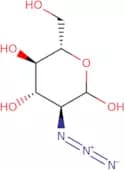
<p>2-Azido-2-deoxy-L-glucopyranose is a Custom synthesis, modification and fluorination of methylated glucopyranosides. This compound has been shown to be effective in the synthesis of mono-, oligo-, and polysaccharides. 2-Azido-2-deoxy-L-glucopyranose is used for the preparation of glycosylation reagents. It can also be used to modify saccharide chains with azide or alkyne functionalities. 2-Azido-2-deoxy-L-glucopyranose is an important building block for the synthesis of complex carbohydrates, such as polysaccharides, glycosylation reagents, and click chemistry compounds.</p>Fórmula:C6H11N3O5Pureza:Min. 95%Cor e Forma:White to off-white solid.Peso molecular:205.17 g/mol6-Deoxy-D-glucose
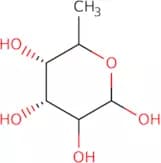
CAS:<p>Homomorph used to study the biological role of 6 hydroxyl group of glucose</p>Fórmula:C6H12O5Pureza:Min. 98 Area-%Cor e Forma:White PowderPeso molecular:164.16 g/molDiethoxy phosphonyl 4,7,8,9-tetra-O-acetyl-N-acetyl-D-neuraminic acid methyl ester
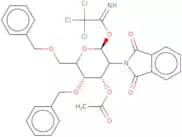
<p>Diethoxy phosphonyl 4,7,8,9-tetra-O-acetyl-N-acetyl-D-neuraminic acid methyl ester is a glycosylation agent that is used in the synthesis of complex carbohydrates. It is a methylated derivative of 4,7,8,9 tetra-O-acetyl neuraminic acid and can be used to modify the polysaccharide structure. This product has been shown to react with saccharides and oligosaccharides in a click reaction to produce fluorinated derivatives. Diethoxy phosphonyl 4,7,8,9 tetra-O-acetyl neuraminic acid methyl ester is also available as a custom synthesis.</p>Fórmula:C24H39NO19P2Pureza:Min. 95%Peso molecular:707.51 g/mol4-O-Acetyl-3,6-di-O-benzyl-2-deoxy-2-phthalimido-b-D-glucopyranosyl trichloroacetimidate
CAS:<p>4-O-Acetyl-3,6-di-O-benzyl-2-deoxy-2-phthalimido-b-D-glucopyranosyl trichloroacetimidate is a methylated saccharide that can be obtained through the Click modification of an oligosaccharide. It is a custom synthesis that has been modified with fluorination. This product is available in high purity and has been glycosylated. It is also a synthetic carbohydrate with a complex structure.</p>Fórmula:C32H29Cl3N2O8Pureza:Min. 95%Peso molecular:675.94 g/molD-Xylose
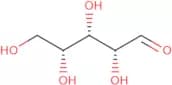
CAS:<p>Xylose (Xyl) is an aldopentose also known as wood sugar (Collins, 2006). The main sources of xylose are hemicelluloses found in hardwood and perennial plants, such as, grasses, cereals, and herbs (Petzold-Welcke, 2014) and some algae. Xylose is used in the production of xylitol, a low calory sugar substitute. Xylose is used in glycosaminoglycan (GAG) biosynthesis, which is initiated by peptide O-xylosyltransferases, which transfer xylose onto selected serine residues in the core proteins. The first enzyme in the pathway, peptide O-xylosyltransferase, catalyzes the transfer of xylose from uridine diphosphate (UDP)-α-D-xylose onto serine and thus determines the site(s) of GAG attachment on the core protein (Briggs, 2018).</p>Fórmula:C5H10O5Pureza:Min. 98.0 Area-%Cor e Forma:White PowderPeso molecular:150.13 g/molMethyl a-L-fucopyranoside
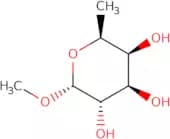
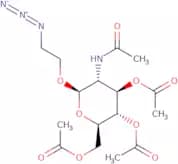
CAS:<p>Methyl a-L-fucopyranoside is a natural product that has been shown to have many biological effects, including antioxidant and anti-inflammatory properties. It has been shown to inhibit the growth of bacteria by binding to the ribosome, preventing protein synthesis and cell division. The compound has also been shown to have anti-inflammatory effects in mice with inflammatory bowel disease. Methyl a-L-fucopyranoside inhibits the production of pro-inflammatory cytokines, such as interferon alfa-2b (IFNα2β), which is induced by IFNγ. This inhibition of IFNα2β activity may be due to methyl a-L-fucopyranoside's ability to bind to cytosolic calcium and inhibit its transport into the nucleus. Methyl a-L-fucopyranoside also blocks the production of antimicrobial peptides, such as defensins or cathelicidins.</p>Fórmula:C7H14O5Pureza:Min. 98 Area-%Cor e Forma:White PowderPeso molecular:178.18 g/mol2-Azidoethyl 2-acetamido-3,4,6-tri-O-acetyl-2-deoxy-β-D-glucopyranoside
CAS:<p>The 2-azidoethyl 2-acetamido-3,4,6-tri-O-acetyl-2-deoxy-b-D-glucopyranoside is a custom synthesis in a high purity that can be methylated and modified for glycosylation. It is an azide sugar with the CAS number 142072-11-5. The product can be used for saccharide and polysaccharides modifications or click chemistry. This product is also available for custom synthesis.</p>Fórmula:C16H24N4O9Pureza:Min. 95%Peso molecular:416.38 g/molXylitol
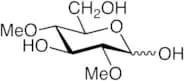
CAS:<p>Xylitol is a sugar alcohol that has been shown to have antimicrobial properties. It is also used as a sweetener in chewing gum and toothpaste. Xylitol inhibits the growth of bacteria by binding to the enzyme adenosine triphosphate (ATP) synthase, which is required for energy metabolism. The binding of xylitol to ATP synthase prevents the formation of ATP and blocks bacterial growth, leading to cell death. Xylitol can be produced from xylose, a sugar found in plants and animals, through biochemical reactions that are catalyzed by enzymes such as xylitol dehydrogenase and xylulokinase. This process is anaerobic and does not require oxygen or organic nutrients. Xylitol has been shown to have physiological effects on wild-type strain bacteria such as Aerobacter aerogenes.</p>Fórmula:C5H12O5Pureza:Min. 95%Cor e Forma:White PowderPeso molecular:152.15 g/mol2,4-Di-O-methyl-D-glucose
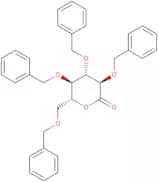
CAS:<p>2,4-Di-O-methyl-D-glucose is a partially O-methylated glucose sugar.</p>Fórmula:C8H16O6Pureza:Min. 95%Cor e Forma:PowderPeso molecular:208.21 g/mol2,3,4,6-Tetra-O-benzyl-D-glucono-1,5-lactone
CAS:<p>Intermediate in the synthesis of tofogliflozin</p>Fórmula:C34H34O6Pureza:Min. 95%Cor e Forma:PowderPeso molecular:538.63 g/mol