Aminoácidos (AA)
Os aminoácidos (AAs) são os building blocks fundamentais das proteínas, desempenhando um papel crucial em vários processos biológicos. Estes compostos orgânicos são essenciais para a síntese de proteínas, vias metabólicas e sinalização celular. Nesta categoria, encontrará uma gama abrangente de aminoácidos, incluindo formas essenciais, não essenciais e modificadas, que são vitais para a pesquisa em bioquímica, biologia molecular e ciências nutricionais. Na CymitQuimica, fornecemos aminoácidos de alta qualidade para apoiar as suas necessidades de pesquisa e desenvolvimento, garantindo precisão e fiabilidade nos seus resultados experimentais.
Subcategorias de "Aminoácidos (AA)"
- Derivados de Aminoácidos(3.957 produtos)
- Compostos Aminoácidos e Compostos Relacionados com Aminoácidos(3.472 produtos)
- Aminoácidos com Oxigénio ou Enxofre(168 produtos)
- Boc- Aminoácidos(351 produtos)
- Aminoácidos com Grupos Protectores(1.710 produtos)
Foram encontrados 38265 produtos de "Aminoácidos (AA)"
Ordenar por
Pureza (%)
0
100
|
0
|
50
|
90
|
95
|
100
8-methyl-4-(3,4,5-trimethoxybenzoyl)-1-oxa-4,8-diazaspiro[4.5]decane-3-carboxylic acid
CAS:Pureza:95.0%Peso molecular:394.424011230468755-Carboxy-2-methylphenylboronic Acid
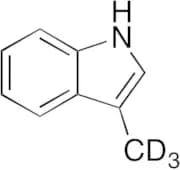
CAS:Produto Controlado<p>Applications 5-Carboxy-2-methylphenylboronic Acid acts as a reagent in the synthesis of pyrazolopyridinone-based p38 MAP kinase inhibitor<br>References Milburn, R. R., et al.: Org. Process Res. Dev., 15, 31 (2011); Achmatowicz, M., et al.: J. Org. Chem., 74, 795 (2009)<br></p>Fórmula:C8H9BO4Cor e Forma:NeatPeso molecular:179.973-Methyl-d3-indole
CAS:Produto Controlado<p>Applications 3-Methyl-d3-indole has been used to prove that bioactivation of the pulmonary toxin 3-methylindole requires methyl carbon-hydrogen bond breakage in mice. 3-Methyl-d3-indole is the labeled analogue of 3-Methylindole (M313470), A naturally abundant pneumotoxin, found primarily in mammalian feces providing its strong fecal odor.<br> Not a dangerous good if item is equal to or less than 1g/ml and there is less than 100g/ml in the package<br>References Huijzer, J., et. al.: Toxicol. Appl. Pharm., 90, 60 (1987); Nakashima, T., et al.: Biol. Pharm. Bull., 32, 832 (2009); Xu, H., et al.: Chem. Pharm. Bull., 57, 321 (2009); Bodoor, K., et al.: J. Med. Chem., 52, 3753 (2009); Naskar, S., et al.: J. Chem. Res., 3, 174 (2009); Sollner, K., et al.: J. Agric. Food Chem., 57, 4319 (2009)<br></p>Fórmula:C92H3H6NCor e Forma:NeatPeso molecular:134.193-[(TERT-BUTOXY)CARBONYL]-3-AZABICYCLO[3.3.1]NONANE-9-CARBOXYLIC ACID
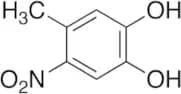
CAS:Pureza:95.0%Peso molecular:269.341003417968754-Methyl-5-nitrocatechol
CAS:Produto Controlado<p>Applications MNC is on the metabolic pathway for 2,4-Dinitotoluene degradation.<br>References Spangoord, R.J., et al.: App. and Environ. Microbiology, 57, 11, 3200 (1991)<br></p>Fórmula:C7H7NO4Cor e Forma:NeatPeso molecular:169.133-(1,2,4-Triazol-1-yl)-L-alanine
CAS:Produto Controlado<p>Applications A metabolite common to all triazole fungicides: free triazole, 1,2,4-triazole (T), and its 2 conjugates: triazolylalanine (TA) and triazolylacetic acid (TAA).<br>References Hrudey, S., et al.: Water Sci. Technol., 20, 55 (1988), Froese, K., et al.: Water Res., 33, 1355 (1999), Hengel, M., et al.: J. Agric. Food Chem., 50, 3412 (2002),<br></p>Fórmula:C5H8N4O2Cor e Forma:NeatPeso molecular:156.145-Methoxyresorcinol
CAS:<p>Applications 5-Methoxyresorcinol (cas# 2174-64-3) is a useful research chemical.<br></p>Fórmula:C7H8O3Cor e Forma:NeatPeso molecular:140.137D-Lysine hydrochloride
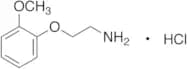
CAS:Produto Controlado<p>Applications D-Lysine, HCl<br></p>Fórmula:C6H14N2O2·ClHCor e Forma:NeatPeso molecular:182.6492-(2-Methoxyphenoxy)ethylamine Hydrochloride
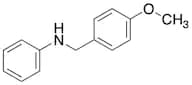
CAS:<p>Impurity Carvedilol EP Impurity E; Carvedilol Impurity E; Carvedilol USP E<br>Applications 2-(2-Methoxyphenoxy)ethylamine Hydrochloride (Carvedilol EP Impurity E; Carvedilol Impurity E; Carvedilol USP E) is an impurity of Carvedilol synthesis.<br>References Smith, L., et al.: J. Med. Chem., 20, 1653 (1977),<br></p>Fórmula:C9H13NO2·ClHCor e Forma:NeatPeso molecular:203.67N-Phenyl-4-methoxybenzylamine
CAS:Produto Controlado<p>Applications N-PHENYL-4-METHOXYBENZYLAMINE (cas# 3526-43-0) is a useful research chemical.<br></p>Fórmula:C14H15NOCor e Forma:NeatPeso molecular:213.2752,2'-Dithiobis[N-methyl-benzamide]
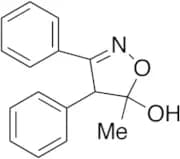
CAS:<p>Applications Benzamide, 2,2'-dithiobis[N-methyl- (cas# 2527-58-4) is a useful research chemical.<br> Not a dangerous good if item is equal to or less than 1g/ml and there is less than 100g/ml in the package<br></p>Fórmula:C16H16N2O2S2Cor e Forma:Light Yellow To Light BeigePeso molecular:332.444,5-Dihydro-5-methyl-3,4-diphenyl-5-isoxazolol
CAS:Produto Controlado<p>Applications 4,5-Dihydro-5-methyl-3,4-diphenyl-5-isoxazolol is an intermediate for the preparation of Valdecoxib.<br></p>Fórmula:C16H15NO2Cor e Forma:NeatPeso molecular:253.30Potassium 4-Hydroxy-4-methylpentanoate
CAS:Produto Controlado<p>Applications potassium 4-hydroxy-4-methylpentanoate (cas# 1607261-66-4) is a useful research chemical.<br></p>Fórmula:C6H11O3•KCor e Forma:NeatPeso molecular:170.24Ref: 10-F624742
1gA consultar5gA consultar10gA consultar100mgA consultar250mgA consultar500mgA consultarRef: 10-F978951
1gA consultar5mgA consultar10mgA consultar50mgA consultar100mgA consultar250mgA consultarN-Methylformanilide
CAS:Produto Controlado<p>Applications N-Methylformanilide is an aromatic reagent used in the synthesis of dye-sensitized solar cells. Also used in the synthesis of potent tyrosinase inhibitors.<br>References Meyer, T et al.: J. Org. Chem., 77, 3704 (2012); Nihei, K. et al.: Bioorg. Med. Chem. Lett., 14, 681 (2004);<br></p>Fórmula:C8H9NOCor e Forma:NeatPeso molecular:135.164-Chloro-2-methylaniline
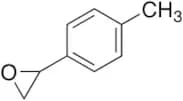
CAS:Produto Controlado<p>Stability Air Sensitive<br>Applications 4-Chloro-2-methylaniline<br> Not a dangerous good if item is equal to or less than 1g/ml and there is less than 100g/ml in the package<br></p>Fórmula:C7H8ClNCor e Forma:Light BrownPeso molecular:141.602-(4-methylphenyl)oxirane
CAS:Produto Controlado<p>Applications 2-(4-methylphenyl)oxirane (cas# 13107-39-6) is a useful research chemical.<br></p>Fórmula:C9H10OCor e Forma:ColourlessPeso molecular:134.172,2,2-Trifluoroacetic acid compound with 2-(8-azabicyclo[3.2.1]Octan-3-yl)acetic acid (1:1)
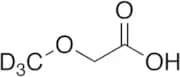
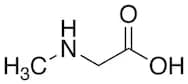
CAS:Pureza:98%Peso molecular:283.247009277343752-Methoxyacetic Acid-d3
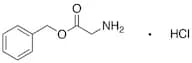
CAS:Produto Controlado<p>Applications: Isotope labelled analogue of 2-Methoxyacetic Acid, a synthetic intermediate in the synthesis of dimethyl(alkyloxy)[(methylsulfonyl)phenyl]furanones as COX-2 inhibitors.<br>Dangerous Goods Info: Not a dangerous good if item is equal to or less than 1g/ml and there is less than 100g/ml in the package<br>References Leblanc, Y., et al.: Bioorg. Med. Chem. Lett., 9, 2207 (1999);<br></p>Fórmula:C32H3H3O3Cor e Forma:NeatPeso molecular:93.10Glycine Benzyl Ester Hydrochloride
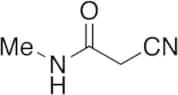
CAS:Produto Controlado<p>Applications Potent crosslinking inhibitors.<br>References Sloan, J., et al.: J. Biol. Chem., 274, 23740 (1999).<br></p>Fórmula:C9H11NO2·ClHCor e Forma:Off-WhitePeso molecular:201.652-Cyano-N-methylacetamide
CAS:Produto Controlado<p>Applications 2-Cyano-N-methylacetamide is used in the synthesis of pyridone compounds and benzimidazoles, for various pharmaceutical application.<br>References Mijin, D. et al.: Synth. Comm., 36, 193 (2006); Grimmett, M. et al.: Sci. Synth., 12, 529 (2002); Aggarwal, V. et al.: Synth. 3, 214 (1982);<br></p>Fórmula:C4H6N2OCor e Forma:NeatPeso molecular:98.15'-O-[Bis(4-methoxyphenyl)phenylmethyl]-N-(2-methyl-1-oxopropyl)-guanosine
CAS:Produto Controlado<p>Applications 5'-O-[Bis(4-methoxyphenyl)phenylmethyl]-N-(2-methyl-1-oxopropyl)-guanosine is used to prepare ppGpp analogs as inhibitors of RelA from Gram-negative/-positive bacteria. It is also used to synthesize guanosine 5'-conjugates as initiator molecules for transcription priming.<br>References Wexselblatt, E., et al.: Bioorg. Med. Chem., 18, 4485 (2010); Wolf, J., et al.:Org. Biomol. Chem., 6, 899 (2008)<br></p>Fórmula:C35H37N5O8Cor e Forma:NeatPeso molecular:655.697L-Citrulline-d6
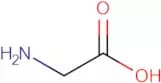
CAS:Produto Controlado<p>Applications Labelled L-Citrulline. An amino acid, first isolated from the juice of watermelon, Citrullus vulgaris Schrad., Cucurbitaceae. Used in the treatment of asthenia.<br>References Kurtz, et al.: J. Biol. Chem., 122, 477 (1938), Rajantie, J., et al.: J. Pediatr., 97, 927 (1980), Carpenter, T.O., et al.: N. Engl. J. Med., 312, 290 (1985),<br></p>Fórmula:C62H6H7N3O3Cor e Forma:NeatPeso molecular:181.22H-Gly-OH
CAS:<p>M03001 - H-Gly-OH</p>Fórmula:C2H5NO2Pureza:98%Cor e Forma:Solid, White crystallinePeso molecular:75.067N-Cinnamylglycine
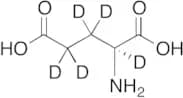
CAS:<p>Applications N-Cinnamylglycine is a derivative of ferulic acid (F308900), a widely distributed compound in plants that is used as an antioxidant and food preservative.<br>References Jellum,E., et al.: J. Pharma. Biomed. Anal., 9, 663 (1991); Kayahara, H., et al.: Anticancer. Res., 19, 3763 (1999); Bollina, V., et al.: Plant. Molec. Biol., 77, 355 (2011);<br></p>Fórmula:C11H11NO3Cor e Forma:NeatPeso molecular:205.21L-Glutamic Acid-d5
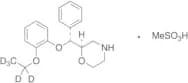
CAS:Produto Controlado<p>Applications L-Glutamic Acid-d5 is an non-essential amino acid. Its salt form (glutamate) is an important neurotransmitter that plays a key role in long-term potentiation and is important for learning and memory. It is also a key molecule in cellular metabolism.<br>References McEntee, W., et al.: Psychopharmacology, 111, 391 (1993), Manev, H., et al.: Mol. Pharmacol., 36, 106 (1989)<br></p>Fórmula:C52H5H4NO4Cor e Forma:NeatPeso molecular:152.16Reboxetine-d5 Mesylate
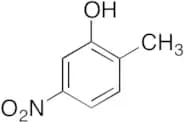
CAS:Produto ControladoFórmula:C20H22D5NO6SCor e Forma:Off White SolidPeso molecular:414.532-Methyl-5-nitrophenol
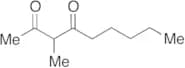
CAS:Produto Controlado<p>Applications 2-Methyl-5-nitrophenol is used as a reactant in the preparation of pyranocarbazole alkaloids.<br>References Zang, Yingda, et al.: Euro. J. of Med. Chem., 143, 438-448 (2018)<br></p>Fórmula:C7H7NO3Cor e Forma:NeatPeso molecular:153.143-Methylnonane-2,4-dione (>80%)
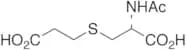
CAS:Produto Controlado<p>Applications 3-Methylnonane-2,4-dione is a compound that possesses a butter-like and beany off flavour that is a result of flavour reversion of soya-bean oil. 3-Methylnonane-2,4-dione is also present in Japanese green tea and pressure-cooked hen meat.<br>References Farkaš, P., et al.: Food Chem., 60, 617 (1997); Guth, H. & Grosch, W.: Flav. Chem., No vol. given, 377 (1999); Kumazawa, K. & Masuda, H.: J. Agr. Food Chem., 47, 5169 (1999)<br></p>Fórmula:C10H18O2Pureza:>80%Cor e Forma:NeatPeso molecular:170.25N-Acetyl-S-(2-carboxyethyl)-L-cysteine Bis(dicyclohexylamine) Salt
CAS:<p>Applications A metabolite of S-propylcysteine.<br>References Jones, A.R., et al.: Xenobiotica, 10, 827 (1980), 25) Ramu, K., et al.: Chem. Res. Toxicol., 8, 515 (1995), Krause, R., et al.: Drug Metab. Dispos., 25, 1013 (1997), Powley, M., et al.: Chem. Res. Toxicol., 16, 1448 (2003),<br></p>Fórmula:C12H23N·C8H13NO5SCor e Forma:NeatPeso molecular:597.89L-Histidinol Dihydrochloride
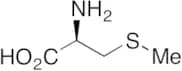
CAS:Produto ControladoFórmula:C6H11N3O·2ClHCor e Forma:NeatPeso molecular:214.09S-Methyl-L-cysteine
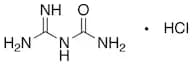
CAS:Produto Controlado<p>Applications S-Methyl-L-cysteine is a substrate in the catalytic antioxidant system mediated by methionine sulfoxide reductase A (MSRA). It has been studied as a theurapeutic for neurodegenerative diseases including Parkinson′s.<br>References Wassef, R., et al.: J. Neurosci., 21, 12808 (2007)<br></p>Fórmula:C4H9NO2SCor e Forma:NeatPeso molecular:135.19Carbamoyl-guanidine Amidino Urea
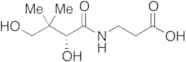
CAS:Produto Controlado<p>Applications Carbamoyl-guanidine Amidino Urea Salt, Hydrochloride salt (cas# 926-72-7) is a compound useful in organic synthesis.<br></p>Fórmula:C2H6N4O·ClHCor e Forma:NeatPeso molecular:138.56Pantothenic Acid (Technical Grade, Contains Lactone)
CAS:Produto Controlado<p>Stability Hygroscopic<br>Applications Pantothenic Acid is a member of the B complex vitamins; essential vitamin for the biosynthesis of coenzyme A in mammalian cells. Occurs ubiquitously in all animal and plant tissue. The richest common source is liver, but jelly of the queen bee contains 6 times as much as liver. Rice bran and molasses are other good sources.<br>References Gardner, P., et al.: Food Chem., 68, 471 (2000); Ou, B., et al.: J. Agric. Food Chem., 50, 2772 (2002); Bahorun, T., et al.: J. Sci. Food Agric., 84, 1553 (2004)<br></p>Fórmula:C9H17NO5Cor e Forma:NeatPeso molecular:219.24L-Isoleucine
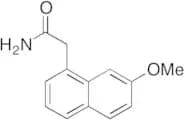
CAS:<p>Applications L-Isoleucine is classified as an essential amino acid, and is also a tumour promoter of bladder cancer in rats.<br>References Hatch, T., et al.: Infect. Immun., 12, 211 (1975); Nishio, Y., et al.: Science, 231, 843 (1986)<br></p>Fórmula:C6H13NO2Cor e Forma:White To Off-WhitePeso molecular:131.177-Methoxy-1-naphthaleneacetamide
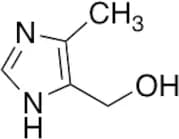
CAS:Produto Controlado<p>Applications 7-Methoxy-1-naphthaleneacetamide, can be used for the synthesis of the analogs of Melatonin (M215000), containing naphthalene moiety instead of indole nucleus, having high affinity for the melatonin receptor. Agomelatine Impurity 6<br>References Tang, J. D., et al.: Org. Prep. Proc. Int., 41, 164 (2009); Sndrieux Y. J., et al.: J. Med. Chem., 35, 1484 (1992);<br></p>Fórmula:C13H13NO2Cor e Forma:NeatPeso molecular:215.254-Hydroxymethyl-5-methylimidazole
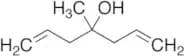
CAS:Produto Controlado<p>Applications 4-Hydroxymethyl-5-methylimidazole (cas# 29636-87-1) is a useful research chemical.<br></p>Fórmula:C5H8N2OCor e Forma:NeatPeso molecular:112.134-Hydroxy-4-methylhepta-1,6-diene
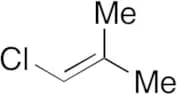
CAS:Produto Controlado<p>Applications 4-Hydroxy-4-methylhepta-1,6-diene is a compound useful in organic synthesis.<br>References Ji, X., et al.: Xiangliao Xiangjing Huazhuangpin, 4, 6 (2011)<br></p>Fórmula:C8H14OCor e Forma:NeatPeso molecular:126.201-Chloro-2-methylpropene
CAS:Produto Controlado<p>Stability Volatile<br>Applications 1-Chloro-2-methylpropene is a reagent in the synthesis of pyrrolyl and indolyl diketo acids and esters as nucleotide-competitive non-nucleoside inhibitors of terminal deoxynucleotidyl transferase.<br> Not a dangerous good if item is equal to or less than 1g/ml and there is less than 100g/ml in the package<br>References Costi, R., et al.: J. Med. Chem., 56, 7431 (2013);<br></p>Fórmula:C4H7ClCor e Forma:NeatPeso molecular:90.55DL-Pipecolic Acid
CAS:<p>Applications Pipecolic acid is involved in synaptic transmission in the central nervous system.<br>References Nomura Y., et al.: Neurochem. Res., 6, 391 (1981),<br></p>Fórmula:C6H11NO2Cor e Forma:White To Off-WhitePeso molecular:129.16Caerulein (>85%)
CAS:Produto Controlado<p>Applications Caerulein is a ten amino acid oligopeptide that stimulates smooth muscle and increases digestive secretions. It is similar in action and composition to cholecystokinin. It stimulates gastric, biliary, and pancreatic secretion; and certain smooth muscle. It is used in paralytic ileus and as diagnostic aid in pancreatic malfunction. It is used to induce pancreatitis in experimental animal models.<br>References Anastasi,E., et al.: Ep., 23, 699 (1997); De Caro, G., et al.: Br. J. Pharmac Chemother., 33, 48 (1968)<br></p>Fórmula:C58H73N13O21S2Pureza:~90%Cor e Forma:Off-WhitePeso molecular:1352.404-(naphthalene-1-carbonyl)-8-propyl-1-oxa-4,8-diazaspiro[4.5]decane-3-carboxylic acid
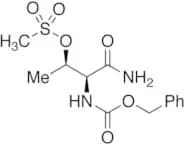
CAS:Pureza:95.0%Peso molecular:382.4599914550781N-Benzyloxycarbonyl L-Threonine Amide O-Methanesulfonate
CAS:Produto Controlado<p>Applications N-Benzyloxycarbonyl L-Threonine Amide O-Methanesulfonate (cas# 80082-51-5) is a compound useful in organic synthesis.<br></p>Fórmula:C13H18N2O6SCor e Forma:NeatPeso molecular:330.36L-Homocysteine Thiolactone Hydrochloride
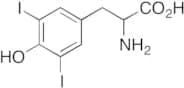
CAS:Produto Controlado<p>Applications L-Homocysteine Thiolactone Hydrochloride is used to prepare substituted homocysteine analogs as inhibitors of peptidylglycine α-amidating monooxygenase. It is also used to synthesize (mercaptoacyl)alanylprolines as metalloprotease inhibitors.<br>References Erion, M., et al.: J. Med. Chem., 37, 4430 (1994); Slusarchyk, W., et al.: Bioorg. Med. Chem. Lett., 5, 753 (1995)<br></p>Fórmula:C4H8ClNOSCor e Forma:NeatPeso molecular:153.633,5-Diiodo-DL-tyrosine
CAS:Produto Controlado<p>Applications 3,5-Diiodo-DL-tyrosine is used for diagnosis of hypothyroidism caused by DEHAL1 gene defects.<br>References Encinas, S., et al.: Chem. Res. Toxicol., 11, 946 (1998), Daneshvar, A., et al.: Chemosphere, 80, 301 (2010), Eriksson, J., et al.: Photochem. Photobiol., 86, 528 (2010),<br></p>Fórmula:C9H9I2NO3Cor e Forma:NeatPeso molecular:432.98
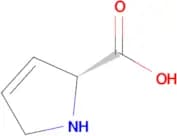

![8-methyl-4-(3,4,5-trimethoxybenzoyl)-1-oxa-4,8-diazaspiro[4.5]decane-3-carboxylic acid](/_next/image/?url=https%3A%2Fstatic.cymitquimica.com%2Fproducts%2F10%2Fthumb-webp%2FF525628.webp&w=3840&q=75)


![3-[(TERT-BUTOXY)CARBONYL]-3-AZABICYCLO[3.3.1]NONANE-9-CARBOXYLIC ACID](/_next/image/?url=https%3A%2Fstatic.cymitquimica.com%2Fproducts%2F10%2Fthumb-webp%2FF502801.webp&w=3840&q=75)


![2,2'-Dithiobis[N-methyl-benzamide]](/_next/image/?url=https%3A%2Fstatic.cymitquimica.com%2Fproducts%2FTR%2Fthumb-webp%2FB184508.webp&w=3840&q=75)




![2,2,2-Trifluoroacetic acid compound with 2-(8-azabicyclo[3.2.1]Octan-3-yl)acetic acid (1:1)](/_next/image/?url=https%3A%2Fstatic.cymitquimica.com%2Fproducts%2F10%2Fthumb-webp%2FF771892.webp&w=3840&q=75)
![5'-O-[Bis(4-methoxyphenyl)phenylmethyl]-N-(2-methyl-1-oxopropyl)-guanosine](/_next/image/?url=https%3A%2Fstatic.cymitquimica.com%2Fproducts%2FTR%2Fthumb-webp%2FB415160.webp&w=3840&q=75)







![4-(naphthalene-1-carbonyl)-8-propyl-1-oxa-4,8-diazaspiro[4.5]decane-3-carboxylic acid](/_next/image/?url=https%3A%2Fstatic.cymitquimica.com%2Fproducts%2F10%2Fthumb-webp%2FF525732.webp&w=3840&q=75)