Peptídeos
Os peptídeos são cadeias curtas de aminoácidos ligados por ligações peptídicas, desempenhando papéis importantes como moléculas biológicas em processos celulares. Eles funcionam como hormônios, neurotransmissores e moléculas de sinalização, sendo amplamente utilizados em aplicações terapêuticas e diagnósticas. Os peptídeos também são cruciais na pesquisa para estudar interações proteicas, atividades enzimáticas e vias de sinalização celular. Na CymitQuimica, oferecemos uma ampla seleção de peptídeos de alta qualidade para apoiar suas necessidades de pesquisa e desenvolvimento em biotecnologia e farmacêutica.
Subcategorias de "Peptídeos"
Foram encontrados 30159 produtos de "Peptídeos"
Ordenar por
Pureza (%)
0
100
|
0
|
50
|
90
|
95
|
100
C1ORF75 Blocking Peptide
<p>A synthetic peptide for use as a blocking control in assays to test for specificity of C1orf75 antibody, catalog no. 70R-6574</p>SFRS12 Blocking Peptide
<p>A synthetic peptide for use as a blocking control in assays to test for specificity of SFRS12 antibody, catalog no. 70R-4438</p>Pureza:Min. 95%Amyloid Beta-Protein (Human, 34-40) Antiserum
<p>This product is an antiserum targeting amino acids 34-40 of the amyloid beta-protein which is a key component of extracellular plaques found in the brains of patients with Alzheimer’s disease (AD). It may also be involved in the pathogenesis of other neurodegenerative diseases such as Huntington’s disease and Parkinson’s disease. Targeting this protein may be key to drug discovery and the treatment of AD and other diseases this protein is associated with. Furthermore amyloid beta peptides located in the cerebrospinal fluid are well known biomarkers used to diagnose AD. Although AD is not yet curable, an early diagnosis can be useful in that patients can be treated to delay or improve symptoms.</p>Pureza:Min. 95%Dipeptidyl-Peptidase IV, human, recombinant
<p>Dipeptidyl-peptidase IV (DPP4) is a complex enzyme that is expressed in the pancreas and regulates glucose-dependent insulinotropic polypeptides. DPP4 cleaves the amino terminal dipeptide from these polypeptides, which prevents the activation of pancreatic β-cells. The recombinant human form of this enzyme has been shown to activate T cells and induce apoptosis in insect cells. Its activity against chemokines in vitro may be due to its ability to cleave glycosylated polypeptides. This enzyme also has anti-inflammatory effects by inhibiting the production of proinflammatory cytokines such as tumor necrosis factor α (TNFα), interleukin 1β (IL1β), and IL6.</p>Pureza:Min. 95%SPDP-dPEG®36-Acid
CAS:<p>SPDP-dPEG®36-Acid is a PEG compound with two different functional groups (also known as heterobifunctional). Unlike homobifunctional PEG compounds (same functional group on both ends), this type of compounds are more versatile as have two different anchor points. SPDP-dPEG®36-Acid is used as a linker and spacer to add a PEG moiety, via pegylation (a bioconjugation technique) to proteins, peptides, oligonucleotides, small molecules and nanoparticles.</p>Fórmula:C83H158N2O39S2Pureza:Min. 95%Peso molecular:1,872.26 g/molDBCO-dPEG®12-Carboxyfluorescein
<p>DBCO-dPEG®12-Carboxyfluorescein is a PEG compound containing a fluorescein dye used for tagging biomolecules, and serving as fluorescent probe for bioimaging applications.</p>Pureza:Min. 95%Peso molecular:1,234.34 g/molRNASEH2A Blocking Peptide
<p>A synthetic peptide for use as a blocking control in assays to test for specificity of RNASEH2A antibody, catalog no. 70R-1626</p>Pureza:Min. 95%AMC
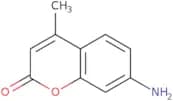
CAS:<p>AMC is a peptide that acts as an activator of the nicotinic acetylcholine receptor. AMC is a high-purity, ion channel ligand with a CAS No. 26093-31-2. It is used in life science research to study cell biology and pharmacology. AMC has been shown to be an inhibitor of the enzyme acetylcholinesterase (AChE) in rat brain slices and it has been reported that it can inhibit the proliferation of human leukemia cells.END></p>Fórmula:C10H9NO2Pureza:Min. 95%Peso molecular:175.18 g/molCA2 Blocking Peptide
<p>A synthetic peptide for use as a blocking control in assays to test for specificity of CA2 antibody, catalog no. 70R-9978</p>Pureza:Min. 95%ZFP589 Blocking Peptide
<p>A synthetic peptide for use as a blocking control in assays to test for specificity of ZFP589 antibody, catalog no. 20R-1179</p>Pureza:Min. 95%SFPQ Blocking Peptide
<p>A synthetic peptide for use as a blocking control in assays to test for specificity of SFPQ antibody, catalog no. 70R-1422</p>Pureza:Min. 95%Peptide YY (canine, mouse, porcine, rat)
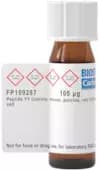
CAS:<p>Peptide YY (PYY) is a peptide hormone that inhibits gastric emptying and increases intestinal transit time. This peptide can be given as an intubation, perfusion, or intravenous infusion to increase the absorption of nutrients. It also has the potential to reduce body weight in obese people. PYY is a potent activator of protein synthesis and it has been shown to stimulate lipolysis in adipocytes. PYY is found in the ileum and colon, where it may have its effects on appetite suppression and regulation of gastrointestinal motility.</p>Fórmula:C190H288N54O57Pureza:Min. 95%Cor e Forma:PowderPeso molecular:4,240.65 g/molRef: 3D-FP109287
Produto descontinuadoAc-Lys-Thr-Lys-Gln-Leu-Arg-AMC
<p>Ac-Lys-Thr-Lys-Gln-Leu-Arg-AMC is a peptide that is used as a research tool in the study of protein interactions. Ac-Lys-Thr-Lys-Gln-Leu-Arg-AMC binds to the acetylcholine receptor (AChR) at the interface between two subunits, which inhibits the formation of ion channels and blocks neurotransmission. This peptide has been shown to be a potent inhibitor of AChR activation by nicotinic agonists, such as acetylcholine (ACh), nicotine, and carbachol. Acetylcholine binding to AChRs induces conformational changes in the receptor that are transmitted across the synapse to activate postsynaptic receptors on muscle cells. Acetylcholine binding triggers an allosteric change in the AChR that results in increased permeability of ion channels, leading to depolarization of</p>Fórmula:C45H73N13O11Pureza:Min. 95%Peso molecular:972.14 g/molGAPDH Blocking Peptide
<p>The GAPDH Blocking Peptide is a powerful tool used in Life Sciences research. It is a ligase that acts as a blocking peptide for glyceraldehyde-3-phosphate dehydrogenase (GAPDH). This peptide specifically inhibits the activity of GAPDH, an essential enzyme involved in glycolysis and other cellular processes. By blocking the function of GAPDH, researchers can study the impact of its inhibition on various cellular pathways and processes. The GAPDH Blocking Peptide is widely used in biochemical and molecular biology studies, providing valuable insights into the role of this enzyme in cellular functions. With its high quality and effectiveness, this peptide is a valuable addition to any research project in the field of Life Sciences.</p>Pureza:Min. 95%MPEG1 Blocking Peptide
<p>A synthetic peptide for use as a blocking control in assays to test for specificity of MPEG1 antibody, catalog no. 70R-3787</p>Pureza:Min. 95%FBN1 Blocking Peptide
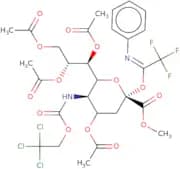
<p>A synthetic peptide for use as a blocking control in assays to test for specificity of FBN1 antibody, catalog no. 70R-8232</p>Pureza:Min. 95%4,7,8,9-Ac4-Neu5Troc(2→O)-O-C(CF3)=NPh Methyl Ester
CAS:<p>4,7,8,9-Ac4-Neu5Troc(2→O)-O-C(CF3)=NPh Methyl Ester is a glycosylated peptide that is conjugated with an acetate ester. This compound is a member of the Acetyl Neu5Ac family of glycoconjugates that are found on the surface of cells and are involved in cell-cell interactions and immune responses. 4,7,8,9-Ac4-Neu5Troc(2→O)-O-C(CF3)=NPh Methyl Ester has been shown to inhibit bacterial growth by interfering with the synthesis of bacterial cell walls.</p>Fórmula:C29H32N2O14Cl3F3Pureza:Min. 95%Peso molecular:795.92 g/molSuc-Ala-Glu-AMC
<p>Suc-Ala-Glu-AMC is a synthetic molecule that is used as a research tool to study protein interactions, ion channels, and other cell biology. Suc-Ala-Glu-AMC binds to specific receptors and activates them. This compound can also be used to isolate ligand/receptor complexes. Suc-Ala-Glu-AMC is a high purity compound with an analytical purity of 98%. It has been shown in pharmacological studies to inhibit the activity of peptides such as vasopressin and oxytocin at the receptor level.</p>Fórmula:C22H25N3O9Pureza:Min. 95%Peso molecular:475.45 g/molCTDSP2 Blocking Peptide
<p>A synthetic peptide for use as a blocking control in assays to test for specificity of CTDSP2 antibody, catalog no. 70R-3514</p>Pureza:Min. 95%SARS-CoV-2 Spike RBD 395-430 peptide
<p>SARS-CoV-2 Spike RBD 395-430 peptide is an epitope of interest of the SARS-CoV-2 Spike S glycoprotein Receptor-Binding Domain (RBD). SARS-CoV-2 Spike RBD 395-430 peptide is useful for vaccine development and for structure-activity relationship studies<br>SARS-CoV-2 Spike (S) glycoprotein<br>Spike (S) glycoprotein corresponds to one of the leading targets for COVID-19 disease. Present on the surface of Sars-CoV-2 virus, Spike S protein is a class I fusion protein that allows the virus to enter host cells.<br>With a 1 273 aa length, Spike protein has 2 subunits : S1 contains the receptor-binding domain RBD and S2 induces the fusion of the viral envelop with the cellular membrane.<br>SARS-CoV-2 Spike RBD:<br>The receptor-binding domain in SARS-CoV-2 Spike protein allows binding to the Angiotensin-Converting Enzyme receptor 2 (ACE2 receptor) which mediates the viral entry.<br>SB-PEPTIDE also offers SARS-CoV-2 Spike RBD 395-430 (Biotin-LC) peptide</p>Human IgG3 (hinge) Heavy Tryptic Peptide Standard (4nmol)
<p>Human IgG3 (hinge) heavy tryptic peptide standard for use in protein identification and quantitation studies. Human IgG3 is one of the four subclasses of IgG and it induces complement-mediated cellular lysis. Its hinge region is extended and is made up of 62 amino acids.</p>Pureza:Min. 95%MAL dPEG®6-Acid
CAS:<p>MAL dPEG®6-Acid is a PEG compound with two different functional groups (also known as heterobifunctional). Unlike homobifunctional PEG compounds (same functional group on both ends), this type of compounds are more versatile as have two different anchor points. MAL dPEG®6-Acid is used as a linker and spacer to add a PEG moiety, via pegylation (a bioconjugation technique) to proteins, peptides, oligonucleotides, small molecules and nanoparticles.</p>Fórmula:C22H36N2O11Pureza:Min. 95%Peso molecular:504.53 g/molKisspeptin-10 (Rat) / Metastin (Rat, 43-52)
CAS:Produto Controlado<p>Kisspeptin-10 (Rat) / Metastin (Rat, 43-52) is a Research Tool that belongs to the group of Activators and Ligands. It is an agonist for G protein coupled receptor 54 (GPR54). Kisspeptin-10 (Rat) / Metastin (Rat, 43-52) has been shown to inhibit ion channels and act as a potent inhibitor of phosphoinositide 3-kinase. This compound has high purity and can be used in pharmacological research.</p>Fórmula:C63H83N17O15Pureza:Min. 95%Peso molecular:1,318.4 g/molIL 1 α Human
<p>IL-1α is a cytokine protein that has been shown to be involved in the immune system. IL-1α is an activator of the receptor and is also a ligand for it. The protein has been shown to activate ion channels, which are proteins that allow ions to pass through either by diffusion or by facilitated transport. This activation causes cells to produce more hydrogen ions, which leads to an increase in the acidity of the cell. IL-1α has also been shown to inhibit cell proliferation and induce apoptosis.</p>Pureza:Min. 95%Cysteine
<p>Cysteine peptide (Ac RFAAKAA COOH) is used in combination with Lysinepeptide (Ac RFAACAA COOH) in the Direct Peptide Reactivity Assay (DPRA) test.<br>Direct Peptide Reactivity Assay is used in cosmetic applications for the characterization of the skin sensitizing potential of a substance, framed by OECD Guideline no 442.<br>The molecular initiating event (MIE) in skin sensitization is a binding between epidermal proteins and the sensitizing chemical substance. MIE is part of the adverse outcome pathway (AOP) of skin sensitization.<br>It is thanks to the properties of Lysine peptide and Cysteine peptide that the chemical binding will be able to take place, so these synthetic heptapeptides will mimic the reaction of a skin exposed to a substance.<br>Binding between nucleophilic proteins and electrophile substance will be measured by High Performance Liquid Chromatography (HPLC). Therefore, the decrease in Lysine peptide and Cysteine peptide levels will be a sign of sensitizing event. Depending on the rate of depletion, the sensitizing character of a molecule will be determined (see table at the bottom of the page).<br>In chemico DPRA test also has wider applications such as hazard classification in cosmetics, but also for pharmaceuticals and biocides. It is a good alternative to animal experimentation.</p>Fórmula:C32H50O9N10S1Peso molecular:750.87 g/molAmino-dPEG® Acid
CAS:<p>Amino-dPEG® Acid is a PEG compound with two different functional groups (also known as heterobifunctional). Unlike homobifunctional PEG compounds (same functional group on both ends), this type of compounds are more versatile as have two different anchor points. Amino-dPEG® Acid is used as a linker and spacer to add a PEG moiety, via pegylation (a bioconjugation technique) to proteins, peptides, oligonucleotides, small molecules and nanoparticles.</p>Pureza:Min. 95%Peso molecular:441.51 g/molGlucagon-like Peptide 2 (Human)
CAS:<p>Glucagon-like peptide 2 (GLP-2) is a protein hormone that belongs to the glucagon family of peptides. GLP-2 has been shown to activate ion channels and regulate the movement of ions across cell membranes, which is important for many physiological processes. GLP-2 also has an inhibitory effect on the release of insulin from beta cells in pancreatic islets. It has been shown to improve glucose tolerance in animal models of Type 2 diabetes by stimulating the production and secretion of insulin from beta cells in pancreatic islets. Additionally, GLP-2 can bind to a receptor on the surface of certain types of immune cells called T lymphocytes and stimulate them to produce cytokines that promote growth and development of other immune cells. Glucagon-like Peptide 2 (Human) is a research tool used in studies involving protein interactions, ligand binding, pharmacology, cell biology, or antibody production. This product is highly purified with a purity</p>Fórmula:C165H254N44O55SPureza:Min. 95%Peso molecular:3,766.1 g/molAngiotensin II (3-8), human
<p>Custom research peptide; min purity 95%.</p>Fórmula:C40H54N8O8Pureza:Min. 95%Peso molecular:774.93 g/molRef: 3D-PA16905
Produto descontinuadoUrinary Trypsin Inhibitor-Ulinastatin Human
<p>Urinary Trypsin Inhibitor-Ulinastatin Human is a protein that is found in human urine. This protein was originally identified as an autoantigen in patients with the tripartite syndrome, which consists of nephrotic syndrome, skin lesions and lymphocytic infiltration. The protein is also found to be involved in the development of type 1 diabetes and other autoimmune disorders. Urinary Trypsin Inhibitor-Ulinastatin Human may be a ribonucleoprotein or a proteinase inhibitor. It has been shown to inhibit trypsin activity on Escherichia coli cells.</p>Pureza:Min. 95%FBXO31 Blocking Peptide
<p>A synthetic peptide for use as a blocking control in assays to test for specificity of FBXO31 antibody, catalog no. 70R-2500</p>Pureza:Min. 95%LL-37, Antimicrobial Peptide, human
<p>Catalogue peptide; min. 95% purity</p>Fórmula:C205H340N60O53Peso molecular:4,493.37 g/molHead activator
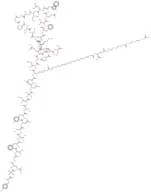
<p>Catalogue peptide; min. 95% purity</p>Fórmula:C54H84N12O14Peso molecular:1,125.36 g/mol[Tyr52] PTH (52-84) (human)
<p>Catalogue peptide; min. 95% purity</p>Fórmula:C158H262N44O56Peso molecular:3,674.02 g/molbeta II probe
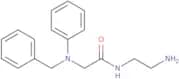
<p>Catalogue peptide; min. 95% purity</p>Fórmula:C94H150N26O31SPeso molecular:2,172.46 g/molN-(2-Amino-ethyl)-2-(benzyl-phenyl-amino)-acetamide
CAS:<p>Please enquire for more information about N-(2-Amino-ethyl)-2-(benzyl-phenyl-amino)-acetamide including the price, delivery time and more detailed product information at the technical inquiry form on this page</p>Fórmula:C17H21N3OPureza:Min. 95%Cor e Forma:White PowderPeso molecular:283.37 g/molRef: 3D-FA111189
Produto descontinuadoDefensin (human) HNP-2
<p>Catalogue peptide; min. 95% purity</p>Fórmula:C147H217N43O37S6Peso molecular:3,370.94 g/molCJC-1295
CAS:<p>CJC-1295 is a synthetic peptide, which is an analogue of growth hormone-releasing hormone (GHRH). It is synthesized through recombinant DNA technology, which allows for precise control over its sequence and length. This particular peptide is designed to bind to GHRH receptors in the pituitary gland. By activating these receptors, CJC-1295 stimulates the release of growth hormone (GH) into the bloodstream.The primary function of CJC-1295 is to influence the endocrine system, particularly enhancing the release of endogenous growth hormone. It achieves this by increasing the amplitude and frequency of GH pulses without affecting the natural negative feedback mechanisms that regulate GH production. This mode of action distinguishes CJC-1295 from other growth hormone therapies, as it promotes a more physiological pattern of hormone secretion.CJC-1295 is used in various scientific contexts, primarily in research focusing on growth hormone deficiencies, muscle wasting conditions, and certain metabolic disorders. Its ability to increase GH release also makes it a subject of interest in studies related to aging, tissue repair, and regeneration. The longer half-life of CJC-1295 compared to natural GHRH peptides further enhances its applications in research, allowing for more sustained and controlled experimentation.</p>Pureza:Min. 95%Ref: 3D-FC138107
Produto descontinuadoAmyloid Dan Protein (1-34) (reduced)
<p>Catalogue peptide; min. 95% purity</p>Fórmula:C185H270N48O51S2Peso molecular:4,046.63 g/molTirzepatide acetate
CAS:<p>Cymit Quimica provides this product solely for uses within the scope of any statute or law providing for an immunity, exemption, or exception to patent infringement (“Exempted Uses”), including but not limited to 35 U.S.C. § 271(e)(1) in the United States, the Bolar type exemption in Europe, and any corresponding exception to patent infringement in any other country. It is the sole responsibility of the purchaser or user of this product, and the purchaser or user of this product agrees to engage only in such Exempted Uses, and to comply with all applicable intellectual property laws and/or regulations. The purchaser of this product agrees to indemnify Cymit Quimica against all claims in connection with the performance of the respective commercial agreement (e.g. supply agreement) and possible infringements of intellectual property rights.</p>Pureza:Min. 95%[Des-Pro2] Bradykinin
<p>Catalogue peptide; min. 95% purity</p>Fórmula:C45H66N14O10Peso molecular:963.12 g/molSeglitide acetate
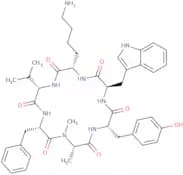
CAS:Produto Controlado<p>Seglitide is a cyclic peptide that is a model system for the receptor activity of somatostatin. Somatostatin inhibits cells by binding to its receptors, which are found on the surface of endocrine cells and in the hypothalamus. Seglitide has been shown to inhibit cell growth in tissue culture and is a potent inhibitor of epidermal growth factor (EGF) production. Seglitide also activates locomotor activity in mice, suggesting that it may have some clinical relevance. Structural analysis has revealed that seglitide's amino acid sequence is similar to somatostatin's, making them closely related compounds. It also binds to DNA-dependent RNA polymerase, preventing transcription and replication.</p>Fórmula:C44H56N8O7·C2H4O2Pureza:Min. 95%Peso molecular:869.02 g/molH-Asp-Ala-OH
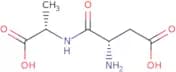
CAS:<p>Adriamycin is an anticancer drug that is a structural analogue of aspartic acid. It can be synthesized in a solid-phase synthesis using a polymeric resin with an acidic functional group, such as H-Asp-Ala-OH. Adriamycin inhibits the production of inflammatory cytokines and prostaglandins, which are involved in the development of inflammatory diseases. Adriamycin has been shown to have anti-inflammatory effects on human serum and to inhibit the production of proteins important for tumor cell proliferation. Adriamycin also has anti-inflammatory properties due to its ability to bind with hydrogen bonds to acidic residues on proteins.<br>END></p>Fórmula:C7H12N2O5Pureza:Min. 98 Area-%Cor e Forma:PowderPeso molecular:204.18 g/molRef: 3D-FA107993
Produto descontinuadoGSK3 Peptide Substrate
<p>Catalogue peptide; min. 95% purity</p>Fórmula:C470H76N16O16Peso molecular:1,121.23 g/molBiotin-Intermedin (rat)
<p>Catalogue peptide; min. 95% purity</p>Fórmula:C236H377N77O66S3Peso molecular:5,445.29 g/mol[D-Tyr6, beta-Ala11, beta-Phe13, Nle14]-Bombesin
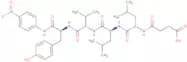
<p>Catalogue peptide; min. 95% purity</p>Fórmula:C81H115N23O18Peso molecular:1,698.98 g/molSuc-Leu-Leu-Val-Tyr-pNA
CAS:<p>Please enquire for more information about Suc-Leu-Leu-Val-Tyr-pNA including the price, delivery time and more detailed product information at the technical inquiry form on this page</p>Fórmula:C36H50N6O10Pureza:Min. 95%Peso molecular:726.82 g/molRef: 3D-FS110818
Produto descontinuadoLaminin Penta Peptide, amide
<p>Catalogue peptide; min. 95% purity</p>Fórmula:C26H43N9O7Peso molecular:593.7 g/molAmyloid beta-Protein (33-42)
<p>Catalogue peptide; min. 95% purity</p>Fórmula:C41H74N10O11SPeso molecular:915.17 g/molbeta-Amyloid Protein Precursor 770 (135-155)
<p>Catalogue peptide; min. 95% purity</p>Fórmula:C116H173N35O31S2Peso molecular:2,617.95 g/molRef: 3D-VAC-00391
Produto descontinuadoMyelin Oligodendrocyte Glycoprotein (35-55) (mouse, rat) trifluoroacetate
CAS:<p>Myelin oligodendrocyte glycoprotein (MOG) is a myelin protein found in the central nervous system. MOG is a ligand for CD200, which is an inhibitory receptor expressed by astrocytes. It has been shown that MOG can induce the proliferation and differentiation of primary cultures of rat astrocytes in vitro. MOG induces the production of reactive oxygen species in mitochondria and increases the expression of acid-binding protein, which are both important factors in the demyelination process. MOG has also been implicated as a potential factor in the development of multiple sclerosis. Further research into this protein may lead to new treatments or cures for disorders such as encephalomyelitis, nervous system diseases, or even cancer.</p>Fórmula:C118H177N35O29S•C2HO2F3Pureza:Min. 95%Cor e Forma:PowderPeso molecular:2,695.98 g/molRef: 3D-FM109206
Produto descontinuadoVesicular Stomatitis Virus Nucleoprotein (52-59) trifluoroacetate salt
CAS:<p>Please enquire for more information about Vesicular Stomatitis Virus Nucleoprotein (52-59) trifluoroacetate salt including the price, delivery time and more detailed product information at the technical inquiry form on this page</p>Fórmula:C44H66N12O12Pureza:Min. 95%Peso molecular:955.07 g/molRef: 3D-FV110198
Produto descontinuadoA-A-A-Y-G-G-F-L
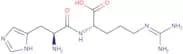
<p>Catalogue peptide; min. 95% purity</p>Fórmula:C37H52N8O10Peso molecular:768.87 g/molH-His-Arg-OH
CAS:<p>H-His-Arg-OH is a synthetic peptide that has been shown to have cytotoxic effects on mammalian cells. The H-His-Arg-OH peptide can be used for the treatment of heart disease and autoimmune diseases, such as rheumatoid arthritis. This peptide has been found to be resistant to congestive heart failure, which is caused by a number of factors, including hypertension and valvular stenosis. It has also been shown to have an immunoglobulin G1 (IgG1) genotype.</p>Fórmula:C12H21N7O3Pureza:Min. 95%Peso molecular:311.34 g/molRef: 3D-FH108062
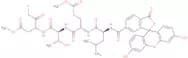
Produto descontinuadoFluorescein-6-carbonyl-Leu-Glu(OMe)-Thr-DL-Asp(OMe)-fluoromethylketone
CAS:<p>Please enquire for more information about Fluorescein-6-carbonyl-Leu-Glu(OMe)-Thr-DL-Asp(OMe)-fluoromethylketone including the price, delivery time and more detailed product information at the technical inquiry form on this page</p>Fórmula:C43H47FN4O15Pureza:Min. 95%Peso molecular:878.85 g/molRef: 3D-FF111108
Produto descontinuadoCarassin (Carrassius Auratus)
<p>Catalogue peptide; min. 95% purity</p>Fórmula:C103H175N35O27SPeso molecular:2,367.83 g/mol















![[Tyr52] PTH (52-84) (human)](/_next/image/?url=https%3A%2Fstatic.cymitquimica.com%2Fproducts%2F3D%2Fthumb-webp%2FVAC-00889.webp&w=3840&q=75)






![[Des-Pro2] Bradykinin](/_next/image/?url=https%3A%2Fstatic.cymitquimica.com%2Fproducts%2F3D%2Fthumb-webp%2FVAC-00674.webp&w=3840&q=75)


![[D-Tyr6, beta-Ala11, beta-Phe13, Nle14]-Bombesin](/_next/image/?url=https%3A%2Fstatic.cymitquimica.com%2Fproducts%2F3D%2Fthumb-webp%2FVAC-00196.webp&w=3840&q=75)