Peptídeos
Subcategorias de "Peptídeos"
Foram encontrados 29707 produtos de "Peptídeos"
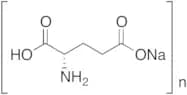
γ-Polyglutamic Acid Sodium Salt (Technical Grade)
CAS:Produto ControladoStability Hygroscopic
Applications gamma-Polyglutamic acid - sodium salt (cas# 25513-46-6) is a useful research chemical.Fórmula:(C5H8NNaO4)nCor e Forma:NeatPeso molecular:NAKollisolv PEG 300
CAS:Produto ControladoApplications Kollisolv PEG 300 is used as a thickening agent and gel binder in the pharmaceutical industry.
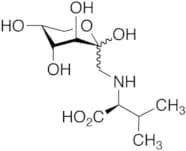
Fórmula:H2O(C2H4O)nCor e Forma:ColourlessPeso molecular:62.07Fructose Valine (mixture of diastereomers)
CAS:Produto ControladoApplications An Amadori compound having the potential to alter cellular adhesion, inhibit cancer metastasis and induce apoptosis.
References Horiuchi, T., et al.: Agric. Biol. Chem., 55, 333 (1991), Sosnovsky, G., et al.: J. Pharm. Sci., 82, 649 (1993), Glinsky, G., et al.: Cancer Res., 56, 5319 (1996),Fórmula:C11H21NO7Cor e Forma:Off-White To Dark BrownPeso molecular:279.29Biotin NHS
CAS:Produto ControladoStability Moisture Sensitive
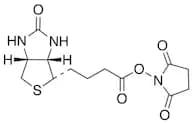
Applications Amino reactive biotin reagent for preparing biotinylated surfaces or polypeptides.
References Ngo, T.T., et al.: Applied Biochem. Biotech, 7, 443 (1982), Wojchowski, D.M., et al.: J. Immunol. Methods, 90, 173 (1986);Fórmula:C14H19N3O5SCor e Forma:NeatPeso molecular:341.38Ethyl Cyano(hydroxyimino)acetate
CAS:Produto ControladoApplications Ethyl Cyano(hydroxyimino)acetate is used in peptide synthesis and has shown to suppress racemiztion, has high coupling efficiency in both solution and solid phase synthesis and is a non-explosive alternative to 1-hydroxybenzotriazole (HOBt) and 1-hydroxy-7-azabenzotriazole (HOAt).
References Khattab, S.N.: Bull. Chem. Soc. Jpn., 83, 1374 (2010)Fórmula:C5H6N2O3Cor e Forma:NeatPeso molecular:142.11L-Carnosine
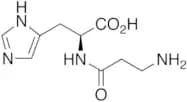
CAS:Produto ControladoApplications L-Carnosine is a naturally-occurring histidine-containing compound and the biological role of this dipeptide is to act as cytosolic buffering agents. Other roles ascribed to L-Carnosine include actions as neurotransmitters, modulation of enzymic activities and chelation of heavy metals.
References Quinn, P.J., et al.: Mol. Aspects. Med., 13, 379 (1992); Aruoma, O.I., et al.: Biochem. J., 264, 863 (1989);Fórmula:C9H14N4O3Cor e Forma:NeatPeso molecular:226.23MG-101 (ALLN)
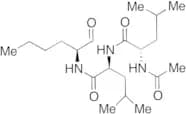
CAS:Produto ControladoApplications MG-101 (ALLN) is a potent inhibitor of cysteine proteases including caplains and cathespins. Used in the treatment of genotoxic agents or replication stress of cells. Neuroprotective product.
References Wang, H. et al.: Biochem., 54, 5781 (2015); Fukunaga, Y. et al.: Neurosci. Res., 101, 6 (2014);Fórmula:C20H37N3O4Cor e Forma:NeatPeso molecular:383.53N-Glycylglycine
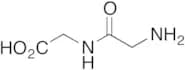
CAS:Produto ControladoApplications N-Glycylglycine is a derivative of Glycine (G615990), a non-essential amino acid that enhances N-methyl-D-aspartate (NMDA) receptor mediated synaptic potentials in the neocortex of rats. Glycine is also being used as adjuvant therapy for the treatment of schizophrenia.
References Logan, W. & Snyder, S.: Brain Res., 42, 413 (1972); Rosse, R., et al.: Clin. Neuropharmacol., 12, 416 (1989)Fórmula:C4H8N2O3Cor e Forma:NeatPeso molecular:132.12tert-Butoxycarbonyl-D-proline
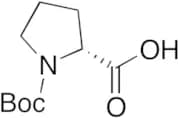
CAS:Produto ControladoApplications tert-Butoxycarbonyl-D-proline is Boc protected D-proline (P755990). It is used to prepare trichostatin A and trapoxin B analogs as histone deacetylase inhibitors. It is also used to prepare potent and selective nonpeptide inhibitors of caspases 3 and 7.
References Jung, M., et al.: Bioorg. Med. Chem. Lett., 7, 1655 (1997); Lee, D., et al.: J. Med. Chem,, 44, 2015 (2001)Fórmula:C10H17NO4Cor e Forma:NeatPeso molecular:215.25E-64d
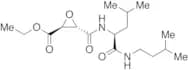
CAS:Produto ControladoApplications E-64d is an inhibitor of cathepsins B and L as well as a potential inhibitor of calpain. E-64d has been shown to inhibit lysosomal proteases. E-64d has been used in combination with Prepstatin A to interfere with autolysosomal digestion. E-64d displays neurovascular and neuronal protective effects after focal cerebral ischemia in rats.
References Wilcox, D. et al.: Biochem. J., 285, 495 (1992); McGowan, E.B. et al.: Biochem. Biophys. Res. Comm., 158, 432 (1989); Tsubokawa, T. et al.: J. Neurosci. Res., 84, 832 (2006);Fórmula:C17H30N2O5Cor e Forma:NeatPeso molecular:342.43D-Lactic Acid
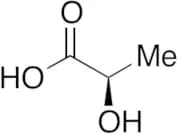
CAS:Applications D-Lactic Acid occurs in small quantities in the blood and muscle fluid of man and animals. The lactic acid concentration increases in muscle and blood after vigorous activity.
References He, W. et al.: Comp. Biochem. Phys. Part A: Mol. Int. Phys., 166, 308 (2013)Fórmula:C3H6O3Pureza:90%Cor e Forma:Colourless To Light YellowPeso molecular:90.08DOTA-tris (t-Bu ester) (~90%)
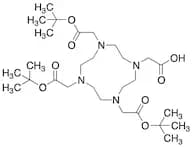
CAS:Produto ControladoApplications DOTA-tris (t-Bu ester), is a Bifunctional chelator, that can be used in the preparation of gadolinium complexes as MRI blood contrast agents.
Fórmula:C28H52N4O8Pureza:~90%Cor e Forma:NeatPeso molecular:572.73N-CBZ-Glycyl-glycyl-L-arginine 7-Amido-4-methylcoumarin Hydrochloride
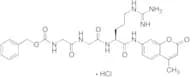
CAS:Applications N-CBZ-Glycyl-glycyl-L-arginine 7-Amido-4-methylcoumarin Hydrochloride is a fluorogenic substrate for uPA (urokinase).
References Zimmerman, M., et al. Proc. Natl. Acad. Sci. USA 75, 750 (1978);Fórmula:C28H33N7O7·HClCor e Forma:NeatPeso molecular:579.6Poly(ethylene Glycol) ~2000
CAS:Applications Poly(ethylene Glycol) molecules of an average molecular mass of 2000. Poly(ethylene Glycol) is used in various applications from industrial chemistry to biological chemistry. Recent research has shown PEG maintains the ability to aid the spinal cord injury recovery process, helping the nerve impulse conduction process in animals. In rats, it has been shown to aid in the repair of severed sciatic axons, helping with nerve damage recovery. It is industrially produced as a lubricating substance for various surfaces to reduce friction. PEG is also used in the preparation of vesicle transport systems in with application towards diagnostic procedures or drug delivery methods.
References Borgens, R. et al.: J. Neurosci. Res., 66, 1179 (2001); Stavisky, R. et al.: Neurosci. Lett., 376, 98 (2005); Nalam, P. et al.: Tribiol. Lett., 37, 541 (2010); Steinmetz, N. et al.: J. Am. Chem. Soc., 131, 17093 (2009); Li, X. et al.: J. Am. Chem. Soc., 133, 11147 (2011); Li, L. et al.: Int. J. Pharm., 447, 192 (2013);Fórmula:H2O(C2H4O)nCor e Forma:White To Off-WhitePeso molecular:62.07γ-L-Glutamyl L-Glutamic Acid
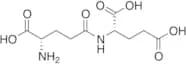
CAS:Produto ControladoApplications H-GAMMA-GLU-GLU-OH (cas# 1116-22-9) is a useful research chemical.
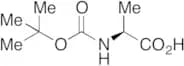
Fórmula:C10H16N2O7Cor e Forma:NeatPeso molecular:276.24N-tert-Boc-L-alanine
CAS:Produto ControladoApplications N-tert-Boc-L-alanine is the protected form of L-Alanine (A481500), a non-essential amino acid that can be found naturally in the human body and is obtained by our diet.
References Anderson, H., et al.: J. Nutr., 99, 82 (1969)Fórmula:C8H15NO4Cor e Forma:NeatPeso molecular:189.21DAPT
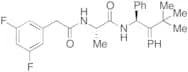
CAS:Applications DAPT is a γ-secretase inhibitor which inhibits thegrowth of cancer cells and epethelial and mesenchymal transition (1,2).
References (1) Li, L. et al.: Oncol Lett. 7, 2160 (2014) (2) Wang, M. et al.: Int. J. Onc., 44, 1401 (2014)Fórmula:C23H26F2N2O4Cor e Forma:Off White SolidPeso molecular:432.46Caspase-5-derived FSP (67-75)
Custom research peptide; min purity 95%. For different specs please use the Peptide Quote ToolAcetyl-Myelin Basic Protein (Mouse, 1-11)
The myelin sheath which is located in both the Central Nervous System (CNS) and the Peripheral Nervous System is crucial for neural insulation and the salutatory conduction of nerve impulses. When this myelin sheath is destroyed neurodegeneration and conduction failure occur and theses occurrences can be observed in demyelinating diseases in the CNS such as: acute disseminated encephalomyelitis and multiple sclerosis and within the PNS: Guillain–Barré syndrome and Charcot–Marie–Tooth disease. Myelin Basic Protein (MBP) from which this product is derived is the second most abundant protein in myelin. It has been found to be an intrinsically disordered protein and depending on the environmental conditions it can change its conformation. It also folds into ⍺-helical structures which allow MBP to bind tightly to lipid bilayer surfaces. MBP also interacts with other proteins, namely cytoskeletal proteins and calmodulin and may be involved in signalling pathways. Although more research needs to be carried out, it is thought that MBP significantly contribute to the pathogenesis of multiple sclerosis. As MBP is an autoantigen it can be recognized and cleaved by autoantibodies and is a substrate for the immunoproteasome. Additional research has found that post-translational modifications of MBP such as the removal of arginine are increased and may be involved in the pathogenesis of multiple sclerosis. Therefore this protein derived from MBP can be used to mimic Neurodegenerative disease phenotypes in research and animal models.Fórmula:C53H95N21O18Pureza:Min. 95%Peso molecular:1,314.48 g/mol