Peptídeos
Subcategorias de "Peptídeos"
Foram encontrados 29801 produtos de "Peptídeos"
H2N-Trp-Leu-Ser-Glu-Ala-Gly-Pro-Val-Val-Thr-Val-Ar
Custom research peptide; min purity 95%. For different specs please use the Peptide Quote ToolFórmula:C97H152N28O27Peso molecular:2,142.42 g/molFK18
FK18 is a basic fibroblastic growth factor that has been shown to promote neuronal survival and is neuroprotective. It also can prevent glutamate-induced neurotoxicity in the central nervous system (CNS) by inhibiting glutamate release from the synaptic cleft, which leads to neuronal death. FK18 has been shown to have anti-inflammatory properties, which may be due to its ability to inhibit the production of prostaglandins and other inflammatory mediators. FK18 has also been shown to reduce necrotic cell death by decreasing mitochondrial membrane potential.Fórmula:C107H155N31O31Pureza:Min. 95%Peso molecular:2,371.62 g/molTentaGel® HL-NH2 Resin
TentaGel resin; constructed with a backbone of low cross-linked polystyrene grafted with polyoxyethylene (polyethylene glycol). The typical chain length of POE (n) is approximately 68 ethylene oxide units or an average MW of 3000. This long chain creates a spacer that effectively separates the reactive site (X) from the crosslinked backbone matrix. TentaGel; HL (High Load) (mean particle size 110 µm: capacity 04-06 meq/g)Pureza:Min. 95%Azido-dPEG®4-NHS ester
CAS:Azido-dPEG®4-NHS ester is a PEG compound with two different functional groups (also known as heterobifunctional). Unlike homobifunctional PEG compounds (same functional group on both ends), this type of compounds are more versatile as have two different anchor points. Azido-dPEG®4-NHS ester is used as a linker and spacer to add a PEG moiety, via pegylation (a bioconjugation technique) to proteins, peptides, oligonucleotides, small molecules and nanoparticles.Fórmula:C15H24N4O8Pureza:Min. 95%Peso molecular:388.37 g/molLys18[(AEEA)2-5-FITC]-Hepcidin (Human)
Lys18[(AEEA)2-5-FITC]-Hepcidin (Human) is a FITC-Labeled Hepcidin for cell detection by flow cytometry and by fluorescent or confocal microscopy. Human Hepcidiin is a peptide hormone that is produced by the liver and is heavily involved in iron homeostasis through binding to and preventing ferroportin from exporting iron. Hepcidin has also demonstrated its capabilites as an anti-microbial peptide, preventing the amount of iron available to invading pathogens. This product consists of the following disulfide Bonds: Cys7-Cys23, Cys10-Cys13, Cys11-Cys19, and Cys14- Cys22 One-Letter Formula: DTHFPICIFCCGCCHRSK(AEEA-AEEA-5-FITC)-CGMCCKTFórmula:C146H203N37O42S10Pureza:Min. 95%Peso molecular:3,469.11 g/molProinsullin, human
Proinsulin is a peptide hormone that is made up of the amino acid chain, insulin. It is synthesized in the beta cells of the pancreas and is stored in granules with other hormones. The proinsulin molecule consists of two chains linked by disulfide bonds, which are broken down to release insulin when needed. Proinsulin can activate receptors on cells, which leads to a number of physiological responses including changes in metabolism and ion channels. It has been shown to be an important research tool for studying protein interactions and pharmacology. Proinsulin also has potential as a therapeutic agent for the treatment of diabetes mellitus type I due to its ability to inhibit glucose production in the liver.Pureza:Min. 95%H-Trp(Boc)-2-ClTrt-Resin (200-400 mesh) 1% DVB
H-Trp(Boc)-2-ClTrt-Resin (200-400 mesh) is a resin that contains amines and thiols. It can be used as a building block of peptides and proteins. H-Trp(Boc)-2-ClTrt-Resin (200-400 mesh) can also be used in the synthesis of alcohols, which are important chemicals for industry.
Pureza:Min. 95%Presenilin 1 (349-361)
Presenilin 1 (349-361) is a peptide that is a substrate for glycogen synthase. It is cleaved from the precursor protein presenilin 1 and has a molecular weight of 4.5 kDa. Presenilin 1 (349-361) is an enzyme substrate that can be used in biochemical assays to research glycogen metabolism.Fórmula:C56H93N21O19Pureza:Min. 95%Peso molecular:1,364.49 g/mol[Sar1]-Angiotensin II
CAS:Produto ControladoAngiotensin II is a peptide hormone that is secreted by the kidneys. It stimulates the release of aldosterone and causes vasoconstriction, leading to an increase in blood pressure. Angiotensin II is also involved in other physiological functions such as the regulation of fluid balance, electrolyte levels, and blood coagulation. The drug is used to treat congestive heart failure and high blood pressure. Sar1-Angiotensin II has been shown to inhibit transcriptional regulation by binding to the angiotensin receptor type 1 (AT1). This binding disrupts conformational changes in the receptor, preventing signal transduction from occurring and decreasing the activity of enzymes such as protein kinase A, which are needed for activation of transcription factors.Fórmula:C49H71N13O10•(C2H4O2)2Pureza:Min. 95%Peso molecular:1,122.28 g/molbeta-Casomorphin (1-2)
CAS:Beta-casomorphin (1-2) is a peptide that has been identified as a possible endogenous ligand for opioid receptors. It is a product of the breakdown of casomorphin, a milk protein found in dairy products such as cheese and yogurt. Beta-casomorphin (1-2) has been shown to bind to human immunodeficiency virus type 1 receptors and may play an important role in the pathogenesis of human immunodeficiency virus type 1 infection. This peptide also inhibits bacterial growth by binding to bacterial ribosomes, preventing the formation of new proteins, which leads to cell death. Beta-casomorphin (1-2) has been shown to have an inhibitory effect on blood pressure and its antihypertensive activity may be due to its ability to stimulate the release of nitric oxide from endothelial cells.Fórmula:C14H18N2O4Pureza:Min. 97 Area-%Cor e Forma:PowderPeso molecular:278.3 g/molTylotoin
Tylotoin is a peptide that has been shown to have a proliferative effect on endothelial cells. It also acts as an inhibitor of cell proliferation in keratinocytes and fibroblasts, without affecting the proliferation of other cell types. Tylotoin is structurally similar to the disulfide-rich peptides from the salamander Tylototriton verrucosus, which are known for their wound healing properties. The proliferative effects of tylotoin are thought to be due to its ability to inhibit the proteolytic enzymes that degrade extracellular matrix proteins in endothelial cells.Fórmula:C59H108N24O16S2Pureza:Min. 95%Peso molecular:1,473.8 g/molAc-RLIEDICLPRWGCLWEDD-NH2
Peptide Ac-RLIEDICLPRWGCLWEDD-NH2 is a Research Peptide with significant interest within the field academic and medical research. This peptide is available for purchase at Cymit Quimica in multiple sizes and with a specification of your choice.H-AEEEA-Glu[Cyclo(Arg-Gly-Asp-D-Tyr-Lys)]2
H-AEEEA-Glu[Cyclo(Arg-Gly-Asp-D-Tyr-Lys)]2 is a peptide that binds to the integrin αvβ3, which is expressed on many types of cancer cells. This binding causes cell death by apoptosis. H-AEEEA-Glu[Cyclo(Arg-Gly-Asp-D-Tyr-Lys)]2 also has the potential to be used as an imaging agent for tumor detection and diagnosis.Fórmula:C67H102N20O22Pureza:Min. 95%Peso molecular:1,539.68 g/molH-GTYLTDETHR^-OH
Peptide H-GTYLTDETHR^-OH is a Research Peptide with significant interest within the field academic and medical research. This peptide is available for purchase at Cymit Quimica in multiple sizes and with a specification of your choice.H-SYPSNATCPR^-OH
Peptide H-SYPSNATCPR^-OH is a Research Peptide with significant interest within the field academic and medical research. This peptide is available for purchase at Cymit Quimica in multiple sizes and with a specification of your choice.KGF 2 Human
KGF 2 is a recombinant human protein that binds to the KGFR-2 receptor, which regulates cell growth and differentiation. It is a potent inhibitor of cell proliferation and has been shown to inhibit the growth of breast cancer cells in vitro. The KGF 2 peptide is synthesized as a fusion protein with six histidine residues on the N-terminus and two cysteine residues on the C-terminus. This product can be used as a research tool, as well as an antibody for immunodetection of KGFR-2 protein in tissue culture.Pureza:Min. 95%Abz-Ser-Pro-Tyr(NO2)-OH
Abz-Ser-Pro-Tyr(NO2)-OH is a peptide that has been shown to be an angiotensin I converting enzyme II (ACE) substrate and an inhibitor of ACE. It also inhibits the release of renin from the juxtaglomerular apparatus, which is needed for the production of angiotensin II. This peptide is used in biochemical research and as a standard for measuring enzymatic activity.Fórmula:C24H27N5O9Pureza:Min. 95%Peso molecular:529.51 g/molFmoc-Asp(OtBu)-Rink-Amide MBHA Resin
Fmoc-Asp(OtBu)-Rink-Amide MBHA Resin is a building block for peptides. It is an acid labile resin that can be cleaved with TFA to provide amine-protected dipeptides and tripeptides. This product is used as a building block for peptide synthesis.
Pureza:Min. 95%Fmoc-Ser(tBu)-Wang Resin (100-200 mesh) 1% DVB
Wang resin is a high purity, ion-exchange resin that is used in the preparation of peptides and proteins. The resin contains a cationic quaternary ammonium group that can be used to bind anionic molecules such as phosphates, sulfates, phosphonates, and carboxylates. Wang resin is also capable of binding to the amino groups on proteins. This resin has been shown to have excellent receptor binding capacity for peptides and proteins. In addition, Wang resin has been shown to be an activator of G-protein coupled receptors and ion channels. Wang resin has been used in research for life science and cell biology applications including antibody production and inhibitor studies.Pureza:Min. 95%Fmoc-Thr(tBu)-Rink-Amide MBHA Resin
Fmoc-Thr(tBu)-Rink-Amide MBHA Resin is a resin that can be used for the synthesis of peptides. It is an inhibitor of Protein interactions, Activator, Ligand, and Receptor. This resin can be used in research to study ion channels and antibodies. Fmoc-Thr(tBu)-Rink-Amide MBHA Resin is also a high purity product with CAS No.Pureza:Min. 95%H-Asp-[Pen-Phe-Trp-Lys-Tyr-Cys]-Val-OH
H-Asp-[Pen-Phe-Trp-Lys-Tyr-Cys]-Val-OH is a peptide that belongs to the class of biochemicals. It is a disulfide-rich peptide that is found in the brain, and has been shown to increase blood flow and activate the hypothalamic pituitary adrenal axis in animals. Urotensin II and related peptides are also found in the brain, but have not been shown to have any effect on blood flow or hormone levels.Fórmula:C52H68N10O12S2Pureza:Min. 95%Peso molecular:1,089.31 g/molFmoc-Asn(Trt)-Rink-Amide MBHA Resin
Fmoc-Asn(Trt)-Rink-Amide MBHA Resin is an ion channel blocker and a research tool that can be used to study the effects of peptides and other small molecules on ion channels. It is a high purity resin with a CAS number of 47794-33-4. The Fmoc-Asn(Trt)-Rink-Amide MBHA Resin is an inhibitor of the Ca2+ channel and the K+ channel and it can be used in pharmacology, cell biology, and immunology research.Pureza:Min. 95%H-Ser-Leu-Ile-Gly-Arg-NH2
Hypertension is a condition that affects the heart and blood vessels. It is caused by a number of factors, including increased blood pressure, high levels of cholesterol, diabetes, and genetics. Hypertension can lead to stroke, kidney disease, heart failure, or death. This drug was designed to target hypertension by activating protease-activated receptor (PAR) peptides in the body. PAR peptides are found in many tissues throughout the body and are involved in inflammation and coagulation. PAR2 has been shown to be involved in cardiovascular diseases such as atherosclerosis and coronary artery disease. The drug was designed for use as an oral treatment for hypertension and related conditions.Fórmula:C23H45N9O6Pureza:Min. 95%Peso molecular:543.67 g/molGO-CoA-Tat (Rat, Mouse)
GO-CoA-Tat is a cell-penetrating peptide that inhibits ghrelin O-acyltransferase, a key enzyme in the production of ghrelin. GO-CoA-Tat has been shown to reduce body weight and improve glucose tolerance in animal models of obesity. It has also been shown to be an effective inhibitor of cell proliferation.Fórmula:C146H245N54O47P3SPureza:Min. 95%Peso molecular:3,633.92 g/molM CSF Human
M-CSF is a protein that is involved in the regulation of the immune system. It is an activator of macrophages, and it also binds to receptors on cells of the immune system. It can be used as a research tool for studying how cells communicate with each other, and how certain proteins interact with each other. M-CSF is also an antibody that can bind to ion channels and other proteins. This antibody can be used for pharmacological studies to find inhibitors for specific proteins or peptides. M-CSF has been shown to have effects on many different types of cells, including lymphocytes, monocytes, neutrophils, eosinophils, basophils, and mast cells.Pureza:Min. 95%H-Ser-Phe-Asn-Gly-Gly-Pro-NH2
CAS:H-Ser-Phe-Asn-Gly-Gly-Pro-NH2 is a peptide that activates Protease Activated Receptor 1 (PAR1) and Protease Activated Receptor 3 (PAR3). It also has been shown to decrease blood pressure in mice, inhibit coagulation, and increase the breakdown of fibrin clots. This product is a ligand for PAR1 and PAR3. It has been shown to activate these receptors by binding to them through its amino acid sequence. HSPNP binds to proteases that cleave the peptide from the receptor, which leads to activation of the receptor. HSPNP can also bind to PAR3 and PAR4.Fórmula:C25H36N8O8Pureza:Min. 95%Peso molecular:576.61 g/molFmoc-Cys(Trt)-Wang Resin (100-200 mesh) 1% DVB
Fmoc-Cys(Trt)-Wang Resin (100-200 mesh) 1% DVB is a research tool that is used as an activator, ligand or receptor for cell biology, antibody production or ion channels. It has been used in the study of protein interactions and pharmacology. Fmoc-Cys(Trt)-Wang Resin (100-200 mesh) 1% DVB is a high purity resin that can be used to synthesize peptides and compounds for life science purposes. It is also an inhibitor that can be used to block enzymatic reactions.Pureza:Min. 95%Fmoc-Arg(Pbf)-Wang Resin (100-200 mesh) 1% DVB
Fmoc-Arg(Pbf)-Wang resin is a building block for the synthesis of peptides. It is a resin that is used for the solid phase synthesis of peptides and oligonucleotides with Fmoc chemistry. This resin is provided in powder form, as well as in various particle sizes from 100 to 200 mesh. The resin has been shown to be stable in the presence of DIC/HOBT coupling reactions and can be used with other resins for automated peptide synthesizers.Substitution: 0.3meq/gSwelling: 4.4ml/g (DCM - 30min)Pureza:Min. 95%MOCAc-Pro-Cha-Gly-Nva-His-Ala-Dap(Dnp)-NH2
MOCAc-Pro-Cha-Gly-Nva-His-Ala-Dap(Dnp)-NH2 is a peptide that inhibits the activity of various proteases, including collagenase, MMPs and stromelysin. It has been shown to inhibit cancer cells in vitro and to reduce tumor growth in vivo. MOCAc-Pro-Cha-Gly-Nva-His-Ala-Dap(Dnp)-NH2 may be useful for the treatment of angiogenesis and metastasis, which are hallmarks of cancer. MOCAc is an inhibitor of matrix metalloproteinases (MMPs), which are enzymes that break down the extracellular matrix and basement membrane during tissue remodeling. MOCAc inhibits both type I (collagenases) and type II (gelatinases) collagenase activity, as well as other proteolytic activities such as stromelysin or elastFórmula:C51H65N8O13Pureza:Min. 95%Peso molecular:1,100.16 g/molFmoc-Ala-Wang Resin (100-200 mesh) 1% DVB
This is a vivitide catalogue product. Please send your vivitide product enquiry to sales@vivitide.com for an up-to-date price and availability.Pureza:Min. 95%H-Ser(tBu)-2-ClTrt-Resin (100-200 mesh) 1% DVB
H-Ser(tBu)-2-ClTrt-Resin (100-200 mesh) 1% DVB is a resin that is designed for the synthesis of peptides. It can be used as a building block and has been shown to react with thiols, alcohols, amines, and other building blocks.Pureza:Min. 95%Fmoc-β-(7-methoxy-coumarin-4-yl)-Ala-OH
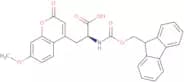
CAS:Fmoc-b-(7-methoxy-coumarin-4-yl)-Ala-OH is a reagent with the CAS No. 524698-40-6, which is used in organic synthesis. It is a versatile building block and useful intermediate that can be used to synthesize other organic compounds. Fmoc-b-(7-methoxy-coumarin-4-yl)-Ala-OH is also used as a reaction component in the synthesis of peptides and proteins, as well as in the preparation of polymers. It has been shown to be an effective building block for complex compounds.Fórmula:C28H23NO7Pureza:Min. 95%Cor e Forma:PowderPeso molecular:485.48 g/molH-NPANPV^QR-OH
Peptide H-NPANPV^QR-OH is a Research Peptide with significant interest within the field academic and medical research. This peptide is available for purchase at Cymit Quimica in multiple sizes and with a specification of your choice.
(Gly106)-Cytochrome C (92-107) (Manduca sexta)
CAS:Custom research peptide; min purity 95%. For different specs please use the Peptide Quote Tool
Fórmula:C77H129N23O24Peso molecular:1,761.01 g/molDynorphin A (1-11), porcine
Catalogue peptide; min. 95% purityFórmula:C63H103N21O13Peso molecular:1,362.66 g/molH-FYGAEIVSALEYLHSR^-OH
Peptide H-FYGAEIVSALEYLHSR^-OH is a Research Peptide with significant interest within the field academic and medical research. This peptide is available for purchase at Cymit Quimica in multiple sizes and with a specification of your choice.LCBiot-SGTLGHPGSL-OH
Peptide LCBiot-SGTLGHPGSL-OH is a Research Peptide with significant interest within the field academic and medical research. This peptide is available for purchase at Cymit Quimica in multiple sizes and with a specification of your choice.Apolipoprotein KV domain (67 - 77)
Vascular lipid deposition and altered lipid profiles are typical when unregulated angiogenesis is occurring, it is often seen in vascular disorders such as cancer and atherosclerosis. Apolipoprotein a (ApoA) functions as part of the lipid transporter complex high-density lipoproteins (HDL) to ensure lipid homeostasis and therefore the balance of angiogenesis. Within ApoA the Kringle5 (KV) domain (67 - 77), also known as KV11, has been identified as the region of ApoA that exerts anti-angiogenic effect. KV11 was shown in tumour cells to inhibit angiogenesis and consequently inhibits tumour progression. KV11 targets the angiogenesis c-Src/ERK pathway by blocking the activation signals received from vascular endothelial growth factor (VEGF). KV11 provides a new research potential for an anti-angiogenesis and anti-tumour therapeutic agent.Peso molecular:1,447.66 g/molH-AQSKPER^-OH
Peptide H-AQSKPER^-OH is a Research Peptide with significant interest within the field academic and medical research. This peptide is available for purchase at Cymit Quimica in multiple sizes and with a specification of your choice.
Rhodopsin Epitope Tag
ID4 is a highly versatile epitope tag. The peptide sequence is highly specific to rhodopsin and related photoreceptor proteins, meaning when used with monoclonal antibodies off-target signals are virtually non-existent. ID4 is also devoid of charged residues therefore reducing nonspecific ionic interactions. Monoclonal antibodies also bind to ID4 with high affinity therefore there is less need for inserting multiple copies of ID4.Peso molecular:902.4 g/molMotilin (1-10)
Residues 1-10 of the gastrointestinal hormone motilin, secreted from endocrine cells in the small intestines, mainly from the jejunum and duodenum, in response to the fasting, drinking water or the mechanical stimulus of eating.Peso molecular:1,184.6 g/molNeurokinin A (Substance K)
Neurokinin A (NKA) is a member of the classical tachykinins family of peptides which also includes substance P and neurokinin B. These peptides are primarily found in the nervous system where they act as neurotransmitters and neuromodulators. They also play key roles in neuronal inflammation, and high levels of NKA have been linked to poor prognosis of some tumours.The tachykinin peptides are characterised by a common C-terminal sequence, Phe-X-Gly-Leu-Met-NH2, where X represents either an aromatic (Phe, Tyr) or a branched aliphatic (Val, Ile) amino acid.This C-terminal region is thought to be responsible for activating the receptor. The divergent N-terminal region is thought to play a role in determining the receptor subtype selectivity. NKA binds preferentially to the NK2 receptor.Peso molecular:1,132.6 g/molNeuropeptide Y (3-36) Human,Rat
Neuropeptide Y (NPY) is a peptide involved in the gut-brain axis. Neurons express it in both the brain and the gut. However, expression is significantly increased upon nerve injury. NPY is the most abundant neuropeptide within the brain and is expressed by many neuronal systems, and several important pathways utilising NPY as a neurotransmitter have been identified. Mammalian NPY acts as a vasoconstrictor by affecting blood pressure around peripheral nerves, while it also acts on food intake and emotional regulation.The primary receptor subtypes on which NPY acts in the brain are the Y1 and Y2 receptors but also include Y4, Y5 and y6 (a human pseudogene). Y1 and Y2 increase blood pressure, Y1 and Y5 increase food intake, and Y2 and Y4 decrease food intake.NPY has been linked to psychiatric disorders such as anxiety and depression. Low levels of NPY have been observed in patients with major depressive disorder. Rodent models are used to understand better NPY and its receptors' role in emotional regulation.Peso molecular:4,271.69 g/molKisspeptin 14 human
The biologically active C-terminal region of Kisspeptin. Kisspeptin, is cleaved from a 145 amino acid precursor to a 54 amino acid peptide in humans and a 52 amino acid peptide in mice. Smaller isoforms of 14, 13 and 10 amino acids have also been isolated in humans, each sharing the common C-terminal sequence. Kisspeptin-14 (KP-14) has equivalent receptor binding efficiency and potency to full length Kisspeptin.Kisspeptin, a product of the KISS1 gene, is a hypothalamic neuropeptide that stimulates gonadotropin-releasing hormone (GNRH) neurons and drives fertility. When energy balance is severely altered (either negatively or positively), Kiss1 expression and fertility are compromised. Kisspeptin neurons are responsible for the transmission of key homeostatic information to GNRH neurons, which is likely to mediate the link between energy balance and fertility. Leptin, ghrelin, pro-opiomelanocortin (POMC), and neuropeptide Y (NPY) have been suggested as modulators of this process.Kisspeptin binds specifically to the G-protein-coupled receptor-54, now known as Kiss1r, which is expressed in almost all GNRH neurons. Kisspeptin plays an essential role in reproduction, and Kiss1r mutations have been isolated in cases of defects in sexual development. Kiss1r is also expressed in other areas of the brain and periphery, highlighting other possible roles for kisspeptin outside of reproduction. Due to kisspeptins importance in reproduction it is synthesized in excess to ensure reproductive success.Cor e Forma:PowderPeso molecular:1,740.8 g/mol(Arg8) Vasotocin
(Arg8) Vasotocin (AVT) is a member of the neurohypophyseal hormone family which contains 9 amino acids with the cysteines at positions 1 and 6 linked through a disulphide bridge. Within the central nervous system of lower vertebrates, AVT has been shown to play a role as a neuromodulator and controls reproductive behaviour. Furthermore it regulates osmotic and electrolyte balance and blood pressure within the periphery. In the mammalian brain AVT functions through arginine vasopressin (AVP) or oxytocin receptor cross-reactions. Mice have an AVT reactive receptor specific to AVT and neuropeptide S. This AVT which functions to regulate processes such as sleep and reproduction.Cor e Forma:PowderPeso molecular:1,049.5 g/molH-VISPSEDR^-OH
Peptide H-VISPSEDR^-OH is a Research Peptide with significant interest within the field academic and medical research. This peptide is available for purchase at Cymit Quimica in multiple sizes and with a specification of your choice.LL-37 fragment (30-34)
LL-37 is a member of the large cationic family of anti-microbial peptides called cathelicidins which have broad-spectrum anti-microbial activity and are expressed in many species. The only cathelicidin found in humans is LL-37, this is produced in epithelial cells, by proteolytic cleavage from the C-terminal of the hCAP-18 protein. LL-37 can be processed into different forms of anti-microbial peptides. As well as its anti-microbial properties LL-37 also regulates many aspects of the innate immune system and overexpression of LL-37 has been linked to autoimmune diseases such as asthma and psoriasis, making LL-37 the most studied form of the human cathelicidin peptides.More recently, studies have shown that LL-37 binds to SARS-CoV-2 S protein and inhibits binding to its receptor hACE2, which may inhibit viral entry into the cell. LL-37 is upregulated by vitamin D, therefore this may be one mode of action for the positive outcomes seen with vitamin D treatment for Covid-19.Cor e Forma:PowderPeso molecular:597.4 g/molSARS-CoV-2 NSP7 (46-60)
SARS-CoV-2 NSP7 is part of the RNA-dependent RNA polymerase heterotetramer for mediating coronavirus RNA synthesis. NSP7 and NSP8 form a channel to confer processivity on RNA polymerase. NSP7 aids in stabilising NSP12 regions involved in RNA binding and is essential for a highly active NSP12 polymerase complex. These factors make NSP7 a good target for developing new antiviral drugs. In addition, the identification of epitopes within the NSP7 sequence can help design more effective SARS-CoV-2 vaccines.Models have predicted epitopes exhibiting antigenicity, stability and interactions with MHC class-I and class-II molecules. NSP7 (46-60) is an epitope candidate with various HLA restrictions. This epitope can be used to better vaccine design for more durable CD4+ and CD8+ T cell responses for long-lasting immunity.Peso molecular:1,678.9 g/mol



![Lys18[(AEEA)2-5-FITC]-Hepcidin (Human)](/_next/image/?url=https%3A%2Fstatic.cymitquimica.com%2Fproducts%2F3D%2Fthumb-webp%2FPLP-3793-PI.webp&w=3840&q=75)


![[Sar1]-Angiotensin II](/_next/image/?url=https%3A%2Fstatic.cymitquimica.com%2Fproducts%2F3D%2Fthumb-webp%2FPAN-3948-PI.webp&w=3840&q=75)

![H-AEEEA-Glu[Cyclo(Arg-Gly-Asp-D-Tyr-Lys)]2](/_next/image/?url=https%3A%2Fstatic.cymitquimica.com%2Fproducts%2F3D%2Fthumb-webp%2FRGD-3766-PI.webp&w=3840&q=75)


![H-Asp-[Pen-Phe-Trp-Lys-Tyr-Cys]-Val-OH](/_next/image/?url=https%3A%2Fstatic.cymitquimica.com%2Fproducts%2F3D%2Fthumb-webp%2FPUT-3640-PI.webp&w=3840&q=75)