Peptídeos
Subcategorias de "Peptídeos"
Foram encontrados 29635 produtos de "Peptídeos"
SBDS Blocking Peptide
A synthetic peptide for use as a blocking control in assays to test for specificity of SBDS antibody, catalog no. 70R-1181Pureza:Min. 95%C21ORF13 Blocking Peptide
A synthetic peptide for use as a blocking control in assays to test for specificity of C21orf13 antibody, catalog no. 70R-3197
Pureza:Min. 95%Carboxypeptidase N1 Blocking Peptide
A synthetic peptide for use as a blocking control in assays to test for specificity of CPN1 antibody, catalog no. 70R-5449Pureza:Min. 95%APP669-711
APP669-711, also known as Amyloid Precursor Protein (APP) 669-711 or Aβ−3–40, may have a potential use as a biomarker for Alzheimer's disease.Pureza:Min. 95%Gastrin Related Peptide
Gastrin-related peptide is a peptide that is involved in the regulation of the growth of cells. It has been shown to promote cancer cell growth, and may be involved in other cancers such as prostate cancer and neurological disorders. Gastrin related peptide is not active against normal cells, which makes it a potential therapeutic target for cancer treatment.
Fórmula:C35H46N6O8SPureza:Min. 95%Peso molecular:710.84 g/molGEM Blocking Peptide
A synthetic peptide for use as a blocking control in assays to test for specificity of GEM antibody, catalog no. 70R-5974Pureza:Min. 95%Urocortin 3 (Mouse, Rat)-EIA Kit (1ea)
Urocortin 3 (Mouse, Rat)-EIA Kit is a first-generation, solid-phase sandwich ELISA kit for the quantitative measurement of mouse and rat urocortin 3. The kit contains all the necessary reagents for performing the assay, including antibodies and standards. The Urocortin 3 (Mouse, Rat)-EIA Kit has been validated with mouse and rat samples and shown to be linear over a wide range of concentrations. The detection limit is 0.5 pg/ml in ELISA plates coated with 100 ng/ml of mouse or rat urocortin 3 antibody.Pureza:Min. 95%KCTD16 Blocking Peptide
A synthetic peptide for use as a blocking control in assays to test for specificity of KCTD16 antibody, catalog no. 70R-3962Pureza:Min. 95%Z-Gly-Pro-Leu-Gly
CAS:Z-Gly-Pro-Leu-Gly is a synthetic peptide with a kinetic and biochemical profile that is similar to that of the bacterial enzyme monoiodotyrosine hydroxylase. Z-Gly-Pro-Leu-Gly has been shown to react with the substrate, monoiodotyrosine, by forming hydrogen bonds. The enzyme activities of Z-Gly-Pro-Leu-Gly are inhibited by neutral pH and increased at acidic pH. The optimum pH for this reaction is 4.5. When injected subcutaneously, Z-Gly-Pro-Leu-Gly can penetrate the skin and hydrolyze monoiodotyrosine in ascidians.Fórmula:C23H32N4O7Pureza:Min. 95%Peso molecular:476.52 g/molTRPC4 Blocking Peptide
A synthetic peptide for use as a blocking control in assays to test for specificity of TRPC4 antibody, catalog no. 70R-5142Pureza:Min. 95%LOC285033 Blocking Peptide
A synthetic peptide for use as a blocking control in assays to test for specificity of LOC285033 antibody, catalog no. 70R-3365Pureza:Min. 95%UBXD2 Blocking Peptide
A synthetic peptide for use as a blocking control in assays to test for specificity of UBXD2 antibody, catalog no. 20R-1265Pureza:Min. 95%Anti Chromogranin A (344-374), Human Serum
Anti-chromogranin A (344-374) is a peptide that binds to the receptor for gastrin. It is used as a research tool and can be used to study the pharmacology of gastrin and the role of this hormone in the regulation of stomach acid production. Anti-chromogranin A (344-374) is purified from human serum, with an antibody specific to the peptide immobilized on a solid support.Pureza:Min. 95%MRPS2 Blocking Peptide
A synthetic peptide for use as a blocking control in assays to test for specificity of MRPS2 antibody, catalog no. 70R-2423
Pureza:Min. 95%KCNK4 Blocking Peptide
A synthetic peptide for use as a blocking control in assays to test for specificity of KCNK4 antibody, catalog no. 70R-7446Pureza:Min. 95%m-dPEG®8-Azide (Azido-m-dPEG®8)
m-dPEG®8-Azide (Azido-m-dPEG®8) is a PEG compound with two different functional groups (also known as heterobifunctional). Unlike homobifunctional PEG compounds (same functional group on both ends), this type of compounds are more versatile as have two different anchor points. m-dPEG®8-Azide (Azido-m-dPEG®8) is used as a linker and spacer to add a PEG moiety, via pegylation (a bioconjugation technique) to proteins, peptides, oligonucleotides, small molecules and nanoparticles.Fórmula:C20H20F4N2O7Pureza:Min. 95%Peso molecular:476.38 g/molRBPMS2 Blocking Peptide
A synthetic peptide for use as a blocking control in assays to test for specificity of RBPMS2 antibody, catalog no. 70R-4834Pureza:Min. 95%PCSK6 Blocking Peptide
A synthetic peptide for use as a blocking control in assays to test for specificity of PCSK6 antibody, catalog no. 20R-1074Pureza:Min. 95%TERF2IP Blocking Peptide
A synthetic peptide for use as a blocking control in assays to test for specificity of TERF2IP antibody, catalog no. 70R-4063Pureza:Min. 95%Iberiotoxin
CAS:Iberiotoxin is a neurotoxin that is synthesized by the bacterium Clostridium botulinum. It inhibits the activity of a number of enzymes, including protein kinase C and cyclase, but has no effect on phosphatases. Iberiotoxin has been shown to be effective against models systems of bowel disease, such as colonic inflammation and ulceration. Iberiotoxin binds to specific neuronal receptors in the central nervous system, leading to inhibition of intracellular calcium levels, which may play an important role in the mechanisms of action for this toxin.Fórmula:C179H274N50O55S7Pureza:Min. 95%Peso molecular:4,230.86 g/molOSBPL1A Blocking Peptide
A synthetic peptide for use as a blocking control in assays to test for specificity of OSBPL1A antibody, catalog no. 70R-4070Pureza:Min. 95%TUBA8 Blocking Peptide
A synthetic peptide for use as a blocking control in assays to test for specificity of TUBA8 antibody, catalog no. 70R-9492Pureza:Min. 95%ZFP57 Blocking Peptide
A synthetic peptide for use as a blocking control in assays to test for specificity of ZFP57 antibody, catalog no. 70R-7892Pureza:Min. 95%LYSMD2 Blocking Peptide
A synthetic peptide for use as a blocking control in assays to test for specificity of LYSMD2 antibody, catalog no. 70R-4425Pureza:Min. 95%SLIT1 Blocking Peptide
A synthetic peptide for use as a blocking control in assays to test for specificity of SLIT1 antibody, catalog no. 70R-5296Pureza:Min. 95%LIX1 Blocking Peptide
A synthetic peptide for use as a blocking control in assays to test for specificity of LIX1 antibody, catalog no. 70R-3596Pureza:Min. 95%Biotin-MAGE-A1 (278-286)
Biotin-MAGE-A1 (278-286) is the N-ter biotinylated version of MAGE-A1 (278-286). Biotin-MAGE-A1 (278-286) can be used in the analysis of antigen-specific T cells. MAGE-A1 protein:
MAGE-A1 (278-286) is an epitope of Melanoma Antigen Gene A1 expressed by tumors of different histological types such as on the surface of breast carcinoma cell and is a Cancer/Testis Antigens (CTA). MAGE-A1 is a tumor antigen expressed in 40% of melanoma and contains epitope for binding HLA-A*02:01 molecules and that are recognized by cytotoxic T cells.
Applications of MAGE-A1 (278-286):
MAGE-A1 (278-286) is used to stimulate specific cytotoxic T cells in PBMCs and to analyze by ELISPOT peptide epitope specificity and cytokine production like IFN-γ. Immunogenicity of MAGE-A1 (278-286) raised the possibility of developing anticancer immunotherapies or vaccinations. MAGE-A1 is also expressed in lung adenocarcinoma and studies suggest that MAGE-A1 may serve to develop Chimeric Antigen Receptor (CAR) T cell therapy using lentiviral vector and show an encouraging tumor-inhibitory efficacy.
Sequence: Biotin-KVLEYVIKVHSD11B2 Blocking Peptide
A synthetic peptide for use as a blocking control in assays to test for specificity of HSD11B2 antibody, catalog no. 70R-2912
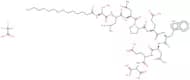
Pureza:Min. 95%Pkcβii peptide inhibitor I trifluoroacetate salt
CAS:Pkcβii peptide inhibitor I trifluoroacetate salt is a specific peptide inhibitor that targets the protein kinase C beta II (PKCβII) isoform. This inhibitor is commonly sourced from synthetic peptide libraries and is integrated with trifluoroacetate as a counterion to enhance stability and solubility. The mode of action involves the selective inhibition of PKCβII, interfering with its role in cellular signaling pathways. As PKCβII is implicated in the regulation of various cellular processes such as growth, differentiation, and apoptosis, the inhibitor is valuable for elucidating the mechanistic roles of this kinase in cellular physiology and pathophysiology.The Pkcβii peptide inhibitor I trifluoroacetate salt is primarily utilized in biochemical and cellular research to investigate the specific pathways mediated by PKCβII. Its applications extend to studies involving cancer research, diabetes, cardiovascular diseases, and other conditions where PKCβII's activity is a contributing factor. By enabling precise inhibition, researchers can dissect the isoform-specific effects and potentially tailor therapeutic strategies, thus advancing the understanding of PKCβII's function in health and disease.Fórmula:C61H94N12O19·C2HF3O2Pureza:(%) Min. 95%Peso molecular:1,299.47 g/molRXFP3 Blocking Peptide
A synthetic peptide for use as a blocking control in assays to test for specificity of RXFP3 antibody, catalog no. 70R-9809Pureza:Min. 95%MTR Blocking Peptide
A synthetic peptide for use as a blocking control in assays to test for specificity of MTR antibody, catalog no. 70R-5231Pureza:Min. 95%QRSL1 Blocking Peptide
A synthetic peptide for use as a blocking control in assays to test for specificity of QRSL1 antibody, catalog no. 70R-3857Pureza:Min. 95%ULBP1 Blocking Peptide
A synthetic peptide for use as a blocking control in assays to test for specificity of ULBP1 antibody, catalog no. 70R-5981Pureza:Min. 95%Ninjurin 1 Blocking Peptide
A synthetic peptide for use as a blocking control in assays to test for specificity of NINJ1 antibody, catalog no. 70R-6116Pureza:Min. 95%WDR40A Blocking Peptide
A synthetic peptide for use as a blocking control in assays to test for specificity of WDR40A antibody, catalog no. 70R-3536Pureza:Min. 95%CAB39 Blocking Peptide
A synthetic peptide for use as a blocking control in assays to test for specificity of CAB39 antibody, catalog no. 70R-3696Pureza:Min. 95%OTUD6A Blocking Peptide
A synthetic peptide for use as a blocking control in assays to test for specificity of OTUD6A antibody, catalog no. 70R-9720
Pureza:Min. 95%PTX3 Blocking Peptide
A synthetic peptide for use as a blocking control in assays to test for specificity of PTX3 antibody, catalog no. 70R-9405Pureza:Min. 95%WIPI1 Blocking Peptide
A synthetic peptide for use as a blocking control in assays to test for specificity of WIPI1 antibody, catalog no. 70R-4359
Pureza:Min. 95%PCDHA5 Blocking Peptide
A synthetic peptide for use as a blocking control in assays to test for specificity of PCDHA5 antibody, catalog no. 70R-6167Pureza:Min. 95%Human beta-defensin-2 peptide
Human beta-defensin-2 (hBD-2), also known as skin-antimicrobial peptide 1 (SAP1) is a cysteine-rich cationic antimicrobial peptide of 41 amino acids. It was originally isolated from skin cells of psoriasis patients. hBD-2, which belongs to the defensin family, is implicated in the innate immunity thanks to its antimicrobial activity. Thus, β-defensins can play a role at the cutaneous level by limiting the use of antibiotics in severe burns and disease like psoriasis. Moreover, at the pulmonary level, defensins might be involved in the resorption of the infection in cases of cystic fibrosis.
hBD-2 is produced after stimulation of epithelial cells following their contact with some organisms like Gram-negative bacteria and Candida Albicans, fungus or cytokines such as TNF-alpha and IL-1 beta. This antimicrobial activity was shown to be microbicidal at concentrations greater than 1 µM and was lethal for E.Coli and pseudomonas (LD90 : 10 mg/mL) and Candida Albicans (LD90 : 25 mg/mL). Besides its antimicrobial activity, hBD-2 also exhibits proinflammatory properties as chemoattractants for memory T-cells, immature dendritic cells, mast cells and neutrophils.
hBD-2 has also demonstrated inhibitory activity of the voltage-gated potassium channel Kv1.3 at picomolar concentration. Kv1.3 are overexpressed by T-cells in case of autoimmune disorders.BRMS1L Blocking Peptide
A synthetic peptide for use as a blocking control in assays to test for specificity of BRMS1L antibody, catalog no. 70R-10065Pureza:Min. 95%DMBT1 Blocking Peptide
A synthetic peptide for use as a blocking control in assays to test for specificity of DMBT1 antibody, catalog no. 70R-3916
Pureza:Min. 95%GMPR2 Blocking Peptide
A synthetic peptide for use as a blocking control in assays to test for specificity of GMPR2 antibody, catalog no. 70R-1015Pureza:Min. 95%SURF1 Blocking Peptide
A synthetic peptide for use as a blocking control in assays to test for specificity of SURF1 antibody, catalog no. 70R-10333Pureza:Min. 95%PRMT1 Blocking Peptide
A synthetic peptide for use as a blocking control in assays to test for specificity of PRMT1 antibody, catalog no. 70R-1243Pureza:Min. 95%