Peptídeos
Subcategorias de "Peptídeos"
Foram encontrados 29639 produtos de "Peptídeos"
Bz-DL-Arg-pNA • HCl [DL-BAPA]
CAS:Bz-DL-Arg-pNA • HCl [DL-BAPA] is a trypsin and trypsin-like protease substrate. It is used as a tool in biochemical studies to investigate the degradation of proteins by these enzymes. Bz-DL-Arg-pNA • HCl [DL-BAPA] is also used as an experimental model for diseases that affect enzyme activity, such as rheumatoid arthritis and multiple sclerosis.
Fórmula:C19H22N6O4•HClPureza:Min. 95%Peso molecular:434.88 g/molMOCAc-Arg-Pro-Lys-Pro-Val-Glu-Nva-Trp-Arg-Lys(Dnp)-NH₂
CAS:MOCA-Arg-Pro-Lys-Pro-Val-Glu-Nva-Trp-Arg-Lys(Dnp)-NH2 is a synthetic peptide that interacts with the nicotinic acetylcholine receptor and is a potent agonist. MOCA was found to be a potent activator of the nicotinic acetylcholine receptor, as well as an inhibitor of ligand binding. The affinity for binding to the receptor was found to be high, with an inhibition constant (Ki) of 0.06 μM. It has been shown to inhibit ion channels and ligand binding in cell biology experiments. MOCA can also be used as a research tool for studying protein interactions and receptors.
Fórmula:C78H110N22O20Pureza:Min. 95%Peso molecular:1,675.8 g/molAzido-dPEG®4-acid
CAS:Azido-dPEG®4-acid is a PEG compound with two different functional groups (also known as heterobifunctional). Unlike homobifunctional PEG compounds (same functional group on both ends), this type of compounds are more versatile as have two different anchor points. Azido-dPEG®4-acid is used as a linker and spacer to add a PEG moiety, via pegylation (a bioconjugation technique) to proteins, peptides, oligonucleotides, small molecules and nanoparticles.Fórmula:C51H101N3O26Pureza:Min. 95%Peso molecular:1,172.35 g/molBoc-Gln-Arg-Arg-AMC
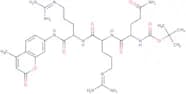
CAS:Boc-Gln-Arg-Arg-AMC is a Research Tool that is used to study the interactions of protein ligands with receptor and ion channels. It has been shown to inhibit the activity of ion channels, such as calcium and potassium channels.Fórmula:C32H49N11O8Pureza:Min. 95%Peso molecular:715.8 g/molBradykinin-Potentiator C
CAS:Bradykinin-Potentiator C is a peptide that can act as an activator or inhibitor of ion channels. It has been used in research for pharmacology, protein interactions, cell biology, and antibody production. Bradykinin-Potentiator C is purified from rabbit lung and has a CAS number of 30953-20-9.Fórmula:C51H77N11O13Pureza:Min. 95%Peso molecular:1,052.2 g/molVirus Replication Inhibiting Peptide
CAS:The virus replication-inhibiting peptide is a fatty acid that inhibits the replication of viruses. It has been shown to inhibit the growth of the bacteria Stenotrophomonas maltophilia and other bacteria, which causes infectious diseases. The peptide also has a diagnostic use for detecting viral infections in cells. The peptide was found to up-regulate genes in response to infection by pandemic influenza, which may be due to its ability to bind receptors on cells and also interfere with inflammatory responses. The virus replication-inhibiting peptide has been shown to be effective against influenza virus and other viruses, as well as against chronic inflammatory diseases such as lung damage caused by β-amino acids.
Fórmula:C28H29N3O6Pureza:Min. 95%Peso molecular:503.55 g/molBoc-Gln-Pro
CAS:Boc-Gln-Pro is a peptide that can be used as a substrate for peptidoglutaminase.
Fórmula:C15H25N3O6Pureza:Min. 95%Peso molecular:343.38 g/molGRF (Human)
CAS:Growth hormone-releasing factor (GRF) or GHRH (growth hormone-releasing hormone).Binds to the growth hormone-releasing hormone receptor (GHRH-R), causing growth hormone secretion.porcine: H-YADAIFTNSYRKVLGQLSARKLLQDIMSRQQGERNQEQGARVRL-NH2bovine: H-YADAIFTNSYRKVLGQLSARKLLQDIMNRQQGERNQEQGAKVRL-NH2ovine: H-YADAIFTNSYRKILGQLSARKLLQDIMNRQQGERNQEQGAKVRL-NH2human: H-YADAIFTNSYRKVLGQLSARKLLQDIMSRQQGESNQERGARARL-NH2Fórmula:C215H358N72O66SPureza:Min. 95%Peso molecular:5,039.7 g/molFmoc-Ser[Ac4Galß(1- >3)Ac2GalNAcα(1- >O)]-OH
CAS:Fmoc-Ser[Ac4Galß(1- >3)Ac2GalNAcα(1- >O)]-OH is a peptide that belongs to the group of carbohydrate derivatives. It has been shown to inhibit the growth of bacteria and fungi by inhibiting protein synthesis. The amino acid sequence is Ser-Gly-Gly-Gly-Ala-Ser, which has a high affinity for bacterial cell walls. Fmoc-Ser[Ac4Galß(1- >3)Ac2GalNAcα(1- >O)]-OH binds to bacterial cell walls by competitive inhibition of the enzyme D, L aminopimelate aminotransferase (EC 2.6.1.19). This binding prevents the formation of an antibiotic inhibitor complex with the enzyme that is required for cell wall biosynthesis, inhibiting protein synthesis and cell division.Fórmula:C44H52N2O21Pureza:Min. 95%Peso molecular:944.88 g/molMAL-dPEG®4-(m-dPEG®12)3
CAS:MAL-dPEG®4-(m-dPEG®12)3 is a PEG compound with two different functional groups (also known as heterobifunctional). Unlike homobifunctional PEG compounds (same functional group on both ends), this type of compounds are more versatile as have two different anchor points. MAL-dPEG®4-(m-dPEG®12)3 is used as a linker and spacer to add a PEG moiety, via pegylation (a bioconjugation technique) to proteins, peptides, oligonucleotides, small molecules and nanoparticles.Fórmula:C84H158N6O40Pureza:Min. 95%Peso molecular:1,892.17 g/molTuftsin
CAS:Produto ControladoTuftsin is a cyclic peptide that has been shown to have various biological properties, including anti-inflammatory and immunosuppressive activity. Tuftsin has been shown to inhibit the production of proinflammatory cytokines such as IL-10 by T cells in vitro. Tuftsin also inhibits the activation of toll-like receptors (TLR) and may have a role in inhibiting mycobacterial infection. This drug was found to be well tolerated in humans with congestive heart failure, and is currently being evaluated for its potential use as an adjunct therapy for inflammatory bowel disease. It has also been shown to be effective against opportunistic fungal infections, such as Candida albicans, Cryptococcus neoformans, and Aspergillus fumigatus. Tuftsin can be measured using analytical methods such as titration calorimetry or polymerase chain reaction (PCR).Fórmula:C21H40N8O6•2CH3COOH•4H2OPureza:Min. 95%Peso molecular:692.75 g/molFmoc-N-Amido-dPEG®6-Acid
CAS:Fmoc-N-Amido-dPEG®6-Acid is a PEG compound with two different functional groups (also known as heterobifunctional). Unlike homobifunctional PEG compounds (same functional group on both ends), this type of compounds are more versatile as have two different anchor points. Fmoc-N-Amido-dPEG®6-Acid is used as a linker and spacer to add a PEG moiety, via pegylation (a bioconjugation technique) to proteins, peptides, oligonucleotides, small molecules and nanoparticles.Pureza:Min. 95%Peso molecular:575.65 g/mol[Tyr34]-Parathyroid Hormone (Bovine, 7-34 amide)
CAS:[Tyr34]-Parathyroid Hormone (Bovine, 7-34 amide) is a product sourced from bovine, is available as a 0.5mg vial and is related to the peptide hormone Parathyroid Hormone (PTH). During abnormal serum calcium levels PTH is secreted from the parathyroid gland, thus regulating calcium and phosphate levels in the body. PTH binds to its PTH receptor which is a G-protein coupled receptor that activated adenylate cyclase or phospholipase C to activate pathways involved in the mediation of bone resorption and bone formation.
Fórmula:C156H244N48O40S2Pureza:Min. 95%Peso molecular:3,496 g/molUrocortin (Rat)
CAS:Urocortin is a peptide that is also known as corticotropin-releasing factor (CRF). It is an inhibitor of the protein phosphatase 1 and protein phosphatase 2A, which are enzymes that regulate the activity of other proteins. Urocortin also has the ability to bind to receptors for glucocorticoid hormones, such as GRP and MR, in a manner that activates them. This peptide is used in research studies to study ion channels, neuronal excitability, and other aspects of cell biology. Urocortin has been shown to be a high purity reagent with no detectable impurities.Fórmula:C206H338N62O64Pureza:Min. 95%Peso molecular:4,707.3 g/molm-dPEG®4-Thiol
CAS:m-dPEG®4-Thiol is a PEG compound with two different functional groups (also known as heterobifunctional). Unlike homobifunctional PEG compounds (same functional group on both ends), this type of compounds are more versatile as have two different anchor points. m-dPEG®4-Thiol is used as a linker and spacer to add a PEG moiety, via pegylation (a bioconjugation technique) to proteins, peptides, oligonucleotides, small molecules and nanoparticles.Fórmula:C57H113NO25S2Pureza:Min. 95%Peso molecular:1,276.63 g/molAzido-dPEG®35-Amine
CAS:Azido-dPEG®35-Amine is a PEG compound with two different functional groups (also known as heterobifunctional). Unlike homobifunctional PEG compounds (same functional group on both ends), this type of compounds are more versatile as have two different anchor points. Azido-dPEG®35-Amine is used as a linker and spacer to add a PEG moiety, via pegylation (a bioconjugation technique) to proteins, peptides, oligonucleotides, small molecules and nanoparticles.Pureza:Min. 95%Peso molecular:1,627.94 g/mol2,3,4,6-Tetra-O-Acetyl-α-D-Galactopyranosyl Fluoride
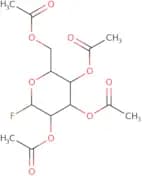
CAS:2,3,4,6-Tetra-O-acetyl-α-D-galactopyranosyl fluoride (TATA) is a fluorinated sugar that is used as a building block for the synthesis of peptides and other biochemicals. TATA has been shown to be an inhibitor of bacterial growth in medium containing glycosyl residues. This product has also been shown to have anti-inflammatory properties in animal models.
Fórmula:C14H19O9FPureza:Min. 95%Peso molecular:350.29 g/molAmino-dPEG®12-t-Butyl Ester
CAS:Amino-dPEG®12-t-Butyl Ester is a PEG compound with two different functional groups (also known as heterobifunctional). Unlike homobifunctional PEG compounds (same functional group on both ends), this type of compounds are more versatile as have two different anchor points. Amino-dPEG®12-t-Butyl Ester is used as a linker and spacer to add a PEG moiety, via pegylation (a bioconjugation technique) to proteins, peptides, oligonucleotides, small molecules and nanoparticles.Fórmula:C31H63NO14Pureza:Min. 95%Peso molecular:673.83 g/molPropargyl-dPEG®1-NHS Ester
CAS:Propargyl-dPEG®1-NHS Ester is a PEG compound with two different functional groups (also known as heterobifunctional). Unlike homobifunctional PEG compounds (same functional group on both ends), this type of compounds are more versatile as have two different anchor points. Propargyl-dPEG®1-NHS Ester is used as a linker and spacer to add a PEG moiety, via pegylation (a bioconjugation technique) to proteins, peptides, oligonucleotides, small molecules and nanoparticles.Fórmula:C48H98N4O23Pureza:Min. 95%Peso molecular:1,099.3 g/molParathyroid Hormone (Human, 1-34)
CAS:This product which is available as a 0.1mg vial is amino acids 1-34 of the 84 amino acid parathyroid hormone (PTH) and can be used as an adenylate cyclase and bone growth stimulating peptide. It is also an effective anabolic agent used in the treatment of some forms of Osteoporosis. PTH is a peptide hormone that is secreted from the parathyroid gland in the event of abnormal serum calcium levels and it ultimately regulates calcium and phosphate levels in the body. The PTH exerts its activity through binding to the G-protein coupled receptor type 1 PTH receptor, which activates adenylate cyclase or phospholipase C thus activating pathways involved in the mediation of bone resorption and bone formation. This product is suitable for life science applications.Fórmula:C181H291N55O51S2Pureza:Min. 95%Peso molecular:4,117.7 g/moldPEG®24-Biotin Acid
CAS:dPEG®24-Biotin Acid is a PEG compound with two different functional groups (also known as heterobifunctional). Unlike homobifunctional PEG compounds (same functional group on both ends), this type of compounds are more versatile as have two different anchor points. dPEG®24-Biotin Acid is used as a linker and spacer to add a PEG moiety, via pegylation (a bioconjugation technique) to proteins, peptides, oligonucleotides, small molecules and nanoparticles.Fórmula:C61H117N3O28SPureza:Min. 95%Peso molecular:1,325.6 g/mol2,3,4,6-Tetra-O-Acetyl-α-D-Glucopyranosyl Fluoride
CAS:2,3,4,6-Tetra-O-acetyl-α-D-glucopyranosyl fluoride is a glycosyl fluoride that inhibits the enzyme glucosidase. This compound has been shown to inhibit peptide degradation and is used in studies of proteolytic enzymes. 2,3,4,6-Tetra-O-acetyl-α-D-glucopyranosyl fluoride has also been used as an inhibitor of carbohydrate metabolism and in the synthesis of glycoproteins.Fórmula:C14H19O9FPureza:Min. 95%Peso molecular:350.29 g/molBz-Gly-Gly-Gly [Hippuryl-Glycyl-Glycine]
CAS:Bz-Gly-Gly-Gly is a prodrug that is metabolized by enzymatic hydrolysis to its active form, hippurylglycylglycine. The prodrug has been shown to have minimal toxicity in mice and humans, and it binds to the target enzyme of infectious diseases (e.g., HIV) with high affinity. Bz-Gly-Gly-Gly has been shown to be effective in vitro against human immunodeficiency virus type 1 (HIV1) and mouse tumor models, as well as in vivo against mouse leukemia cells. The drug has also been shown to be safe at physiological levels in mice.
Fórmula:C13H15N3O5Pureza:Min. 95%Peso molecular:293.28 g/molD-Arginyl-[Hyp3,Thi5,D-Tic7,Oic8]-Bradykinin
CAS:D-Arginyl-[Hyp3,Thi5,D-Tic7,Oic8]-Bradykinin is a synthetic peptide that is used as a research tool. It has been shown to activate ion channels and receptor proteins in studies on cell biology and pharmacology. This peptide also inhibits the binding of ligands to their receptors, which may be due to its structural similarity with other peptides that bind to the same receptor. D-Arginyl-[Hyp3,Thi5,D-Tic7,Oic8]-Bradykinin is an inhibitor of protein interactions.Fórmula:C59H89N19O13SPureza:Min. 95%Peso molecular:1,304.5 g/molm-dPEG®2-NHS Ester
CAS:m-dPEG®2-NHS Ester is a PEG compound with two different functional groups (also known as heterobifunctional). Unlike homobifunctional PEG compounds (same functional group on both ends), this type of compounds are more versatile as have two different anchor points. m-dPEG®2-NHS Ester is used as a linker and spacer to add a PEG moiety, via pegylation (a bioconjugation technique) to proteins, peptides, oligonucleotides, small molecules and nanoparticles.
Fórmula:C18H28N2O9Pureza:Min. 95%Peso molecular:416.42 g/molHydroxy-dPEG®24-t-Butyl Ester
CAS:Hydroxy-dPEG®24-t-Butyl Ester is a PEG polymer categorised as monofunctional (OH-PEG-X). Used as a linker, hydroxy-dPEG®24-t-Butyl Ester is used to attached PEG to proteins, peptides, oligonucleotides, nanoparticles and small molecules via pegylation, a bioconjugation technique.Fórmula:C16H26N2O7Pureza:Min. 95%Peso molecular:358.39 g/mol[Sar1,Thr8]-Angiotensin II
CAS:Angiotensin II is a peptide that is produced in the body and has a variety of effects. It is an activator of angiotensin receptors, which are found on cells throughout the body. Angiotensin II also binds to ligand binding sites on the surface of cells, which are called receptors. The receptor-ligand complex activates or inhibits ion channels in the cell membrane, which results in changes in cell function.Fórmula:C44H69N13O11Pureza:Min. 95%Peso molecular:956.1 g/molNeuropeptide W-30 (Human)
CAS:Neuropeptide W-30 is a peptide that has been shown to activate the receptor for neuropeptide W (NPW). Neuropeptide W is a member of the tachykinin family of peptides, which are known to function as activators of G protein-coupled receptors. Neuropeptide W-30 has been shown to be a potent inhibitor of ion channels and ligand-gated ion channels, including potassium channels, calcium channels, and sodium channels. Neuropeptide W-30 also blocks the release of neurotransmitters such as acetylcholine, noradrenaline, dopamine, and serotonin in animal cells.Fórmula:C165H249N49O37SPureza:Min. 95%Peso molecular:3,543.1 g/molFmoc-N-Amido-dPEG®24-Acid
CAS:Fmoc-N-Amido-dPEG®24-Acid is a PEG compound with two different functional groups (also known as heterobifunctional). Unlike homobifunctional PEG compounds (same functional group on both ends), this type of compounds are more versatile as have two different anchor points. Fmoc-N-Amido-dPEG®24-Acid is used as a linker and spacer to add a PEG moiety, via pegylation (a bioconjugation technique) to proteins, peptides, oligonucleotides, small molecules and nanoparticles.Pureza:Min. 95%Peso molecular:1,368.59 g/molBiotin-dPEG®23-MAL
CAS:Biotin-dPEG®23-MAL is a PEG compound with two different functional groups (also known as heterobifunctional). Unlike homobifunctional PEG compounds (same functional group on both ends), this type of compounds are more versatile as have two different anchor points. Biotin-dPEG®23-MAL is used as a linker and spacer to add a PEG moiety, via pegylation (a bioconjugation technique) to proteins, peptides, oligonucleotides, small molecules and nanoparticles.Fórmula:C65H119N5O28SPureza:Min. 95%Peso molecular:1,450.72 g/molBiotin-dPEG®4-Hydrazide
CAS:Biotin-dPEG®4-Hydrazide is a PEG compound with two different functional groups (also known as heterobifunctional). Unlike homobifunctional PEG compounds (same functional group on both ends), this type of compounds are more versatile as have two different anchor points. Biotin-dPEG®4-Hydrazide is used as a linker and spacer to add a PEG moiety, via pegylation (a bioconjugation technique) to proteins, peptides, oligonucleotides, small molecules and nanoparticles.Fórmula:C22H25NO6Pureza:Min. 95%Peso molecular:399.44 g/molChlorotoxin
CAS:Chlorotoxin is an ion channel activator that is characterized by its high purity and affinity. It has been shown to bind to the acetylcholine receptor in the brain, which leads to increased levels of acetylcholine at the synapse and subsequent activation of postsynaptic neurons. Chlorotoxin also inhibits potassium channels, leading to hyperpolarization of cells and a decrease in neuronal activity. The peptide is used as a research tool for cell biology and pharmacology studies.Fórmula:C158H249N53O47S11Pureza:Min. 95%Peso molecular:3,995.7 g/molGly-Leu
CAS:Gly-Leu is a cyclic peptide that was originally isolated from human serum. It has been shown to have antibiotic activity against bacteria such as Escherichia coli and Staphylococcus aureus. This drug also inhibits the enzyme activities of trifluoroacetic acid, sodium citrate, and calcium binding. Gly-Leu has been shown to have anti-tumour properties in vivo by inhibiting the growth of carcinoma cell lines and inducing apoptosis in these cells. It also has immunomodulatory effects on autoimmune diseases such as multiple sclerosis.Fórmula:C8H16N2O3Pureza:Min. 95%Peso molecular:188.22 g/molAc-Abu-Tle-Leu-Gln-AMC
Ac-Abu-Tle-Leu-Gln-AMC is a peptide that activates the ion channels of ligand gated calcium channels. It is an inhibitor of the glycine receptor, which is a type of ligand gated ion channel. Ac-Abu-Tle-Leu-Gln-AMC binds to the agonist binding site and blocks the neurotransmitter glycine from activating the receptor. This peptide has been shown to be effective in inhibiting neuronal excitability in rodent models.Pureza:Min. 95%Ac-Tyr-Val-Ala-Asp-AMC
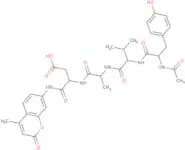
CAS:Ac-Tyr-Val-Ala-Asp-AMC is a peptide that is used as a research tool to activate ion channels in cells and study the effects of ligands on these channels. It is also used in cell biology to study protein interactions, although it does not bind to any specific receptor. Ac-Tyr-Val-Ala-Asp-AMC belongs to the group of inhibitors and can be used for pharmacological purposes. The chemical structure of this peptide consists of a covalent bond between an amino acid and an acetylated form of a fluorescent molecule, which makes it suitable for use in fluorescence microscopy. Acetylated Tyr (Ac-Tyr) is one of the six amino acids found in proteins and has the ability to inhibit the activity of ion channels by binding to their external cavity. Acetylation at position 2 or 3 on Tyr can increase its affinity for calcium ion channels and affect their activation or deFórmula:C33H39N5O10Pureza:Min. 95%Peso molecular:665.69 g/molGla17,21,24-Osteocalcin (Human)
CAS:Gla17,21,24-Osteocalcin is a peptide that belongs to the family of proteins that have bone-building properties. Osteocalcin is produced by osteoblasts and its production increases in response to activation by parathyroid hormone. It is also an activator of ion channels and has been found to be involved in regulating calcium homeostasis. Gla17,21,24-Osteocalcin has been shown to inhibit protein interactions with the receptor and ligand. This peptide also binds to receptor sites on cells and inhibits the activity of G protein-coupled receptors (GPCRs).
Fórmula:C269H381N67O82S2Pureza:Min. 95%Peso molecular:5,929.4 g/molTAME hydrochloride
CAS:Tos-Arg-OMe • HCl is a peptide that has been shown to modulate the responsiveness of cells to sodium channels. Tos-Arg-OMe • HCl may also be useful as an anti-cancer drug, as it inhibits cancer cell growth and induces apoptosis. This peptide has been shown to be an effective treatment for HIV infection by inhibiting viral replication. It also reduces inflammation and prevents the development of other opportunistic infections in animal models.Fórmula:C14H22N4O4S·ClHPureza:Min. 95%Peso molecular:378.87 g/molUrocortin II (Mouse)
CAS:Urocortin II is a peptide of the corticotropin-releasing factor receptor family that is synthesized in the brain. It has been shown to inhibit the activity of other peptides and proteins, and can be used as a research tool for studying protein interactions, receptor binding, ion channel activity, and ligand binding. Urocortin II has been shown to activate receptors in mouse brain tissue, which may provide insight into its function as a regulator of stress responses.Fórmula:C187H320N56O50Pureza:Min. 95%Peso molecular:4,152.9 g/molParathyroid Hormone (Human, 1-34)
CAS:This product which is available as a 0.5mg vial is amino acids 1-34 of the 84 amino acid parathyroid hormone (PTH) and can be used as an adenylate cyclase and bone growth stimulating peptide. It is possible that in can be used in research in the treatments of some types of osteoporosis. PTH is a peptide hormone that is secreted from the parathyroid gland in the event of abnormal serum calcium levels and it ultimately regulates calcium and phosphate levels in the body. The PTH exerts its activity through binding to the G-protein coupled receptor type 1 PTH receptor, which activates adenylate cyclase or phospholipase C thus activating pathways involved in the mediation of bone resorption and bone formation. This product is suitable for life science applications.Fórmula:C181H291N55O51S2Pureza:Min. 95%Peso molecular:4,117.7 g/molBis-dPEG®17-PFP Ester
CAS:Bis-dPEG®17-PFP Ester is a PEG polymer categorised as homobifunctional PEG (X-PEG X). Used as a linker, bis-dPEG®17-PFP Ester is used to attached PEG to proteins, peptides, oligonucleotides, nanoparticles and small molecules via pegylation, a bioconjugation technique.
Fórmula:C50H72F10O21Pureza:Min. 95%Peso molecular:1,199.08 g/molZ-Asp-CH2-DCB
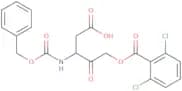
CAS:Z-Asp-CH2-DCB is a peptide that is an activator of cell membrane ion channels and receptor proteins. It has been shown to inhibit the interaction between ligands and receptors, thus blocking the binding of chemical signals with their corresponding cells. This chemical signal can be either neurotransmitters or hormones. Z-Asp-CH2-DCB is also a research tool for studying protein interactions and cellular processes, such as ion channel activation.Fórmula:C20H17NO7Cl2Pureza:Min. 95%Peso molecular:454.26 g/molBz-Ala-OMe
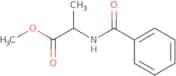
CAS:Bz-Ala-OMe is a reactive mercuric chloride that undergoes hydrolysis to form reactive mercuric acetate. It has been shown that the activation energy of the reaction is high and the reaction can be initiated by soybean trypsin. The reactive site of Bz-Ala-OMe is composed of chloride atoms and sephadex g-100. This compound reacts with serine proteases, such as trypsin or chymotrypsin, to form an amide intermediate. This intermediate reacts with n-acetyl-l-tyrosine to produce a chloromethyl ketone which then undergoes a nucleophilic attack by histidine to produce histamine in the presence of H2O2 or O2. Histamine binds to H1 receptors in the body, leading to an inflammatory response.
Fórmula:C11H13NO3Pureza:Min. 95%Peso molecular:207.23 g/molANP (Rat, 3-28)
CAS:ANP (Rat, 3-28) is a peptide that is a potent inhibitor of protein interactions. This peptide binds to the ligand-binding domain of the receptor and blocks the binding of the ligand. ANP (Rat, 3-28) also has high purity and can be used as a research tool or an antibody in life science studies.
Fórmula:C119H189N43O36S2Pureza:Min. 95%Peso molecular:2,862.2 g/molCoV-2 S1 (319-529)
COVID-19 is a recombinant protein that was derived from the SARS-CoV. It is an antibody, which binds to the SARS-CoV and prevents it from infecting cells. COVID-19 is a monoclonal antibody that targets the glycoprotein spike of the coronavirus. The 319-529 region of this protein shows high binding affinity for SARS-CoV and SARS-CoV/SARS-CoV-2, which are two types of coronaviruses. This region can be used as a diagnostic marker for these viruses. COVID-19 may also have therapeutic potential as it has shown to neutralize SARS in cell culture and protect mice against lethal challenge with the virus.Pureza:Min. 95%Hydroxy-dPEG®8-t-Butyl Ester
CAS:Hydroxy-dPEG®8-t-Butyl Ester is a PEG polymer categorised as monofunctional (OH-PEG-X). Used as a linker, hydroxy-dPEG®8-t-Butyl Ester is used to attached PEG to proteins, peptides, oligonucleotides, nanoparticles and small molecules via pegylation, a bioconjugation technique.
Pureza:Min. 95%Peso molecular:498.6 g/molLeu-NH2 • HCl
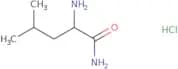
CAS:Leu-NH2 • HCl is an imidazolidinone that has been shown to have anti-inflammatory properties. The compound is a highly selective, full agonist at the CB1 receptor and has been shown to be effective in animal models of inflammatory diseases, such as collagen-induced arthritis. Leu-NH2 • HCl also has been shown to inhibit the enzymatic activity of cb1 receptor in food chemistry and c1-6 alkyl atrial receptors. Leu-NH2 • HCl binds to the same site on the receptor as THC (Δ9-tetrahydrocannabinol) and is used in research on Alzheimer's disease. This drug has also been shown to inhibit the enzymatic activity of hyaluronic acid synthetase, which may be related to its pharmacokinetic study.Fórmula:C6H14N2O•HCIPureza:Min. 95%Peso molecular:166.65 g/molZ-Gly-Gly-Leu-pNA
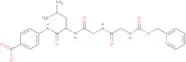
CAS:Z-Gly-Gly-Leu-pNA is a peptide that is derived from the amino acid sequence of a basic protein. It can be used as a fluorescent probe to detect hydration and enhance the fluorescence of other proteins. Z-Gly-Gly-Leu-pNA has been shown to bind basic protein subunits with high affinity, forming a stable complex. This peptide has also been shown to hydrolyze in acidic pH, making it useful for detecting proteolytic activity. The optimum pH for this peptide is neutral, at around 7.5. This peptide can be solubilized by adding Triton X or Brij 35 detergent and stored at -20°C.
Fórmula:C24H29N5O7Pureza:Min. 95%Peso molecular:499.52 g/molDynorphin A (Human, 1-13)
As a dynorphin peptide, Dynorphin A has affinity for opioid receptors in particular it favors kappa-opioid receptors and residues 1-13 of the Dynorphin A peptide are crucial for its potency. Kappa-opioid receptors are expressed in the brain, peripheral tissues and the spinal cord and are located in areas involved in pain. For example when Dynorphin A binds to kappa-opioid receptors, dopamine is inhibited in areas of the brain prevalent in drug addiction, thus demonstrated Dynorphin A to have antagonistic effects on the brain reward circuit. Dynorphin A could be a useful research tool for studying analgesia, reward and addiction.Fórmula:C75H126N24O15•5CH3COOH•6H2OPureza:Min. 95%Peso molecular:2,012.35 g/mol[D-Arg1,D-Pro2,D-Trp7,9,Leu11]-Substance P
Substance P is a peptide that is found in the central nervous system and peripheral tissues. It is an agonist at the neurokinin-1 receptor, which causes pain and inflammation. Substance P also has been shown to be a stimulant of gastrointestinal motility, and it may play a role in mood regulation. Some studies have shown that substance P may have an anti-inflammatory effect on the gut.Fórmula:C75H108N20O13•3HCI•8H2OPureza:Min. 95%Peso molecular:1,751.3 g/molMotilin Blocking Peptide
A synthetic peptide for use as a blocking control in assays to test for specificity of MLN antibody, catalog no. 70R-6243Pureza:Min. 95%
![Bz-DL-Arg-pNA • HCl [DL-BAPA]](/_next/image/?url=https%3A%2Fstatic.cymitquimica.com%2Fproducts%2F3D%2Fthumb-webp%2FSRN-3013.webp&w=3840&q=75)




![Fmoc-Ser[Ac4Galß(1- >3)Ac2GalNAcα(1- >O)]-OH](/_next/image/?url=https%3A%2Fstatic.cymitquimica.com%2Fproducts%2F3D%2Fthumb-webp%2FCAR-22103.webp&w=3840&q=75)


![[Tyr34]-Parathyroid Hormone (Bovine, 7-34 amide)](/_next/image/?url=https%3A%2Fstatic.cymitquimica.com%2Fproducts%2F3D%2Fthumb-webp%2FPTH-4185-V.webp&w=3840&q=75)




![Bz-Gly-Gly-Gly [Hippuryl-Glycyl-Glycine]](/_next/image/?url=https%3A%2Fstatic.cymitquimica.com%2Fproducts%2F3D%2Fthumb-webp%2FSGG-3128.webp&w=3840&q=75)
![D-Arginyl-[Hyp3,Thi5,D-Tic7,Oic8]-Bradykinin](/_next/image/?url=https%3A%2Fstatic.cymitquimica.com%2Fproducts%2F3D%2Fthumb-webp%2FPKB-4293-V.webp&w=3840&q=75)


![[Sar1,Thr8]-Angiotensin II](/_next/image/?url=https%3A%2Fstatic.cymitquimica.com%2Fproducts%2F3D%2Fthumb-webp%2FPAN-4102-V.webp&w=3840&q=75)








![[D-Arg1,D-Pro2,D-Trp7,9,Leu11]-Substance P](/_next/image/?url=https%3A%2Fstatic.cymitquimica.com%2Fproducts%2F3D%2Fthumb-webp%2FPSP-4172.webp&w=3840&q=75)