Peptídeos
Subcategorias de "Peptídeos"
Foram encontrados 29634 produtos de "Peptídeos"
Big Endothelin-1 (Human, 1-38)
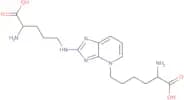
CAS:This product has disulfide bonds between Cys1-Cys15 and Cys3-Cys11 and is available as a 0.5mg vial. Big Endothelin-1 (Human, 1-38) is a peptide that is a member of the endothelin family and is part of the 39 amino acids of Big Endothelin-1 which is a precursor of Endothelin-1 (ET-1). ET-1 exhibits vasoconstrictive properties and is an activator of endothelin G-protein coupled receptors. Furthermore ET-1 is produced when inflammation, vascular stress or hypoxia occurs. In vivo Big Endothelin-1 has a greater half life compared to ET-1 and therefore makes it useful to study secretory activity in the endothelial system. Overall Big Endothelin-1 (Human, 1-38) can be used as a research tool for studying protein interactions, receptor activation and function, and ligand binding. This peptide is also used in pharmacology to study the effects of therapeutic agents on receptor activity and expression.Fórmula:C189H282N48O56S5Pureza:Min. 95%Peso molecular:4,282.9 g/molPentosidine
CAS:A Pentosidine product which can be used as a biomarker for Advanced Glycation End Products (known as AGEs) and for Glycation-Oxidative stress which is seen in diabetes mellitus type 2. It is available in the Trifluoroacetate Salt form and as a 0.1mg vial.Fórmula:C17H26N6O4Pureza:Min. 95%Peso molecular:378.43 g/molm-dPEG®36-Azide (Azido-m-dPEG®36)
CAS:m-dPEG®36-Azide (Azido-m-dPEG®36) is a PEG compound with two different functional groups (also known as heterobifunctional). Unlike homobifunctional PEG compounds (same functional group on both ends), this type of compounds are more versatile as have two different anchor points. m-dPEG®36-Azide (Azido-m-dPEG®36) is used as a linker and spacer to add a PEG moiety, via pegylation (a bioconjugation technique) to proteins, peptides, oligonucleotides, small molecules and nanoparticles.Fórmula:C48H97N3O24Pureza:Min. 95%Peso molecular:1,100.29 g/molLipoamido-dPEG®36-TFP Ester
CAS:Lipoamido-dPEG®36-TFP Ester is a PEG molecule conjugated with a lipid moiety. Lipoamido-dPEG®36-TFP Ester, conjugated to this lipid constituent, is very important especially in drug delivery and vaccine development as it helps improve the stability and circulation time of lipid nanoparticles (LNPs) and liposomes.Fórmula:C16H20N2O10Pureza:Min. 95%Peso molecular:400.34 g/mol[Ala11, D-Leu15]-Orexin B (Human)
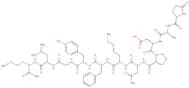
CAS:Orexin B is a peptide that belongs to the orexin family and is used in research. It has been shown to bind to orexin receptors, which are G-protein coupled receptors. Orexin B activates these receptors and is an activator of Ligand-gated ion channels such as NMDA (N-methyl-D-aspartate) receptors. It also binds with high affinity to the human M1 muscarinic acetylcholine receptor and inhibits Ca2+ currents in neuronal cells. Orexin B is also a ligand for the L1 class of immunoglobulin superfamily cell adhesion molecules, which are involved in cell biology.Fórmula:C120H206N44O35SPureza:Min. 95%Peso molecular:2,857.3 g/molAbz-Glu-Pro-Phe-Trp-Glu-Asp-Gln-EDDnp
CAS:Abz-Glu-Pro-Phe-Trp-Glu-Asp-Gln-EDDnp is a peptide that is used as a research tool for the study of protein interactions, receptor activation, and ion channels. It has shown to be an activator of receptors and ion channels. The Abz-Glu-Pro-Phe-Trp-Glu-Asp-Gln is a cyclic peptide which can bind to the GluR2 receptor on the postsynaptic membrane. This binding causes an influx of calcium ions and depolarization of the postsynaptic cell membrane.Fórmula:C59H68N14O19Pureza:Min. 95%Peso molecular:1,277.25 g/molAdjuvant Peptide
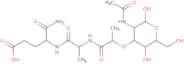
CAS:Adjuvant Peptide is a glycol ether that has been shown to have biological properties. It is used in the production of Immunoassays and other biochemicals. Adjuvant Peptide is an experimental model for immunity, as it stimulates cellular responses and alters the immune system's response to antigens. It shows potential for use in treating bowel diseases, such as ulcerative colitis, because of its ability to stimulate macrophage activity and induce cytokine production.
Fórmula:C19H32N4O11•2H2OPureza:Min. 95%Peso molecular:528.51 g/molCBZ-N-Amido-dPEG®36-Acid
CAS:CBZ-N-Amido-dPEG®36-Acid is a PEG compound with two different functional groups (also known as heterobifunctional). Unlike homobifunctional PEG compounds (same functional group on both ends), this type of compounds are more versatile as have two different anchor points. CBZ-N-Amido-dPEG®36-Acid is used as a linker and spacer to add a PEG moiety, via pegylation (a bioconjugation technique) to proteins, peptides, oligonucleotides, small molecules and nanoparticles.Fórmula:C83H157NO40Pureza:Min. 95%Peso molecular:1,809.12 g/molAmyloid β-Protein (Human, 1-28)
CAS:Amyloid β-Protein (Human, 1-28) is a peptide that belongs to the group of research tools. It is an activator of ion channels and can be used as a research tool for Life Science, Cell Biology, and Pharmacology. Amyloid β-Protein (Human, 1-28) has been shown to regulate the interactions between proteins with its receptor or ligand. This protein has also been shown to inhibit the activity of ion channels and may be useful in treating diseases such as Alzheimer's disease. The chemical formula for this peptide is C17H22N4O2 and its molecular weight is 368.4 g/mol.Fórmula:C145H209N41O46Pureza:Min. 95%Peso molecular:3,262.5 g/molSalusin-α (Human)
CAS:Salusin-Alpha is a human protein that belongs to the peptide family. It has the ability to activate a receptor and is used in research as a pharmacology and cell biology tool. Salusin-Alpha binds to ion channels and inhibits their function, which may be due to its ability to inhibit ligand binding. Salusin-Alpha is used in research as an inhibitor of peptides and antibodies, which are used in research as receptor ligands. This product has been shown to have high purity, with no detectable contaminants such as proteases, lipases, or nucleases. The CAS number for this product is 624735-22-4.Fórmula:C114H192N40O30Pureza:Min. 95%Peso molecular:2,603 g/molAc-Val-Glu-Ile-Asp-AMC
CAS:Ac-Val-Glu-Ile-Asp-AMC is a peptide that binds to the acetylcholine receptor, which is a protein that plays an important role in the transmission of nerve signals. Ac-Val-Glu-Ile-Asp-AMC is used as a research tool to study the binding of ligands and receptors. It can be purchased from Sigma Aldrich with purity greater than 98%.Fórmula:C32H43N5O11Pureza:Min. 95%Peso molecular:673.71 g/molCbz-N-Amido-dPEG®6-Acid
CAS:Cbz-N-Amido-dPEG®6-Acid is a PEG compound with two different functional groups (also known as heterobifunctional). Unlike homobifunctional PEG compounds (same functional group on both ends), this type of compounds are more versatile as have two different anchor points. Cbz-N-Amido-dPEG®6-Acid is used as a linker and spacer to add a PEG moiety, via pegylation (a bioconjugation technique) to proteins, peptides, oligonucleotides, small molecules and nanoparticles.Pureza:Min. 95%Peso molecular:487.54 g/molPhysalaemin
CAS:Physalaemin is a peptide that has been found to be an activator of the G-protein coupled receptor. Physalaemin has been shown to inhibit ion channels, such as potassium channels and calcium channels. Physalaemin may also inhibit the activity of certain ligands, such as bradykinin and substance P. This peptide can also act as a research tool for pharmacology and cell biology.
Fórmula:C58H84N14O16SPureza:Min. 95%Peso molecular:1,265.4 g/molt-boc-N-Amido-dPEG®36-Acid
CAS:t-boc-N-Amido-dPEG®36-Acid is a PEG compound with two different functional groups (also known as heterobifunctional). Unlike homobifunctional PEG compounds (same functional group on both ends), this type of compounds are more versatile as have two different anchor points. t-boc-N-Amido-dPEG®36-Acid is used as a linker and spacer to add a PEG moiety, via pegylation (a bioconjugation technique) to proteins, peptides, oligonucleotides, small molecules and nanoparticles.Fórmula:C80H159NO40Pureza:Min. 95%Peso molecular:1,775.1 g/molLipoamido-dPEG®4-TFP Ester
CAS:Lipoamido-dPEG®4-TFP Ester is a PEG molecule conjugated with a lipid moiety. Lipoamido-dPEG®4-TFP Ester, conjugated to this lipid constituent, is very important especially in drug delivery and vaccine development as it helps improve the stability and circulation time of lipid nanoparticles (LNPs) and liposomes.Fórmula:C31H62O15Pureza:Min. 95%Peso molecular:674.81 g/molSuc(OMe)-Ala-Ala-Pro-Val-AMC
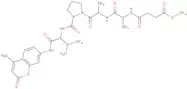
CAS:Suc(OMe)-Ala-Ala-Pro-Val-AMC is an activator ligand that binds to the receptor. It is a research tool and is used in cell biology, antibody production, ion channels and pharmacology. This compound can be used as an inhibitor for protein interactions. Suc(OMe)-Ala-Ala-Pro-Val-AMC has high purity and is a peptide. The CAS number of this compound is 72252-90-5.Fórmula:C31H41N5O9Pureza:Min. 95%Peso molecular:627.69 g/molAzido-dPEG® 8-NHS ester
CAS:Azido-dPEG® 8-NHS ester is a PEG compound with two different functional groups (also known as heterobifunctional). Unlike homobifunctional PEG compounds (same functional group on both ends), this type of compounds are more versatile as have two different anchor points. Azido-dPEG® 8-NHS ester is used as a linker and spacer to add a PEG moiety, via pegylation (a bioconjugation technique) to proteins, peptides, oligonucleotides, small molecules and nanoparticles.Pureza:Min. 95%Peso molecular:564.58 g/molAmino-dPEG®4-t-boc-hydrazide
CAS:Amino-dPEG®4-t-boc-hydrazide is a PEG compound with two different functional groups (also known as heterobifunctional). Unlike homobifunctional PEG compounds (same functional group on both ends), this type of compounds are more versatile as have two different anchor points. Amino-dPEG®4-t-boc-hydrazide is used as a linker and spacer to add a PEG moiety, via pegylation (a bioconjugation technique) to proteins, peptides, oligonucleotides, small molecules and nanoparticles.Fórmula:C16H33N3O7Pureza:Min. 95%Peso molecular:379.45 g/mol[D-Ala2,Met5]-Enkephalin
CAS:[D-Ala2,Met5]-Enkephalin is a peptide. It is a potent and specific activator of opioid receptors. It has been used to study the effects of opioid peptides on ion channels and receptor interactions, as well as for research into protein interactions and pharmacology.Fórmula:C28H37N5O7SPureza:Min. 95%Peso molecular:587.69 g/molAmino-dPEG®2-t-butyl ester
CAS:Amino-dPEG®2-t-butyl ester is a PEG compound with two different functional groups (also known as heterobifunctional). Unlike homobifunctional PEG compounds (same functional group on both ends), this type of compounds are more versatile as have two different anchor points. Amino-dPEG®2-t-butyl ester is used as a linker and spacer to add a PEG moiety, via pegylation (a bioconjugation technique) to proteins, peptides, oligonucleotides, small molecules and nanoparticles.Fórmula:C42H65NO16Pureza:Min. 95%Peso molecular:839.96 g/molCbz-N-Amido-dPEG®12-Acid
CAS:Cbz-N-Amido-dPEG®12-Acid is a PEG compound with two different functional groups (also known as heterobifunctional). Unlike homobifunctional PEG compounds (same functional group on both ends), this type of compounds are more versatile as have two different anchor points. Cbz-N-Amido-dPEG®12-Acid is used as a linker and spacer to add a PEG moiety, via pegylation (a bioconjugation technique) to proteins, peptides, oligonucleotides, small molecules and nanoparticles.
Pureza:Min. 95%Peso molecular:751.86 g/mol[Met(O)12]-ANP (Human, 1-28)
CAS:[Met(O)12]-ANP (Human, 1-28) is a peptide that activates the guanylate cyclase. It has been shown to bind to the receptor for ANP, which is present in many cell types. The binding of [Met(O)12]-ANP (Human, 1-28) to its receptor leads to an increase in intracellular cGMP levels and consequently an increase in intracellular cAMP levels. This product is a research tool for protein interactions and can be used as an inhibitor or activator. The purity of this product is >98%.
Fórmula:C127H203N45O40S3Pureza:Min. 95%Peso molecular:3,096.4 g/molm-dPEG®12-Lipoamide
CAS:m-dPEG®12-Lipoamide is a PEG molecule conjugated with a lipid moiety. m-dPEG®12-Lipoamide, conjugated to this lipid constituent, is very important especially in drug delivery and vaccine development as it helps improve the stability and circulation time of lipid nanoparticles (LNPs) and liposomes.Pureza:Min. 95%[Nle8,18,Tyr34]-Parathyroid Hormone (Human, 1-34)
CAS:Peptide product related to the 1-34 amino acids of the Parathyroid Hormone (PTH) and available as a 0.5mg vial. PTH is a peptide hormone that is secreted from the parathyroid gland in the event of abnormal serum calcium levels and it ultimately regulates calcium and phosphate levels in the body. The PTH exerts its activity through binding to the G-protein coupled receptor type 1 PTH receptor, which activates adenylate cyclase or phospholipase C thus activating pathways involved in the mediation of bone resorption and bone formation. This product is suitable for life science applications.Fórmula:C183H295N55O52Pureza:Min. 95%Peso molecular:4,097.6 g/molBNP-32 (Rat)
CAS:BNP-32 is a peptide that is an activator of the B2 receptor. It has been shown to inhibit the ion channels in cells, which may be due to its binding to the ligand-binding site on the receptor. BNP-32 has also been shown to bind to antibodies and can be used as a research tool for cell biology or other areas of life science. BNP-32 is a high purity product with CAS No. 123337-89-3.
Fórmula:C146H239N47O44S3Pureza:Min. 95%Peso molecular:3,452.9 g/molBradykinin-Potentiator B
CAS:Bradykinin-potentiator B is a peptide that belongs to the group of activators. It has been shown to activate ion channels and is used as a research tool for studying protein interactions, receptor pharmacology, and ligand binding. Bradykinin-potentiator B can be used in cell biology for studying protein interactions with antibodies or receptors. Bradykinin potentiator B binds to the receptor site and activates it by changing its conformation. This leads to changes in the cell's behavior, such as increased secretion of hormones or neurotransmitters.Fórmula:C56H91N15O13Pureza:Min. 95%Peso molecular:1,182.4 g/molE-64-c
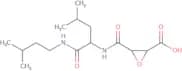
CAS:E-64-c is a research tool that is used to activate the receptor of a cell. This ligand can bind to the receptor and form a complex, which will then be able to interact with other proteins in the cell. This process can lead to changes in ion channel activity, protein synthesis, or gene expression. E-64-c has been shown to inhibit the activity of ion channels such as calcium channels and potassium channels, as well as protein synthesis. It also binds to antibodies and blocks their binding sites on cells.br>
E-64-c is a high purity ligand that can be used for studying protein interactions or pharmacological purposes. The potency of this ligand has been tested by measuring its ability to inhibit the binding of various peptides such as vasopressin and angiotensin II.Fórmula:C15H26N2O5Pureza:Min. 95%Peso molecular:314.38 g/molBz-Gly-Gly-Gly [Hippuryl-Glycyl-Glycine]
CAS:Bz-Gly-Gly-Gly is a prodrug that is metabolized by enzymatic hydrolysis to its active form, hippurylglycylglycine. The prodrug has been shown to have minimal toxicity in mice and humans, and it binds to the target enzyme of infectious diseases (e.g., HIV) with high affinity. Bz-Gly-Gly-Gly has been shown to be effective in vitro against human immunodeficiency virus type 1 (HIV1) and mouse tumor models, as well as in vivo against mouse leukemia cells. The drug has also been shown to be safe at physiological levels in mice.
Fórmula:C13H15N3O5Pureza:Min. 95%Peso molecular:293.28 g/molD-Arginyl-[Hyp3,Thi5,D-Tic7,Oic8]-Bradykinin
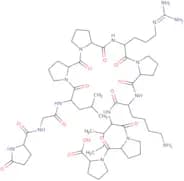
CAS:D-Arginyl-[Hyp3,Thi5,D-Tic7,Oic8]-Bradykinin is a synthetic peptide that is used as a research tool. It has been shown to activate ion channels and receptor proteins in studies on cell biology and pharmacology. This peptide also inhibits the binding of ligands to their receptors, which may be due to its structural similarity with other peptides that bind to the same receptor. D-Arginyl-[Hyp3,Thi5,D-Tic7,Oic8]-Bradykinin is an inhibitor of protein interactions.Fórmula:C59H89N19O13SPureza:Min. 95%Peso molecular:1,304.5 g/molm-dPEG®2-NHS Ester
CAS:m-dPEG®2-NHS Ester is a PEG compound with two different functional groups (also known as heterobifunctional). Unlike homobifunctional PEG compounds (same functional group on both ends), this type of compounds are more versatile as have two different anchor points. m-dPEG®2-NHS Ester is used as a linker and spacer to add a PEG moiety, via pegylation (a bioconjugation technique) to proteins, peptides, oligonucleotides, small molecules and nanoparticles.
Fórmula:C18H28N2O9Pureza:Min. 95%Peso molecular:416.42 g/molHydroxy-dPEG®24-t-Butyl Ester
CAS:Hydroxy-dPEG®24-t-Butyl Ester is a PEG polymer categorised as monofunctional (OH-PEG-X). Used as a linker, hydroxy-dPEG®24-t-Butyl Ester is used to attached PEG to proteins, peptides, oligonucleotides, nanoparticles and small molecules via pegylation, a bioconjugation technique.Fórmula:C16H26N2O7Pureza:Min. 95%Peso molecular:358.39 g/mol[Sar1,Thr8]-Angiotensin II
CAS:Angiotensin II is a peptide that is produced in the body and has a variety of effects. It is an activator of angiotensin receptors, which are found on cells throughout the body. Angiotensin II also binds to ligand binding sites on the surface of cells, which are called receptors. The receptor-ligand complex activates or inhibits ion channels in the cell membrane, which results in changes in cell function.Fórmula:C44H69N13O11Pureza:Min. 95%Peso molecular:956.1 g/molNeuropeptide W-30 (Human)
CAS:Neuropeptide W-30 is a peptide that has been shown to activate the receptor for neuropeptide W (NPW). Neuropeptide W is a member of the tachykinin family of peptides, which are known to function as activators of G protein-coupled receptors. Neuropeptide W-30 has been shown to be a potent inhibitor of ion channels and ligand-gated ion channels, including potassium channels, calcium channels, and sodium channels. Neuropeptide W-30 also blocks the release of neurotransmitters such as acetylcholine, noradrenaline, dopamine, and serotonin in animal cells.Fórmula:C165H249N49O37SPureza:Min. 95%Peso molecular:3,543.1 g/molFmoc-N-Amido-dPEG®24-Acid
CAS:Fmoc-N-Amido-dPEG®24-Acid is a PEG compound with two different functional groups (also known as heterobifunctional). Unlike homobifunctional PEG compounds (same functional group on both ends), this type of compounds are more versatile as have two different anchor points. Fmoc-N-Amido-dPEG®24-Acid is used as a linker and spacer to add a PEG moiety, via pegylation (a bioconjugation technique) to proteins, peptides, oligonucleotides, small molecules and nanoparticles.Pureza:Min. 95%Peso molecular:1,368.59 g/molBiotin-dPEG®23-MAL
CAS:Biotin-dPEG®23-MAL is a PEG compound with two different functional groups (also known as heterobifunctional). Unlike homobifunctional PEG compounds (same functional group on both ends), this type of compounds are more versatile as have two different anchor points. Biotin-dPEG®23-MAL is used as a linker and spacer to add a PEG moiety, via pegylation (a bioconjugation technique) to proteins, peptides, oligonucleotides, small molecules and nanoparticles.Fórmula:C65H119N5O28SPureza:Min. 95%Peso molecular:1,450.72 g/molBiotin-dPEG®4-Hydrazide
CAS:Biotin-dPEG®4-Hydrazide is a PEG compound with two different functional groups (also known as heterobifunctional). Unlike homobifunctional PEG compounds (same functional group on both ends), this type of compounds are more versatile as have two different anchor points. Biotin-dPEG®4-Hydrazide is used as a linker and spacer to add a PEG moiety, via pegylation (a bioconjugation technique) to proteins, peptides, oligonucleotides, small molecules and nanoparticles.Fórmula:C22H25NO6Pureza:Min. 95%Peso molecular:399.44 g/molChlorotoxin
CAS:Chlorotoxin is an ion channel activator that is characterized by its high purity and affinity. It has been shown to bind to the acetylcholine receptor in the brain, which leads to increased levels of acetylcholine at the synapse and subsequent activation of postsynaptic neurons. Chlorotoxin also inhibits potassium channels, leading to hyperpolarization of cells and a decrease in neuronal activity. The peptide is used as a research tool for cell biology and pharmacology studies.Fórmula:C158H249N53O47S11Pureza:Min. 95%Peso molecular:3,995.7 g/molGly-Leu
CAS:Gly-Leu is a cyclic peptide that was originally isolated from human serum. It has been shown to have antibiotic activity against bacteria such as Escherichia coli and Staphylococcus aureus. This drug also inhibits the enzyme activities of trifluoroacetic acid, sodium citrate, and calcium binding. Gly-Leu has been shown to have anti-tumour properties in vivo by inhibiting the growth of carcinoma cell lines and inducing apoptosis in these cells. It also has immunomodulatory effects on autoimmune diseases such as multiple sclerosis.Fórmula:C8H16N2O3Pureza:Min. 95%Peso molecular:188.22 g/molAc-Abu-Tle-Leu-Gln-AMC
Ac-Abu-Tle-Leu-Gln-AMC is a peptide that activates the ion channels of ligand gated calcium channels. It is an inhibitor of the glycine receptor, which is a type of ligand gated ion channel. Ac-Abu-Tle-Leu-Gln-AMC binds to the agonist binding site and blocks the neurotransmitter glycine from activating the receptor. This peptide has been shown to be effective in inhibiting neuronal excitability in rodent models.Pureza:Min. 95%Ac-Tyr-Val-Ala-Asp-AMC
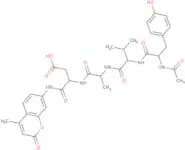
CAS:Ac-Tyr-Val-Ala-Asp-AMC is a peptide that is used as a research tool to activate ion channels in cells and study the effects of ligands on these channels. It is also used in cell biology to study protein interactions, although it does not bind to any specific receptor. Ac-Tyr-Val-Ala-Asp-AMC belongs to the group of inhibitors and can be used for pharmacological purposes. The chemical structure of this peptide consists of a covalent bond between an amino acid and an acetylated form of a fluorescent molecule, which makes it suitable for use in fluorescence microscopy. Acetylated Tyr (Ac-Tyr) is one of the six amino acids found in proteins and has the ability to inhibit the activity of ion channels by binding to their external cavity. Acetylation at position 2 or 3 on Tyr can increase its affinity for calcium ion channels and affect their activation or deFórmula:C33H39N5O10Pureza:Min. 95%Peso molecular:665.69 g/molGla17,21,24-Osteocalcin (Human)
CAS:Gla17,21,24-Osteocalcin is a peptide that belongs to the family of proteins that have bone-building properties. Osteocalcin is produced by osteoblasts and its production increases in response to activation by parathyroid hormone. It is also an activator of ion channels and has been found to be involved in regulating calcium homeostasis. Gla17,21,24-Osteocalcin has been shown to inhibit protein interactions with the receptor and ligand. This peptide also binds to receptor sites on cells and inhibits the activity of G protein-coupled receptors (GPCRs).
Fórmula:C269H381N67O82S2Pureza:Min. 95%Peso molecular:5,929.4 g/molTAME hydrochloride
CAS:Tos-Arg-OMe • HCl is a peptide that has been shown to modulate the responsiveness of cells to sodium channels. Tos-Arg-OMe • HCl may also be useful as an anti-cancer drug, as it inhibits cancer cell growth and induces apoptosis. This peptide has been shown to be an effective treatment for HIV infection by inhibiting viral replication. It also reduces inflammation and prevents the development of other opportunistic infections in animal models.Fórmula:C14H22N4O4S·ClHPureza:Min. 95%Peso molecular:378.87 g/molUrocortin II (Mouse)
CAS:Urocortin II is a peptide of the corticotropin-releasing factor receptor family that is synthesized in the brain. It has been shown to inhibit the activity of other peptides and proteins, and can be used as a research tool for studying protein interactions, receptor binding, ion channel activity, and ligand binding. Urocortin II has been shown to activate receptors in mouse brain tissue, which may provide insight into its function as a regulator of stress responses.Fórmula:C187H320N56O50Pureza:Min. 95%Peso molecular:4,152.9 g/molParathyroid Hormone (Human, 1-34)
CAS:This product which is available as a 0.5mg vial is amino acids 1-34 of the 84 amino acid parathyroid hormone (PTH) and can be used as an adenylate cyclase and bone growth stimulating peptide. It is possible that in can be used in research in the treatments of some types of osteoporosis. PTH is a peptide hormone that is secreted from the parathyroid gland in the event of abnormal serum calcium levels and it ultimately regulates calcium and phosphate levels in the body. The PTH exerts its activity through binding to the G-protein coupled receptor type 1 PTH receptor, which activates adenylate cyclase or phospholipase C thus activating pathways involved in the mediation of bone resorption and bone formation. This product is suitable for life science applications.Fórmula:C181H291N55O51S2Pureza:Min. 95%Peso molecular:4,117.7 g/molBis-dPEG®17-PFP Ester
CAS:Bis-dPEG®17-PFP Ester is a PEG polymer categorised as homobifunctional PEG (X-PEG X). Used as a linker, bis-dPEG®17-PFP Ester is used to attached PEG to proteins, peptides, oligonucleotides, nanoparticles and small molecules via pegylation, a bioconjugation technique.
Fórmula:C50H72F10O21Pureza:Min. 95%Peso molecular:1,199.08 g/molZ-Asp-CH2-DCB
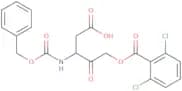
CAS:Z-Asp-CH2-DCB is a peptide that is an activator of cell membrane ion channels and receptor proteins. It has been shown to inhibit the interaction between ligands and receptors, thus blocking the binding of chemical signals with their corresponding cells. This chemical signal can be either neurotransmitters or hormones. Z-Asp-CH2-DCB is also a research tool for studying protein interactions and cellular processes, such as ion channel activation.Fórmula:C20H17NO7Cl2Pureza:Min. 95%Peso molecular:454.26 g/molBz-Ala-OMe
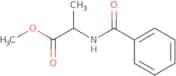
CAS:Bz-Ala-OMe is a reactive mercuric chloride that undergoes hydrolysis to form reactive mercuric acetate. It has been shown that the activation energy of the reaction is high and the reaction can be initiated by soybean trypsin. The reactive site of Bz-Ala-OMe is composed of chloride atoms and sephadex g-100. This compound reacts with serine proteases, such as trypsin or chymotrypsin, to form an amide intermediate. This intermediate reacts with n-acetyl-l-tyrosine to produce a chloromethyl ketone which then undergoes a nucleophilic attack by histidine to produce histamine in the presence of H2O2 or O2. Histamine binds to H1 receptors in the body, leading to an inflammatory response.
Fórmula:C11H13NO3Pureza:Min. 95%Peso molecular:207.23 g/molANP (Rat, 3-28)
CAS:ANP (Rat, 3-28) is a peptide that is a potent inhibitor of protein interactions. This peptide binds to the ligand-binding domain of the receptor and blocks the binding of the ligand. ANP (Rat, 3-28) also has high purity and can be used as a research tool or an antibody in life science studies.
Fórmula:C119H189N43O36S2Pureza:Min. 95%Peso molecular:2,862.2 g/molCoV-2 S1 (319-529)
COVID-19 is a recombinant protein that was derived from the SARS-CoV. It is an antibody, which binds to the SARS-CoV and prevents it from infecting cells. COVID-19 is a monoclonal antibody that targets the glycoprotein spike of the coronavirus. The 319-529 region of this protein shows high binding affinity for SARS-CoV and SARS-CoV/SARS-CoV-2, which are two types of coronaviruses. This region can be used as a diagnostic marker for these viruses. COVID-19 may also have therapeutic potential as it has shown to neutralize SARS in cell culture and protect mice against lethal challenge with the virus.Pureza:Min. 95%Hydroxy-dPEG®8-t-Butyl Ester
CAS:Hydroxy-dPEG®8-t-Butyl Ester is a PEG polymer categorised as monofunctional (OH-PEG-X). Used as a linker, hydroxy-dPEG®8-t-Butyl Ester is used to attached PEG to proteins, peptides, oligonucleotides, nanoparticles and small molecules via pegylation, a bioconjugation technique.
Pureza:Min. 95%Peso molecular:498.6 g/mol




![[Ala11, D-Leu15]-Orexin B (Human)](/_next/image/?url=https%3A%2Fstatic.cymitquimica.com%2Fproducts%2F3D%2Fthumb-webp%2FPOR-4483-S.webp&w=3840&q=75)







![[D-Ala2,Met5]-Enkephalin](/_next/image/?url=https%3A%2Fstatic.cymitquimica.com%2Fproducts%2F3D%2Fthumb-webp%2FPEK-4116-V.webp&w=3840&q=75)


![[Met(O)12]-ANP (Human, 1-28)](/_next/image/?url=https%3A%2Fstatic.cymitquimica.com%2Fproducts%2F3D%2Fthumb-webp%2FPAF-4145-V.webp&w=3840&q=75)

![[Nle8,18,Tyr34]-Parathyroid Hormone (Human, 1-34)](/_next/image/?url=https%3A%2Fstatic.cymitquimica.com%2Fproducts%2F3D%2Fthumb-webp%2FPTH-4129-V.webp&w=3840&q=75)

![Bz-Gly-Gly-Gly [Hippuryl-Glycyl-Glycine]](/_next/image/?url=https%3A%2Fstatic.cymitquimica.com%2Fproducts%2F3D%2Fthumb-webp%2FSGG-3128.webp&w=3840&q=75)
![D-Arginyl-[Hyp3,Thi5,D-Tic7,Oic8]-Bradykinin](/_next/image/?url=https%3A%2Fstatic.cymitquimica.com%2Fproducts%2F3D%2Fthumb-webp%2FPKB-4293-V.webp&w=3840&q=75)


![[Sar1,Thr8]-Angiotensin II](/_next/image/?url=https%3A%2Fstatic.cymitquimica.com%2Fproducts%2F3D%2Fthumb-webp%2FPAN-4102-V.webp&w=3840&q=75)