Peptídeos
Subcategorias de "Peptídeos"
Foram encontrados 29635 produtos de "Peptídeos"
Z-Ile-Trp-OH
CAS:Please enquire for more information about Z-Ile-Trp-OH including the price, delivery time and more detailed product information at the technical inquiry form on this page
Fórmula:C25H29N3O5Pureza:Min. 95%Peso molecular:451.51 g/molRef: 3D-FI111493
Produto descontinuado[Ser25]-PKC (19-36) Substrate
Catalogue peptide; min. 95% purity
Fórmula:C93H159N35O25Peso molecular:2,167.52 g/mol[Des-Asp10]Decorsin, Leech
Catalogue peptide; min. 95% purity
Fórmula:C175H272N54O59S6Peso molecular:4,268.78 g/molγ-TAC4 (30-61)-NH2
Catalogue peptide; min. 95% purity
Fórmula:C155H242N40O49SPeso molecular:3,481.96 g/molTryptophan Motif Peptide
Catalogue peptide; min. 95% purity
Fórmula:C35H41N11O7Peso molecular:727.79 g/molTetanus toxin (TT) peptide
Catalogue peptide; min. 95% purity
Fórmula:C79H120N18O21Peso molecular:1,657.95 g/molMARCKS Protein (151-175)
Catalogue peptide; min. 95% purity
Fórmula:C147H243N41O31Peso molecular:3,080.83 g/molNTB (Naltriben)
Catalogue peptide; min. 95% purity
Fórmula:C50H65N11O11S2Peso molecular:1,060.29 g/molInfluenza HA (529-537)
Catalogue peptide; min. 95% purity
Fórmula:C41H67N9O13Peso molecular:894.04 g/molPKA Inhibitor Substrate
Catalogue peptide; min. 95% purity
Fórmula:C61H108N25O22PPeso molecular:1,574.69 g/molBrain injury Derived Neurotrophic Peptide(3) BINP
Catalogue peptide; min. 95% purity
Fórmula:C62H101N17O19Peso molecular:1,388.58 g/molHypercalcemia Malignancy Factor (1-40)
Catalogue peptide; min. 95% purity
Fórmula:C180H287N57O48Peso molecular:4,017.55 g/mol[Ala4]-MBP (1-11)
Catalogue peptide; min. 95% purity
Fórmula:C49H81N21O17Peso molecular:1,236.32 g/molLeucopyrokinin (LPK)
Catalogue peptide; min. 95% purity
Fórmula:C42H66N12O12Peso molecular:931.06 g/mol[D-Phe7] a-MSH, amide
Catalogue peptide; min. 95% purity
Fórmula:C77H109N21O19SPeso molecular:1,664.92 g/molBiotin-Gastrin (1-17)
Catalogue peptide; min. 95% purity
Fórmula:C107H140N22O34S2Peso molecular:2,342.56 g/molTNF-α(71-82), human
Catalogue peptide; min. 95% purity
Fórmula:C51H91N19O18Peso molecular:1,258.41 g/mol[Ile-Ser]-Bradykinin (T-Kinin)
Catalogue peptide; min. 95% purity
Fórmula:C59H89N17O14Peso molecular:1,260.47 g/molBiotin-a-CGRP (canine, mouse, rat)
Catalogue peptide; min. 95% purity
Fórmula:C172H276N52O54S3Peso molecular:4,032.63 g/molα-Mating Factor (1-6)
Catalogue peptide; min. 95% purity
Fórmula:C45H59N11O8Peso molecular:882.04 g/molRef: 3D-VAC-00670
Produto descontinuadoDisulfide biotin azide
CAS:Extraordinary strength of the streptavidin-biotin interaction allows for efficient capturing of even highly dilute targets; however, it makes recovery of proteins from affinity resins challenging. Conventional methods to elute biotinylated proteins from immobilized avidin include the following: (i) denaturation of streptavidin by boiling the resin in a denaturing buffer that may include high concentrations of chaotropic salts, (ii) trypsin digestion of proteins while they are bound to the resin, or (iii) elution of proteins with excess free biotin. These protocols can co-elute contaminant proteins by releasing nonspecifically bound proteins and/or naturally biotinylated proteins concurrently with labeled proteins. In addition, some of these methods can cause elution of high levels of resin-based peptides along with the proteins of interest, resulting in further sample contamination.
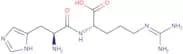
Disulfide Biotin Azide probe eliminates a major limitation of the streptavidin-biotin affinity purification. This reagent contains a biotin moiety linked to an azide moiety through a spacer arm containing a cleavable disulfide linker. Captured biomolecules can be efficiently released under mild conditions (50 mM dithiothreitol, 10 mM 2-mercaptoethanol or 1% sodium borohydride) and the small molecular fragment (188.25 Da) left on the labeled protein following cleavage. These features make the cleavable probe especially attractive for use in biomolecular labeling and proteomic studies.Fórmula:C27H48N8O7S3Pureza:Min 95%Peso molecular:692.92 g/molH-His-Arg-OH
CAS:H-His-Arg-OH is a synthetic peptide that has been shown to have cytotoxic effects on mammalian cells. The H-His-Arg-OH peptide can be used for the treatment of heart disease and autoimmune diseases, such as rheumatoid arthritis. This peptide has been found to be resistant to congestive heart failure, which is caused by a number of factors, including hypertension and valvular stenosis. It has also been shown to have an immunoglobulin G1 (IgG1) genotype.
Fórmula:C12H21N7O3Pureza:Min. 95%Peso molecular:311.34 g/molRef: 3D-FH108062
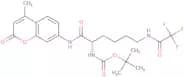
Produto descontinuadoBoc-Lys(Tfa)-AMC
CAS:Boc-Lys(Tfa)-AMC is a small molecule that inhibits the acetylation of histone H3 and has anticancer activity. Acetylation increases the rate of transcription and replication, whereas Boc-Lys(Tfa)-AMC inhibits this process by preventing acetylation. This drug also binds to δ-opioid receptors in cancer cells, triggering a redox signal that leads to inhibition of cancer cell proliferation. The mechanism of this drug's anticancer activity is unknown, but it may be due to its ability to inhibit enzyme activities or disulfide bond formation in vivo.
Fórmula:C23H28F3N3O6Pureza:Min. 95%Peso molecular:499.48 g/molRef: 3D-FB110609
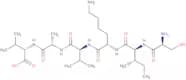
Produto descontinuadoH-Ser-Ile-Lys-Val-Ala-Val-OH
CAS:H-Ser-Ile-Lys-Val-Ala-Val-OH is a peptide that is synthesized from the amino acid sequence of the human skin cells. It has been shown to be effective in inhibiting bacterial growth and inducing death in bacteria. This peptide binds to the bacterial cell wall and inhibits its growth. The polymer film can be used for the delivery of H-Ser-Ile-Lys-Val-Ala-Val-OH in the form of lamellar, galacturonic acid, collagen, or lipid nanoparticles. The lamellar phase can be prepared by using water as solvent and lipids as surfactant. The lipid nanoparticle formulation consists of a core material (e.g., cholesterol) surrounded by a lipid bilayer composed of phospholipids or glycolipids with H Ser Ile Lys Val Ala Val OH incorporated into it. This peptide has also been shown to have skin care properties when
Fórmula:C28H53N7O8Pureza:Min. 95%Peso molecular:615.76 g/molRef: 3D-FS108741
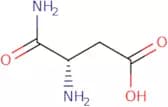
Produto descontinuadoH-Asp-NH2
CAS:H-Asp-NH2 is an isomeric mixture of l-phenylalanine and its methyl ester. It is used as a feed additive in animals to improve growth and feed conversion efficiency. The deamination of H-Asp-NH2 produces hydrogen peroxide, which has been shown to be lethal to enterobacteriaceae. This compound may also act as a microbial growth inhibitor by preventing the formation of peptides during synthesis.
Fórmula:C4H8N2O3Pureza:Min. 95%Peso molecular:132.12 g/molH-GILGFVFTL-OH
CAS:FluM1 (58-66) is a short part of the matrix protein of Influenza A virus which is the most abundant component of this enveloped virus localized under the viral lipid envelope. The GILGFVFTL epitope is highly conserved in Influenza A virus strains at a rate of 93% for 69 strains tested. Human Influenza epitopes may bind MHC molecules and then may be recognized by CD8+ cytotoxic T cells. Applications of FluM1 (58-66): FluM1 (58-66) is used to stimulate CTL responses in peripheral blood mononuclear cells (PBMCs). Then, ELISPOT assay is used to quantify peptide epitope specificity and IFN-γ releasing effector cells. FluM1 (58-66) has shown CTL responses qualified of immunodominant with restriction by HLA-A*02:01. It has also been detected CTL responses when FluM1 (58-66) is restricted by all HLA-C. Therefore, FluM1 (58-66) may help to understand the reaction of immune system against Influenza virus of each populations having different HLA type. FluM1 (58-66) has indeed prompted research to develop T-cell vaccine strategies capable of inducing specific CTL responses in patients upon immunization with Influenza M1 antigenic epitope. MVA-NP+M1 vaccine use GILGFVFTL epitope and is tested in clinical trial. Potential cross-reactivity with HIV-1 p17 Gag (77-85): Moreover, FluM1 (58-66) share similarities with HIV-1 p17 Gag (77-85) which can potentially show a cross-reactivity between these epitopes. It has been demonstrated a cross-reactivity and results suggest that immunity following infection by Influenza virus causes specific immune response to HIV-1 p17 Gag (77-85).
Fórmula:C49H75N9O11Peso molecular:966.18 g/molCerebellin trifluoroacetate
CAS:Please enquire for more information about Cerebellin trifluoroacetate including the price, delivery time and more detailed product information at the technical inquiry form on this page
Fórmula:C69H113N23O23•(C2HF3O2)4Pureza:Min. 95%Peso molecular:2,088.86 g/molRef: 3D-BC184180
Produto descontinuadoH-ASCLYGQLPK-OH
Peptide H-ASCLYGQLPK-OH is a Research Peptide with significant interest within the field academic and medical research. This peptide is available for purchase at Cymit Quimica in multiple sizes and with a specification of your choice.
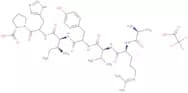
Fórmula:C48H76N12O13SPeso molecular:1,079.27 g/molAngiotensin A (1-7) trifluoroacetate
CAS:Endogenous heptapetide which causes vasodilation and has anti-hypertensive properties.
Fórmula:C40H62N12O9•(C2HF3O2)xPureza:Min. 95%Cor e Forma:PowderPeso molecular:855 g/molCoibamide A
CAS:Please enquire for more information about Coibamide A including the price, delivery time and more detailed product information at the technical inquiry form on this page
Fórmula:C65H110N10O16Pureza:Min. 95%Peso molecular:1,287.65 g/mol


![[Ser25]-PKC (19-36) Substrate](/_next/image/?url=https%3A%2Fstatic.cymitquimica.com%2Fproducts%2F3D%2Fthumb-webp%2FVAC-00658.webp&w=3840&q=75)
![[Des-Asp10]Decorsin, Leech](/_next/image/?url=https%3A%2Fstatic.cymitquimica.com%2Fproducts%2F3D%2Fthumb-webp%2FVAC-00243.webp&w=3840&q=75)


![[Ala4]-MBP (1-11)](/_next/image/?url=https%3A%2Fstatic.cymitquimica.com%2Fproducts%2F3D%2Fthumb-webp%2FVAC-00021.webp&w=3840&q=75)


![[D-Phe7] a-MSH, amide](/_next/image/?url=https%3A%2Fstatic.cymitquimica.com%2Fproducts%2F3D%2Fthumb-webp%2FVAC-00051.webp&w=3840&q=75)


![[Ile-Ser]-Bradykinin (T-Kinin)](/_next/image/?url=https%3A%2Fstatic.cymitquimica.com%2Fproducts%2F3D%2Fthumb-webp%2FVAC-00511.webp&w=3840&q=75)